What Is a Food and Drink Vending Machine Solution?
A food and drink vending machine solution is an unattended retail system designed to store, display, sell, and manage packaged food and beverages. Depending on the configuration, one machine can offer bottled water, canned drinks, energy drinks, chips, candy, cookies, protein bars, sandwiches, salads, dairy products, boxed meals, and other packaged items.
The machine itself is only one part of the solution. Operators also need to consider refrigeration, tray design, payment acceptance, software, connectivity, inventory replenishment, customer traffic, branding, delivery access, and after-sales support. A machine that performs well in a small office may not be the right choice for a factory, university, hospital, airport, or shopping center.
That is why Zhongda Smart approaches food and beverage vending as a location-based retail project. The objective is to match the machine configuration to the products, customer behavior, operating environment, and expected sales volume rather than recommending the same model for every buyer.
Why Traditional Food Service Often Falls Short
Most businesses begin looking for a vending machine because an existing food service method is inconvenient, expensive, limited, or difficult to manage. Understanding the original problem makes it much easier to choose the right solution.
Limited Service Hours
Cafeterias and staffed stores may close before night shifts, weekend visitors, or late-working employees need food and drinks.
High Labor Requirements
A staffed retail counter requires scheduling, training, supervision, and payroll even when customer traffic is inconsistent.
Unreliable Product Availability
Without accurate stock information, popular products sell out while slow-moving products occupy valuable shelf space.
Payment Friction
Customers may walk away when a machine accepts only cash or does not support the payment methods commonly used in the local market.
Temperature Concerns
Cold beverages and refrigerated food require stable temperature control and a machine selected for the intended product category.
Poor Location Economics
An oversized machine in a low-traffic location can tie up capital, while an undersized machine may require constant restocking.
How Smart Vending Addresses These Challenges
A properly configured vending system creates a compact, self-service retail point that can operate beyond normal business hours. Customers can browse products, pay independently, and collect their purchases without requiring a cashier.
Refrigerated configurations support chilled beverages and appropriate packaged food categories. Adjustable trays allow the product layout to change as demand changes. Touchscreens can display product information and promotional content, while connected management tools can help operators review sales, check inventory, monitor machine status, and plan restocking routes.
The result is not automatic profitability. Performance still depends on location quality, product selection, pricing, uptime, and replenishment. The advantage is that operators gain a more flexible platform for managing those factors.
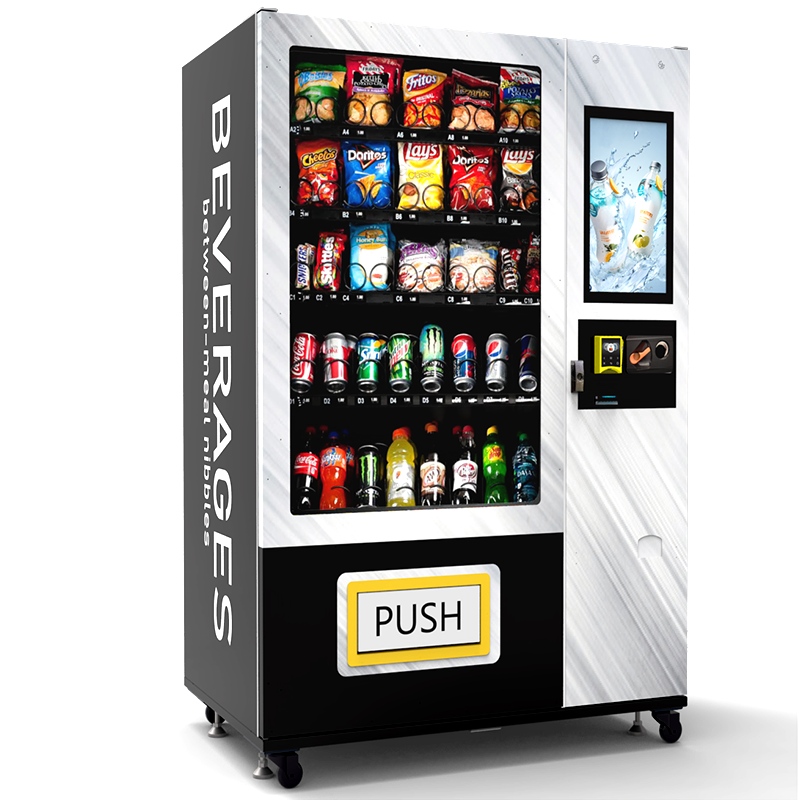
Choose a Configuration Based on What You Plan to Sell
Different product categories create different storage, dispensing, and temperature requirements. The machine should be selected after the initial merchandise plan is defined.
Beverage Vending Machines
Designed for bottled water, canned drinks, juice, soda, coffee beverages, energy drinks, and other packaged beverages.
Best for: gyms, offices, factories, transit locations, and public spaces.
Snack Vending Machines
Suitable for chips, candy, cookies, crackers, nuts, protein bars, and shelf-stable packaged foods.
Best for: schools, offices, hotels, dormitories, and employee break rooms.
Refrigerated Food Machines
Configured for chilled sandwiches, salads, dairy products, packaged meals, desserts, and selected fresh-food items.
Best for: hospitals, offices, campuses, factories, and 24-hour workplaces.
Combo Vending Machines
Combine snacks and drinks in one cabinet, providing a broad product mix without requiring two separate machines.
Best for: mixed-demand locations with limited floor space.
Food and Drink Vending Machines for Different Projects
The models below illustrate several common food and beverage vending configurations. Screen size, payment modules, tray layout, cooling range, branding, and software can be discussed according to the project.
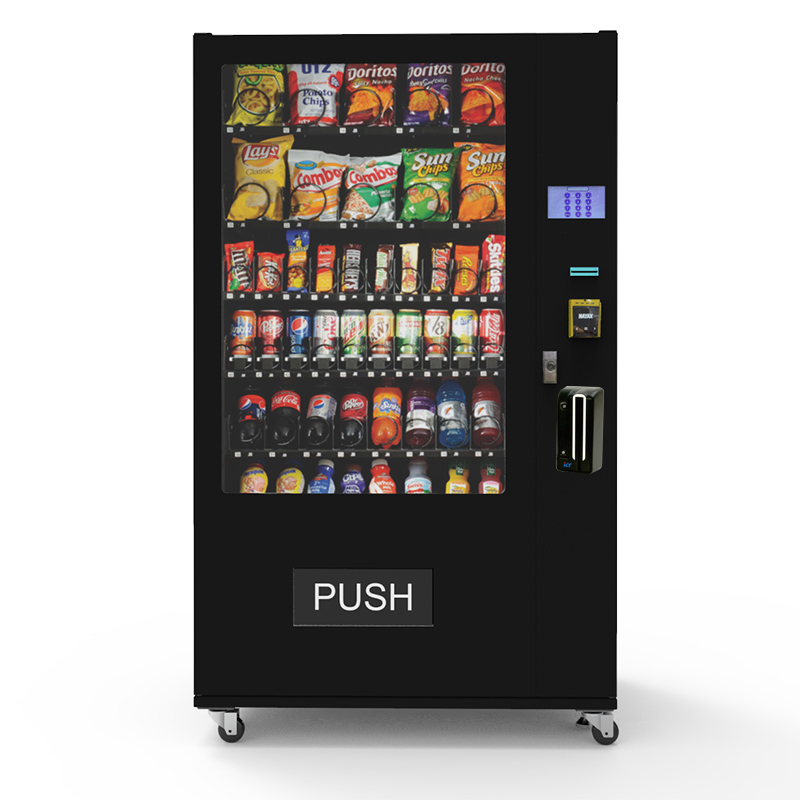
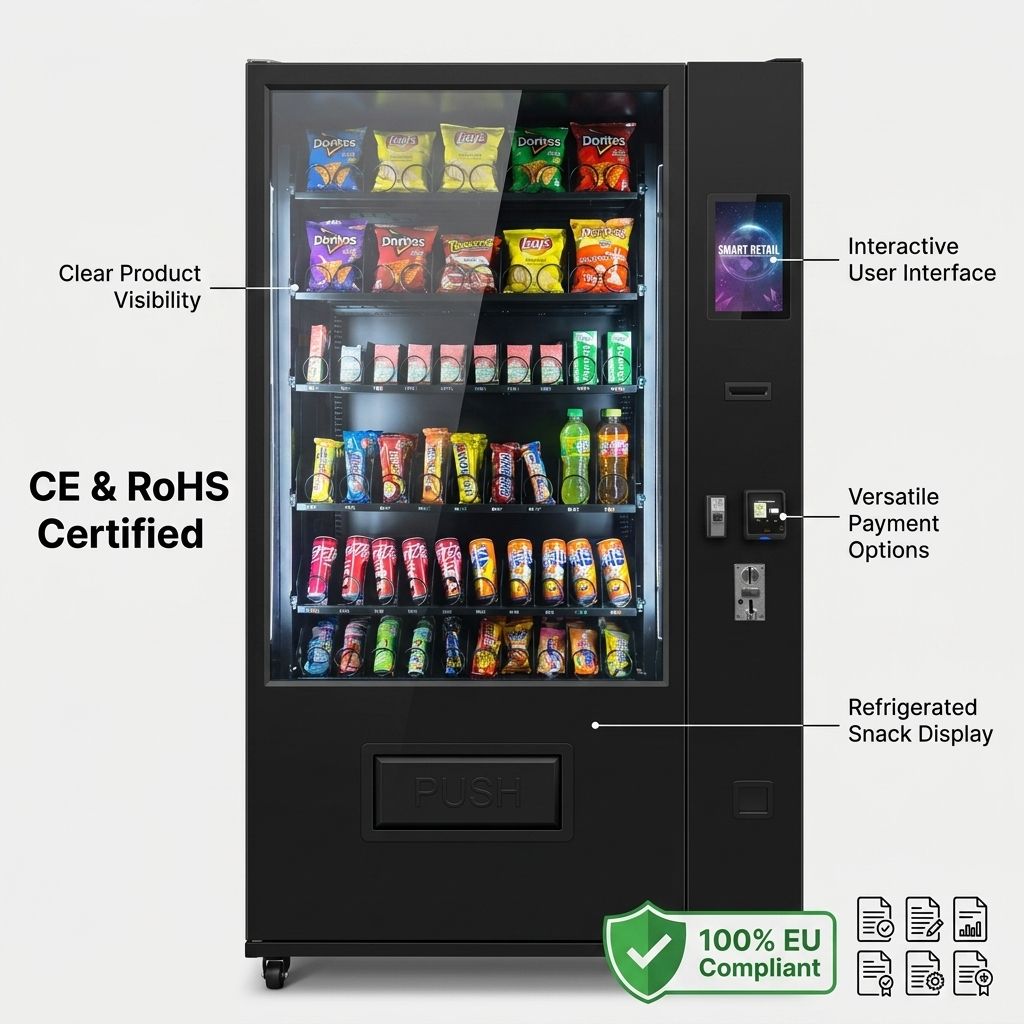
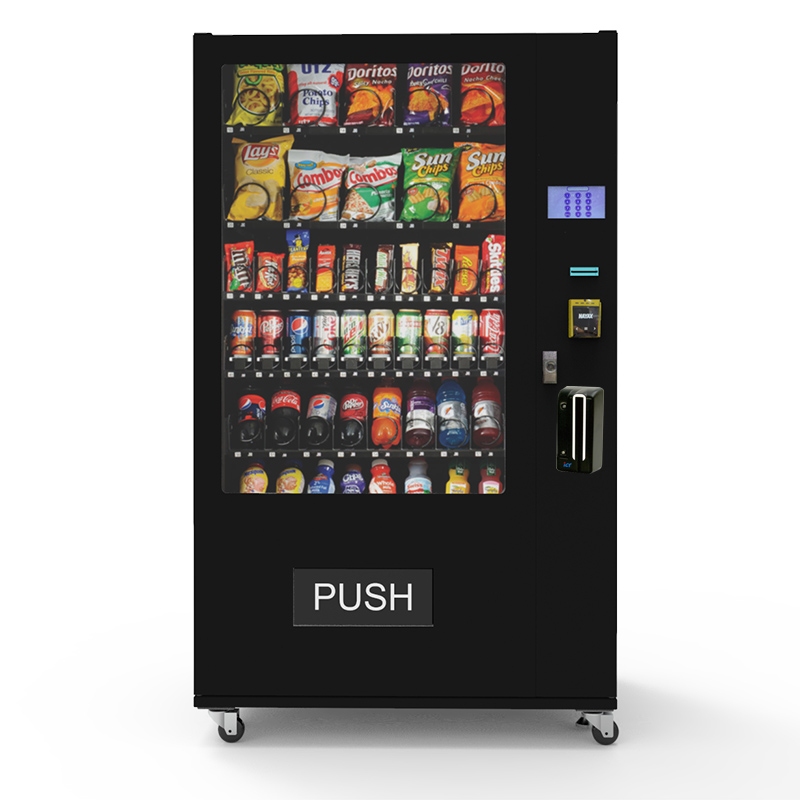
Product appearance, specifications, payment hardware, certification requirements, software functions, temperature settings, and capacity may vary by model and customization. Confirm all project-specific requirements before ordering.
Features That Matter in Daily Operation
Buyers often focus on appearance and purchase price. Long-term results, however, are usually influenced more by reliability, product compatibility, payment convenience, service access, and the quality of operating data.

1. Appropriate Refrigeration
Match the cooling configuration to the products being sold. Bottled beverages, dairy items, sandwiches, salads, and packaged meals may have different storage requirements. Product labels, food safety rules, ambient temperature, door-opening frequency, and machine placement should all be considered.
2. Adjustable Tray and Channel Layout
Adjustable trays provide greater freedom to change the assortment over time. Operators can allocate more space to best sellers, introduce seasonal products, or accommodate packages with different heights, widths, and shapes.
3. Local Payment Compatibility
Payment hardware should reflect customer habits in the destination market. Depending on the project, this may include bills, coins, bank cards, contactless cards, NFC payments, QR-code payments, employee cards, campus cards, or mobile wallets.
4. Remote Inventory and Sales Visibility
Connected management can reduce unnecessary site visits by helping operators see which products are selling, which selections are low, and whether the machine requires attention. This information can support more efficient replenishment planning.
5. Touchscreen Merchandising
A digital screen can make product browsing easier and provide space for promotions, nutritional information, instructions, advertising, brand content, and cross-selling messages. Screen size should be selected according to location, budget, and customer experience goals.
6. Reliable Delivery Detection
A good dispensing system should handle the intended package types consistently. Depending on the product, elevator delivery or specialized channels may be preferable to traditional spirals, especially when packaging is fragile or irregular.
7. Accessible Service Components
Modular components, clear documentation, spare-parts availability, and technical support can reduce downtime. Before purchasing, ask how payment devices, screens, refrigeration parts, control boards, and dispensing components are serviced or replaced.
Where Food and Drink Vending Machines Work Best
The strongest vending locations combine repeated demand, limited nearby alternatives, convenient machine access, and enough customer traffic to support regular product turnover.
Office Buildings
Provide coffee beverages, bottled drinks, snacks, light meals, and healthier choices without maintaining a staffed cafeteria.
Factories and Warehouses
Serve employees across multiple shifts, including nights and weekends when nearby food options may be closed.
Schools and Universities
Offer convenient food and beverage access in libraries, dormitories, faculty buildings, recreation centers, and student areas.
Hospitals and Clinics
Support staff, patients, and visitors during long waiting periods and outside normal cafeteria hours.
Gyms and Fitness Centers
Sell water, sports drinks, protein beverages, protein bars, healthy snacks, and fitness-related convenience products.
Hotels and Residential Buildings
Give guests and residents access to drinks, snacks, and quick meals without requiring a full convenience store.
Transportation Hubs
Meet high-volume, time-sensitive demand in airports, train stations, bus terminals, and waiting areas.
Shopping and Entertainment Venues
Create additional self-service sales points in malls, cinemas, attractions, game centers, and family entertainment locations.
Plan the Product Mix Before Finalizing the Machine
Product planning should happen before the tray layout is approved. Start with the customers who will use the machine. Office employees, students, travelers, hospital visitors, gym members, and factory workers have different purchasing patterns.
A practical opening assortment usually combines familiar best sellers with a smaller number of location-specific products. Beverage choices may include water, soda, juice, energy drinks, ready-to-drink coffee, tea, or sports drinks. Food choices may include chips, cookies, candy, nuts, granola bars, protein bars, sandwiches, salads, or packaged meals.
Avoid filling every selection with a different product simply to create variety. Too many slow-moving items can make restocking and expiration management more difficult. Instead, give strong products enough capacity and use sales data to test new items gradually.
Pricing should account for wholesale cost, spoilage risk, location commission, payment fees, replenishment labor, electricity, software fees, freight, maintenance, and the margin required by the operator.
A Simple Product-Mix Framework
How to Choose the Right Food and Drink Vending Machine
A clear project brief helps the manufacturer recommend a suitable cabinet, cooling system, dispensing method, payment configuration, and software package.
| Question | Why It Matters | Information to Provide |
|---|---|---|
| What products will be sold? | Product size, weight, packaging, and temperature needs influence tray and cooling design. | Product photos, package dimensions, unit weight, and initial SKU list. |
| Where will the machine be installed? | Indoor or sheltered placement, climate, security, access, and customer traffic affect configuration. | Location type, indoor or outdoor status, temperature range, floor access, and doorway dimensions. |
| Which payments are required? | Payment compatibility directly affects customer convenience and system integration. | Country, currency, cash requirements, card processor, QR payment needs, and cashless provider. |
| Is remote management needed? | Software requirements affect connectivity, hardware, data access, and ongoing operation. | Inventory, sales reports, alerts, temperature monitoring, advertising, and API requirements. |
| How often will it be restocked? | Restocking frequency helps determine product capacity and machine size. | Expected transactions, refill schedule, driving distance, and storage availability. |
| Is custom branding required? | Artwork, interface design, and cabinet finish may influence production time and cost. | Logo files, brand colors, wrap design, interface language, and screen content requirements. |
A Practical Deployment Process
Define the Location
Estimate traffic, customer type, available space, service hours, security, power, and connectivity.
Build the Product List
Provide dimensions and packaging details so the dispensing layout can be evaluated.
Confirm Configuration
Finalize screen, cooling, payment hardware, trays, software, branding, and language.
Prepare Installation
Check delivery access, floor condition, power supply, network availability, and machine clearance.
Launch and Optimize
Track sales, remove weak products, increase capacity for best sellers, and improve refill scheduling.
Why Buyers Consider Zhongda Smart
Zhongda Smart supplies intelligent food and drink vending solutions for businesses that need flexible unattended retail equipment. Projects can be discussed around product compatibility, cooling, tray configuration, screen size, payment integration, remote management, cabinet graphics, software language, and other OEM or ODM requirements.
Instead of choosing a model only from a catalog photo, buyers can provide the intended products, destination country, installation environment, and operating goals. This gives the technical and sales teams a clearer basis for recommending the machine configuration.
Explore Available ModelsQuestions to Ask Before Requesting a Quote
Food and Drink Vending Machine FAQ
Answers to common questions from operators, distributors, property managers, and businesses planning an unattended food retail project.
Build a Food and Drink Vending Solution Around Your Location
Share your product list, destination country, payment requirements, cooling needs, screen preference, and estimated quantity. Zhongda Smart can review the project and recommend a suitable vending machine configuration.
Phone / WhatsApp: +86 189 2619 5586 | Email: lawrance@zhongdazn.com
Last updated: August 5, 2026