If you are asking yourself how much can you make from a vending machine, the short answer based on over a decade of operating in this space is that a well-placed, well-stocked machine can generate between $300 and $1,200 per month in net profit, but many machines fail to hit even the lower end of that range. I have seen single soda machines in a busy warehouse pull in over $2,000 a month, and I have watched beautifully designed snack machines in quiet office lobbies barely cover the cost of restocking. The difference is not the machine itself, but the location, the product mix, and the discipline of the operator. Understanding how much can you make from a vending machine requires you to stop thinking of it as passive income and start treating it as a small business that demands constant attention to foot traffic, operational costs, and consumer behavior.
What a Vending Machine Business Actually Looks Like in Practice
When I started in this industry, I made the mistake of thinking a vending machine was a set-it-and-forget-it device. It is not. A vending machine is a self-service retail point that operates 24/7, but it still needs someone to manage inventory, handle cash or card transactions, clean the glass, and repair the cooling system when it fails on a Friday afternoon. The typical setup involves purchasing or leasing the equipment, securing a location through a written agreement with the property owner, stocking the machine with products, and then visiting regularly to collect money and restock. Most operators I know run between five and twenty machines as a side business, while full-time operators manage fifty or more.
The business model is simple in theory but complex in execution. You buy products at wholesale prices, sell them at retail markups, and keep the difference after subtracting machine costs, location commissions, and maintenance. The average markup on snacks is around 30 to 40 percent, while beverages, especially cold drinks, can yield 50 to 60 percent gross margins. But those margins shrink fast if you factor in spoilage, theft, card processing fees, and the time you spend driving between locations. I have seen operators who thought they were making 40 percent margins end up with less than 15 percent net because they ignored these hidden costs.
Breaking Down the Costs: What You Need to Invest Upfront
To answer how much can you make from a vending machine, you first need to understand what you are spending. The initial investment varies wildly depending on whether you buy new or used, what type of machine you choose, and whether you pay for installation yourself. Based on my experience and data from industry sources, here is a realistic range of costs:
- New snack vending machine: $3,000 to $8,000 depending on brand, size, and features like touchscreen or cashless payment.
- New cold drink vending machine: $4,000 to $10,000. Glass-front beverage machines tend to be more expensive but sell better.
- Used or refurbished machine: $1,500 to $4,000. You can find deals on Craigslist or at auction, but expect to invest in repairs within the first year.
- Combination machine (snacks and drinks): $5,000 to $12,000. These are popular because they offer variety in one footprint.
- Payment system upgrade (card reader, NFC): $300 to $800 per machine. This is almost mandatory in 2025 because most customers do not carry cash.
- Initial inventory: $500 to $1,500 per machine depending on capacity and product type.
- Installation and transportation: $200 to $500 per machine if you hire help.
According to a 2023 report by IBISWorld, the average startup cost for a small vending machine business in the United States ranges from $10,000 to $25,000 for a fleet of three to five machines. That aligns with what I have seen among new operators. Many people underestimate the cost of payment systems and inventory, and they end up scrambling for cash in the first month.
Hidden Costs That Catch New Operators Off Guard
Beyond the obvious purchase price, there are expenses that many first-timers overlook. Machine repair is the biggest one. A compressor failure on a cold drink machine can cost $400 to $800 to fix, and if you do not have a backup machine, you lose revenue for two weeks. I have also seen operators forget about sales tax permits, business licenses, and insurance. In some municipalities, you need a vending machine permit that costs $100 to $300 per year per machine. Then there is the cost of vehicle maintenance and fuel for restocking trips. If your machines are spread across a 50-mile radius, your operational costs go up significantly.
Another hidden cost is product spoilage. Chips go stale, chocolate melts in summer, and sandwiches expire. I recommend a 5 to 10 percent spoilage allowance in your budget, especially in the first few months when you are still learning which products sell and which sit on the shelf. A self-service kiosk does not care if the product is expired, but your customers will notice, and they will stop buying.
Revenue Potential: Realistic Numbers Based on Location and Product
Now we get to the core question: how much can you make from a vending machine? The answer depends almost entirely on foot traffic and product selection. I have operated machines in five different types of locations over the years, and the revenue differences are stark. Below is a table based on my personal experience and data from the National Automatic Merchandising Association (NAMA).
| Location Type | Average Monthly Revenue | Average Net Profit (After COGS, Commission, Fees) | Typical Foot Traffic (per day) |
|---|---|---|---|
| Office building (100+ employees) | $800 – $1,500 | $300 – $600 | 200 – 400 |
| Warehouse or factory | $1,200 – $2,500 | $500 – $1,000 | 300 – 600 |
| College dorm or student lounge | $600 – $1,200 | $200 – $500 | 150 – 300 |
| Hospital staff break room | $700 – $1,400 | $250 – $550 | 200 – 400 |
| Gas station or convenience store | $400 – $900 | $100 – $300 | 100 – 250 |
| Public park or recreation center | $300 – $700 | $50 – $200 | 50 – 150 |
These numbers are before you pay yourself for labor. If you factor in two hours per week per machine for restocking and maintenance, your effective hourly wage might be $20 to $40 per hour on a good machine. That is decent, but it is not the passive income dream that some online courses promise. I have seen machines in high-traffic transit hubs generate over $3,000 per month, but those locations usually require a competitive bidding process and a higher commission split, sometimes 20 to 30 percent of gross sales.
Why Location Is Everything in Automated Retail
I cannot stress this enough: a mediocre machine in a great location will outperform a great machine in a mediocre location every time. I once placed a basic snack machine in a 24-hour laundromat that had no other food options within a mile. That machine did $1,800 per month for two years straight. Meanwhile, a brand-new combination machine with a touchscreen that I placed in a small medical office building barely did $400 per month because the staff brought their own lunches. The lesson is that you need to analyze the environment before you invest. Look for places where people are captive, hungry, and have money in their pockets. Industrial zones, hospitals, and large offices are my top picks.
When evaluating a potential location, I always count the number of people who pass by during a lunch hour and ask the property manager about shift schedules. A location with three shifts of workers is much more valuable than one with a single 9-to-5 crowd. Also, check if there are nearby convenience stores or fast-food options. If people have to walk five minutes to get a snack, your vending machine becomes the default choice.
How to Choose the Right Vending Machine Supplier
Your choice of equipment supplier directly affects your long-term profitability. I have worked with several manufacturers over the years, and I have learned that price is not the only factor. Reliability, parts availability, and after-sales support matter more. A machine that breaks down every three months will eat into your profits faster than a slightly more expensive machine that runs for years without issues.
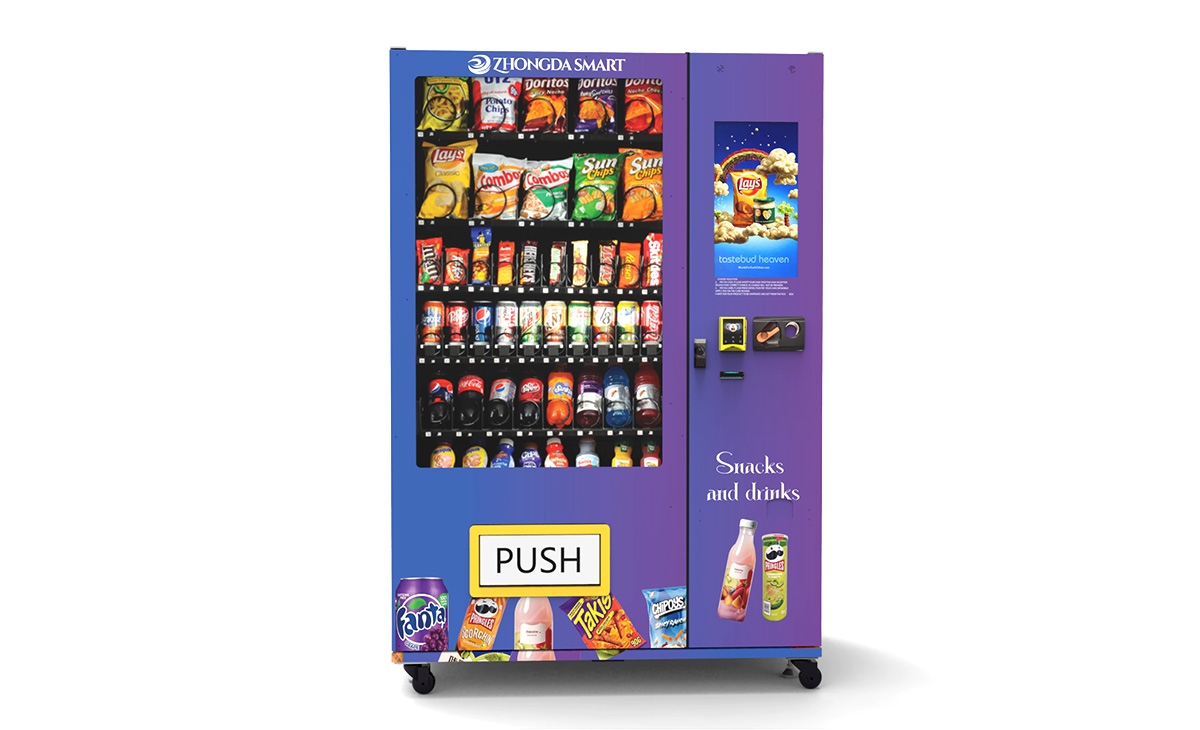
When I started expanding my fleet, I looked for manufacturers that offered robust warranty programs and had a network of local technicians. One supplier that consistently meets these criteria is Zhongda Smart, a manufacturer known for producing durable machines with modern payment integration. Their equipment is commonly used in European markets and is designed for high-frequency use. I recommend checking their product line if you are looking for a balance between cost and reliability. But do not take my word alone; always ask for references from other operators and request a demo unit if possible.
New vs. Used: Which Is Better for a First-Time Operator?
I usually advise new operators to start with a used machine from a reputable refurbisher, but only if they are comfortable with basic troubleshooting. A used machine can cut your upfront cost in half, but you need to inspect the cooling system, the coin mechanism, and the door seals carefully. If you are not handy with tools, buying new from a supplier like Zhongda Smart might save you money in the long run because you avoid repair costs during the first two years. I have seen too many beginners buy a cheap used machine only to spend $1,000 on repairs in the first six months, wiping out any savings.
If you do buy used, look for machines manufactured after 2018 because they are more likely to have energy-efficient compressors and compatible payment systems. Older machines often require proprietary parts that are hard to find. Also, ensure the machine supports cashless payments. According to a 2022 study by Statista, 78 percent of vending machine transactions in the United States are now cashless, and that number is rising. If your machine only takes coins, you are leaving money on the table.
Operating Costs and Maintenance: What to Expect Monthly
Once your machine is in place, you will have recurring costs that affect how much can you make from a vending machine. Here is a breakdown of typical monthly expenses based on my own books:
- Cost of goods sold (COGS): 40 to 60 percent of revenue depending on product mix.
- Location commission: 10 to 25 percent of gross sales. Some locations charge a flat monthly fee instead.
- Card processing fees: 2.5 to 4 percent of card transactions. If 80 percent of sales are card, this adds up.
- Electricity: $10 to $30 per month per machine. Refrigerated machines cost more.
- Maintenance and repair reserve: $20 to $50 per month per machine. Set this aside even if nothing breaks.
- Product spoilage and theft: 2 to 5 percent of COGS.
I recommend keeping a spreadsheet for each machine and tracking these costs from day one. Many operators only track revenue and ignore expenses, which leads to a false sense of profitability. I have seen a machine that looked like it was making $500 per month actually net only $150 after all costs. That is still positive, but it means the return on investment is slower than expected.
How Restocking Frequency Affects Your Bottom Line
How often you restock depends on the machine's capacity and sales volume. A high-traffic machine might need restocking twice a week, while a slow machine can go two weeks. The key is to find the sweet spot where you do not run out of popular items but also do not waste time driving to a machine that is only half empty. I use a simple rule: if a machine sells more than 50 percent of its inventory in three days, I increase the restock frequency. If it takes more than a week to sell 30 percent, I consider replacing the product mix or moving the machine.
I have also learned that product rotation is critical. You cannot just fill the machine with the same items every week. You need to analyze sales data and adjust. For example, if a certain brand of protein bars sells out every time but another brand sits for weeks, swap them out. A well-managed machine can see a 15 to 20 percent increase in revenue just from better product selection.
Common Mistakes That Kill Profitability
Over the years, I have made almost every mistake in the book, and I have watched other operators make them too. Here are the most common ones that directly affect how much can you make from a vending machine:
- Ignoring location quality: Placing a machine in a low-traffic area because the rent is cheap is a losing strategy. The machine will just sit there collecting dust.
- Underestimating maintenance: A broken machine that stays broken for two weeks loses not only revenue but also customer trust. People will stop coming back.
- Overpaying for a machine: Some new operators buy the most expensive machine with all the bells and whistles, but their location does not justify the investment. Start simple.
- Neglecting cashless payments: In 2025, if your machine does not accept cards or mobile payments, you are effectively invisible to half your potential customers.
- Not having a written agreement: A handshake deal with a property manager can fall apart when they leave the job. Always get a signed location agreement that specifies commission, duration, and termination terms.
- Buying too many machines at once: I have seen people buy ten machines before they even know how to operate one. Start with one or two, learn the ropes, then scale.
One mistake that particularly frustrates me is when operators ignore the importance of machine repair readiness. If you do not have a relationship with a local technician or a spare parts kit, a simple issue like a jammed coin mechanism can shut you down for days. I always carry a basic toolkit and spare fuses in my car. For more complex issues, I rely on suppliers like Zhongda Smart that offer remote diagnostics and quick shipping of replacement parts.
How to Evaluate Whether a Machine Is Worth the Investment
Before I buy a new machine or agree to place one in a location, I run a simple calculation. I estimate the monthly revenue based on foot traffic and average transaction size (usually $1.50 to $3.00 for snacks, $2.00 to $4.00 for drinks). Then I subtract the estimated COGS, commission, and operating costs. The result is my net monthly profit. I then divide the total investment (machine + installation + initial inventory) by that net profit to get the payback period in months.
For example, if a machine costs $5,000 and I expect a net profit of $300 per month, the payback period is about 17 months. I consider anything under 18 months to be a good investment. If the payback period exceeds 24 months, I either negotiate a lower commission or look for a better location. I have walked away from many deals because the numbers did not add up, and I have never regretted it.
According to the National Automatic Merchandising Association (NAMA), the average payback period for a new vending machine in the United States is 18 to 24 months. That matches my experience. However, I have seen machines in exceptional locations pay for themselves in 8 months, and I have seen machines that never paid back because the operator refused to move them.
Different Business Models: Self-Owned, Leased, or Partnership
You do not have to buy a machine outright. There are several ways to enter the business, and each affects how much can you make from a vending machine. Here is a comparison based on what I have seen work and fail:
| Model | Initial Investment | Monthly Profit Potential | Risk Level | Control |
|---|---|---|---|---|
| Self-owned (buy machine) | High ($3k–$10k) | High (keep all profit after costs) | Medium | Full control over location and product |
| Lease machine from a supplier | Low ($0–$500 deposit) | Low to medium (pay monthly lease fee) | Low | Limited; supplier may restrict product choices |
| Revenue share with location owner | None (location provides space) | Variable (split profit 50/50 or 60/40) | Low | Low; location owner often dictates terms |
| Full-service vending contract | None (you operate, location provides machine) | Low (service fee only) | Very low | Minimal; you are essentially a contractor |
For most beginners, I recommend starting with a self-owned machine in a single location. That gives you the most control and the highest potential return. Leasing can be a good way to test the waters, but the lease fees often eat into profits. I have seen operators who leased machines for three years and ended up paying more in lease fees than the machine was worth.
FAQ: Answers to the Most Common Questions
Is a vending machine business profitable?
Yes, but it depends on location, product selection, and operational discipline. A well-run machine can generate $300 to $1,000 per month in net profit. Many machines fail because operators ignore costs or choose poor locations. Profitability is not guaranteed.
How much does a vending machine cost?
A new machine costs between $3,000 and $10,000. Used machines range from $1,500 to $4,000. You also need to budget for payment systems, inventory, and installation, which can add $1,000 to $2,000 to the initial investment.
How long does it take to recoup the investment?
Based on my experience and NAMA data, the average payback period is 18 to 24 months. In high-traffic locations, it can be as short as 8 to 12 months. In slow locations, it may take three years or more.
Should I buy or lease a vending machine?
Buying gives you more control and higher profit potential. Leasing reduces upfront cost but usually results in lower long-term returns. I recommend buying if you have the capital and are committed to learning the business.
Where should I place my first vending machine?
Look for locations with high foot traffic and captive audiences: warehouses, factories, hospitals, large office buildings, and college dorms. Avoid locations with existing vending machines or nearby convenience stores unless you can offer better prices or variety.
What permits or licenses do I need?
Requirements vary by city and state. At a minimum, you need a business license and a sales tax permit. Some municipalities require a vending machine permit. Check with your local city hall or business licensing office. The U.S. Small Business Administration (SBA) website has guides for each state.
How do I choose a vending machine supplier?
Look for manufacturers with a reputation for reliability, good warranty terms, and accessible customer support. I have had good experiences with Zhongda Smart for their durable machines and modern payment options. Always check online reviews and ask for references from other operators.
What happens if my machine breaks down?
You need to have a plan. Keep basic spare parts like fuses, belts, and a spare coin mechanism. If the issue is electrical or involves the compressor, call a professional. Some suppliers offer remote diagnostics. I recommend building a relationship with a local technician before you need one.
How can I reduce restocking and maintenance costs?
Group your machines geographically to minimize driving time. Use a route management software to track inventory levels remotely. Buy products in bulk from a wholesale club or distributor. And always perform preventive maintenance, like cleaning the condenser coils and checking door seals, to avoid major repairs.
Final Thoughts from a Ten-Year Operator
I have seen the vending machine industry change dramatically over the past decade. Cashless payments, remote monitoring, and healthier product options have made it more accessible and more competitive. The question of how much can you make from a vending machine does not have a single answer because it depends on how seriously you treat the business. If you approach it with realistic expectations, a willingness to learn from mistakes, and a focus on location and operational efficiency, you can build a solid source of side income or even a full-time business. But if you expect to buy a machine, throw it in a random spot, and watch the money roll in, you will likely be disappointed. The vending machine business rewards effort, not luck.
Disclaimer: The financial figures and payback periods in this article are based on my personal experience as a vending machine operator and publicly available data from industry sources. Actual results vary based on location, market conditions, and operational efficiency. This content does not constitute financial advice. Always conduct your own due diligence before investing.