If you are asking, “how much is it to put a vending machine somewhere,” the short answer is that you are looking at an initial investment ranging from about $3,000 to over $15,000 per machine, depending on the type of equipment and the location setup fees. But that number is only the start. Over the past decade running vending routes across the U.S. and parts of Europe, I have learned that the real cost is not just the hardware—it is the sum of the location commission, inventory, payment system fees, maintenance, and the time you spend restocking. Many newcomers focus only on the machine price, then get blindsided by ongoing expenses. In this guide, I will break down exactly what you need to budget for, where the hidden costs hide, and how to evaluate whether a given spot will actually turn a profit.
Understanding the Vending Machine Business Model
Before we dive into specific numbers, it helps to understand what you are actually buying into. A vending machine is essentially a self-service kiosk that sells products without a cashier. The business model is simple in theory: you buy or lease the machine, stock it with products, and collect the cash or digital payments. In practice, the success of an automated retail operation depends heavily on location, product selection, and operational discipline.
I have seen operators make over $2,000 a month from a single machine in a busy office break room, while the exact same machine in a low-traffic laundromat barely breaks $150. The difference is not the machine—it is the foot traffic and the purchasing behavior of the people passing by.
Most vending machine businesses in North America and Europe operate on a route model, where one operator manages 10 to 50 machines spread across different locations. This spreads the risk and makes the business more scalable. A single machine can be profitable, but the real money comes from having a network of well-placed units.
How Much Does a Vending Machine Actually Cost?
The price of a vending machine varies widely based on type, features, and whether you buy new or used. Here is a realistic breakdown based on what I have seen in the market over the last ten years.
New Machines
A brand-new, basic snack vending machine from a reputable manufacturer typically costs between $3,500 and $6,000. A new combo machine that sells both snacks and cold drinks usually runs between $5,500 and $9,000. If you want a specialized machine for frozen food, fresh food, or high-end coffee, expect to pay $8,000 to $15,000 or more. These prices include basic features like a digital payment system and a modern user interface.
Used or Refurbished Machines
Used machines can be found for $1,500 to $4,000, but you have to be careful. I have bought used machines that worked perfectly for years, and I have also bought ones that needed a vending machine repair within the first month. A refurbished machine from a dealer who replaces the compressor, updates the payment system, and tests the electronics is a safer bet than a private sale from someone who just wants to get rid of an old unit. Budget an extra $300 to $800 for potential repairs or upgrades on a used machine.
Additional Costs at Setup
Putting a vending machine somewhere involves more than just the machine price. You may need to pay a location commission (often 10% to 20% of gross sales), installation fees, and possibly a security deposit. If the location requires a dedicated power outlet or a concrete pad for outdoor placement, those costs can add $200 to $1,000. Many operators also invest in a cellular-based telemetry system to monitor sales remotely, which costs about $15 to $30 per month per machine.
| Machine Type | New Price Range (USD) | Used Price Range (USD) | Typical Monthly Revenue (USD) |
|---|---|---|---|
| Basic Snack Machine | $3,500 – $6,000 | $1,500 – $3,000 | $300 – $1,200 |
| Combo (Snack + Drink) | $5,500 – $9,000 | $2,500 – $4,500 | $500 – $2,000 |
| Fresh/Frozen Food Machine | $8,000 – $15,000 | $3,500 – $7,000 | $800 – $3,000 |
| High-End Coffee Machine | $7,000 – $14,000 | $3,000 – $6,000 | $600 – $2,500 |
Revenue ranges are based on my own route data and industry averages from IBISWorld reports on the vending machine industry in the U.S. (IBISWorld Vending Machine Operators Report). Actual results vary significantly by location and product mix.
Where Should You Put a Vending Machine?
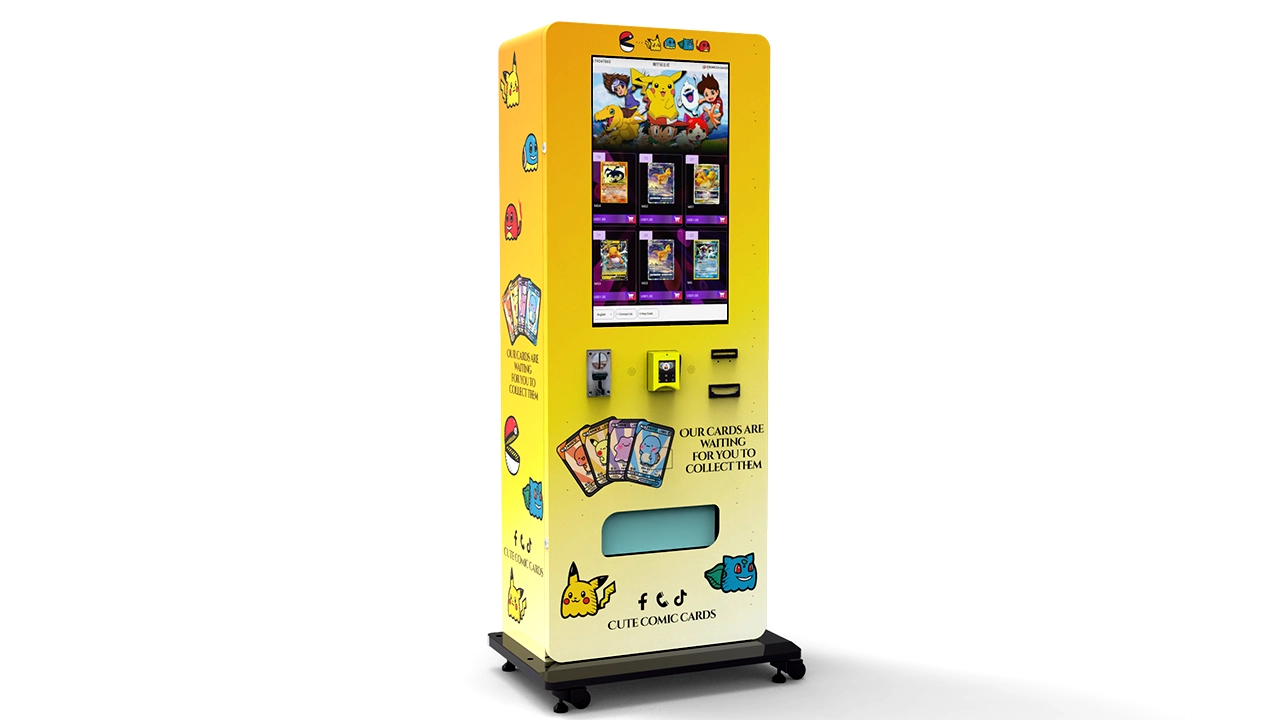
Location is everything in this business. I have placed machines in over 200 different sites, and I can tell you that a mediocre machine in a great location will outperform a great machine in a mediocre location every time. The key is finding places where people are already spending money or have a clear need for a quick purchase.
High-Traffic Locations That Work
Office buildings, especially those with 50 or more employees, are classic vending spots. Break rooms are natural locations because people want snacks and drinks during their shifts. Hospitals and healthcare facilities also perform well because staff and visitors are often on-site for long hours. Schools and universities can be excellent, but you need to check if they have exclusive contracts with a major provider like Aramark or Sodexo.
Industrial sites, warehouses, and manufacturing plants are often overlooked by new operators. These locations have workers who need quick energy breaks, and there is usually less competition than in retail spaces. I have a machine in a small factory that does over $1,800 a month in sales, simply because there are no other food options nearby.
Locations to Avoid
Low-traffic laundromats without a steady stream of customers are usually disappointing. Bars and nightclubs can be problematic because of vandalism and late-night maintenance issues. Very small offices with fewer than 20 people rarely generate enough volume to justify the machine, unless you place a very small unit. Also, avoid locations where the manager expects a high commission—anything above 25% usually eats too much of your margin.
I once placed a machine in a small retail store that seemed busy, but the owner demanded a 30% commission plus a monthly fee. After three months, I was losing money on that spot. I moved the machine to a nearby auto repair shop with no commission, and it started doing three times the sales. The lesson is that the terms of the deal matter as much as the traffic count.
How Much Can You Earn from a Vending Machine?
Revenue depends on location, product pricing, and how often you restock. Based on my experience and data from the National Automatic Merchandising Association (NAMA), a well-placed snack and drink machine can generate $400 to $2,500 per month in gross sales. The average across my own route is about $700 per machine per month, but that includes some underperformers that I should have moved years ago.
Gross profit margins on vending products typically range from 25% to 40%. Snacks like chips and candy bars have higher margins than drinks, but drinks drive more volume. If you sell a bottle of water for $1.50 that cost you $0.50, your gross profit is $1.00, or 67%. But after you account for the location commission (say 15%), the credit card processing fee (about 2.5% to 3.5%), and the cost of your time to restock, your net profit per sale drops significantly.
According to a Statista report on the vending machine industry in the United States, the average vending machine operator earns a net profit margin of about 10% to 15% after all expenses (Statista Vending Machines Industry Overview). That means if your machine does $1,000 in monthly sales, you might take home $100 to $150 after everything. The key to making real money is volume—more machines, better locations, and efficient operations.
Payback Period: How Long Until You Break Even?
This is the question everyone asks, and the honest answer is that it depends heavily on your setup. For a new snack machine costing $5,000 placed in a solid location doing $700 per month in sales with a 30% gross margin, your monthly net profit might be around $150 to $200. At that rate, it would take about 25 to 33 months to break even. That is not a fast return, but it is realistic.
If you buy a used machine for $2,500 and place it in a high-traffic office doing $1,200 per month, your payback period could be as short as 12 to 18 months. I have seen operators achieve payback in under a year with the right combination of cheap equipment and excellent location. I have also seen people lose money because they bought an expensive machine, put it in a bad spot, and never recovered the initial investment.
One mistake I see often is underestimating the ongoing costs. A vending machine repair can cost $150 to $400 per visit. If your machine breaks down twice in a year, that is a significant hit to your profit. Payment system fees, inventory spoilage, and theft also eat into margins. Always budget at least 10% of your gross revenue for maintenance and unexpected expenses.
Key Factors That Affect Profitability
Product Selection and Pricing
What you put in the machine matters as much as where the machine sits. I have learned that variety is critical. If you only stock the same five candy bars and soda, customers get bored. Rotating in new items, seasonal products, and healthier options keeps people coming back. Pricing should be competitive with nearby convenience stores, but you can usually charge a small premium for the convenience of a self-service kiosk.
Payment Systems
In 2025, if your machine does not accept credit cards, Apple Pay, and Google Pay, you are losing at least 30% of potential sales. I switched all my machines to cashless payment systems three years ago, and my average transaction value went up by about 15%. The upfront cost for a cashless reader is about $300 to $600 per machine, plus monthly fees of $10 to $20. It is worth every penny.
Restocking Efficiency
Your time is your biggest hidden cost. If you spend two hours driving to a location, restocking, and driving back, and that machine only generates $200 in sales per month, you are losing money on a per-hour basis. Efficient route planning is essential. I group my machines by geography and restock them on the same day to minimize driving time. For low-volume machines, I restock every two weeks instead of weekly.
Maintenance and Repairs
No matter how good your machine is, it will break eventually. The most common issues are jammed product chutes, faulty coin mechanisms, and refrigeration failures. I always keep a stock of spare parts for my most common machine models. If you are not comfortable doing basic vending machine repair yourself, you will need to budget for a technician, which can cost $75 to $150 per hour. Some operators choose to buy a service contract from the manufacturer, but that adds $200 to $500 per year per machine.
How to Choose a Vending Machine Supplier
Finding a reliable supplier is one of the most important decisions you will make. I have worked with several manufacturers over the years, and I have learned that price is not the only factor. Build quality, warranty terms, availability of spare parts, and customer support matter just as much.
When evaluating suppliers, ask about the following: What is the warranty period? Are spare parts readily available in your region? Does the machine support modern payment systems out of the box? Is the machine energy efficient? Older machines can consume a lot of electricity, which eats into your profit.
One supplier that I have found to be reliable for mid-range equipment is Zhongda Smart. They offer a range of vending machines that are well-suited for the European and North American markets, with modern payment systems and good build quality. I have seen their machines perform well in office and industrial settings. That said, always do your own due diligence. Request a sample or visit a showroom if possible. Talk to other operators in your area about their experiences with different brands.
Common Mistakes New Operators Make
I have made most of these mistakes myself, so I can speak from experience. The first mistake is buying a machine before securing a location. It is tempting to buy a machine and then look for a spot, but that often leads to settling for a bad location. Always lock down the location first, then buy the machine that fits that space and traffic profile.
The second mistake is underestimating the importance of the payment system. I have seen operators buy a perfectly good machine but skip the cashless upgrade to save money. Then they wonder why sales are low. In 2025, a vending machine without digital payment is like a store that only takes cash—you are turning away customers.
The third mistake is ignoring the data. Most modern machines come with telemetry that tracks sales, inventory levels, and machine health. If you do not use this data, you are flying blind. I have caught a failing compressor early because the telemetry showed a temperature spike, saving me hundreds of dollars in spoiled inventory. Use the data to decide which products to stock and which locations to keep or drop.
Another common error is placing machines in locations with no clear demand. Just because a place has people does not mean those people want to buy from a vending machine. I once placed a machine in a busy gym, thinking members would buy protein bars and water. What I did not realize was that the gym had a juice bar that sold the same items. My machine did poorly until I moved it to a nearby office building.
Comparing Business Models: Buy, Lease, or Revenue Share
Not everyone wants to buy a machine outright. There are several ways to get into the vending business, and each has its pros and cons.
| Model | Upfront Cost | Monthly Cost | Control | Best For |
|---|---|---|---|---|
| Buy New | $3,500 – $15,000 | Low (maintenance only) | Full control | Operators with capital and long-term plans |
| Buy Used | $1,500 – $5,000 | Low (repairs may be higher) | Full control | Budget-conscious operators |
| Lease | $0 – $500 deposit | $100 – $300 per month | Limited (terms vary) | New operators testing the waters |
| Revenue Share | $0 | Share of sales (often 50/50) | Very limited | Location owners who want passive income |
Leasing can be a good way to start with lower risk, but you usually end up paying more over time. Revenue share models are common with location partners who want to split the profit without any upfront investment. I have done revenue share deals with a few locations, and they work well when both parties trust each other. But make sure the contract is clear about who handles restocking, maintenance, and repairs.
Legal and Regulatory Considerations
In the United States, vending machines are subject to state and local regulations. You will need a business license and a seller s permit in most states. If you sell food or beverages, you may need a food handler s permit and must comply with local health department rules. The FDA requires that packaged foods sold in vending machines have proper labeling, including allergen information and nutrition facts.
In Europe, regulations vary by country. For example, in France, any machine that sells food must comply with the hygiene standards set by the Direction Générale de l Alimentation (DGAL). Some countries require a declaration to the local prefecture. In the UK, you need to register with the local authority if you sell food from a vending machine. According to the European Vending Association, compliance with the EU Food Information to Consumers Regulation (FIC) is mandatory for all packaged products sold through automated retail systems (European Vending Association).
Taxes are another factor. In the U.S., you generally need to collect sales tax on vending machine sales, and the rate depends on the state and the type of product. Some states have specific vending machine tax rules. In Europe, VAT applies to vending sales, and the rate varies by country. Always consult a local accountant or tax professional before you start.
How to Evaluate a Potential Location
Before you agree to place a machine, do a simple evaluation. Count the number of people who pass by the location during peak hours. For an office building, check how many employees work there and whether they have easy access to other food options. For a hospital, look at the visitor traffic and the hours of operation of the cafeteria.
I also ask the location owner about their utility costs. If they expect me to pay for electricity separately, that is an added expense. Most locations provide power for free because they see the vending machine as an amenity for their employees or customers. If they want to charge you for electricity, factor in about $20 to $50 per month.
Another tip: talk to the people who work or spend time at the location. Ask them what products they would want from a vending machine. I once placed a machine in a warehouse after the manager told me workers wanted energy drinks and protein bars. That machine did well from day one because I stocked exactly what the customers wanted.
When to Move or Remove a Machine
Not every location works out. I have a rule: if a machine does not generate at least $200 per month in gross sales after six months, I move it. The cost of restocking and maintaining a low-performing machine is not worth the effort. Sometimes the location changes—a new cafeteria opens, the business downsizes, or foot traffic drops for reasons beyond your control.
I keep a spreadsheet of all my machines with monthly sales, expenses, and notes. When a machine consistently underperforms, I give the location notice and pull the machine. I have moved machines from failing locations to new spots and seen sales triple. Do not get emotionally attached to a location. The machine is a business tool, not a decoration.
Final Thoughts on Starting a Vending Machine Business
Starting a vending machine route can be a solid small business if you go in with realistic expectations. It is not a get-rich-quick scheme, and it is not passive income—you have to restock, maintain, and manage the machines. But with the right locations, good equipment, and efficient operations, it can generate steady cash flow.
If you are serious about getting into this business, start small. Buy one or two used machines, place them in good locations, and learn the ropes before scaling up. Track every expense and every sale. Talk to other operators. And always keep learning—the market changes, payment technology evolves, and customer preferences shift.
There is no single answer to the question of how much it is to put a vending machine somewhere, because the cost depends on your choices. But if you approach it with discipline and a willingness to learn from mistakes, the vending business can be a rewarding venture.
Frequently Asked Questions
Are vending machines profitable?
Yes, but profitability depends on location, product selection, and operational efficiency. A well-placed machine can generate $400 to $2,500 per month in gross sales, with net profit margins typically between 10% and 15% after all expenses.
How much does a vending machine cost?
A new machine costs between $3,500 and $15,000 depending on the type and features. Used machines can be found for $1,500 to $4,000, but may require repairs or upgrades.
How long does it take to break even?
Payback periods range from 12 to 36 months, depending on the machine cost, location performance, and operating expenses. A used machine in a strong location can break even in a year or less.
Should I buy or lease a vending machine?
Buying gives you full control and higher long-term profit. Leasing is lower risk upfront but costs more over time. Revenue share models are also available if you want to partner with a location owner.
Where is the best place to put a vending machine?
Office buildings, hospitals, industrial sites, schools, and warehouses are typically strong locations. Avoid low-traffic areas and locations with high commission demands.
What permits do I need?
In the U.S., you need a business license and seller s permit. Food sales may require a food handler s permit. In Europe, regulations vary by country, but compliance with local food safety and tax laws is mandatory.
How do I choose a vending machine supplier?
Look for reliable build quality, warranty terms, spare parts availability, and modern payment system support. Zhongda Smart is one option worth considering for mid-range equipment. Always do your own research and talk to other operators.
What happens if the machine breaks?
You will need to either repair it yourself or hire a technician. Basic vending machine repair skills are valuable. Keep spare parts on hand and budget for unexpected service calls.
How can I reduce restocking costs?
Plan efficient routes, group machines by geography, and restock based on sales data rather than a fixed schedule. Use telemetry to monitor inventory levels and avoid unnecessary trips.
Can I run a vending machine business part-time?
Yes, many operators start part-time with a small route of 5 to 10 machines. Just be realistic about the time required for restocking, maintenance, and administration.
- online service