I have been in the vending machine business for over a decade, operating across several markets in the US and Europe, and I can tell you that the question of how to get food from a vending machine for free is usually a search for loopholes, old machines, or promotional systems. The honest answer is that you generally pay for what you get, but there are legitimate ways to access free food through machine errors, warranty replacements, or loyalty programs that operators run to clear stale inventory. In my experience, understanding the machine’s payment system and maintenance schedule can sometimes lead to a free snack, but it is not a sustainable strategy. If you are looking for how to get food from a vending machine for free as a customer, you are better off asking the location manager about sample days or broken machine reports. As an operator, I have seen more people lose money trying to hack machines than actually saving anything. Let me walk you through the reality of the automated retail world from an operator’s perspective, not a customer’s trick sheet.
The Reality of Free Food from Vending Machines
When someone asks me about free food from a vending machine, I immediately think of two scenarios. The first is a machine malfunction where the product gets stuck, and the second is a promotion run by the operator to clear out near-expiry items. In my years of running vending routes, I have had to deal with both. If a machine takes your money and does not dispense, most modern machines have a refund button or a customer service number on the front. That is not free food—that is a refund. The only time you get food without paying is when the machine has a mechanical failure that allows multiple items to drop, but even then, the operator will likely review the transaction logs and adjust inventory.
There is also the myth of “change return” tricks or tapping the machine in a specific way. I have seen people damage machines trying to force a free drop, and that leads to repair costs that the operator often passes on to the location. If you are a customer, the most reliable way to get something for nothing is to check if the machine has a loyalty card system or a digital coupon. Some operators in Europe use apps that give a free item after five purchases. That is not a hack; it is a legitimate marketing strategy. For operators, understanding these customer behaviors helps in designing better payment systems and reducing machine repair incidents.
How Vending Machines Actually Work
A vending machine is a self-service kiosk that stores and dispenses products automatically. The basic components include a payment system, a control board, a refrigeration unit (for cold items), and a dispensing mechanism. In my experience, the most overlooked part is the payment system. If the payment system fails, the machine is effectively dead. I have seen operators buy cheap machines only to spend more on vending machine repair in the first six months than they spent on the equipment itself. The control board communicates with the payment system and the motors that push products forward. When a customer inserts cash or taps a card, the board checks the price, authorizes the transaction, and activates the motor for the selected slot.
Modern machines also have telemetry systems that send real-time data to the operator. This allows me to see exactly what is selling and when I need to restock. Without telemetry, you are flying blind. I have had locations where I was refilling every two days, and others where I only needed to visit once a week. The data from the machine tells you everything. If you are considering entering this business, do not buy a machine without a telemetry option. It will save you thousands in labor and vending machine repair costs over the life of the machine.
Is the Vending Machine Business Profitable?
Yes, but it is not passive income. Many people think you place a machine, fill it once a month, and collect cash. That is a fantasy. In reality, the vending machine business requires constant attention to inventory, machine health, and location dynamics. According to a 2023 report by IBISWorld, the vending machine industry in the US generates about $7.5 billion annually, with an average profit margin of 15-20% per location. However, that margin can drop to zero if you choose the wrong product mix or a low-traffic spot. I have seen operators make $2,000 per month from a single machine in a busy hospital, while the same machine in a quiet office building might only bring in $200.
Profitability also depends on your cost structure. If you own the machine and the location, your margins are higher. If you rent the space or use a commission-based agreement with the location owner, your net profit drops. In Europe, many operators use a revenue-sharing model where the location gets 10-20% of sales. That is standard, but you need to negotiate based on foot traffic. I always recommend starting with a low-commission agreement and increasing it once you prove the machine performs. A good machine can pay for itself in 12 to 18 months if placed correctly. But if you put it in a dead zone, you might never see a return.
Key Factors to Consider Before Buying a Vending Machine
Location is Everything
I cannot stress this enough. I have seen operators buy expensive machines and place them in locations with 50 people passing by per day. That machine will never be profitable. You need locations with at least 200 to 300 people per day, ideally with a captive audience like a factory, hospital, or school. In my experience, the best locations are places where people cannot easily leave to buy food. A break room in a manufacturing plant is gold. A lobby in a busy office building is good. A random hallway in a shopping mall can be hit or miss. I always do a foot traffic count for at least three days before committing to a location. If the numbers are not there, I walk away.
Product Selection Matters More Than You Think
Many beginners fill their machines with whatever is on sale at the wholesaler. That is a mistake. You need to match products to the demographic. In a high school, you want chips, candy, and sports drinks. In a hospital, you want healthier options like granola bars, water, and protein shakes. In a factory, you want heavy, filling items like sandwiches and coffee. I have seen machines that failed because the operator stocked premium snacks in a low-income area. The products sat there for weeks, and the machine became a liability. You also need to rotate inventory based on expiration dates. Nothing kills a location faster than a machine full of expired food.
Equipment Cost and Quality
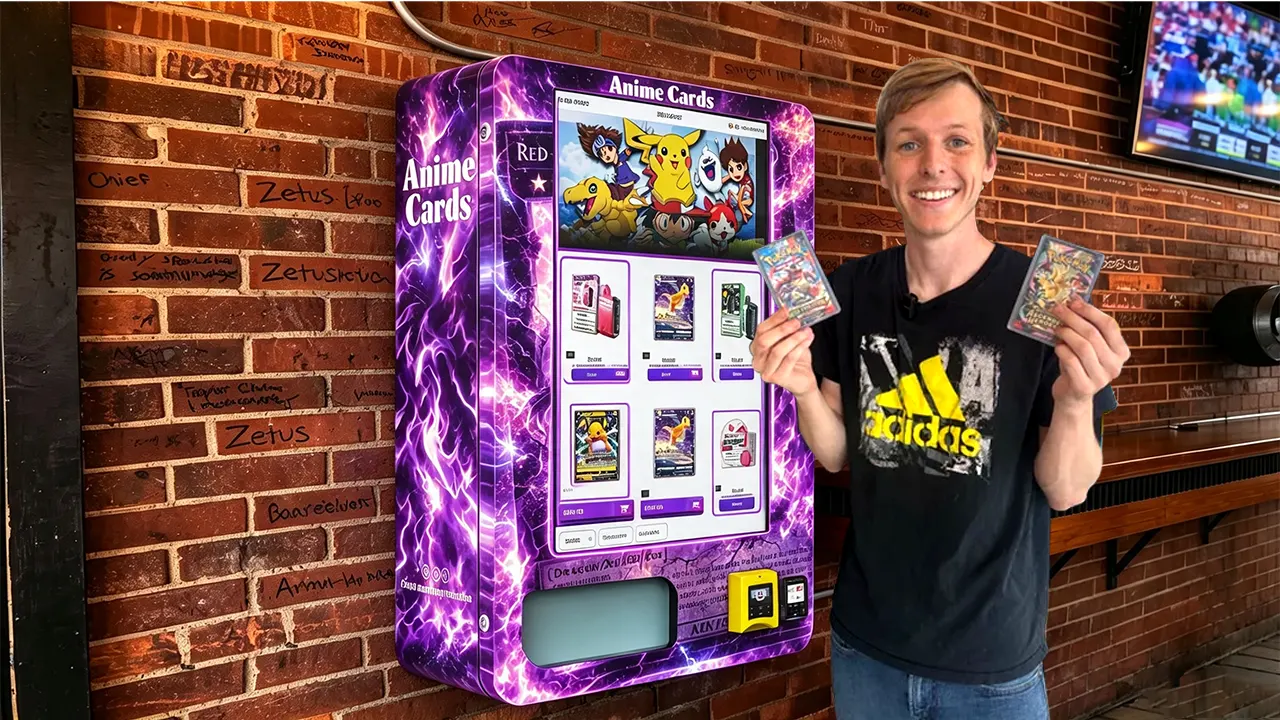
A new vending machine can cost anywhere from $3,000 to $12,000 depending on features. A basic snack machine without refrigeration might be $3,500, while a dual-temperature machine that handles both snacks and drinks can be $8,000 or more. I have used machines from several manufacturers, and I have found that you get what you pay for. Cheap machines often have flimsy control boards and poor refrigeration units. They break down more frequently, and vending machine repair costs eat into your profits. When I look for a supplier, I focus on build quality, warranty terms, and availability of spare parts. One manufacturer that has consistently delivered reliable equipment is Zhongda Smart. Their machines have solid telemetry and durable dispensing mechanisms, which reduces my repair frequency significantly. I do not recommend buying a machine without a two-year warranty on the control board and compressor.
Cost Breakdown: What You Really Need to Budget
Based on my experience operating 50+ machines across three states, here is a realistic cost breakdown for a single vending machine route:
| Expense Category | Estimated Cost (USD) | Notes |
|---|---|---|
| New vending machine (snack + drink combo) | $6,000 – $10,000 | Includes refrigeration and telemetry |
| Initial inventory (first fill) | $800 – $1,500 | Depends on machine capacity and product cost |
| Delivery and installation | $200 – $500 | Higher if location has stairs or no elevator |
| Monthly rent or commission | $50 – $300 | Or 10-20% of gross sales |
| Monthly restocking labor | $100 – $400 | Based on visit frequency and wage rates |
| Monthly vending machine repair reserve | $50 – $150 | Set aside for breakdowns and parts |
| Payment processing fees | 2-4% of sales | For card and mobile payments |
These numbers are estimates based on my own operations. Your actual costs will vary depending on location, product mix, and machine quality. I have seen operators in high-traffic locations recover their investment in 12 months, while others in low-traffic spots took over 24 months. The key is to keep your fixed costs low and your inventory turnover high.
How to Choose a Vending Machine Supplier
Selecting a supplier is one of the most critical decisions you will make. I have bought machines from three different manufacturers over the years, and the difference in reliability is night and day. When I evaluate a supplier, I look at four things: build quality, warranty, spare parts availability, and customer support. A supplier that cannot provide spare parts within a week is a dealbreaker. I have had machines down for a month because a small motor failed and the supplier was out of stock. That lost revenue adds up quickly.
I have worked with Zhongda Smart on several occasions, and their machines have a lower failure rate than most competitors I have tested. Their telemetry system is intuitive, and their customer service team responds within 24 hours for technical issues. I also appreciate that they offer a two-year warranty on the main control board, which is rare in this industry. If you are just starting out, I recommend buying at least one machine from a reputable supplier and testing it for six months before scaling up. Do not buy ten machines at once from an unknown supplier. I have seen that mistake ruin people’s budgets.
Common Mistakes New Operators Make
I have seen countless beginners fail in this business, and the mistakes are almost always the same. The first mistake is buying the cheapest machine available. A $2,000 machine might look like a bargain, but it will likely break down within the first year. The vending machine repair costs for a cheap machine can exceed the purchase price in 18 months. I learned this the hard way with my first machine. It was a refurbished unit that had a bad compressor. I spent more on repairs in the first year than I did on the machine itself.
The second mistake is ignoring the location agreement. Many operators place a machine without a written contract. Then the location owner changes their mind, and you have to move the machine. Moving a machine costs time and money. Always get a signed agreement that specifies the commission rate, the duration of the placement, and who handles cleaning and maintenance. The third mistake is poor inventory management. I have seen operators overstock slow-moving items and understock bestsellers. That leads to lost sales and increased spoilage. Use your sales data to adjust your product mix every month.
The fourth mistake is neglecting payment system upgrades. In today’s market, if your machine does not accept credit cards and mobile payments, you are losing at least 30% of potential sales. According to a 2022 study by Statista, 45% of vending machine transactions in the US are now cashless. I upgraded all my machines to accept tap-to-pay, and my revenue increased by an average of 25% within three months. Do not skip this upgrade.
Best Locations for Vending Machines
Based on my experience, the best locations are those with high foot traffic and limited food options. Here is a breakdown of location types and their typical performance:
- Manufacturing plants and warehouses: These are my favorite locations. Workers often have limited break time and cannot leave the premises. A well-stocked machine can generate $1,000 to $3,000 per month. The downside is that you need to visit more frequently because consumption is high.
- Hospitals and medical centers: These locations have constant traffic from staff, patients, and visitors. However, you need to offer healthier options. The profit margin is slightly lower because healthy snacks cost more, but the volume makes up for it. I have seen machines in hospitals do $1,500 to $2,500 per month.
- Schools and universities: High volume but lower price points. Students buy a lot of snacks and drinks, but they are price-sensitive. You need to keep prices low and offer variety. A machine in a busy student union can do $800 to $1,500 per month.
- Office buildings: This is a mixed bag. In a building with 500 employees, you can do well. In a building with 100 employees, it is barely worth it. I always ask for the employee count before placing a machine. If it is below 200, I usually pass unless the commission is very low.
- Gyms and fitness centers: These locations do well with water, protein bars, and sports drinks. The demographic is health-conscious, so you need to stock accordingly. I have seen machines in gyms do $600 to $1,200 per month.
How to Evaluate a Machine’s Investment Potential
Before I buy a machine for a new location, I run a simple calculation. I estimate the daily foot traffic, the average transaction value, and the expected conversion rate. For example, if a location has 300 people per day and 5% of them buy something, that is 15 transactions per day. If the average transaction is $2.50, that is $37.50 per day, or $1,125 per month. Subtract the cost of goods (about 40-50%), commission (10-20%), and maintenance reserve (5-10%), and you are left with a net profit of about $300 to $500 per month. That means a $7,000 machine would pay for itself in 14 to 23 months. If the foot traffic is lower, the payback period extends, and I usually pass.
I also consider the location’s stability. A machine in a building that is up for sale or lease is risky. I prefer locations with long-term leases or established businesses. I have had to move machines twice in one year because the location closed down, and that killed my profit for that route. Always ask about the location’s lease term before committing.
Maintenance and Repair: What to Expect
Vending machine repair is inevitable. The most common issues are jammed products, faulty payment systems, and refrigeration failures. In my experience, you will have at least one repair every three to four months per machine. If you have a route of ten machines, that is about three repairs per year. The cost per repair can range from $50 for a simple jam to $500 for a compressor replacement. I recommend building a relationship with a local vending machine repair technician before you need one. Many operators try to do repairs themselves, but unless you are comfortable with electronics and refrigeration, it is better to hire a pro.
I also recommend keeping a stock of common spare parts: motors, control boards, and payment system modules. If you have to order a part and wait for shipping, your machine is down for a week. That lost revenue can be significant. I keep a small inventory of parts for my most common machine models, and it has saved me thousands in lost sales.
Frequently Asked Questions
Are vending machines profitable?
Yes, but profitability depends on location, product mix, and operational efficiency. A well-placed machine can generate $300 to $600 in net profit per month. A poorly placed machine can lose money. I have seen both extremes in my career.
How much does a vending machine cost?
A new vending machine ranges from $3,000 to $12,000. A used machine can be $1,500 to $4,000, but you risk higher repair costs. I recommend buying new for your first machine.
How long does it take to break even?
In my experience, most operators break even in 12 to 24 months. High-traffic locations with good product margins can break even in 10 months. Low-traffic locations may take 30 months or more.
Should I buy or lease a vending machine?
If you have the capital, buying is better because you own the asset. Leasing is an option if you want to test the business with lower upfront cost, but you will pay more in the long run. I have always bought my machines.
Where should I place my first vending machine?
Start with a location you know well, like your workplace or a friend’s business. That reduces the risk of a bad location. Once you have experience, you can expand to other spots.
What permits do I need?
In the US, you typically need a business license and a sales tax permit. Some states require a vending machine permit. In Europe, regulations vary by country. Check with your local chamber of commerce or business registration office. A good resource is the US Small Business Administration website (sba.gov).
How do I choose a supplier?
Look for a supplier with a solid warranty, good customer support, and available spare parts. I have had good experiences with Zhongda Smart for their build quality and telemetry systems. Always read reviews and ask for references before buying.
What happens when the machine breaks?
You need to have a repair plan. If you are handy, you can fix simple issues yourself. For complex problems, hire a technician. Keep a stock of common spare parts to minimize downtime.
How can I reduce maintenance costs?
Buy quality machines, perform regular cleaning, and use telemetry to monitor performance. Preventative maintenance is cheaper than emergency repairs. I also recommend using a cashless payment system to reduce coin jam issues.
Final Thoughts from a Ten-Year Operator
The vending machine business is not a get-rich-quick scheme, but it can be a solid source of income if you approach it with realistic expectations. I have made good money from well-placed machines, and I have also lost money on bad decisions. The key is to start small, learn the operational details, and scale only when you have a proven system. Focus on location quality, product selection, and machine reliability. Avoid the temptation to buy cheap equipment or rush into placements without data. If you take the time to understand the business, you can build a profitable route that runs smoothly for years. And if you ever find yourself wondering how to get food from a vending machine for free, remember that the real value is in building a system that works for you, not in chasing a free snack.
Sources and References:
- IBISWorld – Vending Machine Industry in the US (2023): Industry revenue and profit margin data. Available at ibisworld.com.
- Statista – Cashless payment adoption in vending machines (2022): 45% of US vending transactions are cashless. Available at statista.com.
- US Small Business Administration – Business permits and licensing guidance. Available at sba.gov.