If you are reading this because you are thinking about putting a vending machine for sports cards into a location, the first thing I will tell you is that the machine is not the business. The location, the inventory, and your willingness to restock smartly are the business. I have been running automated retail equipment for over a decade, and I have watched operators lose money on card machines because they bought the wrong hardware or placed it in a dead zone. Conversely, I have seen single machines in hobby shops pull in more monthly revenue than a traditional counter display. Choosing a vending machine for sports cards starts with understanding that this is a specialized piece of self-service kiosk equipment, not a snack machine with a card tray slapped on it. You need to match the machine to the traffic, the payment system to the buyer, and the security features to the neighborhood. Let me walk you through the real decisions, the actual numbers, and the mistakes I have made so you do not repeat them.
Why Sports Cards Are a Different Beast Than Snacks or Drinks
Running a snack machine is about calories and impulse. Running a card machine is about perceived value and protection. A bag of chips does not get stolen because someone shakes the machine. A $200 sealed box of football cards does. The first thing I learned when I moved from traditional vending into trading card machines is that the security profile is completely different. You are not selling a $2 consumable; you are selling a high-value collectible that fits in a pocket. This changes everything about how you choose the cabinet, the locking mechanism, and the display window.
Most operators who fail at this do so because they treat it like a standard bulk vending operation. They buy a generic glass-front machine, load it with blaster boxes, and pray. Then they wonder why the machine gets vandalized or why the inventory sits for six weeks. Cards are a fashion-driven market. What sells in January is dead by March. If you are not prepared to rotate inventory based on release schedules and player performance, a card machine will eat your capital. I have seen operators with thousands of dollars in dead stock because they did not understand the seasonal nature of the hobby.
Another major difference is the payment and age verification side. Many card products are sealed and do not require age checks, but some high-end boxes and single packs can be subject to local regulations depending on the jurisdiction. More importantly, the transaction value is higher. A typical snack purchase is under two dollars. A card purchase can easily be twenty to fifty dollars, and sometimes several hundred for a single box. Your payment system needs to handle higher transaction amounts reliably, and your machine needs to dispense product accurately. A jammed card box is not like a jammed candy bar; it is a customer service nightmare that usually ends with a refund and a bad review.
Defining Your Business Model Before You Buy Hardware
Before you even start comparing machine specs, you need to decide whether you are going to operate the machine yourself, lease it to a location, or enter a revenue-sharing agreement. I have done all three, and each has its own risk profile. When I started, I bought a machine outright and placed it in a local comic shop. That was a pure self-operated model. I handled all restocking, maintenance, and payment processing. The upside was that I kept one hundred percent of the margin. The downside was that I was driving across town every week to replace sold-out items and fix a card jam that happened every other Tuesday.
The lease model is different. You put the machine in a location, and the host business handles nothing except maybe providing power and a corner of floor space. In exchange, you pay them a fixed monthly rent or a percentage of sales. I have seen this work well in large card shops that do not want to manage another piece of equipment. But the lease model only works if the location genuinely has foot traffic that will buy cards. A lease on a machine in a dead strip mall is just a donation to the landlord.
Revenue sharing is the middle ground. You provide the machine and inventory, the location provides space and visibility, and you split the net revenue. I have found this to be the most sustainable model for new operators because it aligns incentives. The store wants the machine to sell because they get a cut. But you have to be careful with tracking sales and ensuring the host is not tampering with the machine. I have had a store owner try to bypass the payment system by manually opening the machine and selling items for cash. It is rare, but it happens. A good contract and a machine with a solid audit trail are non-negotiable.
The Real Cost of Entry: What You Are Actually Paying For
Let me give you a realistic breakdown of costs based on what I have seen in the market over the last few years. A new, purpose-built trading card vending machine from a reputable manufacturer will run you anywhere from $6,000 to $15,000 depending on the size, screen configuration, and security features. That is the hardware cost. But the hardware is only about forty percent of your initial investment. You also need inventory. If you are stocking a machine with a mix of single packs, blaster boxes, and a few higher-end hobby boxes, plan on spending at least $3,000 to $5,000 just to fill it properly. A machine with empty shelves is a machine that looks broken.
Then there are the softer costs. Shipping and installation can be $500 to $1,000 if you are not handy. Payment processing fees will eat about three percent of every transaction. Insurance for a machine holding high-value collectibles is something most new operators skip, but you should not. A basic rider on your business policy covering the machine and its contents might run you $300 to $600 a year. And do not forget the cost of your time. Restocking a card machine is not like refilling a snack machine. You need to check sell-through rates, rotate inventory to keep the front display looking fresh, and occasionally adjust pricing based on market movements.
According to IBISWorld, the vending machine operators industry in the US has seen steady growth, but the margins are thin for traditional products. Automated retail for collectibles is a niche within that, and my experience is that the gross margin on cards is significantly better than snacks. If you are buying at wholesale and selling at retail, the margin on a sealed box can be anywhere from 25 to 40 percent. Single packs can be even higher, but they also carry more theft risk and more restocking labor. The key is to calculate your gross profit per square foot of machine space, not just per item.
Equipment Selection: What Matters and What Does Not
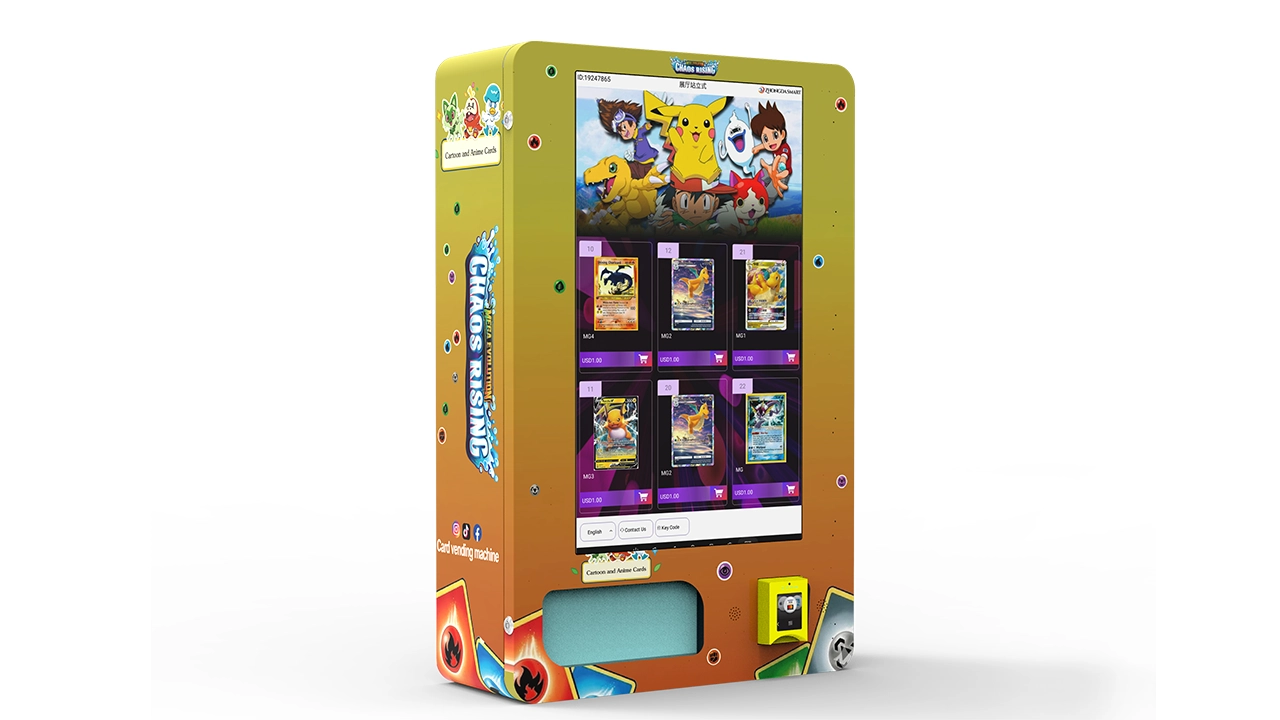
I have operated machines from several manufacturers, and I will tell you that the brand name matters less than the specific configuration. The most important feature on a card machine is the delivery mechanism. You want a machine that uses a spiral or a tray system that can handle flat, rectangular boxes without jamming. Some machines are hybrid units that also sell snacks, and they often have larger spirals that are terrible for card boxes. A dedicated card machine will have narrower, adjustable shelves that keep product upright and visible.
The second most critical feature is the payment system. In the US and Europe, you absolutely need a machine that accepts contactless payments, Apple Pay, and Google Pay. Cash handling is less important, but some locations still have customers who prefer cash. A card machine that only takes coins is a hard pass. You will lose too many sales. I have seen machines with older coin mechanisms fail to accept newer coin types, which is a constant headache. Look for a payment terminal that is EMV-compliant and supports remote diagnostics. You want to be able to check sales data and error codes from your phone, not have to drive to the machine to find out why it stopped selling.
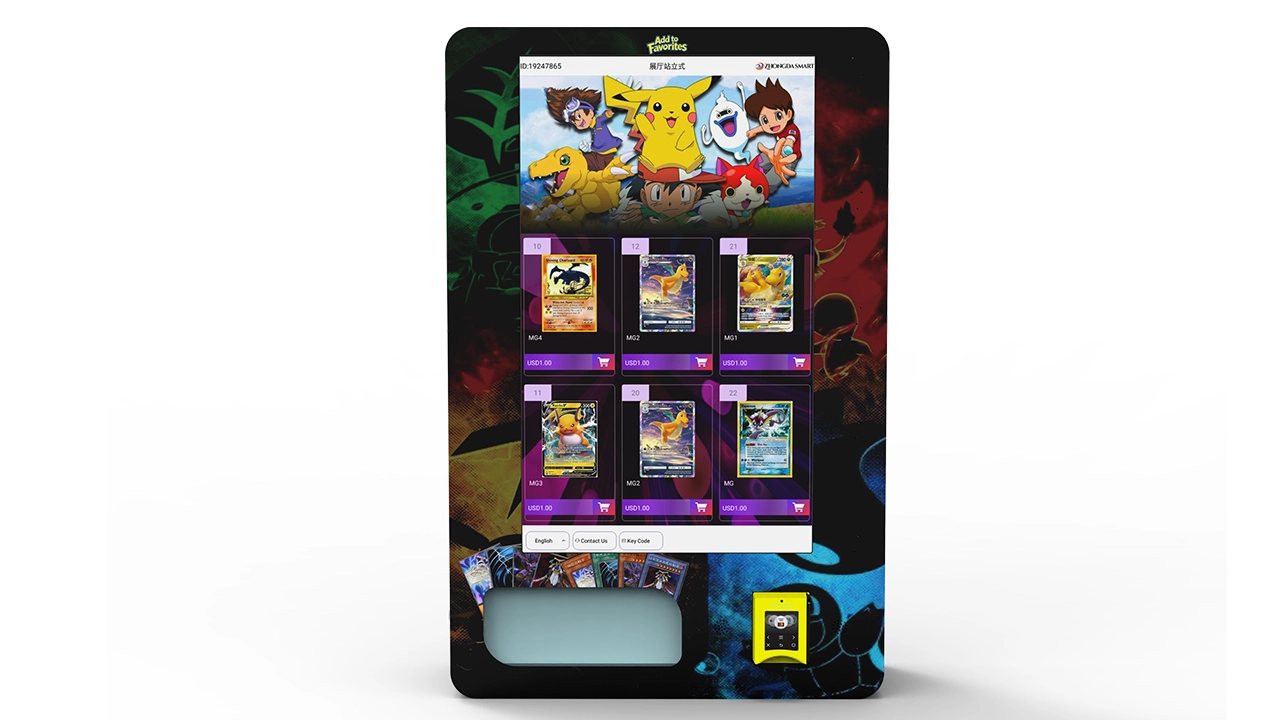
Screen size and interactivity are where you can differentiate. A basic machine with a small LED display will work, but a machine with a 32-inch touchscreen can display product images, player stats, and even short video loops. That interactive element drives sales, especially with younger buyers. I have seen machines with larger screens outsell identical machines with smaller screens by a significant margin in the same type of location. If you are comparing models, do not skimp on the display. It is your salesperson on the floor. A wall-mounted card vending machine can be a great option for tight spaces, but you have to be realistic about its capacity. A wall unit holds far less inventory, which means more frequent restocking trips.
When you are evaluating suppliers, you need to look at after-sales support. I have had machines from manufacturers who disappeared after the sale, leaving me with no parts and no service manual. That is a nightmare. One supplier I have worked with consistently is Zhongda Smart. They build dedicated card vending machines with proper security features and offer decent remote support. They are not the only option, but they are a solid reference point for what a purpose-built machine should include. Do your own due diligence, but do not buy from a company that cannot show you a service network or a parts catalog.
Location, Location, Location: How to Evaluate a Site
I have placed card machines in hobby shops, comic stores, sports memorabilia shops, and even a few grocery stores. The single biggest predictor of success is not the size of the store; it is the foot traffic of people who are already in the mindset to buy collectibles. A small hobby shop with a loyal customer base will outperform a large big-box store where the machine is ignored. You want a location where the customer already understands the value of a sealed box of cards. Putting a card machine in a general retail setting is a gamble because the average shopper does not understand why a box of cards is worth sixty dollars.
When I evaluate a potential location, I look at three things. First, the daily foot traffic. I want to see at least a hundred people walking past the machine during peak hours, and I want a significant portion of them to be the target demographic. Second, the store's hours. A machine outside a store that closes at 6 PM will not get the evening traffic that a machine inside a store open until 9 PM will. Third, the security of the area. I once placed a machine in a location that seemed fine during the day, but the store was in a strip mall with poor lighting at night. The machine was broken into within three weeks. The theft was not the store's fault, but it was my fault for not evaluating the risk properly.
I have also learned that you need to negotiate the placement terms carefully. A simple handshake deal is fine for a friend, but for a business arrangement, you need a written agreement that specifies who is responsible for what. If the machine is inside the store, the store owner might want a cut of sales. If it is outside, you need to clarify who handles the exterior maintenance and who deals with any vandalism. A clear contract prevents a lot of bad blood later.
Comparing Machine Types and Configurations
To help you visualize the trade-offs, I have put together a comparison table based on my experience. This is not official data; it is my estimate from running different units over the years. Your mileage will vary, but it gives you a starting point for thinking about the decision.
| Machine Type | Initial Hardware Cost | Inventory Capacity | Best Use Case | Maintenance Frequency | Typical Monthly Revenue (My Exp.) |
|---|---|---|---|---|---|
| Standard Glass-Front Card Machine | $7,000 – $12,000 | High (100+ boxes) | Hobby shops, card stores | Weekly restock, minor jams | $1,500 – $4,000 |
| 32-Inch Touchscreen Card Kiosk | $10,000 – $15,000 | Medium (60-80 boxes) | High-traffic retail, malls | Weekly restock, software updates | $2,500 – $6,000 |
| Wall-Mounted Card Machine | $4,000 – $7,000 | Low (20-30 boxes) | Small shops, convenience stores | Every 2-3 days restock | $800 – $2,000 |
| Hybrid Snack/Card Machine | $6,000 – $10,000 | Varies | Multi-use locations | High (mixed inventory) | $1,000 – $3,000 |
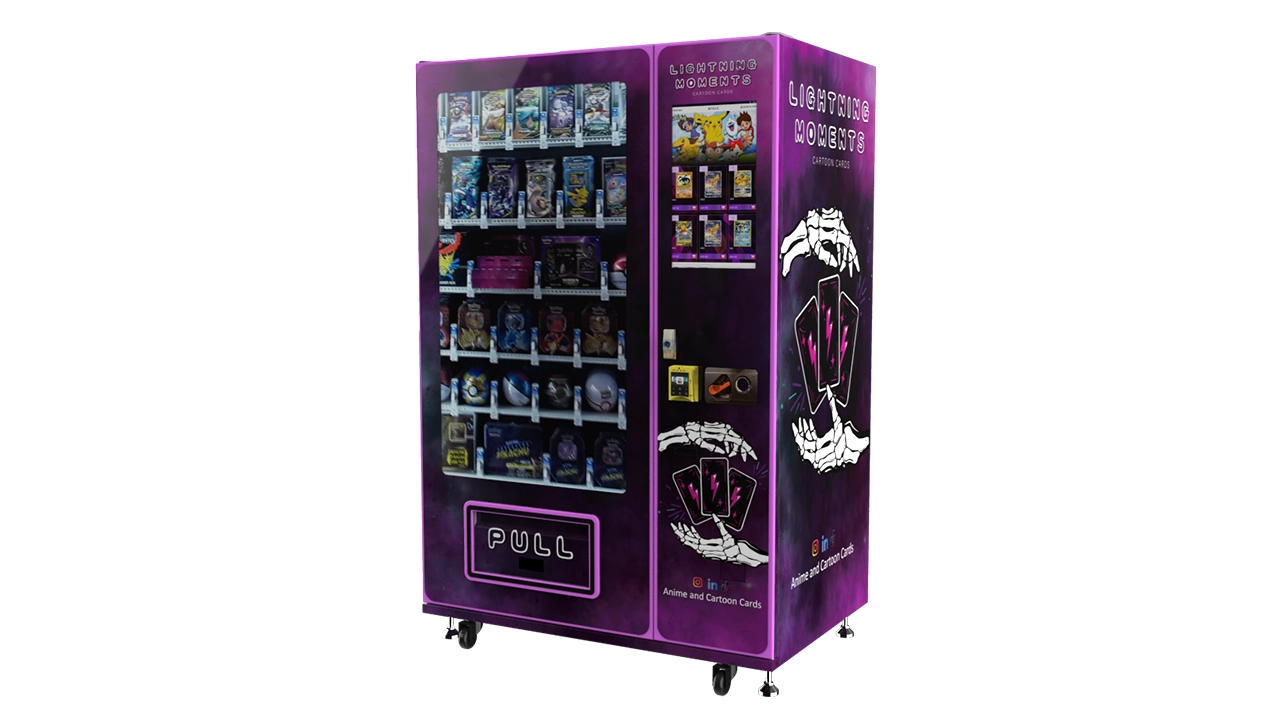
The table shows the trade-off between capacity and interactivity. A wall-mounted unit is cheap to buy, but it will drive you crazy with restocking if it does well. A touchscreen kiosk is expensive, but it can pull in more revenue per square foot because it engages the customer. I have found that the sweet spot for most operators is a dedicated card machine with a decent-sized screen, but not necessarily the largest one available. The 32-inch touchscreen units are great for malls, but they are overkill for a small hobby shop.
The Numbers That Actually Matter: Revenue, Margin, and Payback
Let me talk about payback period, because that is what everyone asks me about. I will give you a realistic scenario based on my own operations. Suppose you buy a standard card machine for $9,000. You spend another $4,000 on initial inventory. Your total investment is $13,000. If the machine averages $2,500 in monthly sales and you are working with a 30 percent gross margin, that is $750 in gross profit per month. But you have to subtract payment processing fees, the cost of your time, and any location rent. If you are paying $200 a month in rent and $75 in processing fees, your net profit is around $475 per month. At that rate, it takes about 27 months to pay back the initial investment. That is not terrible, but it is not the get-rich-quick scenario some sellers paint.
Now, if you place the same machine in a better location and it averages $5,000 in monthly sales, your gross profit is $1,500. Subtract $400 for rent and $150 for processing, and you are netting around $950 per month. The payback period drops to about 14 months. That is a much healthier number. The point is that the machine cost is fixed, but the revenue is highly variable based on location and inventory selection. I have seen machines in the same city, with the same inventory, generate completely different results because one was in a store that promoted it and the other was in a store that ignored it.
According to data from the U.S. Small Business Administration, most small retail businesses take two to three years to become profitable. My experience with card vending machines aligns with that. If you are expecting to recoup your investment in six months, you are going to be disappointed. If you are planning for a 12 to 24 month payback, you are in the right ballpark. And remember, this is not passive income. A card machine requires active management. You need to track what sells, adjust your pricing, and restock regularly. The machine is a tool, not a business in itself.
Maintenance, Repairs, and the Reality of Downtime
Every machine will break eventually. The question is how fast you can fix it. I have had a card jam that took me an hour to clear because I did not have the right tools and the machine was in a cramped back corner of a store. I have also had a payment terminal fail on a Friday night, which meant I lost the entire weekend of sales because I could not get a replacement part until Monday. Downtime is lost revenue, and it is also a hit to your reputation with the location owner. If the machine is broken, the store owner starts to see it as an eyesore, not an asset.
You need to have a basic toolkit and a spare parts kit for your machine. Spiral motors, sensors, and payment terminals are the most common failure points. If you buy a machine from a reputable supplier, they should be able to sell you spare parts. If they cannot, that is a red flag. I have also learned to keep a small stock of the most common card boxes in my car when I do restocking runs. If a box is damaged or the packaging is torn, you need to replace it immediately. A damaged box on a shelf makes the whole machine look neglected.
For software issues, remote diagnostics are a lifesaver. Modern machines with a 32-inch touchscreen often have built-in telemetry that can alert you to errors. I have a machine that sends me a text message when a spiral is empty or when the temperature inside the cabinet exceeds a certain threshold. That kind of proactive monitoring is worth the extra cost. It saves you from making unnecessary trips and helps you catch small problems before they become big ones. If you are looking at a machine that does not offer any kind of remote monitoring, I would be very cautious.
Common Mistakes I Have Seen (and Made)
One of the biggest mistakes new operators make is overstocking with high-end product. They think that the most expensive boxes will sell fastest because they have the highest potential value. That is not how it works. Most buyers are looking for affordable entry points. They want to rip a pack for ten or fifteen dollars, not drop a hundred on a box. I once stocked a machine almost entirely with hobby boxes and it sat there for two months. I had to pull most of it out and replace it with blaster boxes and single packs. The lesson is to match your inventory to the average spending power of the location's customers.
Another mistake is ignoring the visual merchandising of the machine. The front display is your storefront window. If it is dusty, disorganized, or full of empty slots, people will not buy. I have seen operators who restock the machine but do not take the time to rotate the front-facing product so the newest boxes are at eye level. It sounds minor, but it makes a big difference. I have also seen operators who put a card machine in a location and then never visit it for weeks at a time. The machine looks neglected, and customers assume it is out of order.
I also made the mistake of not checking local regulations before placing a machine. In some jurisdictions, a vending machine that sells sealed collectibles is subject to the same business licensing requirements as a retail store. In others, you need a specific permit for automated retail. I have had to pay fines because I did not have the right paperwork. It is not a huge amount of money, but it is an avoidable headache. Check with your local business licensing office before you sign any placement agreement.
Inventory Management and Restocking Efficiency
Restocking a card machine is not just about filling empty slots. It is about data. You need to track which products sell through quickly and which ones sit. I use a simple spreadsheet to track sales by SKU, but you can also use the machine's internal reporting if it has that feature. The goal is to identify your top movers and keep them in stock, while avoiding dead inventory. I have a rule of thumb: if a product has not sold in 30 days, I discount it or pull it out. Dead inventory ties up capital and takes up space that could be used for something better.
Your restocking frequency will depend on the location. A machine in a high-traffic hobby shop might need restocking twice a week. A machine in a lower-traffic location might only need a weekly visit. I have learned to schedule restocking for off-peak hours, usually early morning or late evening, so I do not get in the way of the store's customers. It also gives me time to clean the glass and the touchscreen, which I do on every visit. A clean machine is a working machine.
You also need to think about the mix of product types. Sealed boxes are the safest because they are hard to tamper with. Loose packs are more vulnerable to theft, but they have higher margins. I have found that a mix of about 60 percent sealed boxes and 40 percent single packs works well in most locations. The single packs are the impulse buys, and the boxes are the planned purchases. If you are in a location with a lot of kids, you might want to skew more toward single packs. If your location is more serious collectors, skew toward boxes.
Payment Systems and the Customer Experience
The payment experience is where you win or lose the sale. A customer who has to fumble with a finicky card reader is a customer who walks away. I have tested machines with different payment terminals, and the difference is night and day. The newer contactless terminals are much faster and more reliable. They also support mobile wallets, which is essential for younger buyers. I have seen machines that only accept magstripe cards, and they are a pain. In Europe, where chip and PIN is the standard, you need a terminal that supports that protocol. A machine that does not accept the local payment method is a machine that does not sell.
I also recommend enabling pre-authorization for higher-value items. If someone is buying a $200 box, you want to make sure the payment goes through before the product is dispensed. Most modern payment systems handle this automatically, but it is worth checking the settings. On the customer experience side, you want the machine to be intuitive. The touchscreen should guide the buyer through the selection process. If the interface is confusing, people will not use it. I have seen machines with clunky menus that require multiple taps just to see the price of an item. That is a design failure. A good machine makes the purchase process feel like a game, not a chore.
Legal Considerations and Business Basics
I am not a lawyer, and this is not legal advice, but I can tell you what I have learned from operating in different states and countries. You need a business license, and you need to report your income. The machine does not make you exempt from sales tax. In most jurisdictions, you are responsible for collecting and remitting sales tax on vending machine sales. Some states have specific vending machine regulations that require you to display your license number on the machine. Others have rules about the types of products you can sell. For example, in some places, trading cards are considered a form of gambling if they are sold in a way that emphasizes the chance of pulling a valuable card. I have not seen that enforced against vending machines, but it is something to be aware of.
According to Eurostat, the retail sector in the EU has been moving toward more self-service and automated solutions, but the regulatory environment varies significantly by country. If you are operating in the EU, you need to be aware of the General Product Safety Directive, which applies to the products you are selling. It is not a major hurdle for sealed trading cards, but you should have proper labeling and traceability. In the US, the Federal Trade Commission has guidelines on advertising and pricing, but they are mostly irrelevant to a vending machine. The bigger issue is local zoning laws. Some municipalities restrict where vending machines can be placed, especially if they are on public property or in outdoor locations.
Evaluating Suppliers and Buying a Machine
When you are ready to buy, do not just look at the price. Look at the warranty, the availability of spare parts, and the supplier's track record. I have bought machines from manufacturers that were slow to respond to support requests, and I have bought from others that had a dedicated hotline. The difference is significant when you have a machine down. I have also learned to ask for references. A reputable supplier will be happy to put you in touch with other operators who are using their machines. If they cannot provide references, that is a warning sign.
I mentioned Zhongda Smart earlier, and I want to be clear that they are a legitimate player in the card vending machine space. They offer a range of units, including the 32-inch touchscreen model that I have found to be reliable. However, you should not buy from them just because I mentioned them. Do your own research. Ask about the delivery mechanism, the payment terminal compatibility, and the software interface. If possible, see a machine in person before you buy. A video tour is not the same as standing in front of the machine and testing the touchscreen.
Also, consider the shipping and installation logistics. These machines are heavy. A full-size card machine can weigh several hundred pounds. Make sure you have a way to get it into the location. A standard pallet jack is usually enough, but if the location has stairs or narrow doorways, you might need to hire movers. That is an additional cost that many people overlook. I have also learned to check the power requirements. Some machines need a dedicated circuit, and if the location does not have one, you will have to pay an electrician to install it.
Scaling Up: When to Add a Second Machine
Once you have one machine running profitably, you will probably think about adding a second. I would advise you to wait until the first machine has been stable for at least six months. The reason is that you need to understand the seasonal fluctuations before you commit to more inventory. The card market has peaks and valleys. The release of a new product can cause a surge in sales, but there are also slow periods. If you have only one machine, you can ride out the slow period. If you have two machines, you have double the inventory and double the restocking burden.
When you do expand, look for a location that is different from your first one. If your first machine is in a hobby shop, consider a location with a different customer base, like a sports bar or a gym. The card-buying demographic is broader than you might think, and you might find that a location with no obvious connection to sports cards still sells well because it has high foot traffic. I have seen machines in laundromats and convenience stores perform surprisingly well because they are in high-traffic areas with no direct competition.
Frequently Asked Questions
Based on the emails I get and the questions I hear at trade shows, here are the answers to the most common questions about running a card vending machine.
Are vending machines for sports cards profitable?
Yes, they can be profitable, but not automatically. My experience shows that a well-placed machine with good inventory can generate $1,500 to $5,000 in monthly sales. The gross margin is typically 25 to 40 percent. However, you have to subtract location rent, payment processing fees, and your own time. A machine that is poorly placed or poorly stocked will lose money. Profitability depends on the location and the operator's effort, not just the machine itself.
How much does a sports card vending machine cost?
A new, dedicated card machine costs between $6,000 and $15,000. The price depends on the size, screen configuration, and security features. A wall-mounted unit is cheaper, around $4,000 to $7,000, but it holds less inventory. You should also budget for initial inventory, shipping, and installation, which can add another $4,000 to $6,000 to your startup costs.
How long does it take to recoup the investment?
Based on my operations, a realistic payback period is 12 to 24 months. If you have a high-traffic location and strong sales, you might pay back in 12 months. If the location is slower, it could take closer to 3 years. It depends on the net profit you generate each month. I have never seen a machine pay for itself in 6 months, despite what some sellers claim.
Should a beginner buy a machine or lease one?
I recommend that beginners buy a machine rather than lease, because leasing can come with hidden terms and you do not build any equity. However, if you are not sure if you want to commit, you could try a revenue-sharing agreement with a location owner who already has a machine. That way, you can learn the business without the upfront capital. But if you are serious about it, buying gives you more control and better long-term margins.
Where is the best place to put a card vending machine?
The best locations are hobby shops, comic stores, and sports memorabilia stores. These places already have customers who understand the value of trading cards. A secondary option is a high-traffic retail location like a mall or a large grocery store, but you have to be prepared to educate the customer. I would avoid low-traffic strip malls and locations with poor lighting, as they are a security risk.
What permits or licenses do I need?
You need a business license and you must register to collect sales tax. Some local jurisdictions have specific vending machine regulations, so check with your city or county business office. In the EU, you need to comply with the General Product Safety Directive. It is not complicated, but you should do your research before you place the machine.
How do I choose a vending machine supplier?
Look for a supplier that offers a warranty, has a parts catalog, and provides remote support. Ask for references from other operators. A supplier like Zhongda Smart is a reasonable option, but you should compare several manufacturers. Avoid suppliers that cannot provide a service network or that disappear after the sale.
What do I do if the machine breaks down?
First, check if it is a simple jam that you can clear yourself. Keep a basic toolkit and spare parts on hand. If it is a software issue, try a reboot. If you cannot fix it, contact the supplier's support line. If you have a machine with remote diagnostics, you might be able to identify the problem before you even visit the site. Downtime is costly, so act fast.
How can I reduce restocking and maintenance costs?
Use the machine's sales data to identify your top sellers and stock accordingly. Avoid dead inventory. Schedule restocking during off-peak hours to save time. Invest in a machine with reliable components and a good warranty. Also, keep the machine clean and well-maintained, as a neglected machine is more likely to have issues.
I have tried to give you a realistic picture of what it takes to run a vending machine for sports cards. It is not a passive income stream, but it can be a solid addition to a small business or a standalone venture if you are willing to put in the work. The machine is just the beginning. The real work is in the location, the inventory, and the maintenance. If you get those right, the machine will take care of the rest. If you get them wrong, no amount of fancy hardware will save you.
Disclaimer: The figures and estimates in this article are based on my personal experience and are for informational purposes only. They are not a guarantee of revenue or profit. Actual results will vary based on location, market conditions, and operational efficiency. Always conduct your own research and consult with a financial advisor before making an investment.