If you are looking into how to negotiate a trading card vending machine location agreement, the first thing you need to understand is that the machine itself is the easy part. The location is the entire business. After running card vending operations across the U.S. for over a decade, I have learned that a bad location will kill a profitable machine in three months, and a great location will make a mediocre machine look like a genius investment. The negotiation is not about getting the lowest rent; it is about structuring a deal that survives the reality of foot traffic, maintenance, and seasonal sales swings. Before you sign anything, you need to know exactly what your machine can generate, what the host expects, and where your exit strategy lives.
Why the Location Agreement Matters More Than the Equipment
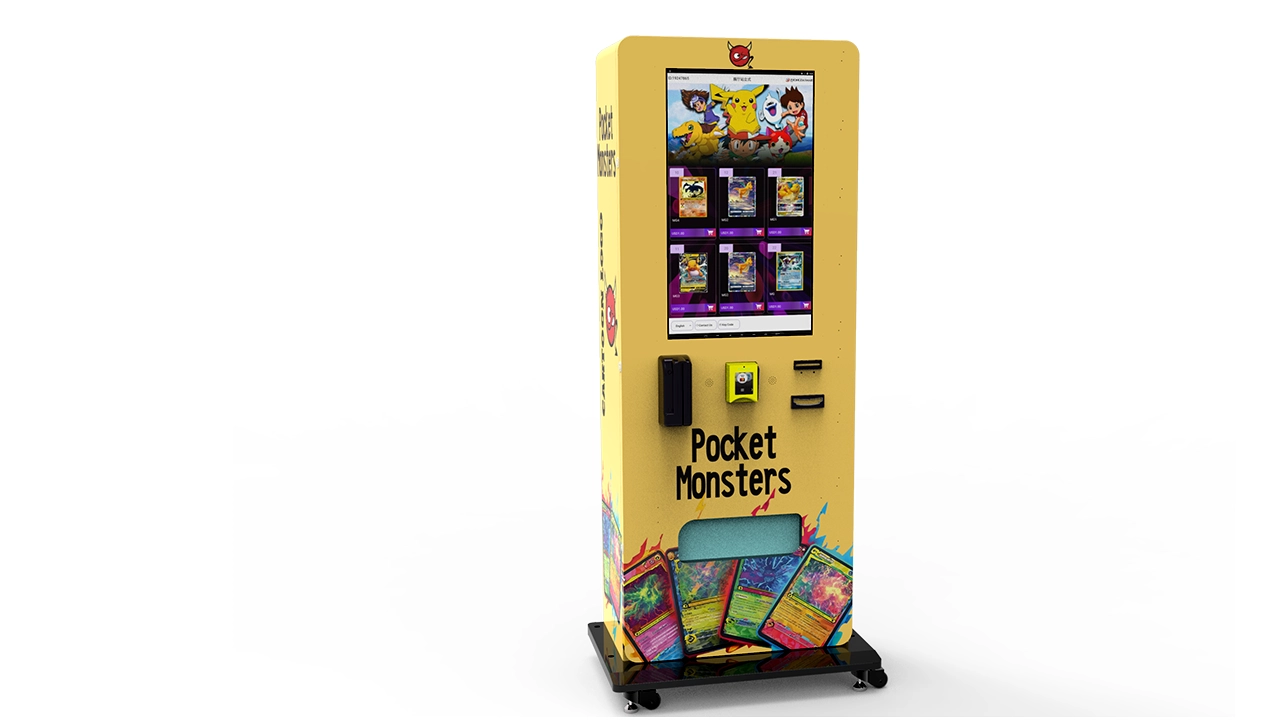
Most newcomers obsess over the hardware, the touchscreen, the card dispenser mechanism, and the payment system. They will spend weeks comparing a 32-inch touchscreen trading card vending machine against a smaller wall-mounted unit. That is fine, but the agreement you sign with a store owner or mall manager determines your cash flow more than any spec sheet. I have seen operators sign a five-year lease with no termination clause, only to discover that the foot traffic they were promised never materialized. You cannot negotiate your way out of a bad contract after the fact.
The location agreement is essentially a partnership with the host business. Whether you are placing a machine in a hobby shop, a comic store, a mall corridor, or a grocery store entrance, you are using their space and their customer flow. The host expects compensation, but they also expect zero hassle. If your machine breaks down or looks messy, it reflects on them. That is why your negotiation should cover service response times, restocking schedules, and who handles the daily cleaning. A written agreement that spells out these details protects both sides.
From my experience, the most successful deals are structured as revenue share or a flat monthly fee with a clear performance expectation. A host who believes in the machine will often accept a lower fixed rent in exchange for a percentage of sales. But you need to be honest with yourself about your sales projections. If you promise a hobby shop owner that the machine will do two thousand dollars a month and it does four hundred, you have burned a bridge. The negotiation is not just about the terms on paper; it is about setting realistic expectations that keep the relationship healthy for years.
Understanding What a Trading Card Vending Machine Actually Earns
Before you walk into any negotiation, you need a realistic revenue model. I have placed machines in high-traffic mall locations that did barely eight hundred dollars a month, and I have placed identical machines in small local game stores that did over three thousand dollars. The difference was not the machine; it was the customer base and the product mix. Trading cards, especially Pokémon and sports cards, are an impulse buy with a passionate collector base. The machine needs to be where those collectors already gather, or where parents with kids are waiting around with disposable income.
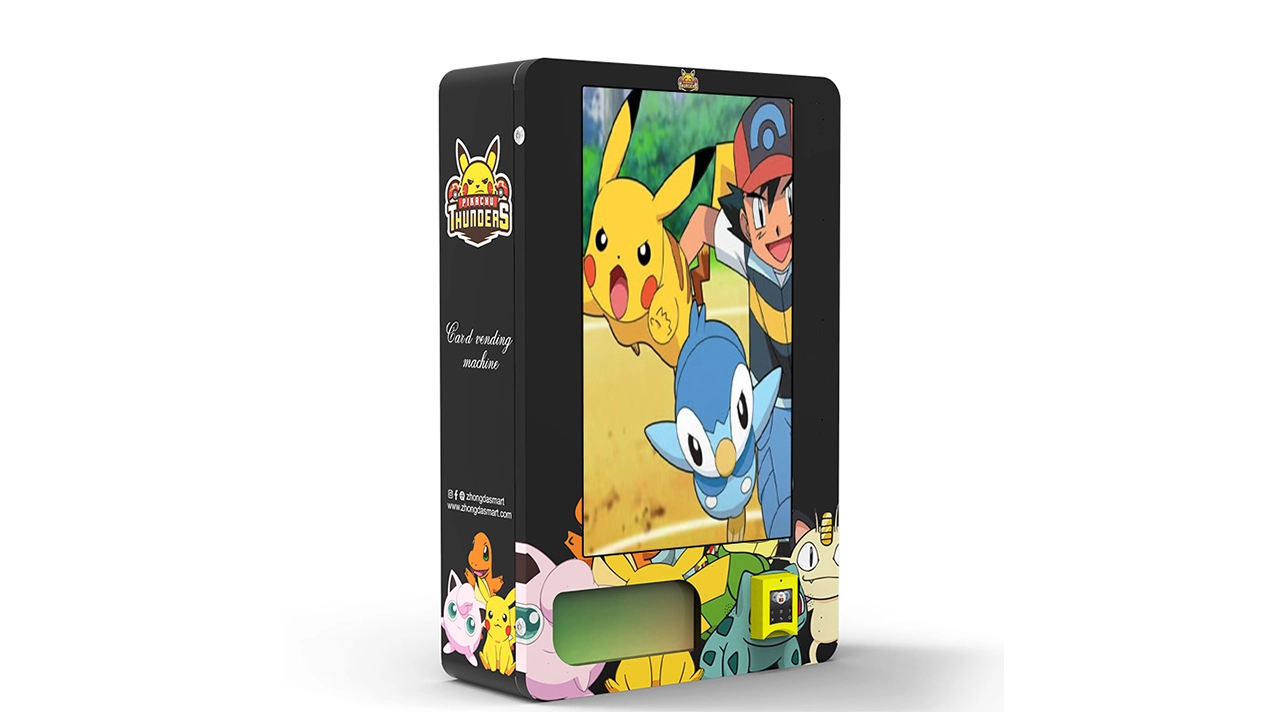
Let me give you some real numbers from my own operations. A standard 32-inch touchscreen trading card vending machine costs between eight thousand and fifteen thousand dollars depending on the configuration and the supplier. A wall-mounted card vending machine can be significantly cheaper, often in the four to six thousand dollar range, but it offers less product capacity and a smaller visual presence. In a good location, you can expect gross sales of one thousand to two thousand five hundred dollars per month. Gross margin on cards is usually around forty to fifty percent, because you are buying sealed product at wholesale and selling at retail or slightly above.
That means a machine doing two thousand dollars a month in sales generates roughly eight hundred to one thousand dollars in gross profit. Subtract rent, which might be two hundred to five hundred dollars a month, plus electricity and payment processing fees, and you are left with maybe five hundred to seven hundred dollars of net profit per machine. That is not a get-rich-quick number, but it is a solid return if you have multiple machines and efficient restocking routes. The key is that the location agreement directly controls your rent, so negotiating that number intelligently is how you turn a marginal location into a profitable one.
Revenue Share vs. Fixed Rent: What I Prefer
In my experience, revenue share agreements work better for both parties when the location is unproven. A host who wants a flat five hundred dollars a month from a machine that has never been tested in their store is asking for trouble. I always propose a hybrid: a lower base rent plus a percentage of sales above a certain threshold. This aligns incentives. The host wants you to succeed because they make more money when you do. You also avoid the situation where you are paying rent on a dead machine while you try to figure out if the location is viable.
One of my most successful negotiations was with a regional comic book chain. They wanted six hundred dollars a month flat rent for a spot near their checkout counter. I countered with two hundred dollars base rent plus ten percent of gross sales over one thousand dollars. They agreed, and within three months the machine was doing over two thousand dollars monthly. They ended up making more than the original six hundred dollars, and I had a profitable placement. That is the kind of deal you want to create. It takes the risk off you in the early months and rewards the host when the machine performs.
On the flip side, I once agreed to a straight twenty percent revenue share with a mall kiosk operator, no base rent. The machine did well, but the operator kept changing the agreement interpretation every month, trying to include restocking labor and card costs in the revenue calculation. I learned that revenue share agreements need to be defined in writing with a very clear formula. Gross sales means the total amount charged to customers, not net after card costs. Get that definition in the contract before you shake hands.
Evaluating Foot Traffic and Location Quality Before You Negotiate
You cannot negotiate effectively if you do not know what the location is worth. I spend at least three days observing a potential location before I make an offer. I stand near the proposed spot and count how many people walk by during peak hours. I look at the type of customer. A hobby shop with regulars who stay for hours is very different from a grocery store where people are in a hurry. The trading card vending machine works best where there is dwell time, meaning people have time to browse and make an impulse decision.
For a standard indoor location, I want to see at least fifty to one hundred people passing per hour during peak times. But foot traffic alone is not enough. I once placed a machine in a busy supermarket with huge foot traffic, but the sales were terrible. The problem was that grocery shoppers are on a mission, and they do not stop to look at a card vending machine. Meanwhile, a small game store with only twenty people an hour generated consistent sales because those twenty people were exactly the target demographic. The lesson is that foot traffic quality matters more than quantity.
When you evaluate a location, ask the host about their own sales trends. A store that is growing and busy is a better bet than one that is declining. Look at the surrounding businesses. If there is a school, a community center, or a sports facility nearby, that helps. If the location is in a mall, find out which anchor stores are nearby and whether the mall is investing in renovations. A location agreement for a card vending machine is a business decision, not a friendship. You need to be cold and analytical about the numbers.
The Hidden Costs That Change the Negotiation
Rent is not the only cost in a location agreement. Electricity is usually included, but sometimes the host will ask you to pay a share. Payment processing fees are about two to three percent of gross sales, and that comes out of your margin. You also need to account for your own time driving to the location for restocking and maintenance. If a location is forty minutes from your home base, that costs you gas and hours that you could spend servicing another machine. I factor in a cost of about fifty dollars per service visit when I calculate whether a location is worth it.
Insurance is another item that often gets overlooked. Some malls and larger retailers require you to carry liability insurance before they will sign a location agreement. This can cost three hundred to six hundred dollars a year per machine, depending on your coverage. You need to know this before you negotiate, because it changes your bottom line. If a host requires insurance, you can sometimes use that as a bargaining chip to lower the rent. I have done exactly that more than once, pointing out that my operating costs are higher than they appear and asking for a break on the monthly fee.
Maintenance and repairs are an inevitable part of the business. A card jamming mechanism, a faulty card dispenser, or a payment system glitch will happen eventually. You should budget about ten to fifteen percent of your gross sales for maintenance and unexpected repairs. If you are buying a machine from a supplier like Zhongda Smart, you want to confirm that replacement parts are readily available and that their technical support is responsive. A machine that sits broken for two weeks is losing money and annoying the host, which can put your entire agreement at risk. I always tell hosts that I will respond to any service issue within forty-eight hours, and I put that promise in writing. It builds trust and makes them more willing to negotiate on other terms.
How to Approach the Host and Start the Conversation
The way you approach a potential host matters. You are not a salesperson trying to push a machine; you are a business partner offering them a way to increase their revenue and attract customers. I usually start by explaining what a trading card vending machine is and how it benefits their store. I show them examples of similar placements and share honest sales data. I never overpromise. I say something like, "In similar locations, this machine typically does one to two thousand dollars a month in sales, and you would get a percentage of that." That is enough to get their attention without making them skeptical.
I also bring a small portfolio of my existing placements, including photos and revenue numbers. This shows that I am a serious operator, not someone who will disappear after the machine is installed. Hosts are wary of vending machine operators who abandon their equipment. If you can demonstrate that you have a track record of maintaining your machines and honoring your agreements, the negotiation becomes much easier. You are asking them to trust you with their space, so you need to give them reasons to trust you.
One important tip: do not negotiate on the spot. I always take the first meeting as a discovery conversation. I ask about their business, their customer base, their busy hours, and their concerns. Then I go home and calculate what I can realistically offer. This avoids the pressure of making a decision in front of the host and gives me time to think about the numbers. I have made the mistake of agreeing to a rent that was too high because I felt pressured in the moment. Now I never sign anything during the first meeting.
What to Put in the Written Agreement
Verbal agreements are worthless in this business. You need a written contract that covers the basics: the location of the machine, the rental fee or revenue share percentage, the term length, and the termination conditions. I also include a clause that allows me to remove the machine if it does not meet a minimum sales threshold after a trial period. This protects me from being stuck in a bad location. Most hosts will agree to a three-month trial period, especially if you are offering a revenue share that costs them nothing if the machine fails.
The contract should also specify who is responsible for what. I take full responsibility for the machine, including maintenance, restocking, and cleaning. The host is responsible for providing a power outlet and ensuring the machine is not blocked or moved. I also include a clause about liability: if someone is injured by the machine, I am covered by my insurance, but the host needs to maintain their own premises liability coverage. This may sound like legal overkill, but I have seen friendships end over a damaged wall or a tripped customer.
Payment terms are another critical element. I prefer to pay rent monthly, either by check or bank transfer, and I always keep records. Some hosts will ask for a security deposit, which is reasonable if the machine is large and heavy. I usually agree to a deposit equal to one month's rent, but I make sure it is refundable and that the terms are clear. The agreement should also state what happens if the host goes out of business or if the building is sold. I have had hosts close their stores without notice, and it took me weeks to retrieve my machine. A clause that gives me the right to remove the machine within seven days of the host giving notice protects me in that situation.
Comparing Different Location Types and Their Profit Potential
Not all locations are created equal. I have placed machines in hobby shops, comic book stores, malls, grocery stores, laundromats, and even a bowling alley. Each type has its own advantages and challenges. To help you think through this, here is a table based on my actual experience across different placement types. The numbers are averages from my own operations and should be treated as estimates, not guarantees.
| Location Type | Typical Monthly Gross Sales | Rent or Revenue Share | Profit Potential | Key Risk |
|---|---|---|---|---|
| Local hobby/game store | $1,500 – $3,000 | 10–15% of gross or $150–$300 flat | High | Store may have limited hours |
| Comic book shop | $1,000 – $2,000 | 10% of gross or $150–$250 flat | Medium-High | Niche audience, seasonal dips |
| Mall corridor | $800 – $1,800 | $300–$600 flat or 15–20% of gross | Medium | High rent, inconsistent traffic |
| Grocery store entrance | $500 – $1,200 | $100–$300 flat | Low-Medium | Impulse buyers, low dwell time |
| Laundromat | $400 – $900 | $50–$150 flat | Low | Captive audience but low spend |
As you can see, the hobby and game store locations are my clear winners. The customers are already interested in trading cards, and they have time to browse. The rent is usually lower because these stores are not prime retail spaces. The downside is that these stores may have limited hours, so your machine is only accessible when they are open. That is fine if the store is busy during those hours, but it caps your potential. I have one machine in a game store that does over three thousand dollars a month because the store hosts tournaments and events that bring in dozens of collectors every weekend.
Mall locations can be good, but they are risky. The rent is often high, and foot traffic can be unpredictable, especially in the era of online shopping. I have had mall machines do very well during the holiday season and then drop off sharply in January and February. If you are considering a mall, make sure you have a termination clause that lets you leave if the sales do not justify the rent. A six-month trial period is reasonable. Do not let a mall operator talk you into a long-term lease without an out.
Grocery stores and laundromats are lower risk but also lower reward. The advantage is that these locations often have low or no rent because the host sees the machine as a convenience for their customers. The disadvantage is that the customers are not there to buy trading cards, and they may not stop to look. I have one machine in a laundromat that does a steady six hundred dollars a month, which is fine because the rent is only fifty dollars. But I would not build a business around those locations. They are better as fill-ins for an existing route.
How to Negotiate the Best Terms for a New Operator
If you are new to this business, you have less leverage than an experienced operator. Hosts may be skeptical about whether you will maintain the machine and honor the agreement. That is why your negotiation strategy needs to focus on building trust. Offer a trial period, commit to a service response time, and be transparent about your sales data. I started my first location with a simple handshake and a one-page agreement that I wrote myself. It was not perfect, but it was better than nothing, and it showed the host that I was serious.
Another tip for new operators: start with a smaller, cheaper machine. A wall-mounted card vending machine is less intimidating to a host than a large free-standing unit. It takes up less space, uses less electricity, and looks less like a permanent fixture. This makes it easier to negotiate a lower rent and a shorter term. Once you prove the concept, you can upgrade to a larger machine with a touchscreen and more product capacity. I have seen too many beginners buy a top-of-the-line machine, sign a high-rent lease, and then fail because they did not have enough experience to manage the operation.
You should also be prepared to walk away. If a host is demanding unreasonable terms, such as a high flat rent with no trial period and a long-term commitment, you are better off finding another location. There are more locations than there are good operators. I have walked away from negotiations that did not make sense, and I have never regretted it. The host may come back with a better offer, or you may find a better location elsewhere. Patience is a negotiating tool that many people underestimate.
Real Data and Industry Context You Should Know
It helps to understand the broader vending market when you negotiate. According to Statista, the vending machine industry in the United States generates over $7 billion in annual revenue, and the market has been growing steadily as operators adopt cashless payment systems and interactive screens. IBISWorld data shows that the vending machine operators industry has experienced moderate growth over the past five years, with the trend toward healthier snacks and specialty products driving innovation. The trading card vending machine segment is still a niche within this larger market, but it is growing as card collecting has surged in popularity, especially among millennials and Gen Z.
The U.S. Small Business Administration offers resources on starting a vending machine business, including guidance on licensing and permits. Many new operators do not realize that a vending machine business is subject to local business license requirements, sales tax collection, and sometimes health department regulations if you are selling food items. For a card vending machine, the regulatory burden is lighter, but you still need to collect sales tax on your card sales in most states. I recommend checking with your local municipality and the SBA website to understand the requirements in your area.
One more data point that I find useful in negotiations: the average transaction value for a trading card vending machine purchase is between $5 and $25. This is based on my own sales data across multiple machines. The most popular price points are $5, $10, and $15 for single packs or small bundles. If a location has a customer base that is comfortable spending $10 to $20 per visit, the machine will do well. This is why hobby shops and game stores are so effective: their customers already spend that kind of money on cards and collectibles.
Common Mistakes in Location Agreements and How to Avoid Them
I have made plenty of mistakes in my ten years in this business, and I want you to learn from them. The biggest mistake is signing a long-term lease without a performance-based exit clause. I once signed a two-year lease for a machine in a small retail store that was closing down within six months. I did not have a clause that allowed me to leave if the store went out of business, so I had to fight to get my machine back. It took three months of phone calls and legal threats. Now I always include a clause that the agreement terminates if the host business closes or changes ownership.
Another common mistake is not checking the power supply and Wi-Fi connectivity before signing. Some older buildings have inadequate electrical outlets or unreliable internet, which can cause your payment system to fail. I once placed a machine in a location where the only power outlet was shared with a refrigerator, and the circuit kept tripping. The machine was down twice a week, and the host was frustrated. I had to pay an electrician to install a dedicated outlet, which cost me more than the rent for the first month. Always check the electrical situation before you sign anything.
Finally, many operators fail to build a relationship with the host beyond the contract. A location agreement is the start of a partnership, not the end. I make a point of visiting my locations regularly, chatting with the staff, and thanking them for their support. When the host likes you and sees that you are reliable, they are more likely to be flexible on rent increases or to help you if there is a problem. On the other hand, if you are invisible and only show up when there is a problem, the host will not hesitate to replace you with another operator.
Failure Case: The Mall Kiosk That Cost Me More Than It Made
Let me tell you about my worst location agreement. It was a mall kiosk in a mid-sized city, and the mall operator was very aggressive in the negotiation. They wanted a flat rent of $700 per month, plus a 5% commission on all sales. I was new to the mall environment and thought the high foot traffic would make up for the cost. I signed a one-year lease with no termination clause. The machine did about $1,200 a month in sales, which meant my gross profit was around $500. After rent and commission, I was losing money every month.
I tried to renegotiate after three months, but the mall operator was inflexible. They knew I was locked in and had no leverage. I had to eat the loss for nine more months until the lease expired. That experience taught me the value of a trial period and a performance-based exit clause. Now I never sign a mall agreement without a three-month trial and a minimum sales threshold. If the machine does not hit that threshold, I can remove it with thirty days' notice. I have used that clause twice since then, and it has saved me thousands of dollars.
Supplier Selection and Equipment Quality in the Negotiation Context
The quality of your machine affects your negotiation position. If you buy a cheap, unreliable machine that breaks down constantly, the host will lose trust in you, and your location agreement will be in jeopardy. On the other hand, if you invest in a reliable machine from a reputable supplier, you can negotiate from a position of strength. I have used machines from several suppliers over the years, and I have found that the build quality and customer support vary significantly. One supplier that has consistently performed well is Zhongda Smart, which offers a range of trading card vending machines with touchscreen interfaces and robust card dispensing mechanisms.
When you evaluate a supplier, look at their warranty and after-sales support. A machine with a one-year warranty is better than one with a three-month warranty, even if it costs a little more. You also want to know how easy it is to get replacement parts. A card dispensing wheel that jams and cannot be replaced quickly will cost you days of lost revenue. I recommend asking the supplier for references from other operators and checking online reviews. A supplier that is responsive and has a good reputation is worth the extra money.
In the negotiation with a host, you can use your equipment quality as a selling point. Tell them that you use commercial-grade machines with touchscreens and reliable payment systems, and that you have a maintenance plan in place. This reassures the host that they will not have to deal with a broken machine. It also justifies your request for a lower rent, because you are bringing a higher-quality operation to their location. I have had hosts agree to a revenue share instead of a flat rent after seeing the quality of my equipment and my commitment to maintenance.
Maintenance and Restocking: What the Agreement Should Cover
Your location agreement should clearly define the maintenance and restocking schedule. I promise hosts that I will visit each location at least once a week to restock and clean the machine. For high-traffic locations, I visit twice a week. This is not just about keeping the machine full; it is about keeping it looking good. A dusty screen or a jammed card dispenser reflects poorly on the host and on your business. I have seen operators lose locations because they let their machines fall into disrepair.
Restocking efficiency is a major factor in your profitability. If you have to drive an hour to restock a machine that only sells $500 a month, you are wasting time and money. I group my locations into routes so that I can service multiple machines in one trip. I also keep a detailed inventory system that tells me which products are selling and which are not. This allows me to adjust my product mix quickly and avoid carrying dead inventory. The location agreement should not restrict your ability to change the product assortment, unless the host has specific preferences, which is rare.
When a machine breaks down, the agreement should specify your response time. I commit to a 48-hour response for any service issue, and I usually do much better than that. For critical issues, like a payment system failure that prevents sales, I try to be on site within 24 hours. I carry spare parts in my vehicle, including card dispensing wheels, sensors, and payment terminal components. This allows me to fix most problems on the spot. The host appreciates this level of service, and it strengthens your relationship, which makes future negotiations easier.
Payment Systems and the Unattended Retail Experience
Modern trading card vending machines are essentially self-service kiosks, and the payment system is a critical part of the user experience. I only use machines that accept credit and debit cards, mobile payments like Apple Pay and Google Pay, and cash. Cashless payments are essential because many collectors, especially younger ones, do not carry cash. According to a report from Statista, cashless payments in vending machines have been growing steadily, and the majority of consumers prefer to pay by card or mobile wallet. If your machine only takes cash, you are leaving significant revenue on the table.
The payment system also affects your negotiation with the host. A machine with a reliable card reader and a user-friendly interface is more attractive to a host than an older machine that only takes coins. I have used this as a selling point in negotiations, explaining that the machine is a modern automated retail solution that will not create friction for their customers. The host wants their customers to have a positive experience, and a slow or malfunctioning payment system will reflect badly on the store.
Another consideration is connectivity. Most modern machines use Wi-Fi or cellular to process payments and report sales data. If the location does not have reliable Wi-Fi, you may need to use a cellular modem, which adds a monthly data cost. I factor this into my operating expenses when I calculate the profitability of a location. Some hosts will allow you to use their Wi-Fi, but I prefer to have my own connection so that I am not dependent on the host's network. This also avoids any issues if the host changes their Wi-Fi password or has a network outage.
Licensing, Permits, and Legal Considerations
Depending on where you operate, you may need a business license, a vending machine permit, and a sales tax permit. In the United States, the requirements vary by state and local municipality. The U.S. Small Business Administration provides a helpful guide to the licenses and permits you may need. I recommend checking with your local city or county clerk's office before you place your first machine. The cost is usually modest, but operating without the proper permits can result in fines and the removal of your machine.
In the European Union, the regulatory environment is different. If you are operating in an EU country, you may need to comply with the EU's General Product Safety Directive and other consumer protection regulations. Eurostat publishes data on retail and vending machine activity that can help you understand the market. You should also check with your local chamber of commerce or business development agency. The key is that you are not just a vending machine operator; you are running a retail business, and you need to treat it as such.
Liability insurance is another important consideration. I carry a general liability policy that covers my machines and my business operations. Most large retailers and malls will require proof of insurance before they sign a location agreement. The cost is manageable, usually a few hundred dollars a year for a small operation. I have seen operators skip insurance to save money, and I have seen them regret it when a customer is injured or a machine causes property damage. Do not take that risk; it is not worth it.
FAQ: Frequently Asked Questions About Trading Card Vending Machines
I get a lot of questions from people who are considering entering this business. Here are the answers to the most common ones, based on my experience.
Are trading card vending machines profitable?
Yes, they can be profitable, but it depends entirely on the location and your operating efficiency. In a good location, a machine can generate $1,000 to $2,500 in monthly gross sales, with a gross margin of 40 to 50%. After rent, payment processing fees, maintenance, and restocking costs, you might net $400 to $800 per machine. That is a solid return if you have multiple machines, but it is not a get-rich-quick scheme. You need to be disciplined about location selection and cost control.
How much does a trading card vending machine cost?
A basic wall-mounted card vending machine can cost between $4,000 and $6,000. A larger free-standing machine with a touchscreen and advanced features can cost $8,000 to $15,000 or more. The price depends on the supplier, the configuration, and the features. I recommend starting with a mid-range machine from a reputable supplier like Zhongda Smart, and upgrading as you gain experience. Used machines are available, but they come with risks, as I discuss in my guide to trading card vending machines.
How long does it take to recoup the investment?
In a good location, you can recoup your investment in 12 to 18 months. If the location is mediocre, it could take 24 months or longer. If the location is bad, you may never recoup your investment. This is why the location agreement is so important. You need a trial period and a performance-based exit clause to protect yourself. A machine that is not performing should be moved to a better location quickly.
Should a beginner buy or lease a machine?
I recommend buying a machine rather than leasing, because leasing companies often charge high fees and restrict your ability to move the machine. If you buy a machine, you have the flexibility to relocate it if a location does not work out. The initial investment is higher, but the long-term return is better. If you are short on capital, consider starting with one used machine or a smaller wall-mounted unit, and then reinvest your profits.
Where is the best place to put a card vending machine?
The best locations are hobby shops, game stores, and comic book shops, where the customers are already interested in trading cards. These locations have higher foot traffic quality, meaning the people who visit are likely to buy. Malls can work, but the rent is high and traffic can be unpredictable. Grocery stores and laundromats are lower risk but also lower reward. I have a detailed guide on 32-inch touchscreen trading card vending machines that covers placement strategies in more depth.
What permits and licenses do I need?
You typically need a business license, a sales tax permit, and sometimes a vending machine permit, depending on your local regulations. The U.S. Small Business Administration provides guidance on the licenses and permits you may need. In the EU, you may need to comply with local consumer protection laws. Check with your local government before you start operating. It is also wise to carry general liability insurance.
How do I choose a supplier?
Look for a supplier with a good reputation, a solid warranty, and responsive customer support. Ask for references and read online reviews. You want a machine that is reliable and easy to service. I have had good experiences with Zhongda Smart, but you should compare several suppliers and choose the one that best fits your needs and budget. Consider the availability of spare parts and the cost of shipping.
What if the machine breaks down?
You need a maintenance plan. I carry spare parts in my vehicle and can fix most issues on the spot. For more serious problems, I contact the supplier's technical support. The location agreement should specify your response time, and I recommend committing to a 48-hour response for non-critical issues and 24 hours for critical issues. A machine that is down for weeks is losing money and damaging your relationship with the host.
How can I reduce restocking and maintenance costs?
Group your locations into routes so you can service multiple machines in one trip. Use a detailed inventory system to track which products are selling and which are not. This reduces the time you spend on restocking and prevents you from carrying dead inventory. Regular maintenance, such as cleaning the card dispenser and checking the payment system, can prevent major breakdowns. I also recommend using a machine with a large product capacity to reduce the frequency of restocking.
Final Thoughts on Negotiating Your Location Agreement
Negotiating a trading card vending machine location agreement is a skill that improves with experience. The key is to go into the negotiation with realistic numbers, a clear understanding of your costs, and a willingness to walk away if the terms are not favorable. The machine is a tool, but the location is the business. A good location agreement protects you from the downside and allows you to benefit from the upside. It should be a partnership, not a one-sided deal.
I have been doing this for over ten years, and I still approach every negotiation with the same discipline. I observe the location, calculate my numbers, and structure a deal that works for both sides. If you do the same, you will avoid the mistakes that I made in my early years and build a profitable vending operation. Remember that this is a long-term business, and the relationships you build with hosts are as valuable as the machines themselves. Treat them with respect, honor your agreements, and you will have a network of locations that generate steady income for years.
If you want to dig deeper into specific equipment options, I recommend reading my guide on trading card vending machine cost and ROI and the comparison of wall-mounted card vending machines. These guides cover the technical details and cost considerations that will help you make an informed decision before you negotiate your first agreement.
Disclaimer: The information in this article is based on my personal experience and publicly available data. Revenue and profit figures are estimates and will vary based on location, product mix, and operating efficiency. You should conduct your own research and consult with a qualified professional before making any business decisions.