After a decade of placing, servicing, and sometimes pulling machines out of bad locations across the US and Europe, I can tell you this upfront: a vending machine is not a set-it-and-forget-it money printer. But when done right, it functions exactly like a mini convenience store with zero rent for square footage you do not use. The model works because it shrinks the distance between the customer and the product to about three feet. I have seen single machines in office break rooms generate more monthly profit than small retail kiosks with full-time staff. The difference comes down to location, category management, and machine reliability. If you are considering entering this space, you need to understand the economics, the operational traps, and why the term vending machines as mini convenience stores is not a marketing gimmick—it is the most accurate description of what a well-run automated retail point can deliver.
What Exactly Is a Vending Machine in Today's Retail Context
Let us strip away the old image of a glass-front machine dropping stale chips and warm soda. A modern vending machine is a self-contained retail unit that processes payments, manages inventory, and often reports sales data in real time. It is a self-service kiosk that replaces the cashier, the shelf stocker, and the store lease. In many European cities, these units now sell fresh sandwiches, salads, hot coffee using bean grinders, electronics accessories, and even over-the-counter medications.
The core idea is simple: place the right product where people already are, at the moment they need it. That is what convenience stores have always done, but with higher overhead. A vending machine strips away the labor cost, the utility bills for a full storefront, and the shrinkage from theft that plagues manned retail. According to a 2023 report by IBISWorld, the vending machine industry in the United States alone generates over $7 billion annually, with growth driven by cashless payment adoption and healthier product offerings.
Does a Vending Machine Business Actually Make Money
This is the question I hear most often, and the honest answer is: it depends entirely on the location and the product mix. I have operated machines that gross $1,200 per month in a small manufacturing plant break room, and I have pulled machines that barely did $150 per month from a low-traffic laundromat. The difference was not the machine—it was the foot traffic and the purchasing intent of the people passing by.
Based on my own operational data across roughly 50 machines over the last decade, a well-placed machine in a mid-sized office building (150 to 300 employees) will average between $600 and $1,200 in monthly sales. The gross margin on snacks and cold drinks typically runs between 30% and 40%. That means gross profit per machine lands somewhere between $180 and $480 per month. After factoring in restocking labor, machine payment, and occasional vending machine repair, net profit per machine in a good location runs between $100 and $300 per month.
That may not sound like a windfall, but scale changes the math. Run 20 machines at that average, and you are looking at $2,000 to $6,000 per month in passive-ish income. The key word is "ish"—because restocking and maintenance are not passive. But compared to opening a physical store, the capital requirement is dramatically lower.
Key Factors That Determine Profitability
Location Is Everything, but Not How You Think
Most beginners think high foot traffic equals high sales. That is only partially true. A train station may have 10,000 people passing through daily, but if they are all rushing to catch a train and not stopping to browse, your machine will underperform. I have seen machines in quiet office break rooms outperform machines in busy retail corridors. The reason is dwell time and intent. In an office, employees have a few minutes to walk to the machine, make a selection, and return to their desk. They are also hungry or thirsty on a predictable schedule.
The best locations I have found are medium-sized workplaces (100 to 400 employees), manufacturing facilities with shift workers, hospitals (staff break areas, not visitor lobbies), and college residence halls. These locations provide consistent, repeat traffic from the same people. That repeat traffic builds habit, and habit drives predictable revenue.
Product Mix and Pricing Strategy
If you stock the same items as the grocery store down the street, you will lose. The vending machine customer pays a premium for convenience. A can of soda that costs $0.50 at retail can sell for $1.50 in a machine. A packaged sandwich costing $3.00 at a deli can sell for $5.00. But you have to offer variety. I learned this the hard way when I stocked a machine entirely with salty snacks and sugary drinks, only to watch sales stagnate after three weeks. Adding protein bars, nuts, bottled water, and a few healthier options lifted revenue by nearly 40% in that same machine.
Payment Systems Matter More Than You Think
In 2024, if your machine only takes cash, you are leaving at least 40% of potential sales on the table. According to a 2023 Statista survey, 41% of US consumers reported using cashless payment methods for small purchases under $5. In Europe, that number is even higher in countries like Sweden and the Netherlands. Every machine I deploy now includes a card reader and supports Apple Pay and Google Pay. The upfront cost is higher, but the revenue lift typically pays for the upgrade within three to four months.
How to Choose the Right Vending Machine
New operators often make the mistake of buying the cheapest machine they can find. I have seen used machines sold for $800 that looked fine on the outside but had corroded wiring, failing compressors, and outdated payment systems. Within six months, the owner had spent more on vending machine repair than the machine cost. Do not do this.
You have three main categories of machines to consider:
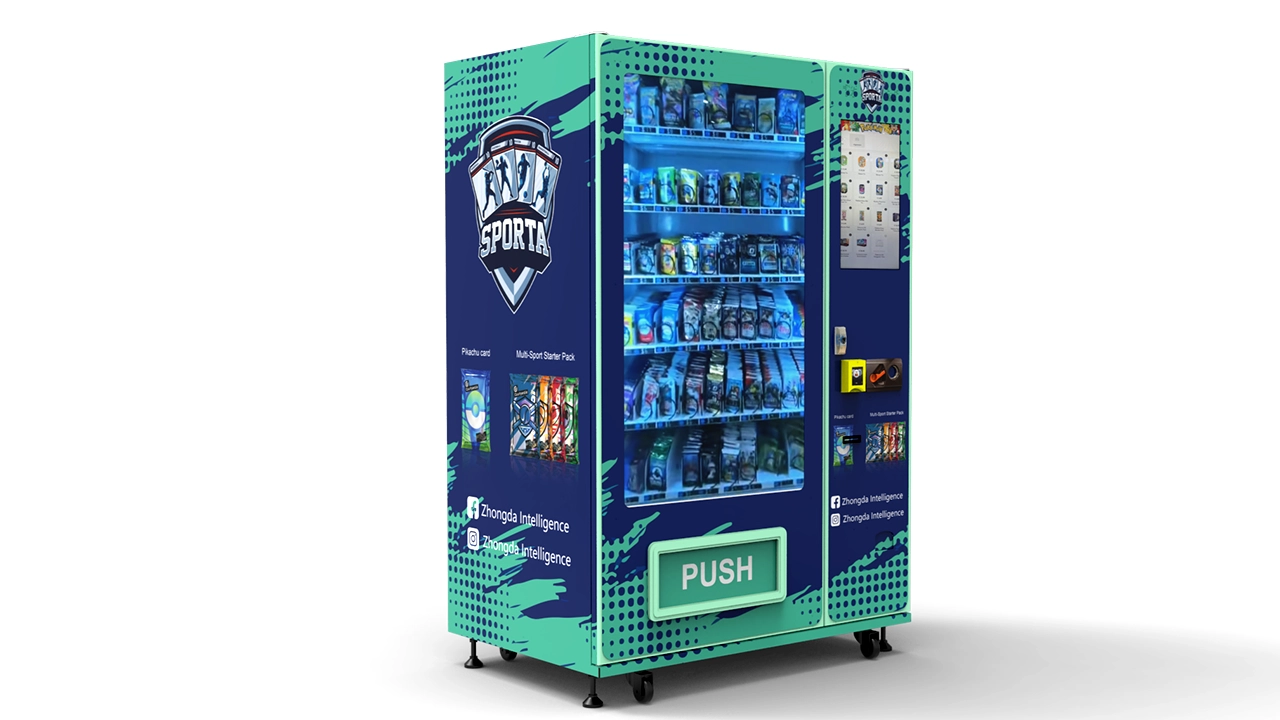
- Combination machines: These hold both snacks and drinks in one unit. They are ideal for small locations where you can only place one machine. Cost ranges from $3,000 to $6,000 new.
- Glass-front snack machines: These hold only dry goods. They are cheaper ($2,000 to $4,000 new) but require a separate drink machine if you want to offer beverages.
- Refrigerated food machines: These are designed for fresh items like sandwiches, salads, and yogurt. They cost more ($5,000 to $9,000 new) and require stricter temperature monitoring and shorter restocking cycles.
When evaluating suppliers, I look for three things: parts availability, technical support responsiveness, and build quality. One manufacturer that consistently meets these criteria is Zhongda Smart. Their machines use commercial-grade compressors, support multiple payment systems out of the box, and their after-sales support team responds within 24 hours for most issues. I have deployed six of their units across two states, and the failure rate has been significantly lower than some of the older refurbished machines I started with.
Cost Breakdown and Return Timeline
Let me give you a realistic picture based on my own deployments. These numbers are estimates and will vary based on your specific location and operating efficiency, but they reflect what I have seen across dozens of machines.
| Cost Category | Estimated Amount (USD) | Notes |
|---|---|---|
| New combination machine | $4,500 | Includes card reader, telemetry, installation |
| Initial inventory | $600 | First stock of snacks, drinks, and food items |
| Location commission (if any) | 10%–20% of sales | Negotiable; some locations charge nothing |
| Monthly restocking labor | $100–$200 | 2–3 hours per week at $20/hour |
| Monthly credit card processing fees | 2.5%–3.5% of sales | Varies by processor |
| Annual maintenance reserve | $200–$400 | For repairs, part replacements, cleaning |
Based on a machine generating $900 per month in sales with a 35% gross margin, the gross profit is $315 per month. Subtract restocking labor ($150) and processing fees ($27), and you are left with roughly $138 per month. At that rate, the machine pays for itself in about 32 months. If the location does $1,200 per month, that timeline drops to under 24 months. If you can negotiate a location with no commission and handle restocking yourself, the return accelerates significantly.
Common Mistakes New Operators Make
Ignoring the Importance of Machine Placement Within a Location
I once placed a machine in a factory break room that was hidden behind a pillar. The factory manager assured me it was "fine." It was not fine. Sales were half of what I projected. After moving the machine 15 feet to a more visible spot, revenue doubled within two weeks. Visibility and ease of access are non-negotiable.
Overstocking or Understocking
New operators tend to overstock because they fear running out. That ties up cash in inventory that may expire. On the flip side, understocking frustrates customers. The sweet spot is to carry about 1.5 times the weekly sales volume in inventory. Use telemetry data to fine-tune this over the first three months.
Choosing Cheap Machines to Save Money
I already touched on this, but it deserves repeating. A $1,500 used machine with no warranty and an outdated payment system will cost you more in lost sales and repair bills than a $4,500 new machine. The automated retail space is not kind to corner-cutters.
Neglecting Regular Cleaning and Maintenance
A dirty machine signals neglect. Customers notice. I have walked into locations where the machine glass was smudged, the selection buttons were sticky, and the floor around the machine was littered with crumbs. That machine was doing $300 per month. After a deep clean and restocking with fresh items, sales climbed to $700 per month within six weeks. Perception matters.
Best Locations for Vending Machines
Based on my experience and industry benchmarks, here are the location types that consistently perform well:
- Office buildings with 100+ employees: Consistent daily traffic, predictable demand for snacks and drinks.
- Manufacturing and warehouse facilities: Shift workers have set break times and often limited access to outside food options.
- Hospitals and medical centers: Staff and visitors need quick access to food and drinks at all hours.
- College dormitories and student unions: High density of young consumers with limited meal options late at night.
- Gym and fitness centers: Demand for water, protein bars, and healthy snacks is high.
- Government buildings: Often secure facilities where outside food delivery is restricted.
Avoid locations with heavy foot traffic but no dwell time, such as narrow hallways, bus stops with no shelter, or areas where people are carrying luggage or pushing strollers. The machine needs to be in a spot where people feel comfortable stopping for 30 to 60 seconds.
How to Evaluate a Location Before Committing
I use a simple scoring system before placing a machine. It is not scientific, but after ten years, it has proven reliable:
- Daily foot traffic (visible to machine): At least 100 people passing within 10 feet of the planned location.
- Dwell time: At least 30 seconds of idle time available for most passersby.
- Access to power and internet: Within 20 feet of an outlet; cellular signal strong enough for telemetry.
- Competition: No other vending machine within 100 feet. If there is one, check how old and dirty it is. A neglected competitor is an opportunity.
- Location manager attitude: If the manager is indifferent or hostile, walk away. They will not help if issues arise.
I once ignored a bad manager attitude because the foot traffic was excellent. That machine was vandalized within three months, and the manager refused to let me install a security camera. Trust your instincts on this one.
Supplier Selection: What to Look For
When you are ready to buy, do not just search for the lowest price. Look for a supplier that offers:
- In-stock parts for at least five years: Machines break. If the supplier stops supporting a model, you are stuck.
- Remote diagnostics capability: This saves huge amounts of time. A technician can often fix a software issue without visiting the site.
- Flexible payment system options: The supplier should support integration with major card processors and digital wallets.
- Transparent warranty terms: A one-year parts and labor warranty is standard. Anything less is a red flag.
As I mentioned earlier, Zhongda Smart has been a reliable partner in my operations. Their machines are built with standardized components, which makes sourcing replacement parts straightforward. They also offer machines pre-configured for the US and European markets, including voltage compliance and payment system compatibility.
Maintenance and Repair Realities
Even the best machines will need service. The most common issues I encounter are jammed vending spirals, failed card readers, and refrigeration compressor failures. For the first two, you can learn basic repairs in an afternoon. For compressor issues, you will need a licensed refrigeration technician.
I recommend setting aside $200 to $400 per machine per year for maintenance. If you operate 10 machines, that is a $2,000 to $4,000 annual reserve. In practice, I have spent less than that in most years, but when a compressor goes out mid-summer, you will be glad you have the funds.
One tip that has saved me thousands: always keep a spare card reader and a spare spiral motor assembly in your car. When a machine goes down, the cost of the lost sales during a two-week wait for a replacement part often exceeds the cost of the part itself.
Legal and Regulatory Considerations
In the United States, vending machines are subject to state and local regulations regarding food safety, labeling, and sales tax. If you sell packaged food, you generally need a food handler permit or a vending machine license. In Europe, regulations vary by country. For example, in France, distributeur automatique operators must comply with hygiene standards outlined by the Direction Générale de l'Alimentation. You can find guidance on the official Service-Public.fr website.
Sales tax is another consideration. In many US states, food items are exempt from sales tax, but candy and soda are not. You are responsible for collecting and remitting that tax. I recommend using a point-of-sale system integrated with your vending machines that automatically tracks taxable vs. non-taxable sales. Doing this manually is a nightmare.
How to Scale from One Machine to a Fleet
Starting with one machine is smart. You learn the operational rhythm without risking too much capital. Once you have a machine running smoothly for six months, you can reinvest the profits into a second machine. I have seen operators scale from one to twenty machines in three years using this approach.
The key to scaling is standardization. Use the same machine model as much as possible. That way, you only need to stock one type of spare part, and your restocking process becomes more efficient. I also recommend using a route management software to optimize your restocking schedule. Driving 50 miles to restock a single machine is a waste of margin. Cluster your machines geographically.
Frequently Asked Questions
Are vending machines profitable?
Yes, but profitability depends on location, product mix, and operating efficiency. A well-placed machine can generate $100 to $300 in net profit per month. Poorly placed machines can lose money.
How much does a vending machine cost?
A new combination machine with a card reader costs between $3,000 and $6,000. Used machines can be found for $1,000 to $2,500, but may require repairs and upgrades.
How long does it take to recoup the investment?
Based on my experience, expect 18 to 36 months for a new machine in a good location. Faster returns are possible with high-traffic, low-commission locations.
Should a beginner buy or lease a vending machine?
Buying is generally better if you have the capital. Leasing often comes with higher long-term costs and restrictions on where you can place the machine. If cash is tight, consider buying a quality used machine from a reputable seller.
Where should I place my first vending machine?
Start with a location you already have access to, such as your own workplace or a friend's business. This reduces the risk of losing the location and gives you time to learn the operational side.
What permits do I need?
In the US, you typically need a business license, a seller's permit, and possibly a food handler permit. Check your state and local regulations. In Europe, requirements vary by country; consult local business authorities.
How do I choose a vending machine supplier?
Look for a supplier with good parts availability, responsive technical support, and positive reviews from other operators. Zhongda Smart is one example of a manufacturer that meets these criteria.
What happens if the machine breaks down?
Most common issues can be fixed by the operator with basic tools. For major repairs, you will need a technician. Keep a maintenance reserve of $200 to $400 per machine per year.
How can I reduce restocking costs?
Use route management software to plan efficient restocking routes. Cluster machines in the same geographic area. Stock high-turnover items only, and use telemetry data to predict when restocking is needed.
Final Thoughts
A vending machine is not a shortcut to wealth, but it is a legitimate business model that provides real value to customers and steady income to operators who treat it seriously. The operators who succeed are the ones who pay attention to the details: location selection, product rotation, machine cleanliness, and customer experience. If you are willing to learn those details, the vending machines as mini convenience stores model can work for you. Start small, track everything, and reinvest your profits into better machines and better locations. That is how you build a sustainable automated retail operation.
This article was updated on May 2025. The information provided is based on personal operational experience and publicly available data. Results vary based on location, market conditions, and operator efficiency. No guarantee of specific financial returns is made.