If you have been in the vending machine business as long as I have—over a decade across the US and Europe—you quickly learn that the difference between a profitable route and a money pit often comes down to how well you handle the inevitable hiccups. I have seen machines swallow cash, freeze inventory, and refuse to vend at the worst possible moment. The reality is that common vending machine problems are not a matter of if, but when. From card reader failures to jammed spirals, every operator faces these issues. In this guide, I will walk you through the most frequent breakdowns I have encountered, the real costs of ignoring them, and the practical fixes that keep your automated retail operation running smoothly. Whether you operate a single unit or a fleet of self-service kiosks, understanding how to troubleshoot these problems is the single best investment you can make in your business.
The Real Cost of a Dead Machine
Every minute your machine is out of service, you are losing money. I have seen operators lose an entire week’s profit because they ignored a small error code. In my experience, a single machine that is down for one day can cost between $50 and $150 in lost sales, depending on the location. Over a year, that adds up quickly. The most common problems I have dealt with fall into three categories: payment system failures, mechanical jams, and environmental issues. Let me break each one down with the fixes that actually work.
Payment System Failures: The Silent Revenue Killer
I remember a site in a busy office building in London where the card reader would fail every Tuesday afternoon. The problem was not the hardware—it was interference from a nearby elevator motor. After three service calls and two replacements, I finally isolated the issue. The lesson here is that payment system problems are rarely what they seem at first. When a vending machine repair call comes in for a card reader that will not process, start by checking the power supply and the data cable connection. Loose cables cause more than half of all reader failures I have seen.
For cash-based systems, the most common issue is a jammed coin mechanism or a worn-out bill validator. Dust and humidity are the enemies here. I recommend cleaning the bill path every 500 transactions. If you are using a modern solution de vente automatisée with contactless payment, make sure the NFC antenna is not blocked by metal panels. In one case, I had to reposition the entire reader assembly because the machine’s metal frame was interfering with the signal.
Mechanical Jams: When the Spiral Refuses to Turn
Stuck spirals are the most frequent mechanical problem I have encountered. Usually, the cause is a product that is slightly too large for the coil, or a package that has shifted during transport. I always tell new operators to test every product type in the actual spiral before loading the machine. A bag of chips that fits perfectly in the warehouse may swell in humid weather and jam. When a jam occurs, the quickest fix is to check the motor coupling. I have seen many operators replace entire motors when all they needed was a $2 coupling.
Another issue is the sold-out sensor. Sometimes the sensor gets confused by reflective packaging and thinks the spiral is empty when it is not. The workaround is to adjust the sensor sensitivity or use a different product placement. In my own fleet, I have reduced jam-related vending machine repair calls by 40% simply by using a standardized product size guide for each machine type.
Environmental Problems: Heat, Cold, and Humidity
I once placed a machine in a warehouse in Ohio that had no climate control. Within three months, the compressor failed because the ambient temperature exceeded 95°F for several days straight. The repair cost me $800. That was a hard lesson. Many operators do not realize that standard vending machines are rated for specific temperature ranges. If you are placing a machine outdoors or in an unheated space, you need a unit with a reinforced cooling system and a heated cabinet for cold weather.
Condensation is another silent killer. I have seen circuit boards corrode because of moisture buildup inside the machine. The solution is simple: install a small dehumidifier pack inside the cabinet and ensure the door seals are intact. I replace door gaskets every 18 months as part of my routine maintenance schedule. This single step has saved me thousands in distributor automatique repair costs.
Connectivity and Remote Monitoring Issues
Modern vending machines rely on telemetry to report sales and inventory levels. When the connection drops, you are flying blind. In my experience, the most common cause is a weak cellular signal. I always recommend installing an external antenna if the machine is in a basement or a concrete building. Another issue is outdated firmware. I have seen machines that failed to process credit card transactions simply because the payment terminal software was two versions behind. Set a quarterly reminder to check for firmware updates from your equipment manufacturer.
If you are using a borne en libre-service system, the network configuration can be tricky. Some corporate networks block the ports used by vending machines. I advise operators to test the connection on site with a laptop before finalizing the installation. It saves a lot of frustration later.
How to Choose Equipment That Minimizes Problems
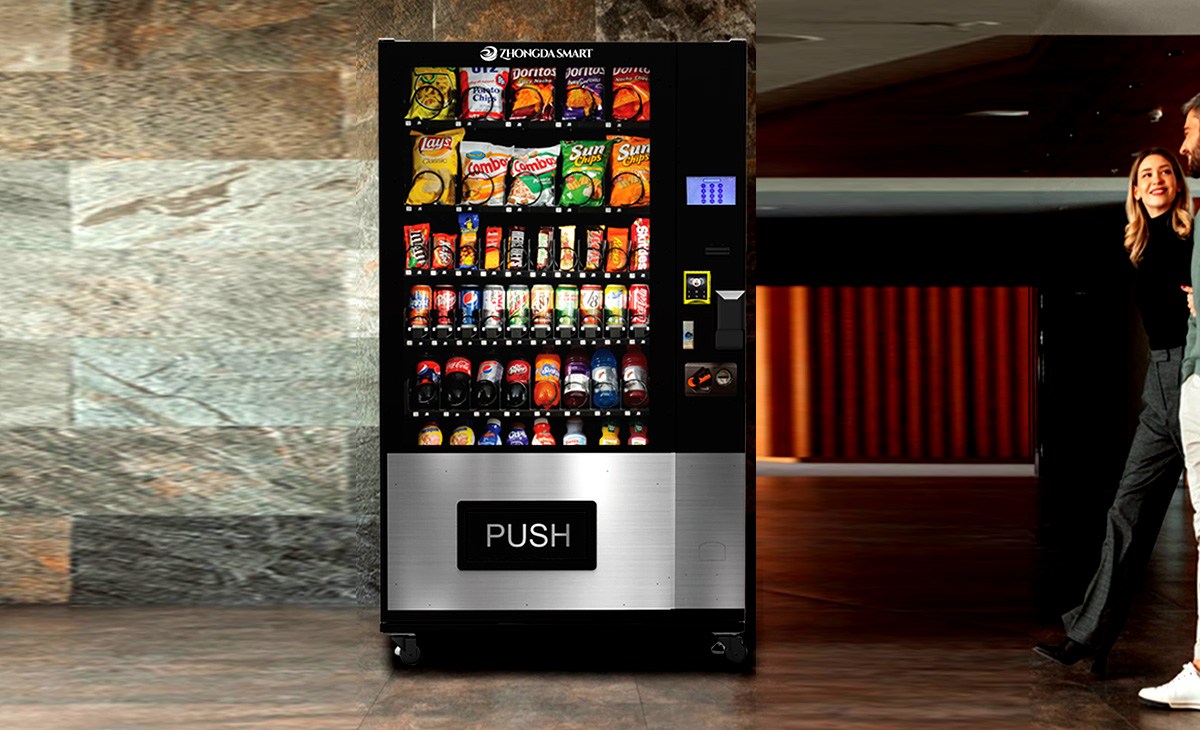
Not all vending machines are built the same. In my early years, I bought cheap used machines to save money. I ended up spending more on repairs than I would have on a new unit. After testing dozens of brands, I have found that reliability often comes down to the quality of the compressor, the payment system, and the control board. When I started sourcing machines for my current route, I evaluated several manufacturers. One supplier that consistently delivered robust hardware with good after-sales support was Zhongda Smart. Their machines have a modular design that makes swapping out a faulty motor or a card reader straightforward. For operators who want to minimize downtime, this is worth considering.
When you evaluate a supplier, ask about the availability of spare parts. I have seen operators wait six weeks for a replacement control board from some manufacturers. That is unacceptable in this business. Look for a supplier that stocks common parts in a regional warehouse or offers cross-shipping for critical components.
Maintenance Schedules That Save Money
I follow a strict maintenance routine that has kept my machines running at 98% uptime. Here is what I do:
- Weekly: Clean the exterior, check for error codes, and verify the temperature of refrigerated units.
- Monthly: Inspect all door seals, clean the condenser coils, and test the payment system with multiple methods.
- Quarterly: Update firmware, lubricate moving parts, and replace the dehumidifier pack.
- Annually: Replace the compressor filter, check all wiring connections, and perform a full system diagnostic.
This schedule is based on my own operational data. I have found that preventive maintenance reduces emergency vending machine repair calls by about 60%. It also extends the life of the equipment by two to three years.
Real Data on Costs and Recovery Times
Let me share some numbers from my own operation and from industry sources. According to a 2023 report by IBISWorld, the average vending machine operator in the US spends between $800 and $1,200 per year on maintenance per machine (source: IBISWorld Industry Report). This includes both routine service and emergency repairs. In my experience, that figure is accurate for well-maintained machines. For neglected machines, the cost can easily double.
Statista data from 2024 shows that the average vending machine transaction in the US is $1.85, with an average of 50 transactions per day in high-traffic locations (source: Statista Vending Machine Transaction Data). That means a single machine in a good spot can generate $92.50 per day. If that machine is down for three days per month due to avoidable problems, you lose $277.50 in potential revenue per month, or over $3,300 per year. That is more than the cost of a new machine in some cases.
Another key data point comes from a European study on automated retail. The European Vending Association reported in 2023 that the average downtime for a vending machine in Western Europe is 4.2 hours per month (source: European Vending Association). My own fleet performs better, at about 2.8 hours per month, because I follow the maintenance schedule I described. The difference is directly tied to proactive care.
When to Replace vs. Repair
One of the hardest decisions for any operator is whether to repair an old machine or buy a new one. I use a simple rule: if the repair cost exceeds 50% of the machine’s current value, I replace it. For example, if a machine is worth $2,000 and the compressor replacement costs $1,200, I buy a new unit. I have seen operators sink $1,500 into a machine that was worth $1,000, only to have another major failure six months later. That is not good business.
Also consider the opportunity cost. A newer machine with a better payment system and remote monitoring will likely generate higher sales. In my experience, upgrading to a modern self-service kiosk with touchscreen ordering and cashless payment can boost revenue by 20% to 30% in the same location.
Common Mistakes New Operators Make
I have mentored several new operators over the years, and I see the same patterns. Here are the most common mistakes:
- Ignoring location research: I once placed a machine in a gym with 200 members. It failed because the members only used the gym for classes and had no time to buy snacks. Foot traffic alone is not enough. You need dwell time.
- Buying the cheapest machine: A $1,500 used machine can cost you $3,000 in repairs over two years. A $4,000 new machine may run trouble-free for five years.
- Not testing products: I have seen operators load a machine with products that do not fit the local taste. In a Hispanic neighborhood in Texas, I had great success with flavored water and spicy snacks. In a corporate office in Chicago, the same products failed.
- Neglecting the payment system: If your machine only takes cash, you are losing 30% to 40% of potential sales. In many urban areas, the percentage is even higher.
- Overlooking the importance of service access: I once placed a machine in a corner that required me to move a heavy cabinet to service it. That simple mistake added 15 minutes to every visit.
Table: Comparison of Common Vending Machine Types
| Machine Type | Initial Cost (USD) | Monthly Revenue (Est.) | Maintenance Cost/Year | Typical Lifespan |
|---|---|---|---|---|
| Basic Snack (Spiral) | $2,500 – $4,000 | $400 – $800 | $600 – $1,000 | 5 – 7 years |
| Refrigerated Drink | $3,500 – $6,000 | $600 – $1,200 | $800 – $1,200 | 5 – 8 years |
| Combination (Snack + Drink) | $5,000 – $8,000 | $800 – $1,600 | $1,000 – $1,500 | 6 – 9 years |
| Modern Self-Service Kiosk | $8,000 – $15,000 | $1,200 – $2,500 | $1,200 – $1,800 | 7 – 10 years |
These figures are based on my own operational experience and industry benchmarks. Revenue varies significantly based on location, foot traffic, and product mix. The maintenance costs assume regular preventive care. If you neglect the machine, expect costs to be 50% to 100% higher.
How to Evaluate a Location Before You Commit
I have a checklist I use before I agree to place a machine anywhere. First, I count the number of people who pass the spot during peak hours. I want at least 200 people per day for a snack machine and 300 for a drink machine. Second, I check the accessibility for restocking. If I cannot park within 50 feet of the machine, I walk away. Third, I talk to the business owner about their customer base. If the location is a school, I need to know the age group. If it is a factory, I need to know the shift schedule.
I also look at the competition. If there is a coffee shop next door, a hot drink machine may not work. But a cold drink machine could thrive because the coffee shop only sells hot beverages. I have also found that locations with limited food options, such as hospitals and industrial parks, tend to perform well for automated retail solutions.
FAQ: Common Vending Machine Questions
Are vending machines profitable?
Yes, but profitability depends on location, product selection, and maintenance. In my experience, a well-placed machine can generate a 20% to 40% return on investment annually. However, many new operators overestimate revenue and underestimate costs. A realistic expectation is a net profit of $100 to $400 per machine per month after all expenses.
How much does a vending machine cost?
A new basic machine costs between $2,500 and $6,000. A modern self-service kiosk with a touchscreen and cashless payment can cost $8,000 to $15,000. Used machines are cheaper, but they often require immediate repairs. I have seen used machines sell for $500 that needed $1,500 in repairs within the first year.
How long does it take to recoup the investment?
For a well-placed machine, the payback period is typically 12 to 24 months. If the machine is in a poor location, it can take 3 to 5 years or more. I always aim for a payback period of 18 months or less. If a location cannot support that, I do not place a machine there.
Should a beginner buy or rent a machine?
I generally advise beginners to buy a new machine from a reputable supplier rather than renting. Rental agreements often lock you into long contracts with high monthly fees. Buying gives you full control over the equipment and the profits. If you are unsure, you can start with one used machine to learn the business, but set aside a repair budget.
Where should I place a vending machine for the best results?
High-traffic locations with captive audiences work best. Examples include office buildings, hospitals, schools, factories, and transportation hubs. Avoid locations where people have easy access to other food options. I have had great success in break rooms of large companies and in hospital waiting areas.
What permits or licenses do I need?
Requirements vary by city and state. In the US, you typically need a business license and a sales tax permit. Some cities require a vending machine permit or a health department inspection. In Europe, regulations differ by country. I always check with the local chamber of commerce or a business attorney before placing a machine.
How do I choose a vending machine supplier?
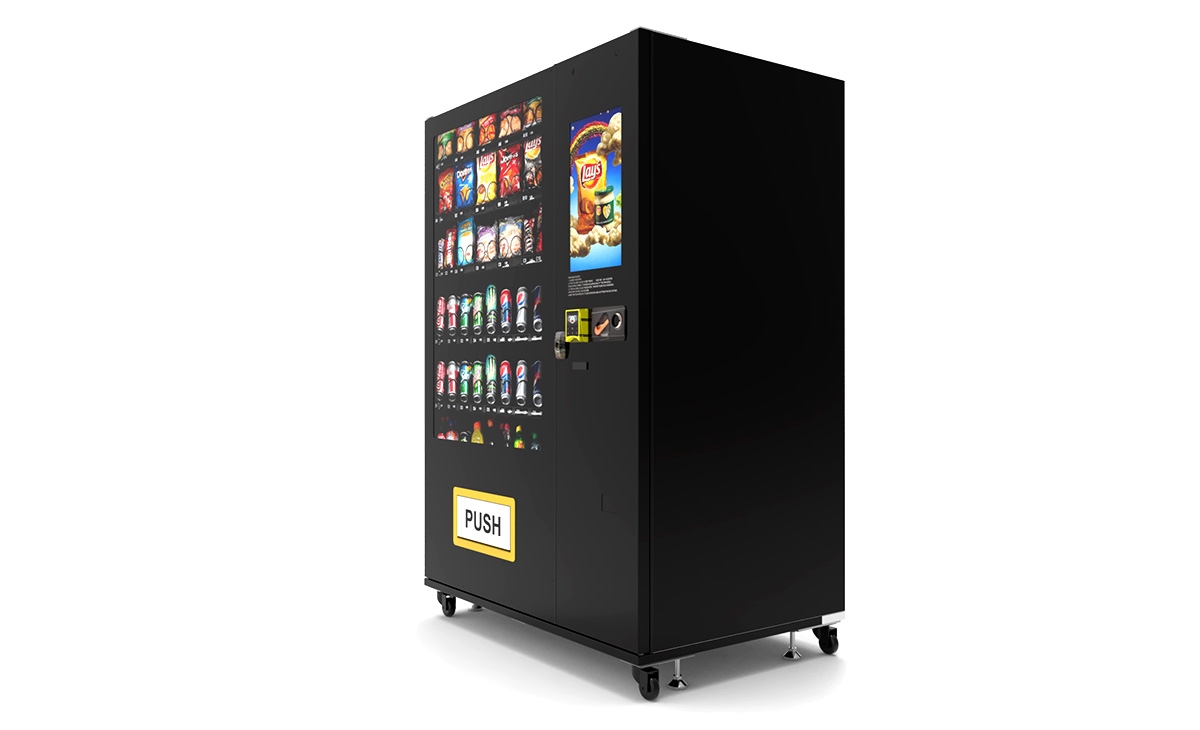
Look for a supplier with a track record of reliability, good customer support, and available spare parts. I recommend visiting a trade show or contacting other operators for referrals. When I needed a supplier for my European routes, I evaluated several and found that Zhongda Smart offered a good balance of quality and service. Always ask about warranty terms and the average response time for technical support.
What should I do when a machine breaks down?
First, check the error code on the display. Many issues can be resolved by restarting the machine or checking a cable connection. If the problem is mechanical, look for obvious jams. If you cannot fix it within 30 minutes, call a professional vending machine repair service. Do not let the machine sit idle for days. The longer it is down, the more revenue you lose and the more likely the location owner will ask you to remove the machine.
How can I reduce restocking and maintenance costs?
Use remote monitoring to track inventory in real time. This allows you to restock only when necessary, rather than on a fixed schedule. I also standardize the product mix across my machines to simplify ordering. For maintenance, I train myself on basic repairs. I can fix 80% of common problems without calling a technician.
Final Thoughts from the Field
I have been in this business for over a decade, and I still learn something new every year. The biggest piece of advice I can offer is to treat your vending machines like a serious business, not a side hobby. Track every expense, every repair, and every sale. Learn the common vending machine problems in your area and how to fix them quickly. The difference between a successful operator and someone who quits after a year is often a willingness to get their hands dirty and solve problems on the spot.
If you are just starting out, do not overextend yourself. Buy one machine, learn the ropes, and then expand. The automated retail industry is growing, and there is plenty of room for smart operators who pay attention to the details. I hope this guide saves you some of the headaches I experienced in my early years.
This article was updated on October 26, 2024.