If you’ve been watching the retail landscape in the US over the last two years, you’ve probably noticed the same thing I have: trading card vending machines are popping up in malls, grocery store entrances, and even gym lobbies. The question I get asked most often isn’t whether they’re popular—it’s whether they actually make money. After running vending routes for over a decade and placing card machines in everything from rural gas stations to high-traffic urban retail centers, I can tell you this: the economics are real, but they’re not automatic. The machines that thrive are the ones where the operator understands foot traffic, product mix, and maintenance costs before ever signing a lease. Let’s break down the trading card vending machine opportunity the way I wish someone had explained it to me when I started.
The Shift From Hobby Shelves to Self-Service Kiosks
The trading card market has matured. What used to be a countertop display behind a hobby shop register is now a standalone automated retail experience. I’ve watched this transition happen in real time, and it’s not just about Pokémon or sports cards—it’s about how consumers want to buy. They want the thrill of the pull, the mystery of a sealed pack, and they want it without waiting for a store associate to unlock the case. That’s where the self-service kiosk model shines.
From my experience, the shift started gaining serious traction around 2021 when sealed product became harder to find in big-box retailers. Collectors turned to specialty shops, but those shops had limited hours. A card vending machine solves that problem by extending the sale window to 24/7. I’ve seen locations where the machine outsells the staffed counter by a factor of three simply because it’s always available.
What operators often underestimate is the behavioral difference between a browsing customer and a machine customer. A person walking past a vending machine isn’t necessarily a collector. They’re an impulse buyer. That changes everything about how you stock the machine. You need products that sell themselves—sealed packs, mystery boxes, and items with clear visual appeal behind glass.
This is also why I’ve shifted my own strategy toward placing machines in non-hobby locations. Grocery stores and laundromats outperform card shops in many cases because the audience is broader. The hobbyists will find you; the impulse buyers need to stumble on you. And that’s exactly what a self-service kiosk does best.
What a Trading Card Vending Machine Actually Costs
Let’s talk numbers, because this is where most newcomers get lost. The initial investment for a card vending machine isn’t uniform. You can spend anywhere from $4,000 for a basic wall-mounted unit to $15,000 or more for a large touchscreen model with multiple shelves and payment integrations. The sweet spot for most operators I know is the mid-range, typically between $6,000 and $9,000 for a reliable unit that can hold decent inventory and handle high transaction volumes.
I’ve run the numbers on my own routes, and here’s what I can share from experience: the average gross margin on card products sold through vending is roughly 40% to 55%, depending on what you’re selling. Booster packs and sealed boxes carry thinner margins—around 30% to 40%—while mystery packs and repackaged lots can push closer to 60%. That margin is your lifeline, because it has to cover rent, restocking labor, card processing fees, and machine depreciation.
According to data from IBISWorld, the vending machine operator industry in the US generates around $8.5 billion annually, with a steady growth rate of about 2% per year. That’s the broader context, but card-specific vending is growing faster because the product category itself is expanding. The trading card market was valued at roughly $6.3 billion globally in 2023, and projections from industry analysts suggest it could reach $13.4 billion by 2028, driven largely by nostalgia buying and new collector demographics.
What I tell every new operator is this: don’t budget for the machine alone. You need working capital for the initial inventory load, which will run you $2,000 to $5,000 depending on the machine’s capacity. You also need a buffer for maintenance and restocking labor. A realistic total startup cost for a single, well-placed unit is $10,000 to $15,000 if you’re doing it right.
How Long Until You Break Even
The payback period question is the one I get asked most, and the honest answer is: it depends entirely on location and product velocity. In a high-traffic mall kiosk space, I’ve seen machines gross $2,500 to $4,000 per month. In a slower suburban location, that number can drop to $800 or even $500. The difference isn’t the machine—it’s the people walking past it.
Let me give you a real example from my own operation. I placed a 32-inch touchscreen card vending machine in a busy shopping center near a movie theater and a popular fast-casual restaurant. The initial investment was about $8,500 for the unit, plus $4,000 in inventory. Within the first three months, the machine averaged $3,200 in monthly sales. After cost of goods, card processing fees, and minimal rent, I was netting around $1,400 per month. That puts the payback at roughly eight months, which is on the faster end of what I typically see.
On the flip side, I had a wall-mounted unit in a small hobby shop that never broke $600 in monthly sales. The rent was low, so it wasn’t a disaster, but it took over two years to recoup the initial investment. That machine taught me a lesson about location that I still apply today: foot traffic beats a targeted audience every time when you’re selling impulse products.
Statista data from 2023 shows that the average vending machine transaction value in the US is around $3.50, but card machines skew higher because the product price points are higher. My average transaction across all card machines is closer to $18, which means I need far fewer transactions to hit revenue targets. That’s the structural advantage of this category.
Choosing Between Self-Op, Leasing, and Revenue Share
There are three main ways to get into card vending: buy your own machine, lease one from a supplier, or partner with a location owner on a revenue-share basis. Each model has trade-offs, and I’ve used all three at different points in my career.
Owning your machine gives you the most control and the best long-term return, but it also carries the most risk. If the location fails, you’re stuck with a machine you need to relocate. Leasing reduces upfront capital but eats into your margins over time. Revenue sharing is attractive when you don’t have capital, but you’re essentially working for the location owner.
Here’s a comparison table I put together based on my own operating experience. It’s not official data—it’s what I’ve seen across dozens of placements.
| Model | Upfront Cost | Monthly Margin | Control Level | Risk Profile |
|---|---|---|---|---|
| Self-Owned | $10k–$15k | High (40–60%) | Full | High if location fails |
| Leased | $0–$2k | Medium (20–35%) | Limited | Low, but capped upside |
| Revenue Share | $0–$500 | Variable (10–25%) | Minimal | Very low, but low reward |
My personal preference is self-ownership with a strong location agreement. If you can negotiate a short-term lease—six months with renewal options—you limit your downside while keeping the upside. I’ve done this successfully in three different states, and it’s the model I recommend to anyone who has the capital.
Location Evaluation: What I Look For Before Signing Anything
I can’t stress this enough: the machine is only as good as the spot it’s standing in. I’ve developed a simple checklist over the years, and I run through it every time I’m evaluating a potential location. First, I look at raw foot traffic. I want to see at least 500 people passing by per day, and ideally over 1,000. I’ve used manual counting and simple clickers, but if you want data, the U.S. Small Business Administration publishes guides on foot traffic analysis that are genuinely useful.
Second, I look at dwell time. A location where people are waiting—laundromats, DMV waiting areas, movie theater lobbies—is worth more than a location where they’re rushing through. Dwell time correlates directly with impulse purchase rates. I’ve seen a laundromat machine outperform a mall machine because people had time to browse.
Third, I check the power situation and security. You need a reliable outlet and some form of surveillance or at least a line of sight to a staffed counter. Card machines are targets for theft because the product is high-value and small. I had a machine broken into once in a poorly lit parking lot entrance, and it cost me $1,200 in lost product and repair fees. That was a painful lesson in location vetting.
Fourth, I negotiate rent based on gross revenue, not a flat monthly fee. I’ve found that location owners are often open to a 10% to 15% commission on sales rather than a fixed rent, which aligns incentives. If they don’t believe in the machine, I don’t want to be paying them rent anyway.
Device Selection: Touchscreen, Wall-Mounted, or Something Else
The hardware you choose matters more than most beginners think. I’ve run basic coil machines, smart card dispensers, and large interactive kiosks. Each has its place, but the trend is clearly toward touchscreen-enabled automated retail solutions. A 32-inch touchscreen machine allows for better product display, video loops, and interactive browsing, which increases average transaction value.
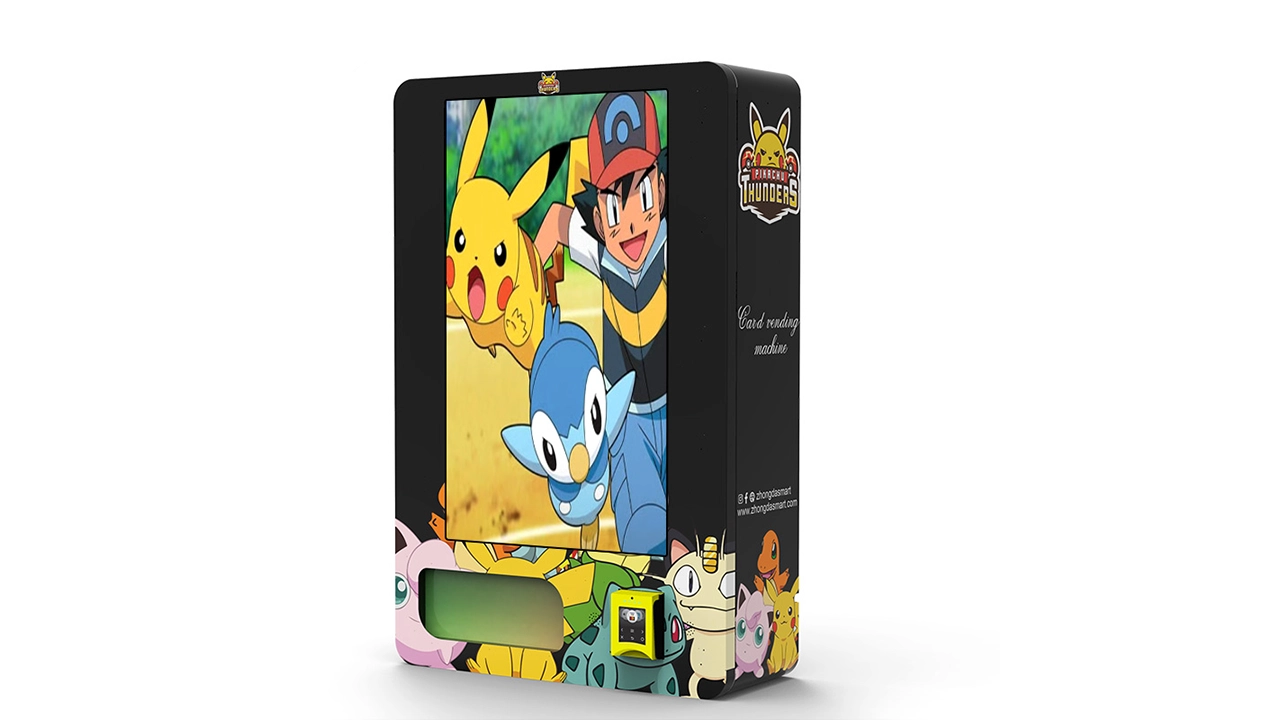
Wall-mounted units are cheaper and work well in tight spaces, but they hold less inventory and are harder to maintain. I’ve used them in small convenience stores where floor space is limited, and they perform adequately. However, if you’re serious about building a route, I’d recommend investing in at least one full-size unit first to understand the operational demands.
One thing I look for in any machine is modular shelving. Card products come in different sizes—booster packs, blisters, boxes—and you need flexibility to adjust shelf heights. I’ve also learned to prioritize machines with reliable card dispensing mechanisms. Some cheaper units jam frequently, and every jam costs you a customer. The 32-inch touchscreen trading card vending machine I’ve standardized on has a rotating shelf system that handles different pack sizes well, and that reliability has directly reduced my service calls.
In terms of suppliers, I’ve worked with several manufacturers, and I’ve had the best experience with Zhongda Smart on the hardware side. They’re not the cheapest option, but their machines have held up well in high-traffic locations, and their customer support has been responsive when I’ve needed replacement parts. That matters more than saving a few hundred dollars upfront.
Payment Systems and the Self-Service Experience
Modern card vending machines need to accept cards, mobile wallets, and ideally cash. The payment stack is critical because collectors are often younger and expect tap-to-pay. I’ve seen machines that only accepted cash fail in affluent areas simply because nobody carries coins anymore. That’s not a product problem—it’s a payment problem.
From my experience, the best payment systems are the ones that integrate with telemetry. You want real-time sales data, inventory tracking, and remote diagnostics. This is where the concept of a connected self-service kiosk pays off. I can check my machines from my phone and know exactly which products are selling and which are sitting stale.
The user interface matters too. I’ve learned that a confusing screen kills sales. If a customer has to think for more than ten seconds, they walk away. The best machines I’ve operated have a clean, three-step purchase process: select a product, choose a payment method, and receive the item. Anything more complicated than that needs to be redesigned.
One thing that surprised me early on is how much customers appreciate the machine itself as an experience. The lighting, the layout, the way the product drops—it all contributes to the perceived value. I’ve had customers tell me they prefer buying from the machine over the counter because it feels more “authentic,” like a modern-day arcade prize dispenser. That’s the experience layer that separates a good placement from a great one.
Restocking, Inventory Management, and Maintenance Reality
Restocking a card vending machine is not like restocking a snack machine. The product is high-value, low-weight, and theft-prone. I’ve developed a strict restocking routine: every seven to ten days for high-traffic locations, and every two to three weeks for slower ones. The key is to never let the machine look empty. A half-empty card machine signals low selection, and low selection kills impulse buys.
Inventory management is where I’ve seen the most operator errors. Newcomers stock what they like, not what sells. I’ve learned to track sell-through rates religiously. If a product hasn’t moved in three weeks, I pull it and replace it with something else. This is where data-driven decisions beat gut feelings. I use a simple spreadsheet, but there are dedicated vending management platforms that automate this.
Maintenance is another reality check. Card dispensing mechanisms are more sensitive than snack spirals. You’ll deal with jams, misaligned shelves, and payment terminal issues. I budget about 5% of gross revenue for maintenance and unexpected repairs. That’s a rule of thumb I’ve developed from years of operating across different climates and traffic patterns.
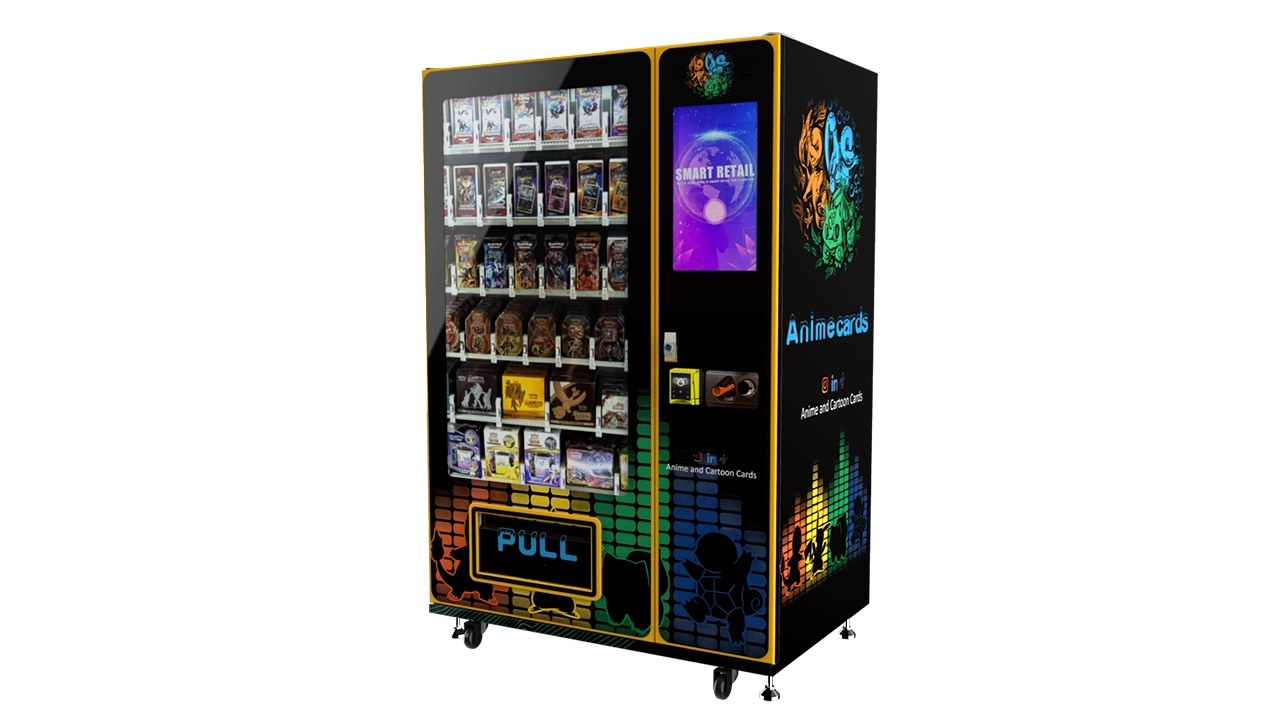
If you’re not prepared to do your own vending machine repair, you need a reliable local technician. In some areas, that’s easy to find; in others, you’ll be waiting days for service. I’ve learned to keep a stock of spare parts—sensors, motors, and card readers—on hand so I can fix common issues myself. That alone has saved me thousands in service call fees.
Common Mistakes I’ve Made and Seen Others Make
I’m going to be honest with you: I’ve made my share of mistakes in this business. The most expensive one was chasing a low-rent location without verifying foot traffic. I placed a machine in a strip mall that looked busy on paper but was actually a dead zone. It sat there for six months barely making $300 a month. I finally pulled it, relocated it to a grocery store entrance, and it tripled its revenue within a month. The lesson was simple: rent is not the metric that matters—traffic is.
Another mistake I see constantly is overstocking a new machine with too many SKUs. New operators think variety will attract more buyers, but it actually creates decision paralysis. I’ve found that a curated selection of 8 to 12 products performs better than a machine stuffed with 30 different items. Fewer choices, faster decisions, higher conversion.
I also see operators neglecting the visual merchandising side. Cards are a visual product. If your machine is dimly lit or the shelves are dusty, it looks abandoned. I clean my machines every time I restock, and I’ve seen sales jump after a simple cleaning and reorganization. It sounds trivial, but it’s not.
One success case I’m proud of involved a location that other operators had written off. A small grocery store in a mid-sized town had a corner with low foot traffic. I negotiated a revenue-share deal with no minimum rent, placed a wall-mounted unit, and stocked it with a mix of sports cards and mystery packs. Within two months, it was one of my top-performing machines. The difference was that I studied the local demographics—mostly families with kids—and adjusted the product mix accordingly. That’s the kind of judgment you only develop by being in the field.
How to Vet Suppliers and Avoid Bad Hardware
Supplier selection is one of the most critical decisions you’ll make, and it’s also where newcomers get burned. I’ve seen operators buy cheap machines from unknown manufacturers only to have them fail within months. The machine is your revenue engine; cutting corners on it is like buying a delivery truck with no engine.
When I evaluate a supplier, I ask three questions. First, how long have they been manufacturing vending equipment? Second, do they have local service partners in my region? Third, what’s their warranty and parts availability? If a supplier can’t answer those questions clearly, I walk away.
I’ve had positive experiences with Zhongda Smart, particularly with their build quality and after-sales support. They’ve been around long enough to understand the operational realities of automated retail, and their machines are designed for continuous use, not occasional operation. That’s important because a card vending machine in a good location runs hundreds of transactions per week.
I’d also recommend asking for references from other operators. A supplier that’s willing to connect you with existing customers is a supplier that’s confident in their product. I’ve done this myself, and the insights I gained from talking to other operators were more valuable than any spec sheet.
Regulatory Considerations and Permits
Depending on where you operate, you may need business licenses, sales tax permits, and possibly a vending machine operator’s license. The rules vary significantly by state and municipality. I’ve operated in states where a simple business license was sufficient, and others where I needed a specific vending permit and health inspection for food-adjacent products.
If you’re planning to sell sealed card products, you’re generally not dealing with food safety regulations, but you still need to collect and remit sales tax. The U.S. Small Business Administration has a good overview of licensing requirements, and I recommend checking your local city and county regulations before you sign any lease.
One thing I’ve learned is that some mall and retail property managers have their own requirements for vending machines, including insurance certificates and equipment approvals. I always ask for a written agreement that specifies who is responsible for electricity, maintenance, and liability. This may seem like overkill, but it has saved me from headaches on multiple occasions.
Scaling Up: From One Machine to a Route
Once you’ve proven a single location, the natural next step is scaling. I’ve built my current route by adding one or two machines per quarter, not by rushing into twenty locations at once. Each machine needs your attention, and if you’re not prepared to service them regularly, you’ll see revenue drop and theft increase.
Scaling also changes your purchasing power. With multiple machines, you can buy inventory in larger volumes, which improves your margins. I’ve negotiated better wholesale rates by consolidating orders with a small group of other operators. That’s a strategy I picked up from a mentor early in my career, and it’s still one of the most effective ways to boost profitability.
When you’re ready to expand, consider the wall-mounted card vending machine for smaller locations and full-size units for anchor spots. I’ve found that a mix of both gives me the flexibility to enter locations that would otherwise be too small or too expensive.
Data-Driven Adjustments: Knowing When to Pivot
The operators who succeed in this space are the ones who treat their machines like live data points. I review my sales data weekly, and I’m always looking for trends. Is a particular product slowing down? Is a location underperforming during certain hours? These insights tell me when to rotate inventory, adjust pricing, or even relocate a machine.
I’ve also learned to pay attention to seasonal trends. Sports card sales spike around major releases and during the holiday season. Pokémon products surge whenever a new set drops. If you’re not watching the release calendar, you’re missing easy sales. I maintain a simple calendar of major trading card releases and plan my restocking schedule around them.
One of the best decisions I made was to use a telemetry system that tracks sales in real time. It allows me to spot issues before they become problems. For example, if a machine’s transaction count drops suddenly, it might be a payment terminal issue or a product shortage. I can dispatch a technician or adjust remotely before losing more revenue.
Frequently Asked Questions
Are trading card vending machines profitable?
They can be, but profitability depends heavily on location, product selection, and operating efficiency. In my experience, a well-placed machine can generate $2,000 to $4,000 in monthly sales, with net margins of 30% to 50% after all costs. However, a poorly placed machine can lose money. There’s no guaranteed profit in this business.
How much does a trading card vending machine cost?
You can expect to pay between $4,000 and $15,000 for the machine itself, depending on size and features. A full setup with inventory and installation typically runs $10,000 to $15,000. Leasing options are available, but they reduce your long-term margins.
How long does it take to recoup the investment?
Payback periods range from six months to two years. In my experience, the average is around 10 to 14 months for a good location. High-traffic areas with strong impulse buying can pay back faster, while slower locations take longer.
Should I buy or lease a card vending machine?
I recommend buying if you have the capital. Leasing reduces upfront risk but caps your profitability. Revenue-share agreements are best for operators who have no capital and want to test the market with minimal exposure.
Where should I place a card vending machine?
Look for locations with high foot traffic and dwell time: grocery store entrances, malls, laundromats, movie theaters, and convenience stores. Avoid locations with low visibility or poor lighting. I always negotiate for revenue-based rent when possible.
What permits and licenses do I need?
Requirements vary by state and city. You’ll typically need a business license and a sales tax permit. Some areas require a specific vending operator license. Check with your local government and the U.S. Small Business Administration for guidance.
How do I choose a reliable supplier?
Look for manufacturers with a track record in automated retail, responsive support, and available spare parts. I’ve had good results with Zhongda Smart, but you should always ask for references and test the machine before committing to a large order.
What happens if the machine breaks down?
You’ll need to perform basic repairs or hire a local technician. I recommend keeping spare parts on hand and learning common fixes. Budget about 5% of gross revenue for maintenance and repairs.
How can I reduce restocking and maintenance costs?
Use telemetry to monitor inventory remotely, consolidate restocking trips, and clean the machine during every visit. A well-maintained machine has fewer breakdowns and higher sales, which lowers your overall cost per transaction.
If you’re thinking about getting into this business, start small, do your homework on locations, and don’t believe the hype that every machine prints money. The opportunity is real, but it rewards operators who treat it like a business, not a lottery ticket. I’ve seen the model work, and I’ve seen it fail—the difference is almost always in the preparation and the willingness to adapt. If you’re ready to put in that work, the trading card vending machine space is still wide open.
Disclaimer: The figures and insights shared in this article are based on personal operating experience and publicly available data. Actual results may vary depending on location, market conditions, and operational decisions. This content is for informational purposes only and does not constitute financial or legal advice.