If you are looking at a trading card vending machine and wondering whether it can actually turn a profit, the short answer is yes—but only if you treat it like a small business, not a passive ATM. After a decade of placing, repairing, and restocking automated retail equipment across the U.S., I can tell you that the difference between a machine that prints money and one that collects dust comes down to location, unit economics, and how honestly you calculate your real costs. Most first-time operators underestimate the split between gross revenue and net profit, and that is exactly where the trading card vending machine business gets dangerous. Let me walk you through the real math, the traps I have hit, and the numbers you need before you buy anything.
Why the Trading Card Vending Machine Niche Is Different
Traditional vending machines sell consumables: a soda is gone once you drink it, a snack is gone once you eat it. Trading cards are different because they carry collectible value, and that changes the entire profit model. You are not just selling cardboard; you are selling the chance to pull a rare card worth more than the pack itself. That emotional pull drives repeat purchases in a way that a candy bar never will.
But that same dynamic creates a problem. If the machine is poorly stocked, if the selection is stale, or if the price point feels off, collectors will walk away and never come back. I have seen operators fill a machine with base cards nobody wants and then complain that the market is dead. The market is not dead; their inventory strategy was.
Another difference is the secondary market. Unlike snacks, trading cards have a resale value that fluctuates. That means you need to stay aware of what is hot in the hobby, not just what your distributor wants to sell you. A machine that sits in a comic book shop needs different stock than one placed in a mall or a Walmart parking lot.
Finally, the equipment itself is more complex. A card vending machine often has a touchscreen, a card-dispensing mechanism, and sometimes even a gravity bin that requires precise calibration. The trading card vending machine niche demands more technical attention than a standard snack unit, and if you ignore that, repair costs will eat your margin.
How to Calculate Profit: The Real Formula
Let me give you the formula I use with every operator I mentor. It looks simple on paper, but the devils are in the details.
Net Profit = (Gross Revenue – Cost of Goods Sold – Location Commission – Operating Costs – Maintenance/Repair Reserve – Depreciation)
Most people only look at the first three items and think they are rich. You need to run the full equation, including a reserve for the day the card mechanism jams or the screen goes dark.
Step 1: Estimate Gross Revenue Realistically
Gross revenue is the total amount the machine takes in before any deductions. In my experience, a well-placed trading card machine in a high-traffic hobby shop or mall can generate between $1,200 and $3,500 per month. But that is a wide range because location matters more than any other variable.
If you place a machine in a low-traffic laundromat, do not expect more than $300 to $600 per month. The audience is not there. If you place it near a game store that hosts Friday Night Magic, the numbers can be much higher because the customer base is already self-selected.
I always tell new operators to be conservative. Use the lower end of the range for your first projection. If the machine outperforms, great. If it underperforms, you are not caught off guard.
Step 2: Calculate Cost of Goods Sold
Cost of goods sold is what you pay for the cards you put inside. This is not the retail price printed on the pack; it is the wholesale price you pay to your supplier. For sealed booster packs, your margin is usually between 30% and 45%.
Let me give you a concrete example. If a booster pack retails for $5.99 and your wholesale cost is $3.60, your gross margin is roughly $2.39 per pack. That is about 40%. That sounds healthy until you subtract the rent commission and operating costs.
If you are selling single cards from a bulk box, your margins can be higher, sometimes 70% or more, because you are curating the inventory yourself. But that also means your labor cost goes up because someone has to sort, price, and sleeve each card.
Step 3: Subtract Location Commission
Location commission is the rent you pay to the host business. This is usually a percentage of gross revenue, not a flat fee. In my experience, the standard ranges from 10% to 20% of gross sales, depending on the quality of the foot traffic.
A prime location in a hobby shop might demand 20% because they know their customers will buy. A less desirable location might accept 10% or even no commission if they just want the foot traffic. Negotiate hard here because this is one of the few costs you can actually control.
Real Cost Breakdown: What You Need to Budget
Let me walk you through the actual capital outlay so you have a realistic picture before you start shopping.
Equipment Purchase
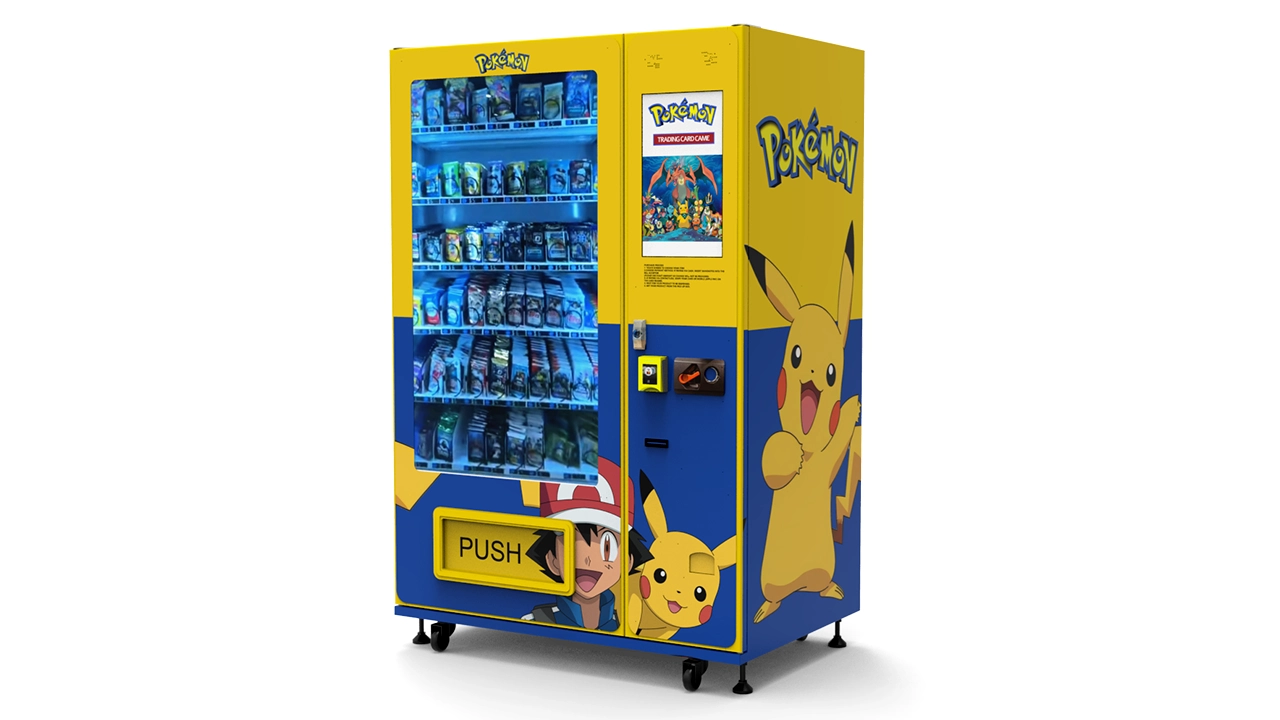
A new, commercial-grade trading card vending machine with a touchscreen and card-dispensing mechanism will cost you between $4,500 and $9,000 depending on the size and configuration. If you buy a smaller wall-mounted unit, you might get closer to $3,500, but you will sacrifice capacity and product variety.
I have seen operators buy used machines for $1,500 to $2,500, but I have also seen those same operators spend $800 on repairs within the first three months. If you are considering a used unit, budget at least 20% of the purchase price for immediate maintenance.
Installation and Setup
Delivery, installation, and initial stocking will run you another $300 to $700. This includes the cost of the product itself for the initial fill, which can be $500 to $1,000 depending on the size of the machine and the price point of the cards.
Operating Costs
Electricity is usually negligible, maybe $10 to $20 per month. Payment processing fees are not negligible, though. Card readers and mobile payment systems take a cut of every transaction. You are looking at 2.9% plus a small fixed fee per transaction, so factor that into your margins.
Connectivity is another cost if your machine uses cellular data for remote monitoring. That will run you $15 to $30 per month, but it is worth it if you want to avoid driving to the machine only to find it empty or jammed.
Maintenance and Repair Reserve
Set aside at least 10% of your monthly gross revenue for maintenance and repair. This is not optional. I have seen card-dispensing wheels wear out, touchscreens go dark, and payment systems fail. If you do not have a reserve, one bad month can wipe out your profits for the quarter.
If you are not handy with electronics, you will also need to budget for a technician. Vending machine repair calls typically cost $75 to $150 per hour, and most jobs take two to three hours.
Location: The Single Biggest Profit Driver
I cannot stress this enough: location is 80% of the battle. You can have the best machine, the best pricing, and the best inventory, but if it is in the wrong spot, it will fail.
What Makes a Good Location
Look for places where people already gather for hobbies or shopping. Hobby shops, comic book stores, game cafes, and even certain Walmart or Target entrances can work well. The key is foot traffic combined with the right demographic.
In my own operation, my best-performing machine sits in a hobby shop that runs weekly trading card tournaments. That machine consistently does $2,800 per month because the customers are already there, ready to buy. My worst-performing machine sat in a movie theater lobby, and it barely did $200 per month. The audience was there, but they were not thinking about cards.
How to Evaluate Foot Traffic
Do not just look at the raw number of people passing by. Look at the type of people. Are they stopping to look at the machine? Are they lingering? Are they carrying bags from the store you are in?
I recommend sitting near the proposed location for at least two hours on a weekend and two hours on a weekday. Count how many people walk past, how many glance at the machine, and how many actually stop to read the screen. That gives you a much better sense than any traffic report.
The Wall-Mounted Option
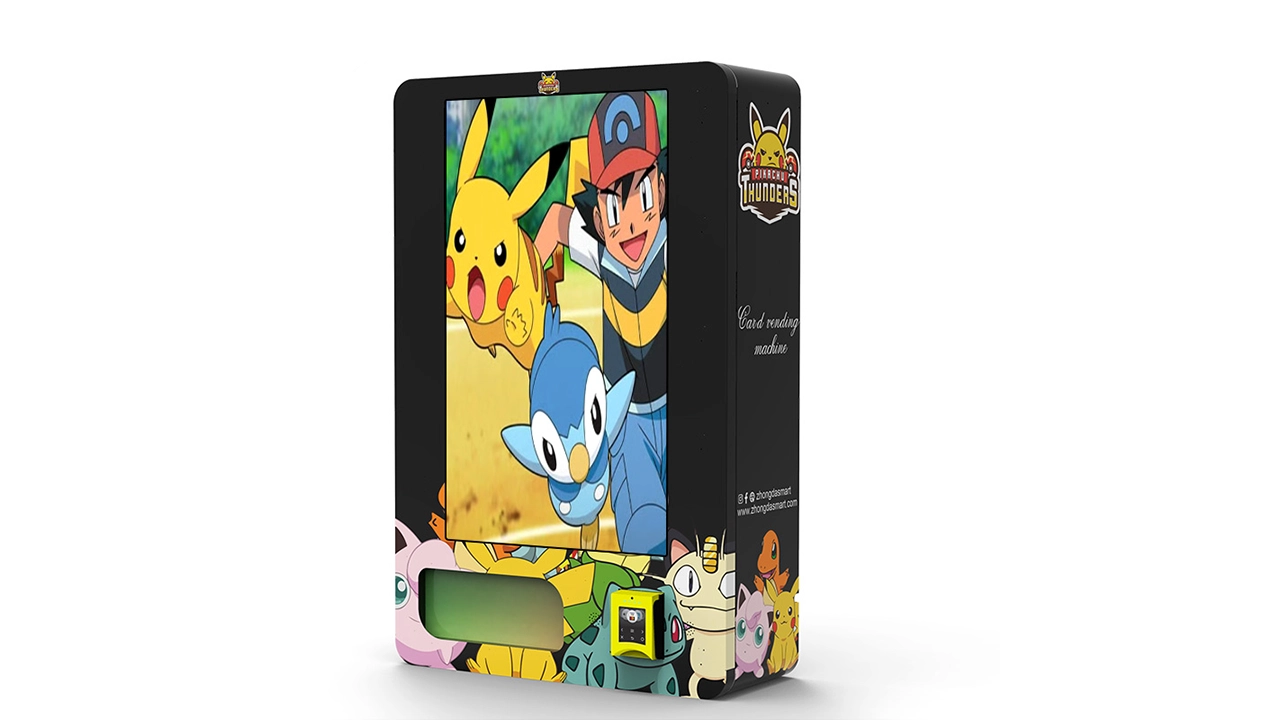
If you are working with a tight floor space, a wall-mounted card vending machine can be a smart play. It takes up less real estate, which makes it easier to negotiate a lower commission, and it forces you to be more disciplined about inventory because you have less room to work with.
Comparing Different Machine Types and Costs
Not all trading card vending machines are the same, and the type you choose will directly affect your profit potential. Here is a simple comparison based on my experience.
| Machine Type | Initial Cost | Monthly Revenue Potential | Maintenance Complexity | Best Location |
|---|---|---|---|---|
| 32-inch Touchscreen Floor Model | $6,500 – $9,000 | $1,500 – $3,500 | Moderate (touchscreen, card wheel) | Hobby shops, malls, game stores |
| Wall-Mounted Compact Unit | $3,500 – $5,500 | $800 – $1,800 | Low to Moderate | Small retail shops, cafes, convenience stores |
| Used/Refurbished Unit | $1,500 – $3,000 | $500 – $1,500 | High (older parts, more failures) | Only if you can repair it yourself |
As you can see, the upfront cost difference is significant, but so is the revenue potential. Do not buy a machine based on price alone. Buy based on the location you have secured and the traffic you expect.
The Hidden Costs Nobody Talks About
There are three costs that first-time operators almost always miss, and they can quietly destroy your profit.
Inventory Shrinkage and Damage
Cards get damaged, packs get tampered with, and sometimes the machine just eats a card. You need to budget for a 2% to 5% shrinkage rate. That means if you sell $1,000 worth of cards, you should expect $20 to $50 in lost or damaged product.
Payment Processing Fees
If you have ever run a business, you know payment processors take a cut. For card and mobile payments, expect to lose about 3% of gross revenue. On a $2,000 month, that is $60. It does not sound like much, but it adds up over a year.
Opportunity Cost of Your Time
Your time has value. If you spend four hours a week restocking, cleaning, and checking the machine, and you value your time at $25 per hour, that is $100 per week, or $400 per month. If your machine only nets $600 per month, you are effectively working for $200.
Realistic Profit Scenarios from My Own Operation
Let me share two examples from my own route to show you how the math plays out in the real world.
Scenario A: The Successful Machine
I have a 32-inch touchscreen model placed in a hobby shop in a mid-sized college town. The location commission is 15% of gross revenue. The machine does about $2,600 per month.
- Gross Revenue: $2,600
- Cost of Goods Sold (40%): $1,040
- Location Commission (15%): $390
- Payment Processing Fees: $78
- Electricity and Connectivity: $35
- Maintenance Reserve (10%): $260
That leaves a net profit of about $797 per month. Not bad for a single machine, and the payoff period for the initial investment is around 10 to 12 months.
Scenario B: The Mistake I Made
Early in my career, I placed a machine in a busy grocery store because the rent was low. I thought the foot traffic would carry the day. It did not. The demographic was wrong, and the machine only did $400 per month. After paying the commission, processing fees, and maintenance reserve, I was left with about $80 per month. That machine took over three years to pay for itself, and I only kept it because the location was convenient for my other stops.
That experience taught me to be honest about the difference between foot traffic and target traffic.
How to Choose a Supplier Without Getting Burned
Your supplier determines your margins, your product quality, and your ability to restock quickly. I have worked with several suppliers over the years, and I have learned to ask specific questions before signing anything.
What to Ask a Supplier
First, ask about their wholesale pricing structure and whether it changes based on volume. Second, ask about their return policy for damaged or defective products. Third, ask about their restock lead time. If you run out of a hot product, you need to be able to get more within a week, not a month.
I have also worked with equipment manufacturers like Zhongda Smart, and I can tell you that the quality of the machine matters as much as the quality of the cards. A reliable machine with a good warranty will save you more money than a slightly cheaper machine that breaks down twice a year.
Red Flags to Watch For
If a supplier will not give you a clear answer on lead times or does not have a spare parts inventory, walk away. If they only sell you the machine and then disappear when you need support, you will regret it. I have seen operators buy machines from overseas suppliers with no local support, and when the touchscreen failed, they had to ship the entire unit back at their own cost.
Self-Op, Lease, or Revenue Share: Which Model Works
There is more than one way to run a trading card vending machine. You can own and operate it yourself, lease it to a location, or enter into a revenue share agreement with the host business. Each model has its pros and cons.
Self-Operated
This is the most common model for independent operators. You buy the machine, find the location, stock it, and keep all the profit after expenses. The downside is that you take on all the risk and all the maintenance responsibility.
Leasing to a Location
Some operators buy the machine and then lease it to a host business for a flat monthly fee. This is lower risk because you get a fixed payment, but your upside is capped. I have seen this work well for operators who do not want to deal with inventory management.
Revenue Share
In a revenue share model, you and the host business split the gross revenue. This can be attractive because it gives the host an incentive to promote the machine, but it also means you need to trust the host to report sales accurately. I have seen this go wrong when the host underreports, so if you go this route, use a machine with remote sales monitoring.
How Long Until You Break Even
Payback period is the number one question I get from new operators. Based on my experience, a well-placed machine in a good location should pay for itself in 12 to 18 months. If it takes longer than 24 months, you are either in the wrong location or you are paying too much for the equipment.
Let me show you the math using a realistic scenario. If your machine costs $7,500 including delivery and initial stocking, and you net $500 per month after all expenses, your payback period is 15 months. If you net $800 per month, it drops to just over 9 months.
I always recommend running a cash flow projection for at least 12 months before you buy. Include a conservative revenue estimate and a maintenance reserve. If the projection still looks good, you are probably ready to move forward.
Maintenance and Restocking: The Daily Grind
The most profitable machine in the world will fail if you do not keep it stocked and clean. I have learned this the hard way more than once.
Restocking Frequency
In a high-traffic location, you will need to restock every 7 to 10 days. In a slower location, every two to three weeks is usually enough. If you let the machine run empty, collectors will stop checking, and they will not come back.
Cleaning and Upkeep
Wipe down the screen, clean the glass, and make sure the card-dispensing mechanism is free of dust and debris. A dirty machine looks neglected, and collectors will assume the cards are damaged or old.
Remote Monitoring
If your machine supports remote monitoring, use it. It will tell you when inventory is low, when a transaction fails, and when the machine is offline. This can save you hours of unnecessary driving and help you catch problems before they become expensive.
Common Mistakes I See New Operators Make
I have made most of these mistakes myself, and I have watched others make them too. Here are the ones to avoid.
Buying the Cheapest Machine
Cheap machines break. They have flimsy card wheels, poor touchscreens, and weak payment systems. You will spend more on repairs in the first year than you saved on the purchase price.
Ignoring the Secondary Market
If you do not know what cards are hot, you will buy the wrong inventory. Spend time on eBay, TCGplayer, and hobby forums to see what is selling.
Placing in the Wrong Location
Foot traffic is not enough. You need the right foot traffic. A busy grocery store is not a good location for trading cards. A small hobby shop with a loyal customer base is worth ten times more.
External Data and Industry Context
It is worth looking at the broader vending industry to understand the opportunity. According to Statista, the U.S. vending machine industry generates billions in annual revenue, and the trend toward automated retail is only accelerating. The IBISWorld vending machine operators industry report shows steady growth driven by cashless payments and contactless technology.
The U.S. Small Business Administration also offers useful guidance on market research and competitive analysis, which is exactly what you need to do before placing your first machine. And if you are operating in Europe, Eurostat provides retail and consumer data that can help you evaluate different markets.
Frequently Asked Questions
Are trading card vending machines profitable?
Yes, they can be profitable if placed in the right location with the right inventory. Based on my experience, a well-run machine can net between $300 and $1,000 per month after all expenses. However, results vary significantly based on location, product selection, and how well you control costs.
How much does a trading card vending machine cost?
A new machine typically costs between $4,500 and $9,000 depending on size and features. Wall-mounted units are cheaper, around $3,500 to $5,500, while larger floor models with touchscreens cost more. Used machines can be found for $1,500 to $3,000, but they often require repairs.
How long does it take to break even?
In my experience, a well-placed machine pays for itself in 12 to 18 months. If you have a high-traffic location and strong margins, you might break even in 9 to 12 months. If it takes longer than 24 months, you should reevaluate your location and cost structure.
Should a beginner buy or lease a machine?
If you have the capital and you have secured a good location, buying is better because you keep all the profit. If you are unsure about the market or you want to test the waters with lower risk, leasing or a revenue share agreement can be a safer start.
Where is the best place to put a trading card vending machine?
Hobby shops, comic book stores, game cafes, and entertainment venues are the best locations. Look for places where collectors already gather. Avoid locations with high foot traffic but the wrong demographic, such as grocery stores or movie theaters.
What permits or licenses do I need?
Requirements vary by state and municipality. You generally need a business license and possibly a sales tax permit. If you are placing the machine on private property, you also need a written agreement with the property owner. Check with your local government for specific requirements.
How do I choose a reliable supplier?
Ask about wholesale pricing, return policies, and restock lead times. Look for a supplier with a local support presence. I have had good experiences with manufacturers like Zhongda Smart, but you should always do your own due diligence before committing.
What happens if the machine breaks down?
You need a plan. If you are handy, you can fix many issues yourself, but you should still budget for professional repairs. Keep spare parts on hand, especially for the card-dispensing mechanism and the payment system. A maintenance reserve of 10% of monthly revenue will cover most unexpected costs.
How can I reduce restocking and maintenance costs?
Use remote monitoring to check inventory levels without visiting the machine. Group your machines on a route so you can service multiple locations in one trip. Buy in bulk to reduce per-unit costs, and keep your inventory focused on the best-selling products.
Final Thoughts from the Field
Running a trading card vending machine is not a get-rich-quick scheme. It is a real business with real costs, real risks, and real rewards if you do it right. I have seen operators make solid side income from a single machine, and I have seen others lose money by ignoring the fundamentals.
My best advice is to start small, be conservative with your revenue projections, and always keep a maintenance reserve. Find a location where collectors already gather, buy quality equipment from a reliable supplier, and stay on top of your inventory. If you do that, the math tends to work out in your favor.
Before you sign any contract or hand over any money, sit down with a spreadsheet and run the full profit formula. Trading card vending machines can be a great addition to an existing route or a standalone experiment, but only if you go in with your eyes open.
Disclaimer: This article reflects my personal experience and estimates. Actual revenue, costs, and payback periods vary depending on location, equipment, market conditions, and operational efficiency. Always conduct your own research and consult a financial professional before making investment decisions.