If you are reading this, you are probably tired of watching card shops and hobby stores dictate how and when you can sell trading cards, and you are wondering whether a trading card vending machine is the right move for your business. I have spent over a decade in the automated retail space, and I can tell you that the single most important decision is not which machine to buy, but how you customize the entire vending experience to match your brand and your location. In my experience, a generic card machine placed in a mediocre spot will barely cover its rent, while a properly branded self-service kiosk in the right retail environment can generate more revenue per square foot than almost anything else in the store.
Why a Trading Card Vending Machine Is Different From Food and Snack Vending
Most operators who come to me have experience with snack or drink vending, and they assume the card business works the same way. It does not. A snack machine sells items with a low unit price and a predictable margin, but a card machine sells mystery, collectibility, and the hope of hitting a high-value card. That changes everything about how you stock it, where you place it, and how you handle customer expectations.
When I placed my first card vending machine in a comic shop back in 2016, I made the mistake of treating it like a candy machine. I filled it with loose packs, set a basic margin, and walked away. Within two weeks, the machine jammed because a customer shoved a damaged pack back into the slot, and the shop owner was furious. I learned quickly that card vending is not a passive income play; it is a curated retail experience that requires constant attention to product mix, machine maintenance, and customer psychology.
The good news is that the market has matured significantly since then. According to a recent industry report, the global vending machine market is projected to grow at a compound annual growth rate of over 6% through 2030, and the trading card segment is outperforming most traditional categories. That growth is driven by the resurgence of sports cards, Pokémon, and other collectible card games, particularly among adults with disposable income who are looking for a fun, low-cost thrill.
If you are serious about this, you need to understand that the machine is not the product. The product is the experience of buying a pack, the chance of pulling something rare, and the trust that the machine is fair and well-maintained. Your brand is what makes that experience memorable, and that is where customization comes in.
Assessing Whether a Card Vending Machine Is Actually Profitable
The first question I always get asked is whether these machines are actually profitable, and the honest answer is that it depends on your location, your product sourcing, and your ability to keep the machine running. In my own operations, I have seen single machines in high-traffic hobby stores generate over $1,800 in monthly sales, while identical machines in lower-traffic locations barely break $300. The difference is not the machine; it is the fit between the product and the customer base.
Let me give you a real example. I have a partner who runs a card shop in a mid-sized city in Ohio, and we placed a wall-mounted card vending machine near his counter. That machine does about $1,200 a month in sales, with a gross margin of around 35% after accounting for card costs, payment processing fees, and restocking time. After the machine cost, installation, and ongoing maintenance, he recovered his initial investment in about seven months. That is a realistic outcome for a decent location, but it is not guaranteed.
On the other hand, I once placed a machine in a grocery store lobby because the manager offered me a low commission rate and I thought the foot traffic would compensate. It did not. The grocery shoppers were not card collectors, and the machine sat idle for weeks. I learned that foot traffic alone is not enough; you need the right kind of foot traffic. A location with 500 daily visitors who are not interested in trading cards is worth less than a location with 100 daily visitors who are actively collecting.
To give you a clearer picture, here are some numbers from my own experience and from discussions with other operators. A standard card vending machine with a 32-inch touchscreen costs between $4,500 and $8,000 depending on the configuration and the supplier. A wall-mounted unit can be slightly cheaper, while a full-size cabinet with multiple shelves and a card dispenser will be at the higher end. Monthly operating costs, including rent or commission, electricity, and payment processing, typically run between $150 and $350 per machine.
Based on those figures, a machine that does $800 in monthly sales with a 35% margin will generate about $280 in gross profit. After operating costs, you are left with maybe $100 to $150 in net profit per month. That is not exciting, but if you scale to five or ten machines in good locations, the numbers start to look much better. The key is to avoid the trap of buying one machine, placing it in a bad spot, and giving up when it does not perform.
Different Types of Card Vending Machines and Their Tradeoffs
Before you even think about branding and customization, you need to choose the right hardware. There are several main types of card vending machines on the market, and each has its own strengths and weaknesses. In my years of operation, I have used most of them, and I can give you a frank comparison based on real-world performance.
The first type is the basic spiral or coil machine, which is essentially a snack machine adapted for card packs. These are cheap and reliable, but they are not great for card sales because the spiral mechanism can damage packs, and they do not offer the visual appeal that collectors expect. I would avoid these for any serious card vending operation.
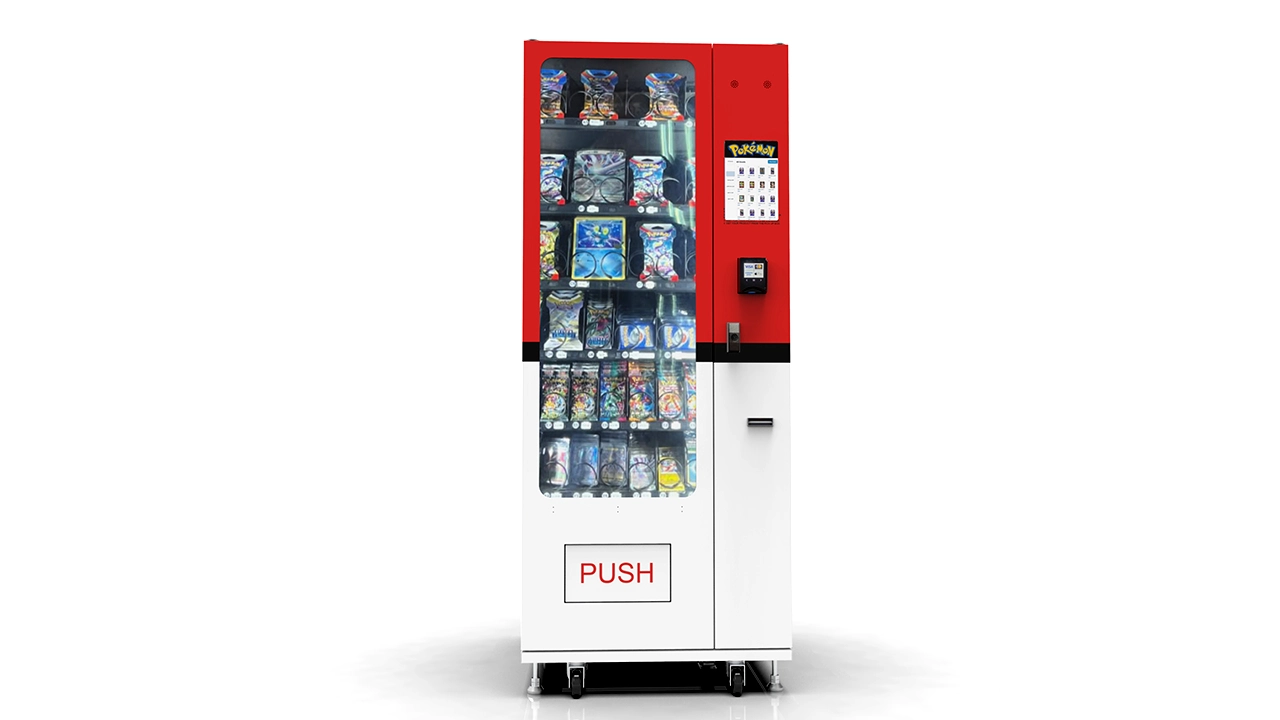
The second type is the gravity-fed or drop-style machine, where packs are stacked in columns and released one at a time. These are more common in the card vending world because they handle rectangular packs well and are less likely to jam. The downside is that they typically hold fewer SKUs, and the customer cannot see the products as clearly as they can in a glass-front machine.
The third type is the robotic or carousel-style machine, which uses a robotic arm or a rotating carousel to retrieve a selected pack and deliver it to a bin. These are the machines that look impressive and attract attention, but they are also more expensive and have more moving parts that can break. I have had mixed results with these; they are great for high-traffic locations where the wow factor drives sales, but they require more frequent maintenance and a reliable supplier for parts.
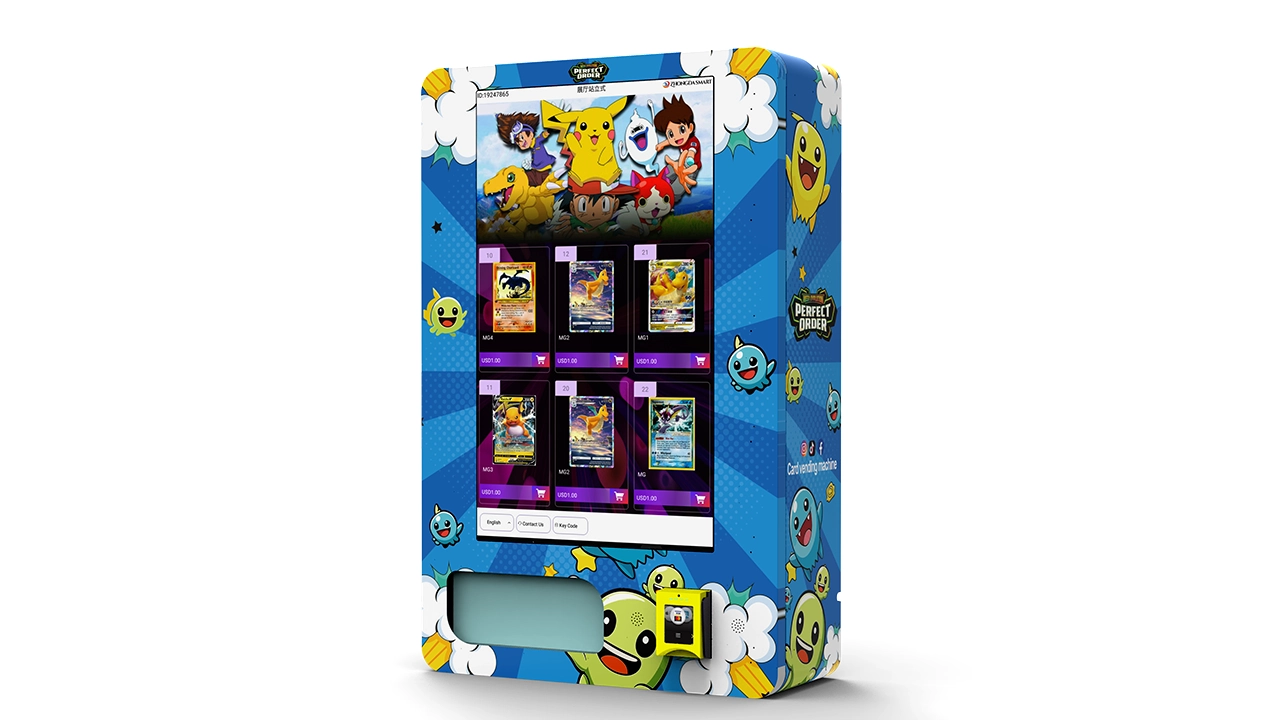
Finally, there is the newer generation of smart card vending machines with touchscreens, card dispensers, and integrated payment systems. These are the ones I recommend for most operators because they offer the best balance of reliability, customer experience, and data collection. A good touchscreen machine can show product images, display prices, and even play videos, which is a huge advantage when you are trying to build a brand.
| Machine Type | Initial Cost Range | Typical Monthly Sales | Maintenance Frequency | Best Use Case |
|---|---|---|---|---|
| Spiral/Coil adapted | $2,000–$4,000 | $300–$600 | Low | Budget entry, but not recommended |
| Gravity-fed drop style | $3,500–$6,000 | $500–$900 | Moderate | Small shops, low to medium traffic |
| Robotic/carousel | $7,000–$12,000 | $800–$1,500 | High | High traffic, showcase locations |
| Smart touchscreen | $4,500–$8,000 | $700–$1,800 | Moderate | Most operators, brand building |
As you can see from the table, the smart touchscreen machine offers the best balance for most operators. It is not the cheapest, but it gives you the flexibility to customize the user interface, update prices remotely, and track sales data in real time. If you are serious about building a branded card vending business, this is where I would put your money.
Customizing the Machine to Fit Your Brand Identity
Once you have chosen the hardware, the next step is making the machine look and feel like an extension of your brand. This is where a lot of operators miss the mark. They buy a generic machine, slap a vinyl sticker on the side, and call it branded. That approach does not work, especially in the trading card space where aesthetics and trust matter.
I have seen machines that are nothing more than white boxes with a logo, and they sit in the corner of a shop looking like an afterthought. Customers walk past them because they do not look inviting. On the other hand, I have seen machines that are wrapped in vibrant artwork, with LED lighting, clear product displays, and a touchscreen interface that matches the shop's visual identity. Those machines pull people in and create a sense of excitement.
When you customize your machine, you should think about three things: visual branding, user interface, and product presentation. Visual branding includes the exterior wrap, the lighting, and any signage that makes the machine identifiable from across the room. User interface refers to the touchscreen menus, the way products are displayed, and the overall ease of use. Product presentation is about how the packs are arranged, whether they are visible, and whether the machine clearly communicates what is inside each pack.
I recommend working with a supplier that offers customization options, and I have had good experiences with Zhongda Smart, a manufacturer that provides both standard and fully customized card vending machines. They are not the only option, but they have been reliable in terms of build quality and their willingness to adapt the software to my needs. That kind of flexibility is important when you are trying to create a unique experience for your customers.
Another important aspect of customization is the payment system. In the US and Europe, customers expect to pay with credit cards, mobile wallets, and sometimes even cash. A machine that only accepts coins is going to lose sales. I have also found that integrating a loyalty or rewards program into the machine's software can significantly increase repeat purchases. For example, you can offer a free pack after ten purchases, or give customers a discount code for their next visit to your physical store.
Location Strategy: Where to Place Your Machine for Maximum Returns
I cannot stress this enough: location is everything in the vending business, and card vending is no exception. I have made the mistake of placing machines in locations that looked good on paper but failed in practice, and I have also found hidden gems in places I almost overlooked. The key is to evaluate each potential location based on the quality of the foot traffic, not just the quantity.
In my experience, the best locations for a trading card vending machine are, in order of profitability: dedicated card and hobby shops, comic book stores, gaming cafes, and high-end toy stores. These are places where people are already spending money on collectibles, and they understand the value of a sealed pack. The second tier of locations includes movie theaters, bowling alleys, and family entertainment centers, where the foot traffic is high but the customer intent is less specific. The third tier, which I usually avoid, is general retail like grocery stores and convenience stores, unless there is a specific reason to believe the local customer base is into cards.
When you are evaluating a location, you should spend at least a few hours there observing the flow of customers. Look at who is coming in, what they are buying, and whether they seem like the type of person who would spend $10 to $20 on a pack of cards. Talk to the business owner and ask about their average transaction value and their customer demographics. A shop that sells high-ticket items like board games or collectible figurines is a better fit than a shop that sells low-margin convenience goods.
Another factor to consider is the physical placement of the machine within the location. I have found that machines placed near the checkout counter or in a high-visibility area near the entrance perform significantly better than machines tucked away in a corner. Visibility drives impulse purchases, and impulse purchases are the bread and butter of card vending. If the machine is out of sight, it is out of mind.
Real-World Failure Case: A Lesson in Poor Placement
I want to share a specific failure case because it taught me more than any success ever did. A few years ago, I was approached by a regional chain of laundromats that wanted to add vending machines to their locations. They offered me a great deal on floor space, and I thought it was a smart move because laundromats have steady foot traffic and customers with time to kill. I placed a card vending machine in one of their busiest locations, in a city with a strong sports card community.
The machine did almost nothing. In the first month, it generated about $120 in sales, which was less than the electricity cost and the commission I had to pay. I was baffled, so I went to the location to observe. What I found was that the laundromat customers were almost entirely families and college students who were there to do laundry, not to buy trading cards. The few people who were interested in cards did not want to spend their time in a laundromat browsing a vending machine; they wanted to go to a dedicated card shop.
I pulled the machine after three months and moved it to a comic book store across town. In its first month there, it did over $900 in sales. The difference was night and day. This experience taught me that you can have a great machine, a great brand, and great products, but if you put it in front of the wrong audience, it will fail. Do not be seduced by high foot traffic numbers alone; you need the right foot traffic.
Cost Breakdown and Return on Investment Expectations
Let me give you a realistic breakdown of costs and returns, based on my own operations and conversations with other experienced operators. These numbers are not guarantees, and they will vary depending on your specific situation, but they should give you a solid baseline for planning.
The initial investment for a good quality smart card vending machine, including shipping and installation, is typically between $5,000 and $9,000. If you go for a wall-mounted unit or a used machine, you can reduce that to $3,000 to $5,000, but you will likely sacrifice some features or reliability. I generally recommend buying new for your first machine, because the learning curve is steep enough without having to deal with someone else's maintenance problems.
Your ongoing costs include the cost of goods (the packs themselves), which will be your biggest expense. If you buy packs at wholesale prices and sell them at retail, your gross margin will be between 25% and 40%, depending on the product. For example, if you buy a box of 36 packs for $90 and sell each pack for $4, your gross revenue is $144, and your gross margin is about 37.5%. That is a healthy margin, but you have to factor in the cost of unsold inventory if a product does not move.
Other ongoing costs include the location commission or rent, which I have seen range from 10% to 25% of gross sales, payment processing fees of about 2.5% to 3.5%, and electricity, which is usually negligible for a card machine. You should also budget for maintenance and repairs, which I estimate at about $200 to $400 per year for a well-maintained machine, and for restocking labor, which depends on how often you visit each location.
Based on these numbers, a machine in a good location doing $1,000 in monthly sales will generate about $350 in gross profit. After paying the location commission, payment fees, and other costs, you might clear $150 to $200 per month. That means your payback period is roughly 30 to 45 months, which is longer than many people expect. However, if you find a great location and do $1,500 to $2,000 in monthly sales, the payback period drops to 12 to 18 months. The key is to be patient and to scale slowly.
Supplier Selection: How to Avoid Getting Burned
Choosing the right supplier is one of the most critical decisions you will make, and it is also where I see new operators make costly mistakes. The vending machine market is full of companies that import cheap machines from overseas and sell them to unsuspecting buyers with little to no after-sales support. I have been burned by this myself, and I have helped many others recover from bad supplier choices.
When you are evaluating a supplier, you should ask about their warranty terms, their spare parts availability, and their technical support response time. A good supplier will offer at least a one-year warranty on the machine and will have a stock of common spare parts such as card dispensers, touchscreens, and payment systems. They should also be able to provide remote troubleshooting and software updates, because a card vending machine is essentially a computer, and it needs regular updates to stay secure and functional.
I have had good experiences with Zhongda Smart, as I mentioned earlier, because they offer a range of customization options and they have a responsive support team. However, I would not rely on any single supplier without doing your own due diligence. Ask for references from other operators, join vending industry forums, and search for reviews of the specific machine model you are considering. If a supplier is not willing to provide references or answer your technical questions, that is a red flag.
Another important consideration is the payment system. Make sure the machine you buy is compatible with the payment methods used in your target market. In the US, that means supporting major credit cards and mobile wallets like Apple Pay and Google Pay. In Europe, you will also need to support local payment methods like iDEAL in the Netherlands or Bancontact in Belgium, depending on your location. A machine that only supports one payment method will severely limit your sales.
Maintenance and Restocking: The Real Work Behind the Scenes
Many people think that once the machine is installed, the work is done. That is far from the truth. A card vending machine requires regular maintenance and restocking, and the quality of your maintenance program directly impacts your sales. A machine that is dirty, poorly stocked, or frequently out of order will lose customer trust, and it is very hard to win that trust back.
I recommend visiting each machine at least once a week, even if it does not need restocking. This allows you to clean the machine, check for any signs of tampering or damage, and interact with the business owner to get feedback. I have found that a quick weekly visit prevents small issues from becoming big ones. For example, I once noticed that a card dispenser was slightly misaligned during a routine visit, and I was able to fix it before it caused a jam that would have shut the machine down for days.
Restocking frequency depends on the sales volume and the capacity of the machine. In a high-traffic location, you might need to restock every two to three days, while in a slower location, once a week may be enough. I always carry extra packs in my vehicle when I visit a machine, so I can top up any empty slots immediately. It is also important to rotate your inventory, bringing newer products to the front and moving older stock to the back, to ensure that you are selling your oldest inventory first and minimizing the risk of stale product.
When it comes to maintenance, you should learn the basics of your machine, including how to clear jams, how to reset the payment system, and how to replace common parts. I have saved thousands of dollars over the years by doing simple repairs myself instead of calling a technician. However, I also know my limits, and I have a trusted technician for more complex issues. The average annual maintenance cost for a card vending machine is between $200 and $500, but this can be higher if you are not proactive about keeping the machine clean and well-maintained.
Payment Systems and the Self-Service Experience
The payment system is the heart of the customer experience. If the payment process is confusing or glitchy, customers will abandon their purchase, and they may not come back. In my experience, the best payment systems are those that accept multiple methods, process transactions quickly, and provide clear feedback to the customer.
I have seen machines that only accept cash, and they consistently underperform machines that accept cards and mobile payments. The reason is simple: most people do not carry cash anymore, and they expect to be able to pay with their phone or card. According to a report from the Federal Reserve, cash transactions accounted for only about 16% of all payments in the US in 2022, and that number is declining. If your machine does not accept card payments, you are effectively cutting off more than 80% of potential customers.
When you are setting up your payment system, you should also consider the user interface. The touchscreen should be responsive, the instructions should be clear, and the checkout process should take no more than 30 seconds. I have seen machines that require customers to create an account or enter a zip code before making a purchase, and that friction kills sales. The best machines are those that allow customers to select a product, pay, and receive their card in under 20 seconds.
Another feature that I have found valuable is the ability to offer promotions and discounts through the machine. For example, you can set up a buy-one-get-one-free promotion on a slow-moving product, or offer a discount to customers who subscribe to your email list. This not only increases sales but also helps you build a relationship with your customers, which is essential for a branded vending business.
Comparing Different Operating Models: Self-Owned vs. Leased vs. Revenue Share
When you are starting out, you have three main operating models to choose from: you can buy the machine yourself and operate it independently, you can lease a machine from a supplier, or you can enter into a revenue-sharing agreement with a location owner. Each model has its pros and cons, and the right choice depends on your budget, your experience level, and your risk tolerance.
Self-ownership is the most straightforward model. You buy the machine, find a location, and keep all the profits after paying the location commission. This gives you the most control and the highest potential return, but it also requires the most capital and the most effort. If you are new to the business, I recommend starting with one machine that you own outright, so you can learn the ropes without the pressure of a lease payment.
Leasing is a good option if you want to test the waters without making a large upfront investment. Many suppliers offer lease-to-own programs that allow you to pay for the machine over time, but you will end up paying more in the long run due to interest and fees. I have seen lease agreements that look attractive on the surface but have hidden costs, so make sure you read the fine print and understand the total cost of ownership.
Revenue sharing is a popular model in the vending industry, especially for operators who have established relationships with location owners. In this model, you provide the machine and handle all the maintenance and restocking, and the location owner provides the floor space and electricity. The revenue is split according to a pre-agreed percentage, usually 70/30 or 60/40 in your favor. This model reduces your upfront costs and your risk, but it also reduces your profit per machine.
In my experience, the best approach for most new operators is to start with one owned machine in a good location, learn the business, and then expand gradually. Once you have a track record of success, you can negotiate better terms with location owners and expand your fleet. Do not try to scale too quickly, because the operational complexity increases exponentially with each additional machine.
Regulatory and Compliance Considerations in the US and Europe
Before you install your first machine, you need to understand the regulatory environment in your area. The rules for vending machines vary widely depending on your location, and it is your responsibility to ensure compliance. I have seen operators get fined for not having the proper permits, and I have seen others shut down entirely because they ignored local regulations.
In the United States, vending machines are generally regulated at the state and local level. You will likely need a business license, a sales tax permit, and possibly a vending machine permit from the city or county where the machine is located. If you are selling trading cards, you do not need to worry about food safety regulations, but you may need to comply with age restrictions if you are selling products intended for minors. It is always a good idea to check with your local chamber of commerce or small business association to understand the specific requirements in your area.
In the European Union, the regulatory landscape is different. The EU has harmonized rules for many products, but vending machines are still subject to national and local regulations. You will need to register your business, comply with VAT rules, and ensure that your machine meets all applicable safety standards. If you are operating in multiple EU countries, you will need to navigate the VAT registration requirements in each country, which can be complex. The European Commission provides a helpful guide to VAT rules for small businesses, and I recommend consulting that resource before you expand across borders.
You should also consider data protection regulations, especially if your machine collects any customer data. The EU's General Data Protection Regulation (GDPR) has strict requirements for data collection and processing, and even a simple loyalty program can trigger these obligations. I recommend working with a legal advisor who is familiar with the vending industry to ensure that your operations are compliant.
Common Mistakes New Operators Make and How to Avoid Them
Over the years, I have seen many new operators make the same mistakes, and I want to help you avoid them. The first mistake is buying a machine before you have secured a location. You should never buy equipment without having a signed agreement with a location owner, because the machine is only valuable if it is placed somewhere that generates sales. I have seen people buy machines and then struggle for months to find a location, leaving their investment idle and unproductive.
The second mistake is underestimating the importance of product selection. The trading card market is constantly changing, and a product that is hot today may be dead in six months. You need to stay on top of trends, know which products are selling in your area, and be willing to rotate your inventory quickly. I have had success with a mix of sports cards, Pokémon, and other collectible card games, and I always keep an eye on what is trending on social media and in online communities.
The third mistake is ignoring the data. Modern smart card vending machines collect a wealth of data on sales, customer behavior, and machine performance. If you are not using this data to make decisions, you are flying blind. For example, I look at the sales data for each machine every week, and I adjust my product mix and pricing based on what is selling and what is not. This data-driven approach has helped me increase sales by 20-30% at several locations.
The fourth mistake is not having a maintenance plan. A card vending machine is a complex piece of equipment, and it will break down eventually. If you do not have a plan for handling breakdowns, you will lose sales and damage your reputation. I recommend having a relationship with a local technician who can handle repairs, and I always keep spare parts on hand for common issues. The cost of a spare part is negligible compared to the cost of a machine that is out of service for a week.
Real-World Success Case: A Branded Machine in a Hobby Shop
I want to end this section with a success case that illustrates the power of customization and the right location. A few years ago, I was approached by the owner of a hobby shop in a mid-sized city in the Pacific Northwest. The shop had a loyal customer base of card collectors, but the owner wanted to increase sales and attract new customers. He asked me to help him set up a branded card vending machine in his store.
We worked together to design a machine that matched the shop's aesthetic, using the shop's logo and color scheme on the exterior, and we set up the touchscreen interface to display featured products and promotions. We placed the machine near the counter, where it was visible to every customer who walked in. The result was remarkable. In the first month, the machine generated over $1,500 in sales, and it has maintained that level ever since. The owner was so pleased that he ordered two more machines for his other locations.
What made this success work was a combination of factors: a good location with the right customer base, a machine that was customized to fit the brand, and a proactive maintenance and restocking schedule. The owner and I worked together to ensure that the machine was always stocked with the most popular products, and we used the sales data to adjust the product mix on a regular basis. This is the kind of success that is possible when you do it right, but it requires effort and attention to detail.
Final Thoughts on Building a Card Vending Business
Building a profitable card vending business is not a get-rich-quick scheme, but it can be a solid source of income if you approach it with the right mindset. The key is to focus on the fundamentals: choose the right machine, place it in the right location, customize it to fit your brand, and maintain it consistently. If you do those things, you can build a business that generates steady cash flow and grows over time.
I have been in this industry for over a decade, and I have seen the market evolve from a niche curiosity to a mainstream retail channel. The demand for trading cards is strong and shows no signs of slowing down, and vending machines are becoming an increasingly popular way for collectors to purchase packs. If you are willing to put in the work, there is a real opportunity here.
Before you make any purchase, I encourage you to do your own research, talk to other operators, and visit locations where card vending machines are already in use. There is no substitute for firsthand experience, and the more you learn, the better your decisions will be. And remember, the machine is just a tool; it is your brand, your location, and your customer relationships that will determine your success.
I should also note that the figures I have shared in this article are based on my own experience and are not guarantees of future results. Your actual costs and revenues will vary depending on your specific circumstances, including your location, your product sourcing, and your operational efficiency. I recommend consulting with a financial advisor before making any significant investment.
Frequently Asked Questions
Are trading card vending machines profitable?
They can be profitable if placed in the right location with the right product mix. In my experience, a well-placed machine can generate $700 to $1,800 in monthly sales, with gross margins of 25% to 40%. However, profitability depends heavily on foot traffic quality, product sourcing, and maintenance efficiency. Many operators see a payback period of 12 to 18 months in good locations, but it can be longer if the location is suboptimal.
How much does a trading card vending machine cost?
A new smart card vending machine with a touchscreen typically costs between $4,500 and $8,000, depending on the configuration and supplier. Wall-mounted units can be slightly cheaper, while larger machines with robotic mechanisms can cost $10,000 or more. Used machines are available for less, but they come with higher maintenance risk. Shipping and installation will add several hundred dollars to the total cost.
How long does it take to recoup the investment?
The payback period varies based on location and sales performance. In a high-traffic hobby shop, you might recoup your investment in 12 to 18 months. In a slower location, it could take 30 to 45 months or longer. I recommend setting a target of $1,000 or more in monthly sales to ensure a reasonable payback period. Your actual results will depend on your specific situation.
Should a beginner buy or lease a card vending machine?
I generally recommend buying a new machine for your first venture, because it gives you full control and avoids the hidden costs of leasing. Leasing can be a good option if you want to test the waters with less upfront capital, but you will pay more in the long run. If you buy, you can always sell the machine if the business does not work out, whereas a lease can be harder to exit.
Where is the best place to put a card vending machine?
The best locations are card and hobby shops, comic book stores, gaming cafes, and high-end toy stores. These places attract people who are already interested in collectibles and have the disposable income to spend on packs. Second-tier locations include movie theaters and family entertainment centers, but you need to carefully evaluate the customer demographics before committing.
What permits or licenses do I need?
Requirements vary by location. In the US, you will typically need a business license, a sales tax permit, and possibly a vending machine permit from your local government. In the EU, you need to register your business and comply with VAT rules. I recommend contacting your local chamber of commerce or small business association to understand the specific requirements in your area.
How do I choose a reliable supplier?
Look for a supplier that offers a one-year warranty, has spare parts available, and provides responsive technical support. Ask for references from other operators and search for reviews of the specific machine model. I have had good experiences with Zhongda Smart, but you should do your own due diligence before making a purchase.
What should I do if the machine breaks down?
First, learn basic troubleshooting, such as clearing jams and resetting the payment system. For more complex issues, have a relationship with a local technician who can handle repairs. Keep spare parts on hand for common issues, and consider a remote monitoring system that alerts you to problems before they become serious.
How can I reduce restocking and maintenance costs?
Plan your restocking routes efficiently, and visit each machine on a regular schedule. Use sales data to predict demand and avoid overstocking or understocking. Keep the machine clean to prevent common issues, and perform preventive maintenance regularly. By being proactive, you can reduce the frequency and cost of repairs.
Disclaimer: The information provided in this article is based on personal experience and industry knowledge. Figures and outcomes are estimates and may vary based on individual circumstances. Always conduct thorough research and consult with professional advisors before making business decisions.