If you are putting trading cards inside a vending machine, the first question you need to answer is not how many packs you can sell—it is how you plan to protect the product from theft, tampering, and damage. I have been running automated retail operations for over a decade, and I have seen more operators lose their margins to a broken lock or a poorly designed drop tray than to a slow sales week. High-value cards demand a different level of security than snacks or drinks. You are not just protecting cardboard; you are protecting an asset that can be resold, swapped, or damaged in seconds. The right approach to protecting high-value cards inside a vending machine starts with the machine’s physical build, then moves to your restock routine, your payment system, and finally your location strategy.
Why Trading Card Vending Machines Are a Different Animal
Running a card vending machine is nothing like running a traditional candy or soda route. The product is small, light, and carries a high resale value on the secondary market. A single sealed pack of Pokémon or a hobby box of sports cards can be worth more than the entire inventory of a typical snack machine column. That changes everything about how you secure the machine, how you monitor it, and how you handle restocking.
In my experience, the most common mistake newcomers make is treating the machine like a bulk vending unit. They buy a cheap cabinet, load it with booster packs, and assume the lock will do its job. Then they get hit with a $500 loss because someone pried open the delivery door or reached into the bin with a wire. Theft in card vending is rarely a smash-and-grab. It is usually a slow, quiet manipulation of the machine’s weak points.
You also have to think about product damage. Cards are fragile. A drop chute that works fine for a can of soda will dent a booster box or scuff a sealed pack. If the customer receives a damaged product, they will not come back, and they will leave a bad review. Protecting your cards means designing the entire customer journey—from selection to delivery—so the product stays pristine.
This is why I always advise operators to look at the machine’s internal delivery mechanism before anything else. A spiral or coil system that drops product into a bin is fine for low-value items, but for cards, you want a machine that can present the product gently or use a retrieval tray that minimizes impact.
The Real Threat: Not Just Theft, But Fraud
When most people think about protecting high-value cards, they picture a crowbar or a drill. In reality, the more common threat is fraud from the customer side. I have seen people try to fish product out of the delivery bin with tape and wire. I have seen them insert foreign objects into the card reader. I have seen chargebacks on card payments after they received the product, claiming they never got it.
This is why payment systems matter so much in card vending. A cash-only machine is a liability in a high-value product scenario. You need a payment system that supports card payments, mobile wallets, and ideally pre-authorization. The ability to lock a transaction and verify delivery is not a luxury; it is a core security feature.
One of the best decisions I made in my own operation was switching to machines with a “one item per transaction” rule enforced at the software level. This prevents a single customer from clearing out your inventory in one swipe, which is a common tactic among resellers who then return the items or claim they were damaged. You can set limits on how many units a single card number can buy in a rolling hour, which cuts down on scalping and reduces your risk exposure.
Another layer is the camera. I am not talking about a full surveillance setup; a simple camera pointed at the machine, with a clear sign that it is there, changes behavior. I have seen attempted theft drop by nearly half in locations where a visible camera was installed. It is not about catching the person; it is about making them choose an easier target.
Machine Selection: What to Look For Before You Buy
I have operated machines from several manufacturers, and I can tell you that not all card vending machines are built the same. The first thing I check is the gauge of the steel on the cabinet and the delivery door. If the door flexes when you push on it, walk away. High-value product requires a heavy-duty cabinet, preferably with reinforced hinges and a multi-point locking system.
The second thing I look at is the locking mechanism. A standard cam lock is not enough. You want a lock that is pick-resistant and drill-resistant, with a key that is not easily duplicated. Some operators go with electronic locks that log when the door was opened and by which key code. That audit trail is invaluable if you suspect an inside job.
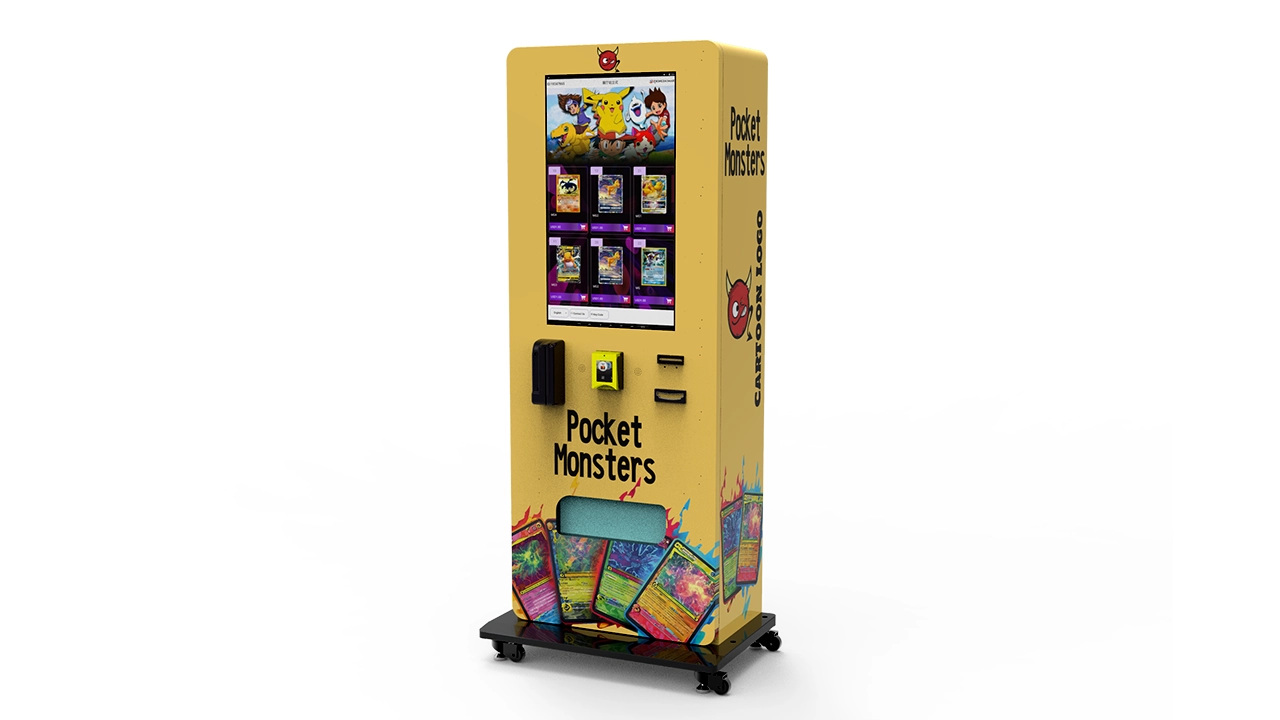
Third, consider the delivery system. There are two main types: the drop bin and the retrieval tray. For cards, I strongly prefer a retrieval tray or a “claw” style mechanism that brings the product to the customer without dropping it. This reduces damage complaints and also makes it harder for someone to reach into the machine. My experience with a 32-inch touchscreen trading card vending machine has been positive precisely because the larger screen allows for clearer instructions and the delivery system is more forgiving on the product.
Finally, look at the software. Can you adjust prices remotely? Can you lock out a column instantly? Can you see real-time sales data? If the machine requires a physical visit to change a price or disable a malfunctioning column, you are going to lose money on every slow-moving item and every technical glitch. Remote management is not a luxury; it is a cost control tool.
Zhongda Smart and the Reality of Sourcing Equipment
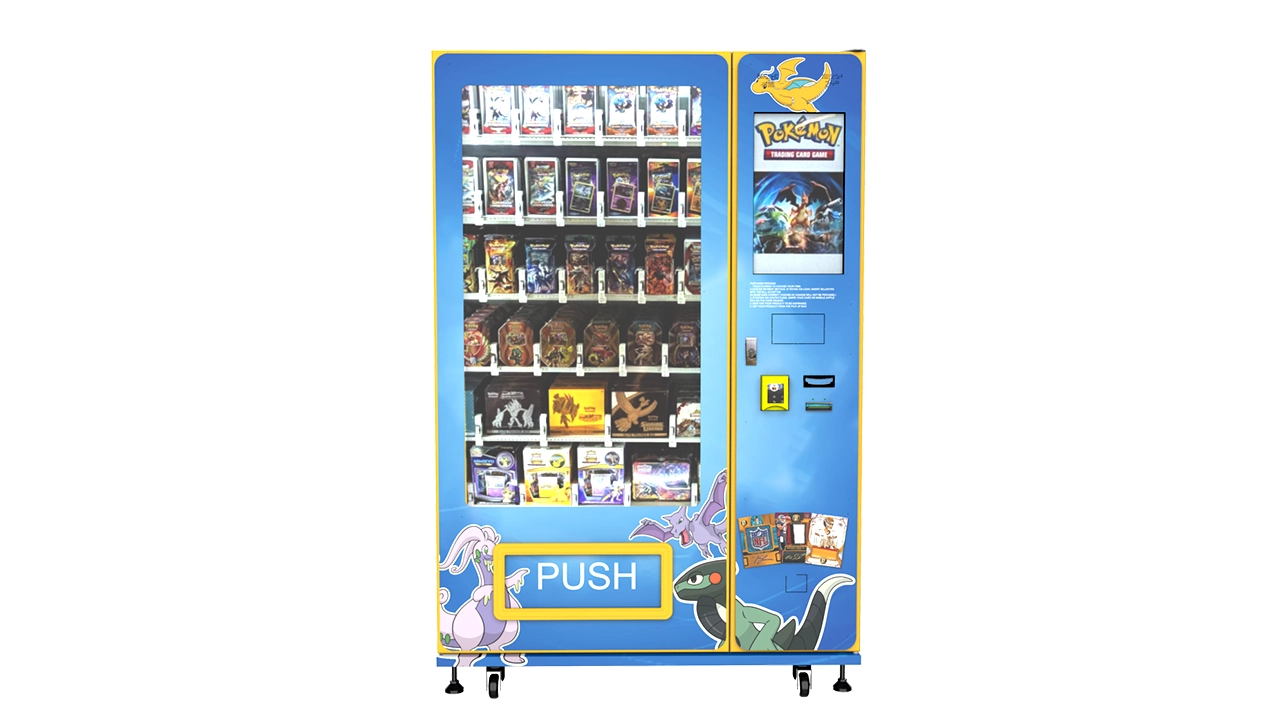
When I talk to operators about sourcing equipment, the name Zhongda Smart comes up often, and for good reason. They are one of the more established manufacturers in the space, and their card vending machines are designed with the specific challenges of high-value product in mind. I have seen their units in the field, and they hold up well in terms of cabinet strength and delivery mechanism design.
That said, I would not tell you to buy from any manufacturer without doing your own due diligence. The key is to ask specific questions about the lock type, the steel gauge, the software API, and the warranty on the delivery mechanism. If a manufacturer cannot give you clear answers on these points, move on. Zhongda Smart has been responsive in my dealings, and their machines offer good value for the price point, but you should still get a sample unit or visit a site where one is installed before committing to a fleet.
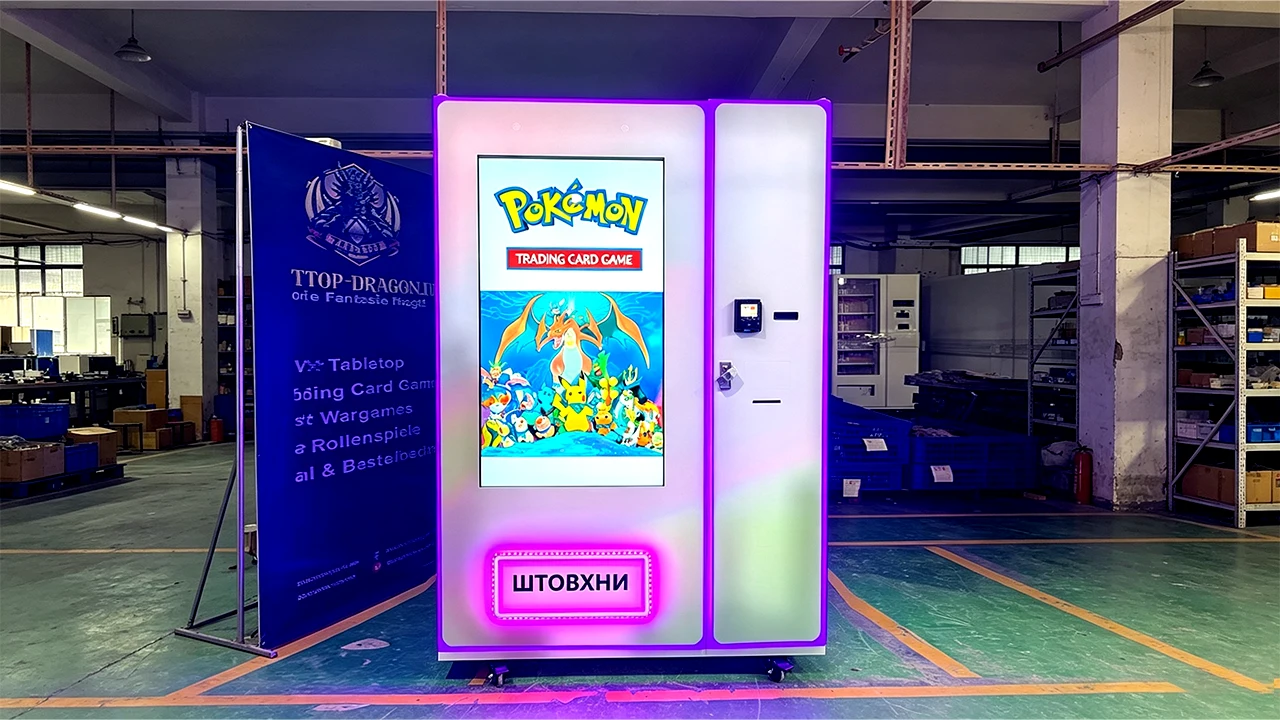
Another point on sourcing: do not overlook the shipping and import costs. If you are in the US or Europe, a machine manufactured overseas will come with freight, customs, and potential lead time issues. Factor that into your total cost of ownership. A cheaper machine that takes three months to arrive and has no local service support is not a bargain.
Site Selection: The First Line of Defense
You can have the most secure machine on the market, but if you put it in a location with no foot traffic, no lighting, and no oversight, you are inviting trouble. Site selection is the first line of defense for protecting high-value cards. I have learned this the hard way.
Early in my career, I placed a card machine in a small comic shop that was only open part-time. The owner loved the idea, and the rent was low. Within two weeks, someone had pried open the delivery door overnight. The machine was in a corner, out of sight of the street, and there was no camera. I lost about $800 in product and had to pay for the repair. The shop owner was apologetic, but that did not bring back the inventory.
That failure taught me to look for locations with natural surveillance. A spot near the checkout counter of a game store, or in a well-lit corridor of a mall, is far safer than a quiet corner. You want the machine to be visible to staff or other customers at all times. If a location does not offer that visibility, the rent needs to be very low to justify the risk.
I also look at the demographic and the culture of the location. A hobby shop where the owner is present and engaged is a better bet than a self-service laundromat. The customer base matters. Collectors are generally respectful of product, but opportunists are everywhere. The presence of staff who know the product and can spot suspicious behavior is a huge asset.
Real-World Cost and Return Projections
Let me give you a realistic picture of the numbers based on my own operations and industry data. A new, high-quality card vending machine with a touchscreen and secure delivery system will typically cost between $6,000 and $15,000, depending on the manufacturer and configuration. I have seen larger, more complex units go for $20,000 or more, but for most operators, the sweet spot is in the $8,000 to $12,000 range.
On the revenue side, a well-placed card machine can generate anywhere from $500 to $2,500 per month in gross sales. The wide range depends heavily on location, product selection, and local demand. In a busy hobby shop or a mall with a strong youth demographic, you can hit the higher end. In a low-traffic convenience store, you might struggle to clear $300 a month. My own average across a small fleet is around $1,200 per machine per month.
Gross margins on trading cards are typically between 30% and 50%, depending on your wholesale pricing and the mix of products you carry. Booster packs have thinner margins than sealed boxes or specialty items. After accounting for cost of goods, you are left with a gross profit of maybe $400 to $800 per machine per month.
Then you have operating costs. Rent or commission to the location owner can eat 10% to 20% of gross sales. Electricity is negligible, but connectivity for the payment system will cost $20 to $40 per month. Maintenance and repairs should be budgeted at about 5% of the machine cost per year. If you factor in your time for restocking and servicing, the realistic payback period for a new machine is 12 to 24 months. That is not a get-rich-quick scheme, but it is a solid return if you treat it like a business.
According to IBISWorld data on the vending machine industry in the US, the average profit margin for vending operators is around 12% to 15% after all expenses. My experience aligns with that, though card machines can do better if you keep shrink low and rotate product well. The key is to not overpay for the machine and to negotiate favorable terms with the location owner.
Comparing Machine Types and Configurations
To help you make a clear decision, here is a comparison table based on my experience and common industry pricing. This is not an official statistic; it is an operator’s view of what you can expect at different price points.
| Machine Type | Typical Cost | Best Use Case | Security Level | Monthly Revenue Potential |
|---|---|---|---|---|
| Small wall-mounted unit | $3,000 – $5,000 | Low-traffic shops, secondary locations | Basic lock, limited capacity | $200 – $600 |
| Standard floor model with coil delivery | $6,000 – $9,000 | Mid-traffic retail, hobby stores | Reinforced door, better lock | $500 – $1,200 |
| Touchscreen model with retrieval tray | $9,000 – $15,000 | High-traffic malls, game stores | High security, camera-ready, remote management | $1,000 – $2,500 |
| Multi-compartment or kiosk style | $15,000 – $25,000 | Large venues, tournaments, flagship locations | Highest security, multiple locks, anti-fraud software | $2,000 – $4,000 |
What this table does not show is the risk factor. A cheaper machine may seem like a good entry point, but if it gets broken into once, the loss can wipe out months of profit. I have seen operators abandon the business entirely after a single incident. The extra money you spend on a secure machine is insurance, not an expense.
Restocking and Inventory Management: Protecting Your Margin
Protecting high-value cards inside a vending machine is not just about the physical security of the cabinet. It is also about how you manage your inventory. The moment you put a product in the machine, you are exposing it to risk. That risk includes theft, but also spoilage, obsolescence, and price fluctuation.
I restock my card machines on a schedule, not on a whim. For high-traffic locations, that might be twice a week. For slower locations, once a week is usually enough. The key is to never let the machine run completely empty, because an empty machine looks neglected and invites tampering. You also want to rotate product so that the newest items are in the back and the older items sell first. This is standard retail practice, but it is easy to forget when you are in a hurry.
Inventory tracking is where most operators fail. You need to know exactly what is in each column, what sold, and what is still sitting there. I use a simple spreadsheet for each machine, and I reconcile it every time I restock. If the numbers do not match, I find out why. In one case, I discovered that a column had a jammed spiral that was not dispensing product, but the machine was still charging customers. That was a refund headache and a trust issue with the location owner.
Another tip: do not overstock a new location. Start with a modest inventory, track what sells, and then adjust. I have seen operators load a machine with $2,000 worth of product only to find that the local market prefers a different set. That cash is tied up and vulnerable. A lean inventory is easier to protect and easier to manage.
Payment Systems and Fraud Prevention
I mentioned payment systems earlier, but let me go deeper because this is where the modern card vending machine differs from old-school vending. The payment system is your first line of defense against fraud, and it is also your best tool for data collection.
You want a payment system that supports contactless payments, Apple Pay, Google Pay, and traditional credit cards. Cash is a liability in a high-value product scenario. Cash invites robbery and makes it harder to track sales. I run my card machines as cashless-only, and I have not had a single theft incident related to cash since making that switch.
Pre-authorization is another critical feature. Some customers will attempt to use a stolen card or a chargeback scheme. With pre-auth, you can hold the funds until the transaction is confirmed. This is common in other automated retail sectors, and it works well for cards. The only downside is that pre-auth can slightly slow down the transaction, but for high-value items, it is worth the extra second.
I also recommend setting a per-transaction limit. For example, limit each customer to buying one booster pack or one sealed box per transaction. This prevents scalping and reduces the risk of a single chargeback wiping out a large sale. You can always adjust the limit for special promotions or events, but for daily operation, limits are your friend.
Maintenance and Breakdowns: What to Do When It Fails
No matter how good your machine is, it will break down eventually. The question is how you handle it. I have had machines jam, payment readers fail, and screens go dark. The key is to have a plan before it happens.
First, choose a machine from a manufacturer that offers spare parts and technical support. If you buy from a no-name brand, you will be chasing parts for weeks. Zhongda Smart, for example, has a network of distributors and can ship common parts quickly. That matters when your machine is down and losing money every day.
Second, learn basic troubleshooting yourself. Most issues are simple: a jammed coil, a loose connection, a paper jam in the receipt printer. If you can fix these on-site, you save the cost of a service call, which can be $100 to $200 per visit. I keep a small toolkit in my car and have a spare parts kit for each machine model I operate.
Third, have a backup plan for product protection during a breakdown. If a machine is out of service for more than a day, the product inside is at risk. I have a policy of emptying the machine if it will be down for more than 48 hours. That means carrying a few boxes and a dolly to remove the inventory. It is a hassle, but it beats leaving $1,000 of cards in a dead machine.
Leasing vs. Buying vs. Revenue Share
One of the most common questions I get from new operators is whether to buy a machine outright, lease it, or enter a revenue share agreement with a location owner. There is no single right answer, but I can share what I have seen work.
Buying is the best option if you have the capital and you plan to operate for more than two years. You own the asset, you can sell it later, and you have full control over the software and pricing. The downside is the upfront cost and the risk if the location fails.
Leasing is attractive for those with limited capital, but the monthly payments can eat into your margin. I have seen lease terms that effectively double the cost of the machine over three years. Only consider leasing if you have a very strong location confirmed and you can negotiate a fair rate.
Revenue share with the location owner is a middle ground. You provide the machine and the product, and the owner provides the space and maybe the electricity. You split the gross sales, usually 70/30 or 80/20 in your favor. This model reduces your rent risk, but it also means you have less control over the location. If the owner is not engaged, the machine will not get the attention it needs.
In my experience, the best arrangement for a new operator is to start with a single machine in a location where you have a personal connection. You can negotiate a simple revenue share or a low monthly rent. Once you prove the concept and learn the local market, you can expand with confidence.
Common Mistakes I Have Made and Seen
I want to be honest about the mistakes I have made so you can avoid them. The first was buying a cheap machine to save money. It broke down twice in the first three months, and the repair costs ate up any savings. The second mistake was placing a machine in a location without a formal contract. The store owner changed staff, and the new staff had no idea how to handle a jammed machine. Customers were frustrated, and I lost that location.
Another common mistake is ignoring the local market. I once loaded a machine with sports cards in a location that was primarily a children’s toy store. The foot traffic was there, but the demand was for Pokémon and Yu-Gi-Oh, not baseball. Sales were terrible, and I had to move the machine. Take the time to understand what the local collectors want before you invest in inventory.
Finally, do not underestimate the value of a good relationship with the location owner. A friendly owner will keep an eye on the machine, report issues quickly, and even promote it to their customers. I have one location where the owner actively recommends the machine to every customer who asks about cards. That relationship is worth more than any marketing campaign.
Data and Market Context
Let me give you some broader context. The vending machine market in the United States was valued at over $7 billion in recent years, and the segment for specialized vending, including card machines, is growing. According to Statista, the vending machine industry has seen steady growth, with a notable shift toward cashless payments and interactive screens. This aligns with what I see in the field: customers expect a modern, touchscreen experience, not a rusty coil machine.
In Europe, the trend is similar. Eurostat data on retail trade and automated vending shows a gradual increase in the number of automated retail units, particularly in urban areas. The demand for trading cards has surged in the last few years, driven by both nostalgia and new collectors. This is a good time to be in the business, but it also means more competition. You have to differentiate on security, product selection, and location.
One more point on data: the secondary market for trading cards is volatile. Prices for certain cards can spike and crash. If you are not monitoring the market, you might have a column of product that is suddenly worth half of what you paid. I recommend checking online price guides weekly and adjusting your inventory accordingly.
FAQ: Answering the Questions Every New Operator Asks
I get asked the same questions over and over. Here are the answers based on my experience, not theory.
Are card vending machines profitable?
Yes, they can be profitable, but it depends on location and product selection. A well-placed machine can generate $500 to $2,500 per month in gross sales, with a gross margin of 30% to 50%. After expenses, a single machine can net $300 to $800 per month. That is a decent return, but it is not guaranteed. You have to manage the business actively.
How much does a card vending machine cost?
A new, quality machine costs between $6,000 and $15,000. Smaller or used units can be less, but they come with higher risk. You should also budget for shipping, installation, and initial inventory, which can add another $2,000 to $5,000 to your startup costs.
How long does it take to recoup the investment?
With a good location, you can expect a payback period of 12 to 24 months. If the location underperforms, it could take longer or never fully pay back. I recommend a conservative financial plan that assumes a slower ramp-up.
Should a beginner buy or lease a machine?
If you have the capital, buy. Leasing is more expensive in the long run and can lock you into a bad deal. If you are not sure you will stay in the business, consider a used machine or a revenue share agreement to reduce your risk.
Where should I place the machine to maximize earnings?
Look for locations with high foot traffic, a relevant customer base, and natural surveillance. Hobby shops, game stores, malls, and tournament venues are all good options. Avoid isolated corners or locations with no staff presence.
What licenses or permits do I need?
This varies by state and country. In the US, you generally need a business license and a sales tax permit. Some locations may also require a vending machine permit. Check with your local Small Business Administration office or your city government. In Europe, you may need to register for VAT and comply with local business regulations.
How do I choose a reliable supplier?
Ask for references, visit an installed machine if possible, and ask about warranty and spare parts availability. A reliable supplier like Zhongda Smart will be transparent about lead times and support. Avoid suppliers who are vague about technical specs or who cannot provide a service network.
What should I do if the machine breaks down?
Have a plan before it happens. Keep a spare parts kit, learn basic troubleshooting, and have a backup plan to empty the machine if it will be down for more than a day. If you cannot fix it yourself, call a local vending machine repair technician. The cost of a service call is usually worth it to get the machine back online.
How can I reduce restocking and maintenance costs?
Track your inventory carefully, restock on a schedule, and choose a machine with remote management capabilities. The less often you have to drive to a location, the lower your costs. Also, negotiate a maintenance agreement with your supplier if possible.
Final Thoughts on Protecting Your Investment
There is no way to eliminate all risk in the card vending business, but you can reduce it dramatically with the right machine, the right location, and the right habits. The machine is your first line of defense, but your own discipline is what keeps the product safe over the long run. I have seen operators succeed with a single machine in a small shop, and I have seen them fail with a fleet of expensive units in bad locations. The difference is always the same: attention to detail and a willingness to learn from mistakes.
If you are just starting out, begin small, choose a secure machine, and build a relationship with a location owner you trust. Track your numbers, adjust your product mix, and do not let a bad month discourage you. The card market is strong, and the demand for automated retail is growing. With careful planning, you can build a profitable operation that holds up against theft, fraud, and market shifts.
And remember, protecting high-value cards inside a vending machine is not a one-time setup. It is an ongoing process of monitoring, maintenance, and adjustment. The operators who treat it that way are the ones who stay in business.