If you’re wondering whether a trading card vending machine can actually turn a profit, the short answer is yes—but only if you treat it like a business, not a novelty. I’ve spent over a decade in the automated retail space, and I’ve watched the trading card vending machine segment explode from a niche experiment into a serious revenue channel for operators who understand location, inventory, and maintenance. The real question isn’t whether these machines work; it’s whether you’re prepared to do the homework that separates profitable sites from money pits. In this guide, I’m going to walk you through what I’ve learned from real installations, including the mistakes that cost me thousands and the decisions that paid off within months.
Why Trading Card Vending Machines Are Gaining Traction
The shift toward 24/7 automated retail has been building for years, but trading cards have accelerated it in ways I didn’t see coming. When I first placed a machine in a suburban mall back in 2019, I expected slow turnover. Instead, collectors treated it like a late-night treasure hunt. The appeal is obvious: no store hours, no waiting for a clerk to unlock a display case, and the thrill of pulling a rare card from a machine that’s always on.
What’s driving this growth isn’t just nostalgia. The secondary market for Pokémon, sports cards, and even One Piece has created a demographic that’s comfortable spending $10 to $50 per transaction without human interaction. According to a Statista report on the self-service kiosk market, the global automated retail sector is projected to grow steadily through 2030, and card-specific machines are riding that wave. From my experience, the key is understanding that you’re not selling cardboard—you’re selling the possibility of a hit.
That said, the hype has also brought in a wave of newcomers who think buying a machine and filling it with packs is a passive income dream. It’s not. I’ve seen operators quit within six months because they ignored the fundamentals. The ones who succeed treat this like a retail operation with a vending interface, not a glorified gumball machine.
Real Costs: What You’re Actually Paying For
Let’s talk numbers, because the internet is full of vague claims. From my own purchases and those of colleagues, a new, well-built trading card vending machine runs between $6,000 and $15,000 depending on screen size, security features, and customization. I’ve seen cheaper models around $4,000, but they often have flimsy dispensers that jam on thicker card sleeves—a problem you don’t want at 2 a.m. when a customer is frustrated.
My first machine was a $7,200 unit with a 32-inch touchscreen. I thought I was being smart by saving money. Within three months, I’d spent an extra $900 on repairs because the dispensing mechanism couldn’t handle the variety of pack sizes I was stocking. That’s when I learned that the initial investment is just the entry ticket. You also need to budget for installation, shipping, and potentially a credit card processing fee that eats into your margin.
On the operational side, expect monthly costs for electricity (about $20–$40), a wireless payment plan (often $30–$60 per month), and inventory. If you’re buying booster boxes wholesale, you’re looking at $2,000 to $5,000 upfront to fill a machine properly. A common mistake is understocking to save cash—then the machine looks sad and customers walk away. Based on my experience, a fully stocked machine at a good location can gross $1,500 to $4,000 per month, but that’s before you account for the cost of goods sold, which typically runs 55–70% of retail price.
Location Is Everything: My Success and Failure Stories
I’m going to share a failure first because it taught me more than any win. In 2021, I placed a machine in a busy comic book store. The owner loved the idea, foot traffic was high, and I thought it was a slam dunk. What I didn’t account for was the store’s own inventory. Why would a customer buy from my machine when the shop had a full display case with better prices? My sales averaged $300 a month. After four months, I pulled the machine and ate the moving costs.
The lesson? You don’t want to compete with the host business. You want to complement it or operate in a space with no direct competition. My best-performing site is a 24-hour laundromat in a college town. Sounds odd, but hear me out. The customers are there for 30 to 60 minutes, they have cash or cards, and there’s nothing else nearby selling cards. That machine consistently does $2,800 a month in sales. The foot traffic isn’t huge, but the dwell time is perfect for impulse buys.
When evaluating a location, I look for three things: idle time, demographic fit, and lack of direct competition. A gym lobby, a bowling alley, or even a late-night convenience store can outperform a high-traffic mall if the audience is right. I’ve also had success with a wall-mounted card vending machine in a small barbershop—it takes up minimal space and the owner gets a cut. The key is to avoid locations where the host business sees you as a threat.
Comparing Machine Types and Configurations
Not all machines are created equal, and your choice should depend on your location and budget. I’ve used everything from basic coil machines to high-end robotic dispensers. Here’s a quick comparison based on my operational experience, not just spec sheets:
| Machine Type | Initial Cost | Pros | Cons | Best For |
|---|---|---|---|---|
| Basic Coil/Spiral | $3,500–$6,000 | Cheap, easy to repair, handles various pack sizes | Jams on thick sleeves, less secure, looks dated | Low-risk test sites |
| Touchscreen Robotic | $8,000–$15,000 | Better UX, can display prices and images, more secure | Higher upfront cost, more complex repairs | High-traffic permanent spots |
| Wall-Mounted | $4,500–$8,000 | Small footprint, easy to install in tight spaces | Limited inventory capacity, lower revenue ceiling | Barbershops, waiting rooms |
| Large Kiosk | $15,000–$25,000 | Huge capacity, multiple product types, premium look | Requires more space, longer payback period | Malls, entertainment venues |
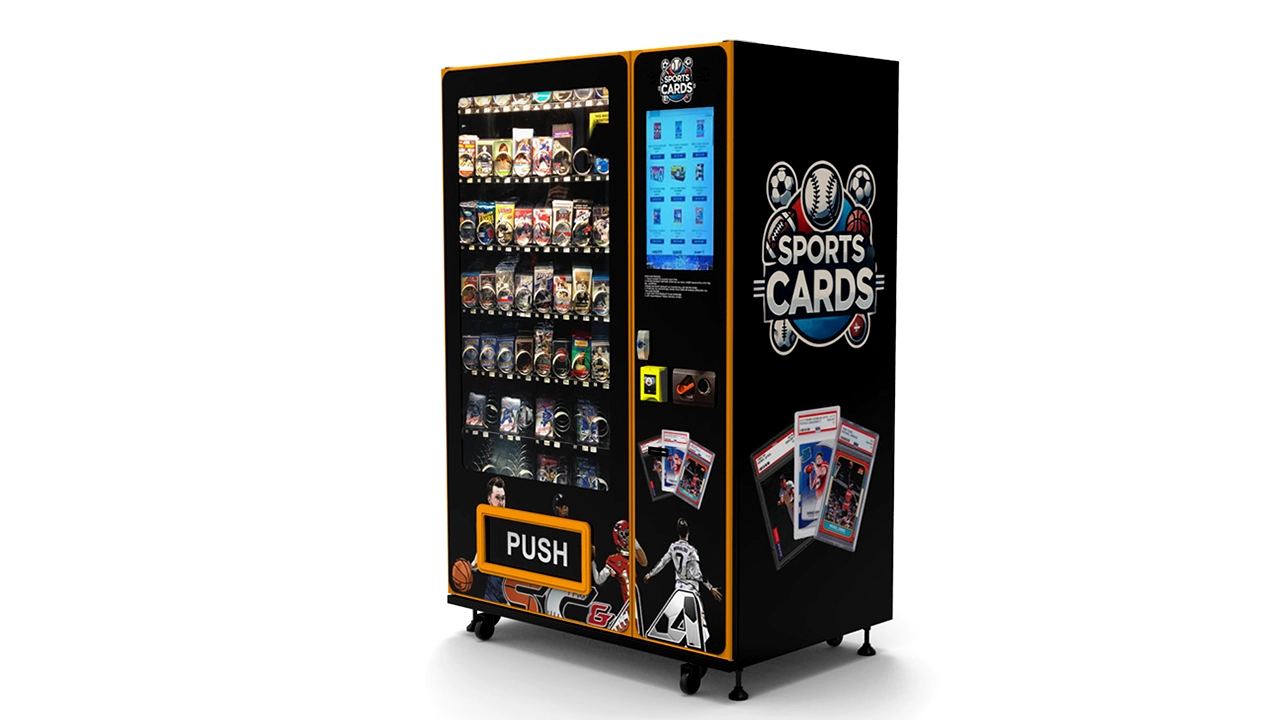
From my experience, the touchscreen robotic machines are worth the extra cost if you’re placing them in a location where presentation matters. A 32-inch screen showing the latest card releases can pull in customers who would otherwise walk past a plain metal box. But if you’re testing a new area, start with a cheaper unit. You can always upgrade later.
I’ve also tested machines from various manufacturers, and I’ve noticed that the build quality varies significantly. One brand I’ve had good luck with is Zhongda Smart—they offer solid construction and responsive support, though I’d still recommend ordering a sample unit before committing to a bulk purchase. Their lead times are reasonable, and the software interface is intuitive for restocking.
Payback Periods and Profitability Expectations
I can’t give you a guaranteed return, and anyone who does is lying. But based on my own sites and conversations with other operators, a realistic payback period is 8 to 18 months. That assumes you’re generating at least $1,200 in monthly sales at a location with reasonable rent or commission. If you’re paying $200 a month in location fees and your gross margin is 35%, you’re clearing about $220 a month after electricity and payment processing. That’s a slow grind.
To hit the faster end of that range, you need a location that does $2,500 or more in monthly sales. That’s where the laundromat example comes in. My successful sites all have one thing in common: they sell through inventory quickly enough that I’m restocking every 10 to 14 days. That means the machine is constantly exposing new products, which keeps collectors coming back. A machine that sits half-full for weeks is a red flag.
Data from IBISWorld on the vending machine industry shows that average profit margins for operators hover around 15–20% after all expenses. That aligns with my experience. You’re not getting rich overnight, but a well-placed machine can generate reliable side income. The key is to scale: once you’ve proven a location, add a second machine nearby or expand to a similar demographic.
Sourcing Inventory and Managing Stock
Inventory management is where most new operators fail. You can’t just buy random packs and hope they sell. I track what moves and what sits. In my experience, Pokémon and sports cards are the safest bets, but you need to stay current with releases. A machine stocked with last year’s sets will collect dust.
I buy from distributors and sometimes directly from manufacturers when I can. The margin is better, but you have to commit to volume. For a single machine, I typically spend $800 to $1,500 per restock, depending on the mix. I’ve learned to keep a reserve of bestsellers—like booster packs under $10—because they drive foot traffic. The higher-priced items, like elite trainer boxes, are where the profit is, but they move slower.
One tip from years of trial and error: don’t fill every slot with the same product. Mix it up. A machine with 60% low-cost packs and 40% premium items seems to perform best. Also, keep track of which slots sell out first. That data tells you what to reorder. I use a simple spreadsheet, but there are also software solutions that integrate with your machine’s telemetry.
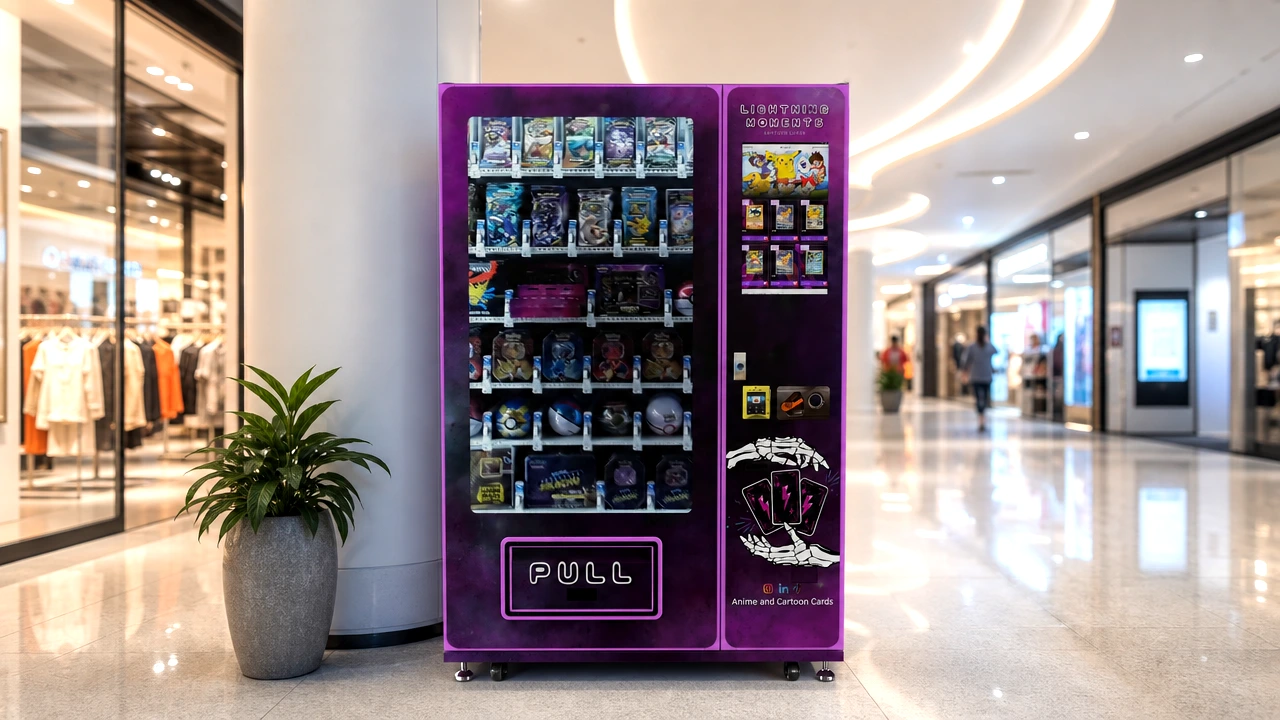
Maintenance, Repairs, and the Reality of Downtime
Every machine will break down eventually. The question is how fast you can fix it. I once had a card jam in a high-traffic location during a weekend Pokémon event. I couldn’t get a technician until Monday, and I lost at least $400 in sales. That’s when I learned basic vending machine repair skills. You should too.
Common issues include jammed dispensers, payment system failures, and screen freezes. If you’re not handy, budget for a local technician—about $75 to $150 per service call, not including parts. I’ve found that cleaning the dispensing mechanism monthly and using the correct pack dimensions reduces issues by 80%. It’s boring, but it’s profitable.
Another consideration is the payment system. Modern machines accept credit cards and mobile payments, but these systems can fail. I always choose machines with dual redundancy—if the card reader goes down, the machine should still accept cash. That’s saved me more than once. And when you’re selecting a supplier, ask about their repair turnaround time. Some overseas manufacturers, including Zhongda Smart, have local service networks, but others will leave you waiting weeks for a part.
Buy, Lease, or Partner? My Take on Business Models
New operators often ask whether they should buy a machine outright, lease one, or partner with a location owner. Here’s my honest take after trying all three. Buying gives you full control and the best long-term margins, but it ties up capital. Leasing reduces upfront risk, but you’ll pay more over time and often have less flexibility.
Partnering with a location owner—where they provide space and you provide the machine—can be a win-win if you structure it right. I typically offer a 15–20% commission on gross sales to the host. That incentivizes them to promote the machine and keeps them happy. But be careful: some hosts will expect you to pay rent plus commission, which can kill your margins. Negotiate hard.
For beginners, I recommend buying a single, reasonably priced machine and placing it in a low-risk location. If it works, scale up. If it doesn’t, you can move the machine. Leasing might seem safer, but you’re still on the hook for maintenance and inventory. The only time I’d consider leasing is if you’re testing a completely new market and want to minimize capital exposure.
Regulations, Permits, and Local Compliance
You can’t just drop a machine anywhere. Most municipalities require a vending permit or business license, and the rules vary widely. In the U.S., check with your city clerk’s office. In the EU, you’ll need to comply with local business registration and possibly VAT requirements. I’ve seen operators get fined for skipping this step, and it’s not worth the risk.
If you’re placing a machine inside an existing business, the host’s license might cover it, but don’t assume. Get it in writing. Also, consider food safety regulations if you ever decide to add snacks or drinks to your machine—that introduces a whole different set of rules. For cards only, you’re usually fine, but check with your local Small Business Administration office for guidance.
Another consideration is data privacy if your machine collects customer information. Most card vending machines don’t, but if you add a loyalty program, you’ll need to comply with GDPR in Europe or CCPA in California. It’s a headache, but it’s manageable. I keep my machines simple: no data collection, no loyalty cards, just a clean transaction.
Common Mistakes That Cost Me Thousands
I’ve made plenty of errors, and I’ll share them so you don’t repeat them. First, I underestimated the importance of restocking frequency. I thought a full machine would last a month. It didn’t. The shelves looked bare after two weeks, and sales dropped because customers assumed the machine was out of order. Now I check my machines every 7–10 days and restock immediately.
Second, I ignored the seasonality of card sales. Pokémon and sports cards spike during holidays and major tournament seasons. If you don’t stock up before those peaks, you miss out on the highest revenue weeks of the year. I now keep a calendar of release dates and plan my inventory purchases accordingly.
Third, I placed a machine in a location where the host business owner was indifferent. He didn’t promote it, didn’t care if it worked, and sometimes blocked access with boxes. Sales were terrible. I’ve learned to only partner with hosts who are genuinely excited about having the machine. That enthusiasm translates into better placement and word-of-mouth.
Data-Driven Adjustments: When to Move or Pivot
Not every location works out, and that’s okay. The key is to track your sales data and make decisions based on numbers, not emotions. I keep a simple log for each machine: monthly sales, units sold, cost of goods, and maintenance expenses. If a machine doesn’t hit a 25% net margin after six months, I move it.
I’ve moved machines from a bowling alley to a barbershop and tripled revenue. The bowling alley had foot traffic, but the demographic was families with kids who wanted candy, not $15 booster packs. The barbershop had a captive audience of adult males with disposable income. That’s the kind of insight you only get from tracking data.
Also, pay attention to which products sell at different times of the day. My laundromat machine sells more during weekday evenings, while the barbershop machine sells on weekends. I adjust my restocking schedule accordingly. It’s not rocket science, but it requires discipline.
Supplier Selection: What I Look For
Choosing the right supplier is critical, and I’ve been burned by cheap imports. Here’s what I check before placing an order. First, ask about the dispensing mechanism. Does it handle different pack thicknesses? Can it be adjusted? Second, inquire about software updates and remote diagnostics. A machine that can alert you to issues via text message saves you from losing days of sales.
Third, check the warranty and parts availability. Some suppliers offer a one-year warranty, but if they don’t have a local distributor, you’ll be waiting for parts. I’ve used machines from Zhongda Smart, and their support has been reliable, but I always order spare parts in advance—things like motors and sensors that are cheap to stock but expensive to wait for.
Finally, don’t be swayed by the lowest price. A $4,000 machine that breaks down monthly will cost you more than an $8,000 machine that runs for years. I’ve learned this the hard way. I now look for a balance of price, build quality, and after-sales support.
FAQ: Questions I Get From New Operators
Do trading card vending machines actually make money?
Yes, but it’s not automatic. A well-placed machine can generate $1,500 to $4,000 per month in sales, with a net margin of 15–25% after costs. The ones that fail are usually in poor locations or poorly managed. My laundromat machine nets about $700 a month after all expenses, which isn’t huge, but it’s passive and consistent.
How much does a trading card vending machine cost?
Expect to spend $6,000 to $15,000 for a new, reliable machine. Basic models are cheaper, but they often lack the security and dispensing reliability you need. I recommend budgeting $10,000 total for your first setup, including shipping, installation, and initial inventory.
How long does it take to recoup your investment?
Realistically, 8 to 18 months. Faster if you land a high-traffic location with low rent and strong sales. Slower if you’re paying high commissions or your machine sits idle. My first machine took 14 months to pay back—not great, but not bad either.
Should I buy or lease as a beginner?
Buy if you can afford it. Leasing reduces upfront cost but locks you into higher long-term payments. I’ve leased in the past and felt restricted. Buying gives you the freedom to move the machine and sell it if needed.
Where should I place my machine for the best results?
Look for locations with idle time and no direct competition. Laundromats, barbershops, gym lobbies, and late-night convenience stores have worked well for me. Avoid places where the host business sells the same products.
What permits or licenses do I need?
Check with your local city or county government. Most places require a vending permit or business license. In the EU, you’ll need to register your business and possibly charge VAT. It’s not complicated, but it’s mandatory.
How do I choose a good supplier?
Ask about the dispensing mechanism, warranty, parts availability, and software support. Look for a supplier with a local service network or quick shipping times. I’ve had good experiences with Zhongda Smart, but always order a sample unit first.
What happens if my machine breaks down?
If you’re not handy, call a technician. But I recommend learning basic troubleshooting—most issues are jams or payment system glitches. Keep spare parts on hand and clean the machine monthly to prevent problems.
How can I reduce restocking and maintenance costs?
Track your sales data and stock only what moves. Use a mix of low-cost and premium items to balance turnover and margin. Schedule restocking every 7–10 days. And choose a machine with reliable components to minimize repairs.
Final Thoughts From the Trenches
This isn’t a get-rich-quick scheme. It’s a real business that rewards attention to detail and patience. I’ve seen too many people buy a machine, place it in a bad spot, and then complain that vending doesn’t work. The truth is, it works—if you respect the fundamentals.
Start small, track your data, and be willing to move your machine if a location doesn’t perform. The market for trading cards is strong, and automated retail is the natural evolution of how collectors buy. Just don’t expect the machine to run itself. You’re still the operator, and that’s what makes the difference between a profitable asset and an expensive paperweight.