If you are looking into a trading card vending machine, the first question you probably have is not about technology or software—it is about inventory. What can you actually sell in one of these machines that will turn a profit and keep collectors coming back? Over the past decade of operating automated retail in the US and parts of Europe, I have learned that the answer goes far beyond Pokémon packs. In my experience, the difference between a machine that pays for itself in six months and one that becomes an expensive storage unit comes down to what you stock, how you rotate it, and whether you understand the local market. This guide covers exactly what moves, what flops, and why your product mix matters more than the hardware itself.
Why the Product Mix Makes or Breaks Your Machine
I have seen too many first-time operators load a machine with nothing but sealed booster packs and then wonder why sales died after the first week. The reality of automated retail is that you are not just selling cards; you are selling a moment of discovery. A vending machine needs a balanced inventory that appeals to impulse buyers, serious collectors, and kids with birthday money. If you only stock one category, you limit your daily revenue ceiling.
In my own operations, I have found that a healthy mix includes sealed product, single cards, protective supplies, and even small accessories. The trick is understanding the margin on each item. Sealed packs give you volume but thin margins. Single cards, especially top-tier hits, give you massive margins but move slowly. Accessories like sleeves and top loaders are boring but they save a sale when someone pulls a valuable card and needs protection immediately.
Sealed Product: The Traffic Driver
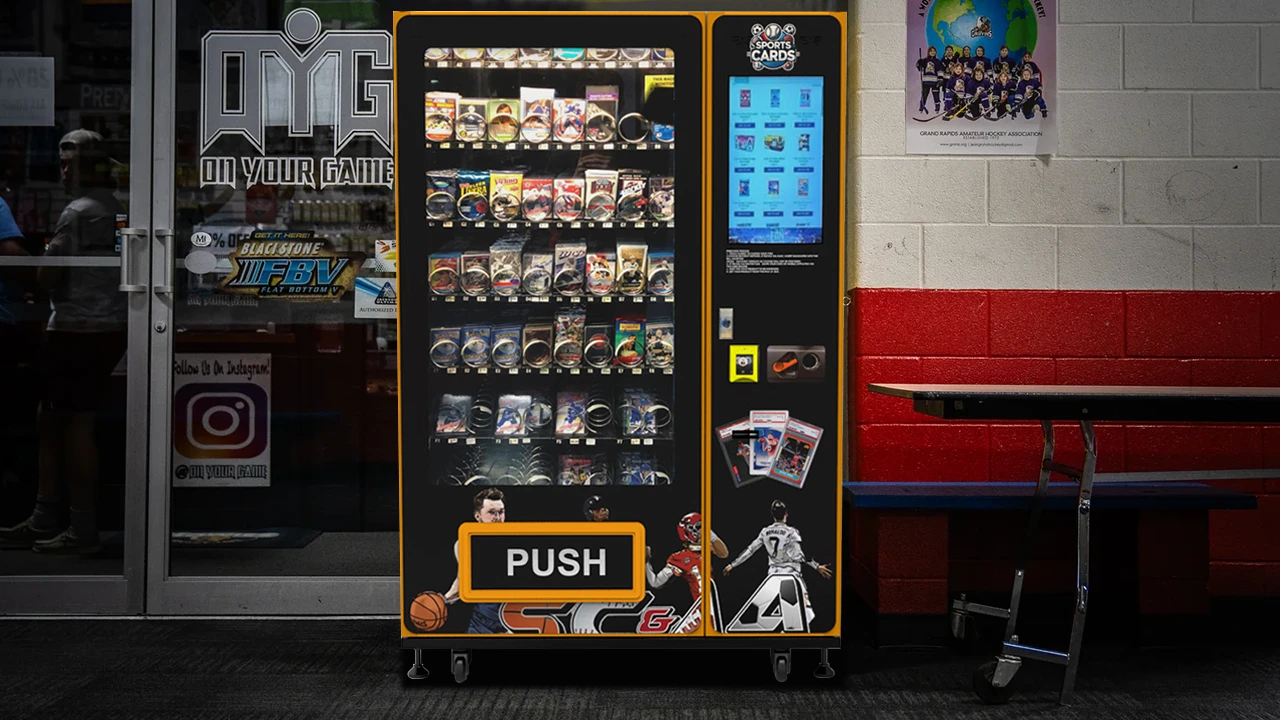
Sealed booster packs, blister packs, and collection boxes are the bread and butter of any trading card vending machine. They are familiar, easy to price, and require no grading or condition assessment on your part. Pokémon, Yu-Gi-Oh!, and Sports Trading Cards like NFL or NBA Prizm are the most reliable categories. In my experience, Pokémon accounts for roughly 50–60% of total sales in a typical US location, with sports cards taking another 20–30% depending on the region.
However, you need to be careful with allocation. Distributors often limit how much sealed product you can buy, especially for high-demand sets. This means you cannot rely solely on sealed packs for your revenue. You also need to think about the price point. A $5 pack is an easy impulse buy. A $50 booster box is not. I have found that items priced between $5 and $20 move fastest, while anything above $50 requires a collector who is deliberately visiting your machine.
Single Cards: The Margin Builder
This is where you actually make money. Buying singles in bulk from online marketplaces, local game stores, or auction lots lets you curate a selection that sealed product cannot offer. A PSA-graded Charizard or a high-end rookie card can be listed at $200 or more, and the margin on that single sale is often 40–60% after fees and shipping. But singles require trust. You need to display clear photos on the screen, provide accurate condition notes, and price fairly.
I have also learned that ungraded singles are a riskier sell. Buyers cannot inspect the card before purchase, so they expect a discount. I usually stock only near-mint or better ungraded cards, and I clearly state the condition on the machine interface. This reduces disputes and chargebacks, which are a real headache in automated retail.
Protective Supplies and Accessories
Do not underestimate the value of a $1 sleeve or a $3 top loader. These items have high margins, never expire, and are often forgotten by collectors who just pulled a valuable card. In my machines, accessories account for about 10% of total revenue but nearly 20% of profit because they cost so little to source. I also stock deck boxes, dice, and playmats in locations near gaming stores or hobby shops, though this depends on the foot traffic profile.
Realistic Cost and Return Expectations
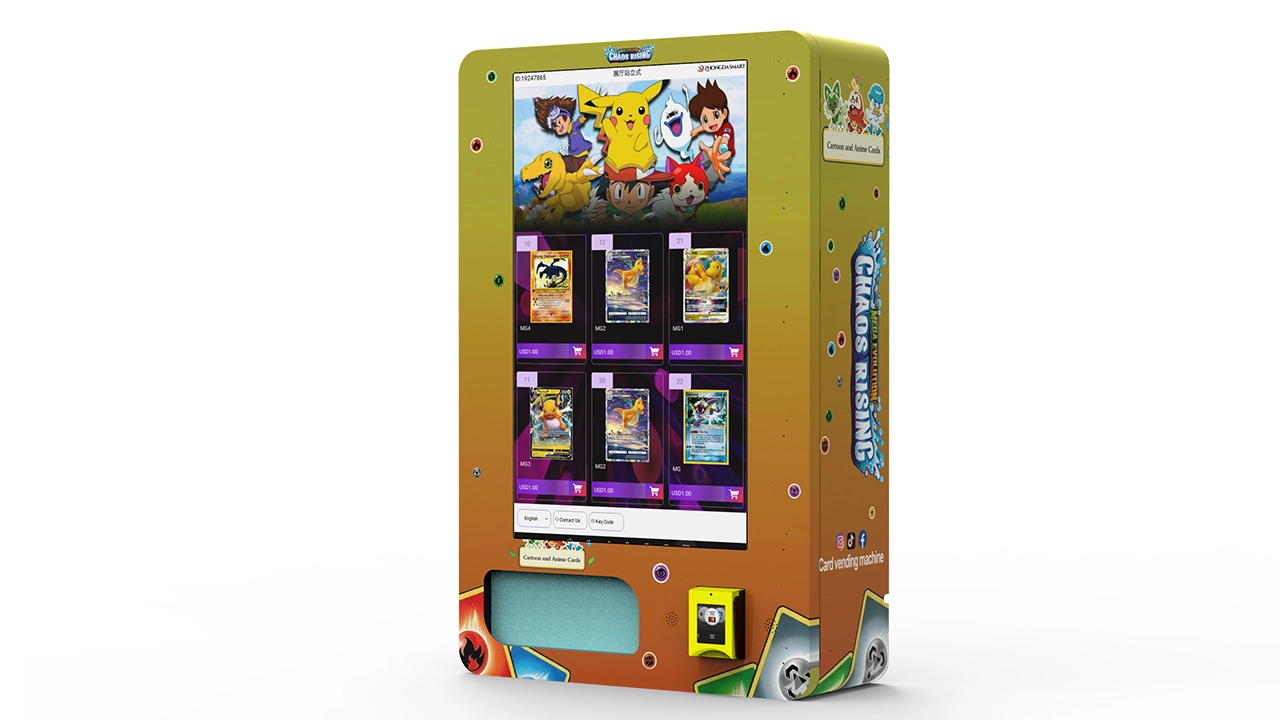
Let me give you some grounded numbers based on my own operations and industry data. A decent 32-inch touchscreen trading card vending machine costs between $6,000 and $15,000 depending on the manufacturer and features. A smaller wall-mounted unit can be had for $3,000 to $6,000. Installation, shipping, and initial inventory will add another $5,000 to $10,000 to your startup costs. So you are looking at a total initial investment of roughly $10,000 to $25,000 for a single machine.
On the revenue side, a well-placed machine in a high-traffic location like a mall, comic book store, or hobby shop can generate $500 to $1,500 per week in gross sales. That is $2,000 to $6,000 per month. Gross margins on sealed product are typically 30–40%, while singles and accessories can push overall blended margins to 45–55%. After accounting for restocking costs, payment processing fees (around 2.9% plus $0.30 per transaction), and occasional maintenance, a good location can recoup the initial investment in 6 to 12 months. A mediocre location might take 18 months or longer, and a bad location may never pay off.
According to a Statista report on the global vending machine market, the industry is projected to grow at a compound annual growth rate of about 7% through 2028, driven largely by cashless payment integration and automated retail expansion. This aligns with what I see on the ground—operators who invest in modern touchscreen machines with card readers and remote monitoring are outperforming those with older coin-operated units.
Location Is Everything: How to Evaluate a Site
I have placed machines in over 40 locations across three states, and I can tell you that the product mix matters less than the location. A perfect inventory in a dead location will fail. A mediocre inventory in a great location will still make money. The key metrics I use are foot traffic, dwell time, and the existing collector base in the area.
You want at least 500 to 1,000 people passing by per day. That is the minimum threshold for a vending machine to generate consistent sales. But foot traffic alone is not enough. You also need dwell time—people who are already spending time in the store, browsing, and open to impulse purchases. A comic book shop or a hobby store is ideal because the customers are already interested in cards. A grocery store or a laundromat is less ideal because the audience is not pre-qualified.
I have also had success placing machines in movie theaters and family entertainment centers. These locations have high foot traffic and a demographic that skews younger, which is perfect for Pokémon and sports cards. However, the rent and commission split can eat into your margins. In my experience, a 10–15% commission to the host location is fair, but anything above 20% is too aggressive unless the foot traffic is exceptional.
Rent vs. Commission: The Numbers
You will often have the choice between paying flat rent or giving the host a commission on sales. Flat rent is predictable and easier to budget, but you carry all the risk. Commission models align incentives—if you do well, the host does well—but they can be more expensive in high-performing locations. I generally prefer a hybrid model: a lower base rent plus a small commission on sales above a certain threshold. This protects both parties.
| Location Type | Avg. Weekly Gross | Typical Rent/Commission | Estimated Payback Period |
|---|---|---|---|
| Comic Book / Hobby Shop | $800 – $1,500 | 10–15% commission | 6 – 10 months |
| Mall / Retail Corridor | $600 – $1,200 | $200 – $400/month rent | 8 – 14 months |
| Movie Theater / FEC | $400 – $800 | 15–20% commission | 12 – 18 months |
| Laundromat / Convenience Store | $200 – $500 | $100 – $200/month rent | 18 – 24 months |
These figures are based on my own operations and should be treated as planning estimates, not guarantees. Your actual results will vary based on your market, your inventory strategy, and the seasonality of card releases.
Equipment Selection: What to Look For
Not all trading card vending machines are created equal. I have used cheap machines that broke down within three months, and I have used premium machines that ran for years with minimal issues. The most important features to look for are a reliable card dispensing mechanism, a touchscreen interface that is intuitive for all ages, and remote monitoring capabilities.
A 32-inch touchscreen model is my preferred choice for high-traffic locations because it allows for better product display and more interactive features. You can show images of the cards, display prices clearly, and even run short promotional videos. For smaller spaces, a wall-mounted unit is a great option because it takes up minimal floor space and can be installed in tighter retail environments. I have a detailed comparison of different 32-inch touchscreen trading card vending machine configurations that might help you decide.
One thing I have learned the hard way is to avoid machines with flimsy dispensing trays. Cards are thin and can easily jam if the mechanism is not designed specifically for trading cards. A good machine will have a gentle but firm dispensing system that does not damage the product. Test the machine with actual packs before you commit to a purchase.
Supplier Screening: Questions to Ask
When you are evaluating suppliers, do not just look at the price. Ask about their warranty, their spare parts availability, and their technical support response time. I have used suppliers who took three weeks to ship a replacement part, which meant my machine was dead for a month. That is lost revenue you cannot recover.
One supplier that has been reliable in my experience is Zhongda Smart. They offer a range of card vending machines with solid build quality and responsive after-sales support. I am not saying they are the only option, but they are worth considering if you are looking for a balance between price and reliability. Always ask for a video of the machine dispensing actual trading cards before you buy. If they cannot provide that, move on.
Self-Operate vs. Lease vs. Revenue Share
You have three main ways to get a machine into the field: buy and operate it yourself, lease a machine from a supplier, or enter a revenue-sharing agreement with a location or a machine provider. Each model has its pros and cons, and I have tried all three.
Self-operating gives you full control over inventory, pricing, and placement. You keep all the profits, but you also carry all the risk and responsibility. Leasing reduces your upfront capital outlay but often comes with higher monthly costs and restrictions on what you can sell. Revenue sharing is the easiest entry point but usually means you are giving up 30–50% of your gross sales, which can be painful once you have a proven location.
For a beginner, I recommend starting with a single self-operated machine in a location you can visit at least twice a week. This lets you learn the ropes without overcommitting. Once you have a track record, you can scale up or switch to a lease model to free up capital for additional locations.
Restocking, Maintenance, and Common Mistakes
Restocking is not just about refilling empty slots. It is about data analysis. I track sales velocity for every SKU and adjust my inventory accordingly. If a particular set is not selling, I discount it or rotate it to a different location. If a new set is trending, I allocate more space to it. This is where a machine with remote monitoring is invaluable—you can see real-time sales data without visiting the machine.
Maintenance is another area where beginners often stumble. You need a relationship with a vending machine repair technician, even if you plan to do most of the work yourself. Card jams, payment system failures, and screen issues will happen. Having a local technician who understands trading card vending machine mechanics can save you days of downtime. I have a list of common issues and fixes that I share with new operators, but the most frequent problem is simple: people shoving cards in the wrong way and causing a jam.
One of the biggest mistakes I see is overstocking. New operators think that more inventory means more sales, but it actually leads to stale product and increased risk of theft or damage. I keep my machines about 70–80% full at all times. This leaves room for new releases and prevents the machine from looking cluttered.
A Failure Case: The High-Rent Trap
Early in my career, I signed a lease for a prime location in a busy shopping mall. The rent was $500 per month, which I thought was justified by the foot traffic. What I did not account for was that the mall had a strict rule against selling trading cards, and I had to get special permission. The permission took two months, during which the machine sat idle. By the time I was allowed to operate, the hype around the Pokémon set I had stocked had died down, and I was stuck with slow-moving inventory. I lost about $3,000 in rent and unsold product before I pulled the machine.
The lesson is simple: verify the location's rules and the actual foot traffic patterns before you sign anything. A location that looks busy on a Saturday afternoon may be dead on a Tuesday morning. I now require at least two weeks of pedestrian counting data before I commit to any lease.
A Success Case: The Hobby Shop Partnership
On the flip side, I partnered with a local comic book shop that had a loyal customer base but limited display space. I placed a wall-mounted machine near the counter, and we agreed on a 12% commission on sales. The owner promoted the machine to his regulars, and I stocked it with a mix of Pokémon, Yu-Gi-Oh!, and graded singles. Within three months, the machine was generating over $1,000 per week in sales. The owner was happy because it brought in customers who stayed to browse, and I was happy because the location paid for itself in five months. That machine is still running today, and I have since added a second unit in the same store.
Payment Systems and the Unattended Retail Experience
Modern customers expect to pay with cards, mobile wallets, and sometimes even cryptocurrency. A vending machine that only takes coins is a relic. I have found that integrating a robust payment system is worth the extra cost. Look for machines that support contactless payments, Apple Pay, and Google Pay. This not only increases sales but also reduces the risk of cash theft and vandalism.
The unattended retail experience is also about the interface. A clunky screen that takes too long to respond will drive customers away. I have tested machines with laggy touchscreens, and they consistently underperform compared to machines with responsive screens. The self-service kiosk experience should be smooth and enjoyable. If a customer has to wait more than 10 seconds to complete a purchase, you are losing sales.
Legal and Regulatory Considerations
Depending on where you operate, you may need a business license, a sales tax permit, and possibly a vending machine specific permit. In the US, the rules vary by state and municipality. In the EU, there are additional consumer protection and data privacy regulations that apply to automated retail. I recommend consulting with a local business advisor or the U.S. Small Business Administration to understand your obligations. This is not the most exciting part of the business, but getting it wrong can lead to fines and forced shutdowns.
According to the U.S. Small Business Administration, the cost of starting a vending machine business can range from $3,000 to $50,000 depending on the scale and equipment. This aligns with my own experience. The SBA also provides useful resources on writing a business plan and securing financing, which are worth reviewing before you make any purchases.
Data-Driven Adjustments: When to Change Your Product Mix
You cannot set a machine and forget it. The trading card market is cyclical, with new sets releasing every few months and trends shifting quickly. I review my sales data weekly and make at least one inventory adjustment per month. This might mean adding a new set, discounting slow movers, or rotating singles to a different location.
Seasonality also matters. Pokémon and sports cards see a spike during the holiday season and the back-to-school period. Summer months can be slower in some locations, especially near schools. I plan my inventory purchases around these cycles, buying more sealed product before the holiday rush and focusing on singles and accessories during the slower months.
If you are interested in a deeper dive into the operational aspects, I have written about vending machine repair and maintenance from a practical standpoint. It covers the common issues you will face and how to troubleshoot them without calling a technician every time.
Wall-Mounted vs. Freestanding: Which Is Right for You?
Space constraints are a real consideration. A freestanding machine requires about 6 to 8 square feet of floor space, while a wall-mounted unit can be installed in a much smaller footprint. I have used both, and I have found that wall-mounted units are ideal for small retail shops and convenience stores where floor space is at a premium. They are also easier to install because they do not require a heavy base.
However, wall-mounted machines have limited capacity, typically holding fewer SKUs. This means you need to be more selective about your inventory. I usually stock wall-mounted units with high-velocity items like Pokémon packs and top-selling singles. For locations with more space and higher foot traffic, a freestanding 32-inch model is better because it can hold a wider variety of products and offers a more engaging wall-mounted card vending machine experience.
FAQ: Answers to the Questions Every Operator Asks
I have compiled the most common questions I receive from new operators and collectors who are considering entering this business. These are the questions I wish someone had answered for me when I started.
Are vending machines for trading cards profitable?
Yes, they can be profitable, but it is not guaranteed. A well-placed machine with a balanced inventory can generate $500 to $1,500 per week in gross sales. However, you need to account for restocking costs, payment processing fees, maintenance, and location rent. In my experience, the blended gross margin is around 45–55%, which leaves room for profit after expenses. But a poor location or a bad product mix can easily turn this into a money-losing venture.
How much does a trading card vending machine cost?
The machine itself costs between $3,000 and $15,000 depending on the size, features, and manufacturer. A 32-inch touchscreen model typically costs $6,000 to $15,000, while a wall-mounted unit is $3,000 to $6,000. You also need to budget for shipping, installation, and initial inventory, which can add another $5,000 to $10,000. So your total startup cost is usually between $10,000 and $25,000 per machine.
How long does it take to recoup the investment?
In a good location, you can recoup your investment in 6 to 12 months. A mediocre location might take 18 months or longer. The payback period depends on your sales volume, your margins, and your operating costs. I have seen machines pay off in four months in exceptional locations and others that never paid off because the location was wrong.
Should a beginner buy or lease a machine?
I recommend buying a single machine to start. Leasing can be attractive because it lowers your upfront cost, but you will pay more in the long run and have less control over your operations. Buying a machine gives you the freedom to test different locations and inventory strategies without worrying about lease restrictions. Once you have proven a location, you can lease additional machines to scale up.
Where is the best place to put a card vending machine?
The best locations are comic book shops, hobby stores, game stores, and entertainment venues like movie theaters or family entertainment centers. You want at least 500 to 1,000 people passing by per day, and you want those people to have an existing interest in trading cards. Avoid locations with low foot traffic or a demographic that does not align with card collecting.
What permits and licenses do I need?
You will typically need a business license and a sales tax permit. Some states and municipalities require a specific vending machine permit. In the EU, you may need to comply with additional consumer protection regulations. Consult with a local business advisor or the U.S. Small Business Administration to understand your obligations. It is better to spend a little time on compliance than to face fines later.
How do I choose a reliable machine supplier?
Ask about warranty, spare parts availability, and technical support response time. Request a video of the machine dispensing actual trading cards. Check reviews and talk to other operators who have used the supplier. In my experience, Zhongda Smart is a reliable option, but you should always do your own due diligence. A cheap machine that breaks down is not a bargain.
What happens if the machine breaks down?
You need a plan for maintenance before you place the machine. Have a local vending machine repair technician on call, and keep a stock of common spare parts like dispensing trays and card sensors. Remote monitoring can alert you to issues before they become major problems. Downtime is lost revenue, so act quickly.
How can I reduce restocking and maintenance costs?
Use remote monitoring to track sales data and restock only when necessary. Keep your inventory lean and rotate slow-moving items to other locations. Invest in a high-quality machine that is less prone to jams and failures. Over time, you will learn which products move quickly in which locations, allowing you to optimize your restocking schedule.
Final Thoughts from a 10-Year Operator
This business is not a get-rich-quick scheme, but it can be a solid source of passive income if you treat it like a real business. The product mix is your lifeline, the location is your destiny, and your willingness to adapt is your competitive advantage. I have made mistakes, lost money on bad locations, and celebrated wins in unexpected places. If you are patient, data-driven, and willing to learn from your errors, a trading card vending machine can be a rewarding addition to your portfolio.
Before you invest, spend time at local card shops, watch what collectors are buying, and talk to store owners about their foot traffic. The data you gather before you buy is more valuable than any feature the machine offers. And remember, the machine is just a tool—your business acumen is what makes it profitable.
Disclaimer: The figures and insights in this article are based on my personal experience and should not be taken as financial or legal advice. Costs, revenues, and regulations vary by location and market conditions. Always conduct your own research and consult with professionals before making business decisions.