If you are looking into a commercial trading card vending machine because you saw a TikTok of someone pulling a rare Charizard or a signed rookie card, I get it. That video probably made the economics look effortless. But after running automated retail for over a decade, I can tell you the real money is not made in the unboxing moment—it is made in the machine selection, the location data, and the maintenance schedule you set before you ever plug the unit in. This guide compares the features that actually matter when you are buying a commercial trading card vending machine, not the flashy ones. We will talk about real costs, real foot traffic requirements, and the operational mistakes that separate profitable routes from expensive storage units.
Why the Trading Card Vending Machine Boom Is Different
The trading card vending machine trend is not just a fad, but it also is not a gold rush for everyone. I have seen operators jump in because card flipping is hot, only to realize that the machine is the easy part. The hard part is understanding that this is a niche within automated retail that behaves differently than snack or soda vending. Your inventory is high-value, low-weight, and highly susceptible to theft and damage. This changes your entire operational model.
When I placed my first machine in a hobby shop in 2019, I thought it would be a passive income stream. I was wrong. The machine required more frequent restocking than my traditional vending routes because the high-value items sold out quickly, and the low-value packs sat there gathering dust. The key is not just having a machine; it is having the right trading card vending machine with the right software to manage that inventory mix dynamically.
Unlike a soda machine where you restock once a week, a card machine in a good location can sell out of specific SKUs in 48 hours. If you do not have a data-driven restocking plan, you are leaving money on the table and frustrating your best customers. This is where the comparison shopping for features becomes critical.
What Buyers Usually Miss During Initial Research
Most buyers spend hours comparing screen sizes and payment processors, which are important, but they ignore the ventilation system and the security locking mechanism. Cards are sensitive to humidity and temperature. A machine placed near a store entrance that gets blasted with hot air every time the door opens will ruin the cards inside within a month. I have opened machines to find warped cards that had to be written off as total loss.
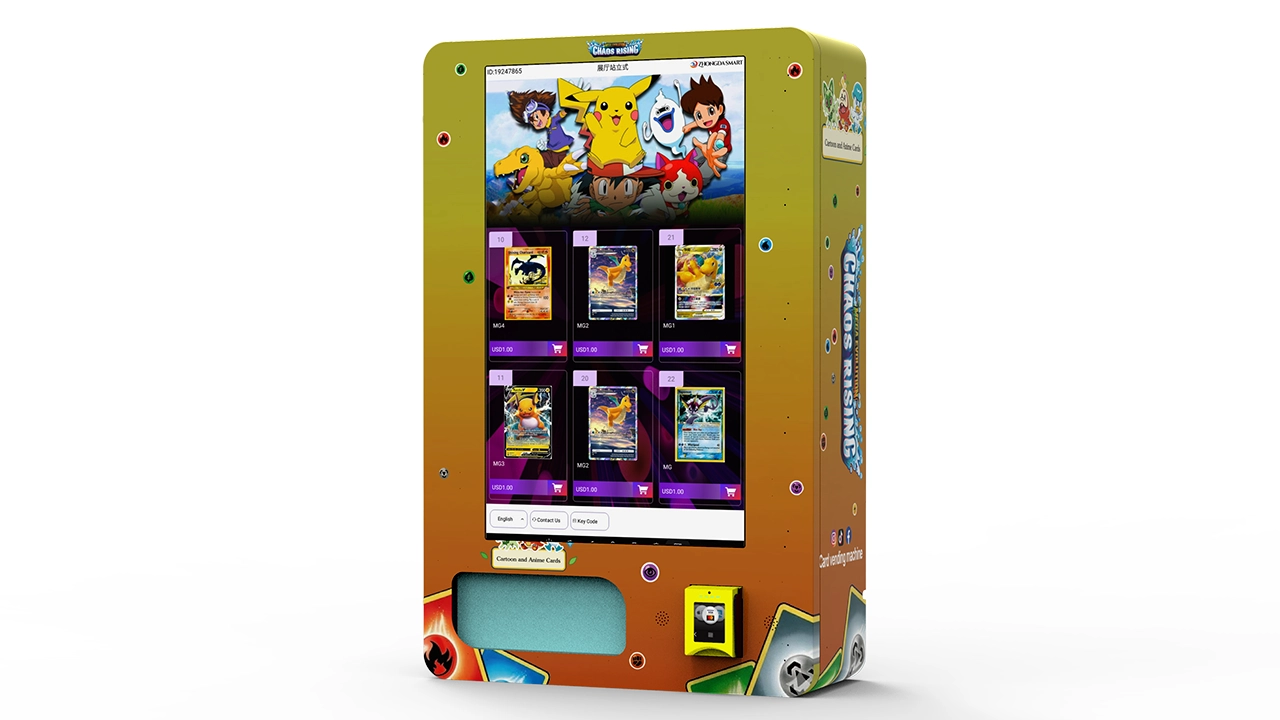
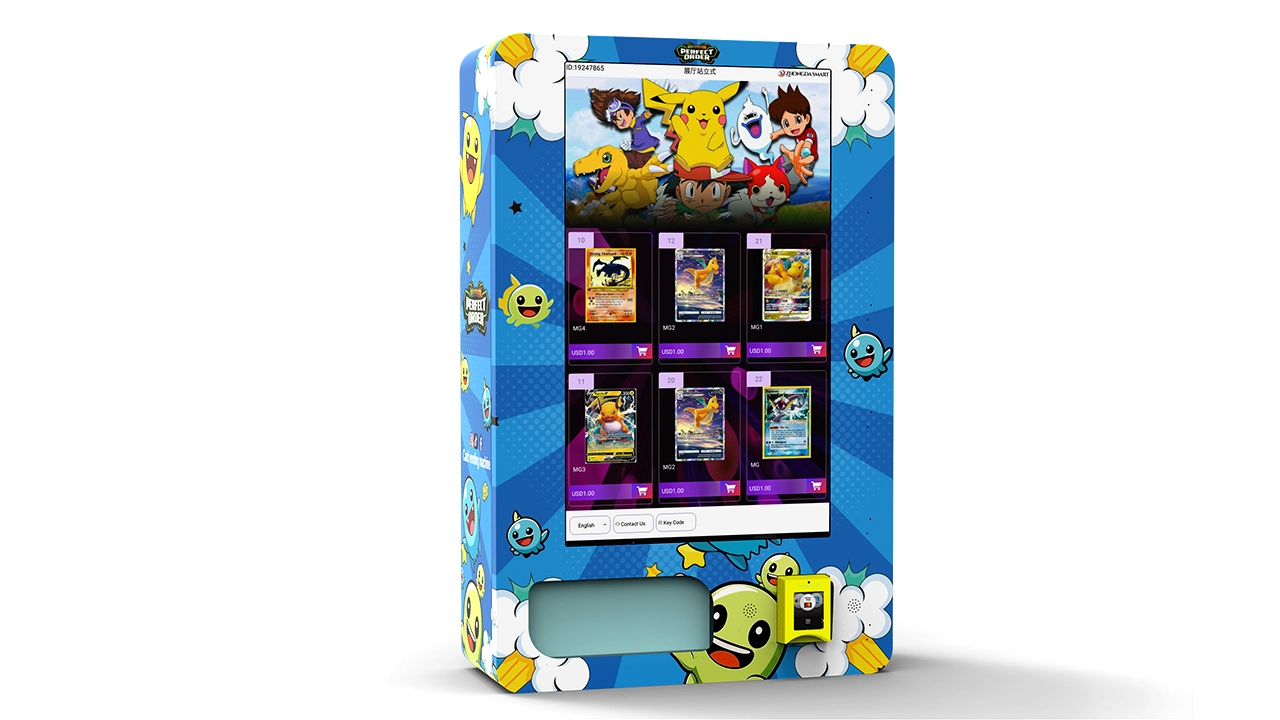
Another overlooked aspect is the software interface for the operator. You need a machine that allows you to change pricing remotely and track inventory in real time. If you have to physically go to the machine to change a price from $5 to $7, you are wasting labor hours. The best 32-inch touchscreen trading card vending machine models offer cloud-based management, which is a non-negotiable feature for me now.
Finally, consider the customer experience. The machine should have a clear, bright display and an intuitive interface. If a customer has to read instructions on how to use the machine, you have already lost the impulse buy. The machine should feel like a premium retail experience, not a clunky vending box.
Comparing the Core Features: Hardware and Build Quality
When comparing machines, the first thing I look at is the chassis. Card vending machines need to be more robust than standard snack machines because they are often placed in high-traffic, unsupervised areas. A thin metal frame will get dented or broken into quickly. Look for a machine with a heavy-duty steel body and a secure, multi-point locking system.
The internal mechanisms are just as important. The spiral or carousel system that dispenses the cards must be adjustable to handle different pack sizes, from thin foil packs to thick, magnetic one-touch cases. If the mechanism is too rigid, you will constantly deal with jams. I learned this the hard way when I tried to sell a thicker, premium card box in a machine designed for standard packs. It jammed three times in one week, and the location manager asked me to remove the machine.
Here is a quick comparison table based on my operational experience with different configurations:
| Feature | Standard Spiral Machine | Carousel/Smart Machine | Wall-Mounted Unit |
|---|---|---|---|
| Footprint | Large (needs floor space) | Medium (flexible placement) | Small (fits in tight gaps) |
| Inventory Capacity | High (200+ items) | Medium (100-150 items) | Low (30-50 items) |
| Security Level | Moderate | High (individual locked slots) | High (but easy to steal whole unit) |
| Best Use Case | High-traffic big box stores | Hobby shops, malls | Barbershops, convenience stores |
| Price Range (USD) | $8,000 - $15,000 | $12,000 - $20,000 | $4,000 - $7,000 |
Do not just look at the purchase price. Look at the replacement cost of parts. I have seen machines where a simple motor costs $150 to replace, and others where it costs $40. The cheaper machine is not always the better deal in the long run.
Screen Size and User Interface
The touchscreen is your salesperson. A 21-inch screen is the minimum I would recommend for a floor-standing unit. The 32-inch screens are fantastic for visibility and creating a "wow" factor, but they drain more power and can be a glare magnet in bright locations. I have one specific model that has an anti-glare screen, which made a huge difference in a location with skylights.
The software on the screen matters just as much as the hardware. You need a UI that loads quickly. If the screen takes more than three seconds to wake up and show the catalog, you lose the customer. They will walk away. The machine should also have a "browse" mode that allows customers to see the card images and prices without starting a transaction. This builds confidence and reduces the number of "help" calls you get.
Payment systems are a separate beast. You cannot just accept coins and bills anymore. You need a card reader that accepts NFC (Apple Pay, Google Pay) and chip cards. The transaction time needs to be under 10 seconds. I have lost sales because a customer's payment was declined due to a slow network connection on the machine. Ensure the machine has a reliable 4G LTE modem or a stable Wi-Fi connection.
Location Analysis: The True Make-or-Break Factor
I cannot stress this enough: the machine features do not matter if the location is wrong. I have a friend who bought the most expensive, feature-rich machine on the market and placed it in a laundromat. It failed. Why? Because the foot traffic was there, but the dwell time was low, and the customer demographic was not interested in spending $20 on a pack of cards.
My rule of thumb for a trading card vending machine is that it needs a location with at least 500 people passing per day, and a significant portion of those need to be in the 15-40 age demographic. Hobby shops are the obvious choice, but they are saturated. Look at "bleisure" spots—hotels near convention centers, airport terminals, or high-end grocery stores. I have one machine in a Marriott lobby that does better than the one in a dedicated card shop because the customers are business travelers with disposable income looking for a unique gift.
Before you sign a lease or a placement agreement, do the math. If the location charges $200/month in rent, you need to sell roughly $600 in gross merchandise just to break even on that rent, assuming a 30% margin. Use a simple calculation: (Monthly Rent / Gross Margin) = Minimum Sales Needed. This is basic math that many new operators skip.
I also look at the power source. Is it a dedicated circuit? I once placed a machine and discovered it was on the same circuit as the store's refrigeration units. Every time the compressor kicked in, my machine would reboot. That caused a major malfunction and a frustrated location owner. Always check the electrical load before installing.
Realistic Foot Traffic and Conversion Rates
You cannot just look at raw foot traffic; you need to look at conversion. A busy grocery store might have 1,000 people a day, but they are there to buy milk, not trading cards. The conversion rate at a grocery store might be 0.1%, while a hobby shop might have 200 people a day with a 5% conversion rate. Do the math on that.
Here is a real-world example from my own operations. I placed a wall-mounted card vending machine in a comic book shop. The shop had modest traffic, but every single person who walked in was a potential buyer. That machine did $800 in sales in the first month. I then moved the same machine to a high-traffic tourist gift shop. It did $150 in the first month. The traffic was higher, but the intent was lower.
When scouting locations, ask the business owner for their foot traffic data. If they do not have it, sit outside and count for an hour on a Friday afternoon. Multiply that by the operating hours to get a rough daily estimate. This is the "shoe leather" work that separates successful operators from dreamers.
The Real Costs: Initial Investment and Operating Expenses
Let's talk about money. A new, high-quality commercial trading card vending machine with a 32-inch screen will set you back between $12,000 and $20,000. The cheaper, wall-mounted units can be found for $4,000 to $7,000, but they have lower capacity and often less secure locking mechanisms. I have also seen used machines on the market for $3,000, but I generally advise against buying a used card machine unless you are a technician yourself. The motors and sensors are delicate, and you have no warranty.
Do not forget the "hidden" costs. You need to budget for installation, which can be $500 to $1,000 if you need an electrician to run a dedicated line. You also need insurance. Most general liability policies will not cover a vending machine unless you specifically add it. That is another $300-$500 per year.
Then there is the inventory. You will need to stock the machine with a mix of booster packs, single cards, and premium boxes. A good initial inventory load for a standard machine will cost you $3,000 to $5,000 depending on the card brands you choose. You cannot just buy any cards; you need to buy products with a proven resale value. I stick mostly to Pokémon and sports cards, as they have the highest liquidity.
Operating expenses include the payment processing fees (typically 2.9% + $0.30 per transaction), electricity (about $20-$40 per month), and your labor for restocking. If you are paying a third-party service to restock, that will eat into your margins significantly. According to a recent Statista report on the vending machine industry, the average profit margin for vending operators is around 15-20% before labor. You need to be above that to make this worthwhile.
Break-Even Timelines: What to Expect
In my experience, a well-placed trading card vending machine will break even in 12 to 18 months. If you are paying $15,000 for the machine and $5,000 for inventory, you have $20,000 at risk. If you are clearing $1,000 per month in profit (which is a solid performance), you are looking at 20 months to recoup your initial investment. That is not a "get rich quick" timeline.
I have one machine that paid for itself in 9 months because it was in a convention center. I have another machine that took 24 months because the location was mediocre. The difference was the location and the ability to adapt my inventory to what was selling. Do not expect every machine to perform the same.
It is also wise to consider the resale value of the machine. If you buy a reputable brand, you can resell it for 50-60% of the original cost after two years. If you buy a cheap import, the resale value is nearly zero. This is why I recommend buying a machine from a manufacturer with a track record in the industry. I have had good luck with Zhongda Smart for some of my specialized kiosks, as they offer robust hardware and decent software support, though you should always do your own due diligence on any supplier.
Operational Strategy: Maintenance and Restocking
Maintenance is where most operators fail. A trading card vending machine is a mechanical device that needs regular cleaning and inspection. I schedule a maintenance check every 90 days. I check the motors, the sensors, the card reader, and the screen. I also update the software if the manufacturer provides updates. Ignoring this leads to downtime, and downtime is death in this business.
Restocking is an art. You need to know when to restock. Do not wait until the machine is empty. In a high-traffic location, you should restock at least twice a week. The best time to restock is on a Tuesday or Wednesday morning, before the weekend rush. This ensures you have full inventory for Friday and Saturday, which are your highest sales days.
Use the sales data from your machine to guide your buying. If a specific Pokémon set is selling out in two days, buy more of it. If a certain sports card brand has been sitting for a month, stop buying it. You have to be ruthless with your inventory management. Dead stock is cash you cannot use.
For those looking at specific models, pay attention to the ease of restocking. Some machines have a slide-out tray system that makes restocking a 10-minute job. Others require you to reach into the machine awkwardly, which turns a simple restock into a 30-minute ordeal. Time is money.
Common Failures and How to Avoid Them
I mentioned the jammed card issue earlier. That is the most common mechanical failure. It is often caused by trying to dispense a product that is too thick or too thin for the spiral setting. Always test a new product in the machine before you load it fully. Run a test transaction to see if it dispenses cleanly.
Another common failure is the screen freezing. This is usually a software issue. I recommend choosing a machine that runs on a standard Android operating system, as it is easier to reboot remotely. If you have a proprietary OS, you often have to physically power-cycle the machine to fix it.
Payment system failures are also common, especially if the machine is in an area with poor cellular reception. I always ask for a machine with a backup battery for the payment system, so it can maintain a connection during a power flicker. This is a small feature that saves a lot of headaches.
Finally, be aware of theft. I have had machines vandalized where someone tried to pry open the card dispenser. The best deterrent is a machine with an alarm system and a camera. Some high-end machines have built-in cameras that record the last 30 seconds of activity when a sensor is triggered. This is a feature worth paying extra for.
Making the Decision: Buy, Lease, or Revenue Share
You have three main options for getting a machine: buy it outright, lease it, or enter a revenue-sharing agreement with a location owner. Buying is the best option if you have the capital and want the highest return. Leasing reduces your upfront risk but increases your monthly costs. Revenue sharing is popular with location owners because it aligns incentives, but it can be complicated to track.
I prefer to buy my machines outright. This gives me the freedom to move them if a location underperforms. If you lease a machine, you are often locked into a contract that makes it expensive to relocate. With a revenue share, you are at the mercy of the location owner's bookkeeping. I have had location owners under-report sales, which is frustrating.
If you are a beginner, I suggest buying a used machine or a smaller wall-mounted unit to test the waters. This limits your initial risk. Once you have proven the concept in one location, you can scale up with a larger, more expensive machine. According to IBISWorld's analysis of the vending machine operators industry, the industry has shown steady growth, but it is competitive. You need to differentiate yourself with better service and better product selection.
Also, check your local regulations. Some states require a vending machine permit, and some cities have specific health and safety codes. The U.S. Small Business Administration has resources on how to find the specific licenses you need. Do not skip this step; fines can eat your profits.
Data-Driven Adjustments and Scaling
Once you have a machine running, you need to look at the data weekly. I export my sales data every Monday and analyze which SKUs are moving. I also look at the time-of-day sales data. If most sales happen between 3 PM and 6 PM, that tells me I should restock in the morning. If sales spike on Saturday, I need to ensure I have premium items in stock for the weekend crowd.
Scaling up is tempting, but do it slowly. I made the mistake of buying four machines at once after my first one performed well. Three of those four performed poorly because I rushed the location selection. It took me six months to find better locations and turn those machines around. It is better to have one great machine than four mediocre ones.
Consider diversifying your locations. Have one in a hobby shop, one in a mall, and one in a tourist area. This protects you from market fluctuations. If the card market dips, the tourist machine might still sell to casual buyers. If the hobby shop machine is your only one, you are vulnerable to a single point of failure.
I also suggest testing different price points. Do not just sell packs at MSRP. Try bundling a pack with a protective sleeve or a display stand. I have seen operators increase their average transaction value by 30% just by offering a "mystery box" bundle that includes a guaranteed rare card. The perceived value is higher.
Supplier Selection and Due Diligence
Choosing the right supplier is just as important as choosing the right machine. I have seen operators get burned by suppliers who promise great features but deliver unreliable machines. When you talk to a supplier, ask for a list of references. Call those references and ask about the machine's uptime and the supplier's responsiveness to service issues.
Look for a supplier that offers a comprehensive warranty. A standard warranty should cover at least one year on parts and labor. Some suppliers offer extended warranties for an additional cost, which can be worth it if you are buying a complex machine with a large touchscreen. Also, check if they have a local service network. If you have to ship a machine back to China for repairs, you are looking at weeks of downtime.
I mentioned Zhongda Smart earlier. They are one of the manufacturers that offer a good balance of price and features. I have a couple of their kiosk units in my fleet, and they have been reliable. However, I always recommend buyers get a sample or visit a trade show to see the machine in person before committing. Videos can be misleading.
Ask about the software update policy. Is the software proprietary? Can you integrate it with your own inventory management system? Some suppliers lock you into their ecosystem, which can be a problem if you want to scale. I prefer machines that offer open APIs or at least a simple CSV export of sales data.
Red Flags in the Market
Be wary of suppliers who promise unrealistic returns. If a supplier says you will make $5,000 a month from one machine, walk away. No one can guarantee that. Also, be wary of machines that are significantly cheaper than the market average. They are usually cheap for a reason—poor build quality, outdated software, or limited support.
Another red flag is a supplier who does not offer any after-sales support. The vending machine business is not a "set it and forget it" business. You will have questions and problems. If the supplier is not responsive during the sales process, they will be even less responsive after you pay.
Also, be careful with "refurbished" machines. Some are fine, but some are just old machines with new paint. Ask for a detailed inspection report and a warranty on the refurbished unit. If they refuse, that is a bad sign. I have seen refurbished machines that were actually just used machines from a failed business, with no real refurbishment done.
Finally, trust your gut. If a deal feels too good to be true, it probably is. The vending industry is full of honest operators, but it also has its share of scammers. Do your homework, ask for references, and visit a location where the supplier has a machine running.
FAQ
Here are the questions I get asked most often by people looking to enter this business. These are based on my real-world experience and the common mistakes I see.
Is a trading card vending machine profitable?
Yes, it can be profitable, but it is not guaranteed. A well-placed machine with good inventory can generate $1,000 to $3,000 in monthly sales. However, after the cost of goods (roughly 50-60% of retail price), payment fees, and restocking labor, your net profit is usually 15-25% of sales. That means a $2,000 month in sales might only put $400 in your pocket. You need volume and efficiency to make it a real business.
How much does a card vending machine cost?
You can expect to pay between $4,000 for a basic wall-mounted unit and $20,000 for a high-end floor-standing model with a large touchscreen and advanced security. The average price for a good quality machine is around $12,000. Do not forget to budget for installation, shipping, and initial inventory, which can add another $5,000 to $7,000 to your startup costs.
How long does it take to recoup the investment?
In my experience, a realistic break-even period is 12 to 18 months. This assumes you have a good location and you manage your inventory well. If you have a poor location, it could take over 24 months or you might never recoup your investment. The quickest I have seen is 9 months, but that was an exceptional location with a high volume of collectors.
Should a beginner buy or lease a machine?
If you are a beginner, I recommend buying a smaller or used machine first. Leasing can be attractive because it lowers upfront costs, but you are often locked into a contract that makes it hard to exit if the machine underperforms. Buying a cheaper machine to test the concept gives you the flexibility to move it or sell it if things do not work out.
Where should I place the machine to maximize earnings?
Look for locations with high foot traffic and a demographic that matches the card-collecting community. Hobby shops, comic book stores, and malls are good. Also, consider less obvious spots like sports bars, barbershops, or hotel lobbies. The key is that the location must have a reason for people to stop and browse, not just walk by.
What permits and licenses do I need?
This varies by state and city. Most locations require a general business license and a seller's permit. Some cities have specific vending machine regulations and require a health inspection if you sell any food items. Check with your local city hall and the Eurostat website for general business regulations if you are in Europe. It is your responsibility to be compliant.
How do I choose a reliable supplier?
Ask for references and call them. Ask about the machine's uptime and the supplier's service response time. Look for a supplier that offers a solid warranty (at least one year) and has a local service network. Be wary of suppliers who make outrageous profit claims. I have had decent experiences with Zhongda Smart, but always verify with third-party reviews and industry forums.
What happens if the machine breaks down?
You have to be prepared for downtime. If you have a warranty, call the supplier immediately. If not, you need to have a local technician on speed dial. In the meantime, you are losing sales. This is why I stress the importance of buying a reliable machine and performing regular maintenance. A machine that is down for a week can easily cost you $300 in lost sales.
How can I reduce restocking and maintenance costs?
Use software to track your inventory levels and sales velocity. Only restock items that are selling. Schedule restocking during off-peak hours to save time. For maintenance, learn to do simple fixes yourself, like clearing jams or replacing a card reader. This can save you hundreds of dollars in service calls every year.
Disclaimer: The figures and timelines mentioned in this article are based on my personal operational experience and industry reports. Actual results vary significantly based on location, market conditions, and operational efficiency. You should conduct your own financial analysis before making any investment. This article is for informational purposes only and does not constitute financial advice.