If you are looking into whether a trading card vending machine makes more sense than a standard vending machine, the short answer is: it depends entirely on your location, your tolerance for niche inventory, and whether you can handle a product that moves in waves rather than steady daily purchases. I have spent over a decade placing traditional snack and drink machines across the US, and for the last three years I have been running a small fleet of card dispensers alongside them. The trading card vending machine can outperform a standard unit by three to four times in the right mall or hobby shop, but it can also sit completely dead for two weeks if you put it in the wrong spot. The key is understanding that you are not selling a commodity anymore—you are selling collectability, impulse, and sometimes pure luck.
What a Trading Card Vending Machine Actually Does Differently
A standard vending machine is built around repeat consumption. People buy a Coke because they are thirsty, and they will buy another one tomorrow because they will be thirsty again. A trading card vending machine is closer to a self-service kiosk for hobbyists. It holds sealed booster packs, single cards in protective cases, or mystery packs that the operator assembles themselves. The customer is not looking for a daily fix—they are looking for a hit, a rare pull, or a specific card to complete a collection.
That changes the entire operational model. You are no longer competing with the gas station across the street on price. You are competing with the local card shop’s glass display case and the online marketplaces where singles get shipped in a plain envelope. The machine itself becomes part of the experience. A 32-inch touchscreen trading card vending machine with a rotating display can draw a crowd in a way a snack machine never will, but it also raises the stakes on maintenance and software reliability.
From a purely mechanical standpoint, the guts of a card machine are not that different from a standard spiral or coil vending machine. The big difference is the product size and the need for precise, gentle dispensing. A crumpled bag of chips is still sellable; a bent foil pack of a rare Pokémon card is a total loss. That means your vending machine repair costs can be higher if you buy a cheap unit that jams easily, and your shrink rate will punish you if you do not test the dispensing mechanism before you commit to a location.
In my experience, the average standard vending machine in a decent office location will pull in somewhere between $200 and $400 a week. A trading card machine in a busy comic shop or a mall corridor near a game store can hit $800 to $1,200 a week during a hype cycle, but it can also drop to $150 a week when the market cools. If you are the type of operator who likes predictable cash flow, the standard machine wins. If you are willing to chase trends and rotate inventory aggressively, the card machine has a much higher ceiling.
Cost Comparison: Upfront Investment and Ongoing Expenses
Let us talk real numbers, because the sticker price is the first thing every new operator asks about. A decent used standard vending machine will cost you anywhere from $1,500 to $4,000, depending on whether it is a single, double, or triple unit. A new one with modern payment systems runs between $5,000 and $9,000. You can find cheaper, but you get what you pay for in terms of compressor reliability and card reader compatibility.
A trading card vending machine is a different animal. Because the market is still relatively young, there is not a huge supply of used units, so you are mostly looking at new equipment. A basic wall-mounted card vending machine starts around $3,200, while a freestanding unit with a touchscreen and multiple trays will set you back $6,000 to $12,000. The high-end models with the rotating displays and the fancy software can go even higher, but I would not recommend those for a first-time operator.
Here is a quick table that compares the typical costs and revenue potential based on my own experience and what I have seen from other operators in the US and Europe:
| Metric | Standard Vending Machine | Trading Card Vending Machine |
|---|---|---|
| Initial investment (new, mid-range) | $5,000 – $9,000 | $6,000 – $12,000 |
| Average weekly revenue (good location) | $250 – $450 | $500 – $1,200 during hype, $150 – $300 in slow periods |
| Cost of goods sold (COGS) percentage | 40% – 55% | 50% – 65% for sealed product, lower if you grade singles yourself |
| Maintenance frequency | Low, mostly coin jams and cooling issues | Moderate, mostly dispensing jams and software updates |
| Refill frequency | 1–2 times per week | 1 time per week, but inventory rotation matters more |
| Payback period (typical) | 12 – 24 months | 9 – 18 months in a good spot, 24+ months in a bad one |
That table is based on my own operational data and conversations with a handful of other operators in the hobby vending space. Your numbers will vary based on rent, foot traffic, and how aggressively you price your product. The one thing I will say is that the trading card machine has a wider variance. You can make your money back in under a year if you hit the right location, or you can watch it collect dust if you do not.
One cost that people often forget when they compare a trading card vending machine to a standard vending machine is inventory management. A snack machine you can fill with whatever the distributor drops off. A card machine requires you to understand the secondary market. You need to know which sets are hot, which cards are tanking, and when to pull a product before it becomes a dead weight on your shelves. That is not a cost you can see on a receipt, but it is a real expense in terms of your time and your ability to buy at the right price.
Revenue Potential and Profit Margins in Different Scenarios
The margin structure is where things get interesting. A standard vending machine typically operates on a 40% to 55% gross margin. You buy a bag of chips for $0.75 and sell it for $1.50. The margin is fine, but the ticket size is small and the volume has to be high. A trading card machine can have a much higher margin if you are willing to do the work of buying sealed product at wholesale and then selling singles at retail. A pack of cards that costs you $3.50 can sell for $6.00, which is a 42% margin, but if you pull a card worth $20 out of that pack and sell it as a single, your margin on that item is closer to 85%.
However, you have to account for the variance. Not every pack is a winner. If you are selling sealed product, the margin is predictable but capped. If you are selling singles or mystery packs that you assemble, the margin can be much higher, but you are taking on the risk of pulling a card that does not sell. I have had months where my card machine cleared $1,800 in profit, and I have had months where I barely broke even because the local hype died and I was stuck with inventory that nobody wanted.
Let me give you a concrete example from my own operation. I placed a wall-mounted card vending machine in a comic shop in a mid-sized city in Ohio. The rent was $150 a month, which was cheap. The first two months, the machine averaged $700 a week. Then the new set release hype died down, and the weekly average dropped to $300. I had to rotate in older product and start selling mystery packs to keep the numbers up. The lesson is that the revenue potential is real, but it is not passive income. You have to be on top of the market.
According to a report from IBISWorld on the vending machine industry in the US, the average vending machine operator earns roughly $35,000 to $60,000 in annual revenue per machine, depending on location and product mix. That data is for the broader vending industry, not specifically card machines, but it gives you a baseline. My own experience tells me that a card machine in a decent location can beat that average, but only if you are willing to treat it like a retail business, not a passive asset.
Location Selection: Where Card Machines Win and Where They Fail
This is the part where most beginners screw up. They see a video of a trading card vending machine making $1,000 a week in some mall and they immediately start looking for the cheapest spot they can find. That is backwards. The location is everything, and it is not just about foot traffic. It is about the right kind of foot traffic.
A standard vending machine can do well in a factory break room, a hospital, or a busy commuter station. People are already there for another reason, and the machine is a convenience. A trading card vending machine needs a location where people are already thinking about hobbies, collectibles, or gambling-like excitement. A comic shop, a gaming store, a hobby shop, or even a mall corridor next to a store that sells trading cards is ideal. A grocery store or a gym is usually a waste of time.
I once put a card machine in a high-traffic college campus food court. The foot traffic was incredible, but the sales were terrible. The students were not there to buy cards; they were there to eat. The machine sat there for three months before I moved it to a local card shop, where it started doing three times the volume. The lesson is that you are not selling a product—you are selling to a specific mindset. If the mindset is not there, the machine will not perform.
When I evaluate a potential spot, I look for a few key things. First, I want to know if there is an existing community of collectors nearby. That could be a local card shop, a gaming league, or even a school with an active trading culture. Second, I look at the average dwell time. A location where people linger, like a mall arcade or a hobby store, is better than a location where people are rushing through. Third, I check the competition. If there is already a card shop across the street, that is not a bad thing—it means the demand is proven, and I can offer a different experience, like a machine that works after hours.
Self-Operation vs. Leasing vs. Revenue Share
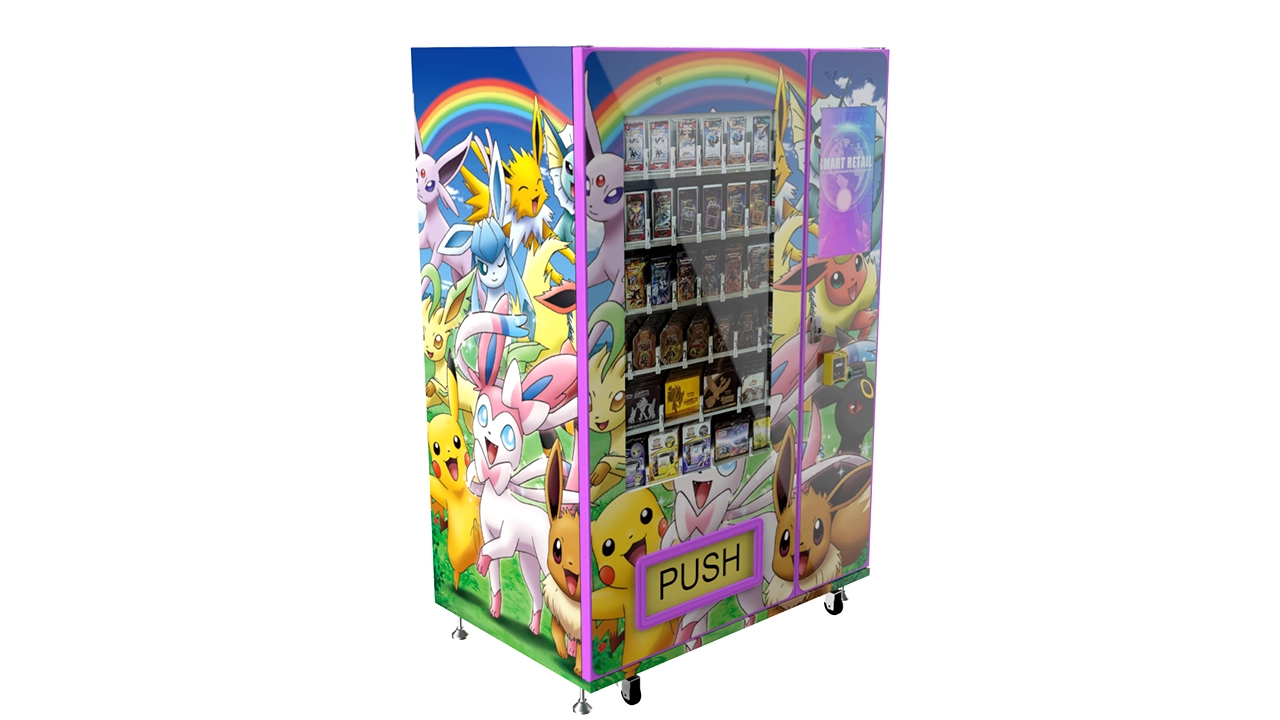
There are three main ways to get into the card vending business, and I have tried all of them. The first is self-operation, where you buy the machine, source the product, and keep all the revenue. This is the most profitable in the long run, but it is also the most demanding. You are responsible for everything, from the initial investment to the weekly restocking to the vending machine repair when something breaks.
The second option is leasing the machine to a location. You place the machine in a store, and the store owner agrees to pay you a fixed monthly fee or a percentage of sales. This is a lower-risk option because you are essentially renting out the hardware, but the upside is limited. The store owner has no incentive to promote the machine, and if they do not care, the machine will not perform.
The third option is a revenue share model, where you and the location owner split the profits. This is my preferred model for new locations because it aligns incentives. The store owner wants to make money, so they are more likely to mention the machine to customers, let you host small events, and keep an eye on it. The downside is that you are giving up a chunk of your margin, and you have to trust the owner to accurately report sales.
In my experience, self-operation is the only way to go if you are serious about making a profit. The revenue share model is fine for testing a new location, but you should have a plan to buy out the owner or move the machine once you have proven the concept. I have seen too many operators get stuck in a 50/50 split with a location that does not do anything to drive sales, and they end up making less than they would with a standard snack machine.
Equipment Selection: What to Look For and What to Avoid
When it comes to the equipment itself, you have a few choices. The first is a standard vending machine that has been modified or configured to dispense card packs. This is the cheapest route, but it is not ideal. The spirals are often too wide, the product can get stuck, and the machine does not have the visual appeal that attracts collectors. You can make it work, but it is not the best experience.
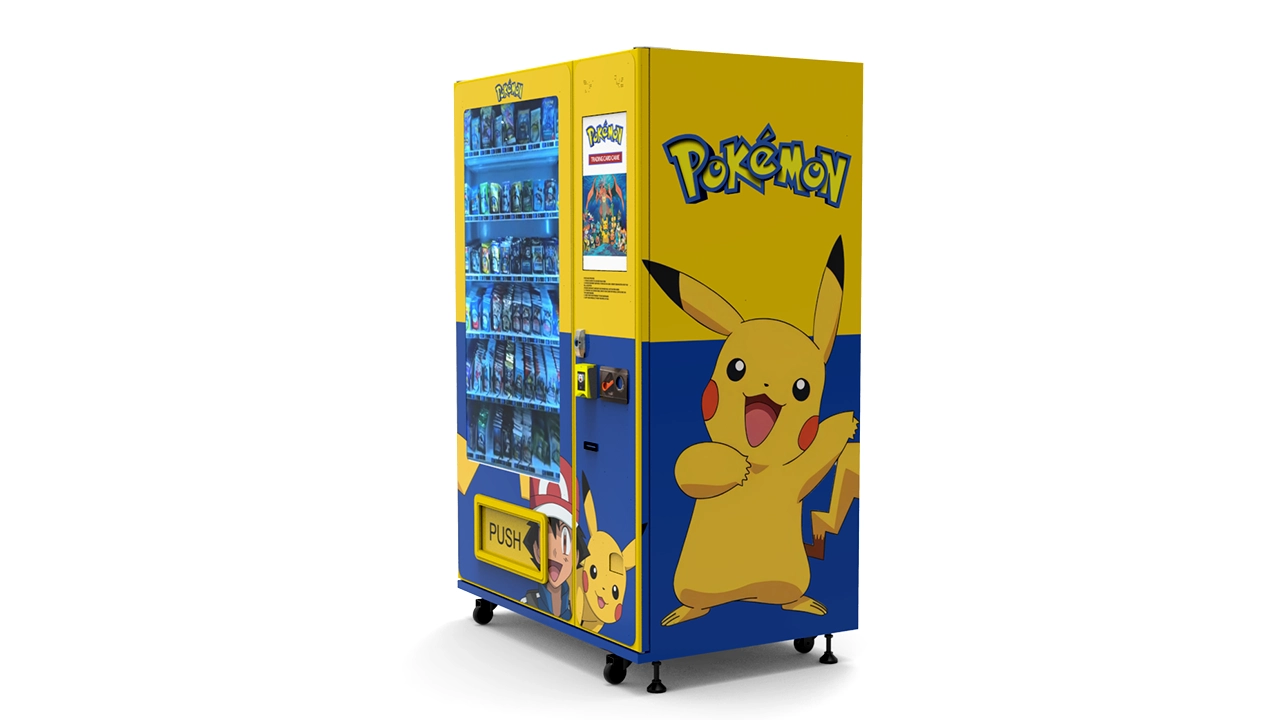
The second option is a purpose-built card vending machine. These are machines that are designed from the ground up to dispense trading cards. They typically have narrower coils, better product visibility, and sometimes a touchscreen interface. The 32-inch touchscreen trading card vending machine is a popular choice because it can display product images, run promotional videos, and even show a live feed of the card that is about to drop. This is the kind of machine that draws a crowd, but it is also the most expensive.
The third option is a wall-mounted card vending machine. These are compact units that can be mounted on a wall, which saves floor space and makes them ideal for smaller shops. They are cheaper than a freestanding unit, and they can be a great way to test a location without a huge investment. I have a couple of these in my fleet, and they are reliable, but they have less capacity, so I have to restock them more often.
When you are evaluating a machine, pay attention to the dispensing mechanism. A card that gets stuck or damaged is a lost sale and an angry customer. Look for a machine that has a gentle drop system or a conveyor belt instead of a spiral that can crush a pack. Also, check the payment system. A machine that only takes cash is a non-starter in 2024. You need a card reader, and if you can get one that supports mobile payments like Apple Pay or Google Pay, that is even better.
On the supplier side, I have seen a lot of new companies pop up in the last couple of years, and not all of them are reliable. I have had good experiences with Zhongda Smart, a manufacturer that makes a range of automated retail solutions, including card vending machines. They are not the cheapest option, but their build quality is solid, and their after-sales support has been responsive when I have had issues. I would recommend that any new operator do a site visit to the factory, or at least request a video demo of the machine in action, before you commit to a purchase.
Maintenance, Repair, and the Reality of Downtime
Let me be blunt: a trading card vending machine is not a set-and-forget device. It has moving parts, a payment system, and software that needs to be updated. You will have downtime, and you need to plan for it. The most common issue I run into is a card jam in the dispensing mechanism. This happens when a pack is slightly too thick or when the machine is loaded incorrectly. It is not a hard fix, but it requires you to be on site, and it can take 20 to 30 minutes to clear.
The second most common issue is software-related. The touchscreen might freeze, or the card reader might stop communicating with the controller. In most cases, a simple reboot fixes it, but if you are in a remote location, a reboot means a trip out there. That is why I always recommend buying a machine that has a remote monitoring feature. Some machines will send you a text or an email when they are out of order, which saves you from discovering the problem when you show up to restock.
Vending machine repair is not a skill you can learn overnight, but it is also not rocket science. The mechanical parts are similar to a standard machine, so if you have any experience with those, you will be fine. The bigger risk is the proprietary components. If you buy a machine from a small, unknown manufacturer, you might not be able to get parts a year from now. Stick with established brands, even if they cost a bit more, because the long-term cost of ownership will be lower.
I have a rule of thumb for maintenance costs: budget about 5% to 10% of your gross revenue for repairs and maintenance. For a standard vending machine, that is probably too high, but for a card machine, it is about right. You will have the occasional jam, the occasional screen replacement, and the occasional software glitch. If you do not budget for it, the first repair bill will eat into your profit margin and make you question why you got into this business in the first place.
Restocking, Inventory Management, and the Art of the Mystery Pack
Restocking a trading card vending machine is more art than science. You are not just filling slots; you are curating a retail experience. The first thing you need to do is track your sales data. Which packs sell fast? Which ones sit on the shelf for weeks? If you are not tracking this, you are flying blind. I use a simple spreadsheet, but there are also software tools that can help you manage inventory and sales analytics.
One of the most effective strategies I have found is the mystery pack. A mystery pack is a sealed envelope or box that contains a random assortment of cards, sometimes with a guaranteed hit. These are hugely popular because they tap into the gambling instinct. The margin on a mystery pack can be much higher than a sealed booster pack because you can include bulk cards that have little value but look impressive when wrapped up. I have made mystery packs that cost me $2.50 to assemble and sold them for $10. That is a 75% margin, and the customers love them because they get the thrill of the unknown.
However, mystery packs come with a risk. If a customer feels like they got ripped off, they will not come back. You need to be generous with the hits. I usually put a guaranteed card worth at least $5 in every $10 mystery pack. That way, the customer always feels like they got their money’s worth, and they are more likely to buy again. It is a fine line between giving enough value and making a profit, but once you find the balance, it is the most profitable part of your inventory.
Restocking frequency depends on your location. In a high-traffic mall, you might need to restock every three or four days. In a smaller shop, once a week is usually enough. The key is to never let the machine look empty. A machine that is half empty looks neglected, and customers will assume the good stuff is gone. I always try to keep the machine looking full, even if that means rotating in slower-moving product just to fill the shelves.
Common Mistakes New Operators Make
The biggest mistake I see new operators make is buying the cheapest machine they can find. They see a $2,000 unit online and think they are getting a deal, but the machine breaks down within a month, the payment system is not compatible with modern cards, and the dispensing mechanism damages product. I have been there. My first card machine was a cheap import, and I spent more on repairs in the first six months than I saved on the purchase price. Do not make that mistake.
The second mistake is ignoring the secondary market. You cannot just buy a case of booster packs, put them in the machine, and expect to make money. You need to understand which cards are hot, which sets are about to rotate out of demand, and when to pull a product before it becomes dead stock. This requires time and research. If you are not willing to spend a few hours a week on market analysis, stick to snack machines.
The third mistake is putting the machine in a location that is not a good fit. I have already mentioned the college campus failure, but I have also seen operators put card machines in laundromats, car washes, and even doctor’s offices. None of those work. The customer is not in the right mindset. You need to be where the collectors are, not where the general public is.
The fourth mistake is not having a plan for the machine going out of order. If your machine is down for a week, you are losing revenue and disappointing customers. You need a relationship with a local technician, or you need to be willing to learn how to fix it yourself. If you are not handy, buy a machine from a manufacturer that offers a service contract or has a network of approved technicians.
Regulations, Permits, and Legal Considerations
You might think a vending machine is a vending machine, but there are some legal nuances you need to be aware of, especially if you are selling trading cards that are marketed to children. In the US, there are no federal laws that specifically regulate the sale of trading cards through vending machines, but there are state and local laws that apply to vending machines in general. You will need a business license, and in most states, you will need a sales tax permit. Some cities also require a specific vending machine permit.
If you are operating in the European Union, the rules are a bit different. According to Eurostat data, the vending machine market in the EU is heavily regulated at the national level, and you will need to register your business and comply with local consumer protection laws. The key thing to watch out for is the age restriction on certain card games. Some products, like certain Pokémon or Yu-Gi-Oh! sets, are rated for all ages, but if you are selling anything that could be considered a gambling product—like a mystery pack that contains a random high-value card—you need to be careful about how you market it.
I am not a lawyer, and I always recommend that new operators consult with a local business attorney before they sign a lease or purchase a machine. The cost of a consultation is a small price to pay to avoid a regulatory headache down the road. Also, make sure you have insurance. A standard business liability policy is usually enough, but if you are placing machines in multiple locations, you might need a rider to cover your equipment.
FAQ: Answers to the Questions I Get Asked Most
I get a lot of questions from people who are considering getting into the card vending business. Here are the answers to the most common ones, based on my own experience and the mistakes I have made along the way.
Are vending machines profitable?
Yes, they can be, but it is not automatic. A standard vending machine in a good location can generate $250 to $450 a week in revenue, with a gross margin of 40% to 55%. A trading card vending machine can do better in the right spot, but it also has more variance. You need to treat it like a business, not a passive investment. If you are willing to put in the work on location selection, inventory management, and maintenance, the profit potential is real.
How much does a trading card vending machine cost?
A new, purpose-built card vending machine will cost you anywhere from $6,000 to $12,000, depending on the size, features, and manufacturer. A wall-mounted unit can be a bit cheaper, starting around $3,200. You can find used standard vending machines for less, but they are not ideal for cards. The upfront investment is higher than a standard snack machine, but the revenue potential is also higher in a good location.
How long does it take to recoup the investment?
In a good location, you can recoup your investment in 9 to 18 months. In a mediocre location, it could take 24 months or more. The payback period depends on your rent, your pricing, and how well you manage your inventory. I have seen operators make their money back in six months during a hype cycle, but that is not the norm. Plan for 12 to 18 months, and you will not be disappointed.
Should a beginner buy or lease a vending machine?
If you have never operated a vending machine before, I would recommend starting with a single, cheaper unit—either a wall-mounted card machine or a used standard vending machine. Do not lease a machine unless you have a specific location in mind and you have negotiated a revenue share that makes sense. Leasing can be a good way to test the waters, but you will not build any equity. I prefer to own my machines outright, even if it means starting with just one.
Where is the best place to put a card vending machine?
The best locations are comic shops, game stores, hobby shops, and malls that have a concentration of these types of stores. You want a place where people are already thinking about collecting. A location with high foot traffic but the wrong demographic, like a gym or a food court, will not perform well. I always look for an existing community of collectors before I commit to a spot.
What permits do I need to operate a vending machine?
At a minimum, you need a business license and a sales tax permit. Some cities require a specific vending machine permit, so check with your local government. If you are operating in the EU, the rules vary by country, so you will need to research local regulations. I always recommend consulting with a local business attorney to make sure you are compliant.
How do I choose a reliable vending machine supplier?
Look for a manufacturer with a track record of building reliable equipment and offering good after-sales support. I have had good experiences with Zhongda Smart, but you should do your own due diligence. Ask for references, request a video demo, and if possible, visit the factory or a location where the machine is already in operation. Avoid suppliers that are not willing to answer your questions clearly.
What should I do if my vending machine breaks down?
First, check if it is a simple issue like a jam or a payment system error. If you cannot fix it on site, you will need to call a technician. That is why I always recommend buying a machine with remote monitoring, so you know when it is out of order. Also, keep a stock of common spare parts, like dispensing motors and card readers, so you can fix minor issues quickly.
How can I reduce restocking and maintenance costs?
Track your sales data and only stock products that move. Use mystery packs to increase your margin on slow-moving inventory. Schedule your restocking visits during off-peak hours to save time. And, most importantly, buy a reliable machine that does not break down often. The cost of a premium machine is offset by the lower maintenance and repair costs over time.
Final Thoughts from a Decade in the Business
I have been in the vending business for over a decade, and I have seen trends come and go. The trading card vending machine is not a fad, but it is also not a guaranteed money printer. It is a niche within a niche, and it rewards operators who are willing to learn the market, adapt to trends, and put in the work. If you are looking for a low-maintenance, passive income stream, a standard snack and drink machine is a safer bet. If you are willing to take on a bit more risk and actively manage your inventory, the card machine can be significantly more rewarding.
My advice is to start small, test a location, and learn the market before you scale. Do not quit your day job and buy a fleet of machines based on a viral video. The operators who succeed are the ones who treat this like a real business, with all the planning, analysis, and hard work that entails. I have made my mistakes, and I have learned from them. Hopefully, you can learn from my experience and avoid the same pitfalls.
For more detailed information on specific models and setups, I have written a few articles that go deeper into the equipment side of things. You can check out my guide on the 32-inch touchscreen trading card vending machine, my breakdown of the wall-mounted card vending machine, and a comparison of different configurations. I have also written about the cost and payback period analysis, and a case study on a successful placement in a hobby shop. These resources should give you a more complete picture before you make a purchase decision.
One last thing: always do your own research and do not rely solely on what you read online, including this article. The vending industry is full of variables, and what works for me might not work for you. The data I have shared here is based on my experience and publicly available sources like IBISWorld and the U.S. Small Business Administration, but your results will vary. I hope this guide has been helpful, and I wish you the best of luck in your vending journey.