If you’re looking into the best places to put Pokemon card vending machines, the short answer is that you need to stop thinking like a collector and start thinking like a landlord of high-traffic footfall. I’ve been placing automated retail units for over a decade, and the single biggest mistake I see new operators make is chasing the loudest hobby shop crowd instead of the quiet, consistent daily traffic that actually pays the bills. A Pokemon card vending machine isn’t a niche toy display; it’s a self-service retail point that thrives on impulse purchases, repeat visits, and a very specific kind of customer who has cash in hand and a desperate need for a booster pack at 8 p.m. on a Tuesday. This guide walks you through real site selection, cost realities, and the operational traps I’ve learned the hard way.
Why Location Beats Inventory Every Time
I’ve seen operators with a mediocre selection of Pokemon cards do five times the volume of a collector who loaded a machine with rare chase cards, simply because the first guy put his machine in a busy laundromat and the second guy put his in a quiet comic shop corner. The math is brutally simple: you need bodies passing by, not enthusiasts seeking you out. A trading card vending machine earns on impulse, and impulse requires a consistent flow of people who may not even be looking for cards when they walk in.
In my early days, I made the classic rookie error of placing a unit inside a niche gaming cafe. It felt right. The customers were exactly my target audience. But the foot traffic was maybe fifty people a day, and most of them were already sitting down to play, not walking past with a wallet out. The machine barely covered its rent. Meanwhile, a friend of mine put the same machine in a 24-hour grocery store and was clearing inventory every three days. That’s when I learned that context beats audience specificity in automated retail.
The truth is that Pokemon card vending machines work best where parents are already spending money on their kids, or where young adults are killing time. Grocery stores, large-format retail, and even bowling alleys outperform specialty shops. I’ve had success in locations that sound completely wrong on paper, like a DMV waiting area, but the dwell time and boredom factor drove sales through the roof. You’re selling a distraction as much as a product.
When you evaluate a site, don’t ask “would a Pokemon fan shop here?” Ask instead, “would someone with twenty dollars and ten minutes to kill stop here?” That’s the real demographic. That’s the difference between a machine that pays for itself in six months and one that becomes a dust collector.
What Makes a Site Profitable for Card Machines
Let’s talk about the actual metrics I use when scouting a location for a card vending machine. I don’t guess, and I don’t trust the landlord’s “we get tons of foot traffic” line. I stand in the spot for an hour and count. I look for a minimum of 500 to 1,000 passing pedestrians or customers per day, depending on the venue type. That might sound high, but a card machine needs volume because the average transaction is relatively low compared to a snack machine.
You’re looking for a conversion rate of somewhere between 1% and 3% of passersby making a purchase. If you have 1,000 people walking past, that’s 10 to 30 transactions a day. With an average sale of $10 to $15, that’s $100 to $450 daily revenue. That range is the difference between a solid business and a struggling one. I’ve seen machines in tourist areas hit the high end, and machines in suburban convenience stores sit at the low end. Both can work, but your expectations and rent tolerance need to adjust.
Dwell time matters just as much as footfall. A place where people wait, like a car wash, a barbershop, or a post office line, will outperform a place where people rush through. The customer needs time to decide, to browse the selection on the screen, and to get excited about a purchase. If they’re walking past at speed, they’ll ignore the machine entirely. I’ve had great results in movie theater lobbies and family entertainment centers because there’s a natural pre-show window of twenty minutes where people are just milling around.
Visibility is another non-negotiable. The machine needs to be seen from the main entrance or the main aisle. If it’s tucked in a corner, even a busy corner, you’re losing potential sales. I’ve moved machines from a “safe” wall spot to a central island position and seen revenue jump by 40% without any other changes. The visual draw of the screen and the colorful card packaging is part of the product. If people can’t see it, they can’t buy it.
Comparing Venue Types and Their Revenue Potential
I’ve gathered data from my own operations and from talking to other operators across the US and Europe. The differences between venue types are stark, and they should guide your initial placement strategy. Don’t just pick a place you like; pick a place with the right economics. The table below breaks down what I typically see in terms of performance across different site categories.
| Venue Type | Average Daily Foot Traffic | Weekly Revenue Range (USD) | Key Challenges | My Verdict |
|---|---|---|---|---|
| Large Grocery Store | 1,500 – 3,000 | $800 – $1,500 | High rent, need high volume | Best overall if you can get in |
| Convenience Store / Gas Station | 800 – 1,500 | $400 – $800 | Limited space, lower dwell time | Good for secondary locations |
| Family Entertainment Center | 500 – 1,200 | $600 – $1,200 | Seasonal fluctuations | Excellent during peak seasons |
| Laundromat / Car Wash | 200 – 400 | $300 – $600 | Long dwell time but low traffic | Great for passive income |
| Hobby / Game Store | 50 – 150 | $150 – $400 | Low traffic, high engagement | Only if rent is very low |
| Bowling Alley / Arcade | 400 – 800 | $500 – $900 | Requires frequent restocking | Solid performer with young crowds |
That table comes from my personal tracking and conversations with peers, not from a government census. Your results will vary based on city, season, and how well you maintain the machine. But it gives you a starting point for negotiations. If a landlord asks for $300 a month in rent for a spot in a laundromat, you can quickly calculate if the traffic justifies it. If a grocery store wants 20% commission, you know whether you can afford it.
The key takeaway is that high traffic doesn’t automatically mean high profit if the rent or commission is too high. I’ve walked away from deals that looked great on paper because the landlord wanted a cut that would have left me with a 5% margin. Always negotiate on the basis of your projected revenue, not on the landlord’s asking price. They don’t know your numbers, so you have the advantage.
Costs, Pricing, and the Real Return on Investment
Let’s talk money because that’s what actually determines if this is a business or a hobby. A new, decent quality trading card vending machine will set you back anywhere from $4,000 to $12,000 depending on the size, screen, and features. I’ve seen cheaper units for $2,500, but they usually have poor card dispensing mechanisms that jam constantly. You will regret buying cheap. I speak from experience when I say that a jammed card machine is a revenue killer and a reputation killer.
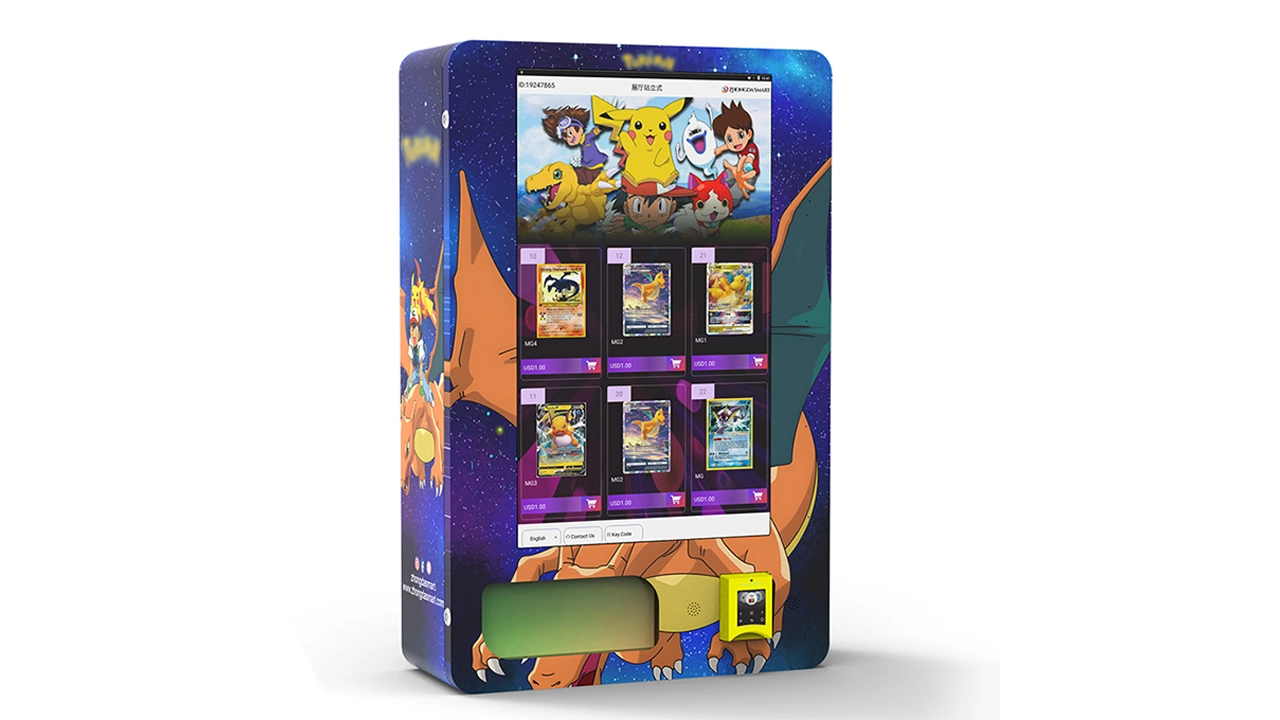
My recommendation is to budget around $6,000 to $8,000 for a reliable 32-inch touchscreen model. That price point usually gets you a machine that handles card thicknesses well, has a decent inventory capacity, and won’t break down every other week. I’ve also had good experiences with Zhongda Smart for certain configurations, particularly their wall-mounted units that fit into tight spaces. They’re not the only player in the market, but they have a solid track record for reliability in my experience.
On the inventory side, you need to think about wholesale costs. Buying booster boxes in bulk gets you packs for around $3.00 to $3.50 each, depending on the set and your supplier. You’ll sell them at $5 to $6 per pack. That’s a gross margin of roughly 40% to 45%. That margin has to cover your rent, electricity, payment processing fees (usually 3% to 5%), maintenance, and your own time. It’s not a get-rich-quick scheme, but it can be a solid side income or even a full-time business if you scale to multiple machines.
I’ve seen single machines in good locations generate $1,000 to $2,000 per month in net profit after all expenses. That aligns with broader industry data showing that the average vending machine generates around $75 to $100 per week in profit, though card machines can exceed that due to higher price points. According to a report by IBISWorld on the vending machine industry, the average operating margin is around 15%, but that includes low-margin snack machines. Card machines can push higher if you manage inventory well.
Your payback period will depend heavily on your location. In a strong grocery store spot, you might recoup your initial investment in 6 to 9 months. In a weaker location, it could take 18 months or more. I always tell new operators to plan for a 12-month payback as a realistic target. Anything faster is a bonus, and anything slower means you need to move the machine or change your pricing strategy.
The Failure Case That Taught Me About Location
I want to share a specific failure because it shaped how I evaluate sites forever. I placed a machine in a newly renovated strip mall that had a popular dollar store and a vape shop. The landlord promised high traffic, and the rent was reasonable. I thought I had done my homework. I counted foot traffic at 600 people a day, which met my minimum threshold. But I failed to account for the demographic mismatch and the lack of dwell time.
Most of the foot traffic was older adults going to the dollar store for household goods. They weren’t interested in Pokemon cards. The vape shop customers were adults, but they were there for a quick transaction, not to browse. The machine sat idle for weeks. I moved it after three months, losing money on the installation and the rent. The lesson was brutal: traffic counts are meaningless without demographic alignment. You need the right kind of people, not just any people.
That experience taught me to look for what I call “pocket money” demographics. Families with kids, teenagers with allowances, and young adults with disposable income. A location near a school, a community pool, or a family-friendly restaurant is worth more than a location with twice the traffic but no matching buyers. I now spend as much time observing who visits a location as I do counting how many visit.
I also learned to test locations with a temporary setup. Some operators are willing to do a short-term lease or a trial period. If the landlord won’t agree to a 3-month trial, I walk away. That flexibility has saved me from several bad deals. The machine is portable, so use that to your advantage. Don’t be afraid to pull out and relocate if the numbers don’t work after a reasonable period.
How to Evaluate a Site Before Signing Anything
Before you commit to any location, you need a systematic evaluation process. I’ve developed a checklist over the years that filters out most of the bad deals. First, I check the foot traffic at three different times: weekday morning, weekday evening, and weekend afternoon. If the traffic is only high on weekends, that’s a red flag because you’re paying rent for seven days but earning for two.
Second, I look at the existing businesses in the area. Are they the type that attract your target audience? A gym or a nail salon might have high traffic, but the clientele is often not the right match for Pokemon cards. I look for complementary businesses like toy stores, ice cream shops, or family restaurants. The synergy between your machine and the neighboring businesses is critical.
Third, I check the competition. Are there already card vending machines nearby? If there are, that’s not necessarily a bad thing. It means the market is proven. But you need to differentiate. Maybe you offer a better selection or a larger machine. If the area is saturated, I look elsewhere. There’s no point fighting over the same customer base.
Fourth, I verify the landlord’s claims. I don’t trust the “we get 5,000 people a day” line without checking. I’ve had landlords grossly exaggerate traffic. I also check the lease terms carefully. Some landlords want a percentage of sales, which can be risky if your sales are low. I prefer a flat monthly fee because it’s predictable. According to the U.S. Small Business Administration, location is the most critical factor in retail success, and that advice applies doubly to vending machines.
Finally, I consider the practical logistics. Is there a power outlet nearby? Is there Wi-Fi for the payment system? Is the area secure enough to prevent vandalism? Can I access the machine easily for restocking and maintenance? These might seem like minor details, but they can become major headaches if you ignore them. I’ve had machines in locations where I had to park three blocks away and carry heavy boxes, and it made restocking a nightmare.
Equipment Choice and Configuration Matters
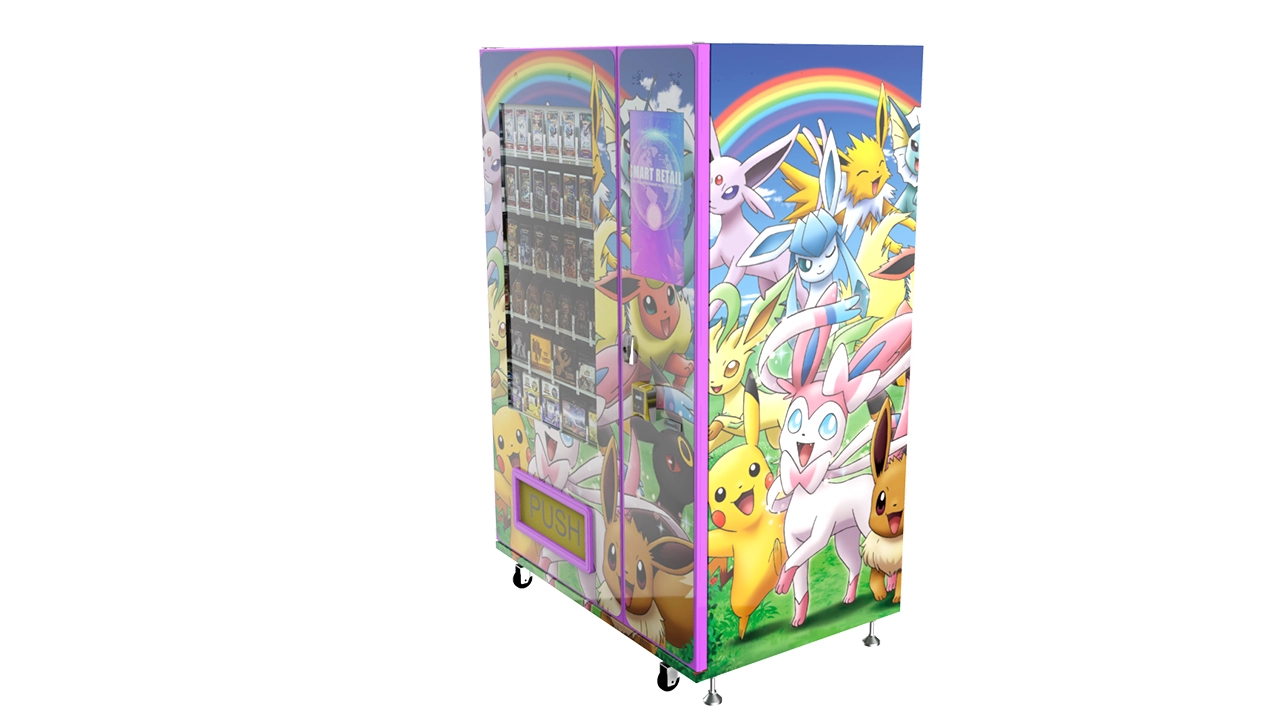
I’ve already touched on the price range, but let’s go deeper into the configuration. The size of the machine matters for your location. A large floor-standing unit with a 43-inch screen is a big draw, but it takes up valuable floor space and might not fit in every location. A wall-mounted unit is more flexible and can fit into narrow corridors, but it has less inventory capacity.
I’ve seen operators succeed with both types. The wall-mounted units are great for secondary locations like a small convenience store or a barbershop. The floor-standing units are better for high-traffic anchors like a Walmart or a mall. You need to match the machine to the space. I’ve also seen machines with multiple dispensing mechanisms that can hold different types of products, from booster packs to individual cards to even sealed boxes. This flexibility allows you to test different price points and products.
The touchscreen interface is crucial. Customers need to browse easily. If the screen is slow or unresponsive, they’ll walk away. I’ve seen machines with outdated software that took 10 seconds to load a product image, and the sales were terrible. You need a machine with a smooth, intuitive interface. The 32-inch touchscreen trading card vending machine is a sweet spot for most locations because it’s large enough to display products well but not so large that it becomes a space hog.
Payment systems are another key factor. You need a machine that accepts credit cards, mobile wallets, and ideally cash. The more payment options you have, the more sales you’ll capture. I’ve seen machines that only take cards lose sales from customers who only have cash. The processing fees are a cost of doing business, but they’re worth it for the convenience. A reliable payment system is non-negotiable in modern automated retail.
Operational Realities: Restocking and Maintenance
Restocking a card machine is not like restocking a snack machine. You have to be careful about inventory management because card sets rotate and demand changes quickly. A set that was hot last month might be dead this month. I’ve learned to track sales data religiously and adjust my inventory every two weeks. I don’t want to be stuck with hundreds of packs of a set that no one wants.
I recommend starting with a conservative inventory and testing the market. Put in a mix of the newest sets and a few classic staples. See what sells and what doesn’t. Then adjust. I’ve had machines where the demand for a specific set was so high that I was restocking every two days. That’s a good problem to have, but it requires a fast supply chain. I have a relationship with a few wholesale distributors that can get me product quickly.
Maintenance is another aspect that new operators underestimate. These are complex machines with moving parts. Card dispensing mechanisms can jam, screens can fail, and payment readers can break. You need to have a plan for vending machine repair before you need it. I’ve had machines break down on a Friday night and lose a whole weekend of sales because I didn’t have a backup plan. Now, I have a spare parts kit and a network of technicians I can call.
You also need to maintain the machine’s appearance. A dirty or scuffed machine looks untrustworthy. Customers won’t buy from a machine that looks neglected. I wipe down the screen and the exterior every time I restock. It takes five minutes and it makes a difference. A clean machine also signals to the landlord that you’re a professional, which helps if you ever need to renegotiate your lease.
Common Mistakes New Operators Make
I’ve seen more failures than successes in this business, and the failures usually stem from a few common mistakes. The first is overpaying for equipment. I’ve seen people buy top-of-the-line machines with all the bells and whistles when a simpler model would have done the job. The extra features don’t necessarily translate to higher sales. Start with a basic, reliable machine and upgrade later if you need to.
The second mistake is ignoring the lease terms. Some landlords will lock you into a long-term lease with no exit clause. If the location doesn’t work out, you’re stuck paying rent for a machine that isn’t earning. Always negotiate a shorter initial term with an option to renew. I’ve learned to include a performance clause that allows me to terminate the lease if sales don’t reach a certain threshold. This protects me from sinking money into a dead spot.
The third mistake is poor product selection. I’ve seen operators load a machine with only the most expensive, rare cards, thinking they’ll make more money. But the average customer wants a booster pack, not a $50 single card. You need a mix of price points to appeal to different buyers. I keep about 70% of my inventory in booster packs and 30% in higher-value items like elite trainer boxes or individual chase cards.
The fourth mistake is ignoring data. You need to track what sells, when it sells, and who buys it. This data will guide your restocking and your pricing. I’ve seen operators who just guess, and they usually end up with a machine full of unsold inventory. Use the sales data from your machine’s software to make informed decisions. It’s the difference between a professional operation and a hobby.
Supplier Selection and Due Diligence
Choosing the right supplier is as important as choosing the right location. I’ve seen operators get burned by suppliers who sold them cheap machines that broke down immediately or who disappeared after the sale. You need to do your due diligence. Look for suppliers with a proven track record. Ask for references and contact them. I’ve called other operators who bought from the same supplier to ask about their experience.
I’ve had good experiences with Zhongda Smart, but I’ve also used other reputable manufacturers. The key is to check the quality of the card dispensing mechanism. That’s the part that fails most often. Ask about the warranty and the availability of spare parts. A supplier who doesn’t stock spare parts is a red flag. You need to know that you can get a replacement part quickly when something breaks.
You should also consider the software. Does the machine have a user-friendly interface? Can you update the product catalog remotely? Can you track sales data easily? Some machines come with clunky software that makes it hard to manage inventory. I’ve seen operators switch to a different machine just because the software was so bad. Test the software before you buy, if possible.
Finally, consider the total cost of ownership, not just the purchase price. A cheaper machine might have higher maintenance costs and lower reliability. A more expensive machine might pay for itself in reduced downtime. I’ve learned to look at the long-term cost, not just the upfront price. The wall-mounted card vending machine options are often a good balance of cost and functionality for small spaces, but you need to verify the build quality.
Scaling Your Operation
Once you have one machine working well, you’ll naturally think about scaling. I’ve scaled from one machine to a small fleet, and the principles are the same, but the logistics get more complex. You need to think about efficient restocking routes, bulk purchasing discounts, and a maintenance schedule that covers multiple machines.
Scaling also means you need to be more disciplined about data. You can’t rely on memory to track what’s in each machine. I use a spreadsheet to track inventory levels, sales, and maintenance history for each machine. This allows me to identify trends and make better purchasing decisions. I know which machines sell certain products faster, and I adjust my restocking accordingly.
When you scale, you also need to think about hiring help. If you’re doing everything yourself, you’ll hit a ceiling. I’ve hired part-time help for restocking and basic maintenance. This frees me up to focus on finding new locations and negotiating better deals. The economics of scale only work if you can manage your time effectively.
I’ve also learned to diversify my locations. I don’t want all my machines in one type of venue. If a grocery store chain goes bankrupt or closes locations, I’d lose multiple machines at once. I spread my machines across different types of locations to mitigate risk. This strategy has protected me from market fluctuations.
Legal and Regulatory Considerations
You might think that vending machines are unregulated, but that’s not entirely true. Depending on your state or country, you might need a vending machine license or a sales tax permit. I’ve operated in multiple states, and the requirements vary. It’s your responsibility to check with your local government. The U.S. Small Business Administration has resources on licensing requirements for vending machine businesses.
You also need to think about liability. If a child buys a card and chokes on it, you could be held liable. I’m not a lawyer, but I’ve been advised to have product liability insurance. It’s not expensive, and it protects you from catastrophic losses. I also make sure my machines are placed in areas that are safe and secure.
There are also specific regulations about the sale of trading cards. Some jurisdictions have age restrictions on certain products, though Pokemon cards are generally considered safe for all ages. However, you should be aware of local laws regarding the sale of collectible items. A quick consultation with a business attorney is worth the cost to avoid future problems.
Taxes are another consideration. You need to collect and remit sales tax on your transactions. The rates vary by state and locality. I use a payment system that automatically calculates and collects the correct tax. This saves me a lot of headaches during tax season. It’s a small detail that can become a big problem if you ignore it.
Making the Final Decision
Deciding where to put your Pokemon card vending machine is not a one-time decision. It’s an ongoing process of testing, measuring, and adjusting. I’ve moved machines that were underperforming to new locations and seen them thrive. The key is to be willing to adapt. Don’t fall in love with a location just because you signed a lease. If the numbers don’t work, move on.
I recommend starting with one machine in a solid location, learning the ropes, and then expanding. Don’t try to scale too fast. I’ve seen operators go bankrupt by buying ten machines at once and then realizing they didn’t have the time or resources to manage them all. Start small, learn, and then grow.
Your focus should always be on the fundamentals: location, inventory, and maintenance. If you get those right, the money will follow. If you neglect them, no amount of hype will save you. This is a business of small margins and careful attention to detail. It’s not glamorous, but it can be profitable.
I’ve also learned to trust my gut. If a location feels wrong, it probably is. I’ve walked away from deals that looked great on paper because something felt off, and I’ve never regretted it. The vending machine business rewards patience and discipline. The best places to put Pokemon card vending machines are the ones that you’ve verified, not the ones you’ve only guessed about.
FAQ
Are Pokemon card vending machines actually profitable?
Yes, they can be profitable if you place them in the right location and manage your inventory well. I’ve seen single machines generate $1,000 to $2,000 in monthly net profit. However, profitability depends heavily on foot traffic, demographics, and your operational efficiency. It’s a business, not a passive income scheme.
How much does a card vending machine cost?
A new, reliable machine will cost between $4,000 and $12,000. I recommend budgeting around $6,000 to $8,000 for a quality 32-inch touchscreen model. Cheaper machines often have jam issues that cost you more in the long run.
How long does it take to recoup the investment?
In a good location, you can recoup your investment in 6 to 9 months. In a weaker location, it could take 18 months or more. I always advise new operators to plan for a 12-month payback as a realistic target. Your results will vary based on location and management.
Should I buy or lease a machine?
If you’re a beginner, I recommend buying a reliable machine. Leasing can be more expensive in the long run and may not give you the flexibility to move if a location doesn’t work out. Buying gives you full control and a better return on investment.
Where is the best place to put a card vending machine?
Look for high-foot-traffic locations with a “pocket money” demographic. Grocery stores, family entertainment centers, and bowling alleys are strong candidates. Avoid niche hobby shops with low traffic, even if they seem like the obvious audience.
What permits or licenses do I need?
You’ll likely need a vending machine license or a sales tax permit, depending on your state or country. Check with your local government and the U.S. Small Business Administration for specific requirements. You should also consider product liability insurance.
How do I choose a supplier?
Do your due diligence. Ask for references, check the quality of the card dispensing mechanism, and verify that the supplier stocks spare parts. I’ve had good experiences with Zhongda Smart, but you should compare multiple suppliers before making a decision.
What happens if my machine breaks down?
You need a plan for vending machine repair before it happens. Keep a spare parts kit and have a network of technicians you can call. Downtime is lost revenue, so you need to act quickly when something goes wrong.
How can I reduce restocking and maintenance costs?
Track your sales data to know which products sell fast and which don’t. This reduces the risk of holding unsold inventory. Schedule regular maintenance to prevent major breakdowns. I wipe down the machine every time I restock, and I replace worn parts before they fail.
Disclaimer: The revenue figures and operational data in this article are based on my personal experience and industry estimates from sources like IBISWorld and the U.S. Small Business Administration. Your actual results will vary depending on location, market conditions, and your management skills. This article is for informational purposes only and does not constitute financial or legal advice. Always consult with a qualified professional before making business decisions.