If you’re looking at putting a trading card vending machine into a mall, a hobby shop, or even a laundromat, the first question you’ll ask is not about the machine itself—it’s about how much inventory you need to fill it and keep it profitable. After running card vending operations for over a decade, I can tell you that the answer depends less on the machine’s capacity and more on your sales velocity, your location’s foot traffic, and your ability to restock efficiently. Most operators start with 800 to 1,200 sealed packs and single cards, but that number can swing wildly based on whether you’re selling Pokémon, sports cards, or graded slabs. In this guide, I’ll break down how to calculate your starting inventory, avoid the rookie mistake of overstocking dead product, and set up a restocking rhythm that keeps your trading card vending machine earning without eating all your weekends.
Why Inventory Volume Matters More Than Machine Size
When I first started placing card vending machines, I made the classic error of buying a large 32-inch touchscreen unit and filling every coil and spiral to maximum capacity. I thought more inventory meant more sales. It didn’t. What I learned is that a trading card vending machine is not a warehouse—it’s a retail display that happens to be automated. The machine’s job is to turn over inventory quickly, not to hold it for months.
The real metric you need to watch is inventory turnover rate. If you’re holding more than 30 days of stock in the machine, you’re tying up cash that could be used for better product. On the flip side, if you’re restocking every three days, you’re spending too much time driving to the location. The sweet spot for most operators is a 7-to-10-day restock cycle, which means your machine should hold roughly 1.5 times your weekly sales volume.
Let’s put some numbers on this. A typical high-traffic card vending machine in a hobby store might sell $1,200 to $2,500 per week, depending on the season and the product mix. If your average pack sells for $6, that’s 200 to 400 packs per week. To avoid running empty, you’d want 300 to 600 packs in the machine at any given time. That’s your starting inventory baseline.
Calculating Your Starting Inventory: A Practical Formula
I use a simple formula that has served me well across dozens of placements. It’s not fancy, but it works: Starting Inventory = (Projected Weekly Sales ÷ Average Price Per Item) × 1.5. The 1.5 multiplier gives you a safety buffer for unexpected sales spikes, especially on weekends when foot traffic increases.
For example, if you project $1,500 in weekly sales and your average item price is $7, you’re selling about 214 items per week. Multiply that by 1.5 and you get 321 items. That’s your minimum starting inventory. I’d round that up to 350 to account for damaged items, machine jams, or slow-moving products that you’ll need to rotate out.
But here’s the part that most new operators miss: you need to think in terms of product categories, not just total unit counts. A healthy card vending machine mix includes sealed booster packs, single cards in protective cases, and sometimes graded cards or mystery packs. Each category has a different turnover rate. Sealed packs move fast but have thin margins. Single cards have better margins but sell slower. Graded slabs are high-ticket but can sit for weeks.
Based on my experience, a balanced starting inventory looks something like this: 60% sealed packs, 30% single cards, and 10% premium or graded items. This split gives you volume to attract buyers, margin to make a profit, and a few high-value items that create excitement and word-of-mouth.
Location Type Determines Inventory Depth
Not all locations deserve the same inventory investment. I’ve placed machines in comic book shops, mall common areas, grocery store lobbies, and even a laundromat that surprised everyone. The location dictates not just how much inventory you need, but what kind.
In a dedicated hobby shop or card store, your customers are enthusiasts. They’re looking for specific products—new set releases, chase cards, and popular single cards. You can stock deeper because the customer base is educated and loyal. These locations can support 500 to 700 items in a machine because the audience knows what they want and will buy even on slow weekdays.
In a general retail environment like a grocery store or mall corridor, your customer is an impulse buyer. They’re not looking for a specific card; they’re looking for a quick, fun purchase. In these spots, I keep inventory leaner—300 to 400 items—and focus on recognizable products like Pokémon and sports trading cards. The less familiar the product, the slower it moves in a general retail setting.
I once placed a machine in a high-traffic shopping mall with 600 items, thinking more selection would drive more sales. It didn’t. The machine looked crowded, the display was overwhelming, and sales were actually lower than a similar machine I ran with 350 items in a smaller hobby shop. The lesson: inventory depth should match the customer’s buying intent, not the foot traffic count.
The Cost of Inventory: What You’re Really Investing
Here’s where a lot of new operators get cold feet. The machine itself might cost $8,000 to $15,000, but the inventory can easily cost another $3,000 to $7,000 depending on what you’re stocking. Sealed booster boxes from The Pokémon Company or Panini come with wholesale pricing, but they still add up quickly.
Let me give you a realistic breakdown based on current market conditions. A booster box of Pokémon Scarlet & Violet series contains 36 packs and costs roughly $90 to $110 wholesale. That’s about $2.75 per pack. If you’re selling those packs for $5 to $7, your gross margin is solid—around 50% to 60%. But if you’re buying single cards from distributors or collectors, the cost structure is completely different. A single card that sells for $10 might cost you $4 to $5, and if it doesn’t sell, you’re stuck with it.
Data from IBISWorld’s vending machine operations industry report shows that the average gross margin for vending machines across all product categories is about 35% to 40%. Card vending can do better—often 50% or more—but only if you manage your inventory carefully. The margin is there, but it’s eaten away by slow-moving product, theft, and spoilage (yes, cards can get damaged in a machine).
For a typical single location, I recommend budgeting $4,000 to $6,000 for initial inventory. That gives you enough depth to look professional without overextending your cash flow. If the location proves itself in the first 60 days, you can add more SKUs and increase your inventory value.
Restocking Frequency: The Rhythm That Works
I’ve seen operators restock on a rigid schedule—every Monday, every Friday—regardless of what the sales data says. That’s a mistake. Your restock schedule should be driven by the machine’s sales data and the location’s traffic patterns, not by the calendar.
In my operations, I use a simple rule: restock when the machine reaches 30% to 40% remaining inventory. That usually works out to every 7 to 10 days for a well-performing location. If you’re restocking more often than that, your machine is either too small for the location, or your pricing is too low. If you’re restocking less often, you’re losing sales because the machine looks empty or the selection is too limited.
One of the best decisions I made was switching to a data-driven restock approach. I installed a simple inventory tracking system that records every sale, which allowed me to see which products moved and which sat. This changed my buying decisions completely. I stopped ordering products that looked good in theory but didn’t sell in practice. Instead, I doubled down on the categories that consistently moved, even if they had lower margins.
For a more detailed look at how restocking and inventory management tie into machine selection, I recommend reading this breakdown on trading card vending machine operations that I put together from years of field notes.
Product Mix: What to Stock and What to Skip
Your product mix is the single biggest factor in whether your trading card vending machine makes money or just sits there humming. I’ve tested dozens of combinations, and I can tell you that the “spray and pray” approach—stocking a little bit of everything—is a guaranteed way to end up with dead inventory.
Here’s what works: focus on high-liquidity products that have a proven secondary market. Pokémon is the king of card vending, hands down. It sells to kids, collectors, and speculators. Sports cards—football, basketball, baseball—are also strong, especially during their respective seasons. Yu-Gi-Oh! has a dedicated following, but it’s smaller and more niche. Magic: The Gathering sells, but the audience is older and more price-sensitive.
What I avoid: obscure TCGs, non-branded mystery packs, and overpriced graded cards. I once stocked a machine with 50 graded cards from a lesser-known distributor, thinking the higher price point would boost revenue. Those cards sat for six months. I eventually pulled them and sold them at a loss on eBay just to free up capital.
Instead, I now stock a mix of sealed product and single cards from well-known sets. The sealed packs give customers a familiar entry point. The single cards—especially popular chase cards—give the machine a “treasure hunt” feel that keeps people coming back. I also keep a small selection of premium items, like booster boxes or elite trainer boxes, for the serious collectors who are willing to spend $50 to $100 in one visit.
Comparing Machine Types and Their Inventory Needs
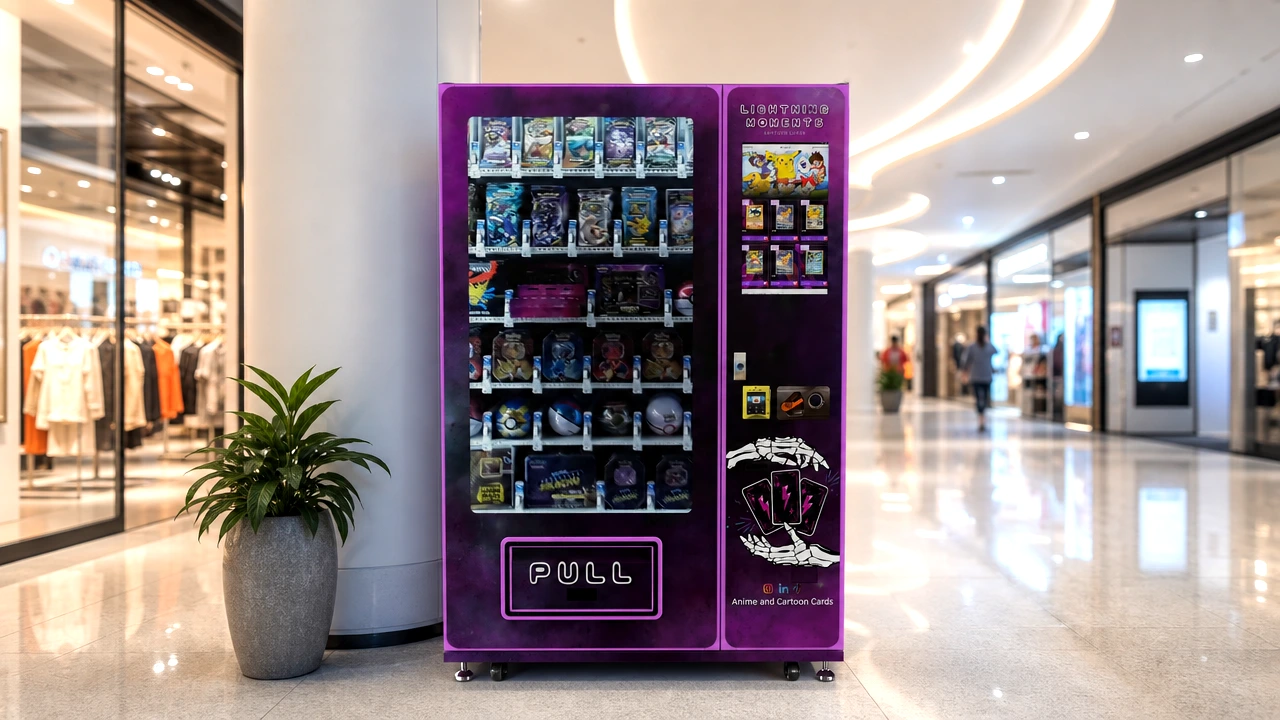
Not every trading card vending machine is the same, and the type of machine you choose directly impacts how much inventory you need. A wall-mounted unit has a smaller capacity and requires a different inventory strategy than a full-size floor model. Let me break down the options I’ve used and how they change the inventory math.
| Machine Type | Typical Capacity | Starting Inventory Cost | Best Use Case | Restock Frequency |
|---|---|---|---|---|
| Wall-mounted card vending machine | 200–300 items | $2,500–$4,000 | Small shops, cafes, waiting areas | Every 5–7 days |
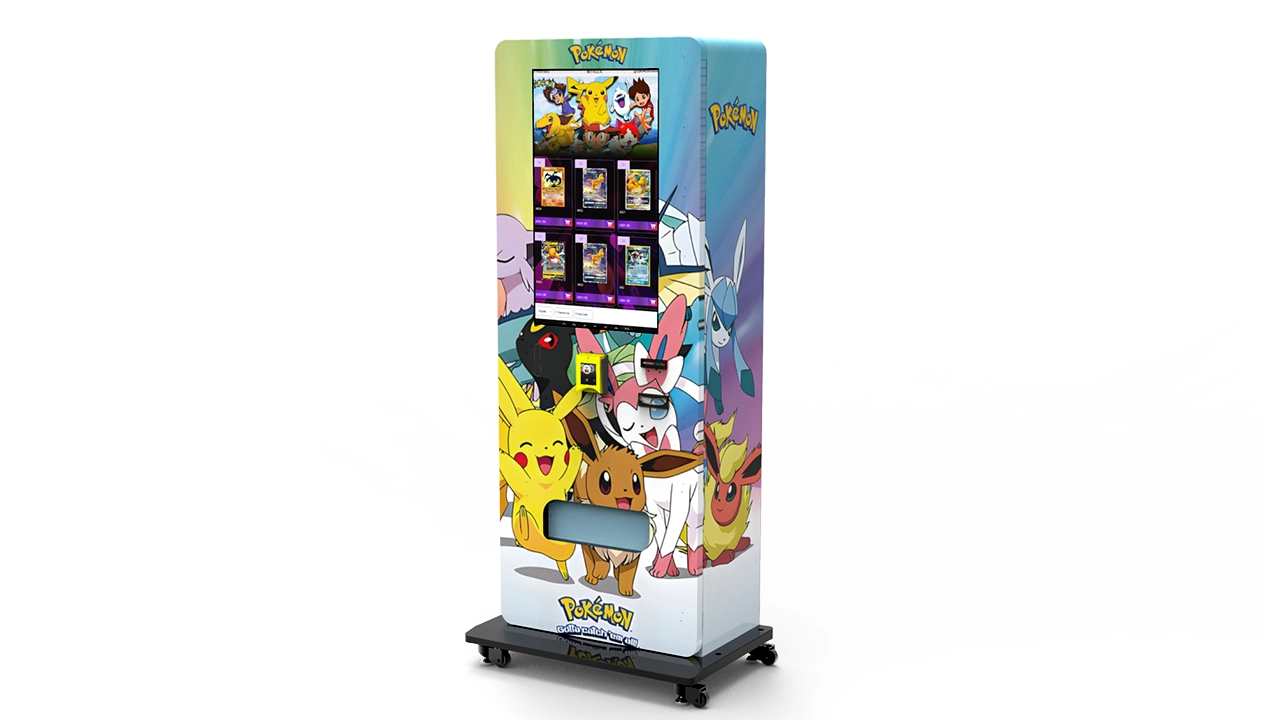
| 32-inch touchscreen floor model | 400–600 items | $4,500–$7,000 | Hobby stores, malls, entertainment venues | Every 7–10 days |
| Large multi-shelf kiosk | 700–1,000 items | $7,000–$10,000 | High-traffic retail, card expos | Every 10–14 days |
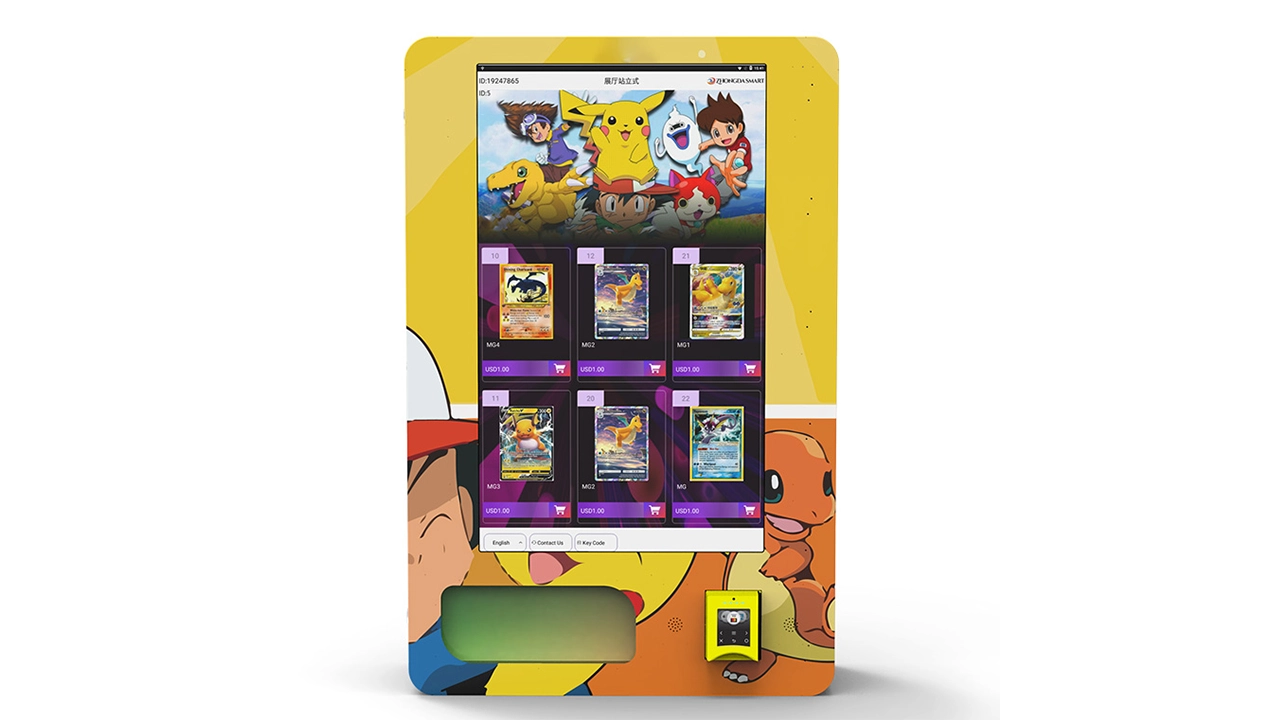
As you can see, the wall-mounted option requires a much lighter inventory investment, which makes it ideal for testing a location without committing too much capital. I’ve used this strategy myself: place a smaller unit in a promising location, track sales for 60 days, and if it performs, upgrade to a larger machine. This approach reduces your downside risk while giving you real data to make decisions.
If you’re considering a smaller footprint, check out this guide on wall-mounted card vending machines to see if it fits your location strategy.
Real Numbers: What to Expect in Revenue and Costs
I want to give you a realistic picture of what the financials look like, but I also need to be honest: every location is different, and anyone who promises fixed returns is selling you something. That said, here are the ranges I’ve seen across my own operations and those of colleagues in the industry.
On the revenue side, a well-placed card vending machine in a hobby shop or mall can generate $800 to $3,000 per month. The high end is rare and usually requires a prime location with heavy foot traffic and strong product demand. The low end is still profitable if your costs are controlled. I’ve seen machines make as little as $400 per month in poor locations, and I’ve seen one in a card shop that did over $4,000 per month during the Pokémon boom.
On the cost side, you have the machine itself, which ranges from $6,000 to $15,000 depending on the configuration. Inventory costs we already covered—$3,000 to $7,000 to start. Then there’s the rent or commission you pay to the location owner, which typically runs 10% to 20% of gross sales. Finally, you have maintenance and restocking labor, which I estimate at $50 to $150 per month per machine if you’re doing the work yourself.
The U.S. Small Business Administration’s vending machine startup guide notes that the average vending business takes 18 to 24 months to recoup the initial investment. In card vending, I’ve seen faster paybacks—sometimes 8 to 14 months—but that’s only when the operator does their homework on location and product mix. If you’re looking at this as a passive income stream, you’ll be disappointed. It’s a small business that requires active management.
Where to Place Machines for Maximum Inventory Turnover
Location is everything, and I can’t stress this enough. A machine with fantastic inventory will fail in a bad location, and a mediocre machine in a great location can still print money. Over the years, I’ve developed a scoring system for evaluating potential spots, and it’s based on three factors: foot traffic, buyer intent, and competition.
Foot traffic is obvious—you need people walking by the machine. But buyer intent is more important. A laundromat has high foot traffic, but how many of those people are thinking about buying trading cards? Not many. A comic book shop has lower foot traffic, but nearly every person who walks in is a potential buyer. In my experience, buyer intent beats raw foot traffic every time.
Competition matters too, but not in the way you might think. If there’s another card vending machine in the same store, that’s bad. But if there are card products on shelves nearby, that’s actually good—it means the store already has an audience for cards, and your machine can capture impulse purchases that the shelves miss.
I’ve had great success placing machines in stores that sell cards but don’t have the staff to keep a full card section organized. The machine becomes a self-service extension of their inventory. It also helps with theft, which is a huge problem in card retail. A vending machine eliminates the “grab and run” problem entirely.
For a deeper dive into evaluating foot traffic and picking the right spot, I wrote up my full approach in this article on card vending machine placement strategy.
Working With a Supplier: What I Look For
Your inventory is only as good as your supply chain. I’ve worked with dozens of suppliers over the years, and I’ve learned to be picky. The biggest mistake I made early on was choosing a supplier based on price alone. I ended up with a machine that had frequent jams and a supplier who was impossible to reach when something went wrong.
Now I look for three things in a supplier: reliability, responsiveness, and product knowledge. Reliability means they ship on time and the machine works as advertised. Responsiveness means I can get a human on the phone when I have an issue. Product knowledge means they understand the card market and can advise on what’s selling.
One supplier I’ve had good experience with is Zhongda Smart. They manufacture card vending machines and have a solid track record with operators in North America and Europe. I’m not saying you must use them, but they’re a benchmark I use when evaluating other suppliers. Their machines have held up well in my fleet, and their support team has been responsive when I needed replacement parts or technical guidance.
If you’re in the market for a machine, I’d suggest looking at their 32-inch touchscreen model—it’s a workhorse that handles high-volume locations well. You can see the specs and configuration options on their product page for the 32-inch touchscreen trading card vending machine.
Common Inventory Mistakes and How to Avoid Them
I’ve made plenty of mistakes in this business, and I’d rather you learn from them than repeat them. The first mistake is overstocking new releases. When a new Pokémon set drops, it’s tempting to buy a case of booster boxes and fill the machine to the brim. But if the set is poorly received, you’re stuck with hundreds of packs that won’t move at retail price.
The second mistake is ignoring seasonality. Sports cards sell better during football and basketball season. Pokémon sells year-round but spikes during holidays and school breaks. If you don’t adjust your inventory to these cycles, you’ll have either too much stock in slow months or too little in peak months.
The third mistake is not tracking which products actually sell. I keep a simple spreadsheet for every machine, recording every sale and restock. This data tells me what to buy more of and what to phase out. It’s the difference between guessing and knowing.
I also see operators neglect the physical condition of their inventory. Cards that sit in a machine for months can get faded, bent, or damaged by humidity. I rotate my inventory every 60 days, pulling slow movers and replacing them with fresh product. The pulled items I sell online or at a discount. It’s a small effort that keeps your machine looking professional and your customers happy.
Maintenance and Repairs: Budgeting for the Unexpected
No matter how good your machine is, it will break down. Card vending machines have moving parts, electronics, and software—all of which can fail. The key is to budget for maintenance before it happens, not after.
I set aside 5% of my monthly gross revenue for maintenance and repairs. On a machine that does $1,500 per month, that’s $75. That covers replacement parts, shipping, and the occasional service call. If I don’t use it in a month, it rolls over into a reserve fund for bigger issues like a compressor failure or a touchscreen replacement.
When a machine breaks down, speed matters. A machine that’s out of service for a week can lose a month’s worth of profit, especially if it’s in a high-traffic location. That’s why I always have a backup plan: a spare parts kit for common failures, and a list of local technicians who can handle repairs if I’m not available.
For operators who are handy, learning basic vending machine repair is a worthwhile investment. It saves you money on service calls and reduces downtime. If you’re not handy, find a reputable technician before you need one, not after.
Payment Systems and the Customer Experience
The payment system on your machine is your cash register, and it needs to be flawless. In the early days, I used machines with coin-only payment systems, and they were a nightmare. Coins jammed, hoppers filled up, and customers walked away frustrated. I switched to card readers and mobile payments as soon as they became reliable, and sales increased immediately.
Today, I won’t install a machine that doesn’t support credit cards, mobile wallets, and contactless payments. The customer experience is everything in automated retail. If a customer has to fumble with coins or wait for a card reader to process, they’ll abandon the purchase and go somewhere else.
I also pay attention to the machine’s display and user interface. A cluttered display confuses customers and slows down their decision-making. I keep the machine well-organized, with clear pricing and product names. The goal is to make the purchase as frictionless as possible—from the moment the customer approaches the machine to the moment they walk away with their cards.
For a look at how display size and interactivity affect sales, I compared different configurations in this article on card vending machine display options. It’s worth a read if you’re deciding between a basic model and one with a larger touchscreen.
Self-Operated vs. Managed Machines: Which Is Right for You?
Some operators prefer to own and manage everything themselves. Others prefer to lease machines or partner with location owners. Each model has its pros and cons, and the right choice depends on your goals, your time, and your capital.
Self-operation gives you full control over inventory, pricing, and placement. You keep all the profit, but you also take on all the risk and work. This is the model I use for most of my machines because I enjoy the hands-on management and I have the systems in place to handle it efficiently.
Leasing or revenue-sharing agreements reduce your upfront cost and risk, but they also cap your upside. You’re trading a share of your profit for lower risk and less operational burden. This can be a good option if you’re testing the waters or if you don’t have the time to manage machines actively.
There’s also the option of partnering with a location owner who buys the machine and hires you to manage it. This is a hybrid model that works well if you have expertise but lack capital. I’ve done this a few times, and it’s a good way to build a management business without owning any assets.
Whichever model you choose, remember that the inventory management principles stay the same. You need to know your sales velocity, your restock schedule, and your product mix. The business model affects your financial structure, but it doesn’t change the fundamentals of running a card vending operation.
Legal Considerations and Compliance
You might think a vending machine is a simple business, but there are legal considerations you can’t ignore. Depending on where you operate, you may need a business license, a sales tax permit, and possibly a special vending license. The rules vary by state and municipality, so do your homework before you buy a machine.
In the European Union, the rules are different. You’ll need to register your business, comply with VAT regulations, and ensure your machine meets CE marking requirements for electrical safety. Eurostat publishes data on retail trade and vending operations that can give you a sense of the market size and regulatory environment in your country.
Insurance is another area that new operators overlook. A machine in a public space is a liability. If someone gets injured using it, or if the machine damages the location, you could be on the hook. I carry general liability insurance on all my machines, and I recommend you do the same. The cost is modest—usually a few hundred dollars per year per machine—but it protects you from a potentially catastrophic loss.
You should also have a written agreement with the location owner. This agreement should cover rent or commission, maintenance responsibilities, liability, and termination terms. I’ve seen too many handshake deals go bad when a machine breaks down or a location owner decides to change the terms. A written contract protects both parties and prevents misunderstandings.
Is This Business Right for You?
I’ve painted a realistic picture of what it takes to run a trading card vending machine business. It’s not passive income, and it’s not a get-rich-quick scheme. But it can be a profitable small business if you approach it with the right mindset.
You need to be willing to learn the card market, track your data, and adapt to changing trends. You need to be comfortable with the physical work of restocking and maintaining machines. And you need to have enough capital to survive the first few months before your machines start generating consistent revenue.
If you’re looking for a low-effort side hustle, this probably isn’t it. But if you enjoy working with products you believe in and you’re willing to put in the effort, card vending can be a rewarding business. I’ve built a small fleet of machines that generate steady income, and I’ve helped other operators do the same. The key is to start small, learn from your mistakes, and scale only when you have proof that your approach works.
FAQ
Are trading card vending machines profitable?
Yes, they can be profitable if placed in the right location and stocked with the right product mix. In my experience, a well-managed machine can generate $800 to $3,000 per month in gross revenue, with gross margins of 40% to 60%. However, profits depend heavily on foot traffic, buyer intent, and how well you manage inventory and maintenance costs.
How much does a trading card vending machine cost?
A new machine typically costs between $6,000 and $15,000, depending on size, features, and configuration. Wall-mounted models are cheaper, while large floor models with touchscreens are at the higher end. You’ll also need to budget $3,000 to $7,000 for initial inventory, plus shipping, installation, and any location fees.
How long does it take to recoup the investment?
In my experience, most operators recoup their investment in 8 to 14 months, assuming the machine is in a good location and performing at average levels. The U.S. Small Business Administration notes that vending businesses generally take 18 to 24 months to break even, but card vending can be faster due to higher margins and strong demand.
Should I buy or lease a card vending machine?
If you have the capital and you’re confident in your location, buying gives you full control and better long-term returns. Leasing or revenue-sharing reduces your upfront risk but caps your upside. I recommend buying if you’ve validated the location and you have a plan for inventory management. Leasing is a safer option for testing the waters.
Where should I place my card vending machine?
Look for locations with high buyer intent, not just high foot traffic. Hobby shops, comic book stores, card shops, and entertainment venues are ideal. General retail locations like grocery stores and malls can work, but you’ll need to focus on recognizable products like Pokémon. Avoid locations where the audience has no interest in trading cards.
What licenses or permits do I need?
Requirements vary by location, but you’ll typically need a business license and a sales tax permit. Some municipalities require a special vending license. In the EU, you’ll need to register your business and comply with VAT and CE marking requirements. Check with your local government and consult a business advisor to ensure compliance.
How do I choose a reliable machine supplier?
Look for a supplier with a proven track record, good customer reviews, and responsive support. Ask about warranty terms, spare parts availability, and technical support. I’ve had good results with Zhongda Smart, but you should compare multiple suppliers and ask for references before committing.
What happens if my machine breaks down?
You’ll need to address the issue as quickly as possible to minimize lost revenue. I recommend keeping a spare parts kit and having a list of local technicians who can handle repairs. If you’re not handy, learn basic troubleshooting or work with a supplier that offers maintenance support.
How can I reduce restocking and maintenance costs?
Use a data-driven restock schedule based on sales velocity, not a fixed calendar. Track which products sell and which don’t, and adjust your inventory accordingly. Keep a maintenance reserve fund and perform regular inspections to catch small issues before they become big problems.
Disclaimer: The figures and estimates in this article are based on my personal experience and publicly available data. Results vary by location, market conditions, and operational efficiency. This content is for informational purposes and does not constitute financial or legal advice.