If you are reading this, you are probably trying to figure out whether a trading card vending machine is a real business or just another TikTok fad that is going to flood the market and crash. I have spent over ten years in the vending and automated retail space, and I have watched the card machine niche explode, plateau, and shake out the amateurs. The honest answer is that these machines can generate serious cash flow, but only if you treat them like a location-based retail business, not a glorified printer. The difference between a machine that earns its rent and one that sits idle collecting dust comes down to inventory control, placement discipline, and a realistic grasp of your trading card vending machine inventory management. In this guide, I am going to walk you through the operational side of this business, including what it actually costs, where to put these units, and the mistakes that will silently kill your margins.
Why Inventory Management Makes or Breaks This Business
Most people who buy a card vending machine think the hard part is sourcing the hardware. It is not. The hard part is what you put inside it. I have seen operators load a machine with $8,000 worth of sealed product, watch it sell out in two weeks, and then panic because they have no idea what to restock. That panic leads to bad decisions, like buying overpriced repacks or chasing hype products that lose value faster than you can ship them.
Inventory management is not just about tracking what sells. It is about understanding the velocity of each SKU, the spread between your cost and the secondary market value, and the psychological triggers that make a collector turn the dial. A machine that is packed with junk nobody wants will not move. A machine that is half empty looks broken. You need a happy medium, and that takes data.
I learned this the hard way back in 2019 when I placed my first card machine in a comic shop in Ohio. I filled it with a mix of Pokémon and sports cards, and I did not track anything. I just assumed that if it sold at the counter, it would sell in the machine. Within a month, I had $3,000 of dead inventory sitting in the coils while the hot items were gone. That is when I realized that a vending machine is not a retail counter. It is a self-service kiosk that needs constant curation.
What You Are Actually Selling: The Product Mix
Before you even think about logistics, you need to decide what kind of card product you are going to move. There are three main categories: sealed booster packs, sealed boxes, and single cards. Each one has a different margin profile and a different level of risk.
Sealed Packs: The Cash Cow
Sealed packs are the bread and butter of most successful card vending operations. They are easy to load, easy to price, and they have a low entry point for the customer. A collector who is chasing a chase card will happily spend $6 to $12 on a pack, even if the expected value is slightly below the price. The problem is that sealed packs have a high risk of being weighed or mapped, especially if you are dealing with older Pokémon products. You need to buy from reputable distributors and avoid sourcing from individuals who might have cherry-picked the heavy packs.
Sealed Boxes: Higher Ticket, Slower Turn
Sealed booster boxes are a different beast. They appeal to investors and breakers, not casual collectors. The margin per unit is higher, but the inventory cost is steep. You might have $600 tied up in a single Pokémon booster box. If it does not move, that is $600 of dead capital sitting in a glass display. I only recommend sealed boxes for high-traffic locations where you have a proven track record of moving premium product. For a new operator, boxes are a trap.
Single Cards: The Margin King
Single cards, especially graded slabs, offer the highest margins and the most control. You can buy a PSA 9 for $50 and sell it for $90. The downside is that singles require a lot of labor. You have to source them, grade them, price them, and sleeve them. You also need a machine that can handle the dispensing mechanism without damaging the card. If you are using a spiral machine, singles can get stuck or bent. You want a machine with a carousel or a tray system for singles.
Realistic Cost Breakdown and Return on Investment
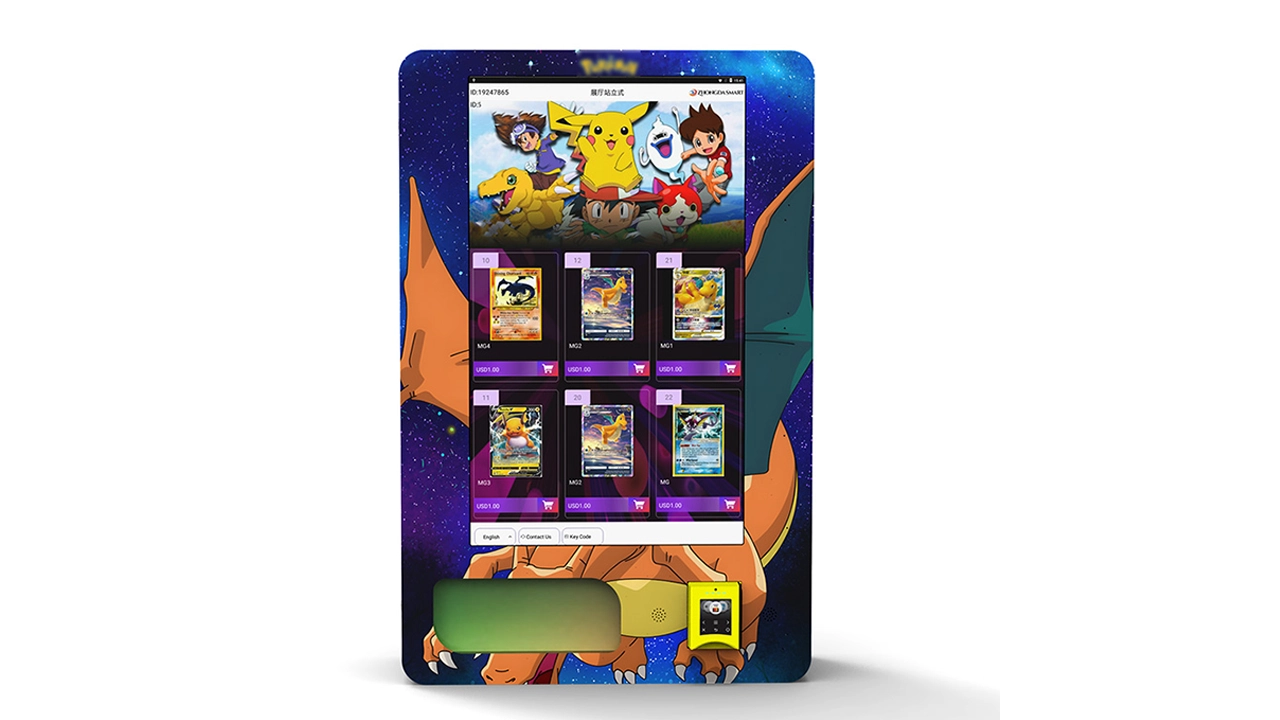
Let me give you a realistic picture of what this business costs. I am not going to sugarcoat it. You can find cheap machines online for $2,000, but they are usually garbage. A reliable, commercial-grade machine with a touchscreen and secure locking mechanism will run you between $6,000 and $15,000. The 32-inch touchscreen models are popular because they allow you to display product images and pricing dynamically, which is a huge advantage over static labels.
Here is a rough breakdown based on my experience across multiple locations:
| Cost Item | Low End | High End | Notes |
|---|---|---|---|
| Machine Hardware | $6,000 | $15,000 | Touchscreen, card-friendly dispensing, secure vault |
| Initial Inventory | $3,000 | $8,000 | Depends on mix of packs, boxes, and singles |
| Location Setup / Rental Deposit | $0 | $2,000 | Some venues charge rent, some take a commission |
| Shipping & Installation | $300 | $1,000 | Freight and possible electrical work |
| Monthly Maintenance Reserve | $100 | $300 | For repairs, software updates, and cleaning |
Now, the revenue side. A well-placed card machine in a comic shop or a hobby store can generate between $1,500 and $5,000 per month in gross sales. That is a wide range, and I mean it to be. I have seen machines in a mall kiosk do $8,000 a month, and I have seen the same machine in a flea market do $400. The difference is foot traffic and the demographic match. According to a report from IBISWorld, the vending machine industry in the US generates roughly $8 billion annually, but that includes everything from snacks to soda. Card machines are a tiny fraction of that, and they are much more volatile.
Your gross margin on sealed product is typically 20% to 40%. On single cards, you can push 50% to 70% if you source well. That means a machine doing $3,000 a month in sales might net you $1,200 to $1,500 in profit before location rent and maintenance. The payback period for a new machine, assuming you do not overpay for inventory, is usually 8 to 18 months. If you are paying rent on the location, add a few months to that. If you are paying a commission to the store owner, factor that in as well.
Location: The Single Most Important Decision
I cannot stress this enough. You can have the best machine, the best inventory, and the best pricing, but if you put it in the wrong spot, you will fail. I have made this mistake, and I have watched dozens of new operators make it too. They get excited about a low rent deal at a flea market or a small convenience store, and they ignore the foot traffic numbers. That is a fatal error.
What should you look for? You want a location with at least 500 people per day passing by, and you want a high percentage of those people to be young males aged 15 to 40. That is the core demographic for trading cards. Comic shops, hobby stores, game stores, and certain mall kiosks are ideal. Some operators have had success in laundromats and bowling alleys, but that is hit or miss. The key is to observe the location during peak hours, not just on a Tuesday afternoon.
I once placed a machine in a high-end grocery store because the owner offered me free floor space. It was a disaster. The shoppers were not card collectors, and the machine just sat there, taking up space and collecting dust. I moved it to a local game store three miles away, and it quadrupled its revenue within two weeks. The product was identical. The only variable was the location. That is when I learned that trading card vending machine placement is more important than the machine itself.
Supplier Selection and Sourcing Strategies
Your suppliers are your lifeline. If you are buying from random eBay sellers or Facebook marketplace flippers, you are going to get burned. You need to establish relationships with legitimate distributors who can provide consistent inventory at wholesale prices. Look for distributors that specialize in trading cards and have a track record of shipping sealed, untampered product.
When I started, I used a mix of regional distributors and direct-to-consumer drops. Over time, I found that the most reliable sourcing came from established distributors who had contracts with the major card companies. I also learned to avoid the temptation of buying "repacks" or "mystery packs" from third-party sellers. These are almost always a way to dump junk inventory on unsuspecting operators. You might make a higher margin per unit, but you will kill your reputation with collectors who feel ripped off.
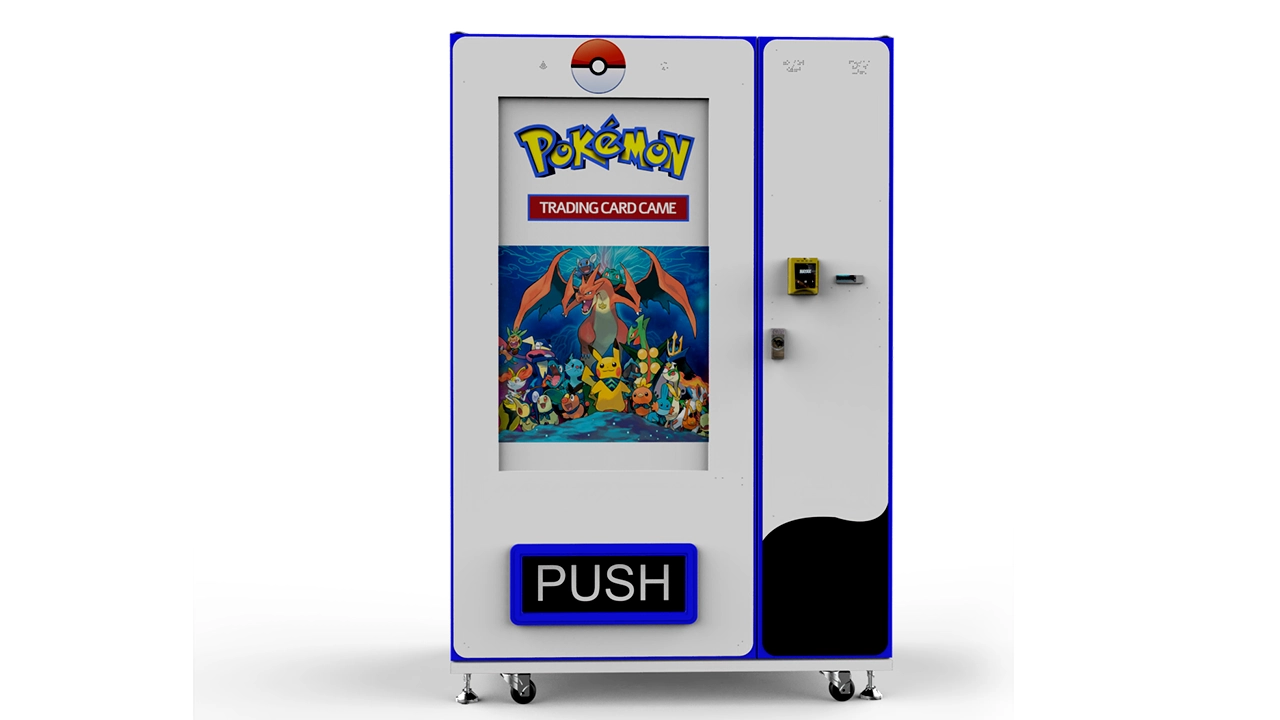
One supplier that has consistently impressed me is Zhongda Smart. They are not a card manufacturer, but they make the vending hardware itself. Their machines are designed with card dispensing in mind, which is more important than you might think. A standard snack vending machine will not properly dispense a booster pack without jamming. Zhongda Smart offers machines with adjustable trays and a secure dispensing mechanism that minimizes the risk of damage. I have used their units in two locations, and the downtime has been minimal. If you are shopping for hardware, they are worth a look, but always compare specs and warranty terms before committing.
The Real Cost of Maintenance and Repairs
Vending machines break. It is a fact of life. The question is how much downtime you can afford. A card machine that is out of order for a week is not just losing sales; it is losing customer trust. Collectors are fickle, and if they see a machine that is always broken, they will stop checking it.
I budget about 10% of my monthly gross revenue for maintenance and repairs. That covers everything from a jammed coil to a failed card reader. The most common issues I have seen are card jams, payment system failures, and screen glitches. You need to have a local technician who can service the machine, or you need to be willing to learn basic troubleshooting yourself. If you are buying a machine from overseas, make sure you have access to spare parts and a support line that actually responds.
One thing that surprised me is how much software matters. Modern card machines run on Android or Linux-based systems, and they need regular updates to handle new payment methods and security patches. If you ignore these updates, you will eventually get hit with a compatibility issue, and your machine will stop accepting credit cards. That is a revenue killer. I check my machine's software status remotely at least once a week.
Payment Systems and the Cashless Experience
You cannot run a card vending machine on cash alone. The average collector under the age of 30 does not carry cash, and they expect to pay with a tap or a scan. If your machine only accepts coins and bills, you are cutting your potential customer base in half. Most modern machines come with a card reader and support mobile payments like Apple Pay and Google Pay. You should also consider integrating with a cashless payment platform that allows for remote price changes and sales tracking.
I have seen operators try to save money by buying a used machine that only takes cash. They think they will upgrade later. That is a mistake. The cost of retrofitting a cashless system is often higher than just buying a new machine with it built in. Plus, the user experience is critical. A collector who has to fumble with quarters is not going to come back. They want a seamless, self-service kiosk experience that feels modern and secure. According to a study by Statista, cashless payments accounted for over 80% of all vending machine transactions in the US in 2023, and that number is only going to grow.
Comparing Different Machine Types and Configurations
Not all card vending machines are created equal. You have spiral machines, carousel machines, and even wall-mounted units that are designed for smaller spaces. Each one has its own pros and cons. Let me break it down for you based on what I have seen in the field.
| Machine Type | Pros | Cons | Best Use Case |
|---|---|---|---|
| Spiral (Coil) Machine | Low cost, easy to load, familiar design | Can damage cards if not adjusted properly, limited to uniform product sizes | Sealed packs and small boxes |
| Carousel / Tray Machine | Gentle on cards, can handle singles and slabs, better for premium inventory | Higher cost, slower dispensing, more complex mechanics | High-value singles and graded cards |
| Wall-Mounted Unit | Small footprint, low installation cost, good for tight spaces | Limited capacity, not suitable for high-volume locations | Small shops, barbershops, or as a secondary unit |
If you are just starting out, I would recommend a carousel machine with a touchscreen. It gives you the flexibility to sell both packs and singles, and it is less likely to damage your inventory. The 32-inch touchscreen trading card vending machine is a solid option because it allows you to display product images and descriptions, which helps with upselling and makes the machine look more professional.
Self-Operated vs. Leased vs. Revenue Share
There are three main ways to run a card vending machine business: you own and operate everything, you lease machines from a supplier, or you partner with a location owner on a revenue share basis. Each model has its own risk profile.
Owning and operating is the most straightforward. You buy the machine, you source the inventory, you handle the maintenance, and you keep all the profit. The downside is that you need capital and you need to be hands-on. Leasing is attractive for people who want to test the waters without a big upfront investment, but the monthly lease payments can eat into your margins. I have seen lease deals where the operator ends up paying 30% of their gross revenue just to rent the hardware, which is not sustainable.
Revenue share is a hybrid model. You place the machine in a store for free, and the store owner gets a cut of the sales, usually 10% to 20%. This is a great way to get into high-traffic locations without paying rent, but you need to have a solid contract that covers maintenance responsibilities and inventory control. I have used this model successfully in a few game stores. The key is to make sure the store owner is motivated to promote the machine. If they do not care about it, it will fail.
Common Mistakes and How to Avoid Them
I have seen more operators fail than succeed in this business. The failures are almost always due to the same few mistakes. First, they overpay for inventory. They buy hype products at peak prices and then get stuck when the market cools. Second, they neglect the location. They think that any spot with foot traffic will work, but they do not verify that the traffic is the right demographic. Third, they ignore maintenance. A machine that is down for a week becomes invisible to customers.
Another common mistake is buying a used or refurbished machine without understanding its history. I have seen operators buy a machine that was previously used for snacks, and they assume it will work for cards. It will not. The dispensing mechanism is different, and the shelves are not adjustable for card products. You need a machine that is specifically designed for cards, or you will be fighting with jams and damaged product every week. If you are considering a used machine, check the specific model's compatibility with card products before you hand over any money.
Refilling and Restocking: The Daily Grind
Restocking is not just about putting new product in the machine. It is about cleaning the glass, checking the dispensing mechanism, and rotating inventory so that older product sells before it gets stale. I recommend checking your machine at least twice a week, even if it is not empty. This allows you to spot potential issues before they become major problems.
You also need to track what sells and what does not. I keep a simple spreadsheet for each machine, and I log every transaction. After a month, I have a clear picture of which SKUs are moving and which ones are dead weight. That data drives my purchasing decisions. If a particular product has not sold in 30 days, I discount it or move it to another location. This is the core of card vending inventory management. It is not complicated, but it requires discipline.
Legal Considerations and Local Regulations
Depending on where you are located, you may need a vending machine license, a sales tax permit, and possibly a business license. In the EU, regulations vary by country, and in the US, they vary by state and municipality. You should check with your local chamber of commerce or small business administration office to understand what permits you need. According to the U.S. Small Business Administration, most states require a seller's permit for any retail operation, and vending machines are no exception.
You also need to think about liability. If a child gets a card stuck in the machine and tries to shake it, you could be held liable for injuries. Make sure your machine is stable and anchored if necessary. Some locations require a safety inspection before you can operate. I always carry liability insurance, and I recommend you do the same. It is a small cost compared to the potential legal fees.
Data-Driven Adjustments and Scaling
Once you have a machine that is performing well, you need to think about scaling. The temptation is to buy five more machines and spread them across the city. That is a mistake if you do not have the operational capacity to support them. Each machine requires restocking, maintenance, and data analysis. You cannot do that effectively if you are driving 50 miles between locations every day.
I scaled from one machine to three, and I found that the third machine was the tipping point. That is when I had to hire a part-time helper to handle restocking and basic repairs. The good news is that the data from your first machine will tell you exactly what to replicate. If a certain product mix works at one location, it will likely work at another similar location. If a location has a high percentage of repeat customers, you need to keep the inventory fresh to keep them coming back.
FAQ
Are trading card vending machines profitable?
Yes, they can be profitable if you manage inventory carefully and choose the right location. In my experience, a well-run machine can generate $1,500 to $5,000 in monthly gross sales, with a net profit margin of 20% to 40%. However, profitability is not guaranteed. It depends on foot traffic, product selection, and your ability to control costs. A machine in a poor location with stale inventory will lose money.
How much does a trading card vending machine cost?
A new, commercial-grade machine with a touchscreen and card-friendly dispensing system typically costs between $6,000 and $15,000. Used machines can be cheaper, but they may require repairs or retrofitting. You also need to budget for initial inventory, which can range from $3,000 to $8,000 depending on the mix of packs, boxes, and singles.
How long does it take to recoup the initial investment?
Based on my operational experience, the payback period is usually 8 to 18 months. This assumes a decent location and consistent sales. If you are paying rent or a commission to the location owner, the payback period will be longer. I recommend running a conservative cash flow projection before you invest.
Should I buy or lease a card vending machine?
If you have the capital and you are confident in the location, buying is the better long-term option because you keep all the equity and profit. Leasing is a good way to test the market with lower upfront costs, but the lease payments will eat into your margins. I have seen lease deals where the operator pays 30% of gross revenue just for the hardware, which is not sustainable.
Where is the best place to put a card vending machine?
Look for locations with high foot traffic and a demographic match. Comic shops, hobby stores, game stores, and mall kiosks are ideal. You want at least 500 people per day passing by, and you want a high percentage of young males aged 15 to 40. Avoid locations like grocery stores or laundromats unless you have data showing that card collectors frequent them.
What permits and licenses do I need?
You will likely need a business license, a seller's permit for sales tax, and possibly a vending machine license depending on your local jurisdiction. In the US, check with your state's Department of Revenue and your local city or county government. In the EU, regulations vary by country. The U.S. Small Business Administration is a good starting point for understanding federal requirements.
How do I choose a reliable supplier for the machine?
Look for a supplier that specializes in card vending machines and has a track record of reliable hardware. Ask about warranty terms, spare parts availability, and technical support response times. I have used Zhongda Smart for some of my hardware, and their machines have been dependable, but you should always compare multiple vendors and read reviews from other operators.
What should I do if the machine breaks down?
First, check if you can fix the issue yourself. Many common problems, like card jams or payment system errors, have simple solutions that are covered in the user manual. If the issue is more complex, you will need a local technician or the supplier's support team. I recommend having a maintenance reserve fund of at least $100 to $300 per month per machine to cover unexpected repairs.
How can I reduce restocking and maintenance costs?
Track your sales data and focus on high-velocity SKUs. This reduces the time you spend restocking and the amount of dead inventory you carry. Also, choose a machine that is designed for card products, as this reduces jams and damage. Regular cleaning and software updates can prevent more serious issues down the road.
Disclaimer: The figures and insights shared in this article are based on my personal operational experience and publicly available industry data. Actual costs, revenue, and payback periods will vary depending on location, market conditions, inventory choices, and operational efficiency. This content is for informational purposes only and does not constitute financial or legal advice. Always consult with a qualified professional before making significant business investments.