If you are looking into buying an OEM trading card vending machine, the first thing I will tell you is this: stop obsessing over the hardware specs and start obsessing over the location and the operating cost per square foot. I have been running automated retail for over a decade, and I have seen too many operators sink $8,000 into a beautiful machine only to park it in a dead zone. The trading card vending machine market is hot right now, but it is not a set-and-forget business. It is a cash-flow game that demands discipline, a sharp eye on inventory velocity, and a realistic understanding of your break-even point. This guide is written from the trenches, not from a spec sheet.
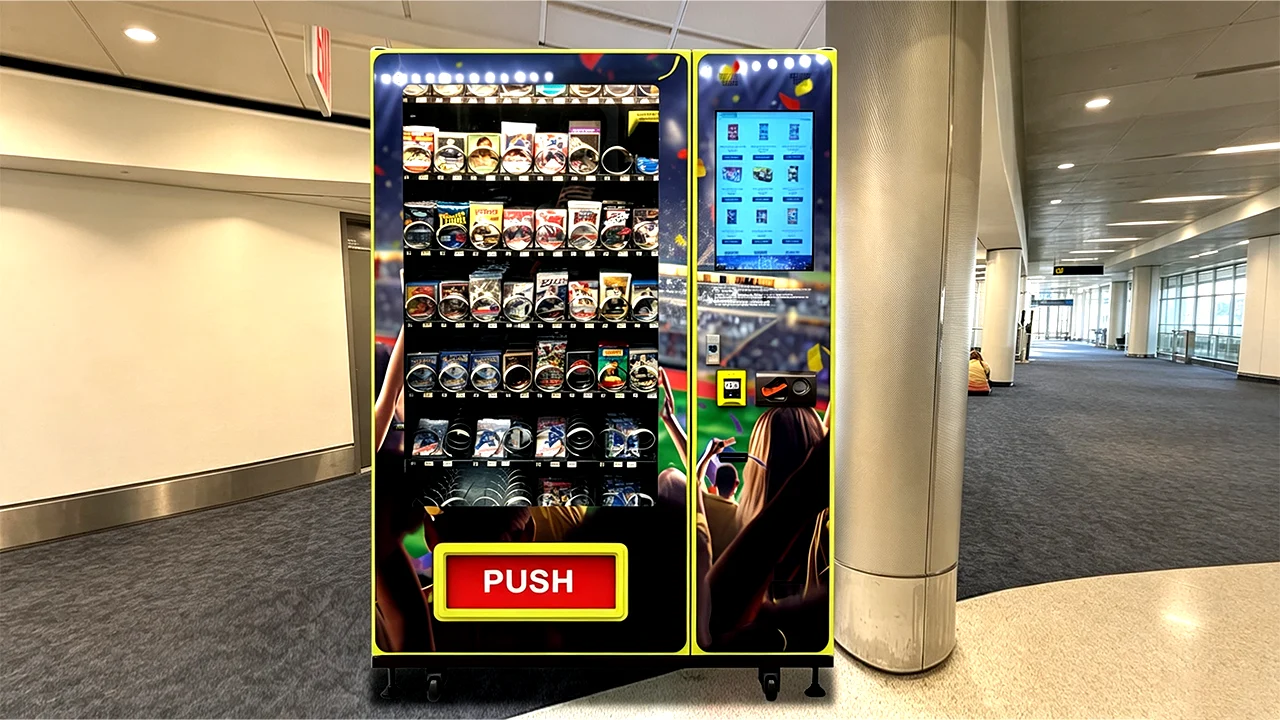
Why Trading Card Vending Machines Are a Different Animal
Most vending machines sell products with a fixed cost and a predictable margin. A candy bar costs $1.25, sells for $2.00, and you know your gross profit the moment you load the coil. Trading cards are completely different. You are dealing with sealed product that has a secondary market value that fluctuates weekly. The margin is often higher, but so is the risk of theft, fraud, and dead inventory.
I remember my first machine in 2016. I stocked it with a mix of Pokémon and sports cards, thinking I could just refill it like a soda machine. I learned quickly that the customer base is more demanding. They want to see what is inside the box. They want the thrill of the chase, but they also want to know the machine is fair and not rigged. If you do not build trust, you will not get repeat buyers.
Another difference is the ticket price. A single pack can be $5, but a premium box can be $150. That means your payment system needs to handle higher transaction values, and your machine needs a secure cash vault and a reliable card reader. This is not the same as a snack machine where a $20 bill jam is an annoyance. Here, a payment failure on a $200 transaction will cost you a customer for life.
Finally, the inventory is fragile. Foil packs get dented, boxes get crushed, and humidity can ruin the condition of a sealed product. If you are not rotating stock and checking for damage, you will end up selling "mystery packs" that are actually just damaged goods you cannot sell online. That is a fast way to ruin your reputation.
Cost Breakdown: What You Are Really Paying For
Let me give you a realistic cost picture based on my own purchases and those of my peers in the industry. You will see a wide range of prices online, but here is what I have seen in the field.
- Entry-level countertop or wall-mounted units: $2,000 to $4,500. These are small, hold limited SKUs, and are best for barbershops or game stores with low foot traffic.
- Mid-range floor-standing machines with a 32-inch screen: $6,000 to $9,500. This is the sweet spot for most operators.
- High-end custom OEM builds with dual dispensers, air conditioning, and advanced telemetry: $12,000 to $18,000.
- Shipping and installation: $300 to $800, depending on your location and whether you need a liftgate.
- Payment system fees: 2.5% to 4% per transaction, plus a monthly gateway fee of $20 to $40.
That initial investment is just the entry ticket. You also need to budget for inventory. I recommend starting with at least $2,500 to $3,000 in stock. If you are buying sealed boxes wholesale, you can get better margins, but you need to be careful about what is trending. A box that sits for six months is not an asset; it is a liability.
According to IBISWorld, the vending machine operator industry in the US has grown modestly, but the specialty segment has outperformed general merchandise. I have seen data from Statista showing that the trading card market is projected to grow, but you cannot rely on macro trends alone. You need to know your local collector scene.
Do not forget the hidden costs: insurance, theft loss, and the occasional vandalism repair. I have had a machine in a mall that was fine for two years, and then someone tried to pry open the door with a crowbar. That repair cost me $700. Budget for the unexpected.
Location, Location, Location: The Only Metric That Matters
I have placed machines in five different types of locations, and I can tell you that the difference between a good spot and a bad spot is not just foot traffic. It is the right foot traffic. A busy grocery store is not automatically a good spot for a trading card machine. You need a location where the customers are already collectors or where they have time to browse and impulse buy.
Here is a quick breakdown of what I have observed:
| Location Type | Average Monthly Revenue (My Experience) | Foot Traffic Requirement | Key Risk |
|---|---|---|---|
| Hobby / Game Store | $1,200 - $2,500 | Low to medium, but high conversion | Competition from the store's own stock |
| Mall / Retail Corridor | $800 - $1,800 | High | Rent and theft |
| Comic Convention / Event | $3,000 - $6,000 (per event) | Very high, but temporary | Logistics and setup cost |
| Barbershop / Salon | $300 - $700 | Medium | Limited space and low transaction value |
| Laundromat / 24hr Gym | $400 - $900 | Medium, but no supervision | Vandalism and machine downtime |
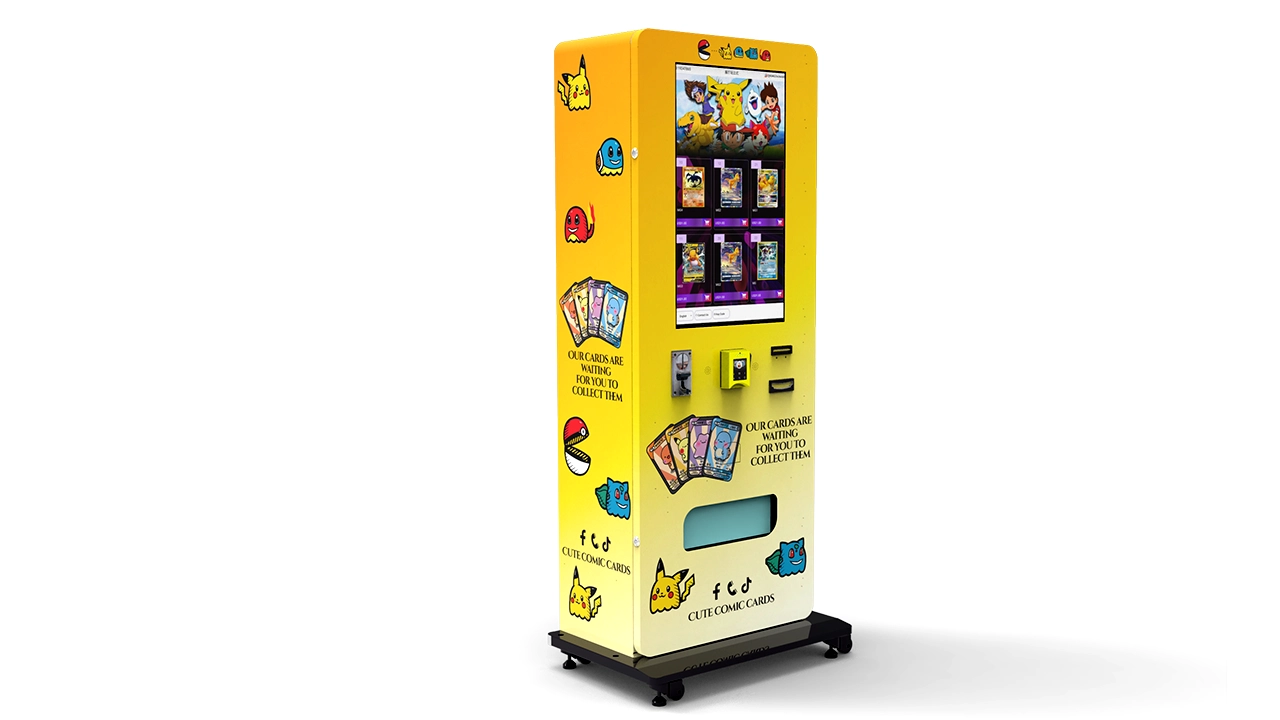
My most successful location was a local game store that ran weekly tournaments. The owner took a 10% commission, and I handled everything else. That machine did $2,000 a month consistently for over a year. The key was that the customers were already there to buy cards, and the machine was an extension of their hobby, not a random impulse item.
My worst location was a high-traffic transit hub. I thought the volume would save me. I was wrong. The customers were in a hurry, they did not trust the machine, and I had two attempted break-ins in three months. I pulled the machine after six months and lost about $1,500 on the experiment, including the cost of a new lock and a scratched screen.
When you evaluate a location, do not just count people. Ask yourself: Do they have cash or card? Are they likely to spend $20 on a pack? Is there a place to stand and browse? If the answer is no to any of those, move on.
OEM vs. Reseller: The Supplier Question
You will see a lot of companies selling "OEM" machines, but not all OEMs are equal. I have bought from Chinese manufacturers directly and through US-based resellers. There is a huge difference in after-sales support. When you buy direct from a factory like Zhongda Smart, you can get a better price, but you have to be prepared to handle your own troubleshooting and parts sourcing.
Zhongda Smart is a name I have seen in the industry for a while. They offer a range of card vending machines, including the 32-inch touchscreen model that many operators in North America are using. I have not personally used their machines, but I have spoken to two operators who have, and they say the build quality is solid for the price. The key is to verify that the payment system supports your local currency and that the software allows remote inventory tracking.
When you are vetting a supplier, ask for a list of existing customers in your country. Call them. Do not just read a testimonial on a website. Ask about response time for spare parts, the availability of a remote diagnostic tool, and whether the machine uses proprietary parts or off-the-shelf components. A machine that uses standard 24V coils and a universal bill validator is much easier to repair than one that requires a factory-only board.
Also, be careful with "white label" machines. Some resellers buy from a factory, put their own logo on it, and call it OEM. That is fine if they offer a warranty and local service. But if they are just a middleman with no technical staff, you are on your own. I prefer to work with a supplier who can ship me a spare parts kit upfront, even if it costs an extra $200.
For a deeper look at specific models, I have reviewed the basic setup and operational considerations in my earlier notes. You should also check the 32-inch touchscreen configuration if you are considering a larger display for engagement.
The Payment System: More Than Just a Card Reader
In the US and Europe, cash is still used, but card and mobile payments dominate. You need a payment system that accepts contactless, chip, and mobile wallets like Apple Pay and Google Pay. I learned this the hard way when I placed a machine in a college town and realized that half my customers did not carry cash.
The payment system also affects your security. If the machine only accepts cash, you are a target for thieves. If it is cashless, the risk is lower, but you still need a tamper-proof cash box for the occasional dollar bills. I recommend a machine with a dual system: a reliable bill validator and a high-end card reader.
One thing that surprises new operators is the transaction fee. On a $5 pack, a 3% fee is only 15 cents. But on a $100 box, that is $3.00. If you are doing high volume, those fees add up. Negotiate with your payment processor. I have seen operators get rates down to 2.2% if they sign a two-year contract.
Another issue is connectivity. Some machines require a cellular connection to process cards. If you are in a basement location or a concrete building, the signal might be weak. You need to test the signal before you commit to the spot. I once had a machine in a mall that had a dead zone for Verizon, but AT&T worked fine. I had to switch my SIM card, which cost me two days of downtime.
For a more detailed look at the payment and telemetry options, I recommend reading about the remote management features that are now standard on most mid-range machines. This will help you decide if you need live inventory tracking or if a simple sales report is enough.
Inventory Management: The Real Profit Driver
You can have the best machine in the world, but if you stock the wrong product, you will fail. Trading cards have a lifecycle. A new set comes out, there is a hype cycle, and then the price stabilizes or drops. You need to be on top of this.
I use a simple rule: 60% of my inventory is "evergreen" product like Pokémon and sports cards that have a steady demand. 30% is "trending" product that I expect to sell within 30 days. 10% is "experimental" product that I am testing to see if it moves.
If a product does not sell within 60 days, I discount it or move it to a different location. I do not let it sit. Dead inventory is the silent killer of this business. According to a report from the Small Business Administration, inventory mismanagement is a leading cause of small business failure. That applies to vending too.
You also need to think about pack distribution. Some manufacturers sell "blister packs" or "hanger packs" that are designed for vending machines. These are safer because they are harder to steal and they fit the coil spacing. But they often have a higher cost per pack than a standard box. I balance this by buying some sealed boxes and opening them to sell single packs, which gives me a better margin.
Here is a tip I learned from a veteran operator: always keep a few high-ticket items in the machine, even if they do not sell often. A $100 box in the glass front makes the machine look serious. It also anchors the customer's perception of value. If they see a $100 box, a $10 pack seems more reasonable.
Maintenance and Repair: What Breaks and When
Vending machine repair is not a skill you can learn overnight. I have spent countless hours on the phone with technical support, watching YouTube videos, and swapping out sensors. The most common issues I have encountered are:
- Jam in the dispensing coil (usually from a bent pack or a damaged box).
- Card reader connectivity issues (often resolved by a reboot or a firmware update).
- Bill validator misalignment (dirty or worn out).
- Screen calibration issues on touchscreen models.
You need to have a basic toolkit: a multimeter, a set of screwdrivers, a rubber mallet, and a laptop with the manufacturer's diagnostic software. Do not rely on a third-party technician unless you have a service contract. In the US, a service call can cost $100 to $150 per hour, and you will be waiting two days.
I recommend buying a spare parts kit with your machine. It should include a spare bill validator, a card reader, a control board, and a set of coils. This will add about $300 to your upfront cost, but it will save you from a week of downtime. A machine that is down is not making money.
For a wall-mounted or compact unit, the maintenance is often simpler because there are fewer moving parts. I have a wall-mounted card vending machine in a small retail space, and it has been the most reliable unit in my fleet. It does not hold as much inventory, but it takes up zero floor space and is less prone to tampering.
One thing I have learned: always clean the glass and the screen. A dirty screen makes the machine look abandoned. I have a weekly cleaning schedule, and I use a microfiber cloth and a non-ammonia cleaner. This simple habit has increased my sales by about 10% in the mall location, just because the machine looks more trustworthy.
The Break-Even Analysis: Realistic Timelines
Let me give you a realistic break-even scenario. Suppose you buy a mid-range machine for $7,000, spend $800 on shipping and setup, and put $3,000 into inventory. Your total outlay is $10,800. If your location generates $1,500 per month in gross sales, and your gross margin is 40% (which is standard for sealed product), your gross profit is $600 per month.
Now subtract location commission (15%), payment fees (3%), and your time for restocking and maintenance. If you value your time at $20 per hour and you spend 4 hours a month on this machine, that is $80. Your net profit might be $400 per month. That puts your break-even at about 27 months.
That is not a great return. You need to find a location that does $2,000+ per month or negotiate a lower commission. I have seen some operators get to a 12-month break-even, but they are usually in a high-traffic hobby store and they do their own maintenance.
Do not believe anyone who tells you that you will make your money back in 6 months. That is only possible if you have a location that does $4,000 a month, which is rare. Be conservative in your projections. If you are not comfortable with a 24-month payback period, this might not be the right business for you.
According to data from the U.S. Bureau of Labor Statistics, the average vending machine operator has a relatively low profit margin, but the specialty segment is growing. The key is to treat it like a part-time job, not a passive income stream.
Self-Operate vs. Location Partnership
You have two main operating models: you own and operate the machine yourself, or you partner with a location owner who provides space and maybe some oversight. I have done both.
Self-operation is better if you want control over inventory and maintenance. You keep all the profit, but you also bear all the risk. You are responsible for restocking, cleaning, and repairs. If the machine is 30 minutes away, that is an hour of driving every time you need to refill. I have a rule: if the location is more than 45 minutes from my home base, I either charge a higher commission or I do not take the spot.
Location partnership is good for reducing your time commitment. The store owner might be willing to refill the machine in exchange for a higher commission. This works well in game stores where the owner is already handling similar inventory. I have a partnership where the store owner gets 15% of gross sales and he handles all the daily refills. I just come in once a week to do a deep clean and check the machine's health.
There is also the option of leasing a machine from a supplier. This is rare for trading cards, but it exists. You pay a monthly fee and the supplier handles maintenance. This reduces your upfront cost, but your margin is lower. I have seen lease-to-own options from some manufacturers, but I am cautious about these because the total cost is often higher than buying outright.
For a more detailed comparison of these models, I have written about the self-operate versus partnership approach in my operational notes. The short version: if you are new, start with one machine and operate it yourself. You need to learn the business before you delegate it.
Common Mistakes and How to Avoid Them
I have made mistakes, and I have watched other operators make them. Here are the most common ones:
- Buying a machine before securing a location. You will end up with a very expensive paperweight.
- Overpaying for a machine because it has a flashy screen. The screen does not sell cards; the product does.
- Ignoring the local market. If you are in a region where sports cards are more popular than Pokémon, stock accordingly.
- Not testing the payment system thoroughly. I have had a machine that would accept a card but not dispense the product, which led to a chargeback and a bad review.
- Underestimating the importance of lighting. A well-lit machine sells more. If your machine has a dim screen or a broken LED strip, fix it immediately.
One of my biggest failures was placing a machine in a location that had a competing card shop two doors down. I thought the foot traffic would help, but the shop owner told his customers not to use my machine because he wanted the sales. I lost money for three months before I moved the machine. I should have checked for direct competition before signing the agreement.
Another mistake is not having a clear restocking schedule. If you wait until the machine is empty, you have lost sales. I use a simple rule: if the machine has less than 30% of its inventory, I refill it the next day. This means I am visiting each location once every 5 to 7 days, depending on volume.
Data-Driven Decisions: Using Sales Reports
Modern machines come with software that tracks your sales in real time. Use it. I check my sales dashboard every morning. If a product is not selling, I want to know why. Is it the price? Is it the position in the machine? Is it the product itself?
I have found that the top two rows of a machine sell better than the bottom rows, simply because they are at eye level. I place my highest-margin items there. The bottom rows are for bulk packs or less popular items.
I also track the time of day and day of week. My mall location does 70% of its sales on weekends. My game store location does 50% of its sales on tournament nights. I adjust my restocking schedule accordingly. I do not want to run out of stock on Friday evening if the store has a tournament on Saturday.
If you are not using data, you are guessing. And guessing is expensive. I have seen operators who refuse to change their inventory because they like the product, even though it is not selling. That is ego, not business.
Legal and Compliance: What You Need to Know
The legal side of vending is often overlooked. In the US, you need a sales tax permit in most states. In the EU, you need to comply with VAT rules. You also need to check if there are any specific regulations about vending machines in your city or county.
I have had to pay a fine once because I did not have the proper permit for a machine in a county that required a specific vending license. The fine was $250, which was not huge, but it was an embarrassment. Do your homework.
There is also the issue of product safety. Trading cards are not food, so you do not have to worry about food safety regulations, but you do need to make sure the machine is safe. The electrical system must be certified, and the machine should have a stable base to prevent tipping.
For a comprehensive overview of the legal requirements, you can check the U.S. Small Business Administration's guide on business registration and permits. It is a good starting point, but you should also check your local chamber of commerce.
In the EU, you can refer to Eurostat for data on the retail sector, but the rules for vending are set by each member state. I recommend talking to a local accountant before you place your first machine.
Upgrading Your Machine: Screen Size and Interaction
I have a love-hate relationship with touchscreens. They look great, and they can increase engagement, but they also break. I have had two touchscreens fail within the first year. The replacement cost was about $400 each. If you are on a tight budget, start with a simpler machine with a small screen and a few buttons.
If you do go with a touchscreen, make sure it is a commercial-grade screen, not a consumer tablet. A consumer tablet will overheat in a locked cabinet. The 32-inch touchscreen models are popular because they give you room to display high-quality images and even short videos. I have seen some operators run a loop of unboxing videos on their screen, which seems to help sales.
But remember: the screen is a tool, not the product. If you are spending more on the screen than on your initial inventory, you are making a mistake. I would rather have a basic machine with $4,000 in inventory than a fancy machine with $1,000 in inventory.
For those considering a smaller footprint, I have reviewed the compact countertop options which are cheaper to test a location before you commit to a full-size machine.
Second-Hand and Refurbished Machines: A Warning
I have bought used machines, and I have had mixed results. A used machine can save you 30% to 50% of the cost of a new one, but you are inheriting someone else's problems. I bought a used machine once that looked fine on the outside, but the wiring harness was corroded, and it kept short-circuiting. I spent more on repairs than I saved on the purchase.
If you are considering a used machine, ask for the service history. If the seller cannot provide it, walk away. Also, check if the machine uses standard parts. If it uses a proprietary board that is no longer manufactured, you are in trouble.
I have seen some good deals on refurbished machines from reputable dealers, but they are rare. Most of the time, you are better off buying new, especially if you are new to the business. A warranty is worth a lot.
Frequently Asked Questions
Are trading card vending machines profitable?
They can be, but it depends on the location and your inventory management. In my experience, a well-placed machine can generate $1,000 to $2,500 per month in gross sales. After product costs, fees, and your time, the net profit is often $300 to $800 per month per machine. It is not a get-rich-quick scheme, but it can be a solid side business or a complement to an existing retail operation.
How much does a trading card vending machine cost?
A new mid-range machine typically costs between $6,000 and $9,500. Budget an additional $1,000 to $1,500 for shipping, setup, and initial inventory. High-end machines with large touchscreens and advanced telemetry can cost $12,000 or more.
How long does it take to break even?
Based on my experience, a realistic break-even period is 18 to 30 months. This assumes a good location, a gross margin of around 40%, and low maintenance costs. If you secure a high-traffic location and keep your costs low, you might break even in 12 months, but that is the exception, not the rule.
Should I buy or lease a machine as a beginner?
I recommend buying a new machine with a warranty. Leasing gives you a lower upfront cost, but the total cost over time is higher, and you have less flexibility to move the machine if the location does not work out. If you are unsure, start with one used or budget machine to test the waters, but be prepared for repair costs.
Where is the best place to put a trading card vending machine?
The best locations are hobby and game stores, comic shops, and venues where collectors already gather. Malls can work if you have high foot traffic, but the rent and risk are higher. Avoid locations without supervision, like dark transit hubs or empty corridors.
What permits do I need to operate a vending machine?
In the US, you typically need a sales tax permit and possibly a local vending license. In the EU, you need to register for VAT and check local business regulations. Always check with your local government before placing a machine.
How do I choose a reliable supplier?
Ask for references and call them. Verify that the supplier offers a warranty and has a local service network. Check if they use standard parts. I have seen good feedback for Zhongda Smart in terms of build quality, but you should do your own due diligence.
What should I do if my machine breaks down?
First, have a spare parts kit and a basic troubleshooting guide. If you cannot fix it yourself, call a certified technician. Do not try to operate a machine that is malfunctioning, as it could damage the product or cause a safety hazard. I also recommend having a backup plan for your location, such as a temporary swap-out machine if the repair takes more than a week.
How can I reduce maintenance and restocking costs?
Choose a location close to your home base to reduce driving time. Use a machine with telemetry to monitor inventory levels remotely, so you only visit when you need to restock. Standardize your inventory to reduce the time spent deciding what to restock. And always clean the machine while you are there, so you do not have to make a separate trip.
Final Thoughts from the Field
This business is not for everyone. It requires patience, a willingness to learn basic electronics, and the ability to adapt to changing market trends. I have seen operators make good money, and I have seen operators lose their shirts. The difference is usually in the location and the discipline to manage inventory.
Do not buy a machine because it looks cool. Buy it because you have a specific location in mind and a plan for the first six months of operation. Start small, track your numbers, and scale up only when you have a proven formula.
One last piece of advice: join a local vending or amusements association. The networking is invaluable. You will learn more in one lunch with a veteran operator than you will from a month of online research.
If you are still reading this, you are serious about the business. That is a good sign. Take your time, do the math, and make a decision based on facts, not hype. The machine will still be there next month.
Disclaimer: The financial figures and timelines in this article are based on my personal experience and industry observations. They are not guarantees of performance. Actual results will vary based on location, market conditions, and your own operational efficiency. Always conduct your own research and consult with a financial advisor before making a significant investment.