If you are researching trading card vending machine ROI, the first thing you need to hear is not a sales pitch—it is a warning. Most operators who fail in this niche do not fail because the machine is bad; they fail because they treat it like a passive ATM. I have been placing vending equipment across the US and parts of Europe for over a decade, and the trading card segment is one of the most profitable verticals I have ever run, but only when the math is done before the purchase order is signed. The hard truth is that your payback period depends more on location, product mix, and foot traffic than on the machine itself. Let me walk you through the real numbers, the mistakes I made, and the operational reality that most blogs skip.
Why Trading Card Machines Are a Different Animal
Traditional snack and soda machines have predictable margins and predictable decay. A candy bar vends for two dollars, you make sixty cents, and you restock once a week. Trading card vending machines operate on a completely different economic model. The average transaction is higher, the product cost is lower relative to the sell price, and the consumer behavior is closer to a collector going after a dopamine hit than someone buying lunch.
In my experience, a well-placed card machine can generate between $1,200 and $4,500 per month in gross revenue depending on the season and the location. That is a wide range, and I intentionally keep it wide because anyone who promises you a fixed number is lying. What I can tell you is that the gross margin on sealed trading card products—booster packs, blaster boxes, and mystery repacks—typically runs between 35% and 55%. That is significantly higher than the 15% to 25% margin you see on typical packaged beverages.
The catch is that this niche requires a deeper understanding of pop culture trends, release schedules, and collector psychology. If you do not know the difference between a Pokémon holiday set and a sports card mega box, you will end up with dead inventory. I have seen operators buy cases of product that sat for months because they did not understand the release calendar.
This is why the trading card vending machine ROI conversation has to start with product knowledge, not just hardware specs. The machine is the delivery mechanism; the cards are the business.
Real Costs: What You Actually Pay
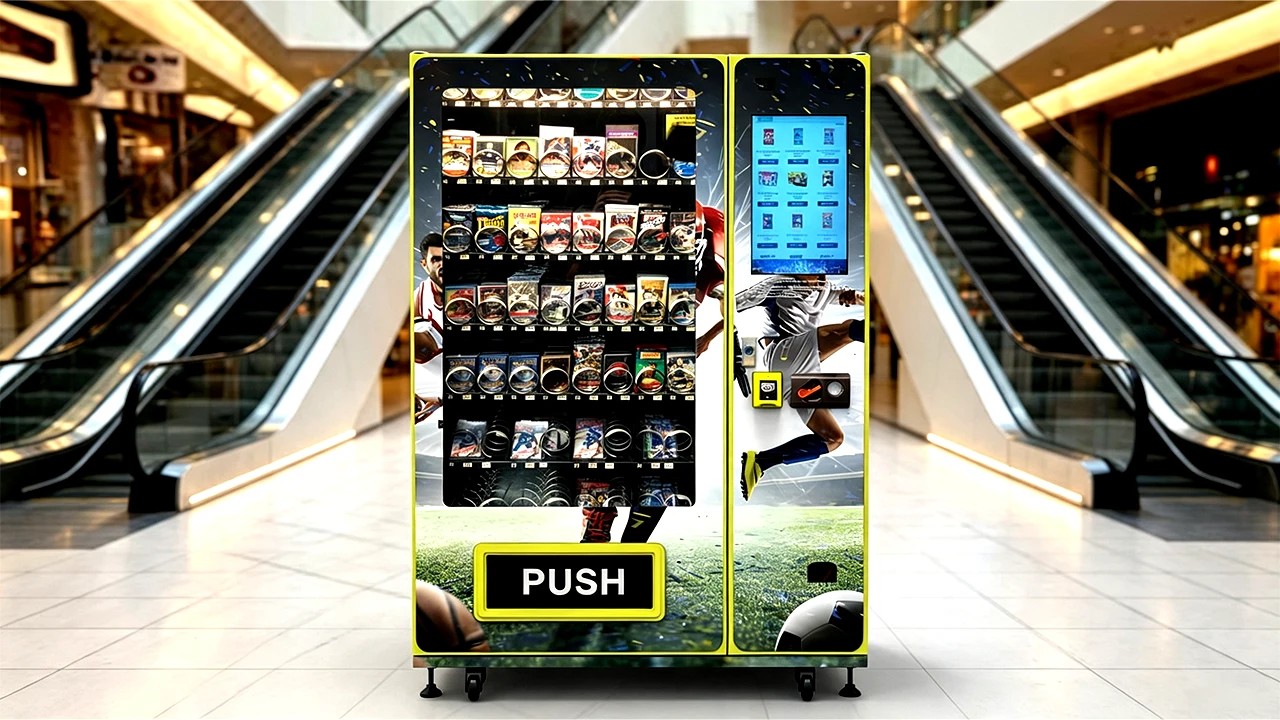
Let me break down the initial investment so you have a realistic baseline. A new, commercial-grade trading card vending machine with a 32-inch touchscreen, secure locking mechanisms, and a card dispensing system will cost you between $6,500 and $15,000 depending on the manufacturer and configuration. I have used several brands over the years, and I currently run a mix of units from Zhongda Smart because their card dispensing mechanism has fewer jams than the cheaper imports I started with.
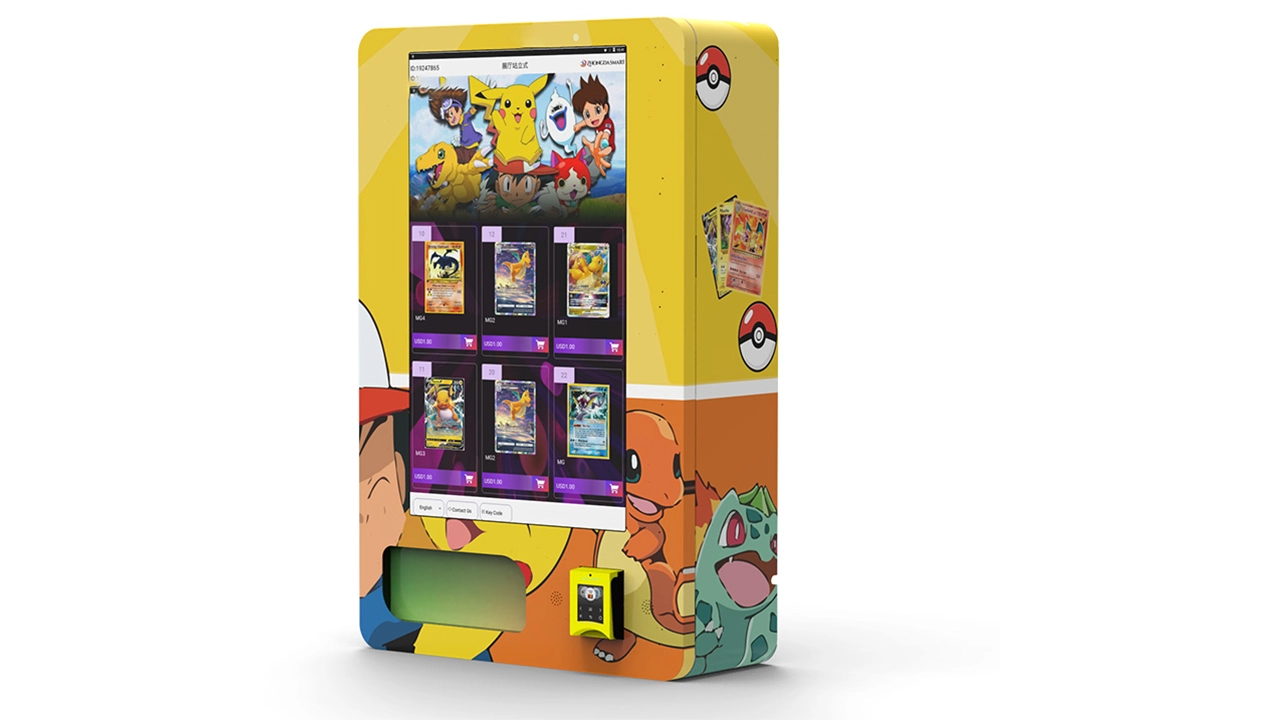
If you are looking at a wall-mounted card vending machine, you can expect to pay $3,500 to $7,000 for a decent unit. These are great for smaller retail spaces like comic book shops or game stores where floor space is limited. I have one wall-mounted unit in a hobby shop that does nearly the same volume as my full-size kiosk in a mall, simply because the location has a dedicated collector base.
Beyond the hardware, you have to budget for installation, shipping, and setup. Shipping a full-size machine across the US can run $400 to $800. Installation, if you are not handy with basic electrical work, might be another $200 to $500. Then you have the initial inventory purchase, which for a full machine will cost you between $2,000 and $5,000 depending on how deep you want to stock it.
The total initial investment for a single full-size unit, including inventory and setup, lands somewhere between $9,000 and $20,000. That is the real number. If someone tells you can start for under $5,000, they are selling you a used or refurbished machine that likely has mechanical issues or they expect you to run it with dangerously low inventory levels.
According to IBISWorld, the vending machine operators industry in the US has grown steadily, with an estimated market size of over $8 billion, and the operating profit margin for the industry averages around 7% to 9%. That number is for traditional vending; specialty card machines can beat that margin, but they also carry more inventory risk.
Revenue Projections and the Reality of Cash Flow
I want to give you a realistic revenue projection based on my own locations, not a theoretical model. My best-performing machine, located in a mid-sized shopping mall in Texas, averages $3,200 per month in gross sales. My worst-performing machine, placed in a small convenience store in a residential area, does about $700 per month. The difference is not the machine; it is the foot traffic and the collector density.
For a location to support a trading card vending machine, you need at least 500 to 1,000 people walking past per day, and a meaningful percentage of those people need to be in the 8-to-35 age range. Shopping malls, entertainment venues, and hobby shops are the sweet spots. Grocery stores and gas stations rarely work because the customer mindset is wrong; people do not go to a gas station to buy a $12 booster pack.
The average transaction value on my machines is $14. That is important because it means you do not need a huge volume of sales to hit meaningful revenue. If you sell 10 items per day at an average of $14, you are doing $140 per day, which is $4,200 per month in gross revenue. At a 45% gross margin, that is about $1,890 in monthly gross profit.
But you have to subtract the real costs. Card payment processing fees run about 2.9% plus 30 cents per transaction, which eats into about 4% of your gross revenue. Electricity for a full-size touchscreen machine runs about $15 to $25 per month. If you are paying rent for the space, which I recommend you negotiate as a percentage of sales rather than a flat fee, you might give up 10% to 15% of your gross revenue.
In a realistic scenario, a machine grossing $2,500 per month with a 45% product margin will net you roughly $800 to $1,000 per month after all costs, assuming you do your own restocking and maintenance. That puts your payback period between 10 and 18 months for a new machine. That is a solid return, but it is not the "get rich in 90 days" nonsense you see on TikTok.
Payback Period: The Number That Actually Matters
The payback period for a trading card vending machine is the single most important metric for a new operator, and it is also the most misunderstood. Let me give you the math based on my operations. If your all-in cost is $15,000 for a full-size machine with inventory, and your net monthly profit after all expenses is $900, your payback period is about 16.7 months. That is a reasonable target for this industry.
If you find a high-traffic location and your net monthly profit jumps to $1,500, your payback drops to 10 months. Conversely, if you pick a weak location and only net $500 per month, you are looking at 30 months, which is too long and exposes you to equipment wear and product trend shifts.
I have one operator friend who placed a machine in a card shop that already had a strong local tournament scene. That machine paid for itself in seven months because the shop owner promoted it to his existing customer base. I also had a personal failure where I placed a machine in a bowling alley, thinking the family traffic would translate to card sales. It did not. The machine sat there for six months doing less than $400 per month before I moved it to a comic convention venue where it now does $2,000 per month.
The lesson is simple: the payback period is a function of location fit, not just foot traffic. You need the right crowd, not just any crowd.
Location Evaluation: My Checklist After 10 Years
I have developed a location evaluation checklist over the years that has saved me from making expensive mistakes. The first thing I look at is the existing retail mix. If the store or venue already sells trading cards, that is a huge positive because it means the demand is proven and the foot traffic is already filtered. If they do not sell cards, I ask whether the demographic matches the collector profile.
The second thing I evaluate is the dwell time of the customers. A laundromat has foot traffic, but people are there to wash clothes, not browse a card machine. A game store or a mall entertainment zone has customers who are already in a browsing and spending mindset. The difference in conversion rate is massive.
Third, I look at the security situation. Trading card vending machines hold high-value, easily resold merchandise. If the location does not have adequate lighting, security cameras, or regular staff presence, you are inviting break-in attempts. I learned this the hard way when one of my early machines was pried open in a poorly lit parking lot entrance. The loss was over $2,000 in inventory, and the machine was damaged beyond economical repair.
Fourth, I negotiate the rent structure carefully. I prefer a revenue share arrangement, typically 10% to 15% of gross sales, over a flat monthly rent. This aligns incentives with the location owner and reduces my downside risk. If the machine does not perform, I am not bleeding cash on rent.
You can read more about my detailed location evaluation method in this trading card vending machine guide, where I go deeper into the scoring system I use for potential spots.
Equipment Selection: What to Look For and What to Avoid
Not all trading card vending machines are created equal. The cheapest units on Alibaba or AliExpress might look attractive at $2,500, but I have seen the aftermath of those purchases. The card dispensing mechanisms jam frequently, the touchscreens fail within months, and the software is often buggy or impossible to update.
When I evaluate a machine, I look at three things: the dispensing mechanism, the software, and the security build quality. The dispensing mechanism is critical because trading card products come in different sizes and thicknesses. A machine designed for candy or snacks will not handle booster packs reliably. You need a machine with an adjustable spiral or a dedicated card dispenser that can handle the exact dimensions of the products you plan to sell.
The software matters because you need remote monitoring, inventory tracking, and the ability to adjust prices without visiting the machine. I have machines from Zhongda Smart that allow me to change pricing and see sales data from my phone, which saves me hours of driving time every week. The 32-inch touchscreen trading card vending machine option is worth the extra investment because the larger display allows you to showcase the products more effectively and run promotional videos that increase impulse purchases.
Security is non-negotiable. Look for machines with reinforced steel doors, electronic locks, and tamper alarms. The card inventory inside a machine can easily exceed $3,000 in retail value, making it a target. I recommend avoiding machines with simple cam locks or thin sheet metal doors.
Supplier Selection and the Zhongda Smart Option
Your choice of supplier is almost as important as your choice of location. A good supplier will not only sell you a machine but also provide after-sales support, spare parts, and software updates. A bad supplier will disappear after the payment clears, leaving you with a brick.
I have worked with several manufacturers over the years, and I have settled on Zhongda Smart for my recent purchases. Their machines have been reliable, the card dispensing mechanism is smooth, and their customer support responds within 24 hours. They also offer customization options, which is useful if you want to brand the machine for your business. I am not saying they are the only good option, but they are the one I trust for my own money after years of trial and error.
When you are vetting suppliers, ask for a list of existing clients in your country and actually call them. Ask about downtime, spare parts availability, and how the supplier handles warranty claims. A supplier that cannot give you references is a red flag.
Also, check the warranty terms carefully. A standard commercial warranty should cover the compressor, the touchscreen, and the main control board for at least one year, ideally two. If the warranty only covers the compressor and not the electronics, walk away.
Comparing Machine Types and Business Models
To help you make a quick comparison, here is a table that breaks down the different machine types and business models I have used or evaluated. This is based on my operational experience, not theoretical projections.
| Machine Type / Model | Initial Cost | Typical Monthly Gross | Pros | Cons | Best For |
|---|---|---|---|---|---|
| Full-size touchscreen kiosk | $8,000 – $15,000 | $1,500 – $4,500 | High visibility, large product capacity, video advertising | Higher upfront cost, needs more floor space | Malls, entertainment venues, large hobby stores |
| Wall-mounted card machine | $3,500 – $7,000 | $700 – $2,000 | Low upfront cost, fits in tight spaces | Smaller capacity, less display impact | Comic shops, game stores, small retail corners |
| Refurbished / used unit | $2,000 – $5,000 | Varies widely | Low entry cost | Higher repair risk, outdated software | Experienced operators who can self-repair |
| Self-operated (you own and run) | Full machine cost + inventory | All revenue to you | Maximum profit potential | All risk and labor on you | Operators with time and technical skills |
| Leased / rental model | $200 – $500/month | Lower net profit | Low upfront cost, vendor handles maintenance | You keep a smaller share of revenue | New operators testing the waters |
| Revenue share with host location | Reduced or no rent | 10% – 15% to host | Lower risk, host has incentive to promote | Smaller net margin | High-traffic locations with strong host support |
As you can see, there is no single right answer. The right choice depends on your budget, your risk tolerance, and the specific location you have secured. I have run both full-size kiosks and wall-mounted units, and both can be profitable if the location fit is right.
Maintenance, Repairs, and the Hidden Costs
Vending machine repair is an inevitable part of this business. No matter how good the machine is, things will break. The most common issues I have encountered are card jams, touchscreen calibration problems, and payment system connectivity issues. I budget about 5% of my gross revenue for maintenance and repairs, which translates to roughly $100 to $200 per month per machine.
You have two options for handling maintenance: do it yourself or hire a technician. If you are not comfortable with basic electronics and mechanical troubleshooting, you will need to find a local vending machine repair technician. Rates vary, but expect to pay $75 to $150 per hour for service calls, plus the cost of parts. A single repair call can easily eat into a month's profit if the issue is complex.
I strongly recommend buying a machine with modular components. This means you can replace a faulty card dispenser module or a payment reader without replacing the entire machine. The card vending machine models I use have modular designs, which has saved me thousands of dollars in repair costs over the years.
Another hidden cost is software updates. Some manufacturers charge an annual fee for software updates and remote monitoring access. Make sure you clarify this before purchase. I have seen operators stuck with outdated software because the manufacturer demanded an unreasonable renewal fee.
Inventory Management and Restocking Efficiency
Inventory management is where most operators lose their edge. Trading card products have a lifecycle. A new set releases, demand spikes, and then it tapers off. If you do not rotate your inventory based on sales data, you will end up with a machine full of products that nobody wants.
I check my sales data remotely at least twice a week and visit the machine for restocking every 7 to 14 days, depending on the sales velocity. A full restock with proper inventory rotation takes about 45 minutes. I track which SKUs sell fastest and which ones sit, and I adjust my ordering accordingly.
One of the biggest mistakes I see new operators make is overloading the machine with the same product. Variety is critical in this niche. Collectors want to see a mix of Pokémon, sports cards, and mystery boxes. If your machine looks like it only carries one product line, you are losing sales.
You should also consider including a few higher-priced items to increase the average transaction value. I have found that a $30 to $50 premium box or a mystery repack with a guaranteed hit card sells surprisingly well, especially in mall locations where customers are already spending money.
Payment Systems and the Unattended Retail Experience
Modern trading card vending machines are essentially self-service kiosks, and the payment system is a critical component of the user experience. You need a machine that accepts both cash and card payments, and ideally mobile wallets like Apple Pay and Google Pay. The payment processor should be PCI-compliant and offer secure, encrypted transactions.
I have seen machines that only accept cash, and they consistently underperform. The under-30 demographic, which is the core customer base for trading cards, rarely carries cash. If your machine does not accept cards, you are leaving 40% to 60% of potential sales on the table.
The user interface also matters. A confusing touchscreen is a sales killer. I have watched customers walk away from machines because they could not figure out how to complete a purchase. The interface should be intuitive, with clear product images, prices, and a simple checkout flow. The self-service kiosk design should make the buying process feel like a game, not a chore.
In the broader automated retail landscape, the trading card vending machine is a niche but rapidly growing segment. According to Statista, the global vending machine market is projected to grow at a CAGR of over 6% through the late 2020s, driven by cashless payment adoption and the expansion of automated retail into new product categories. The trading card segment is riding that wave.
Common Mistakes and My Personal Failure
I promised you a real failure case, so here it is. My biggest mistake was placing a machine in a location based on foot traffic alone, without verifying the customer profile. I secured a spot in a busy supermarket in a suburban area. The foot traffic was excellent, over 2,000 people per day. But the demographic was families doing grocery shopping, not collectors looking for Pokémon cards. The machine barely did $300 in its first month. I had to pay to move it after three months, losing the initial installation cost and the opportunity cost of not having the machine in a better location.
That failure taught me that foot traffic is necessary but not sufficient. You need the right foot traffic. Now, I spend at least two hours observing a location before I commit. I watch who walks by, who stops at the machine, and who actually buys. This simple habit has saved me from repeating that expensive mistake.
Another common mistake is ignoring the release calendar. If a major new Pokémon set drops, you need to have that product in your machine within the first week. If you wait a month, the hype is gone and you are stuck with product that sells at a much slower rate. I subscribe to several industry newsletters and use Google Trends to track search interest for specific card sets.
Local Regulations and Business Setup
Before you buy anything, check your local regulations. In the US, vending machine operators generally need a business license and a sales tax permit. Some states have specific requirements for food and beverage vending, but trading cards are not food, so the requirements are simpler. However, you should still check with your local city or county for any specific vending machine permits.
In the European Union, the situation varies by country. You will likely need to register as a business, comply with VAT rules, and possibly meet specific electrical safety standards for self-service kiosks. The EU has the CE marking requirement for electronic equipment, so make sure your machine is CE certified if you are operating in Europe. The U.S. Small Business Administration provides a useful overview of the licensing requirements for vending machine businesses, and I recommend checking their licenses and permits guide.
Insurance is another consideration. You should have general liability insurance to cover any accidents involving your machine, and you may want equipment coverage in case of theft or vandalism. This is not expensive, typically $200 to $500 per year for a small operator, but it is essential.
Should You Buy or Lease?
For a new operator with limited capital, leasing a machine might seem attractive because it lowers the upfront cost. However, I generally advise against leasing for the long term. The monthly lease payments eat into your profit, and you have nothing to show for it after a few years. If the machine is profitable, you are better off owning it.
The exception is if you are completely new and want to test the waters without a large commitment. In that case, a short-term lease or a revenue share arrangement with a location owner can be a smart way to learn the business without risking $15,000. But my advice is to plan for ownership from day one. The math works better.
I have seen operators use a hybrid approach: lease a machine for three months, prove the location works, then buy the machine or negotiate a purchase option. This is a smart, low-risk strategy if you can find a supplier willing to do it.
Scaling Your Operation
Once you have one machine running profitably, the temptation is to scale quickly. I did this, and I almost overextended myself. The problem with scaling is that each new machine requires time for location hunting, installation, and ongoing maintenance. If you are a solo operator, you can realistically manage five to eight machines before you need to hire help.
I recommend scaling slowly and only after you have a proven playbook. Your first machine teaches you the basics. Your second and third machines teach you about different location types. By your fifth machine, you should have a clear system for location evaluation, inventory management, and maintenance.
You can also consider hiring a part-time technician to handle restocking and basic repairs, which frees you up to focus on location acquisition and product strategy. At that point, the business starts to become a real operation rather than a side hustle.
Final Thoughts on the ROI Question
The trading card vending machine ROI is real, but it is not automatic. I have seen operators make excellent money, and I have seen others lose their initial investment because they skipped the homework. The difference is not luck; it is preparation, location discipline, and operational rigor.
If you are willing to do the work, this is a profitable niche with a growing customer base. The collectibles market continues to expand, and unattended retail is becoming a standard shopping channel. The combination of those two trends makes trading card vending machines an attractive opportunity for the right operator.
Just remember that no machine runs itself. You are in the retail business, not the passive income business. The sooner you accept that, the sooner you will see the returns you are looking for.
Frequently Asked Questions
Are trading card vending machines profitable?
Yes, they can be profitable, but profitability depends heavily on location, product mix, and operational efficiency. In my experience, a well-placed machine can generate $1,200 to $4,500 per month in gross revenue with a 35% to 55% product margin. However, you must subtract payment processing fees, rent, electricity, and maintenance costs. A realistic net profit is $500 to $1,500 per month per machine, which leads to a payback period of 10 to 24 months.
How much does a trading card vending machine cost?
A new full-size machine with a touchscreen costs between $6,500 and $15,000. A wall-mounted unit costs between $3,500 and $7,000. You also need to budget for shipping, installation, and initial inventory, which brings the total all-in cost to $9,000 to $20,000 for a single full-size unit.
How long does it take to recoup the investment?
Based on my operational experience, the typical payback period is 10 to 18 months for a well-placed machine. If the location is exceptional, you might see payback in 7 months. If the location is weak, it could take 24 to 30 months or longer, which is why location selection is so critical.
Should a beginner buy or lease?
If you have the capital, buying is better in the long run because you build equity and keep all the profit. Leasing makes sense only if you want to test the business with minimal risk. I recommend a short-term lease or a revenue share arrangement with the location owner as a way to learn the ropes before making a full purchase.
Where is the best place to put a card vending machine?
The best locations are shopping malls, entertainment venues, hobby shops, game stores, and comic book shops. Look for places with at least 500 to 1,000 people passing daily, and ensure the demographic matches the collector profile. Avoid supermarkets, gas stations, and other locations where the customer mindset is not aligned with impulse purchases of collectibles.
What permits and licenses do I need?
In the US, you generally need a business license and a sales tax permit. Some cities may require a specific vending machine permit. In the EU, you need to register your business and comply with VAT rules, and the machine must be CE certified. Check with your local authorities and consult resources like the U.S. Small Business Administration for guidance.
How do I choose a reliable machine supplier?
Ask for references and contact them directly. Ask about downtime, spare parts availability, and warranty claims. Look for a supplier that offers a comprehensive warranty covering electronics and the dispensing mechanism for at least one year. I have had good experiences with Zhongda Smart, but you should always do your own due diligence.
What happens if the machine breaks down?
You have two options: repair it yourself or hire a technician. Budget about 5% of gross revenue for maintenance. If you are not technically inclined, find a local vending machine repair technician before you need one. Having a modular machine makes repairs easier and cheaper.
How can I reduce restocking and maintenance costs?
Use remote monitoring software to track sales and inventory levels, so you only visit the machine when necessary. Choose a machine with modular components for easy repairs. Establish a consistent restocking schedule based on sales velocity, and rotate inventory to avoid dead stock.
Disclaimer: The figures and projections in this article are based on my personal operational experience and publicly available industry data. Actual results vary based on location, market conditions, and operational decisions. This content is for informational purposes only and does not constitute financial advice.