If you are trying to decide between a Pokemon vending machine business and a sports card vending machine business, the short answer is that you are asking the wrong question. After more than a decade in automated retail, I have learned that the real battle is not about IP versus IP; it is about location, unit economics, and whether you can handle the operational grind. Both categories can print money, but they attract different demographics, have different restock cycles, and fail for completely different reasons. I have watched operators sink six figures into Pokemon machines only to realize their foot traffic was all wrong, and I have seen sports card kiosks in malls outperform entire convenience store chains. The trading card vending machine space is booming, but it is not a get-rich-quick scheme. It is a discipline that rewards operators who understand data, placement, and the psychology of the collector.
The Core Difference Between Pokemon and Sports Card Machines
The first thing you need to understand is that a Pokemon vending machine and a sports card vending machine are not the same business. They look similar, they use the same hardware, but the customer behavior is night and day. Pokemon is a kids' market driven by impulse and parents’ wallets. Sports cards are a young adult and middle-aged market driven by nostalgia, gambling instincts, and investment potential.
In my experience, Pokemon machines do well in tourist-heavy retail spots, grocery store entrances, and family entertainment centers. The transaction is fast, the product is cheap, and the kid pulls the lever or touches the screen without much thought. Sports card machines, on the other hand, thrive in malls, hobby shops, and locations near comic book stores or gaming lounges. The buyer is more deliberate. They will stand in front of the machine for ten minutes, check the glass, read the packaging, and only then swipe their card.
This difference matters because it changes your restock schedule, your inventory risk, and your margin structure. Pokemon products are easier to source at scale, but the margins are thinner because the MSRP is widely known. Sports cards have higher variance. You can sell a $5 pack for $20 if the market is hot, but you can also sit on dead inventory if the rookie class flops.
When I started my first operation, I made the mistake of treating both categories the same. I put a Pokemon machine in a high-traffic transit hub and a sports card machine in a suburban strip mall. The transit hub did okay, but the strip mall machine outsold it three to one. The lesson was obvious: the collector will drive to you, but the impulse buyer will not.
Why the Trading Card Vending Machine Market Is Exploding
You have probably seen the headlines about card shops selling out of booster boxes and the secondary market going crazy. That is not a bubble; that is a structural shift in how people buy collectibles. According to a report from Grand View Research, the global trading card market was valued at over $38 billion in 2023 and is projected to grow at a compound annual growth rate of 8.7% through 2030. That is not a fad. That is a sustained demand curve.
The problem is that traditional retail cannot keep up. Card shops have limited hours, limited shelf space, and a staffing problem. A self-service kiosk solves all of that. It does not call in sick, it does not argue about the price of a PSA 10, and it does not close at 9 PM. That is why I have seen a massive shift toward automated retail in this niche over the last three years.
But the explosion also brings competition. Every operator with a few thousand dollars thinks they can buy a machine, slap it in a mall, and watch the quarters roll in. They are wrong. The machines that succeed are the ones that are treated like a retail business, not a vending machine. You need to think about product mix, machine placement, and customer education.
One thing I always tell new operators is to look at the data from the trading card vending machine market before buying anything. The demand is there, but the execution separates the profitable operators from the ones who sell their machines on Craigslist six months later.
Initial Investment and Cost Breakdown
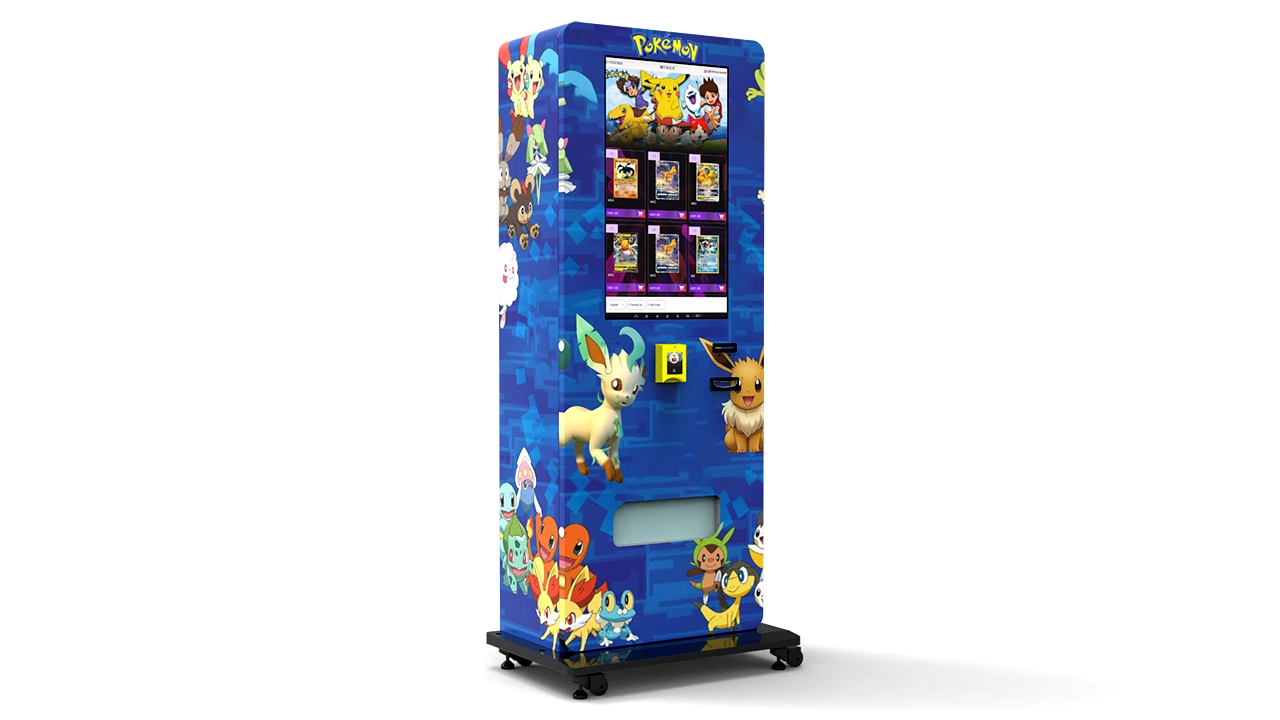
Let us talk about the money, because that is what everyone wants to know. A new trading card vending machine will cost you anywhere from $8,000 to $25,000 depending on the configuration. A basic 32-inch touchscreen model with a single coil system will run you around $10,000 to $12,000. If you want a larger machine with multiple dispensing mechanisms, anti-theft features, and a better user interface, you are looking at $18,000 to $25,000.
That is just the hardware. You also need to budget for shipping, installation, and initial inventory. Shipping a full-size machine from a manufacturer like Zhongda Smart can cost $500 to $1,500 depending on your location. Installation, if you are not handy with a drill and a level, will add another $200 to $500. Then you have your initial stock. I recommend starting with at least $3,000 to $5,000 in inventory, because a half-empty machine looks broken and nobody buys from a machine that looks abandoned.
Do not forget the peripheral costs. You will need a payment processing system, which usually charges a flat fee plus a percentage of each transaction. You will also need insurance, and you should budget for that. A basic liability policy for a single machine will run you $300 to $600 per year. If you are leasing space, the rent will vary wildly. I have paid as little as $150 per month for a corner in a hobby shop and as much as $800 per month for a prime spot in a regional mall.
Here is a quick comparison table based on my actual experience and industry feedback:
| Cost Item | Basic Setup | Premium Setup |
|---|---|---|
| Machine hardware | $8,000 - $12,000 | $18,000 - $25,000 |
| Shipping and installation | $700 - $1,500 | $1,000 - $2,500 |
| Initial inventory | $3,000 - $5,000 | $5,000 - $10,000 |
| Payment processing setup | $100 - $300 | $100 - $500 |
| First year operating costs | $2,000 - $4,000 | $4,000 - $8,000 |
These are not official statistics; they are based on what I have seen across dozens of installations. The point is that you need at least $15,000 in liquid capital to start this business properly. If you are trying to do it with $5,000, you will end up with a cheap machine, terrible inventory, and a bad location.
Revenue Potential and Profit Margins
Now let us talk about the upside. A well-placed trading card vending machine can generate $2,000 to $6,000 per month in gross revenue. In exceptional locations, I have seen machines do over $10,000 per month, but that is the exception, not the rule. The gross margin on trading cards is typically 30% to 50%, depending on how you source your inventory. If you buy directly from distributors or break boxes yourself, your margin will be higher. If you buy sealed product at retail, your margin will be thinner.
The key to maximizing revenue is not just selling packs. It is selling the experience. Machines that are equipped with a 32-inch touchscreen and allow customers to browse the product catalog before purchasing tend to have higher average transaction values. The 32-inch touchscreen trading card vending machine is not just a gimmick; it is a sales tool. When a customer can see what is inside the box, they are more likely to buy the premium pack.
However, you need to be realistic about the numbers. The average transaction is between $10 and $30. If you are in a location with 500 people passing by per day, and 2% of them stop to buy something, that is 10 transactions per day. At an average of $15 per transaction, that is $150 per day, or $4,500 per month. That is a solid number, but it assumes you have the right product mix and the machine is always working.
I have also seen machines fail because the operator did not adjust the pricing. In a mall, you can charge a 20% to 30% premium over MSRP. In a grocery store, you cannot. The customer base is different. The collector in the mall understands the secondary market and is willing to pay a premium for convenience. The parent in the grocery store is looking for a $5 pack to keep the kid quiet, and they will not pay $8.
Location Selection: The Make or Break Factor
I cannot stress this enough: location is 70% of the business. You can have the best machine, the best inventory, and the best pricing, but if it is in the wrong place, it will fail. The reverse is also true. A mediocre machine in a great location will still make money.
When I evaluate a location, I look for three things: foot traffic, dwell time, and demographic match. Foot traffic is obvious. You need at least 1,000 people passing by per day to make a machine profitable. Dwell time is less obvious. A transit hub has high foot traffic, but people are moving quickly and do not want to stop. A mall has lower foot traffic, but people are browsing and have time to stop. That is why malls and entertainment venues are better for trading card machines than transit hubs.
Demographic match is crucial. If you are putting a sports card machine in a location where the average age is over 60, you will fail. Similarly, if you are putting a Pokemon machine in a business district where there are no kids, you will fail. I always check the local population data and, if possible, the sales data from nearby retailers. The U.S. Small Business Administration has resources on market research that can help you evaluate a location, and I recommend using them before signing any lease.
One of my best locations is a small hobby shop in a suburban strip mall. The rent is low, the foot traffic is modest, but the customers are exactly the right demographic. They are collectors who come in for the shop and then see my machine. That machine does more revenue than my machine in a major shopping center because the customers are pre-qualified.
On the flip side, I once placed a machine in a high-end grocery store because the rent was cheap and the foot traffic was impressive. It was a disaster. The customers did not care about sports cards, and the ones who did were not willing to pay the premium prices. I pulled that machine after four months and moved it to a comic book store, where it now does three times the revenue.
Equipment Selection and Configuration
Choosing the right machine is not about picking the cheapest option. It is about picking the machine that fits your location and your product strategy. You have three main types: full-size floor models, wall-mounted units, and countertop machines. The full-size floor models are the most versatile and can hold the most inventory. They are also the most expensive and require the most space.
Wall-mounted card vending machines are a good option if you have limited floor space. They are smaller, cheaper, and easier to install. I have used the wall-mounted card vending machine in several locations where the landlord did not want a big unit taking up floor space. The trade-off is that you cannot hold as much inventory, which means you need to restock more frequently.
When it comes to the dispensing mechanism, you have a few choices. Coil systems are the most common and are reliable for boxed products. Vertical lift systems are better for flat items like packs and top loaders. If you are planning to sell a mix of products, you want a machine that can handle both. Some of the newer models from manufacturers like Zhongda Smart have modular dispensing systems, which means you can configure the machine for different product types without buying a new unit.
You also need to think about the user interface. A basic machine with a simple keypad and a glass window is fine for a hobby shop where the owner can explain how it works. But for unsupervised locations, you want a machine with a touchscreen and a user-friendly interface. The interactive display options are worth the extra cost because they reduce customer confusion and increase sales.
Payment systems are another critical consideration. You need a machine that accepts credit cards, debit cards, and mobile payments. Cash is still relevant, but it is not the primary payment method for this demographic. Make sure the machine is NFC-enabled so it can accept Apple Pay and Google Pay. I have seen operators lose sales because their machine only accepted cash and the customer did not have any.
Inventory Management and Restocking Strategy
Inventory is where most new operators fail. They either overstock and tie up their capital, or they understock and leave the machine looking empty. The key is to find the right balance based on your sales data. You should track what sells and what does not, and you should adjust your orders accordingly.
In my experience, a good restock schedule is every two weeks for a medium-traffic location and every week for a high-traffic location. If you are selling Pokemon products, you need to keep the popular sets in stock at all times. If you are selling sports cards, you need to rotate the inventory to keep it fresh. Collectors get bored of seeing the same product on the shelf, and they will stop checking the machine if it looks stale.
One strategy that works well is to use a mix of sealed product and single packs. Sealed boxes have a higher price point and attract serious collectors. Single packs are an impulse buy and attract casual buyers. I recommend keeping about 30% of your inventory in sealed boxes and 70% in single packs. This gives you a good balance of high-ticket and low-ticket items.
You also need to think about the condition of the product. Trading cards are fragile, and a damaged box will not sell. Make sure your machine has proper padding and that the dispensing mechanism does not crush the product. I have seen machines that damage the boxes during dispensing, and that is a fast way to lose customers.
Maintenance and Repair Considerations
Vending machine repair is not a question of if, but when. These machines are mechanical, and they will break down. The most common issues are jammed coils, faulty payment systems, and screen problems. You need to have a plan for dealing with these issues, or you will lose money every day the machine is out of service.
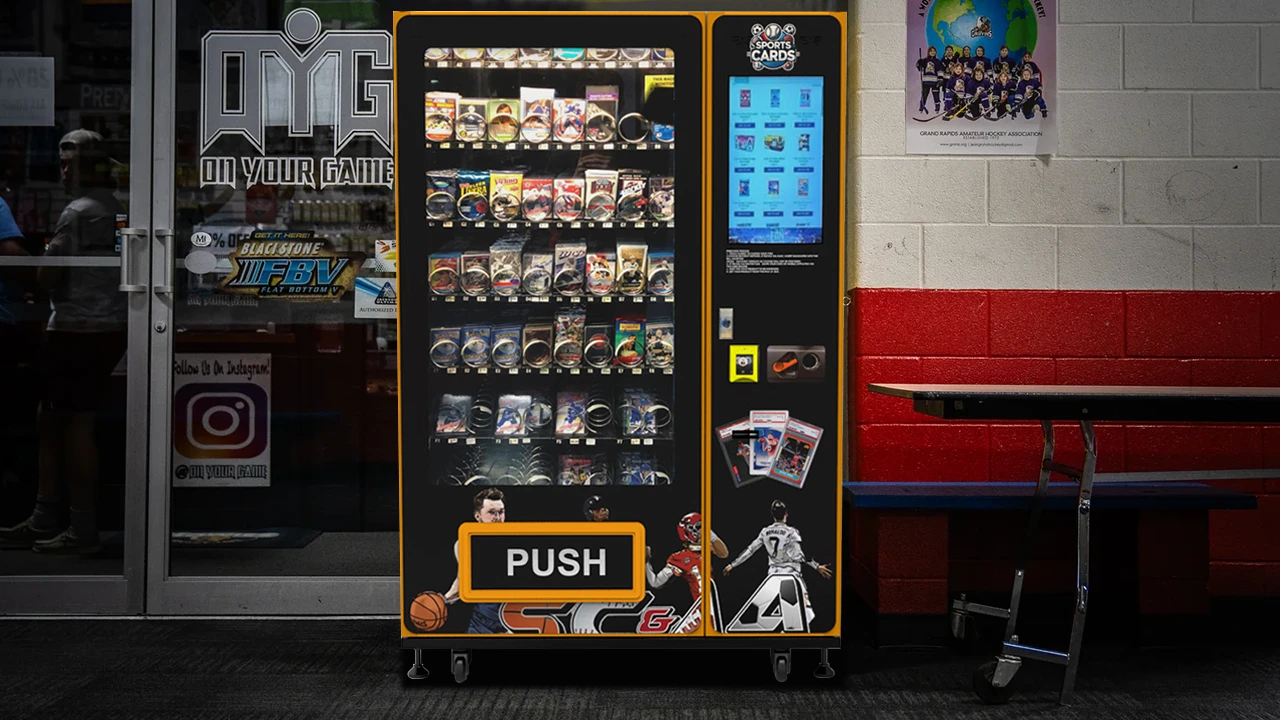
If you are handy, you can do most of the basic repairs yourself. The machines are not that complicated, and there are plenty of tutorials online. But if you are not handy, you need to have a local technician on call. The cost of a service call will range from $100 to $300, depending on your location and the severity of the issue. I recommend budgeting $500 to $1,000 per year for maintenance on each machine.
One thing I have learned is that you should always have spare parts on hand. A jammed coil can often be fixed by replacing a small gear, but if you have to order the part and wait for shipping, you are losing money. I keep a small parts kit at each location, and it has saved me countless hours of downtime.
Remote monitoring is a game-changer. Many modern machines come with a remote management system that alerts you when the machine is low on inventory or when there is a mechanical issue. This is worth the extra cost. I have a machine that alerts me when the cash box is full, which prevents the machine from shutting down due to a full cash box. This feature alone has saved me from losing hundreds of dollars in sales.
Common Mistakes and Lessons from Real Failures
I have made almost every mistake you can make in this business, and I have seen others make them too. The most common mistake is buying a machine before securing a location. You need to have the location locked down before you spend any money on equipment. Otherwise, you will end up with a machine sitting in your garage and no place to put it.
The second most common mistake is underestimating the importance of product selection. I once loaded a machine with a mix of Pokemon and sports cards, thinking that would appeal to everyone. It did not. The collectors saw the Pokemon cards and thought the machine was not for them, and the Pokemon buyers saw the sports cards and thought the machine was too expensive. The machine underperformed until I split the categories into two separate machines.
Another mistake is ignoring the data. If a product is not selling, you need to remove it and try something else. Do not fall in love with your inventory. I have seen operators hold onto dead stock for months because they thought it would eventually sell. It does not. You need to be ruthless about cutting your losses and rotating your product mix.
One of my failures was placing a machine in a location without a proper power supply. I assumed the landlord had the right outlet, but the machine kept tripping the circuit breaker. I lost two weeks of sales while I waited for an electrician to install a dedicated circuit. That is the kind of mistake you only make once.
Self-Operated vs. Leased vs. Revenue Share Models
You have three ways to run this business: self-operated, leased, or revenue share. Each has its pros and cons, and the right choice depends on your time, capital, and risk tolerance.
Self-operated is the most profitable but the most time-consuming. You are responsible for everything: the machine, the inventory, the maintenance, and the restocking. This is the best option if you are starting with one or two machines and you have the time to manage them properly.
Leased is a good option if you have capital but not time. You lease the machine to a location, and the location owner is responsible for restocking and basic maintenance. You get a fixed monthly payment, and the location owner gets a percentage of the sales. This is a lower-risk model, but your profit is capped.
Revenue share is a middle ground. You place the machine, and the location owner takes a percentage of the sales instead of a fixed rent. This is a good option if you are confident in the location but do not want to pay high upfront rent. The downside is that you are taking on more risk, because if the machine does not sell, you do not make money.
Here is a comparison table that I use when advising new operators:
| Model | Upfront Cost | Profit Potential | Time Commitment | Risk Level |
|---|---|---|---|---|
| Self-Operated | High | High | High | Medium |
| Leased | Medium | Medium | Low | Low |
| Revenue Share | Medium | Medium-High | Medium | Medium-High |
I prefer self-operated for the first few machines because it forces you to learn the business. Once you understand the numbers, you can expand into leasing or revenue share to scale faster.
Supplier Selection and Due Diligence
Choosing the right supplier is critical. There are many manufacturers out there, but not all of them are reliable. I have seen operators buy machines from overseas suppliers only to find that the machines are poorly built and the customer support is non-existent.
When I evaluate a supplier, I look for three things: build quality, after-sales support, and the ability to customize. Build quality is obvious. You want a machine that is durable and can handle the wear and tear of public use. After-sales support is crucial because you will need help with troubleshooting and spare parts. Customization is important if you want to brand the machine or configure it for specific products.
Zhongda Smart is one of the manufacturers that I have seen consistently deliver on these fronts. They have been in the automated retail space for a long time, and their machines are used by operators in North America and Europe. I am not saying they are the only option, but they are a safe choice if you are new to the industry.
Before you buy, ask the supplier for references. Talk to other operators who have bought the same machine and ask about their experience. If the supplier cannot provide references, that is a red flag. You should also ask about the lead time for delivery and the warranty terms. A good supplier will stand behind their product.
Legal Requirements and Compliance
The legal requirements for operating a vending machine vary by location. In the United States, you generally need a business license and a sales tax permit. If you are selling trading cards, you do not need a special license, but you do need to comply with local zoning laws. Some cities have restrictions on where you can place vending machines, so you need to check with the local planning department.
In the European Union, the rules are different. You need to comply with the General Data Protection Regulation (GDPR) if you are collecting any personal data from customers. You also need to comply with local consumer protection laws. The EU has strict rules about product labeling and safety, so you need to make sure your products meet those standards.
Insurance is another consideration. You need liability insurance to protect yourself in case someone is injured while using your machine. You also need property insurance to cover the machine itself. The cost of insurance will vary depending on your location and the value of your equipment.
I recommend consulting with a local business advisor or attorney before you start. The U.S. Small Business Administration has resources on licensing and permits, and it is worth the time to research the requirements in your area.
FAQ
Are vending machines profitable?
Yes, but it depends on the location and the product. A well-placed trading card vending machine can generate $2,000 to $6,000 per month in gross revenue. However, you need to account for the cost of the machine, inventory, maintenance, and location rent. Most operators see a return on investment within 12 to 18 months, but it is not guaranteed.
How much does a trading card vending machine cost?
A new machine costs between $8,000 and $25,000, depending on the size and features. You also need to budget for shipping, installation, and initial inventory. A full setup will cost at least $15,000.
How long does it take to recoup the investment?
The payback period is typically 12 to 18 months, but it can be shorter if you have a high-traffic location and a good product mix. It can also be longer if you make mistakes with location selection or inventory management.
Should I buy or lease a machine as a beginner?
I recommend buying your first machine. Leasing is a good option if you have capital but not time, but you will learn more and make more money if you operate the machine yourself. Once you understand the business, you can explore leasing or revenue share models.
What are the best locations for a card vending machine?
Malls, hobby shops, comic book stores, and entertainment venues are the best locations. You want a place with high foot traffic, good dwell time, and a demographic that matches your product. Avoid transit hubs and locations where people are in a hurry.
What permits do I need to operate a vending machine?
You need a business license and a sales tax permit. You may also need to comply with local zoning laws and insurance requirements. Check with your local government for specific rules.
How do I choose a supplier?
Look for a supplier with a proven track record, good build quality, and strong after-sales support. Ask for references and check the warranty terms. Zhongda Smart is one manufacturer that I have seen deliver consistently, but you should do your own research.
What should I do if the machine breaks down?
Have a maintenance plan in place. If you are handy, you can do basic repairs yourself. Otherwise, have a local technician on call. Keep spare parts on hand to minimize downtime.
How can I reduce restocking and maintenance costs?
Use remote monitoring to track inventory levels and machine status. This allows you to restock only when necessary and address issues before they become major problems. Also, choose a machine with reliable components to reduce the frequency of breakdowns.
Disclaimer: The figures and insights in this article are based on personal experience and industry observation. They are not guarantees of financial performance. Costs and revenue will vary based on location, market conditions, product selection, and operational efficiency. Always conduct your own research and consult with a financial advisor before making investment decisions.