If you are looking for the best vending machine for collectibles, the short answer is that it depends less on the hardware and more on your location, your payment stack, and your willingness to treat this like a retail business rather than a passive income scheme. I have spent over a decade placing automated retail units across the United States, and I have watched the trading card vending machine niche explode since 2021. The machines themselves are not magic boxes. They are tools. The best one for you is the one that matches your traffic volume, your card mix, and your service schedule. I have seen operators lose money with a top-tier machine in a dead mall, and I have seen operators print cash with a basic wall-mounted unit in a busy card shop. So before you buy anything, let me walk you through what actually matters.
Why Trading Card Vending Machines Are Different from Snack Machines
Running a snack vending machine is mostly about temperature control and restocking granola bars. Running a collectibles machine is about inventory psychology, theft prevention, and item-level data. A card vending machine holds high-value, high-demand SKUs like Pokémon, sports cards, and even Funko pops. The price point per item is higher, and the customer behavior is completely different. People do not browse a card machine like they browse a candy rack. They come with a goal. They want a specific set, a specific pack, or a chance at a hit card. That changes how you stock, how you price, and how you handle failed transactions.
In my experience, the biggest mistake new operators make is treating a card vending machine like a standard vending machine. They buy a unit, fill it with random packs, and expect the same 15% margins as soda. That is wrong. Card vending requires a completely different approach to merchandising. You need to rotate inventory based on release schedules, you need to monitor which SKUs move at which locations, and you need to accept that some products will sit for months.
The best vending machine for collectibles is one that gives you flexibility. You want adjustable shelves, secure dispensing mechanisms, and a payment system that can handle high-ticket items without constant card reader errors. You also want a machine that can display products behind glass so customers can see what they are buying. Blind-box vending works for some niches, but for trading cards, transparency builds trust.
My First Failure: What I Learned from a Bad Deployment
In 2021, I placed a full-size card vending machine in a suburban strip mall near a comic book store. The machine was expensive, the screen was beautiful, and the location had good foot traffic numbers on paper. But I ignored the most important factor: the store owner did not promote the machine, and there was no existing card-buying community in that area. The machine sat idle for six weeks. I lost money on rent, on inventory, and on my own time.
That failure taught me a lesson that I still apply today. The best vending machine for collectibles is not the one with the most features. It is the one placed in front of people who are already looking for collectibles. A card shop, a hobby store, a sports memorabilia shop, or even a high-traffic mall with a strong youth demographic will outperform a generic retail space every time. I now spend more time evaluating the location than I do evaluating the machine.
Another mistake I made early on was not having a remote monitoring system. I had no idea what was selling, what was jammed, or when I needed to restock. I was driving to the location blind. That is a huge operational cost. Modern card vending machines should have IoT-based telemetry that tells you inventory levels, cash box status, and error codes remotely. If a machine does not have that, you are not buying a vending machine; you are buying a part-time job.
What Defines the Best Vending Machine for Collectibles Today
When I get asked this question, I break it down into four categories: hardware reliability, payment processing, security, and software integration. The best vending machine for collectibles balances all four without breaking the bank.
Hardware Reliability
Card packs are lightweight but have specific dimensions. A machine designed for chips or candy may not have the right coil spacing or shelf depth for sealed packs. You need a machine with adjustable shelves and a dispensing system that does not crush boxes or damage foil packs. I have seen machines that work perfectly for snack bags but destroy the edges of trading card boxes. That is a non-negotiable issue.
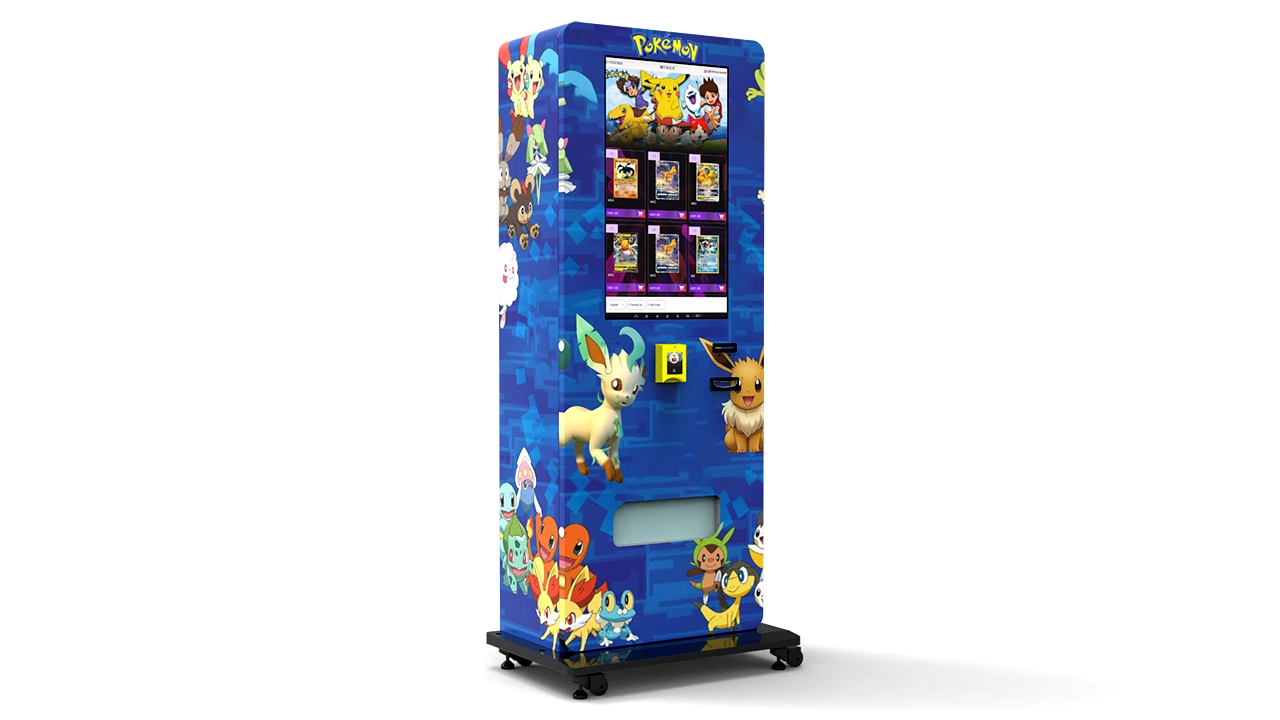
In my experience, the best vending machine for collectibles often comes from manufacturers who specialize in customized automated retail solutions, not just generic vending. One name I have worked with is Zhongda Smart. They build units specifically designed for card dispensing, with adjustable shelves, secure locking mechanisms, and touchscreen interfaces. I am not saying they are the only option, but they understand the product category better than most traditional vending manufacturers.
Payment Processing
You cannot use a standard vending payment system for collectibles. The transaction value is too high, and the fraud risk is too great. You need a payment stack that supports card present, mobile wallet, and ideally pre-authorization. Cash is still relevant, but in my experience, over 70% of card vending transactions are cashless. If your machine has a slow or glitchy card reader, you lose sales. Period.
Look for a machine that supports major payment processors like Nayax, Cantaloupe, or USA Technologies. These platforms give you remote management, cashless payments, and data analytics. The best vending machine for collectibles is one that integrates with a modern payment ecosystem, not a standalone unit that requires manual reconciliation.
Security
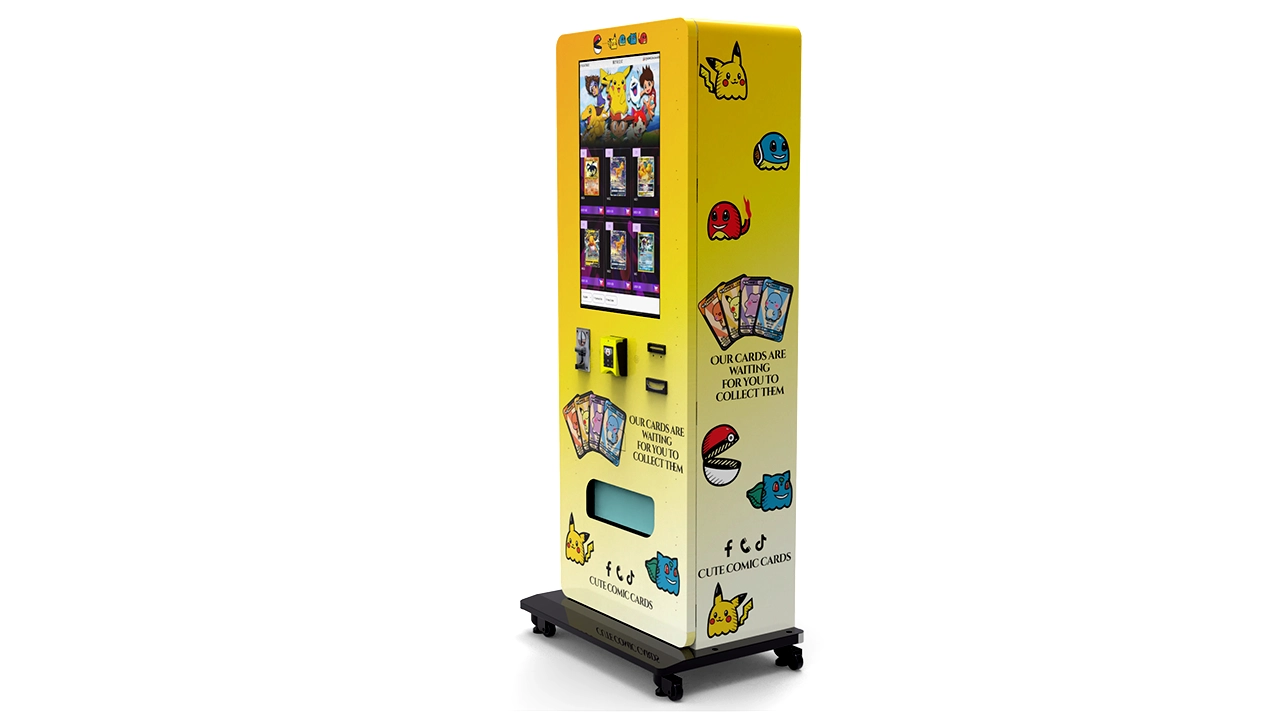
Collectibles are high-value and easy to resell. That makes them a target for theft. You need a machine with reinforced glass, tamper-proof locks, and preferably an alarm system. I have seen break-ins at card vending machines in low-traffic areas. If you place a machine in a location without security cameras or without a physical presence, you are taking a risk. The best vending machine for collectibles is one that is physically hard to break into and has remote alerts.
Software and Data
This is where most operators fail. They buy a machine and treat it like a dumb box. The best vending machine for collectibles gives you item-level sales data. You need to know which packs sold, at what time, and at what price. This data helps you adjust pricing, rotate inventory, and decide whether to move the machine to a different location. Without data, you are guessing. And guessing is expensive.
Cost Breakdown: What You Are Really Paying For
Let me give you a realistic cost picture based on my own purchases and the experiences of operators I have mentored. These numbers come from actual operations, not marketing brochures. The total investment for a card vending machine business can range from $8,000 to $35,000 depending on the machine size, features, and location costs.
| Machine Type | Initial Investment | Monthly Revenue Potential | Gross Margin | Payback Period |
|---|---|---|---|---|
| Wall-mounted card vending machine | $6,000 – $12,000 | $800 – $2,500 | 25% – 40% | 8 – 16 months |
| Freestanding 32-inch touchscreen model | $12,000 – $20,000 | $1,500 – $4,000 | 30% – 45% | 10 – 18 months |
| Full-size multi-shelf card vending machine | $18,000 – $35,000 | $3,000 – $8,000 | 35% – 50% | 12 – 24 months |
These numbers are estimates from my own experience and from talking to other operators. Your actual results will vary based on location, rent, foot traffic, and how efficiently you manage inventory. Do not go into this expecting a fixed return. The best vending machine for collectibles is only profitable if you treat it like a business.
According to IBISWorld, the vending machine industry in the US generates around $7.5 billion in annual revenue, but the collectibles segment is still a small fraction of that. That means you are entering a niche with less competition but also less proven data. You need to be comfortable with uncertainty.
Location Is the Real Business Model
I have said it before and I will say it again: the best vending machine for collectibles is the one in the right location. I would rather have a basic machine in a top-tier card shop than a premium machine in a dead retail space. Location drives everything.
What Makes a Good Location
You need at least 1,000 people per day walking past the machine, or you need a location with a concentrated audience of collectors. A card shop with 200 daily visitors is better than a mall with 10,000 daily visitors if those 200 people are buying cards. The conversion rate is what matters.
I have also seen success in gyms, barbershops, and laundromats, but only when the owner actively promotes the machine and the local community is already interested in trading cards. A passive machine in a passive location will fail.
Rent and Revenue Share
Rent for a card vending machine location typically ranges from $100 to $500 per month, or a 10% to 20% revenue share. I prefer a flat rent with a revenue share cap. That way, the host has an incentive to promote the machine, but I am not giving away my margin. In my experience, a revenue share model works well when the host actively markets the machine to their customer base.
If you are considering a location, ask about foot traffic, existing collectibles sales, and whether the store owner is willing to promote the machine on social media. A store owner who posts about the machine every week is worth more than a location with double the foot traffic and no promotion.
How to Choose a Supplier Without Getting Burned
This is where I have seen the most damage done. There are dozens of suppliers selling card vending machines, and many of them are just resellers of generic vending hardware with a card-themed skin. You need to ask hard questions before you wire any money.
First, ask about the dispensing mechanism. Does it handle sealed packs without damage? Second, ask about the software. Can you remotely change prices, lock out specific shelves, and see real-time inventory? Third, ask about spare parts. If a sensor fails, how long will it take to get a replacement? Fourth, ask about payment integration. Does the machine support Nayax or Cantaloupe, or are you locked into a proprietary system?
I have worked with Zhongda Smart on a few deployments, and they were transparent about lead times and customizations. They also offered a version of the machine with a 32-inch touchscreen that performed well for high-end card displays. But I am not here to sell you on one brand. I am here to tell you that the best vending machine for collectibles is the one whose supplier answers your questions quickly and honestly.
If a supplier cannot provide references from other operators, walk away. If they cannot explain the return policy or the warranty terms in writing, walk away. If they promise guaranteed profits, definitely walk away. No one can guarantee that.
Operating Costs You Cannot Ignore
Beyond the machine cost, you have ongoing expenses that will eat into your margins if you are not careful. The best vending machine for collectibles is not just about the purchase price. It is about the total cost of ownership over three years.
You will have payment processing fees, usually 3% to 5% of each transaction. You will have maintenance costs, which I estimate at $50 to $150 per month for a well-maintained machine. You will have restocking labor, which is the biggest hidden cost. If you are driving 30 minutes each way to restock a machine with $200 worth of product, you are losing money on your time.
I have seen operators reduce restocking frequency by using a data-driven approach. They track which SKUs sell fastest and adjust their shelf space accordingly. A machine that sells 80% of its inventory in two weeks needs more frequent restocking, but also has higher revenue. A machine that sells 30% of its inventory in a month is a problem. You need to cut your losses and change the product mix or the location.
According to the U.S. Small Business Administration, the average small business owner spends about 20% of their time on administrative tasks. In the vending world, that number is often higher. Be prepared to spend at least five to ten hours per week on your card vending operation, even with remote monitoring.
Common Mistakes I See in This Niche
I have been doing this long enough to see the same mistakes repeated by new operators. Let me save you the tuition.
Buying Too Much Machine for the Location
I see new operators buy a full-size machine with a huge screen and multiple shelves for a small card shop that only gets 50 visitors a day. That machine will never pay for itself. Start smaller. Test the location with a wall-mounted unit or a smaller freestanding model. If the location proves itself, upgrade.
Ignoring the Payment Experience
If a customer has to struggle with a payment terminal for three minutes, they will walk away. The best vending machine for collectibles is one that processes a transaction in under 30 seconds. Test the payment flow yourself. If you get frustrated, your customers will too.
Not Having a Restock Schedule
You cannot just show up when the machine looks empty. You need a restock schedule based on sales velocity. If you wait until the machine is empty, you have already lost sales. The best vending machine for collectibles is one that tells you when to restock, not one that you have to check manually.
Treating All Cards the Same
Pokémon sells differently than sports cards. Sealed boxes sell differently than loose packs. You need to understand your local market and stock accordingly. A machine in a college town might sell more sports cards. A machine near a middle school might sell more Pokémon. The best vending machine for collectibles is one that is stocked with the right product for the right audience.
Self-Operated vs. Hosted Location vs. Revenue Share
There are three main ways to run a card vending machine operation. Each has its pros and cons, and the best vending machine for collectibles depends on which model you choose.
Self-Operated
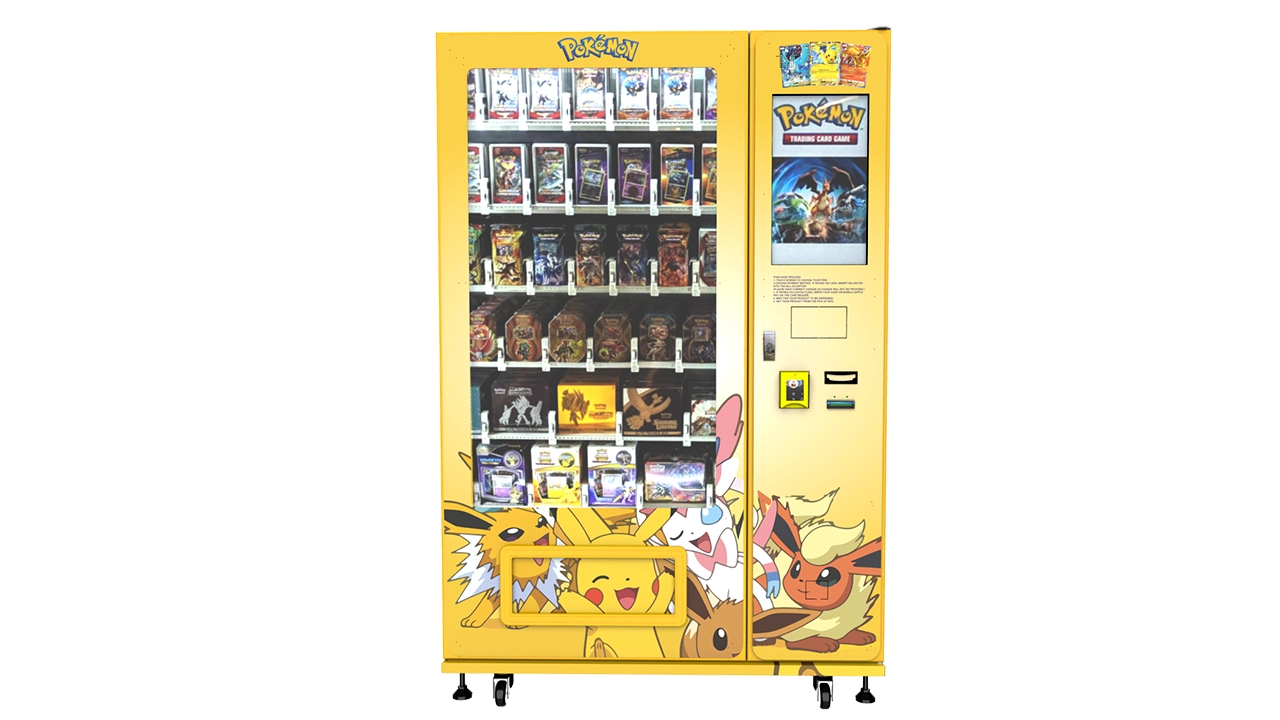
You own the machine, you find the location, you pay rent or a revenue share, and you handle all maintenance and restocking. This gives you the most control and the highest profit potential. But it also requires the most time and effort.
Hosted Location
You place the machine in an existing store and the store owner promotes it. You share a percentage of revenue. This reduces your risk and gives you immediate foot traffic, but you have less control over merchandising and pricing.
Revenue Share with a Host
This is a hybrid model where the host provides the space and the operator provides the machine and inventory. The split is usually 70/30 or 80/20 in favor of the operator. This works well when the host is actively engaged and has a customer base that matches your product.
In my experience, a hosted location with an engaged store owner is the best vending machine for collectibles model for beginners. It reduces the risk of a dead location and gives you real-world data without a huge upfront commitment.
Maintenance and Repair Reality
No machine is perfect. You will have jams, sensor failures, and payment terminal glitches. The question is how fast you can resolve them. The best vending machine for collectibles has a modular design that allows you to replace parts without sending the whole unit back to the factory.
I recommend buying a spare parts kit with your machine. It should include sensors, a payment terminal, a power supply, and basic tools. This will cost you $200 to $500, but it will save you weeks of downtime. In my experience, the average vending machine repair takes two to four hours if you have the parts on hand. If you have to order parts, you are looking at a week of lost revenue.
According to a report by Grand View Research, the global vending machine market is expected to grow at a CAGR of 6.5% from 2023 to 2030. That growth is driven by cashless payments and automated retail. But growth does not mean every machine will be profitable. You still have to do the work.
Should You Buy New or Used?
I get this question a lot. The best vending machine for collectibles is typically a new machine if you are serious about the business. Used machines can be a good deal, but only if you can inspect them in person and verify the dispensing mechanism.
I have seen used card vending machines sold at auction that were completely worn out. The shelves were bent, the payment system was outdated, and the software was locked to a previous operator's account. You will spend more money fixing a used machine than you would have spent buying new.
However, if you are testing a location and do not want to commit $15,000, a used wall-mounted unit for $3,000 to $5,000 can be a smart way to validate demand. Just factor in the cost of repairs and the time you will spend troubleshooting. In my experience, a used machine is only worth it if you are mechanically inclined and have time to burn.
Data-Driven Decisions: The Only Way to Scale
If you want to grow from one machine to five machines, you need data. The best vending machine for collectibles is one that gives you clear, actionable data. You need to know your sell-through rate, your average transaction value, and your inventory turnover.
I use a simple spreadsheet to track every machine. I record the date of restock, the SKUs loaded, the quantity, and the revenue. After a month, I can see which SKUs are dead weight and which ones are selling out. This allows me to optimize my product mix and increase my gross margin.
One operator I know increased his revenue by 40% simply by changing the product mix based on data. He realized that sealed booster boxes sold better on weekends, while individual packs sold better on weekdays. He adjusted his restock schedule and his pricing accordingly. That is the difference between a hobbyist and a professional operator.
Legal and Compliance Considerations
You cannot just place a machine anywhere. You need to check local zoning laws, business licensing requirements, and sales tax rules. In the US, vending machine sales are subject to sales tax in most states. You are responsible for collecting and remitting that tax. The best vending machine for collectibles does not exempt you from tax compliance.
In the EU, the rules are different. You may need to register for VAT if you are selling across borders. The European Commission has resources on cross-border e-commerce and VAT obligations. Do not ignore this. I have seen operators get fined for not collecting VAT on vending machine sales.
If you are planning to place a machine in a public space, you may need a permit from the local municipality. In some cities, vending machines are considered sidewalk vendors and require a special license. Check with your local business office before you sign a lease.
Scaling to Multiple Machines
Once you have one machine running profitably, you will be tempted to scale quickly. I recommend the opposite. The best vending machine for collectibles is the one you can manage efficiently. If you have five machines spread across three cities, you will spend all your time driving. That is not a business; that is a delivery service.
Scale geographically. Place two or three machines within a 20-mile radius before you expand further. This allows you to restock efficiently and respond quickly to maintenance issues. I have seen operators go from one machine to ten machines in six months, only to lose half of them because they could not keep up with restocking.
Final Thoughts from a Ten-Year Operator
The best vending machine for collectibles is not a specific brand or model. It is a machine that fits your location, your budget, and your operational capacity. I have made money with basic machines and lost money with premium machines. The difference was always the location and the operator's discipline.
If you are new to this, start small. Rent a location, buy a reliable machine, and track everything. Do not expect to get rich in the first month. The operators who succeed in this niche are the ones who treat it like a business, not a lottery ticket.
Before you buy, ask yourself: do I have the time to restock, the patience to handle maintenance, and the discipline to rely on data? If the answer is yes, then you are ready. If the answer is no, you are better off investing in something else.
One last piece of advice: do not be afraid to move a machine. If a location is not performing after 90 days, move it. The best vending machine for collectibles is a machine that is in the right place, and sometimes finding the right place takes trial and error.
Frequently Asked Questions
Are card vending machines profitable?
Yes, they can be profitable, but not automatically. In my experience, a well-placed card vending machine can generate $1,000 to $5,000 per month in revenue, with gross margins between 25% and 50%. Profitability depends on location, product mix, and how efficiently you manage restocking and maintenance. You should expect a payback period of 12 to 24 months in most cases.
How much does a collectibles vending machine cost?
A new card vending machine costs between $8,000 and $35,000, depending on size, screen configuration, and customization. Wall-mounted units are the cheapest, while full-size machines with touchscreens are the most expensive. Used machines can cost $3,000 to $10,000, but you will likely need to invest in repairs and software updates.
How long does it take to break even?
Based on my experience, most operators break even in 12 to 24 months. If you have a high-traffic location and a strong product mix, you might break even in 8 to 12 months. If your location is weak or your machine is too expensive, it could take 3 years or more. There is no guaranteed timeline.
Should a beginner buy or lease a card vending machine?
For beginners, I recommend buying a smaller machine or leasing with a revenue share model. Leasing reduces your upfront risk and allows you to test the market. However, leasing can be more expensive in the long run. If you can afford a wall-mounted unit and have a good location, buying is the better long-term option.
Where is the best place to put a card vending machine?
The best locations are card shops, hobby stores, sports memorabilia shops, and high-traffic malls with a strong youth demographic. You want a location with at least 1,000 daily visitors or a concentrated audience of collectors. An engaged store owner who promotes the machine is a huge advantage.
What licenses and permits do I need?
In the US, you typically need a business license and a sales tax permit. Some cities require a vending machine permit or a sidewalk vendor license. In the EU, you may need to register for VAT. Check with your local business office and tax authority before you deploy a machine.
How do I choose a vending machine supplier?
Ask about dispensing mechanism reliability, spare parts availability, payment integration, and remote management software. Request references from other operators. Avoid suppliers who promise guaranteed profits. A supplier like Zhongda Smart can be a good starting point, but always do your own due diligence.
What happens if my machine breaks down?
If you have a spare parts kit and basic technical skills, you can fix most issues in two to four hours. If you do not have a parts kit, expect a week of downtime. I recommend buying a maintenance contract with your machine if the supplier offers one.
How can I reduce restocking and maintenance costs?
Use remote monitoring software to track inventory levels and error codes. Restock based on sales velocity, not on a fixed schedule. Group your machines geographically to reduce travel time. And always keep a stock of fast-moving SKUs so you are not making emergency trips.