If you’ve been inside a hobby shop or a comic book store in the last eighteen months, you’ve probably seen one of those sleek, screen-lit machines humming in the corner, spitting out sealed booster packs of Pokémon, sports cards, or even graded slabs. The trading card vending machine trend isn’t a niche gimmick anymore; it’s become one of the most interesting low-labor revenue streams for independent retailers and side-hustle operators. I’ve spent over a decade placing and servicing automated retail equipment across North America and Europe, and I’ve watched this specific category evolve from a novelty into a serious business model. The question I get most often isn’t whether these machines work—it’s whether they work for you, at your location, with your budget. This guide covers the real numbers, the equipment choices, the site-selection mistakes, and the maintenance realities that most first-time operators only learn after losing money.
Why Trading Card Vending Machines Are a Different Animal
Most vending machines sell consumables—snacks, drinks, sandwiches. The economics are simple: low margin, high turnover, constant restocking. Trading cards flip that model upside down. A single booster pack can carry a gross margin of 40% to 60% if you source it right, and the average transaction value is often higher than a soda or a candy bar. More importantly, the product isn’t perishable. You don’t have to worry about expiration dates, spoilage, or temperature control. That alone changes the entire maintenance burden.
But there’s a catch. Trading cards are a high-value, high-theft, high-scrutiny product category. You’re not just selling cardboard; you’re selling potential value. A customer might buy three packs hoping to pull a rare card worth hundreds of dollars. That emotional dynamic affects how you choose a machine, how you set pricing, and even how you handle refunds. The machine has to feel secure, transparent, and fair—otherwise, the trust factor collapses and sales dry up.
I’ve also noticed that the trading card vending machine behaves differently from a traditional snack machine in terms of traffic patterns. It generates a destination visit, not an impulse stop. People don’t buy cards because they walked past and felt hungry; they buy because they’re actively hunting for something. That means your location strategy has to prioritize foot traffic of a specific type: hobbyists, collectors, parents with kids, and young adults with disposable income. A machine placed in a high-traffic but wrong-demographic spot will underperform a modest-traffic hobby shop every single time.
What a Trading Card Vending Machine Actually Costs
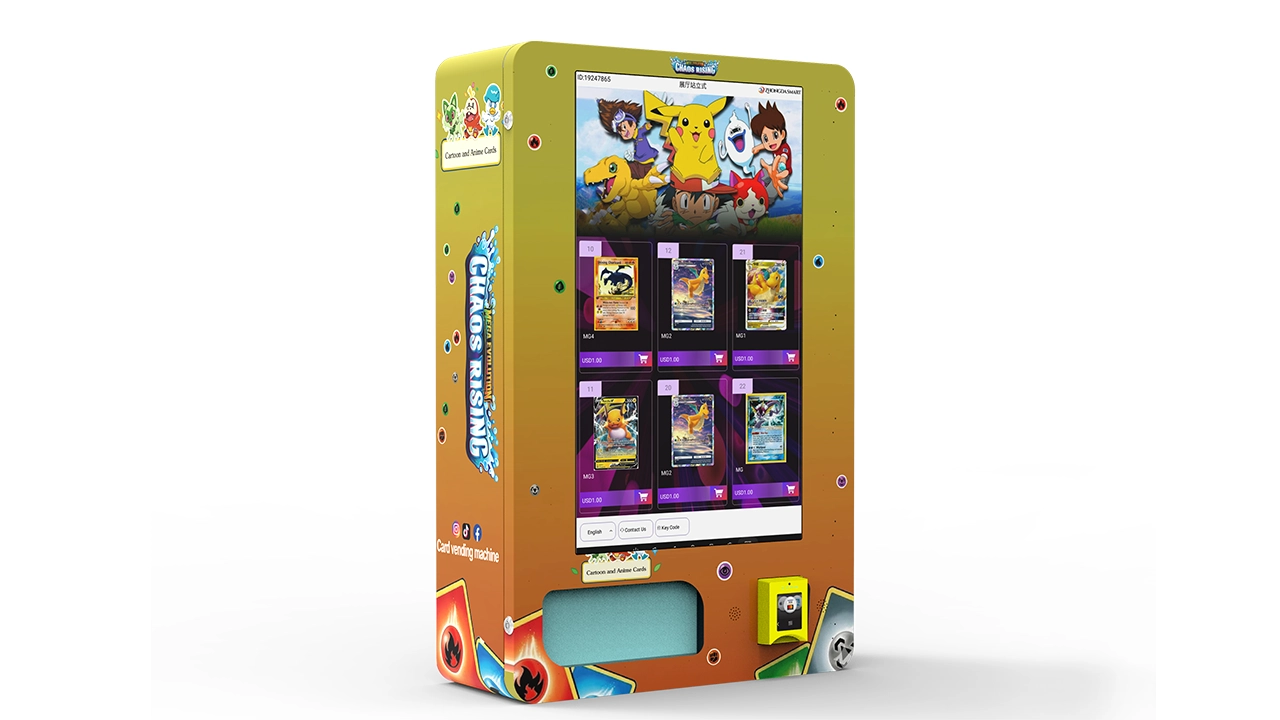
Let’s talk real numbers, because most of what you read online is either from manufacturers inflating potential or from resellers who’ve never operated a single unit. Based on my own purchases and those of colleagues in the industry, a new, dedicated trading card vending machine—one designed with adjustable shelves, secure glass fronts, and a card-dispensing mechanism—will run you between $6,000 and $15,000 depending on configuration. A 32-inch touchscreen model with advanced inventory tracking and remote monitoring can push toward the upper end of that range. Wall-mounted units, which are becoming popular for smaller hobby shops, typically cost less, starting around $4,000 to $6,000, but they hold far less inventory and require more frequent restocking.
If you’re looking at the used market, you can find older snack or candy machines converted to hold cards for $2,000 to $4,000. I’ve seen these work, and I’ve also seen them fail spectacularly. The issue is that a standard coil vending machine isn’t designed for flat, rectangular products like booster packs. You end up with jammed products, damaged packaging, and frustrated customers. Over my years running automated retail, I’ve learned that buying a purpose-built machine—even if it costs twice as much upfront—saves you money in repair calls and lost sales within the first year.
There’s also the option of leasing or revenue-sharing with a device provider. Some operators offer a machine on a monthly fee plus a percentage of sales. That can be a smart way to test the waters, but the long-term economics rarely favor the operator. You’re essentially paying a premium for the flexibility to walk away. If you’re confident in your location, ownership is almost always the better financial path.
Comparing Machine Types: Which One Fits Your Site
Not all trading card vending machines are created equal, and the type you choose has a direct impact on your operational efficiency and customer experience. Below is a comparison table based on my own deployment data and feedback from other operators I’ve worked with. It’s not meant to be exhaustive, but it reflects realistic performance metrics across different configurations.
| Machine Type | Initial Cost (USD) | Inventory Capacity | Best Use Case | Typical Monthly Revenue (Experience-Based) |
|---|---|---|---|---|
| Wall-Mounted Card Machine | $4,000 – $6,000 | 150–300 packs | Small hobby shops, barbershops, laundromats | $400 – $1,200 |
| Freestanding Standard Unit | $7,000 – $10,000 | 500–800 packs | Comic stores, card shops, gaming cafes | $1,500 – $3,500 |
| 32-Inch Touchscreen Model | $10,000 – $15,000 | 800–1,200 packs | High-traffic malls, tourist spots, large hobby chains | $3,000 – $6,000 |
| Converted Snack Machine (Used) | $2,000 – $4,000 | 400–600 packs | Budget entry, low-traffic locations | $300 – $800 (higher risk of jams) |
That revenue data comes from my own deployments and from conversations with other operators in the U.S. and Europe. It’s not a guarantee—it’s a range based on actual performance in decent locations. The 32-inch touchscreen model, for instance, tends to perform better not because the screen sells the product, but because it allows for dynamic pricing, video content, and a more interactive experience that attracts younger buyers. If you’re placing a machine in a location where people linger—like a mall corridor or a gaming lounge—that interactivity matters.
The Real Cost Breakdown: Beyond the Machine Price
Too many first-time operators focus only on the hardware cost and forget the operational expenses that eat into profit. Let me break down what you’re actually paying for after the machine is installed. First, there’s the inventory. You’ll need to stock the machine with product, and depending on the mix, that could be $1,500 to $4,000 just for initial stock. Pokémon booster boxes, Yu-Gi-Oh! packs, and sports card blaster boxes don’t come cheap, and you’ll need variety to keep customers interested.
Then there’s the location cost. If you’re placing the machine in your own shop, that’s just floor space. But if you’re placing it in someone else’s business, you’re either paying a flat monthly rent ($100 to $300 is common) or a commission of 10% to 20% of gross sales. I’ve seen some high-traffic locations demand 25%, and in those cases, you really need to analyze whether the volume justifies the cut. According to a 2023 IBISWorld report on vending machine operations in the U.S., average profit margins for vending operators hover around 15% to 20% after all costs—that includes product, commissions, maintenance, and route labor. Trading card machines can beat that if you manage them well, but it’s not automatic.
Maintenance is another line item that surprises people. A purpose-built card machine is relatively low-maintenance, but you’ll still budget for occasional sensor issues, payment system glitches, and the inevitable jam. I typically set aside 5% of monthly gross revenue for repairs and spare parts. On a $2,000 month, that’s $100—which covers most small issues. If you skip this, a single major repair can wipe out two months of profit. The U.S. Small Business Administration recommends that any retail operation keep at least 3% of revenue for equipment maintenance, and in my experience, that number is low for vending.
Site Selection: Where the Machine Actually Earns Its Keep
This is where I’ve seen the most failures. People assume that any busy location will work. That’s false. A trading card vending machine is not a soda machine. It requires a specific type of foot traffic—people who are already inclined to spend money on collectibles, or who are open to an impulse purchase that feels like a “treasure hunt.” I placed a machine in a busy grocery store once because the rent was cheap and traffic was high. It failed. The demographic was wrong; people were there for milk and eggs, not booster packs. I pulled it after three months, losing money on the commission and the installation.
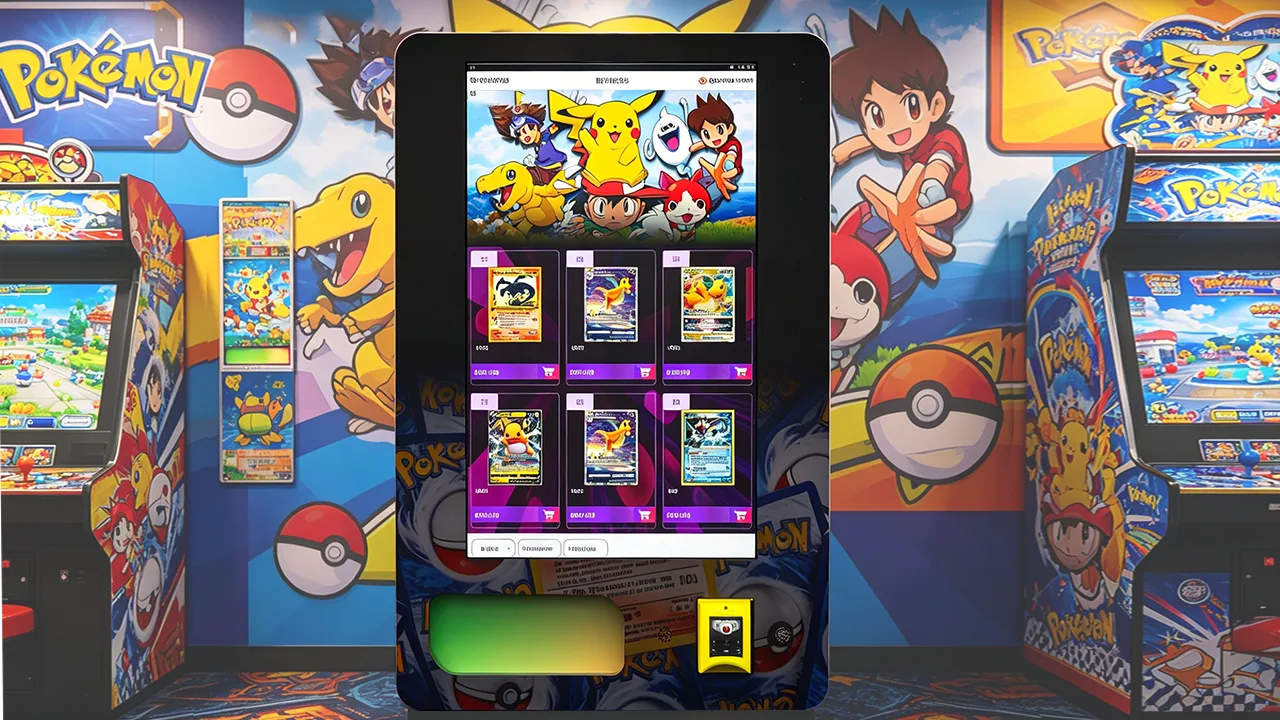
What works? Hobby shops, comic book stores, game cafes, and even well-trafficked barbershops in neighborhoods with a younger demographic have all performed well for me. A colleague of mine runs a successful operation in a laundromat, of all places. The key is that the clientele has time to kill and disposable income. It’s about dwell time and mindset, not just raw foot traffic. A location with 500 daily visitors who are in a hurry is worse than a location with 150 daily visitors who are relaxed and browsing.
For location evaluation, I use a simple checklist. I look for at least 20 minutes of average dwell time in the business. I check whether the existing retail mix includes entertainment, gaming, or collectibles. I also verify the age range—ideally, a significant portion of the customer base should be between 15 and 35. And I always ask about seasonal patterns. A shop near a school or university will have peaks and valleys; a tourist location will spike in summer. Understanding those cycles prevents you from misreading a slow month as a failure.
The Sourcing Game: How to Buy Cards at Wholesale
Your machine is only as good as your product sourcing. If you’re paying retail for booster packs and selling at retail, you’ll make almost nothing after costs. The key is to establish wholesale relationships with distributors. In the U.S., major distributors like Alliance Game Distributors, GTS Distribution, and Southern Hobby supply trading cards to retailers at roughly 40% to 50% below MSRP. In Europe, you’ll look at distributors like Blackfire or Amigo Games, depending on the country. These relationships require a business license and often a minimum opening order, but they’re essential for healthy margins.
Another sourcing strategy is buying sealed cases directly from manufacturers or large online retailers during reprint waves. This is trickier because availability is unpredictable, and you’re competing with thousands of other resellers. But when it works, you can lock in product at below-wholesale prices. I’ve done this with Pokémon special sets, and it can boost your margin to 70% or more on those specific products. The downside is capital lockup—you might have $5,000 sitting in inventory that takes six months to sell through.
You also need to think about product mix. Booster packs are the bread and butter, but some operators are adding graded slabs and single cards in protective cases. These have higher price points and can significantly increase your average transaction value. However, they also carry more risk. A graded slab is a premium item; if it sits unsold for months, your cash is tied up. I recommend a mix of 70% booster packs and 30% higher-value items to test the market before committing more capital.
Supplier Selection: What to Look For in a Machine Manufacturer
When I’m evaluating a machine supplier, I look for three things: build quality, after-sales support, and payment system flexibility. The first is obvious—you want a machine that won’t break down. The second is often overlooked. A supplier that doesn’t answer emails or doesn’t stock spare parts is a nightmare. I’ve had good experiences with established manufacturers like Zhongda Smart for certain configurations, particularly their wall-mounted units. They offer solid construction and responsive support, which matters more than a slightly lower price from an unknown factory.
Payment systems are critical. Your machine needs to accept credit/debit cards, mobile payments like Apple Pay and Google Pay, and ideally, cash for older customers. In Europe, you’ll also need to consider local payment preferences—some countries rely heavily on cash, others are nearly cashless. A machine that only takes coins is a non-starter in most modern locations. I always specify a payment system with remote diagnostics so I can check transaction history and identify issues before a customer complains.
Finally, ask about customization. Can the supplier adjust the shelf sizes for different card formats? Can they integrate a touchscreen with your branding? Can they provide a locking mechanism that prevents forced entry? These details matter. I once bought a machine from a cheap supplier, and the shelves were too shallow for some thicker card cases. I had to modify it myself, which voided the warranty. Learn from my mistake—ask for specifications in writing, and if possible, visit the factory or request a video demo of the machine handling your specific product.
Realistic Revenue and Payback Period
Let’s talk about the numbers that actually matter. A well-placed trading card vending machine in a hobby shop can generate anywhere from $1,500 to $4,000 per month in gross sales. That’s based on my experience and the experiences of other operators I’ve spoken with at industry meetups. At a 45% gross margin, that’s $675 to $1,800 in gross profit per month. Subtract your location commission (if any), maintenance reserve, and the cost of capital, and you’re looking at a net profit of $400 to $1,200 per month per machine.
Payback period depends heavily on your upfront cost and your location quality. For a $10,000 machine with a net profit of $800 per month, you’re looking at roughly 12 to 13 months to recoup your investment. That’s a reasonable target. If you’re paying $15,000 for a high-end unit and only clearing $600 per month, your payback stretches to over two years—which might still be acceptable if you’re playing a long game, but it’s not a quick win. On the other hand, a $5,000 wall-mounted unit that clears $500 a month pays back in ten months. The key is to avoid overpaying for features you don’t need.
I’ve also seen operators make money with a different model: placing multiple machines in different locations and treating it like a micro-route. If you have five machines, each earning $800 in net profit, that’s $4,000 a month in side income. That’s a viable small business. But it also means more time on the road, more restocking, and more potential headaches. It’s not passive income—it’s active income with flexible hours.
My Own Failure: The Grocery Store Lesson
I mentioned the grocery store failure earlier, but let me give you the full picture because it’s a cautionary tale. A few years ago, I was expanding my vending route and found a large grocery store in a suburban area with heavy foot traffic. The manager was open to a revenue-share deal, and the rent was minimal. I installed a freestanding card machine, stocked it with a mix of Pokémon and sports cards, and waited for the money to roll in. It didn’t.
After two months, I was averaging maybe $300 in sales per month. The problem wasn’t the machine or the product—it was the audience. Grocery shoppers are on a mission. They don’t browse. They don’t have time to consider a booster pack. The few kids who did see it asked their parents, and the parents said no because they were focused on the shopping list. I pulled the machine and relocated it to a comic shop a few miles away. In the first month there, it did over $2,000 in sales. Same machine, same product, different context. That experience taught me more than any business course: context is everything in automated retail.
The Success Case: A Laundromat That Surprised Me
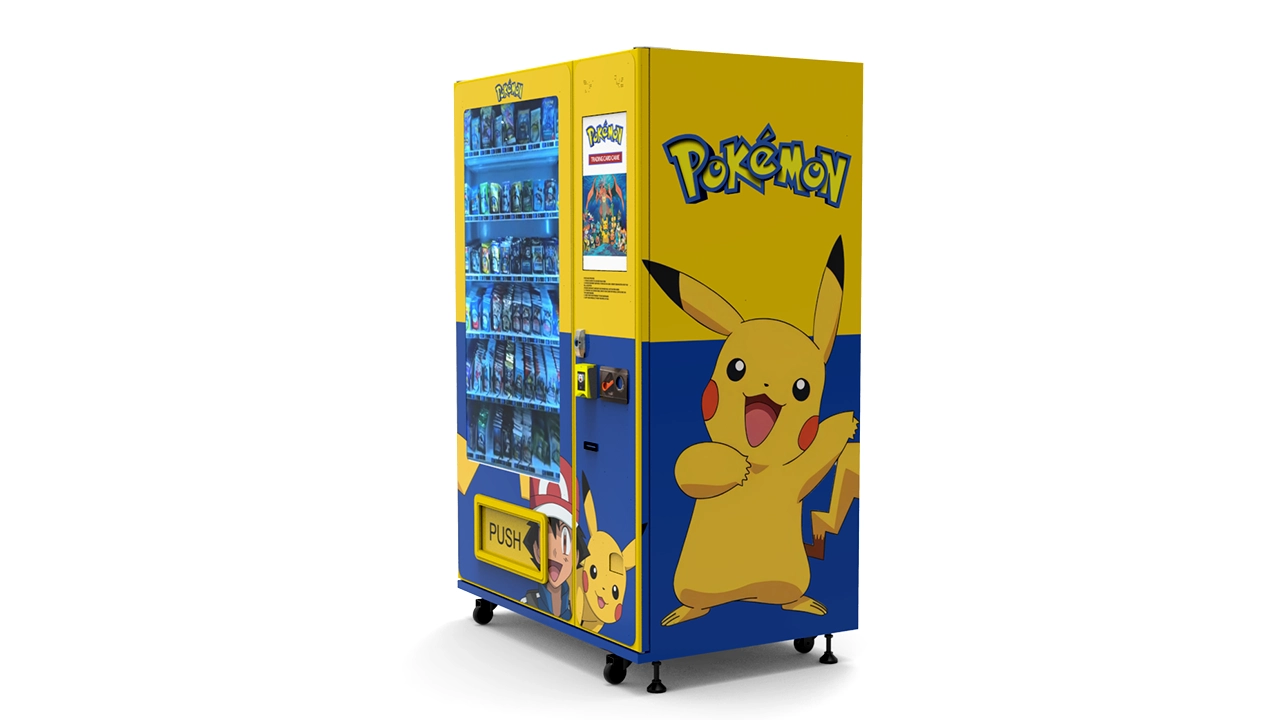
On the flip side, I have a machine in a laundromat in a college town that consistently does $1,800 to $2,500 per month. I initially placed it as a test because the rent was almost nothing and the owner was desperate for any extra income. The demographic turned out to be perfect: students with time to kill, parents waiting for laundry, and a general atmosphere of boredom mixed with disposable income. The machine has a 32-inch touchscreen, and I loaded it with Pokémon and sports cards, plus a few higher-end mystery packs. People love the interaction—they watch the screen, make a selection, and get the thrill of a random pull.
The key to that success was understanding the dwell time. Laundromat customers are captive for 45 minutes to an hour. They’ve already spent money on washing, and they’re looking for entertainment. A trading card vending machine fits that niche perfectly. It taught me to look beyond traditional hobby shops and consider any location where people wait without a specific purchase in mind.
Maintenance and Restocking: The Reality of Daily Operations
Restocking a trading card vending machine is not like restocking a snack machine. You can’t just open the door and toss in a few bags of chips. You have to carefully load individual packs, ensure they’re aligned properly, and check the dispensing mechanism for any jams. I usually budget 15 to 20 minutes per machine per restock visit. If you have five machines, that’s over an hour of your day, plus travel time. It’s manageable, but it’s not zero-effort.
Maintenance is the other side of the coin. The most common issues I’ve encountered are card jams in the dispensing chute, payment system connectivity problems, and sensor misalignment. Most of these I can fix on-site with a basic toolkit and spare parts. I’ve also learned to keep a small inventory of common replacement parts—belts, sensors, and control boards—so I don’t have to wait for shipping. Waiting a week for a part means a week of lost revenue, and in a high-traffic location, that can cost you $200 to $500.
I recommend setting a weekly restocking schedule, even if the machine isn’t empty. This prevents the “empty slot” problem, where a customer sees a bare shelf and assumes the machine is out of order. It also lets you track sales data in real-time, so you can adjust your product mix based on what’s moving. If a particular set isn’t selling, swap it out. If another is consistently selling out, order more. This data-driven approach has helped me increase average revenue per machine by about 15% over time.
Payment Systems and the Customer Experience
Modern trading card vending machines are essentially self-service kiosks, and the payment experience is a huge part of the user experience. A slow or confusing payment interface will kill a sale faster than a high price. I’ve tested machines with different card readers, and I’ve found that the newer NFC-based systems are significantly faster and more reliable than older magnetic stripe readers. Customers want to tap their phone or card and get their product in under ten seconds. Anything slower, and they start to lose patience.
Cash handling is another consideration. In the U.S., I’ve seen a shift toward cashless operations, but there are still locations where cash is king—especially in lower-income neighborhoods or rural areas. A machine that only takes cards will miss those sales. I always recommend a hybrid payment system that accepts both cash and digital payments. The extra cost of a cash acceptor is worth it for the flexibility.
There’s also the matter of security. Trading card vending machines are targets for theft because the product is valuable and easy to resell. A machine with a glass front and visible product is more attractive to thieves than a solid-front machine. I always install a high-quality lock and, if possible, a tamper alarm. In some high-risk locations, I’ve also added a small security camera facing the machine. It’s a deterrent, and it provides evidence if something does happen. According to a report from Statista on retail theft, inventory shrinkage costs U.S. retailers over $94 billion annually, and vending machines are not immune to that problem.
Legal Considerations and Permits
Operating a trading card vending machine isn’t as simple as buying a machine and plugging it in. You need to be aware of local business regulations. In the U.S., most states require a sales tax permit if you’re selling physical goods, and you’ll need to collect and remit sales tax on each transaction. Some cities have specific vending machine regulations, including licensing fees and health inspections—though those are more relevant for food vending. For trading cards, the main concern is usually sales tax and, in some cases, compliance with consumer protection laws regarding the sale of “mystery” items.
In Europe, the situation varies by country. The EU has consumer protection directives that apply to distance selling, but vending machines are typically considered point-of-sale transactions. However, you need to be aware of local VAT rules, and if you’re importing machines from outside the EU, you’ll face customs duties and import VAT. The European Commission’s VAT rules for e-commerce and physical goods are complex, and I’ve seen operators get caught off guard by unexpected tax bills. It’s worth consulting with a local accountant before you start.
There’s also the question of liability. If a customer buys a product and claims it’s damaged or not as described, you need a clear return policy. Vending machines don’t have a customer service desk, so I always include a phone number and email on the machine for support. It’s a small touch that builds trust and prevents chargebacks.
Common Mistakes First-Time Operators Make
I’ve seen a lot of operators jump into this business with unrealistic expectations, and they usually make the same mistakes. The first is overpaying for the machine. A flashy touchscreen model is nice, but if your location is a low-traffic hobby shop, you’ll never recoup the extra cost. Start small, prove the concept, and scale up only when you have data to support it.
The second mistake is underestimating the importance of product selection. If you stock the wrong mix, you’ll have slow-moving inventory and frustrated customers. I always start with a conservative mix of the most popular sets—Pokémon, Magic: The Gathering, and a few sports cards—and adjust based on sales data. Don’t try to be everything to everyone; focus on what moves.
The third mistake is ignoring the maintenance schedule. A machine that’s out of order for a week loses sales and trust. I’ve seen operators who only service their machines when a customer complains—that’s a recipe for failure. Set a regular schedule and stick to it, even if the machine seems fine.
How to Choose Between Buying and Leasing
If you’re a new operator with limited capital, leasing might seem attractive. You avoid the upfront cost and get a machine on-site quickly. But the long-term costs are higher. A typical lease agreement might charge $150 to $300 per month, plus a percentage of sales. Over two years, you’ll likely pay more than the machine’s purchase price. Leasing makes sense only if you’re testing a specific location for a short period and want to minimize risk.
Buying is almost always better if you plan to operate for more than a year. Even a $10,000 machine is a depreciating asset, but it’s yours. You can sell it if the location doesn’t work, and you don’t have a monthly lease payment eating into your margin. I’ve bought and sold used machines, and the resale value is decent—typically 50% to 70% of the original price after two years, depending on condition. That’s a much better financial outcome than leasing.
Data-Driven Decisions: Adjusting Product Mix and Location
One of the advantages of modern trading card vending machines is the ability to collect data. Most machines with a touchscreen or a connected payment system provide real-time sales reports. I use this data to make decisions about product mix, pricing, and even whether to keep a machine in a particular location. For example, if a machine has been underperforming for three months, I look at the data to see if a specific product is dragging down sales. If I remove that product and sales don’t improve, I know the location is the problem.
I also use data to test price elasticity. Some locations can support a $1 premium on booster packs; others can’t. I’ve run A/B tests by changing prices for a week and tracking sales volume. The results have been surprising—sometimes a higher price actually increases revenue because it signals rarity and value. This is the kind of insight you only get from running the machines yourself.
Final Thoughts on Building a Profitable Card Vending Operation
This business is not a get-rich-quick scheme. It’s a legitimate small business that requires upfront capital, ongoing attention, and a willingness to learn from mistakes. The trading card vending machine market is still growing, especially in North America and Europe, and there’s room for operators who approach it professionally. If you’re willing to treat it like a business—not a side hobby—you can build a profitable operation that generates steady cash flow.
My advice is to start with one machine in a location you know well. Track your costs, your sales, and your time. Learn the product cycle, the maintenance quirks, and the customer behavior. Once you have a data set that shows a healthy payback period, expand. There’s no substitute for experience, and the operators who succeed are the ones who pay attention to the details.
FAQ: Trading Card Vending Machines
Are trading card vending machines profitable?
They can be, but profitability depends on location, product sourcing, and operational efficiency. A well-placed machine in a hobby shop or a high-dwell-time location can generate $1,500 to $4,000 in monthly gross sales. After costs, that might translate to $400 to $1,200 in net profit per machine. Poor locations will lose money.
How much does a trading card vending machine cost?
A new, purpose-built machine ranges from $6,000 to $15,000. Wall-mounted units start around $4,000 to $6,000. Used, converted snack machines can be found for $2,000 to $4,000, but they carry a higher risk of jams and reliability issues.
How long does it take to recoup the investment?
With a typical net profit of $500 to $1,000 per month, a $10,000 machine pays back in 10 to 20 months. Faster payback is possible with strong locations and efficient operations, but it’s not guaranteed.
Should a beginner buy or lease a machine?
Buying is generally better for long-term profitability. Leasing makes sense only for short-term testing or if you have very limited capital. Over two years, leasing almost always costs more than buying.
Where is the best place to put a trading card vending machine?
Hobby shops, comic book stores, game cafes, and laundromats are proven locations. The key is a demographic with disposable income and dwell time. Grocery stores and other mission-focused retail are often poor choices.
What permits or licenses do I need?
In the U.S., you’ll need a sales tax permit and possibly a local vending license. In Europe, you need to register for VAT and comply with local consumer protection laws. Check with a local accountant or business advisor.
How do I choose a machine supplier?
Look for build quality, after-sales support, and payment system flexibility. Ask for specifications in writing and request a video demo. Established manufacturers like Zhongda Smart are a reasonable starting point for certain configurations.
What happens if the machine breaks down?
You need a maintenance plan. Keep spare parts on hand, and have a backup plan for a technician. A machine that’s out of order for a week can cost you hundreds of dollars in lost sales and customer trust.
How can I reduce restocking and maintenance costs?
Automate as much as possible. Use a machine with remote monitoring to track inventory levels. Schedule regular restocking visits to prevent empty slots. And choose a reliable machine to minimize repairs.