If you’re looking at a China trading card vending machine vs US supplier cost comparison, the short answer is that Chinese equipment typically lands at 40 to 60 percent less than comparable American-built units, but that gap narrows fast once you factor in freight, import fees, setup, and the real cost of downtime. I’ve been running automated retail for over a decade, and I’ve bought from both sides of the Pacific. I’ve learned that the price tag on the invoice is the least interesting number in this business. What actually matters is the total cost of ownership over the first 18 months, and that includes everything from the touchscreen response time to how quickly you can get a replacement part when a collector shoves a card into the feeder wrong. Let me walk you through the real numbers, the traps I’ve hit, and what I’d do differently today.
The Real Cost Gap: What the Invoices Don’t Tell You
When I first started sourcing vending machines, I made the classic mistake of comparing base prices and calling it a day. A US-built card vending machine might run you $8,000 to $14,000 depending on the options. A comparable Chinese model from a reputable manufacturer like Zhongda Smart often lands in the $3,500 to $6,500 range. On paper, that looks like a no-brainer. But the first time I bought a batch of Chinese units, I learned that the freight quote from Shenzhen to Los Angeles was only the beginning. Customs clearance, import duties, and inland trucking added another 15 to 20 percent on top of the FOB price. By the time the machines hit my warehouse, the gap had closed to maybe 35 percent, still meaningful, but not the 60 percent the spreadsheet promised.
What really changed my mind over the years is the service side. A Chinese supplier might have great English sales staff, but when a card jam happens at 10 PM on a Saturday, you need a technician who understands the wiring diagram. With a US supplier, I can usually get a technician on the phone within hours. With an offshore unit, I’m often waiting on a WeChat message that arrives during their business hours, which is my middle of the night. That delay costs money. A machine sitting idle in a high-traffic mall spot is losing revenue, and worse, it’s annoying the location manager who can see the dark screen every time they walk past.
I’m not saying buy American just to buy American. I’m saying run the full math. The trading card vending machine market is growing, and there’s room for both sourcing strategies, but you need to know what you’re signing up for. If you’re a one-machine operator, the lower upfront cost of a Chinese unit might be the only way to get started. If you’re planning a fleet of 20 or more, the reliability difference and service response time start to matter a lot more than the unit price.
Why I Switched From Cheap Chinese Units to a Mixed Strategy
Let me tell you about my first real failure. Five years ago, I bought six card vending machines from a factory in Guangdong that I found on a B2B marketplace. They were about half the price of anything I could get domestically. The first month was fine. The machines dispensed cards, the touchscreens worked, and the payment system accepted credit cards. Then the trouble started. One machine started eating cards, not just jamming, but actually damaging the card sleeves so collectors couldn’t resell them. Another unit’s screen went blank after a firmware update that the supplier pushed remotely. I spent three weeks trying to get a replacement board shipped, and when it finally arrived, it was the wrong revision. I lost that location entirely.
That experience taught me a hard lesson about vending machine repair logistics. The cheapest machine is the most expensive one you can’t fix. Now I run a mixed fleet. For high-traffic anchor locations, I use US-sourced equipment with a local service contract. For secondary spots where I can tolerate more risk, I still use Chinese machines, but only from manufacturers I’ve vetted personally, and I always keep a spare parts kit for each model. Zhongda Smart has been one of the more responsive suppliers I’ve worked with, they’ve improved their documentation and they offer a 32-inch touchscreen model that performs well in busy retail environments. But I still wouldn’t buy from them without a clear agreement on spare parts availability and software update support.
The key takeaway is that you need a strategy, not a single decision. If you’re comparing a China trading card vending machine vs US supplier cost, you have to decide what kind of operator you want to be. Are you a hands-on owner who can do basic repairs and doesn’t mind waiting for parts? Or are you an absentee owner who needs everything to just work? Your answer changes the math completely.
What a Good Card Vending Machine Actually Costs in 2025
Let me give you some current price ranges based on what I’ve seen in the market and what I’ve paid recently. These are real numbers from actual quotes, not manufacturer fantasy pricing. A basic wall-mounted card vending machine from a Chinese supplier runs about $2,800 to $4,200 FOB. Add freight and import costs, and you’re looking at $3,500 to $5,500 delivered to your warehouse. A larger floor-standing model with a 32-inch touchscreen and multiple card dispensing mechanisms will run $5,000 to $8,000 from China, or $10,000 to $16,000 from a US manufacturer. Those are ballpark figures, and they shift with exchange rates and steel prices, but they give you a realistic baseline.
Now let’s talk about the costs that nobody puts in the brochure. Site rental for a good location runs $150 to $500 per month depending on the venue. If you’re in a shopping mall, expect a percentage of sales on top of the base rent. Insurance is another $200 to $400 per year per machine. Payment processing fees eat 2.5 to 3.5 percent of every transaction. And then there’s the maintenance budget. I typically set aside 5 to 8 percent of monthly revenue for repairs and replacement parts. That’s not a suggestion, that’s the reality of running electromechanical equipment in public spaces where people occasionally kick the machine or try to pry cards out with a screwdriver.
Here’s a comparison table I put together based on my own purchasing history and conversations with other operators. It’s not official data, but it reflects what I’ve actually seen in the field over the last decade.
| Machine Type | China Sourced (Delivered) | US Sourced (Delivered) | Typical Monthly Revenue | Payback Period |
|---|---|---|---|---|
| Wall-mounted card dispenser | $3,500 – $5,500 | $6,500 – $9,000 | $400 – $1,200 | 6 – 14 months |
| Floor-standing, 32-inch touchscreen | $5,000 – $8,000 | $10,000 – $16,000 | $800 – $2,500 | 8 – 18 months |
| High-end multi-dispenser with card grading integration | $9,000 – $14,000 | $18,000 – $25,000 | $1,500 – $4,000 | 10 – 24 months |
Those revenue numbers assume a decent location with foot traffic of at least 1,000 people per day and a product mix that includes both sealed packs and single cards with decent resale value. If you put a machine in a low-traffic spot, you can double those payback periods or worse. I’ve seen machines that never made a single sale in the first month because the operator placed it in a hallway that nobody used. Location is not a detail, it’s the whole business.
Hidden Costs of Importing From China That Most Guides Ignore
Everyone talks about the price difference, but almost nobody talks about the logistics of actually getting a shipping container from Shenzhen to your loading dock. The first time I imported machines, I underestimated the customs brokerage fees, the port handling charges, and the fact that the trucking company charges by the hour when they wait at the port. I also didn’t realize that some components, like certain power supplies and wireless modules, can trigger additional FCC certification requirements. If your machine has a cellular modem for payment processing, you might need to verify that it’s approved for use in your market.
Another hidden cost is the voltage difference. Chinese machines are often built for 220V, but US outlets are 110V. Some suppliers will configure your units for the US market, but if they don’t, you’re looking at transformer costs and potential warranty issues. I always ask for a written confirmation that the machine is configured for the destination country’s electrical system and that the payment system is compatible with local card networks. This sounds basic, but I’ve heard horror stories from other operators who received machines that only worked with Chinese mobile payment apps.
There’s also the issue of software localization. A machine that works perfectly in Shanghai might have a clunky English interface that confuses customers. You want to see the actual UI before you commit to a batch order. Ask the supplier for a video walkthrough of the menu screens, not just a marketing video, but a real demonstration of how an operator loads cards, sets prices, and retrieves sales data. If they hesitate, that’s a red flag. In my experience, the suppliers who are confident in their product will happily show you the boring parts of the software because they know those are the parts that matter for daily operations.
I’ve mentioned that a China trading card vending machine vs US supplier cost comparison needs to include the 32-inch touchscreen trading card vending machine option because that’s where the user experience really differentiates. A larger screen means better visuals, which means more attention from customers walking by. But it also means more power consumption and a higher risk of screen damage from vandalism. You trade one set of costs for another.
Revenue Potential: What Real Operators Are Seeing
I get asked all the time whether card vending machines actually make money. The honest answer is that they can, but the variance is huge. In my own fleet, I have one machine in a comic book shop that does $3,000 a month in sales. I have another machine in a hobby store that does maybe $300 a month. Same machine model, same product mix, completely different results. The difference is foot traffic, customer demographics, and whether the store owner actively promotes the machine.
According to data from IBISWorld, the vending machine industry in the US has been growing steadily, with revenue projected to reach around $11 billion in the next few years. That’s a broad market figure, not specific to card machines, but it tells you that automated retail is not going away. The card segment is smaller, but it’s benefiting from the broader boom in trading card collecting. The popularity of sports cards and Pokémon cards has created a demographic that’s comfortable buying from machines, especially younger collectors who grew up with self-service kiosks everywhere.
Statista reports that the average American spends about $60 per year on vending machine purchases, but that figure is skewed by snack and beverage machines. Card vending machines have a higher average transaction value, often $10 to $50 per sale, because collectors rarely buy just one pack. That changes the economics significantly. You don’t need as many transactions to hit a decent revenue number, but each transaction carries more risk if something goes wrong, because the customer is spending more and expects the machine to work perfectly.
One important thing I’ve learned is that the wall-mounted card vending machine format works best in smaller retail spaces where floor space is limited. A hobby shop that doesn’t have room for a full-size floor unit can still offer a card vending experience with a wall-mounted model. That’s a great entry point for new operators who want to test the market without a huge capital investment. But the smaller format also means fewer card slots and less inventory capacity, so you need to be more disciplined about restocking and rotating product.
Location, Location, Location: Where Card Machines Actually Thrive
I’ve placed machines in malls, comic shops, game stores, card shops, grocery stores, and even a laundromat. The results are predictable in a way that surprises newcomers. The best locations are places where collectors already gather. A dedicated card shop is the obvious choice, but the problem is that some shop owners see your machine as competition. You need to position it as a complementary service, something that brings in customers who might not otherwise visit the store. If you can convince the owner that your machine drives foot traffic, you’ll get a better rental rate or even a revenue-sharing deal.
Grocery stores can work, but they’re tricky. The foot traffic is high, but the demographic is broad, and not every grocery shopper is a collector. I’ve found that the best grocery store locations are in neighborhoods with a lot of families with kids, because parents will buy a pack of Pokémon cards as an impulse purchase while they’re checking out. The card pack is an affordable treat, and the machine adds a bit of novelty to the shopping trip.
Malls are a mixed bag. High-traffic malls can be gold mines, but the rent is expensive, and mall management often has strict requirements about machine aesthetics and placement. Some malls require you to have a staffed kiosk if you want to sell any kind of collectible, which defeats the purpose of an unattended automated retail solution. I’ve walked away from several mall deals because the operational requirements made the numbers impossible.
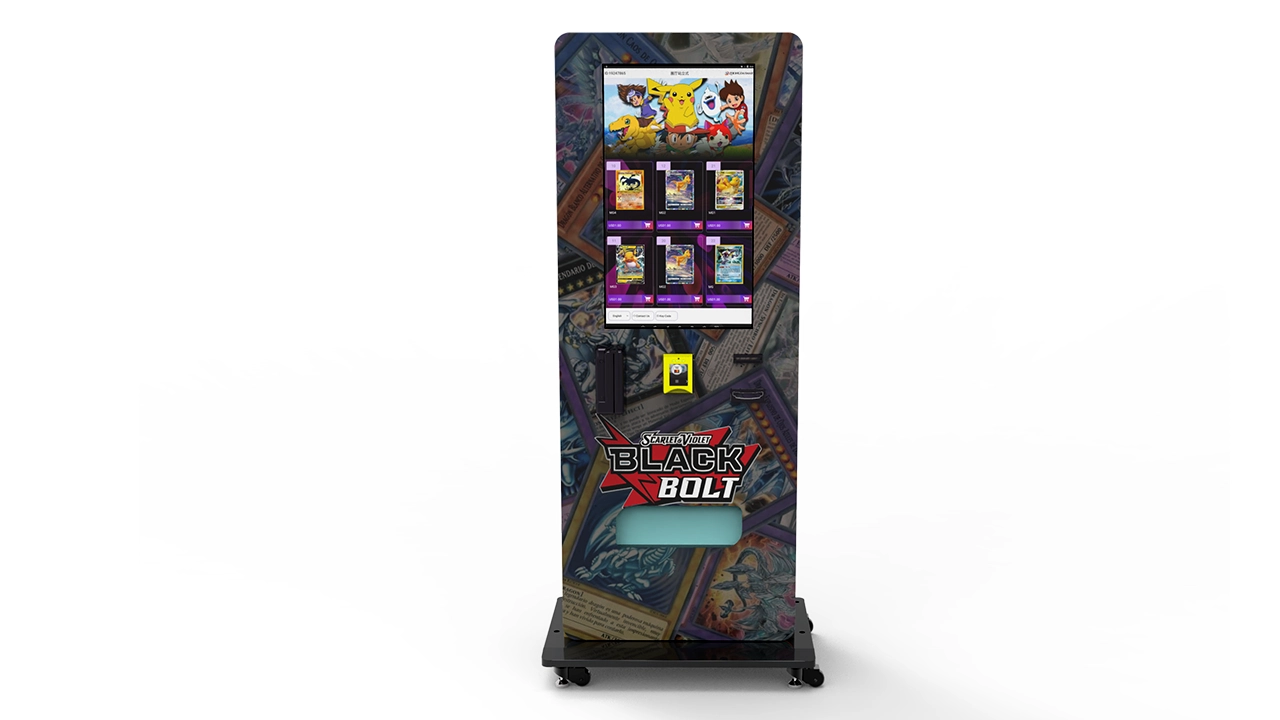
For new operators, I always recommend starting with a location you already have a relationship with. If you know a game store owner, ask if you can place a machine there for a trial period. The rent might be lower, but you’ll learn more about the product mix and customer behavior without the pressure of a high lease payment. The self-service kiosk model works best when you can iterate quickly, and you can’t do that if you’re tied to a long-term lease in an expensive mall space.
Supplier Selection: How to Avoid Getting Burned
I’ve been through the supplier selection process more times than I can count, and I’ve made almost every mistake you can make. The most important advice I can give you is to visit the factory if you’re considering a significant order. I know that’s not always practical, but even a video call where the supplier walks you through their production floor tells you more than a hundred emails. You want to see how they test the machines, what quality control processes they have, and whether they have a dedicated export team that understands your market’s requirements.
When I first vetted Zhongda Smart, I asked for a list of existing customers in North America and Europe. They provided a few references, and I called two of them. The conversations were candid, and that gave me confidence. One operator mentioned that the initial setup was a bit complicated because the payment system needed configuration for their local bank, but the supplier’s technical team stayed on the call until it was resolved. That kind of support is worth more than a discount on the unit price.
You should also ask about their spare parts policy. Some suppliers will only sell you parts in minimum quantities, which means you end up with a box of spare motors and sensors that you’ll never use. Others will ship a single replacement board overnight at a reasonable cost. The difference matters when your machine is down and you’re losing revenue every hour. I’ve learned to negotiate a spare parts kit as part of the initial order, not as an afterthought.
Another red flag is a supplier who promises the world on software features but can’t show you a live demo. Card vending machines are becoming more sophisticated, with features like dynamic pricing, remote monitoring, and integration with loyalty programs. But if the supplier can’t demonstrate these features working on a real machine, they probably don’t exist yet. I’ve seen too many operators buy machines with promised features that never materialized because the software development was outsourced and abandoned.
Let’s talk about the automated retail trend more broadly. The card vending machine is a niche within a larger movement toward unattended retail. According to the U.S. Small Business Administration, starting a vending machine business can be a viable entry point into entrepreneurship because the initial investment is lower than many other retail businesses. But the SBA also warns that success depends on location, product selection, and operational efficiency. That’s exactly right.
The Real Cost of Maintenance and Repairs
Let me be blunt about maintenance. Card vending machines are more complex than snack machines. They have card feeders, sensors, and sometimes multiple dispensing mechanisms. The more moving parts, the more things can go wrong. I’ve had machines that worked flawlessly for six months, and then suddenly started jamming every third transaction. The culprit was a worn rubber roller that needed replacement. The part cost $12, but the service call cost $150 because I had to pay a technician to travel to the location.
If you’re handy, you can learn to do basic repairs yourself. I’m not a technician, but I’ve learned to troubleshoot common issues like card jams, sensor misalignment, and payment terminal connectivity problems. The suppliers I work with provide detailed manuals and video tutorials, and that has saved me thousands of dollars in service fees. But I also know my limits. When a machine’s mainboard failed, I didn’t even try to fix it. I just ordered a replacement and swapped it out.
Preventive maintenance is the key to keeping your machines running. I clean the card feeders every time I restock, which is usually once a week for high-traffic locations. I also check the payment terminal for firmware updates and make sure the machine’s software is current. These small tasks take about 15 minutes per machine, but they prevent most of the common failures. I’ve seen operators who skip maintenance entirely, and their machines break down constantly. They blame the equipment, but the real problem is neglect.
When I’m comparing a China trading card vending machine vs US supplier cost, I also factor in the availability of local repair services. For US-sourced machines, there are often regional technicians who are familiar with the equipment. For Chinese machines, you’re more likely to be on your own or reliant on the supplier’s remote support. That’s not always a problem, but it’s a risk you need to price into your decision.
Payment Systems and Customer Experience
The payment system is the part of the machine that customers interact with the most, and it’s also the part that causes the most frustration when it fails. I’ve learned that you need to support both card payments and mobile payments like Apple Pay and Google Pay. The days of coin-only vending machines are long gone. Collectors expect to pay with their phones or contactless cards, and if your machine doesn’t support that, they’ll walk away.
I’ve also learned that the checkout flow needs to be simple. Some card vending machines have a multi-step process where the customer selects a card, confirms the price, and then completes the payment. That works, but it’s not ideal. The best machines have a one-tap purchase option where the customer scans a QR code or taps their card and the transaction completes in seconds. The faster the transaction, the fewer customers you lose to impatience.
Another consideration is whether to offer a loyalty program or discount for repeat customers. Some operators use a points system where collectors earn rewards for every purchase. That can drive repeat business, but it adds complexity to the software. I’ve kept things simple, no loyalty programs, no discounts, just a fair price and a reliable machine. In the card collecting community, reputation matters, and if your machine treats people well, they’ll come back.
The borne en libre-service concept, which is the French term for self-service kiosk, is becoming more popular in Europe, and I’ve seen some interesting implementations there. European operators tend to focus on the aesthetic design of the machine, making them blend into the retail environment. That’s a smart approach. A machine that looks like an afterthought in a corner will generate less interest than one that’s visually appealing and well-lit.
How to Decide Between Buying and Leasing
For new operators, the question of whether to buy or lease is a common one. Leasing a card vending machine can lower your upfront costs, but it comes with higher monthly payments over time. In my experience, buying is almost always better if you plan to operate the machine for more than two years. The math is simple. If a machine costs $6,000 and generates $800 per month in revenue, you can pay it off in about eight months. After that, the revenue is pure profit, minus your ongoing costs for rent, maintenance, and restocking.
Leasing makes sense if you’re testing a new location and you’re not sure it will work out. But the lease payments are often structured so that the leasing company makes a healthy profit even if your machine is underperforming. I’ve seen lease agreements where the monthly payment is $300 or more, which eats into your margin significantly. If you’re confident in your location and your product mix, buying is the better financial decision.
There’s also the option of a revenue-sharing partnership where you place the machine in a store and split the proceeds with the store owner. This can work well in card shops where the owner sees the machine as a way to offer more product without taking on additional inventory risk. The split is usually 70/30 or 60/40 in your favor, since you’re providing the equipment and the maintenance. But you need a clear agreement about who’s responsible for restocking and what happens if the machine breaks down.
My Failure Case: The Machine That Made Nothing
I told you I’d share a real failure, so here it is. About three years ago, I placed a card vending machine in a family entertainment center. The location had bowling alleys, an arcade, and a restaurant. It seemed like the perfect spot. Families with kids, disposable income, and plenty of time to kill. I paid a premium rent and installed a brand-new machine with a large touchscreen. The first week, sales were modest. The second week, they dropped. By the end of the first month, I had sold maybe $200 worth of cards, which didn’t even cover the rent.
The problem was that the entertainment center was focused on active play, not shopping. Parents were there to watch their kids bowl or play arcade games, not to browse a card machine. The foot traffic was high, but the dwell time near my machine was almost zero. People walked past it on the way to the laser tag entrance, but they never stopped. I had completely misjudged the customer intent. The location had traffic, but not the right kind of traffic.
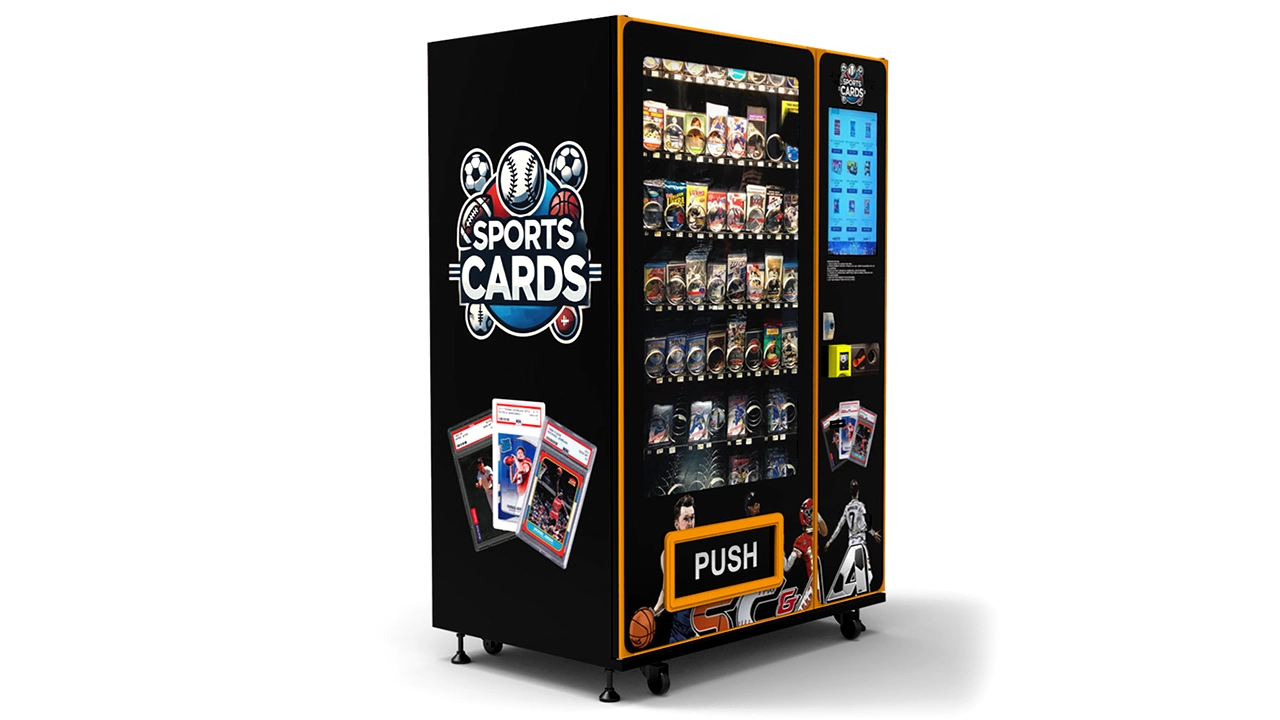
I pulled the machine after three months and moved it to a card shop that was a twenty-minute drive away. In the first month at the new location, it made more than it had made in the entire time at the entertainment center. That experience taught me that foot traffic numbers are meaningless without understanding the consumer behavior. A thousand people walking past your machine is worthless if they’re on their way to do something else.
My Success Case: The Right Machine in the Right Place
On the flip side, I had a success that still surprises me. A small game store in a suburban strip mall asked if I could place a machine near the counter. The store was tiny, maybe 800 square feet, and the owner didn’t have room for a big floor unit. I suggested a wall-mounted card vending machine that took up almost no floor space. The owner agreed, and we set up a revenue-sharing arrangement.
That machine became the highest-performing unit in my fleet for a while. The store owner promoted it to his regular customers, and the collectors loved the novelty of pulling a pack from a machine. The machine was always stocked, because the owner knew that a full machine sold more than a half-empty one. We were selling out every week, and the owner was thrilled because the machine brought in customers who would also buy other products from the store. It was a win-win, and it reinforced my belief that the relationship with the location owner is just as important as the machine itself.
FAQ: Answers to the Questions I Get Every Week
Do card vending machines actually make money?
Yes, but not automatically. A well-placed machine in a location with the right customer demographic can generate $800 to $2,500 per month in revenue. But you have to account for rent, maintenance, restocking, and payment processing fees. My experience is that a single machine can be profitable within six to twelve months, but it depends heavily on location and product mix. There are no guarantees, and I’ve seen machines that never made a profit because the operator chose a poor location.
How much does a card vending machine cost?
Depending on the source and configuration, you can expect to pay anywhere from $3,500 to $16,000 per machine. A basic Chinese model delivered to your warehouse might be $3,500 to $5,500. A US-built machine with a large touchscreen and advanced features could run $10,000 to $16,000. I’ve also seen used machines sell for less, but I’d be cautious about buying used equipment unless you know the maintenance history.
How long does it take to recoup the investment?
In my experience, the payback period ranges from 6 to 24 months. A high-traffic location with a good product mix can pay off a machine in under a year. A slower location might take two years or more. The key is to monitor your sales data and be willing to move a machine if it’s underperforming. Don’t let a bad location drag on for months.
Should a beginner buy or lease a machine?
I recommend buying if you’ve done your research and you’re confident in the location. Leasing can lower your upfront cost, but the monthly payments will eat into your margin. If you’re testing the waters, consider starting with one used or budget-friendly machine and learning the ropes before scaling up. The solution de vente automatisée is a long-term play, not a get-rich-quick scheme.
Where is the best place to put a card vending machine?
Card shops, game stores, comic book shops, and hobby stores are the most reliable locations because the customer intent is already there. High-traffic malls can work, but rent is expensive and the demographic is broader. Grocery stores and entertainment venues are riskier, as I learned from my own failure. Start with a location where collectors already gather.
What permits or licenses do I need?
Requirements vary by state and municipality. In the US, you’ll typically need a business license and a sales tax permit. Some cities require a vending machine license, and you may need to register with the health department if you’re selling any food items, though that’s unlikely for card machines. Check with your local small business administration office for specific requirements.
How do I choose a reliable supplier?
Ask for references and call them. Visit the factory if you can, or at least request a live video walkthrough. Verify that the machine is configured for your market’s voltage and payment systems. Ask about spare parts availability and software support. I’ve had good experiences with Zhongda Smart, but I always do my due diligence before placing a large order.
What happens if the machine breaks down?
You’ll need to troubleshoot the issue and either fix it yourself or call a technician. I recommend keeping a spare parts kit for each machine model you operate. Basic repairs like clearing a card jam or replacing a sensor are manageable with the right manuals and videos. For major failures, you may need to swap out a mainboard or contact the supplier for support.
How can I reduce maintenance and restocking costs?
Choose a location that’s easy for you to access, and schedule regular restocking visits. Clean the machine during every restock to prevent dust buildup. Track your sales data to understand which products sell fast and which ones sit on the shelf. The more efficient you are, the lower your operating costs. I’ve also found that using a remote monitoring system helps me know when a machine is low on inventory without making a wasted trip.
Final Thoughts: What I’d Do If I Were Starting Today
If I were starting from scratch today, I’d begin with a single machine, not a fleet. I’d choose a card shop or game store where I already have a relationship, and I’d negotiate a simple revenue-sharing agreement. I’d buy a mid-range machine, probably a wall-mounted unit, and I’d spend the first few months learning the product mix and the customer behavior. I wouldn’t worry too much about the China trading card vending machine vs US supplier cost debate at that point, because the first machine is about learning, not optimizing.
Once I had a working model, I’d expand slowly. I’d add a second machine at a different location, and then a third. I’d track every metric, sales per day, average transaction value, restock frequency, and downtime. I’d move machines that underperform and double down on locations that exceed expectations. That’s the real business of automated retail. It’s not about buying the cheapest machine or the most expensive one. It’s about building a system that works in your specific market.
I’ve made my share of mistakes, and I’ve learned from all of them. The card vending machine business is a niche, but it’s a growing one, and there’s room for operators who are willing to do the work. The machines are tools, not magic boxes. If you treat them with respect and pay attention to the details, they can be a solid source of income. If you ignore the details, they’ll remind you why the details matter.
This article is based on my personal experience and should not be taken as financial advice. Results vary by location, market conditions, and operational effort. Always do your own research and consult with professionals before making significant investments.