If you are looking at placing a trading card vending machine in a mall, a game store, or a supermarket, the first question you probably asked yourself is where to actually buy the inventory without getting wiped out by distributor pricing. I have been running automated retail operations for over a decade, and I can tell you that sourcing Pokemon cards for a vending machine business is the single biggest factor that separates profitable routes from cash-burning hobbies. You cannot treat this like a hobbyist ripping packs for fun; you are buying wholesale lots to feed a machine that needs predictable margins. The reality is that your entire business model hinges on your ability to secure product at a cost that leaves room for the machine’s overhead, the location’s cut, and your own labor, all while keeping the glass fully stocked with items that people actually want to buy at 2 PM on a Tuesday.
Why Sourcing Is More Important Than the Machine Itself
Most newcomers obsess over the hardware, the screen size, and the payment system, but I have seen operators fail because they bought a beautiful machine and then had nothing worthwhile to put inside. The machine is just a box with a screen. The product is the engine. If you cannot source Pokemon cards at a wholesale price that allows for a healthy margin, you are essentially running a charity for your supplier. In my experience, the operators who succeed are the ones who treat inventory acquisition as a daily job, not a monthly chore. They are constantly checking allocations, building relationships with distributors, and even buying out local card shops that are overstocked on certain sets.
When I started my first route, I made the mistake of thinking I could just buy booster boxes from a big-box retailer and flip them. That works for about a week until you realize your margin is gone and you are paying retail prices for everything. The shift happened when I started negotiating directly with regional distributors and understanding the allocation system for Pokémon products. You have to realize that Pokémon Company intentionally creates scarcity, so you cannot just order unlimited quantities of the hottest set. You need a strategy that involves mixing high-demand products with steady sellers that keep your trading card vending machine looking full and appealing.
The other thing I learned is that you need to diversify your product mix beyond just Pokémon. Sports cards, One Piece, Lorcana, and even vintage singles can fill gaps when Pokémon allocations are tight. A machine that only sells Pokémon is vulnerable to market swings and allocation droughts. I have seen operators pivot to mystery boxes and repacks to keep the machines moving, but that requires even more careful sourcing and a willingness to take on some risk with unsold inventory.
Understanding the Real Cost Structure of Card Inventory
Let me break down what I see in the field. A standard booster box of a new Pokémon set might have a manufacturer’s suggested retail price, but the real market price fluctuates wildly. You might be able to get a case of six booster boxes from a distributor at a discount, but you also have to factor in shipping, taxes, and the opportunity cost of tying up your cash in inventory that might not move as fast as you hoped. In my operations, I aim for a blended margin of around 30 to 40 percent on sealed product, but that requires buying at the right time. If you buy a set at peak hype, you are paying a premium. If you wait six months, you might get it cheaper, but the demand might have cooled off.
Here is a rough table based on my actual route data from the last two years. This is not a guarantee, but it shows the kind of numbers you need to think about when you are sourcing product for a 32 inch touchscreen trading card vending machine or even a smaller unit. The costs vary by location and region, but the structure is the same.
| Product Type | Average Cost per Unit (Wholesale) | Retail Price in Machine | Gross Margin | Notes |
|---|---|---|---|---|
| Pokémon Booster Pack (new set) | $3.50 – $4.50 | $6.00 – $8.00 | 40% – 50% | Allocation dependent, high demand |
| Sports Card Pack (NBA, NFL) | $2.50 – $3.50 | $5.00 – $7.00 | 50% – 60% | More volatile, but steady demand |
| Mystery Box / Repack | $8.00 – $12.00 | $20.00 – $30.00 | 60% – 70% | Higher margin, but requires trust |
| Single Cards (rare pulls) | Varies, often $1 – $5 | $5.00 – $50.00 | Variable | High risk, high reward |
That table is based on my own experience, not official statistics. I have seen operators in high-traffic tourist areas push margins higher, while operators in low-income neighborhoods struggle to sell anything above $10. You have to know your demographic. A machine placed near a college campus might sell more sports cards, while a machine in a suburban mall might do better with Pokémon and Lorcana. Sourcing is not just about price; it is about matching the product to the location’s buying habits.
Where to Actually Buy Pokemon Cards for Your Vending Machine
There are several channels, and you need to be active in all of them. First, you have the official Pokémon distributor network. To get direct access, you typically need to have a physical retail location or a legitimate business license that shows you are a retailer. Some distributors require you to have a storefront, which can be a barrier for vending machine operators. I have found that working with smaller regional distributors who supply hobby shops is often easier, but they may have minimum order quantities that are too high for a single machine.
The second channel is wholesale liquidation and surplus markets. You can sometimes buy overstock from big box retailers or from distributors who have excess inventory. This is where you find older sets or products that did not sell as well. The risk is that you might be buying product that is not as desirable, but the price can be significantly lower. I have bought cases of older Pokémon sets at 30 to 40 percent below distributor cost, and they sold well in machines because the retail price was still lower than what people would pay online.
The third channel, and one that many operators overlook, is buying directly from local card shops. If you build a relationship with a local shop owner, they might sell you their overstock at a discount, especially if they need to free up cash to buy new product. I have done this many times, and it has saved my route when allocations were tight. You are not competing with the shop; you are helping them move inventory that is sitting on their shelves.
A fourth option is to buy from online marketplaces and auction sites, but I would caution against this for a few reasons. You have no way to verify the authenticity of the product, and you are often paying retail or above. I have seen operators get burned by counterfeit product, especially for high-value singles. Stick to reputable sources where you can verify the chain of custody.
Vendor Selection and the Role of Equipment in Your Sourcing Strategy
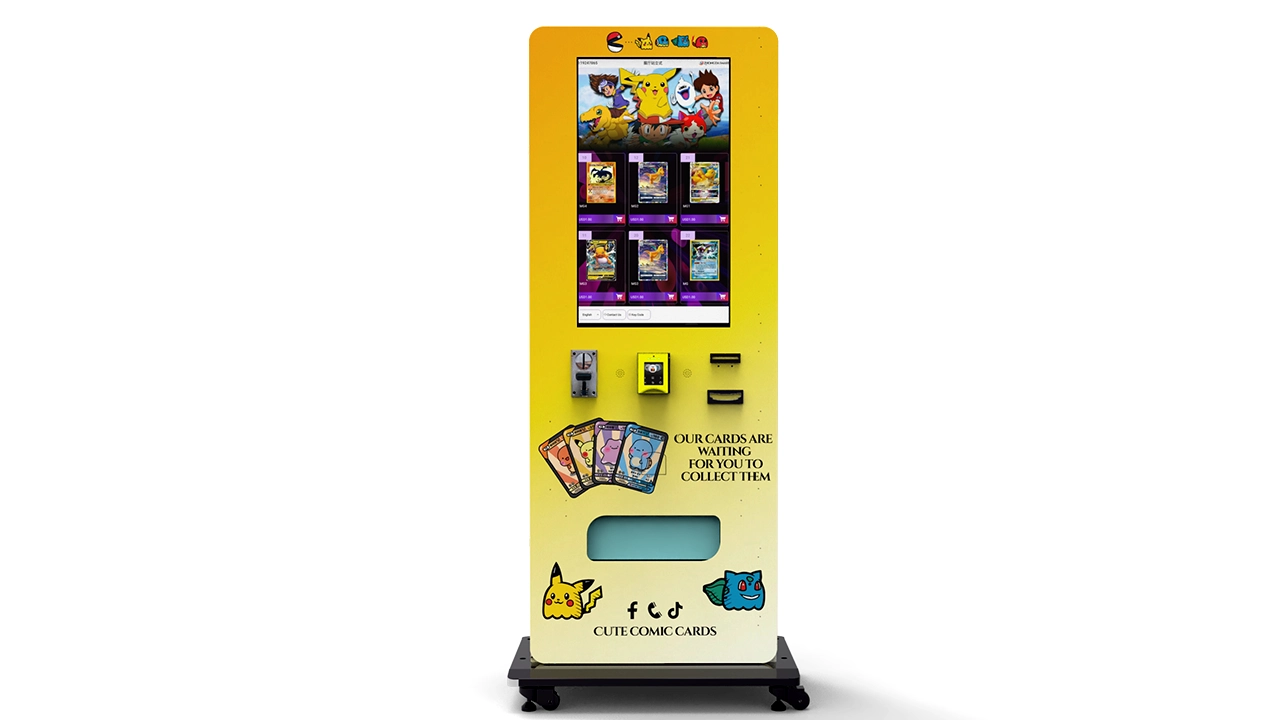
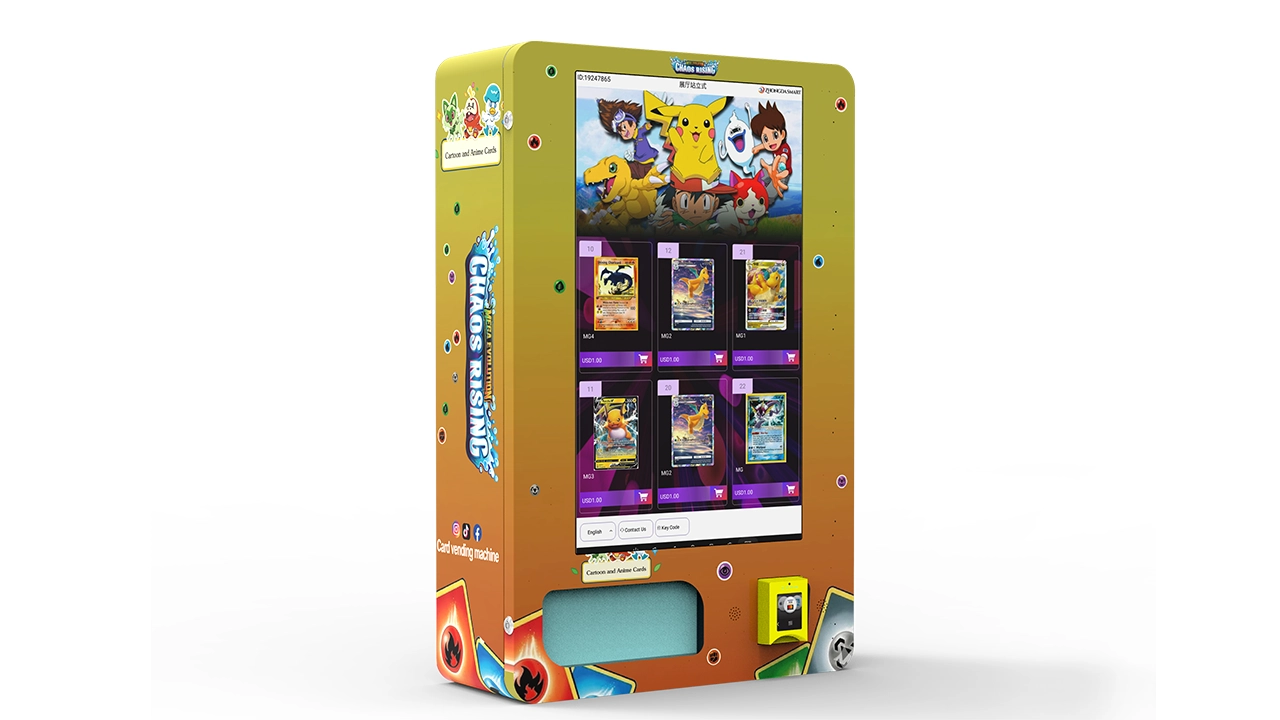
Your sourcing strategy also depends on the type of machine you are running. If you have a simple gravity-fed machine, you are limited to selling packs and small items. If you have a more advanced machine with a robotic arm or a carousel, you can sell boxes and larger items, which opens up more sourcing opportunities. I have seen operators use wall mounted card vending machine units in smaller locations like barbershops or laundromats, and those require a different inventory strategy. You cannot load a wall-mounted unit with 200 booster boxes; you need to focus on high-turnover items that fit the space.
When it comes to equipment, I have used machines from several manufacturers, and I have to say that Zhongda Smart has been a reliable partner for my routes. They are not the only option, but their machines have a good track record for durability and the payment systems are flexible. I am not saying you have to buy from them, but when you are evaluating vendors, look for someone who understands the card vending niche specifically. A generic snack machine vendor will not understand the need for tamper-proof compartments or the ability to adjust pricing on the fly. Your equipment choice directly affects how you source product because some machines have limited SKU capacity, which means you have to be more selective about what you buy.
I have seen operators make the mistake of buying a machine with too many slots, thinking they need to fill every slot with a different product. That is a recipe for overstocking and cash flow problems. You are better off with a machine that has fewer slots but allows you to stock deeper quantities of your best sellers. This is a lesson I learned the hard way when I bought a 40-slot machine and spent $10,000 on inventory to fill it, only to realize that half of the products were not moving. The sourcing should drive the machine selection, not the other way around.
Real-World Case Study: A Failure and a Success
I want to share a specific failure from my early days. I had a machine in a suburban mall, and I decided to load it entirely with a new Pokémon set that was getting a lot of hype. I bought a full case at a premium price from a secondary distributor because I was worried about missing out. The set was popular, but the allocation was so high that every other vending machine operator and card shop in the area had the same product. My machine sat there with a full inventory of a set that was not moving because the market was oversaturated. I had tied up $4,000 in inventory that took three months to sell, and I ended up discounting it just to free up space. That taught me to never buy at peak hype unless I had a guaranteed buyer.
On the flip side, I had a success story with a machine placed in a high-traffic tourist area near a convention center. I sourced a mix of older Pokémon sets, sports cards, and some mystery boxes. The key was that I had a relationship with a local distributor who gave me first access to a limited run of a special edition set. I bought that allocation at a reasonable price, and it sold out within two weeks. That one product alone paid for the machine’s monthly rent. The difference was that I was not chasing the hype; I was buying product that had a known demand but limited supply in that specific area. Sourcing is about being smart, not just being first.
Another mistake I see is operators ignoring the condition of the product. If you are buying loose packs or repacks, you need to ensure that the packaging is not damaged and that the product is authentic. I have had suppliers try to pass off resealed packs, which is a disaster for your reputation. Always inspect a sample before you commit to a large order. This is especially important if you are buying from a new supplier or an online marketplace.
Payment Systems and the Impact on Inventory Turnover
Your payment system also plays a role in how you source product. If you only accept cash, you might be limiting your sales, especially with younger customers who do not carry cash. I have seen a significant increase in sales when I added card readers and mobile payment options. This is not just about convenience; it is about the perception of the machine. A machine that looks modern and accepts Apple Pay or Google Pay is more likely to be trusted by customers who are spending $20 or more on a pack of cards. The self-service kiosk experience has to be seamless, or people will walk away.
I have also experimented with dynamic pricing, where the machine adjusts prices based on inventory levels or time of day. This is not for everyone, but it can help you move slower products without having to manually change prices. The downside is that it requires more sophisticated software and a machine that supports it. If you are using a basic machine, you are stuck with manual price changes, which means you need to be more careful about what you stock.
Location Evaluation and Its Effect on Sourcing
I cannot stress enough that location is the other half of the equation. You can have the best sourcing deals in the world, but if the machine is in a dead spot, you will not make money. I use a simple rule of thumb: a location needs at least 500 to 1,000 people passing by per day to justify a card vending machine, and at least 10 to 20 percent of them need to be in your target demographic. In high-traffic malls, you might see 5,000 people a day, but if they are all there to shop for clothes, your card sales will be low. I have found that locations near game stores, hobby shops, or entertainment venues like movie theaters and arcades are much better.
When I evaluate a location, I also look at the competition. If there is a card shop in the same mall, that can be a positive because it draws card collectors to the area, but it can also be a negative if the shop is selling the same products at a lower price. I have had success placing machines near card shops, but I always make sure my pricing is competitive and my product mix is different. I might focus on older sets or exclusive promos that the shop does not carry.
Data from IBISWorld shows that the vending machine industry in the US has been growing at a steady rate of about 2-3% annually, but the card vending niche is growing faster due to the popularity of trading cards. However, this growth also attracts more operators, which means you need to be more strategic about your locations and your sourcing. You cannot just rely on the brand name of Pokémon; you need to offer value that other operators do not.
Maintenance, Repair, and Downtime Costs
One thing that people forget when they are sourcing product is that the machine itself needs maintenance. A broken machine is a revenue killer, and it also hurts your relationship with the location owner. I have a rule: if a machine is down for more than 48 hours, I am losing money and credibility. This is why I always have a backup plan, whether it is a spare machine or a quick repair service. The vending machine repair costs can eat into your margins if you are not careful. I have seen operators spend $500 on a repair that was only worth $200 in profit from the machine’s sales. You need to factor in a maintenance budget of about 5 to 10 percent of your gross revenue.
When you are sourcing product, you also need to think about the shelf life of the product. Trading cards do not expire, but the demand for a particular set can drop off quickly. I have had to discount older sets just to get rid of them, which cuts into my margin. This is why I avoid stocking too much of any single set. I try to keep my inventory turnover high, so I am not sitting on product that is losing value. This is a balancing act, and it takes time to get it right.
Comparing Business Models: Self-Op, Leasing, and Revenue Share
Another decision that affects your sourcing is whether you are running the machine yourself, leasing it from a company, or doing a revenue share with the location. Each model has its pros and cons, and they affect how much control you have over sourcing. If you own the machine, you have full control over what you stock and where you buy from. If you lease, you might be restricted to products that the leasing company provides, which can limit your margins. Revenue share models are popular in high-traffic locations, but you have to be careful that the location owner does not take too large a cut.
| Model | Pros | Cons | Impact on Sourcing |
|---|---|---|---|
| Self-Op (own machine) | Full control, higher margins | Higher upfront cost, all risk on you | You can source the best deals |
| Leasing | Lower upfront cost, easier to start | Less control, monthly fees | May be forced to buy from specific suppliers |
| Revenue Share | No upfront cost, location has incentive | Lower net margin, location has some say | Need to keep location happy with product mix |
In my experience, self-op is the best model if you have the capital and the time to manage the route. Leasing is okay if you are testing the waters, but you will not build long-term wealth. Revenue share can be lucrative if you find a location that is a perfect fit, but you have to be prepared to walk away if the terms are not favorable. I have seen too many operators sign bad revenue share deals and then complain that they are not making money. The sourcing strategy has to align with the business model.
Regulatory and Compliance Issues You Cannot Ignore
Depending on where you are in the US or Europe, there are different regulations around vending machines. In the US, you generally need a business license and a sales tax permit. In some states, you also need to be registered as a vending machine operator. In the EU, the rules can be stricter, especially regarding consumer protection and product safety. You also need to be aware of any local zoning laws that might restrict where you can place a machine. I have seen operators place machines without checking the zoning, only to be forced to move them, which costs time and money.
Another compliance issue is the sale of trading cards to minors. While there is no federal law against selling cards to children, some locations may have their own policies. You also need to be careful about the gambling aspect. Mystery boxes and repacks can be considered a form of gambling in some jurisdictions, especially if the contents are randomized. I have seen operators get in trouble for this in certain states. You need to check with a local attorney before you start selling mystery products.
Data-Driven Sourcing: Using Sales Data to Refine Your Purchases
The best operators are not just buying based on intuition; they are using data. Your machine’s software should give you detailed sales reports, showing you which products are selling and which are not. I review my sales data weekly, and I adjust my sourcing based on that data. For example, if I see that a certain set is selling out within three days, I will increase my order for that set. If another set has been sitting for two weeks, I will discount it or move it to a different location. This is not rocket science, but it requires discipline. You cannot be attached to a product just because you like it. The data tells you what the customers want.
I have also started using trend analysis tools to predict which sets are going to be popular. This is not always accurate, but it helps me get ahead of the market. For example, if a new movie is coming out that features a certain Pokémon, I will stock up on that set before the movie releases. This has worked well for me, but it also carries risk. If the movie flops, I am stuck with inventory. You have to be willing to take calculated risks.
FAQ Section
Are vending machines profitable?
Yes, they can be profitable, but it depends on your location, your product mix, and your sourcing. In my experience, a well-placed card vending machine can generate between $1,000 and $5,000 in monthly revenue, with a net profit margin of 20 to 40 percent after all costs. However, many machines fail because operators do not do their due diligence. The profit is not automatic; it is earned through hard work and smart buying.
How much does a card vending machine cost?
A new card vending machine can cost anywhere from $5,000 to $20,000, depending on the size, features, and manufacturer. Used machines can be cheaper, but they come with risks. I have seen operators buy used machines for $3,000 and then spend $2,000 on repairs. You also need to budget for installation, shipping, and initial inventory, which can easily add another $5,000 to $10,000 to your startup costs.
How long does it take to recoup the investment?
In my experience, a successful machine can pay for itself in 6 to 18 months. However, this depends on your location and your margins. If you are making $500 a month in net profit, it will take longer than if you are making $2,000 a month. You need to have a clear financial plan before you start.
Should a beginner buy or lease a machine?
If you are a beginner, I would suggest starting with a used machine or a lower-cost model to test the market. Leasing is also an option, but it can be restrictive. The most important thing is to not over-invest in equipment before you have proven the location works. Start small, learn the ropes, and then scale up.
Where is the best place to put a card vending machine?
The best places are locations with high foot traffic and a demographic that is interested in trading cards. Malls, game stores, hobby shops, movie theaters, and college campuses are all good options. You want to avoid locations where people are not likely to make impulse purchases. I always recommend doing a foot traffic count before you commit to a location.
What permits do I need to operate a vending machine?
In the US, you typically need a business license and a sales tax permit. Some states and cities require a specific vending machine operator’s license. In the EU, the rules vary by country, but you generally need to register your business and comply with consumer protection laws. You should check with your local Chamber of Commerce or a business attorney to get accurate information for your area.
How do I choose a reliable vending machine supplier?
Look for a supplier with experience in the card vending niche. Ask for references and check online reviews. I have had good experiences with Zhongda Smart, but you should also consider other manufacturers. Make sure the supplier offers a warranty and has a local service network or a good reputation for shipping parts quickly. You do not want to be stuck with a broken machine and no support.
What should I do if my machine breaks down?
You need to have a plan in place. If you have a warranty, contact the manufacturer first. If not, you need to find a local vending machine repair technician. I always have a list of qualified technicians in each area where I operate. You should also have a backup machine or a plan to move inventory to another location if a machine is down for an extended period.
How can I reduce restocking and maintenance costs?
The key is to be efficient. Plan your restocking routes to minimize travel time. Use data to predict which products are likely to sell, so you are not making unnecessary trips. For maintenance, invest in a quality machine and perform regular cleaning and inspections. Preventative maintenance is much cheaper than emergency repairs.
Ultimately, sourcing Pokemon cards for a vending machine business is not a get-rich-quick scheme. It is a real business that requires capital, research, and a willingness to adapt. I have seen operators succeed and fail, and the difference is almost always in the preparation and the ongoing management of the inventory. You need to treat your suppliers as partners, your data as your guide, and your locations as your most valuable asset. If you do that, you can build a solid automated retail operation that generates steady income.
Disclaimer: The figures and insights shared in this article are based on my personal experience and should not be taken as financial advice. Market conditions, costs, and regulations vary by location and over time. Always conduct your own research and consult with local professionals before making business decisions.