If you’ve been in the vending industry as long as I have, you know the drill: every few years a product category comes along that changes the math on what’s worth putting in a machine. Right now, that category is trading cards. I’ve spent over a decade placing, servicing, and sometimes pulling machines out of bad locations, and I can tell you this much—selling trading card boxes through a vending machine is not a gimmick. It’s a legitimate, high-margin vertical if you understand the equipment, the product, and the psychology of the buyer. The key phrase here is trading card vending machine, and in this guide I’m going to break down exactly what it takes to run one profitably, based on my own wins and losses in the field.
Why Trading Cards Are a Natural Fit for Automated Retail
Let’s start with the product itself. Trading cards—whether sports, Pokémon, or collectible card games—have a unique combination of high value density and passionate demand. A single booster box can retail for anywhere from $80 to over $400, which means you don’t need high foot traffic to hit meaningful revenue. Compare that to a snack machine where you’re selling $1.50 chips and $2 sodas; you’d need dozens of transactions to match one card sale.
Another factor is the thrill of the unknown. When someone buys a sealed box from a vending machine, they’re not just buying cardboard and ink. They’re buying the possibility of a rare pull. That emotional trigger is powerful, and it drives repeat behavior. I’ve seen collectors drive 40 minutes to a specific location just because they knew a machine was stocked with fresh product.
From an operational standpoint, cards are also easier to handle than perishables. No expiration dates, no temperature control, no food safety inspections. You’re dealing with a non-perishable, high-value SKU that can be inventoried with precision. That simplifies the entire vending machine repair and maintenance side of the business, because the machine itself is doing less mechanical work than a cold drink unit.
One thing I learned early on: the trading card vending machine model works best when you treat it like a specialty retail operation, not a traditional vending route. The buyer expects a certain experience—clean glass, bright lighting, and a touchscreen that feels modern. If you place a beat-up old snack machine with a card taped to the front, you’ll fail. Trust me, I tried that in 2019 and it was a disaster.
The Real Numbers: What You’re Looking at Financially
Let’s talk dollars and cents, because that’s what every operator wants to know first. Based on my own placements and the feedback I get from other operators, a well-placed card vending machine can generate between $1,500 and $6,000 per month in revenue. That range is wide because location and product mix matter enormously. A machine in a hobby shop or a high-traffic mall will outperform one in a quiet strip mall by a factor of three or four.
The initial investment for a new, quality card vending machine with a touchscreen and secure dispensing system typically runs between $8,000 and $20,000. If you buy a used or refurbished unit, you might get in for $4,000 to $9,000, but you take on more risk with older components. I’ve seen operators buy cheap machines only to spend more on repairs in the first six months than they saved on the purchase price.
Gross margins on trading cards are usually in the 25% to 45% range, depending on whether you’re buying wholesale, through distributors, or from local card shops. Some operators do even better by sourcing sealed product during flash sales or buying in bulk. But don’t forget the hidden costs: payment processing fees (typically 2.5% to 4%), electricity, internet connectivity for remote monitoring, and your own time for restocking and maintenance.
According to a Statista report on the trading cards market, the global sports trading card market has seen significant growth in recent years, driven by both nostalgia and new collectors entering the space. That trend supports the demand side of the equation, but it doesn’t guarantee your specific machine will be profitable. Location, product selection, and machine reliability are the real determinants.
My First Failure: What a Bad Location Taught Me
I’m going to share a mistake I made so you don’t repeat it. In 2021, I placed a card machine in a laundromat. The reasoning seemed sound at the time—high foot traffic, people waiting around with time to kill, and a captive audience. But what I didn’t account for was the buyer profile. Laundromat customers were mostly there for a chore, not for discretionary spending on a $120 booster box. The machine sat untouched for six weeks before I moved it.
The lesson here is that foot traffic alone doesn’t equal sales. You need the right foot traffic. Collectors, gamers, and hobbyists are your target demographic, and they tend to cluster around specific locations: hobby shops, game stores, comic book shops, and increasingly, card show venues. A machine in a laundromat might get 500 people walking past it daily, but if none of them are collectors, it’s worthless.
I also learned that placement within a location matters. A machine shoved into a dark corner behind a door is invisible. It needs to be in a well-lit, high-visibility area where people naturally gather. In hobby shops, that often means right near the counter or the card display section. In malls, it means near the entrance or anchor stores, not tucked away in a hallway.
That failure cost me about $1,200 in lost revenue and the hassle of moving a heavy machine. But it taught me to develop a proper site evaluation checklist, which I’ll share later in this article. Sometimes the most expensive lessons are the ones that end up making you the most money down the road.
Site Selection: How I Evaluate a Location in 45 Minutes
Before I even consider a location, I spend 45 minutes sitting nearby and observing. I’m not just counting people; I’m looking at who those people are. Are they families with kids? Young adults with backpacks? Middle-aged men wearing sports jerseys? The demographic tells me more than the raw traffic count.
I also look at the surrounding businesses. A location near a card shop, comic store, or gaming café is a strong signal. Even better if there’s a university or high school within walking distance, because younger collectors are often the most enthusiastic buyers. I once placed a machine in a mall near a college campus and saw consistent weekly sales from students who were building their collections.
Another critical factor is operating hours. If the location closes at 6 PM, you’re losing the evening crowd, which is often when collectors are most active. I prefer locations that stay open until at least 9 PM, or even better, 24-hour venues like certain convenience stores or entertainment centers. The machine works while you sleep, but only if the location is open.
Rent is another consideration. I’ve seen locations ask for 15% to 25% of gross revenue as rent. That’s often too high for a card machine, given your margins. I aim for rent that’s 10% or less of projected revenue, or a flat monthly fee that I can cover with two or three sales. If a location owner insists on a high percentage, I walk away. There are too many other good spots available.
Equipment Selection: What I Look for in a Card Machine
Not all vending machines are created equal when it comes to selling trading cards. The machine needs to handle boxes of varying sizes and weights, and it needs to dispense them without damage. I’ve seen machines that crush boxes during the drop, which is an instant way to lose a customer and get a refund request. Look for a machine with a gentle retrieval system, preferably one that uses a robotic arm or a bucket conveyor rather than a simple spiral drop.
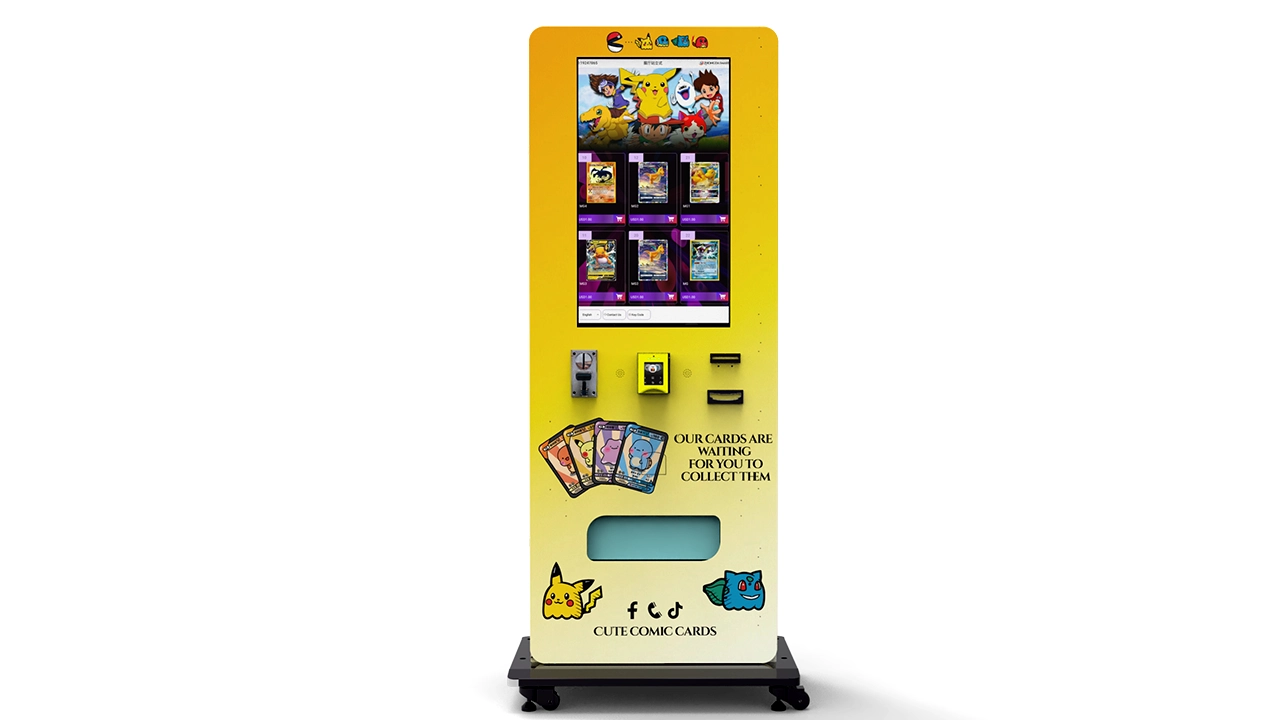
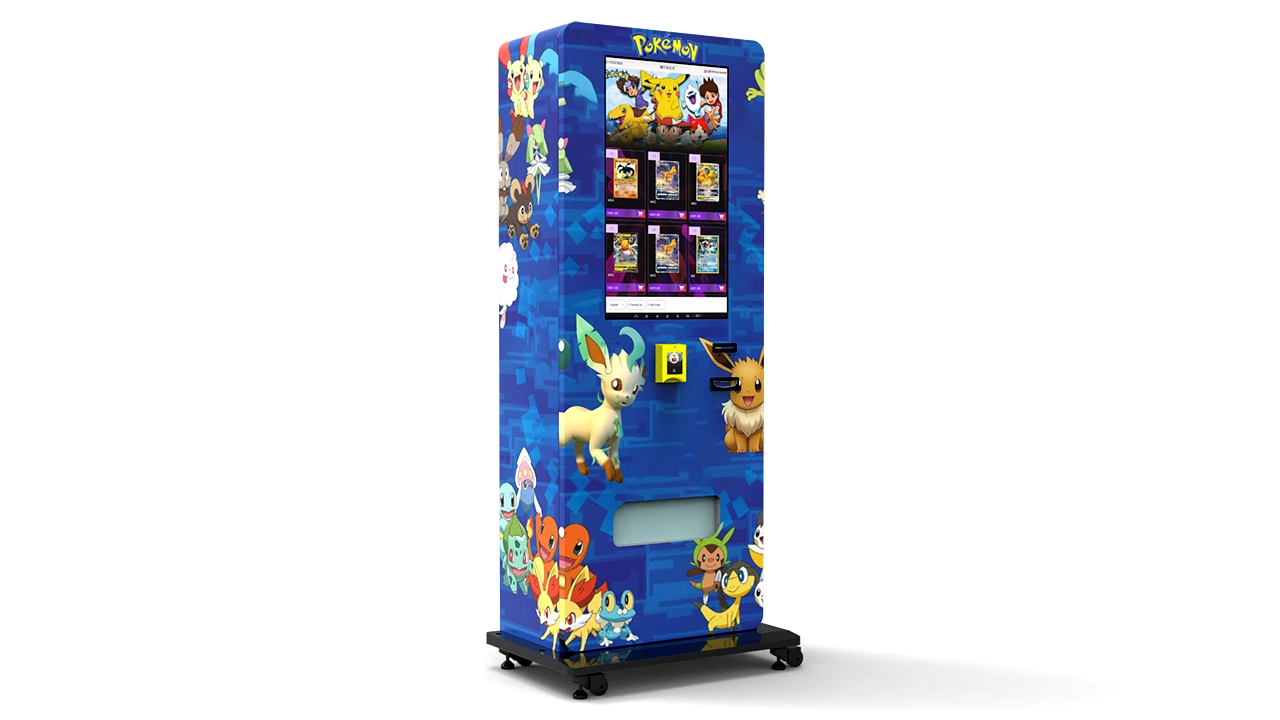
Security is another major concern. Trading cards are high-value items, and a machine full of $200 boxes is a target for theft. I insist on machines with reinforced steel, tamper-proof locks, and ideally, a camera system or remote monitoring capability. Some of the newer 32-inch touchscreen trading card vending machines come with built-in cameras and cloud-based monitoring, which gives me peace of mind when I’m not on site.
The payment system is also critical. You need a modern card reader, mobile payment support (Apple Pay, Google Pay), and ideally, a touchscreen interface that lets customers browse products before purchasing. The user experience matters more than you might think. A clunky interface will turn off younger buyers who are used to smooth digital interactions.
One manufacturer I’ve had good experience with is Zhongda Smart. They make a range of card vending machines with different configurations, and their build quality has been solid in my experience. I’m not saying they’re the only option, but if you’re looking for a reliable machine with good after-sales support, they’re worth putting on your shortlist. Just make sure you compare specs, warranty terms, and shipping costs before committing.
Comparing Machine Types: A Quick Reference
To help you make an informed decision, I’ve put together a table comparing the main types of card vending machines I’ve encountered in the field. This is based on my operational experience, not manufacturer marketing claims.
| Machine Type | Typical Cost (New) | Capacity | Best For | Key Trade-offs |
|---|---|---|---|---|
| Spiral/Coil Machine | $6,000 – $10,000 | Medium (30-60 items) | Low-cost locations, beginners | Cheaper but can damage boxes; limited to uniform sizes |
| Touchscreen Shelf Machine | $12,000 – $20,000 | High (80-150 items) | High-traffic retail, hobby shops | Better UX, gentle dispensing; higher upfront cost |
| Wall-Mounted Unit | $4,000 – $8,000 | Low (15-30 items) | Small spaces, secondary locations | Low footprint, easy to install; limited inventory |
| Robotic Arm Kiosk | $18,000 – $30,000 | Very High (200+ items) | Malls, card expos, flagship locations | Best customer experience; highest cost and maintenance |
As you can see, the range is wide. I generally advise new operators to start with a touchscreen shelf machine if their budget allows, because it offers the best balance of customer experience and reliability. The wall-mounted card vending machine is a good option if you’re testing a location with low rent and aren’t sure about the volume yet.
Where to Place: Ranking the Best Scenarios
Over the years, I’ve placed machines in almost every type of venue you can imagine. Based on that experience, here’s my ranking of the best scenarios for card vending machines, from highest to lowest potential.
At the top are dedicated hobby and game stores. These locations have a built-in audience of collectors who are already spending money on cards. The store owner benefits because your machine adds variety without taking up shelf space, and you benefit from the foot traffic. I typically see the highest revenue per square foot in these locations.
Next are malls and shopping centers, especially those with entertainment anchors like movie theaters or arcades. The foot traffic is high, and the demographic skews younger and more affluent. However, rent is often higher, and you need to be prepared for the possibility of weekend-only sales spikes.
Third on my list are card show venues and conventions. These are temporary placements, but they can be incredibly lucrative. I’ve made more in one weekend at a card expo than in two months at a regular location. The challenge is logistics—you need a portable machine or a plan for temporary installation.
Lower on the list are general retail locations like convenience stores, grocery stores, and laundromats. I’ve seen some success in convenience stores that cater to a younger, male-skewing demographic, but it’s inconsistent. Unless the store is in a college town or near a school, I wouldn’t prioritize these locations.
Self-Operated vs. Leased vs. Revenue Share
Another decision you’ll face is whether to own the machine outright, lease it, or enter a revenue-sharing agreement with a location owner. Each model has its pros and cons, and I’ve used all three at different points in my career.
Owning the machine gives you full control over pricing, product selection, and branding. You also capture all the profits, which is great if the location performs well. The downside is the upfront capital cost and the responsibility for all maintenance and repairs. If the machine breaks down, it’s on you to fix it or call a technician.
Leasing is a good option if you want to test the waters without a big capital outlay. You’ll pay a monthly fee, typically $200 to $500 depending on the machine, and the leasing company handles major repairs. The trade-off is that you have less control over the equipment, and your monthly profit is lower because you’re paying the lease.
Revenue sharing with a location owner is attractive because it reduces your rent burden. The owner might provide the space and electricity, and you split the revenue 70/30 or 80/20 in your favor. However, this model requires a high level of trust, and I’ve seen disputes arise over revenue reporting. Make sure you have a written agreement and, ideally, a remote monitoring system that tracks sales in real time.
For most operators, I recommend starting with self-operated machines in one or two proven locations. Once you understand the market and have a track record, you can consider expanding through leasing or revenue share agreements. According to the IBISWorld vending machine operators industry report, the industry has been shifting toward more specialized and automated retail solutions, which bodes well for card vending machines as a niche.
The Real Cost of Maintenance and Repairs
One of the most underestimated aspects of running a card vending machine is the ongoing maintenance. Unlike a snack machine that has simple mechanics, a card machine with a robotic arm or complex dispensing system has more parts that can fail. I budget about 5% to 10% of gross revenue for maintenance and repairs, and some months I need every bit of that.
Common issues I’ve encountered include touchscreen malfunctions, payment system connectivity problems, and jammed dispensing mechanisms. The good news is that most issues can be diagnosed remotely if your machine has internet connectivity. I use a remote monitoring system that alerts me to errors, low inventory, and even tampering attempts. This saves me from unnecessary trips and allows me to schedule maintenance proactively.
When a machine does break down, response time is critical. If a customer sees an out-of-order sign, they’re not coming back. I have a local vending machine repair technician on call for emergencies, and I’ve also learned to handle basic fixes myself. Watching a few YouTube tutorials and having a basic toolkit can save you hundreds of dollars in service calls.
Another maintenance consideration is cleanliness. A dusty screen or dirty glass makes the machine look neglected, and that reflects poorly on your product. I include a weekly wipe-down of the exterior and a monthly deep clean of the interior in my routine. It takes 15 minutes and it’s worth every second.
Restocking Strategy: How I Keep the Machine Filled
Restocking a card vending machine is different from restocking a snack machine. You’re dealing with high-value items that need to be handled carefully, and you need to track inventory closely to avoid selling out of popular products. I use a simple spreadsheet to track sales by SKU, and I review it weekly to see which products are moving and which are sitting.
My restocking frequency depends on the location. A high-traffic hobby shop might need restocking every three to four days, while a slower location might only need it once a week. I always carry a few extra boxes in my car so I can top up the machine on the fly if I’m nearby and notice it’s getting low.
Product selection is where I’ve made my biggest gains. I don’t just stock the latest releases; I also include a mix of mid-tier products and a few high-end boxes for serious collectors. The high-end boxes give the machine a “premium” feel and attract enthusiasts, while the mid-tier products provide consistent sales volume. According to a Eurostat report on retail trends, automated retail and self-service solutions are growing across Europe, which suggests that the card vending machine model will continue to gain acceptance internationally.
I also rotate products based on seasonality. During the holiday season, I stock more gift-friendly items. Before major card releases, I stock up on the new sets. Being responsive to market trends is what separates a profitable machine from a stagnant one.
Common Mistakes I See New Operators Make
I’ve been doing this long enough to recognize the patterns that lead to failure. The first mistake is buying a cheap, low-quality machine to save money upfront. You’ll regret it the first time the machine jams and you lose a sale. Invest in a reliable machine from a reputable manufacturer, even if it costs more initially.
The second mistake is neglecting site evaluation. I’ve already told you about my laundromat failure, and I see others make the same error. They get excited about a location because it’s cheap or convenient, without checking whether the target demographic actually shops there. Do your homework before you commit.
The third mistake is poor inventory management. Some operators stock too many of one product and not enough of another, leading to missed sales. Others don’t track what’s selling, so they keep reordering products that nobody wants. Use the data from your remote monitoring system to make informed decisions.
Finally, I see operators ignore the customer experience. A card vending machine is not just a transaction point; it’s a mini-retail experience. If the screen is hard to use, or the machine looks run-down, customers will walk away. Invest in a clean, modern-looking machine and keep it well-maintained.
Legal and Compliance Considerations
You might think that putting a vending machine in a store is as simple as signing a lease and plugging it in. It’s not. Depending on where you operate, there are regulations around sales tax, business licensing, and even age-restricted products. Trading cards are generally not age-restricted, but some card games have age ratings, and you should be aware of local rules.
In the United States, you’ll need a business license and a seller’s permit to collect sales tax. The U.S. Small Business Administration provides a helpful guide on registering your business and understanding your tax obligations. I also recommend consulting with a local accountant who understands vending machine operations, because tax rules can vary by state.
In the European Union, regulations differ by country, but you’ll generally need to register for VAT and comply with local consumer protection laws. If you’re operating across borders, the complexity increases. I’ve spoken with operators in Germany and France who’ve had to navigate different labeling requirements and payment system standards.
Another consideration is insurance. I carry liability insurance on all my machines, which covers me if someone is injured while using the machine or if the machine causes property damage. It’s a small cost compared to the peace of mind it provides.
Should You Buy or Lease? My Honest Take
This is one of the most common questions I get from new operators, and my answer is always the same: it depends on your budget and your risk tolerance. If you have the capital and you’ve identified a strong location, buying is the better long-term play. You’ll have lower monthly costs and full control over the operation.
If you’re just starting out and want to minimize risk, leasing is a reasonable option. You’ll get a working machine without the upfront cost, and if the location doesn’t perform, you can return the machine and walk away. The downside is that your monthly profit will be lower, and you might be locked into a lease term even if the location underperforms.
I’ve also seen operators use a hybrid approach: leasing a machine for a trial period, then buying it once they’ve proven the location’s potential. This gives you the best of both worlds, though it requires a flexible leasing agreement.
Whatever you choose, make sure you read the fine print. Some leases have hidden fees for maintenance, insurance, or early termination. I’ve been burned by a lease agreement that charged me for a “cleaning fee” every month, even though I was doing the cleaning myself.
How to Vet a Supplier Before You Send Money
Choosing the right supplier is just as important as choosing the right machine. I’ve heard horror stories from operators who paid deposits for machines that never arrived, or received machines that didn’t match the specs they ordered. Here’s how I vet a supplier before I commit.
First, I check their track record. I ask for references from other operators who’ve bought the same machine model. I also look for reviews on industry forums and social media groups. If a supplier has a pattern of complaints about customer service or build quality, I walk away.
Second, I ask about warranty terms. A reputable supplier should offer at least a one-year warranty on parts and labor. I also ask about their repair process—do they ship parts quickly, and do they have technicians available for remote troubleshooting? A supplier with poor after-sales support is a liability.
Third, I consider the total cost of ownership, not just the sticker price. Shipping costs, import duties, and installation fees can add 10% to 20% to the purchase price. I also factor in the cost of spare parts and consumables, which can be significant over time.
Finally, I test the machine before I buy. If possible, I visit the supplier’s facility or a trade show to see the machine in action. I’ve been to a few industry events where I could operate the machines and ask questions directly. That hands-on experience is invaluable.
FAQ: The Questions I Get Asked Most Often
Are card vending machines profitable?
Yes, they can be, but profitability depends on location, product selection, and operational efficiency. Based on my experience, a well-placed machine can generate $1,500 to $6,000 per month in revenue, with gross margins of 25% to 45%. That said, there are no guarantees, and you should treat it like a business, not a passive income scheme.
How much does a trading card vending machine cost?
New machines typically cost between $8,000 and $20,000, depending on the size and features. Used or refurbished machines can be found for $4,000 to $9,000, but they come with higher maintenance risk. The cost of a trading card vending machine varies widely, so it’s worth comparing multiple options.
How long does it take to recoup the investment?
I’ve seen operators recoup their investment in as little as six months, but others take two years or more. The average is probably 12 to 18 months, assuming you’ve chosen a good location and manage your inventory effectively. Remember that costs and returns vary based on location, foot traffic, and product pricing.
Should I buy or lease a machine as a beginner?
If you have the capital and a strong location, buying is the better long-term option. If you’re testing the waters, leasing reduces your risk but also lowers your profit. I recommend starting with one or two purchased machines in proven locations before scaling up.
Where should I place a card vending machine?
Hobby shops, game stores, comic book stores, and malls with entertainment anchors are the best locations. These venues attract collectors and enthusiasts who are more likely to make a purchase. Avoid locations with high foot traffic but a mismatched demographic, like laundromats or general retail stores.
What permits and licenses do I need?
You’ll need a business license and a seller’s permit to collect sales tax. Depending on your state or country, there may be additional requirements. Check with your local government and consult the U.S. Small Business Administration or your country’s equivalent for guidance.
How do I choose a reliable machine supplier?
Look for a supplier with a proven track record, good warranty terms, and responsive after-sales support. Ask for references, read reviews, and test the machine if possible. Consider the total cost of ownership, including shipping, installation, and spare parts.
What happens if the machine breaks down?
Most modern machines have remote monitoring capabilities that alert you to errors. I recommend having a local vending machine repair technician on call and learning basic troubleshooting yourself. Quick response time is essential to minimize lost sales and keep customer trust.
How can I reduce restocking and maintenance costs?
Use remote monitoring to track inventory and sales data, so you only visit the machine when it actually needs restocking. Establish a maintenance routine to prevent small issues from becoming big problems. Buying spare parts in bulk and learning basic repairs can also save money.
Final Thoughts: Is This the Right Move for You?
I’ve been in this industry long enough to know that there’s no such thing as a guaranteed win. But if you approach card vending machines with the same rigor you’d apply to any business—research, planning, and a willingness to learn from mistakes—you have a real shot at building a profitable operation. The demand for trading cards is strong, the margins are attractive, and the automated retail model is proven.
Start small, choose your locations carefully, and don’t be afraid to move a machine if it’s not performing. Keep your equipment well-maintained, listen to your customers, and adapt to what the data tells you. With the right approach, a trading card vending machine can be a solid addition to your portfolio.
One last piece of advice: if you’re serious about this, get out there and talk to other operators. Join forums, attend trade shows, and visit successful installations. The knowledge you gain from real-world experience is worth more than any guide, including this one. I’ve shared what I know, and I hope it helps you avoid the pitfalls I encountered and find the success I’ve found.