If you are looking at placing a trading card vending machine, the first question is almost never about which Pokémon era to stock. It is about the numbers: what does this thing actually cost to run before it makes you a dime? After a decade of operating vending routes across the US and parts of Europe, I can tell you the upfront machine price is the smallest number you will deal with. The real trading card vending machine operating costs come down to site commissions, payment processing fees, restocking labor, and the quiet killer—machine downtime. Most operators who fail do not pick the wrong machine; they underestimate the monthly bleed of operational expenses. Let me walk you through the real cost structure, the mistakes I have made, and what I now check before signing any location agreement.
The Real Cost Breakdown Nobody Shows You
When I bought my first card vending unit back in 2014, I thought the cost equation was simple: machine plus inventory equals profit. That lasted about four months. The reality is that operating costs split into fixed and variable buckets, and the variable ones are where inexperienced operators get gutted. Fixed costs include the machine depreciation, insurance if you carry it, and any software subscription for remote monitoring. Variable costs are the ones that shift monthly: location commission, credit card processing fees, restocking labor, and replacement parts.
From my own routes, I have seen the true monthly operating cost for a single card machine range from $180 to $450 depending on the site. That does not include the cost of the cards themselves. If you are in a high-traffic mall with a 20% commission, you are bleeding cash on every single transaction. If you are in a hobby shop paying a flat rent, your margins look different. You need to model both scenarios before you commit to a location, not after.
Commission vs. Flat Rent: The First Fork in the Road
The biggest single recurring cost is almost always the location fee. In my experience, shopping malls and grocery stores will ask for 15% to 25% of gross sales. Specialty card shops usually prefer a flat monthly rent, often $100 to $300, because they know the machine brings foot traffic they would not otherwise get. I have one machine in a comic book store paying $150 per month flat, and it outperforms two machines in malls where I pay 20% commission. The difference is the audience. A mall has traffic but low conversion; a card shop has low traffic but every single person who walks in is a buyer.
Before you sign anything, calculate your break-even point at both commission structures. If a machine does $1,200 in monthly sales at 20% commission, you are paying $240 just for the floor space. Add payment processing fees at roughly 2.9% plus 10 cents per transaction, and you are looking at another $40 to $50. Now you are at $290 in operating costs before you have paid for a single pack of cards. That is why I always push for a tiered commission structure: 10% for the first $1,000 in sales, 15% above that. It protects you in slow months.
Payment Processing Fees Are Not Optional
I have tested every major payment processor in the vending space, and I will tell you this straight: the card reader fees are the second largest recurring expense after location commission. Most modern card vending machines require a payment system that accepts credit cards, Apple Pay, and Google Pay because the average transaction is between $5 and $20. You cannot run a cash-only card machine in 2025 and expect volume. The problem is that every tap costs you money.
From my records, payment processing fees run between 2.5% and 4% of gross sales depending on the processor and your monthly volume. On a machine doing $1,500 per month, that is $45 to $60 in fees. Some operators try to avoid this by using cash-only machines, but that cuts your sales potential by at least half. I learned this the hard way when I placed a cash-only unit in a college town and watched it do $200 per month while a competitor with card payments did $900. The fee is the price of doing business, not an expense to avoid.
Payment System Reliability and Hidden Costs
There is also the hidden cost of payment system downtime. When a card reader fails, the machine is dead. I have had a payment terminal go down on a Saturday afternoon in a busy mall, and I lost an entire weekend of sales. The repair cost was $180 plus the lost revenue. This is why I now insist on machines with redundant payment systems or at least remote diagnostic capability. If your machine cannot tell you the card reader is failing before it dies, you are flying blind.
Based on my maintenance logs, I budget about 8% of gross revenue for repairs and replacement parts across a fleet of machines. That includes the occasional pin pad replacement, a jammed dispenser motor, and software updates. Some months it is zero; some months it is $300. If you do not set this money aside, one bad month will wipe out three good ones.
Restocking Labor and Inventory Management
Restocking is not just about driving to the location and filling the machine. It is about knowing what sold, what did not, and what should be rotated out. I have made the mistake of overstocking a slow-moving set and letting it sit for six months while the hot new release sold out within days. That is dead capital sitting in a machine. The cost of restocking labor is real, and it is higher than most new operators estimate.
For a single machine, I budget one hour per week for restocking and cleaning. If you value your time at $25 per hour, that is $100 per month. If you hire someone, it is more. On a route of five machines, you can often combine trips and reduce the per-machine labor cost to about $60 per month. The key is route density. A machine that is thirty minutes away from your other stops is not worth the drive unless it is doing exceptional volume.
Inventory Carrying Costs and Dead Stock
Carrying inventory is a hidden cost that most beginners ignore. When you buy sealed product to stock a machine, you are tying up cash that could be used elsewhere. I keep about $1,500 to $2,500 in inventory per machine, depending on the season. During the holiday rush, I might push that to $3,500. The cost of that capital is not huge, but the risk of dead stock is. If you buy a case of a set that flops, you are stuck with it.
I have a rule now: never buy more than two weeks of inventory for a new location. You need sales data before you commit capital. I once stocked a new machine with $2,000 of product based on what worked at another location, and it was a completely different demographic. That was a $700 mistake in dead inventory that took me four months to move at cost. Learn from that. Start lean, measure, then scale.
Realistic Sales Volume and Payback Period
Let me give you some realistic numbers based on my own operating experience, not the inflated projections you see on manufacturer websites. A well-placed card vending machine in a specialty game store will do $800 to $1,500 per month in gross sales. A machine in a high-traffic mall or tourist area can do $2,000 to $3,500 per month, but the commission is higher and the foot traffic is less predictable. In a bad location, you will do $200 to $400 per month and lose money.
Gross margins on trading cards are typically 30% to 45% if you are buying sealed product at wholesale. If you are buying singles or repacking, the margin can be higher, but the labor is significantly more. From my experience, a realistic monthly net profit after all operating costs, not including the machine cost, is $300 to $800 for a good location. That means a $5,000 machine takes about 8 to 14 months to pay back if everything goes right. If you pay $8,000 to $10,000 for a high-end machine with a large screen and custom software, the payback extends to 18 to 24 months.
Why I Switched from Snack Machines to Card Machines
I spent years running traditional snack and soda vending machines before I moved into trading cards. The comparison is instructive. A snack machine has a lower product cost per unit but higher restocking frequency and spoilage risk. A card machine has higher product margins but a more volatile sales pattern. The table below shows the cost structure I have observed across my own route data over the past three years.
| Cost Category | Traditional Snack Vending | Card Vending Machine |
|---|---|---|
| Machine Cost (New) | $3,000 – $6,000 | $5,000 – $12,000 |
| Monthly Location Fee | $50 – $200 flat or 10-15% commission | $100 – $300 flat or 15-25% commission |
| Payment Processing Fee | 2.5% – 3.5% of sales | 2.9% – 4% of sales |
| Restocking Labor (per machine) | $100 – $200 per month | $60 – $100 per month |
| Maintenance & Repairs | $20 – $50 per month | $30 – $80 per month |
| Gross Margin on Product | 20% – 35% | 30% – 45% |
| Typical Payback Period | 12 – 18 months | 10 – 20 months |
The card machine wins on margin and restocking efficiency, but it loses on machine cost and payment complexity. If you are a first-time operator, do not start with a fleet. Start with one machine, learn the cost rhythm, and expand only when you have three months of clean data showing a net profit.
Site Selection: The Make-or-Break Decision
I have placed machines in twenty different types of locations over the years, and I can tell you with confidence that the site determines 80% of your success. The machine itself matters, but a mediocre machine in a great location will beat a great machine in a mediocre location every time. What I look for now is not raw foot traffic but foot traffic quality. A location with 1,000 people passing per day but only 1% card collectors is worse than a location with 200 people passing and 10% collectors.
For a card vending machine, the ideal location is a hobby shop, comic book store, game café, or a mall that anchors a toy or entertainment section. I have also had success in movie theaters and bowling alleys, but those are more volatile. The key metric I use is the number of people who stop and look at the machine, not the number who walk past. You need a minimum of about 50 engaged looks per day to generate the $30 to $50 in daily sales that makes a location viable.
How to Evaluate a Location Before You Commit
Do not trust the location owner's traffic estimates. I have been told a store sees "thousands of customers per day" only to find it was a few hundred. Sit in the location for two hours on a Saturday and count the foot traffic yourself. Talk to the store staff and ask what the biggest selling items are. If the store already sells trading cards at the counter, that is a good sign. If they do not, you are creating a new market, which is riskier.
I also check the demographics. Card vending machines do best with customers aged 8 to 18 and 25 to 40. The first group is kids with parents who will spend on impulse. The second group is adult collectors with disposable income. If your location has neither, walk away. I once placed a machine in a fitness center because the rent was cheap, and it did $150 per month. I pulled it after three months and moved it to a game store where it does $1,200. The machine was the same; the location was the problem.
Equipment Selection and Supplier Due Diligence
The machine you buy determines your maintenance costs and your customer experience. I have used machines from several manufacturers, and I have learned that cheap is expensive. A $3,500 machine that jams every week will cost you more in repairs and lost sales than a $7,000 machine that runs for six months without a problem. When I look at a machine, I check three things: the dispenser mechanism, the touchscreen quality, and the software reliability.
One supplier I have worked with on several deployments is Zhongda Smart. They offer a range of card vending machines with different screen sizes and dispensing configurations. I have found their 32-inch touchscreen model to be a solid mid-range option for locations where visual appeal matters, such as malls or high-end hobby shops. Their wall-mounted units are a good fit for smaller stores with limited floor space. I am not saying they are the only option, but they are one of the few manufacturers that consistently delivers reliable dispensing mechanisms and responsive software. What I appreciate most is that they do not oversell the revenue potential. They give you specifications and let you do the math.
New vs. Used Machines: The Hidden Risk
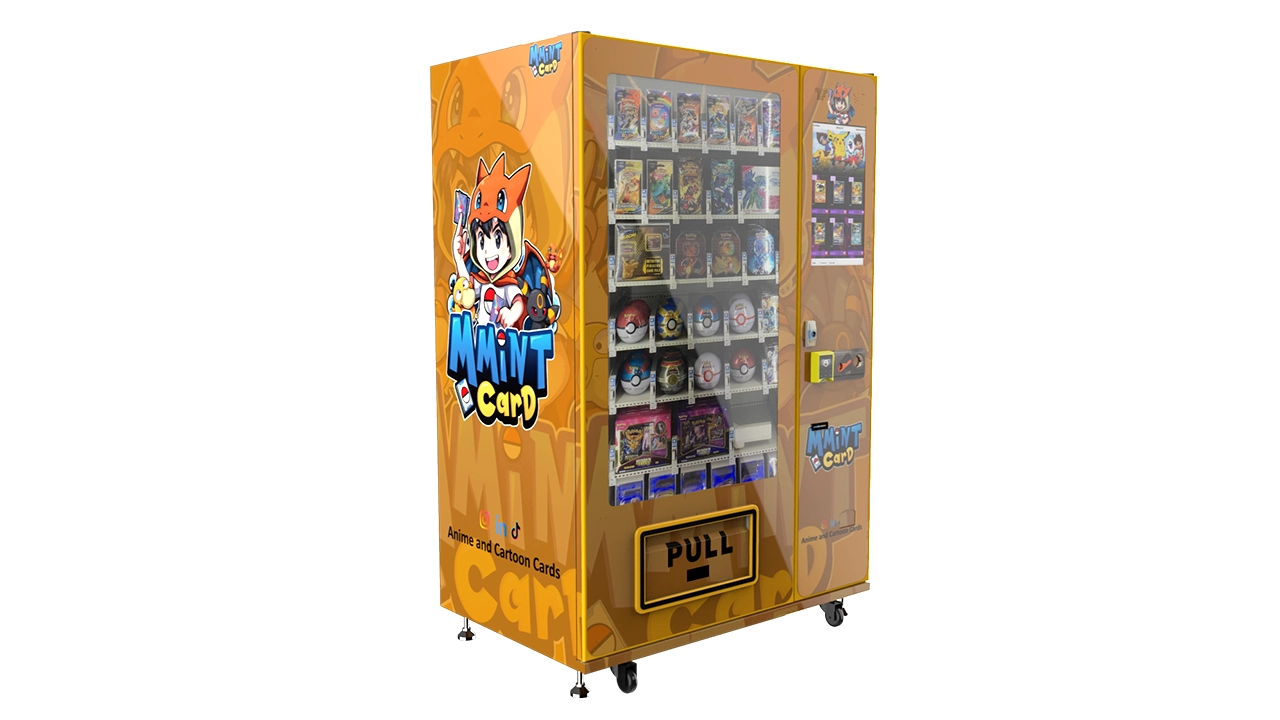
I have bought used machines, and I have regretted most of them. The problem is not the mechanical parts; it is the software and the payment system. A used machine may have outdated firmware that does not support the latest payment methods, and upgrading it can cost as much as the machine itself. If you are on a tight budget, I would rather see you buy a new, basic model than a used premium model with unknown history. The trading card vending machine market has matured enough that entry-level new machines are reliable for a single location.
When you evaluate a supplier, ask for references from other operators. Do not just call the two happy customers they list. Search online forums and vending communities for complaints about specific models. I have seen operators lose thousands on machines with poorly designed dispensing wheels that damage card packs. A machine that damages product is worse than no machine at all because it creates negative brand association.
Maintenance and Downtime: The Operational Reality
Every machine will break. The question is how fast you can fix it and how much it costs. I have had a dispenser motor fail on a Saturday before a major card release, and I lost an entire weekend of peak sales. The repair took five days because I had to order the part. That experience taught me to keep a spare dispenser motor and a spare card reader on hand for every machine. The cost of holding spare parts is about $150 per machine, but it saves you from extended downtime.
For preventive maintenance, I recommend a quarterly check that includes cleaning the sensors, testing the dispenser, and updating the software. This costs about $50 per machine per quarter if you do it yourself, or $150 if you hire a technician. The 32-inch touchscreen trading card vending machine models I run tend to need less mechanical maintenance but more software attention. The touchscreens are sensitive to dust and need a wipe-down every two weeks to keep them responsive.
Remote Monitoring Is Worth the Subscription
I was late to adopt remote monitoring, and it cost me. For the first two years, I only knew a machine was down when a customer called the store owner or I visited. Now I use a cloud-based system that alerts me to jams, low inventory, and payment failures in real time. The subscription is about $15 to $25 per month per machine, and it pays for itself the first time it saves you from a week of downtime. Some suppliers, including Zhongda Smart, offer their own monitoring software that integrates with the machine. If you can get that included in the purchase price, it is a significant advantage.
I also recommend having a local technician on call for locations more than 45 minutes from your home base. I have a network of independent vending repair technicians in each city where I operate. Their rates are typically $75 to $125 per hour with a one-hour minimum. For a simple jam fix, that is the cheapest insurance you can buy.
The Economics of Self-Operation vs. Hiring Help
One of the biggest cost decisions is whether to run the machines yourself or hire a part-time operator. If you have one or two machines, self-operation is the only way to make a profit. The margins are too thin to pay someone else $15 per hour to restock a machine that nets $400 per month. But if you have five or more machines, hiring a part-time route driver can free you up to focus on finding new locations and negotiating better deals.
From my experience, the break-even point for hiring help is around six to eight machines. At that scale, you are spending 15 to 20 hours per week on restocking and maintenance, and your time is better spent on expansion. I hired a part-time college student for $12 per hour to restock three machines twice a week, and it cost me about $280 per month. That pushed my monthly expenses up, but it allowed me to add two more locations without burning out. The net effect was positive, but only because I had the volume to absorb the cost.
Route Density and Fuel Costs
Fuel is a real cost that many new operators overlook. If your machines are spread across a metropolitan area, you can spend $40 to $80 per week on gas just for restocking. I have consolidated my route over the years to keep machines within a 15-mile radius. This has cut my fuel costs by about 35% and reduced the time per stop. A wall-mounted card vending machine in a small store is easier to service than a large floor unit in a mall because you can park closer and the restocking is faster.
When I evaluate a new location, I calculate the drive time and fuel cost into the projected profit. A location that is 30 miles away needs to generate at least $100 more per month in net profit than a local location to justify the extra time and fuel. This simple rule has saved me from several bad decisions.
Regulatory Compliance and Insurance
Depending on where you operate, you may need a business license, a sales tax permit, and possibly a vending machine permit. In the US, the rules vary by state and city. In the EU, the regulatory landscape is different, and you need to comply with local business registration and tax requirements. I operate in five states, and each one has different sales tax collection rules for vending machines. Some states require you to collect tax on the full retail price, while others have special vending machine tax rates.
Insurance is another cost that is easy to ignore. A general liability policy for a single machine will run $200 to $400 per year. If you have a fleet of machines, you can get a blanket policy for $500 to $1,000 per year. I have seen operators skip insurance to save money, but one lawsuit from a child getting injured by a falling machine will wipe out years of profit. The U.S. Small Business Administration has a good overview of the types of insurance you should consider for a small vending operation.
Realistic Profit Projections and Payback Scenarios
Let me give you three scenarios based on my actual operating data. The first is a best-case location: a busy hobby shop in a mid-sized city with 20% commission. The machine does $2,200 per month in gross sales. After commission ($440), payment fees ($70), restocking labor ($80), and maintenance reserve ($60), the net profit is about $1,550 per month. A $7,000 machine pays back in 4.5 months. This is the scenario that makes you feel like a genius.
The second scenario is an average location: a game café with flat rent of $200 per month. The machine does $1,200 in gross sales. After rent ($200), payment fees ($40), restocking labor ($80), and maintenance reserve ($50), the net profit is $830 per month. A $7,000 machine pays back in about 8.5 months. This is the scenario that keeps you in business.
The third scenario is a bad location: a convenience store with 25% commission and low collector traffic. The machine does $400 per month. After commission ($100), payment fees ($15), restocking labor ($80), and maintenance reserve ($30), the net profit is $175 per month. A $7,000 machine would take 40 months to pay back. This is the scenario you must avoid by doing proper site evaluation.
Why I Walked Away from a Seemingly Great Location
I once had the opportunity to place a machine in a major tourist attraction with enormous foot traffic. The rent was 25% of gross sales, and they wanted a minimum guarantee of $300 per month. I ran the numbers and realized that even at $3,000 per month in sales, my net profit would be significantly lower than my best hobby shop location. The minimum guarantee meant I was taking on all the downside risk. I walked away, and it was the right call. The location went through three different operators in two years, and none of them lasted. High traffic does not always mean high profit.
That experience reinforced my belief that the best locations are not the ones with the most people, but the ones with the most collectors. A store that already sells cards and has a loyal customer base is worth more than a mall with a million visitors who have no interest in cards. I now use a simple scoring system: 50% weight on collector density, 30% on foot traffic, and 20% on rent terms. This system has never failed me.
Common Mistakes and Lessons from Real Failures
The most common mistake I see from new operators is overpaying for a machine before securing a location. I have seen people buy a $10,000 machine and then struggle for months to find a good placement. The machine sits in their garage depreciating while they look for a spot. The better approach is to secure the location first, then buy the machine that fits the space and the expected volume.
Another mistake is ignoring the payment processing fees. I have seen operators choose a cheap payment processor that charges 4.5% per transaction to save on monthly fees, only to realize they are losing money on every sale. The vending machine market data shows that cashless payments now account for the majority of vending transactions, so you cannot afford to use an unreliable processor.
The Failed Launch That Taught Me the Most
My worst failure was launching a machine in a new shopping center that had not yet reached full occupancy. The landlord gave me a great rent deal, but there was no foot traffic. I spent $1,800 on inventory and watched it sit for two months. The machine did $240 in total sales before I pulled it. The lesson was simple: never judge a location by its potential, only by its current reality. A shopping center that is 50% occupied is not a good location, no matter how nice the rent is.
That mistake cost me about $2,500 in lost time and inventory. It also taught me to negotiate shorter trial periods. Now I always ask for a 90-day trial with a 30-day exit clause. If the machine does not hit my minimum sales target in the first 60 days, I can move it without penalty. This flexibility is worth more than a slightly better commission rate.
FAQ: Trading Card Vending Machine Operating Costs
Are trading card vending machines profitable?
Yes, they can be profitable, but only in the right location. From my experience, a well-placed machine can generate $800 to $3,500 per month in gross sales with a 30% to 45% product margin. After operating costs, a net profit of $300 to $1,500 per month is realistic. The key is site selection and cost control. A bad location will lose money no matter how good the machine is.
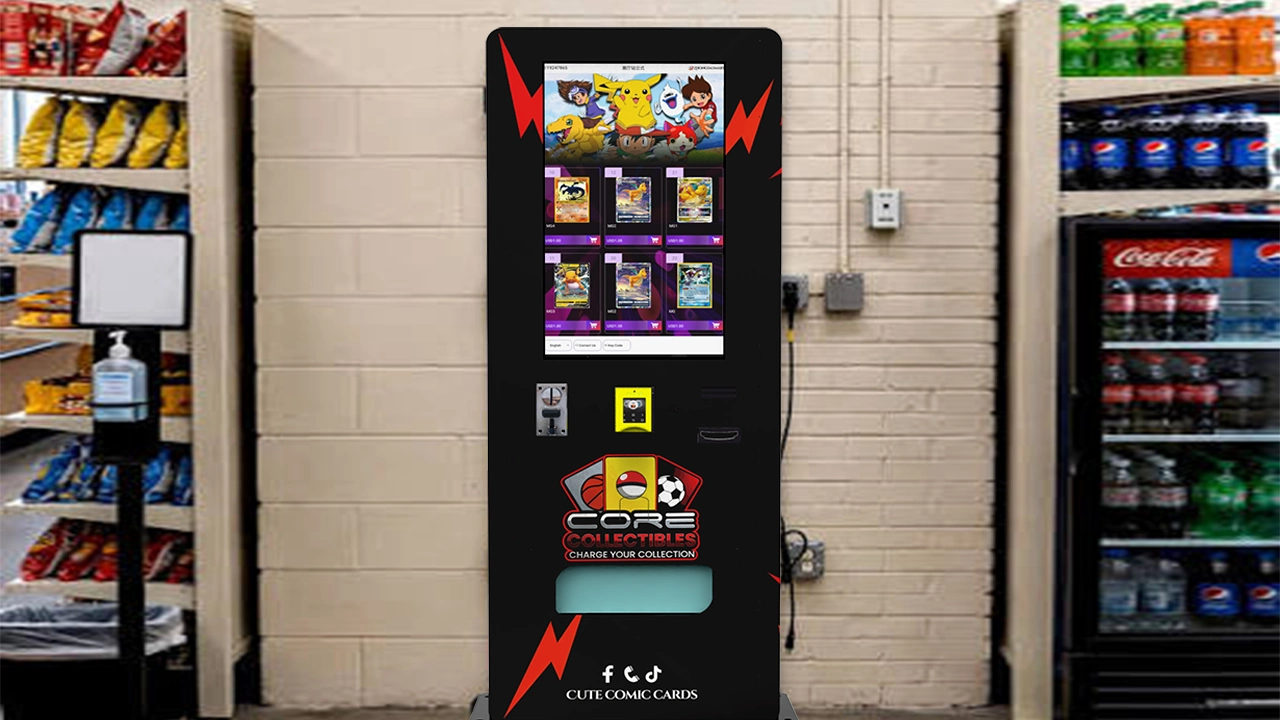
How much does a trading card vending machine cost?
A new machine costs between $5,000 and $12,000 depending on the screen size, dispensing mechanism, and software features. A basic model with a 21-inch screen is around $5,000 to $6,000. A premium model with a 32-inch touchscreen and advanced software is $8,000 to $12,000. Used machines can be found for $2,000 to $4,000, but they carry higher maintenance risk. You can see a breakdown of different configurations in this trading card vending machine cost guide.
How long does it take to pay back a card vending machine?
In a good location, a $7,000 machine will pay back in 6 to 12 months. In an average location, it will take 12 to 18 months. In a bad location, it may never pay back. I have seen machines pay back in 4 months in exceptional hobby shops, and I have seen machines that never made a profit. The payback period depends entirely on the location and your operating efficiency.
Should a beginner buy or lease a card vending machine?
For a beginner, I recommend buying a single, reliable machine rather than leasing. Leasing locks you into a monthly payment that eats into your already thin margins. Buying gives you the flexibility to move the machine if the location does not work out. If you are unsure about the business, start with a lower-cost machine and learn the operational rhythm before scaling up.
Where is the best place to put a card vending machine?
The best locations are hobby shops, comic book stores, game cafés, and entertainment venues with a collector demographic. Look for places that already sell trading cards or host trading card events. The foot traffic does not need to be huge, but the collector density must be high. A location with 200 targeted visitors per day is better than one with 2,000 random visitors.
What permits and licenses are required?
In the US, you typically need a business license, a sales tax permit, and sometimes a vending machine permit depending on your city or state. In the EU, you need business registration and must comply with local tax rules. Check with your local chamber of commerce or the Small Business Administration for guidance. Insurance is also recommended, with general liability policies starting around $200 per year.
How do I choose a reliable vending machine supplier?
Look for a supplier that offers local or regional support, has documented reliability, and does not overpromise revenue. Ask for references from other operators and search online communities for complaints. I have had good experiences with Zhongda Smart for mid-range machines, but the most important thing is to verify the dispenser mechanism quality and software stability before purchase.
What should I do if the machine breaks down?
First, check if it is a simple jam that you can fix on site. Keep spare parts on hand, including a dispenser motor and a card reader. If you cannot fix it, call a local vending repair technician. The cost is typically $75 to $125 per hour. Remote monitoring can alert you to issues before they become major failures.
How can I reduce restocking and maintenance costs?
Consolidate your machines into a tight geographic area to reduce fuel and travel time. Use remote monitoring to avoid unnecessary trips. Keep spare parts on hand to reduce downtime. Buy inventory in bulk only for proven sellers. Track your per-machine costs monthly and eliminate any machine that does not meet your minimum profit threshold.
At the end of the day, the trading card vending machine operating costs are manageable if you approach the business with discipline. The machines are not passive income, despite what some vendors claim. They require constant attention to location performance, inventory rotation, and maintenance. But if you do the math honestly and pick locations with real collector traffic, the return is solid. I have seen too many operators fail because they believed the hype and skipped the fundamentals. Do not be one of them. Start small, measure everything, and scale only when the numbers tell you to.
One more thing worth mentioning: the used machine market is tempting, but it is a minefield. I have bought three used units over the years, and only one was worth the money. The other two had outdated software and failing dispensers that cost more to repair than the machines were worth. If you are on a budget, look for a new basic model rather than a used premium one. The wall-mounted and compact card vending machines are a good entry point because they cost less and are easier to place in smaller stores. You can always upgrade to a larger unit once you have proven the location.
Disclaimer: The figures and projections in this article are based on my personal operating experience and publicly available market data. They are not guarantees of future performance. Actual results will vary based on location, market conditions, inventory selection, and operational efficiency. Always conduct your own due diligence before making any investment decision.