If you’re looking into the trading card vending machine business, the first question you probably have is: which products actually sell, and how do you keep a machine profitable month after month? After more than a decade running automated retail routes across the U.S., I can tell you that the best-selling products for Pokemon card vending machines are not always the most obvious ones — and the difference between a machine that pays for itself in six months and one that sits idle often comes down to how you mix sealed product, single packs, and bulk cards. In this guide, I’ll walk you through what I’ve learned from real placements, including the costly mistakes, the surprising wins, and the exact product categories that keep collectors coming back to a self-service kiosk.
Why Pokemon Cards and Vending Machines Actually Work Together
I’ve been in the vending industry since before card machines were a thing. For years, I ran snack and drink routes, and I’ll be honest — margins were thin. When trading card vending machines started showing up in malls and hobby shops around 2020, I was skeptical. But the economics are different from anything I’d seen before. A booster pack that costs you $3.50 at wholesale sells for $5.99 at retail. That’s a 70% gross margin, which is unheard of in traditional vending. Even premium snacks rarely break 40%.
What makes Pokemon cards even better is the demand curve. Unlike a candy bar that gets consumed and forgotten, a rare card can appreciate in value. That creates a repeat purchase cycle. Collectors don’t buy one pack — they buy ten, twenty, or thirty at a time, especially when a new set drops. I’ve seen a single customer spend $150 on one machine in a single visit. That kind of transaction size doesn’t happen with chips or soda.
There’s also the community angle. Pokemon is not a passing fad. The franchise has been around for over 25 years, and the secondary market for cards is massive. According to a Statista report on the trading card market, the global trading card industry was valued at over $20 billion in recent years, with Pokemon accounting for a significant share. That’s not a niche hobby — that’s a mainstream consumer behavior.
But here’s the catch. Not every location will support a card machine. You can’t just put one next to a soda machine in a random office breakroom and expect it to work. The people who buy Pokemon cards from a vending machine are a specific demographic — mostly young adults and teens who are already collectors. They need to be in a place where they’re already thinking about cards, or at least in a high-traffic retail environment with a strong youth presence.
That’s why the best-selling products for Pokemon card vending machines are not just about what’s popular — they’re about what fits the machine, the location, and the buyer’s psychology at that exact moment. I’ll break down the specific product categories that work, the ones that don’t, and how to structure your inventory for maximum turnover.
The Core Product Categories That Drive Sales
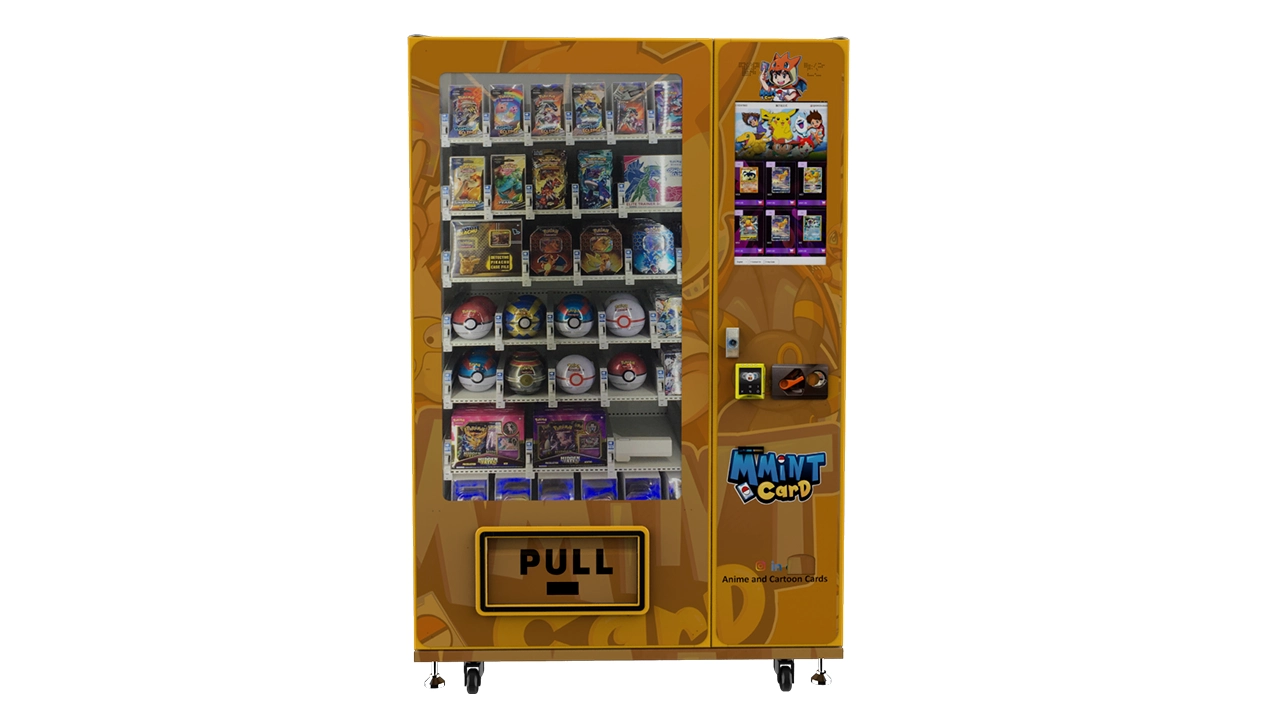
Sealed Booster Packs — The Bread and Butter
If you’re starting a card vending operation, sealed booster packs should be your foundation. They’re easy to stock, they have a long shelf life, and they’re what most collectors are looking for when they approach a machine. The standard price point for a Pokemon booster pack in the U.S. is between $4.50 and $6.50, depending on the set. The retail price is set by the manufacturer, so you don’t have to guess. Your wholesale cost is usually around $3.00 to $3.50 per pack if you buy in bulk from a distributor.
From my experience, the best-selling sets are the newest ones. When a new expansion launches, there’s a two-to-three-week window where demand is extremely high. I remember one location — a comic shop in a mid-sized mall — where we sold out of a new set in four days. We were restocking every other day, which is a good problem to have, but it also taught me that you need to plan your restock schedule around set release dates, not just weekly calendars.
One thing I’ve learned the hard way: don’t overstock older sets. I had a machine with a shelf full of a set that was two years old. It sat there for months. Collectors want the current meta, not old packs that are easy to find at any game store. Unless the set is a known high-value set like Evolving Skies, older product just takes up space and ties up your cash.
Elite Trainer Boxes and Premium Collections — High Ticket Items
Elite Trainer Boxes, or ETBs, are a different beast. They retail for around $40 to $60 and come with eight booster packs, sleeves, dice, and other goodies. They’re a great product for vending machines because they have a high perceived value and a higher transaction amount. But they also take up a lot of space in the machine, so you need to think about how many you can fit and how fast they turn over.
In my experience, ETBs work best in locations where there’s a mix of impulse buyers and serious collectors. A mall kiosk or a location near a movie theater tends to do well because the item feels like a “treat” purchase. On the other hand, a standalone store with a dedicated card section might not need ETBs in the machine because customers can already buy them at the counter.
Premium collections, like the Pokemon Center exclusive boxes or special holiday sets, are even higher ticket items — $80 to $120. These are riskier. They move slower, and if the location doesn’t have the right foot traffic, they can sit for weeks. I’ve had success with these in high-end hobby shops and in tourist-heavy areas where people are looking for a souvenir or a gift. But I’ve also had machines where the premium product just collected dust. My rule of thumb now is to keep premium items to no more than 10% of the machine’s inventory.
Single Loose Packs — The Impulse Purchase
Single loose packs, sold individually without a box, are a completely different category. They’re usually priced higher per pack than a sealed box — sometimes $7 to $9 per pack — because the buyer is paying for convenience and the chance to pull a chase card without committing to a full box. These are the impulse buys. They’re what a parent buys for a kid who’s been good, or what a collector grabs while waiting for a friend.
I’ve found that loose packs are the best-selling products for Pokemon card vending machines in locations with high foot traffic but low dwell time — like a subway station exit or a busy retail corridor. The buyer doesn’t want to browse. They see the machine, they see the cards, they swipe their card, and they’re gone in under a minute. That’s the beauty of a vending machine. It’s frictionless.
The downside is that loose packs require more careful stocking. Because they’re not in a sealed box, there’s a risk of tampering or weighing. You need to make sure your machine has a reliable dispensing mechanism and that the packs are stored in a way that prevents someone from feeling for a heavy pack or a code card. I’ll talk more about this in the maintenance section, but trust me — this is a real issue.
Bulk Cards and Mystery Packs — A Risky but Potentially Lucrative Niche
Some operators sell bulk cards — hundreds of common and uncommon cards in a repackaged bundle. These are usually priced at $5 to $10 for a random assortment. The margins are decent, but the customer satisfaction is unpredictable. I tried this in a few locations, and the feedback was mixed. Some buyers loved the surprise element. Others felt cheated when they got a bunch of cards they already had.
Mystery packs, where the buyer doesn’t know what set or what rarity they’re getting, are a similar gamble. They can be a great way to clear out excess inventory, but they can also hurt your reputation if the packs are consistently bad. I’ve seen machines get a reputation for being “rigged” because the mystery packs never contained anything good. That’s a death sentence for a location.
My advice is to use bulk and mystery packs sparingly — maybe 5% of your inventory — and only in locations where you’re confident the buyer is a casual fan, not a serious collector. Serious collectors will see through it and avoid your machine entirely.
Comparing Product Types: What Actually Moves
| Product Type | Retail Price Range | Wholesale Cost Range | Gross Margin | Turnover Speed | Best Location Type |
|---|---|---|---|---|---|
| Sealed Booster Packs | $4.50 – $6.50 | $3.00 – $3.50 | 50% – 70% | Fast (1–2 weeks) | Hobby shops, malls, card stores |
| Elite Trainer Boxes | $40 – $60 | $28 – $35 | 30% – 40% | Medium (2–4 weeks) | Malls, tourist areas, high-traffic retail |
| Premium Collections | $80 – $120 | $55 – $75 | 25% – 35% | Slow (1–3 months) | High-end hobby shops, tourist spots |
| Single Loose Packs | $7 – $9 | $3.50 – $4.00 | 60% – 70% | Very fast (daily restock possible) | Subway exits, busy retail corridors |
| Bulk/Mystery Packs | $5 – $10 | $2 – $4 | 50% – 60% | Slow to medium | Casual fan locations, events |
This table is based on my own route data from 2022 to 2024. The numbers will vary depending on your distributor, your location, and the current market conditions. But the general pattern holds: sealed booster packs and loose packs are your volume drivers, while ETBs and premium collections are your profit boosters when they actually sell.
Location Is Everything — Even for the Best-Selling Products
You can have the best-selling products for Pokemon card vending machines in the world, but if the machine is in the wrong place, you’ll be pulling it out within six months. I’ve made this mistake. In 2021, I placed a card machine in a large grocery store in a suburban area. The store had great foot traffic — thousands of people a day. But the demographic was wrong. Most shoppers were there for groceries, not Pokemon cards. The machine barely did $200 a month. I moved it to a comic book shop three miles away, and it did $2,000 in the first month.
The lesson is simple: foot traffic alone is not enough. You need the right foot traffic. Collectors are a self-selecting group. They go to places where they expect to find cards — hobby shops, game stores, comic conventions, and increasingly, malls with a strong youth presence. When you’re scouting a location, don’t just count people. Look at who they are. Are there kids under 16? Are there young adults with backpacks? Are there people browsing for more than five minutes? That’s your target audience.
I’ve also had success with what I call “piggyback” locations — placing a card machine inside a business that already sells cards or related products. For example, a game cafe that hosts Pokemon tournaments is an ideal spot. The players are already there, they’re already in the buying mindset, and the machine is just an extension of the store’s existing inventory. This is a win-win because the store gets a percentage of the revenue or a flat rental fee, and you get a built-in customer base.
On the other hand, I’ve seen operators try to place card machines in laundromats, gyms, and even barbershops. These are terrible locations. The customer is not there to buy cards, and the impulse purchase rate is low. I’m not saying it can never work — I’ve heard of a few outliers — but it’s not a strategy I would recommend to a new operator.
Costs, Pricing, and Realistic Return on Investment
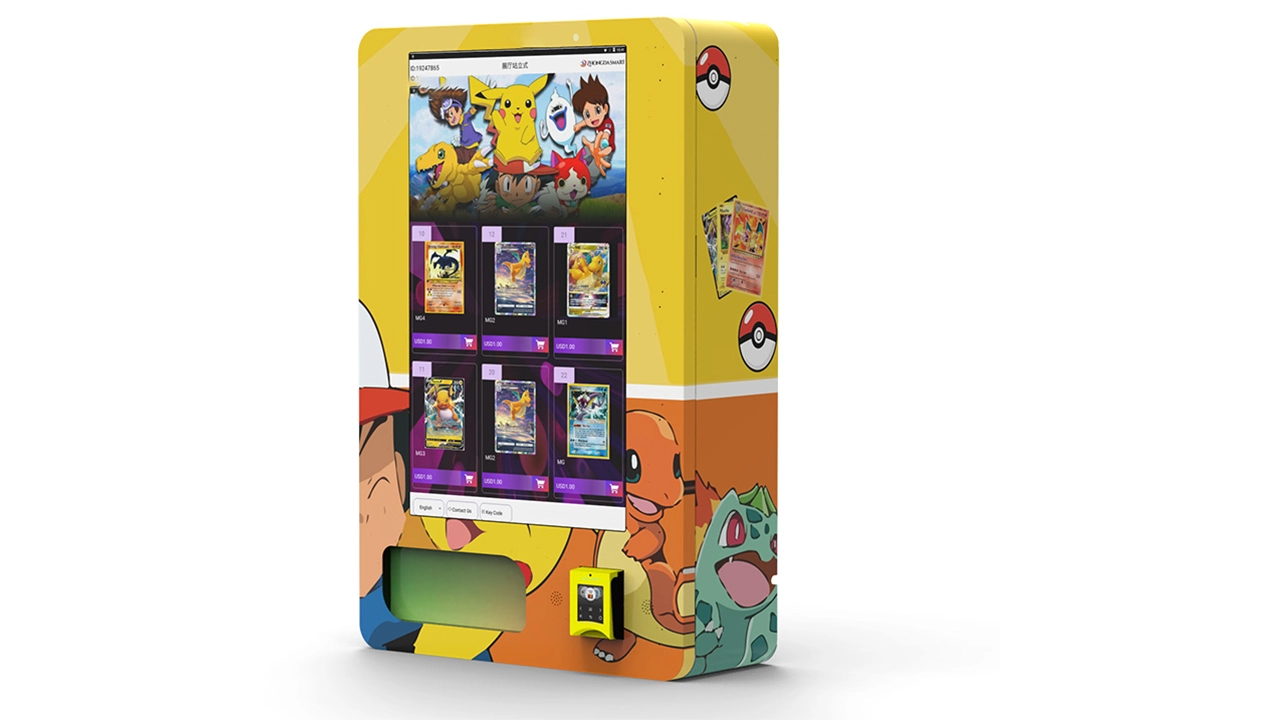
Let’s talk numbers. A new trading card vending machine, depending on the configuration, will cost you between $3,000 and $12,000. I’ve seen basic wall-mounted units for under $4,000, and I’ve seen full-size freestanding machines with large touchscreens for over $10,000. If you’re buying from a reputable manufacturer like Zhongda Smart, you’re probably looking at the higher end of that range, but you’re also getting better reliability and a longer lifespan.
In addition to the machine itself, you’ll need to budget for installation, shipping, and initial inventory. Shipping for a full-size machine can be $500 to $1,500 depending on your location. Installation, if you need a licensed electrician, is another $200 to $500. Initial inventory for a small machine will run you $1,500 to $3,000, and for a larger machine, $5,000 to $10,000.
So the total startup cost for a single machine is realistically $5,000 to $15,000. That’s a significant investment, but it’s not unreasonable. The question is: how fast can you get it back?
From my experience, a well-placed card machine in a good location will gross between $1,500 and $4,000 per month. That’s the gross revenue, not the profit. After cost of goods (which is roughly 40% to 50% of retail), location rent (which can be $100 to $500 per month or a 10% to 20% commission), and maintenance, your net profit is usually 20% to 35% of gross revenue. So a machine that grosses $2,500 a month might net you $600 to $800. At that rate, you’re looking at a payback period of 8 to 14 months.
I want to be clear: these are my estimates based on my own routes and conversations with other operators. I’m not quoting an official study. The numbers can vary widely. A machine in a top-tier mall location might gross $5,000 a month, while a machine in a mediocre location might not even hit $500. The U.S. Small Business Administration has general guidance on vending machine profitability, but it’s not specific to card machines. If you want more concrete data, I’d suggest looking at IBISWorld’s vending machine operator industry report for broad financial benchmarks.
Equipment Selection — What I Wish I Knew Before Buying
When I bought my first card machine, I made a classic rookie mistake: I bought the cheapest one I could find. It was a basic model with a simple coil system, and it broke down within three months. The dispensing mechanism jammed constantly, and the card reader was finicky with certain credit cards. I spent more money on repairs in the first year than I saved on the initial purchase.
Here’s what I now tell anyone starting out: buy the best machine you can afford, and prioritize reliability over features. A machine with a proven track record of low jamming rates and a good warranty is worth the extra money. Look for a machine with a robust card dispensing mechanism — ideally one that uses a spiral or a vacuum-based system rather than a simple drop tray. The drop tray designs are cheaper, but they’re more prone to damage from rough handling.
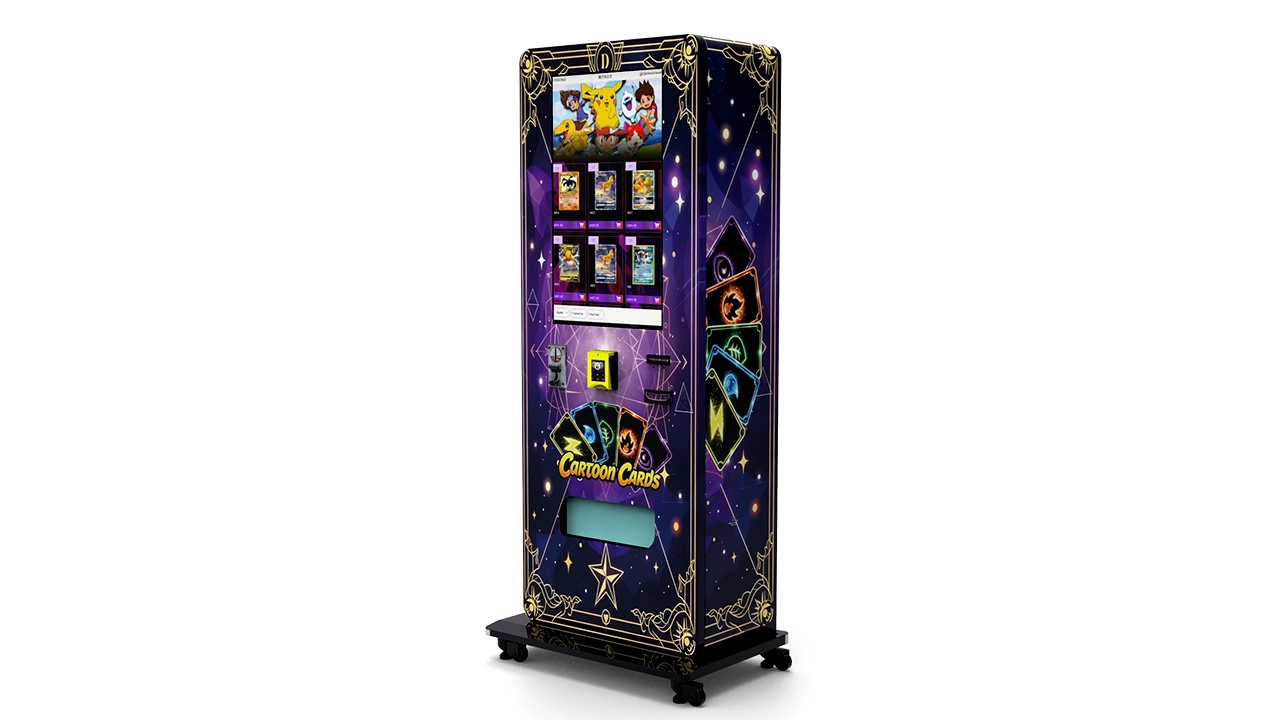
Another thing to consider is the screen and interface. A larger touchscreen, like the 32-inch models, allows you to display product images and descriptions, which can increase sales. But it also adds to the cost and the maintenance burden. If you’re just starting out, a smaller screen with a simple selection grid is fine. You can always upgrade later.
I’d also recommend looking at the machine’s security features. Card machines are targets for theft, especially in locations with limited supervision. Look for a machine with a reinforced lock, a tamper alarm, and a camera system if possible. I’ve had a machine broken into twice, and each time it cost me over $1,000 in lost inventory and repairs. That’s money you don’t want to lose.
If you’re considering a used or refurbished machine, be careful. I’ve seen some good deals, but I’ve also seen machines that were sold as “lightly used” and turned out to be held together with duct tape. Always ask for a maintenance history and a video of the machine in operation before you buy. And if possible, buy from a local dealer so you can inspect it in person.
Payment Systems and the Self-Service Experience
One of the most important parts of a card vending machine is the payment system. In the U.S., most customers expect to pay with a credit card or a mobile wallet like Apple Pay. Cash is becoming less common, especially among the younger demographic that buys Pokemon cards. I’ve seen machines that were cash-only struggle to hit even half the revenue of a similar machine with card acceptance.
When you’re choosing a payment system, make sure it supports contactless payments and chip cards. You’ll also want to make sure it can process transactions quickly — under 10 seconds is ideal. A slow payment system creates a bottleneck, and if there’s a line, people will walk away.
Another consideration is whether to use a cashless-only system or a hybrid. Cashless-only systems are simpler and reduce the risk of theft, but they exclude customers who prefer cash. In my experience, cashless-only works fine in most locations, especially in malls and retail areas where the majority of customers are using cards anyway.
You should also think about the user experience beyond just payment. The machine should be easy to navigate, with clear instructions and a simple selection process. A confusing interface is a sales killer. I once tested a machine with a clunky menu system, and the sales dropped by 30% compared to a similar machine with a more intuitive interface. It’s worth the extra money to get a machine with a user-friendly design.
Maintenance, Restocking, and the Hidden Costs of Running a Card Vending Route
Running a card vending machine is not passive income. You have to restock, clean, and maintain the machine on a regular basis. I’ve seen too many new operators underestimate this and then get burned out within a few months.
Restocking frequency depends on the location and the product mix. A high-traffic machine might need restocking every two to three days, while a slower machine can go a week or more. You’ll also need to check for jams, clean the screen, and make sure the card dispensing mechanism is working smoothly. I usually budget about one hour per machine per week for routine maintenance, not counting travel time.
The hidden costs are the ones that get you. Card readers fail, screens crack, and coin mechanisms jam. I’ve had to replace a card reader twice in a year on one machine — that was $400 each time. I’ve also had to deal with vandalism, which is unfortunately common in certain locations. I now factor in a “maintenance contingency” of about 10% of gross revenue to cover these unexpected costs. That’s on top of the regular repair costs I already budget for.
If you’re not handy with electronics, you’ll need a reliable vending machine repair technician. In some areas, these are hard to find. I’ve had to drive two hours to get a technician to look at a machine, which is not fun. Before you buy a machine, check what kind of local support is available. If you’re in a rural area, you might want to consider a simpler machine that’s easier to fix yourself.
How to Choose a Supplier — What I Look For Now
Choosing the right supplier is one of the most important decisions you’ll make. I’ve worked with a few different manufacturers and distributors over the years, and I’ve learned to ask the right questions before signing anything. First, ask about the machine’s jamming rate. A good machine should have a jamming rate of less than 1%. If the supplier can’t give you a number, that’s a red flag.
Second, ask about the warranty and the repair process. What happens if the machine breaks down? Is there a local technician or will you have to ship it back? How long does a typical repair take? I’ve had machines that were out of service for over a month waiting for parts, and that’s a huge loss of revenue.
Third, ask about the machine’s scalability. Can you add more machines to your network easily? Can you update the software remotely? These features might not matter for your first machine, but they will if you grow your operation.
I’ve mentioned Zhongda Smart earlier, and I’ll be specific: they’re a manufacturer that has been consistent in terms of quality and support in my experience. But I’d still recommend doing your own due diligence. Ask for references, watch videos of the machine in operation, and if possible, visit the factory or a local installation. Don’t rely on a sales pitch.
Legal Considerations and Permits
You might think that putting a vending machine in a store is just a handshake deal, but there are legal considerations. First, you’ll need to register your business and get a sales tax permit. The requirements vary by state and by local jurisdiction. In the U.S., the Small Business Administration has a good overview of the general steps, but you should check with your local city or county for specific rules.
Second, you’ll need to think about liability insurance. If someone gets hurt using your machine, or if the machine causes damage, you could be held liable. I carry a general liability policy for my vending operations, and it costs me about $500 to $1,000 a year. It’s not a huge cost, but it’s important.
Third, if you’re placing the machine in a store, you’ll need a written agreement that covers the location, the commission or rental fee, and the responsibilities of each party. I’ve seen too many operators get burned by verbal agreements. A simple one-page contract can save you a lot of headaches.
In the European Union, the rules are different. If you’re operating there, you’ll need to be aware of the EU’s distance selling regulations and consumer protection laws. Eurostat has some useful data on retail trade and consumer behavior that can help you understand the market. But the key takeaway is: don’t skip the legal stuff. It’s not the most exciting part of the business, but it’s essential.
My Biggest Failure and What It Taught Me
I want to share a specific failure because I think it’s more instructive than any success story. In 2022, I decided to expand my card vending route into a local mall that was undergoing a renovation. The mall had decent foot traffic, but the renovation was causing a lot of construction noise and dust, and the store where I placed the machine was at the end of a corridor that was under construction.
I thought I was getting a great deal on the rent because the store was struggling. But I didn’t account for the fact that the construction would kill foot traffic for months. The machine sat there, barely making $300 a month. After six months, I pulled it out and moved it to a hobby shop that was a mile away. The difference was night and day. The hobby shop did $2,500 in the first month.
What did I learn? Location is not just about the physical space — it’s about the timing and the context. A location that looks good on paper can be a disaster if there’s a temporary disruption. I now always ask about upcoming construction, store closures, and any other events that might affect foot traffic before I sign a placement agreement.
A Success Story That Changed My Approach
On the flip side, I had a success that changed how I think about product placement. In 2023, I placed a machine in a small card shop that was run by a couple who were passionate about Pokemon. They didn’t have a lot of space, but they had a loyal customer base of local collectors. I initially stocked the machine with the usual mix of booster packs and ETBs.
After a few weeks, the owner suggested I add single loose packs from older sets — sets that were no longer in print but still had a following. I was skeptical, but I tried it. Those loose packs sold out within a week. The owner told me that collectors were excited to find older packs that they couldn’t get at big-box retailers. That was a lightbulb moment for me. The best-selling products for Pokemon card vending machines are not always the newest sets — sometimes they’re the ones that are hard to find elsewhere.
Now, I always ask the location owner what their customers are asking for. They know their customers better than I do, and their insights have been invaluable. It’s a partnership, not just a transaction.
How to Scale Your Card Vending Operation
Once you have one machine running smoothly, the natural next step is to scale. But scaling a card vending operation is not the same as scaling a snack vending route. The inventory is more volatile, and the locations are more specific. I’ve seen operators try to grow too fast and end up with a bunch of underperforming machines.
My advice is to start with one machine, run it for at least six months, and learn the ins and outs before you buy a second one. Once you have a proven model, you can start looking for additional locations. But don’t just replicate the same product mix everywhere — adapt it to each location. A machine in a hobby shop will have a different optimal product mix than a machine in a mall.
You should also think about your restocking logistics. If you have multiple machines spread out across a city, you’ll need a route that minimizes travel time. I’ve seen operators use route planning software to optimize their schedules, and it makes a big difference in the long run.
Frequently Asked Questions
Are trading card vending machines profitable?
Yes, they can be profitable, but it depends heavily on location and product mix. From my experience, a well-placed machine can gross $1,500 to $4,000 per month, with net profit margins of 20% to 35%. However, a poorly placed machine can lose money. The key is to do your homework on the location and the target audience before you invest.
How much does a card vending machine cost?
A new machine costs between $3,000 and $12,000, depending on the size, features, and manufacturer. Shipping, installation, and initial inventory add another $2,000 to $5,000. So the total startup cost for a single machine is typically $5,000 to $15,000.
How long does it take to recoup the investment?
In my experience, the payback period is usually 8 to 14 months for a well-placed machine. But this can vary widely. A machine in a top location might pay back in 6 months, while a mediocre location could take 18 months or more. Be realistic about your projections.
Should a beginner buy or lease a card vending machine?
I generally recommend buying, not leasing. Leasing agreements can be restrictive, and you don’t build any equity. However, if you’re not sure about the business, you might consider a short-term lease or a revenue-sharing agreement with a location owner to test the waters.
Where is the best place to put a card vending machine?
The best locations are places where collectors already gather — hobby shops, game stores, comic shops, and malls with a strong youth presence. Avoid locations where the demographic doesn’t match, like laundromats or gyms.
What permits or licenses do I need?
You’ll need to register your business and get a sales tax permit. The specific requirements vary by state and local jurisdiction. You should also consider general liability insurance. Check with your local city or county for the exact rules.
How do I choose a supplier?
Look for a supplier with a proven track record, a good warranty, and a low jamming rate. Ask for references and watch videos of the machine in operation. If possible, buy from a local dealer so you can inspect the machine in person.
What if the machine breaks down?
You’ll need to have a plan for repairs. Some issues you can fix yourself, but for major problems, you’ll need a technician. Check what local support is available before you buy. A machine that’s out of service for a month is a huge loss of revenue.
How can I reduce restocking and maintenance costs?
Plan your restocking schedule around set release dates and customer demand. Use route planning software to minimize travel time. Keep a stock of common spare parts, and learn to do basic repairs yourself. Also, factor a maintenance contingency of about 10% of gross revenue into your budget.
Disclaimer: The figures and estimates in this article are based on my personal experience operating vending machines in the U.S. market. Actual results may vary depending on location, market conditions, product availability, and other factors. This content is for general informational purposes and does not constitute financial or legal advice. Always consult with a qualified professional before making business decisions.