If you are looking into an ODM trading card vending machine, the first thing you need to hear is this: the hardware is the easy part, and the location is the entire game. I have spent over a decade placing vending equipment across North America, and I have watched more operators lose money on card machines through bad site selection than through bad machine builds. The machine itself is a tool, not a business model. Before you wire a single dollar into inventory, you need to understand how foot traffic, dwell time, and local collector behavior will make or break your unit. This guide is written from direct operational experience, not from a spec sheet, so let’s talk about what actually matters when you buy an ODM trading card vending machine for real-world placement.
Why Trading Card Vending Machines Are a Different Beast
Card vending is not snack vending. A snack machine sells a predictable consumable at a low price point, and people buy out of hunger or habit. A trading card machine sells a discretionary, collectible item, and the buyer is usually a hobbyist, a reseller, or a kid with an allowance and high expectations. That changes everything about how you stock, price, and position the unit.
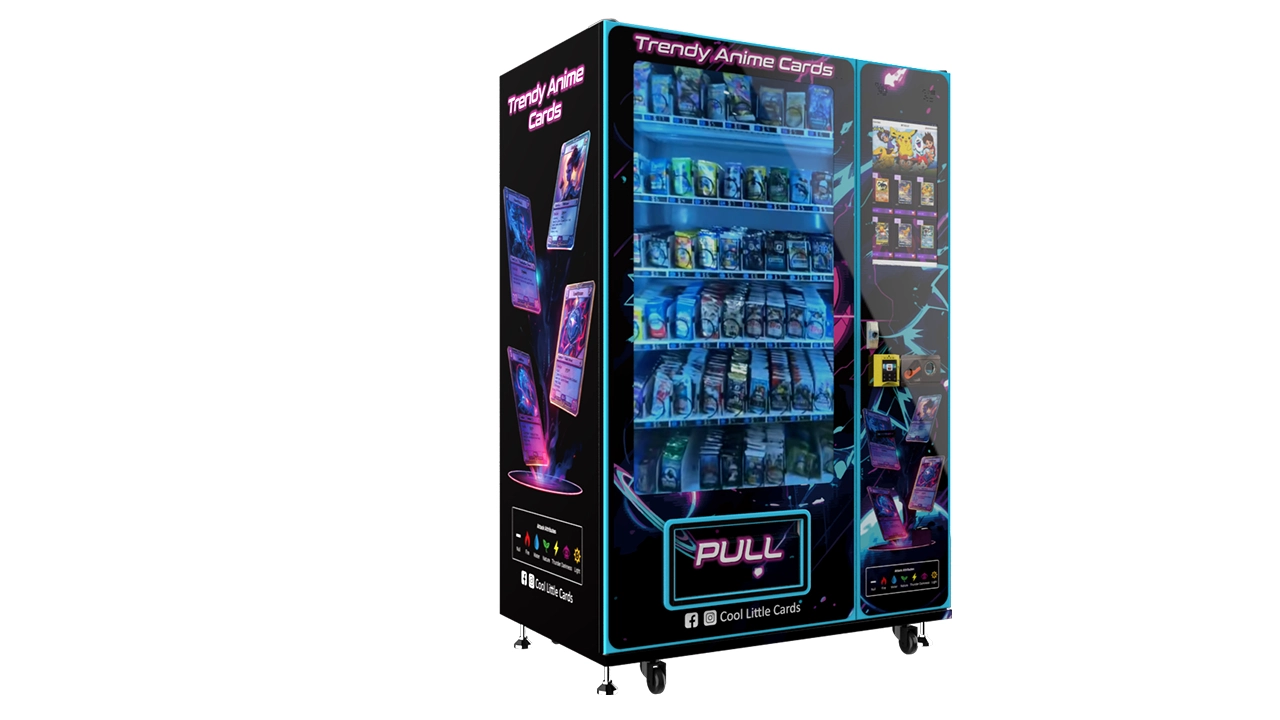
The first major difference is the transaction value. A pack of Pokémon or sports cards can range from five to fifty dollars, and a single pack can carry a resale value far beyond its retail price. This creates a different risk profile: theft, damage, and even machine tampering become real concerns. I have seen operators install a card vending machine in a mall and then complain about breakage when they failed to choose a unit with reinforced glass and a secure locking mechanism. That is an operator error, not a machine flaw.
Another difference is the emotional component. When a buyer pulls a rare card, they remember the machine. When they pull a dud, they also remember the machine. This is a brand experience, and if you want repeat customers, you need to set the machine up for fairness and transparency. That means clear display windows, visible product, and a reliable dispensing mechanism that does not jam or damage the product inside the pack.
Finally, the inventory is not static. Card sets rotate, hype cycles spike, and older product can become dead weight on your shelf. A snack operator can rotate product every few weeks without much thought. A card operator needs to stay current with release schedules, market trends, and secondary market values. This is a specialty retail operation, not a passive vending route.
What Buyers Actually Need to Know Before Buying an ODM Trading Card Vending Machine
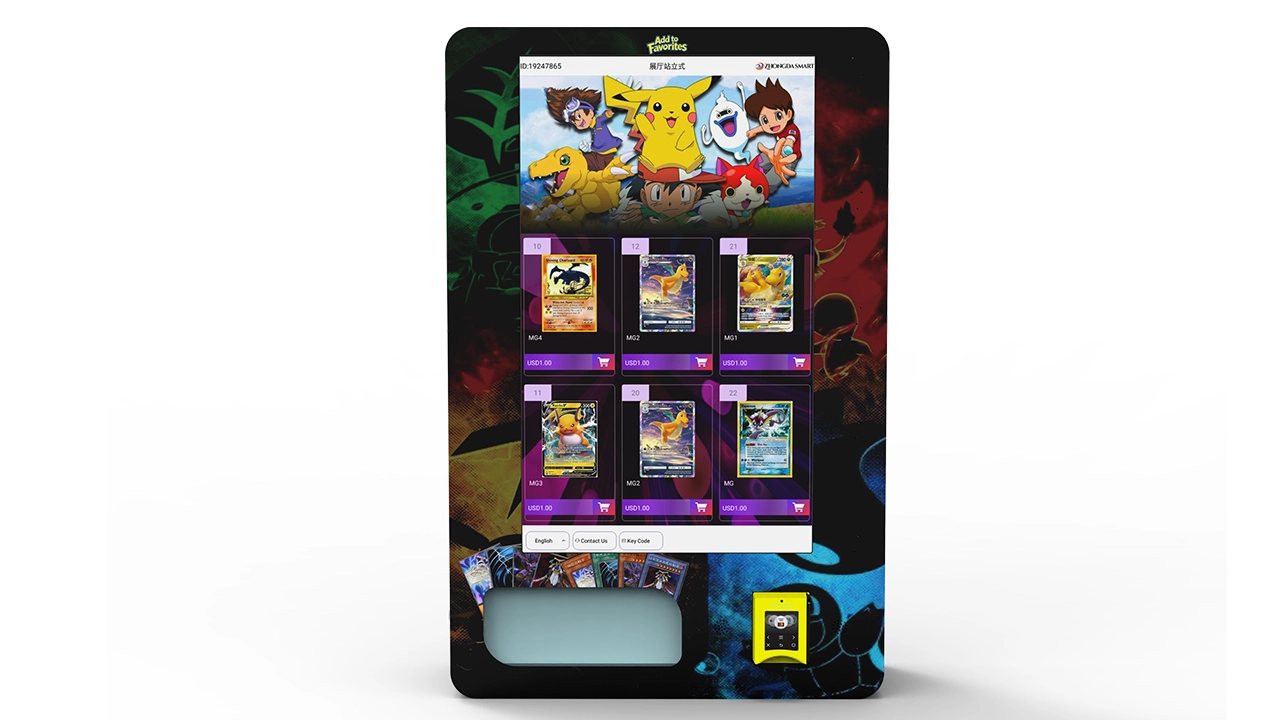
Let’s get into the procurement side. The term ODM trading card vending machine is used broadly, but it usually refers to a machine that is manufactured by a factory and then customized or rebranded for a specific operator. That is a common setup in this industry, and it can be a smart move if you know what you are asking for. The problem is that most first-time buyers do not know what specifications matter, and they end up with a machine that looks good in a showroom but fails in the field.
Here is what I tell every buyer who asks me about equipment selection. First, look at the dispensing mechanism. Card machines typically use either a spiral, a carousel, or a robotic arm system. Spiral systems are simple and reliable, but they are limited in what they can hold. Carousel systems are more flexible and can handle different pack sizes, but they require more maintenance. Robotic arm systems are the most versatile and give the best customer experience, but they are also the most expensive and the most complex to repair. I have run all three, and my honest advice is to choose a system based on the product you plan to sell, not on the wow factor of the machine.
Second, consider the payment system. In the card vending world, you need a payment terminal that handles card payments, mobile wallets, and ideally cash. The card collector demographic skews younger, and they pay with phones and debit cards, not quarters. If your machine only takes cash, you are cutting off a large part of your market. I also recommend a machine with a remote monitoring system so you can check sales data, inventory levels, and error codes without driving to the site. This is not a luxury anymore; it is a necessity for anyone running more than one unit.
Third, think about security and build quality. A card machine is a target because the product inside is small, valuable, and easily resold. You want a machine with a solid steel cabinet, a high-quality lock, and ideally a tamper alarm. I have seen operators buy cheap machines from overseas and then lose thousands of dollars in inventory to a simple crowbar attack. That is a hard lesson, and it is one you can avoid by spending a little more upfront.
The Real Cost of a Trading Card Vending Machine
Now let’s talk numbers, because this is where most buyers get confused. The initial investment for a quality card vending machine varies widely depending on configuration, size, and payment system. Based on my experience and what I see in the market, you should expect to pay somewhere between $8,000 and $25,000 for a new unit from a reputable manufacturer. This range includes basic models with a simple display and a single payment system, all the way up to large-format machines with touchscreens, robotic arms, and advanced telemetry.
If you are looking at a used or refurbished unit, you might find prices in the $3,000 to $7,000 range, but you need to be careful. Used machines often come with worn-out dispensing mechanisms, outdated payment systems, and no warranty. In my experience, a used card machine is only a good deal if you are mechanically inclined and have a reliable repair source. Otherwise, the savings are eaten up by downtime and repair costs.
Beyond the machine itself, you have to budget for inventory. This is the part that surprises most new operators. You cannot just put a few dozen packs in the machine and call it a day. You need enough stock to fill the machine, plus backup inventory to restock during the first few weeks. For a standard card machine, that means an initial inventory investment of $2,000 to $5,000, depending on the product mix. And if you are buying sealed product from distributors, you need to factor in wholesale pricing, which is typically 40% to 60% of retail value.
Let me give you a concrete example from my own operation. I placed a card machine in a busy comic shop in a mid-sized city. The machine cost me $14,000, and the initial inventory was $4,500. I also spent about $800 on installation, signage, and a small security camera. That is a total upfront investment of just under $20,000. The machine grossed about $1,200 per month in the first three months, which gave me a gross margin of roughly 45% after product cost. That means I was clearing about $540 per month before expenses like payment processing fees, electricity, and maintenance. At that rate, the payback period was around 37 months, which is not great, but it was acceptable because the location had long-term stability.
Here is the thing: that same machine in a high-traffic mall or a large hobby store can gross $3,000 to $5,000 per month. In a bad location, it might gross $300. The variance is huge, and that is why I keep telling people that location is the whole ballgame. A machine in the right spot can pay for itself in under a year. A machine in the wrong spot will sit there and collect dust.
Location Evaluation: What I Look For Before Signing a Placement Agreement
If there is one piece of advice I can give you, it is this: do not buy the machine first and then look for a location. That is backwards. Find the location first, evaluate the foot traffic and the customer profile, and then decide what machine to buy. This is the discipline that separates profitable operators from the ones who end up selling their equipment at a loss.
When I evaluate a potential site, I look at several factors. The first is foot traffic volume. I want to see at least 500 people passing by per day, and ideally more than 1,000. But raw numbers are not enough. I also look at the type of traffic. A location with a high volume of families with children is good for Pokémon cards. A location with a high volume of adult hobbyists is better for sports cards. A location with a lot of foot traffic but no interest in trading cards is useless.
Second, I look at dwell time. This is the amount of time people spend in the area. A location like a movie theater lobby or a restaurant waiting area has high dwell time, and that is perfect for a card machine because people have time to browse and make a purchase. A location like a busy transit corridor has low dwell time, and people are in a hurry, so they are less likely to stop and buy a pack of cards.
Third, I look at the existing retail mix. If the location is next to a hobby store, a comic shop, or a game store, that is a strong signal that the customer base is already there. If the location is a grocery store or a pharmacy, the traffic might be high, but the card-buying intent is low. I have had success in grocery store vestibules, but only when the store is in a neighborhood with a strong collector community.
Fourth, I check the operational hours. A 24-hour location is great because you can sell cards at 2 AM, but it also means more risk of theft and vandalism. A location with limited hours is safer, but it also caps your sales potential. I usually prefer a location that is open at least 12 hours a day, seven days a week, with a responsible manager on site.
Finally, I negotiate the terms. Some locations want a flat monthly rent, some want a commission on sales, and some want a combination of both. In my experience, a commission-based agreement is better for the operator because it aligns incentives. If the location believes in the machine, they will help promote it. If they just want a flat rent, they have no reason to care about your sales. I have seen too many operators sign a high flat rent and then struggle to break even.
Comparison of Placement Models: Rent, Commission, or Partnership
Let me break down the three common placement agreements so you can see the trade-offs clearly. This is not an exhaustive list, but it covers the main structures I have encountered in the field.
| Placement Model | Upfront Cost | Monthly Cost | Operator Control | Risk Level | Best For |
|---|---|---|---|---|---|
| Flat Rent | Low to Medium | Fixed fee ($100–$500) | High | Medium | High-traffic locations with proven sales |
| Commission Only | Low | 10%–30% of sales | Medium | Low | New locations, testing a site |
| Revenue Share Partnership | Shared | Split after costs | Low | Low to Medium | Long-term strategic partnerships |
In a flat rent model, you pay a fixed amount regardless of sales. This is simple to budget, but it puts all the risk on you. If the location underperforms, you still owe the rent. In a commission model, you pay a percentage of sales, which means your cost scales with your revenue. This is safer, but the location might lose interest if your sales are low because they are not making much money from you. In a partnership model, you share the investment and the profits, which can work well if the location has a vested interest in your success, but it also means less control over pricing and product selection.
My personal preference is a hybrid model: a low base rent plus a small commission on sales above a certain threshold. This gives the location a steady income and gives me an incentive to grow sales. It is a fair deal for both sides, and it is the structure I have used most often in my successful placements.
Inventory Management and Restocking: The Operational Backbone
Once the machine is on site, the real work begins. Inventory management is the most underrated aspect of card vending, and it is where most operators fail. You cannot just fill the machine and walk away. You need a restocking schedule, a data-driven approach to product selection, and a system for tracking what sells and what does not.
I recommend restocking every one to two weeks, depending on sales velocity. A machine that sells $1,000 per month needs to be restocked every two weeks to keep the selection fresh. A machine that sells $3,000 per month needs weekly restocking. If you wait too long, you will have empty slots, and empty slots are lost revenue. Worse, an empty machine looks abandoned, and customers will stop checking it.
Product selection is a science. I track sales data for every SKU in every machine. I know which products sell fast, which products sit, and which products are past their hype cycle. When a new set is released, I allocate a larger share of the machine to that product. When a product has not sold in 30 days, I pull it and replace it with something else. This is not guesswork; it is retail management.
One mistake I made early on was over-stocking low-tier products. I thought that having a wide variety would appeal to more customers, but in reality, collectors want the high-value stuff. They want the chance to pull a rare card, and if the machine is mostly filled with low-value packs, they will lose interest. I learned to focus on mid-tier and high-tier products, even if it means fewer total packs in the machine. The sales per square foot is higher, and the customer satisfaction is better.
Maintenance, Repairs, and the Reality of Downtime
No matter how good your machine is, it will break down. I do not care if you buy the most expensive ODM trading card vending machine on the market; it will eventually have a jam, a payment system error, or a display issue. The question is not if, but when, and how fast you can fix it.
I have a simple rule: if the machine is down for more than 48 hours, you are losing money and customer trust. A card machine that is out of order is a double loss because you are not selling, and the location manager starts to lose confidence in you. I always have a backup plan, whether that is a spare dispensing motor, a local repair technician, or a direct line to the manufacturer’s support team.
In my experience, the most common issues are card jams in the dispensing mechanism and payment terminal connectivity problems. Card jams happen when a pack is slightly bent or when the mechanism is worn. I mitigate this by buying quality product and by performing regular maintenance, like cleaning the sensors and lubricating moving parts. Payment terminal issues are usually related to network connectivity, and I always use a payment system with a reliable cellular or Wi-Fi connection and a backup option.
When I buy a machine, I ask the manufacturer about their repair network and their spare parts availability. Some manufacturers, like Zhongda Smart, have a solid reputation for producing reliable card vending machines and for offering responsive technical support. That is not a paid endorsement; it is simply a fact that I have seen their machines perform well in the field, and their support team has been helpful when issues arise. I recommend that any buyer ask about the average response time for technical support and the availability of spare parts before making a purchase.
How to Choose a Supplier: The Questions That Matter
Choosing the right supplier is more important than choosing the right machine, because the supplier is your long-term partner. A good supplier will help you configure the machine, provide training, and support you when things go wrong. A bad supplier will disappear after the sale, and you will be left with a machine that no one can repair.
Here are the questions I always ask a potential supplier, and you should too. First, how long have you been manufacturing card vending machines? This is not a product that a snack machine company can just pivot into; it requires specific engineering for card dispensing and display. Second, what is your warranty policy, and what does it cover? I want a minimum one-year warranty on parts and labor, and I want to know who pays for shipping on warranty repairs. Third, do you have a local service network in my region? If not, how do you handle repairs? Fourth, can I talk to other operators who use your machines? A reputable supplier will give you references. If they hesitate, that is a red flag.
I also recommend visiting the factory or seeing the machine in person before you buy. I know that is not always possible, especially if the manufacturer is overseas, but a video call with a live demonstration is a minimum. I have seen too many buyers order machines based on a brochure and then receive a product that does not match the specs. Do your due diligence, and do not be afraid to walk away if the supplier is not transparent.
The ODM Trading Card Vending Machine and the Secondary Market
One of the most interesting dynamics in this business is the relationship between the vending machine and the secondary market for trading cards. A card machine is not just a retail point; it is also a discovery point. Collectors love the thrill of pulling a rare card from a machine, and they will often pay a premium for that experience. This means you can sometimes sell product at or above MSRP, especially for high-demand sets.
I have seen operators use their card machine as a marketing tool for a larger store. They place the machine near the entrance, and it draws people in. The machine acts as a billboard and a salesperson at the same time. In one case, I worked with a hobby store owner who placed a card machine just outside his shop. The machine generated about $2,500 per month in sales, but more importantly, it brought in new customers who had never visited the store before. That is the kind of indirect value that does not show up on a profit and loss statement.
However, the secondary market also creates a risk. If a set is overhyped and then crashes in value, you are left with inventory that no one wants. I have been burned by this more than once. I bought a large quantity of a new set based on pre-release hype, and then the set flopped. I had to sell the packs at a discount just to move them. That is a lesson in inventory discipline: do not overbuy on hype, and always keep a reserve of cash for the next hot release.
Common Mistakes and Failure Lessons from the Field
I have made my share of mistakes, and I would rather share them with you so you do not repeat them. The first mistake is buying a machine without a clear placement strategy. I did this early in my career. I bought a beautiful, expensive card machine, and then I spent three months trying to find a location. When I finally placed it, the location was marginal, and the machine barely broke even. I ended up moving the machine twice before I found a profitable spot. The moving costs and downtime ate into my margins, and the payback period stretched to over two years.
The second mistake is ignoring the payment system. I once placed a machine in a trendy area with a young customer base, but the machine only accepted cash. I thought that was fine because the area had a lot of foot traffic, but I was wrong. The younger customers did not carry cash, and they walked right past the machine. I lost a significant amount of potential sales for three months before I upgraded the payment terminal. That was a costly lesson.
The third mistake is not budgeting for maintenance. I remember a time when a machine’s dispensing motor failed, and I did not have a spare part on hand. The machine was down for two weeks, and I lost over $500 in sales plus the trust of the location manager. Since then, I always keep a small inventory of common spare parts, and I have a relationship with a local technician who can do repairs on short notice.
Here is a success story to balance the failures. I placed a machine in a large tabletop gaming store that had a dedicated trading card section. The store had a loyal customer base, and the owner was enthusiastic about the machine. We agreed on a revenue share model, and I stocked the machine with a mix of Pokémon, Yu-Gi-Oh!, and sports cards. The machine grossed over $4,000 in the first month, and it has remained one of my best-performing locations. The key was the location’s existing community and the owner’s willingness to promote the machine to his customers.
Data and Market Context: What the Numbers Say
Let me put the card vending business into a broader context. The vending machine market in the United States is substantial. According to IBISWorld, the vending machine manufacturing industry in the U.S. is a multi-billion-dollar market, and the broader vending machine operator industry is even larger. The global vending machine market is projected to grow steadily, driven by cashless payment adoption and the expansion of automated retail. This is not a niche that is disappearing; it is a channel that is evolving.
In terms of trading cards specifically, the market has seen a resurgence in recent years. The global trading card market size was estimated at around $13 billion in 2021 and is projected to grow at a compound annual growth rate of over 7% through 2030, according to industry reports. This growth is fueled by nostalgia, the rise of online marketplaces, and the growing popularity of sports and entertainment collectibles. For a vending operator, this means there is a sustained demand for the product, provided you can source it at reasonable wholesale prices.
However, I want to be clear that these numbers are not a promise of profit. The growth of the market does not automatically translate into sales for your machine. You still need to be in the right location, with the right product, at the right price. The data just tells you that the demand is there; it does not tell you how to capture it.
Another useful data point comes from the U.S. Small Business Administration, which provides guidance on starting a vending machine business. They emphasize the importance of market research and location analysis, and they caution against overestimating revenue. I have seen too many operators go in with unrealistic expectations, and the SBA’s advice is sound: be conservative in your projections and plan for a longer payback period than you hope for.
Payment Systems and the Customer Experience
The payment system is the front door to your machine, and if it is not smooth, the customer walks away. In the card vending world, I strongly recommend a machine that accepts all major credit cards, debit cards, and mobile payments like Apple Pay and Google Pay. Cash is still used by some customers, especially younger kids who get an allowance in bills, but it is a shrinking share of the transaction mix.
I also recommend a machine with a digital display that shows the product selection clearly. A touchscreen is a nice feature, but it is not essential. What is essential is that the customer can see what is inside the machine and understand how to make a purchase. If the machine is confusing, they will not bother.
One feature that has been a game-changer for me is the ability to do remote price changes and product updates. I can adjust the price of a hot item from my phone, and the change is reflected on the machine instantly. This is part of the broader trend toward automated retail, where the machine is connected to the cloud and can be managed remotely. This is not a gimmick; it is a practical tool that saves time and increases revenue.
FAQ: Common Questions I Get From New Operators
Are trading card vending machines profitable?
They can be, but profitability depends heavily on location, product selection, and operational discipline. A well-placed machine in a high-traffic area with a strong collector community can generate $1,000 to $4,000 per month in gross sales, with a gross margin of 40% to 50%. However, a poorly placed machine can lose money. I have seen both outcomes, and the difference is almost always the location.
How much does a card vending machine cost?
A new, quality machine typically costs between $8,000 and $25,000, depending on size, features, and payment system. Used machines are cheaper, but they come with risks. You also need to budget for inventory, installation, and maintenance. A realistic total investment for a single machine is between $12,000 and $30,000.
How long does it take to recoup the investment?
In my experience, a well-performing machine can pay for itself in 12 to 24 months. A marginal machine might take 30 to 48 months, and a bad machine might never pay for itself. The payback period is directly tied to location quality and your ability to manage inventory and maintenance efficiently.
Should a beginner buy or lease a machine?
If you are new to the business, I recommend buying a machine rather than leasing, because leasing often comes with restrictive terms and higher long-term costs. However, if you are unsure about the business and want to test it with minimal risk, a lease or a revenue-sharing arrangement with a location can be a lower-risk entry point. Just read the contract carefully.
Where is the best place to put a card vending machine?
The best locations are hobby stores, comic shops, tabletop game stores, and high-traffic retail areas with a strong collector demographic. You want a location with at least 500 to 1,000 people passing by per day, and you want those people to have time to stop and browse. Avoid locations where people are in a hurry or where the customer profile does not match card collectors.
What permits and licenses do I need?
This varies by local jurisdiction. In most places, you need a business license and a sales tax permit. Some locations require a vending machine permit, and some have specific health and safety regulations. Check with your local city or county government, and also check the requirements for the specific location where you plan to place the machine. Do not skip this step; fines and shutdowns are not worth it.
How do I choose a supplier?
Look for a supplier with a proven track record in card vending, a solid warranty, and a responsive support team. Ask for references, visit the factory if possible, and do not be afraid to ask tough questions about spare parts and repair times. A supplier like Zhongda Smart is one of the options you can evaluate, but the most important thing is to find a partner who will support you after the sale.
What should I do if the machine breaks down?
First, do not panic. Have a plan in place before it happens. Keep a list of common spare parts on hand, and have a local technician or a direct line to the manufacturer’s support team. The goal is to minimize downtime, because every hour the machine is down is lost revenue and lost customer trust.
How can I reduce restocking and maintenance costs?
Use a machine with remote monitoring so you can track inventory levels and error codes without driving to the site. Plan your restocking schedule based on sales data, not on a fixed calendar. Buy quality product to reduce jams, and perform regular preventive maintenance. These steps will save you time and money in the long run.
Final Thoughts from a Ten-Year Operator
If you are serious about entering the card vending business, I hope this guide has given you a realistic picture of what it takes to succeed. The ODM trading card vending machine is a legitimate business opportunity, but it is not a passive income machine. It requires work, discipline, and a willingness to learn from your mistakes.
My advice is to start small. Buy one machine, place it in a good location, and learn the ropes before you scale. Track your numbers, talk to your customers, and be honest with yourself about what is working and what is not. The operators who succeed in this business are the ones who treat it like a real business, not a get-rich-quick scheme.
And one more thing: do not forget the joy of the product. Trading cards are about excitement, nostalgia, and the thrill of the pull. If you can build a machine that delivers that experience consistently, you will have customers who come back again and again. That is the secret that no spec sheet can tell you.
Disclaimer: The information provided in this article is based on personal operational experience and publicly available market data. Actual results vary depending on location, market conditions, and operational practices. This content is for informational purposes only and does not constitute financial or legal advice.