If you are reading this, you already know the deal: trading card vending machines look like a license to print money, but the reality is a little more complicated. In my decade of running automated retail across the US and parts of Europe, I have seen operators lose their shirts because they treated a card machine like a soda fountain. The most common trading card vending machine problems are not mechanical failures; they are poor location choices, inventory mismanagement, and unrealistic expectations about cash flow. Let me be blunt: a machine does not make money, a system does. Before you buy anything, you need to understand that the hardware is the least of your worries. The real challenge is building a profitable loop of stocking, pricing, and positioning that survives real-world foot traffic and theft attempts.
The Real Cost of Entry: What You Are Actually Paying For
Everyone asks me what a machine costs, but the question they should be asking is what the total deployed cost is. A basic 32-inch touchscreen unit from a reputable manufacturer will run you between $6,000 and $12,000 delivered. A larger 43-inch or 55-inch model with a bill validator, coin acceptor, and card reader can easily hit $15,000 to $25,000. That is just the hardware. You need to budget for shipping, which is brutal right now, plus sales tax, a dedicated power circuit, and a sturdy base or anchor kit. In my first deployment, I underestimated the ancillary costs by about 30%.
The hidden cost is your time. Scouting locations, negotiating commissions with store owners, and building a reliable restocking route takes weeks, not days. If you are buying a machine to run part-time, you are fooling yourself. The initial investment for a single profitable unit, including inventory and installation, is realistically $10,000 to $15,000. According to IBISWorld, the vending machine industry has grown steadily, but the average machine revenue is heavily skewed by high-performing locations. Do not assume your first spot will be a home run.
Another factor people ignore is the payment system. Modern customers expect to tap a card or use Apple Pay. A cash-only card machine is a non-starter in most suburban areas. Upgrading to a telemetry system with remote inventory tracking adds another $500 to $1,000 to the upfront cost, but it is non-negotiable if you want to avoid wasted trips. I have seen operators buy cheap machines from overseas and then spend months fighting with software that does not support US payment processors.
Finally, consider the cost of the product itself. Sealed booster packs and premium singles are your inventory. You will need at least $2,000 to $4,000 in stock just to fill a small machine with enough variety to look legitimate. If you are stocking Pokemon, Yu-Gi-Oh, or sports cards, your margins are thinner than you think. You are not buying at wholesale unless you have a distributor account, and even then, the margins are 30% to 40% at best, not the 200% you see on social media.
Location, Location, Location: The Only Metric That Matters
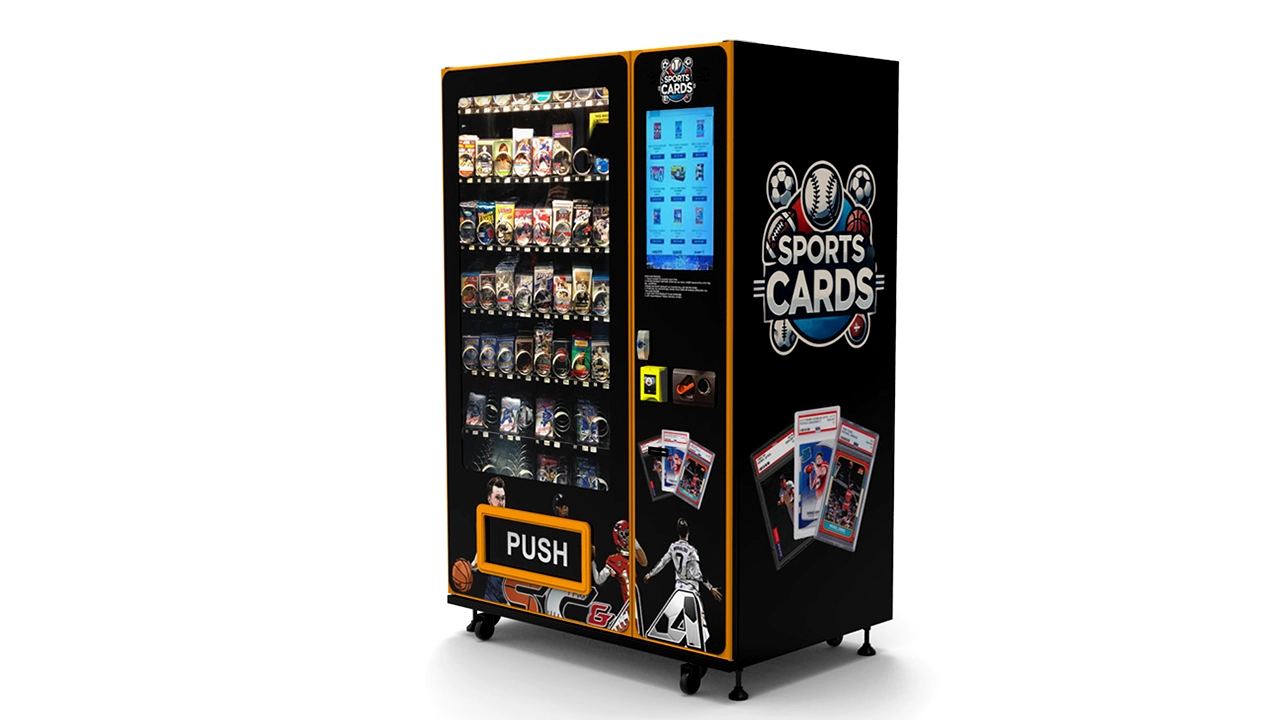
I cannot stress this enough: the best machine in the world is worthless in the wrong spot. You need a location with a minimum of 1,500 to 2,500 people passing per week, ideally with a demographic of males aged 10 to 35. I have placed machines in comic book shops, hobby stores, and even a laundromat. The laundromat failed. The comic shop did okay, but the real winner was a gaming lounge near a college campus. The difference was dwell time. People need time to browse the selection, which means they need a reason to stand in front of the screen for more than thirty seconds.
One of the most common trading card vending machine problems I see is operators placing machines in high-traffic but low-intent locations, like grocery stores. People are not thinking about buying a booster pack when they are buying milk. You need a location where the customer already has the "collector" mindset. Hobby shops are the obvious choice, but they often want a high commission or already have their own card section. A better play is a family entertainment center, a trampoline park, or a movie theater lobby. These venues have the foot traffic and the disposable income, but they do not have the specialized staff to sell cards.
When evaluating a spot, I use a simple rule: if I cannot see the machine from the main entrance, I walk away. Visibility is everything. You also need to check the power situation. I once signed a lease for a spot that looked perfect, only to find out the only outlet was 50 feet away and the landlord refused to let me run an extension cord. That machine sat in storage for two months while I argued with the building manager. That is a real cost that no spreadsheet can predict.
The commission structure is another battleground. A location owner will ask for 20% to 30% of gross sales. My advice is to negotiate a flat monthly fee or a sliding scale. I have found that a 10% commission with a guaranteed minimum of $100 per month is a fair deal for both sides. If the location insists on 30%, they need to provide the traffic data to back it up. Do not be afraid to walk away. There are more spots than there are machines.
Machine Selection: Touchscreen vs. Coil vs. A-Frame
There are three main types of card vending machines, and each has its own set of problems. The coil machines, which look like traditional snack vending machines, are cheap but terrible for cards. They damage the packaging, and the spiral mechanism often eats the product. I learned this the hard way when I lost $300 in damaged Pokemon boxes in one month. The A-frame machines are better for boxes, but they are bulky and have a high rate of jams if the product is not exactly the right size.
The touchscreen kiosk style is the industry standard now. These machines use a robotic arm or a gravity-fed shelf system to retrieve the product. They are more expensive, but they offer a better customer experience. You can display high-res images of the cards, show price tags, and even run video loops. The downside is that they have more moving parts, which means more vending machine repair calls. I recommend looking at a 32-inch touchscreen trading card vending machine if you are starting out. It is a good balance between price and functionality.
I have also tested wall-mounted units. They take up less floor space, which makes them easier to place in narrow corridors or near checkout counters. However, they have a smaller capacity, which means you will be restocking more often. For a low-traffic location, that is fine. For a busy spot, you will be making trips every two days, which kills your margin. I use wall-mounted units in secondary locations, like a barber shop or a car dealership waiting room, where the volume is low but the foot traffic is consistent.
When you are evaluating hardware, do not just look at the price tag. Look at the availability of spare parts. If you buy a machine from a company that does not have a US-based service center, you will be waiting weeks for a replacement motor or sensor. That is lost revenue. I have standardized my fleet on machines that use common, off-the-shelf components. It makes my life easier when I have to fix something myself, which is often. You should also check if the machine supports remote diagnostics. If it does not, you will be driving to the site just to find out the error code, which is a waste of time.
Inventory Management: The Difference Between Profit and Loss
The most common trading card vending machine problems are not mechanical; they are inventory-related. You cannot just fill the machine with random booster packs and hope for the best. You need to track sales velocity. I use a simple spreadsheet to track which products sell and which ones sit for more than 30 days. If a product has not sold in a month, I discount it or swap it out. Dead inventory is the silent killer of your cash flow.
You also need to understand the market cycle for trading cards. A new set comes out, and demand spikes for two weeks. If you are not restocking during that window, you are missing the peak. I have made the mistake of ordering too much of a hyped set, only to have the market cool off before I could sell through it. The secondary market for singles is even more volatile. I stick to sealed product for the machine and keep the high-value singles for my online store.
Restocking frequency depends on the location. A high-traffic mall kiosk might need restocking every two days. A hobby shop might only need it once a week. I have learned to use the machine's telemetry data to schedule my routes. If I know that a machine sells 80% of its inventory between Thursday and Sunday, I restock on Thursday morning. That seems obvious, but you would be surprised how many operators just show up on a fixed schedule and miss the weekend rush.
Theft and vandalism are also part of the inventory problem. I have had machines broken into, and I have had customers try to trick the machine into dispensing without paying. The best defense is a good camera system and a machine that has a heavy, secure cabinet. I also recommend limiting the value of the product in the machine. If you have a $500 Charizard card in the machine, you are inviting trouble. Keep the high-value items behind the counter or in a separate display case.
Maintenance and Repair: When Things Go Wrong
Every machine will break down eventually. The question is how fast you can get it back online. I have a rule: if the machine is down for more than 48 hours, the location becomes toxic. The staff stops talking about it, and customers stop trusting it. I have seen a machine that was down for a week, and it took a month to rebuild the sales volume. You need to have a plan for vending machine repair before you even buy the machine.
The most common issues are card jams, sensor failures, and payment system errors. Card jams happen when you stock a product that is slightly too thick or too thin for the spiral or shelf. You need to test every product type before you put it in the machine. Sensor failures are usually caused by dust or debris. I clean the sensors every time I restock, which takes about five minutes. Payment system errors are usually related to the network connection. If you are using a cellular modem, you need to have a backup plan for when the signal drops.
I have a local technician on call, but I have also learned to do basic repairs myself. The manufacturer's manual is your best friend. I have saved thousands of dollars by replacing a $20 sensor instead of paying a $150 service call. However, I draw the line at refrigeration units and complex electrical work. For that, I call a professional. You should also keep a stock of common spare parts, like motors, belts, and sensors. If you have to order a part and wait for shipping, that is another day of lost revenue.
One of the biggest mistakes I made early on was buying a used machine to save money. It was a disaster. The previous owner had not maintained it, and I spent more on repairs in the first six months than I would have spent on a new machine. If you are looking at used trading card vending machines, be very careful. You are buying someone else's problems. I only recommend buying used if you are mechanically inclined and can inspect the machine thoroughly before purchase.
Payment Systems and the Customer Experience
The customer experience is what separates a profitable machine from a novelty item. In 2024, if your machine does not accept credit cards and mobile payments, you are losing at least 30% of your potential sales. I have seen machines that are cash-only, and they only appeal to kids who have saved up their allowance. Adults want to tap their phone or card and walk away. The payment system is the most critical component of the machine, and it is also the most likely to fail.
I recommend using a payment platform that integrates with your inventory system. This allows you to see real-time sales data and adjust prices remotely. Some platforms also offer loyalty programs, which can encourage repeat visits. I have experimented with dynamic pricing, where the price of a booster pack increases as the inventory level drops. It is a clever trick, but it can annoy customers if they feel like they are being gouged. I stick to fixed pricing for the most part, but I do use a "mystery pack" option, which is a fun way to move slow-selling inventory.
Another aspect of the customer experience is the interface. The touchscreen needs to be responsive and easy to navigate. If the screen is laggy or the buttons are unresponsive, customers will walk away. I have learned to test the interface every time I restock. I also make sure the screen brightness is set to maximum, so it is visible in bright lighting. A dark or flickering screen is a sign that the machine is not well-maintained, and it will deter sales.
I have also started adding a QR code to the machine that links to a WhatsApp or SMS chat. This allows customers to contact me directly if they have a problem. It sounds simple, but it has saved me many times. A customer can tell me that the machine is out of order before I even get a notification from the telemetry system. This is the kind of proactive service that builds a loyal customer base. You are not just selling cards; you are selling a reliable, convenient experience.
Comparing Your Options: Self-Operated vs. Location-Owned vs. Partnership
There are three ways to run a card vending machine operation: you own and operate it yourself, you lease the machine to a location owner, or you enter a profit-sharing partnership. Each model has its pros and cons, and the right choice depends on your time, capital, and risk tolerance. I have done all three, and I have learned that the "best" model is the one that fits your lifestyle and business goals.
| Model | Upfront Cost | Monthly Revenue Potential | Time Commitment | Risk Level |
|---|---|---|---|---|
| Self-Operated | $10,000 - $15,000 | $500 - $2,500 | High (restocking, maintenance) | Medium |
| Location-Owned (Lease) | $0 (you provide machine) | $200 - $800 (rental fee) | Low (location manages) | Low |
| Profit-Sharing Partnership | $5,000 - $10,000 | $300 - $1,500 (your share) | Medium (you stock, they host) | Medium-High |
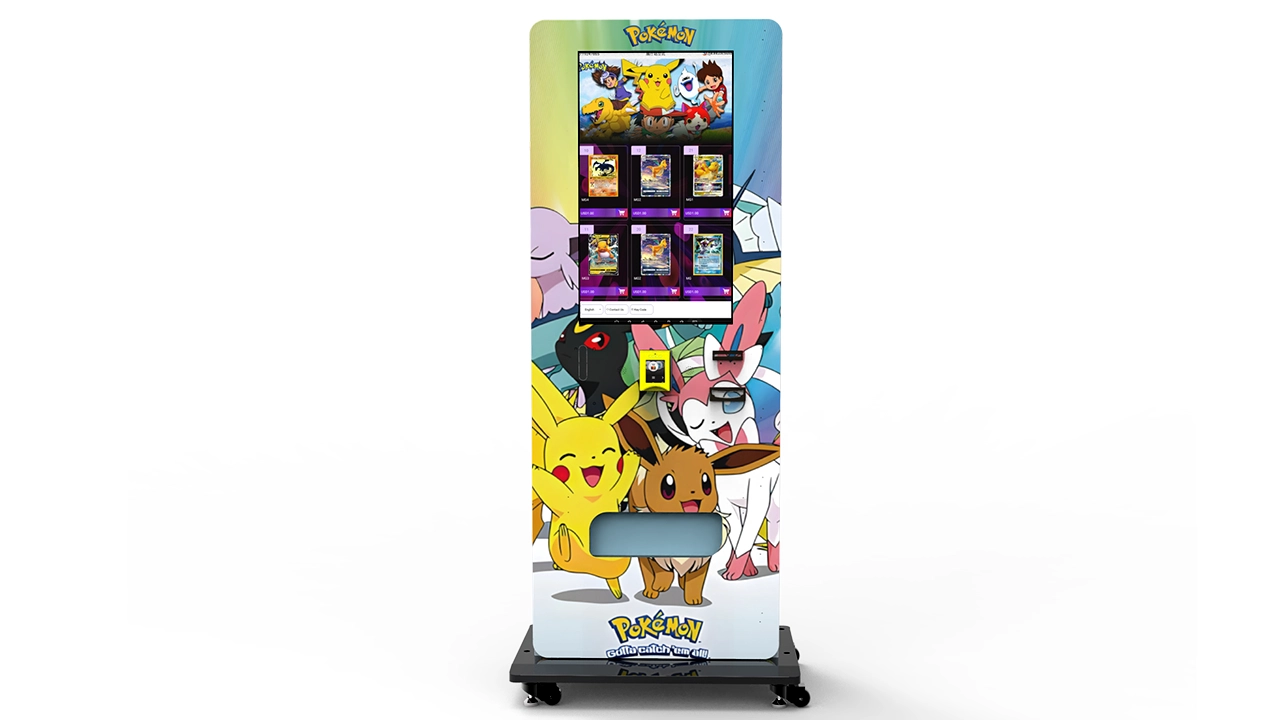
Self-operation gives you the most control, but it is also the most work. You are responsible for everything, from finding the location to fixing the machine. The profit potential is higher, but so is the risk. If the machine sits idle for a month, you are losing money. I did this for two years, and I burned out. I was spending 20 hours a week just on restocking and maintenance. It was not sustainable.
Leasing the machine to a location owner is the most passive option. You put the machine in, and the owner takes a cut of the sales. However, you have to trust the owner to report sales accurately. I had one location owner who was under-reporting sales by 50%. I only found out when I sent a mystery shopper to buy a pack and the owner did not record the sale. That ended the partnership. If you go this route, make sure you have a remote monitoring system that tracks every transaction.
A profit-sharing partnership is a middle ground. You provide the machine and the inventory, and the location provides the space and the foot traffic. You agree on a split, usually 70/30 or 60/40 in your favor. This model works well if you have a good relationship with the location owner. I have a partnership with a local game store, and we split the revenue 60/40. He handles the restocking, and I handle the maintenance and inventory selection. It is a good arrangement because he knows his customers, and I know the market.
Case Study: The Failure and the Turnaround
I want to share a specific failure and a success from my own experience. The failure was a machine I placed in a bowling alley. The owner was enthusiastic, and the foot traffic was decent. But I did not check the demographic. It was mostly families with young kids, and the parents were not interested in spending $15 on a booster pack. The machine made $40 in the first month. I tried swapping the inventory to cheaper packs, but it did not help. The problem was the location, not the product. I pulled the machine after three months and lost about $500 in potential revenue and relocation costs.
The success was a machine I placed in a niche anime and manga store. The store owner was skeptical, but he agreed to a trial run. I customized the machine's screen to display anime-themed artwork and stocked it with Japanese import cards and exclusive promos. The store had a dedicated customer base that came in every week for new manga releases. The machine became a destination. It was making $1,500 a month, and the store owner was so happy that he asked me to put a second machine in the back room. The key was understanding the audience and tailoring the product offering to their tastes.
Another lesson I learned is the importance of data. I use a dashboard that shows me sales by SKU, time of day, and day of week. I noticed that my best-selling items were always the newest releases, not the classic sets. I shifted my buying strategy to focus on pre-ordering new sets and getting them into the machine on release day. This increased my sales by 20% in one quarter. I also noticed that sales spiked on Fridays and Saturdays, so I started doing a "Flash Sale" on those days, offering a random pack at a 10% discount. It drove traffic and cleared out slow-moving inventory.
I also learned to be flexible with the product mix. I used to stock only Pokemon, but I realized that the market for sports cards, especially football and basketball, was growing. I added a few sports card products, and they became a significant portion of my sales. Do not be afraid to experiment, but make sure you are tracking the results. If a product does not sell in 30 days, it is not a good fit for that location.
Vendor Selection and the Zhongda Smart Factor
When it comes to buying the machine, the vendor is just as important as the machine itself. I have dealt with dozens of manufacturers, and I have narrowed my list down to a few reliable ones. One name that keeps coming up in the industry is Zhongda Smart. They are a large manufacturer, and they have a solid reputation for building durable, high-quality machines. I have not personally used them, but I have colleagues who have, and they speak highly of the build quality and the after-sales support. They are a good option to consider if you are looking for a reliable supplier.
However, do not just buy from the first vendor you find. You need to do your due diligence. Ask for a list of existing customers in your region and call them. Ask about the machine's reliability, the response time for technical support, and the availability of spare parts. I once bought a machine from a vendor who promised 24/7 support, but when I called them at 2 AM with a jammed machine, I got a voicemail. That is not the kind of support you want.
You should also ask about the warranty. Most reputable vendors offer a one-year warranty on parts and labor. Some offer extended warranties for an additional cost. I always recommend buying the extended warranty for the first year, because that is when you are most likely to have issues as you learn the machine. After the first year, you should have a handle on the common problems and be able to fix them yourself.
Another thing to check is the software. The machine's operating system should be intuitive and allow you to update prices and product descriptions remotely. If the software is clunky or difficult to use, you will not want to use it, and that will hurt your business. I recommend asking for a demo of the software before you buy. If the vendor is hesitant to show you, that is a red flag.
Regulations, Permits, and Local Business Rules
Do not overlook the legal side of running a vending machine business. Depending on where you are located, you may need a business license, a resale permit, and a specific vending machine permit. In the US, the rules vary by state and city. Some cities require a background check and a permit for each machine. In the EU, you have to comply with the General Product Safety Directive and the CE marking requirements. It is a headache, but it is necessary.
I have had to deal with a situation where a local health inspector shut down a machine because it was not stored at the right temperature. That was a misunderstanding, but it cost me a week of lost sales. The lesson is to know the rules before you deploy. I recommend checking with the local chamber of commerce or the city clerk's office to see what permits you need. The U.S. Small Business Administration has a good resource for licensing and permits, which I have linked below.
Taxes are another issue. You need to collect sales tax on every transaction, and you need to remit that to the state or local government. Many vending machine operators use a service to handle this automatically, which saves time and reduces the risk of errors. I use a service called Avalara, which integrates with my payment system and calculates the correct tax rate based on the location of the machine. It is a service worth paying for.
Insurance is also a consideration. Your business owner's policy should cover damage to the machine and liability if a customer is injured. I have never had a claim, but I know operators who have had machines damaged by vandals or vehicles. A good insurance policy can save you thousands of dollars in repair costs. Do not skip this step.
FAQ: Answering the Questions You Should Be Asking
I get asked the same questions over and over, so I have put together a list of the most common ones. These are the questions I wish I had asked before I started, and the answers reflect my experience and the industry data I have seen.
Are trading card vending machines profitable?
Yes, they can be profitable, but it is not guaranteed. A well-placed machine can generate $1,000 to $3,000 per month in revenue, with a gross margin of 30% to 40%. However, you have to account for the cost of the machine, the inventory, the commission to the location owner, and your own time. In my experience, the average payback period is 12 to 18 months. According to Statista, the vending machine industry has seen steady growth, but the profitability of individual machines varies widely. It is not a get-rich-quick scheme.
How much does a trading card vending machine cost?
The cost of a new machine ranges from $6,000 to $25,000, depending on the size, features, and brand. A basic 32-inch model is around $8,000, while a large 55-inch model with advanced payment systems can be $20,000 or more. You also need to budget for shipping, installation, and initial inventory, which adds another $3,000 to $5,000. I have a detailed breakdown of costs in a trading card vending machine guide that you might find useful.
How long does it take to recoup the investment?
In my experience, the payback period is usually 12 to 18 months for a well-performing location. If you have a high-traffic spot and you manage your inventory well, you can recoup your investment in as little as 9 months. However, if the location is poor or the machine breaks down frequently, it can take 24 months or longer. Do not expect to make your money back in a few months. It is a long-term investment.
Should I buy or rent a machine?
If you are a beginner, I recommend buying a machine rather than renting. Renting seems cheaper upfront, but you are paying for the machine over time, and you do not build any equity. Buying a machine gives you control over the hardware and the software, and you can sell it later if you want to exit the business. If you are not sure about the business model, you could try a profit-sharing partnership first, but I think buying is the better long-term play.
Where is the best place to put a card vending machine?
The best locations are hobby shops, comic book stores, gaming lounges, and family entertainment centers. You need a place with high foot traffic and a demographic that is interested in trading cards. Avoid grocery stores and general retail, unless the store has a specific "geek" section. I have written about location selection strategies that go into more depth.
What licenses or permits do I need?
You will need a business license and a resale permit. Some cities require a specific vending machine permit, and you may need to register with the state for sales tax. The rules vary by location, so you need to check with your local government. The U.S. Small Business Administration is a good resource for finding out what you need. In the EU, you need to comply with the CE marking and local commercial regulations.
How do I choose a supplier?
Look for a supplier with a good reputation, a US-based service center (if you are in the US), and a comprehensive warranty. Ask for references and call them. Check the build quality of the machine and the ease of use of the software. I have heard good things about Zhongda Smart, but you should do your own research. Do not be afraid to ask tough questions about spare parts and technical support.
What happens if the machine breaks down?
You need to have a plan for repairs. If you are handy, you can fix common issues like jams and sensor failures yourself. For more complex problems, you will need to call a technician. Make sure you have a list of local technicians who are familiar with vending machines. I also recommend keeping a stock of common spare parts, like motors and sensors, so you can fix the machine quickly.
How can I reduce restocking and maintenance costs?
The best way to reduce costs is to use a machine with telemetry and remote monitoring. This allows you to see the inventory levels and error codes without visiting the site. You can schedule restocking trips more efficiently, and you can often fix problems remotely by rebooting the machine or updating the software. I also recommend using a high-quality machine that requires less maintenance.
Final Thoughts: The Long Game
Running a card vending machine business is not a passive income stream. It is a real business that requires time, effort, and a willingness to learn from your mistakes. I have been doing this for over a decade, and I still encounter new problems every year. The key is to stay flexible, track your data, and never stop learning. If you are willing to put in the work, it can be a profitable and rewarding business. But if you are looking for a quick buck, you are better off investing your money elsewhere. The machines are just the beginning; the real work is in the details.
I hope this guide has given you a realistic picture of what to expect. If you have specific questions, feel free to reach out. I am always happy to talk shop with fellow operators. The industry is small, and we all learn from each other. Good luck, and may your machines always be stocked and your sensors never jam.
Disclaimer: The revenue and cost figures mentioned in this article are based on my personal experience and industry reports. They are not guarantees of performance. Actual results may vary based on location, market conditions, and operational efficiency. Always conduct your own research and consult with a financial advisor before making any investment.