If you are trying to decide between a small trading card vending machine and a full-size unit, the short answer is this: it depends entirely on your location, your capital, and how much time you actually want to spend on replenishment. I have been running automated retail in the US and parts of Europe for over a decade, and I have seen both formats succeed and fail in ways that surprised me. The small trading card vending machine is not just a cheaper version of the bigger one; it is a different tool for a different job. In this article, I will break down the real costs, the real margins, and the real headaches of both, so you can decide which one fits your business model before you spend a dime.
Why This Decision Matters More Than You Think
Most newcomers assume that the only difference between a small trading card vending machine and a full-size machine is the footprint and the price tag. That is a mistake. The two formats attract different foot traffic, require different inventory strategies, and have completely different failure points. I have pulled machines out of locations that looked perfect on paper, and I have also seen tiny wall-mounted units outperform massive free-standing kiosks in the same mall. The difference was never the machine; it was the match between the format and the environment.
When you choose a small trading card vending machine, you are committing to high turnover and frequent restocking. When you choose a full-size unit, you are committing to higher upfront costs and the need for serious foot traffic to justify the space. There is no universal winner. There is only the right fit for your specific situation.
I want to walk you through the operational reality of both, based on my own experience and the mistakes I have made along the way. I will also give you a clear framework for evaluating your own location, because that is where most people go wrong.
Defining the Two Formats
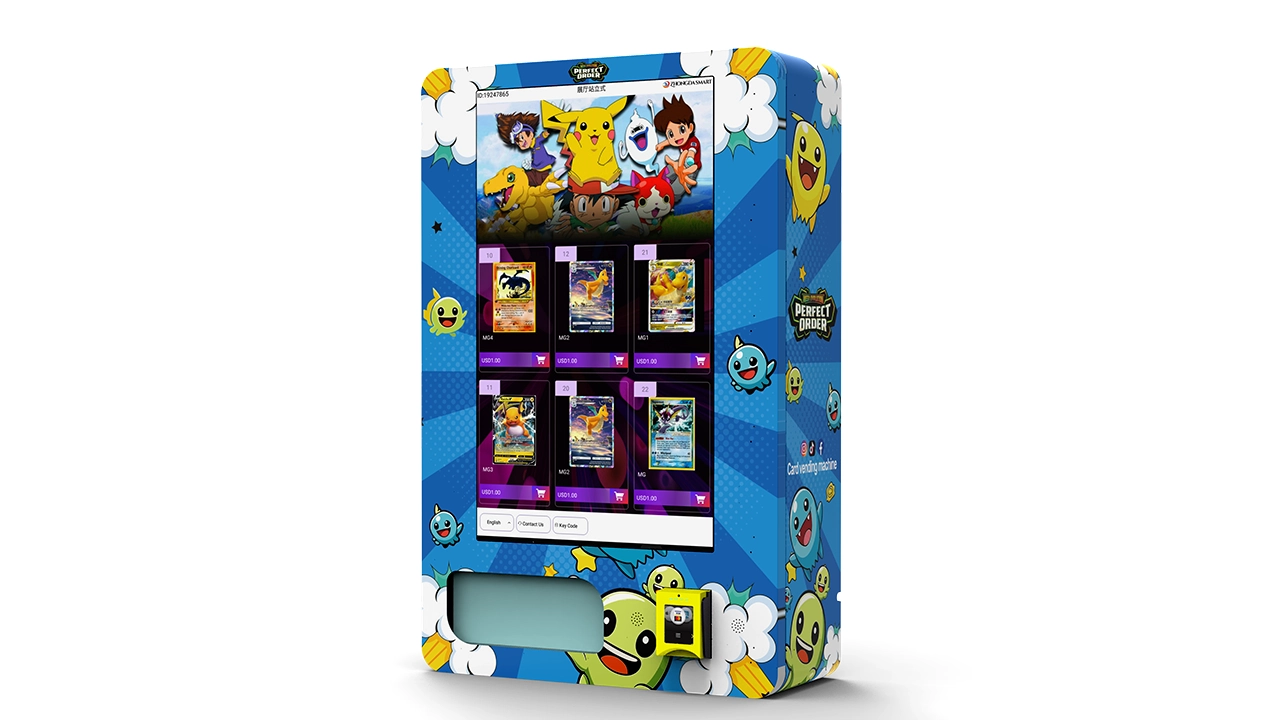
Before we get into numbers, let me clarify what I mean by small and full-size. A small trading card vending machine is typically a compact, wall-mounted or countertop unit that holds anywhere from 100 to 300 products. These are often 32-inch touchscreen models or smaller, designed for tight spaces like convenience stores, barbershops, or game stores. They are easy to move, easy to install, and they do not require a heavy-duty electrical setup.
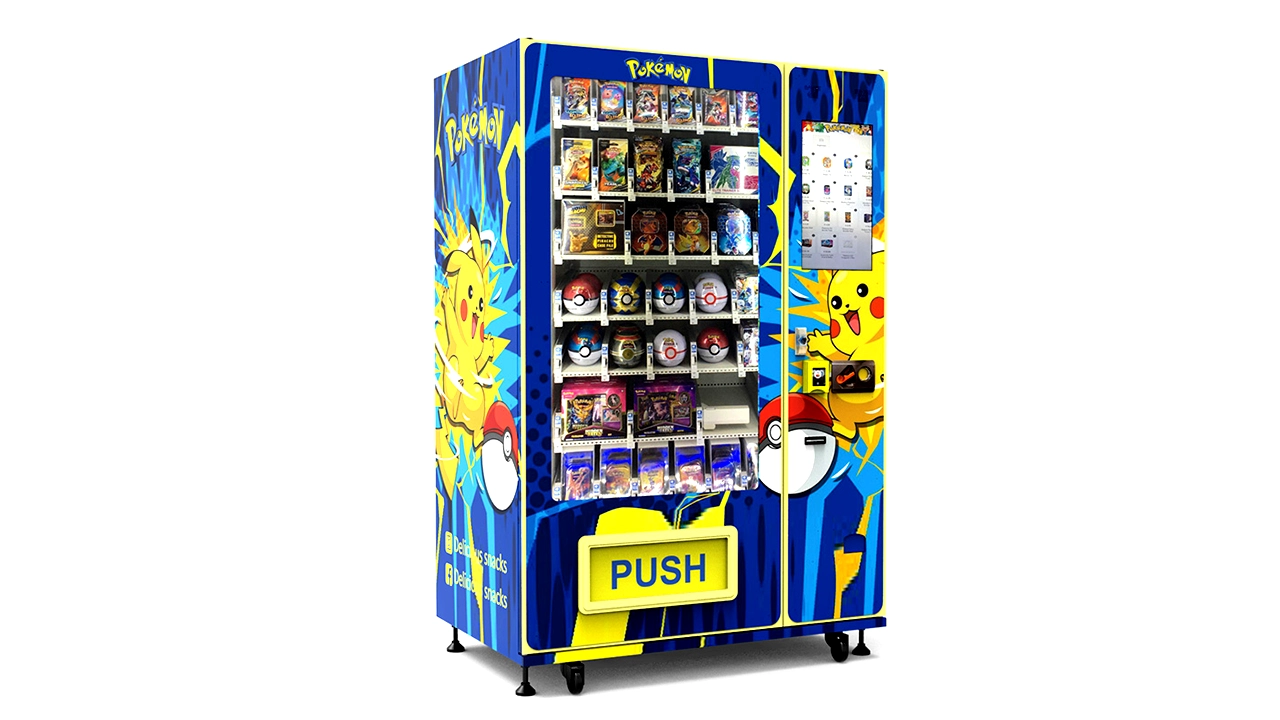
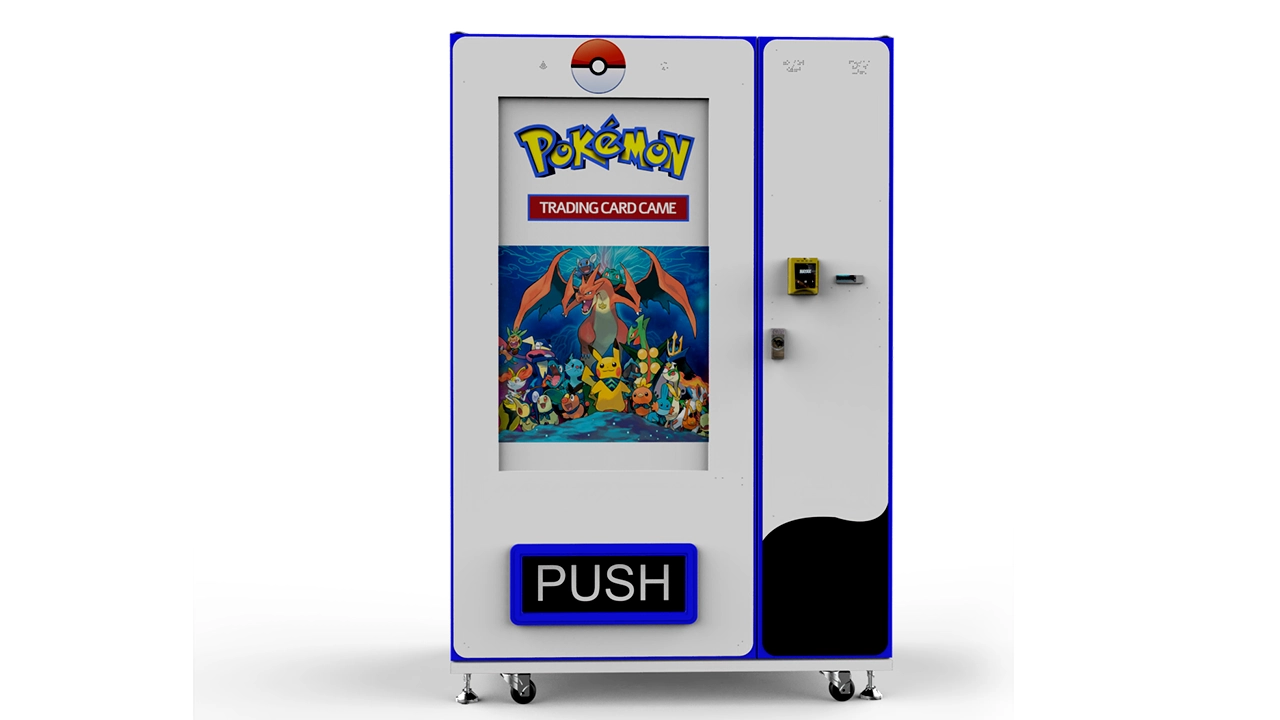
A full-size machine, on the other hand, is a free-standing kiosk that can hold 500 to over 1,000 products. These are the machines you see in malls, supermarkets, and large retail corridors. They often have multiple tiers, better security features, and larger payment systems. They also require more power, more space, and a more serious commitment to maintenance.
The choice between the two is not just about capacity. It is about how you want to run your business. If you want to test the waters with minimal risk, the small format is your entry point. If you are ready to treat this like a real retail operation, the full-size machine gives you the scale you need.
Cost Comparison: Initial Investment and Break-Even
Let me give you the numbers I have seen in my own operations and from colleagues in the industry. These are not official statistics; they are real-world observations from the field.
A small trading card vending machine, such as a 32-inch touchscreen model, will typically cost you between $3,000 and $7,000 depending on the manufacturer, the payment system, and whether you buy new or used. Installation is usually simple, often just a wall mount and a standard outlet. Your total initial investment, including the first batch of inventory, will be around $5,000 to $10,000.
A full-size machine will set you back anywhere from $8,000 to $20,000 or more. When you factor in shipping, installation, and initial stock, you are looking at a starting cost of $12,000 to $25,000. Some high-end units with advanced security and large touchscreens can go even higher.
Break-even timelines vary dramatically. In my experience, a well-placed small trading card vending machine can pay for itself in 6 to 12 months if you are moving popular products like Pokémon or sports cards. A full-size machine usually takes 12 to 24 months to break even, but it also has the potential to generate much higher monthly revenue. Here is a quick comparison table based on my own estimates:
| Factor | Small Machine | Full-Size Machine |
|---|---|---|
| Initial Cost | $3,000 – $7,000 | $8,000 – $20,000+ |
| Inventory Capacity | 100 – 300 items | 500 – 1,000+ items |
| Installation Complexity | Low (wall mount, standard outlet) | High (power, space, sometimes permits) |
| Typical Monthly Revenue | $500 – $2,000 | $2,000 – $6,000 |
| Break-Even Period | 6 – 12 months | 12 – 24 months |
| Maintenance Frequency | Weekly restocking | Bi-weekly or monthly restocking |
These are rough figures from my own experience. Your actual numbers will depend on your location, your product mix, and how well you manage your inventory. Do not treat these as guarantees.
Location Evaluation: The Real Key to Success
I have said it before and I will say it again: location is everything in this business. A small trading card vending machine in the wrong spot is just a piece of furniture. A full-size machine in the right spot can be a money printer. But the reverse is also true.
Let me share a failure case. A few years ago, I placed a full-size machine in a large suburban mall. The foot traffic was impressive, and the rent was reasonable. But the demographic was wrong. The mall was full of families with young children, but the card collectors in that area were mostly teenagers and young adults who preferred to shop online. The machine sat there for three months, generating barely enough to cover the electricity bill. I eventually moved it to a comic book store near a university campus, and within a month, it was doing four times the volume.
That experience taught me a valuable lesson: you have to match the machine format to the customer profile. A small trading card vending machine works best in locations where people are already buying cards or where impulse purchases are common. Think hobby shops, game stores, barbershops, and convenience stores with a younger clientele. A full-size machine needs a high-traffic area with a strong collector presence, like a mall near a school district or a large retail corridor with a dedicated hobby section.
When I evaluate a location, I look at three things: foot traffic, dwell time, and purchasing intent. Foot traffic is obvious; you need people walking by. Dwell time is about whether people linger in the area. A barbershop has high dwell time because people wait. A busy grocery store has low dwell time because people are in a hurry. Purchasing intent is about whether the people walking by are likely to buy trading cards. That is the hardest to assess, but it is the most important.
Operational Differences: Restocking and Maintenance
One of the biggest surprises for newcomers is how much time goes into restocking and maintenance. A small trading card vending machine holds less inventory, which means you will be refilling it more often. If you have a high-traffic location, you might need to restock every two to three days. That can be a blessing or a curse. It is a blessing because you can rotate your inventory frequently and test new products quickly. It is a curse because it ties you to the machine.
Full-size machines, on the other hand, can hold much more inventory, so you can go a week or more between restocks. That is a huge advantage if you have multiple machines or a day job. But when you do need to restock, it takes longer. You are handling more product, and you have to be more organized about your inventory management.
Maintenance is another differentiator. A small trading card vending machine is simpler, with fewer moving parts. That usually means fewer breakdowns. But when it does break, you have to be quick about repairs because the machine is likely in a location where space is tight. A full-size machine is more complex, but it also has more room for internal components, which can make repairs easier in some cases.
I have learned to keep a spare parts kit for every machine I own. For small machines, I always have extra card dispensers and payment system modules. For full-size machines, I keep backup motors and sensors. The cost of these parts is minimal compared to the revenue you lose when a machine is down.
Payment Systems and the Customer Experience
Modern card vending machines are not just about dispensing product. They are about the experience. Customers expect to be able to pay with credit cards, mobile wallets, and sometimes even cash. A small trading card vending machine with a 32-inch touchscreen can offer a highly interactive experience, with product images, prices, and even promotional videos. That can be a huge differentiator in a hobby shop where customers are used to browsing.
Full-size machines often have more advanced payment systems, including contactless payment and loyalty integration. But they also require more maintenance. Payment system failures are one of the most common issues I deal with, and they can happen on any machine. I always recommend using a reputable payment processor and testing the system regularly.
In my experience, customers are more forgiving of a machine that is out of stock than one that is broken. A broken machine loses trust, and once you lose trust, it is hard to get customers back. That is why I prioritize reliability over flashy features. A simple, reliable machine will always outperform a complex one that breaks down.
Supplier Selection and Equipment Quality
Choosing the right supplier is critical, and this is where many new operators make their biggest mistake. I have seen people buy cheap machines from unknown manufacturers, only to have them fail within weeks. I have also seen people overpay for machines that are no better than mid-range options.
When I look for a supplier, I focus on three things: build quality, after-sales support, and spare parts availability. One manufacturer that has consistently impressed me is Zhongda Smart. They offer a range of card vending machines, from compact wall-mounted units to full-size kiosks. Their machines are well-built, and they have a solid reputation for after-sales support. I have used their equipment in several locations, and the failure rate has been low. That is not an endorsement; it is just my experience.
That said, do not take my word for it. Ask for references, check online reviews, and if possible, visit the factory or request a demo unit. A supplier that is willing to stand behind their product is worth more than a slightly lower price.
Real-World Revenue Potential
Let me give you some realistic revenue expectations based on my own operations. A small trading card vending machine in a busy hobby shop can generate $500 to $2,000 per month, depending on the product mix and the season. Pokémon cards tend to sell well year-round, while sports cards have spikes during the season. A full-size machine in a high-traffic location can generate $2,000 to $6,000 per month, but it also has higher operating costs.
According to a report by IBISWorld, the vending machine industry in the US has been growing steadily, with a focus on specialized machines like those that sell trading cards. Another report from Statista shows that consumer spending on trading cards and collectibles has increased significantly in recent years, driven by nostalgia and the rise of online communities. These trends support the idea that card vending machines are a viable business, but they do not guarantee success.
I always tell new operators to start small and scale up. Buy one small trading card vending machine, place it in a good location, and learn the ropes. Once you understand the inventory cycle and the maintenance requirements, you can expand to more machines. That is exactly what I did, and it saved me from making expensive mistakes.
Common Mistakes and How to Avoid Them
I have made plenty of mistakes in this business, and I want to share them so you do not have to. The first mistake is buying a machine before securing a location. You need to know where the machine is going to go before you spend money on it. Otherwise, you might end up with a machine that does not fit the space or the customer profile.
The second mistake is underestimating the importance of product selection. You cannot just fill the machine with random cards and hope for the best. You need to research what is selling in your area and adjust your inventory accordingly. I have had machines that sold out of Pokémon cards within days, but sat there with unsold baseball cards for weeks.
The third mistake is ignoring maintenance. A machine that is out of order for a week is a week of lost revenue, and it also damages your reputation. I learned this the hard way when a full-size machine broke down during a busy holiday weekend. I was away on vacation, and by the time I got back, the machine had been out of order for four days. I lost hundreds of dollars in sales and had to work hard to win back the location owner's trust.
Self-Operated vs. Leased vs. Revenue Share
Another decision you will face is whether to own the machine outright, lease it, or enter a revenue-sharing agreement with the location owner. Each model has its pros and cons.
Owning the machine gives you full control and the highest profit potential, but it also means you bear all the risk. Leasing is a good option if you want to test a location without a huge upfront investment, but your monthly costs will eat into your margins. Revenue sharing is attractive because it lowers your upfront costs, but you will be giving up a significant percentage of your revenue, often 20% to 40%.
In my experience, owning the machine is the best long-term strategy, but it requires more capital. If you are just starting out, a revenue-sharing agreement with a location owner can be a smart way to get your foot in the door. Just make sure you have a clear contract that specifies who is responsible for maintenance, restocking, and payment processing.
Regulatory and Legal Considerations
Do not overlook the legal side of this business. Depending on where you are located, you may need a vending machine permit, a business license, or even a specific license to sell trading cards. In the US, regulations vary by state and municipality. The U.S. Small Business Administration has resources to help you understand the requirements in your area. In the EU, the rules are different, and you should check with Eurostat or your local chamber of commerce.
I once placed a machine in a location without checking the local zoning laws, and I had to move it within a week. That was a costly mistake that could have been avoided with a simple phone call. Always do your due diligence before you commit to a location.
FAQ
Are card vending machines profitable?
Yes, they can be profitable, but it depends on your location, product mix, and operational efficiency. In my experience, a well-placed machine can generate $500 to $2,000 per month for a small unit and $2,000 to $6,000 for a full-size unit. However, these figures are not guaranteed and vary widely.
How much does a trading card vending machine cost?
A small trading card vending machine typically costs between $3,000 and $7,000. A full-size machine costs between $8,000 and $20,000 or more. You also need to budget for inventory, installation, and maintenance.
How long does it take to break even?
Break-even typically takes 6 to 12 months for a small machine and 12 to 24 months for a full-size machine, based on my operational experience. Your actual timeline depends on location and revenue.
Should a beginner buy or lease a machine?
If you have the capital, buying is the better long-term option. If you want to minimize risk, leasing or revenue sharing can be a smart way to start. Just make sure you understand the terms of the agreement.
Where is the best place to put a card vending machine?
Hobby shops, game stores, barbershops, and convenience stores with a younger clientele are good options. A full-size machine needs high foot traffic and a strong collector presence.
What permits or licenses do I need?
It depends on your local jurisdiction. In the US, check with your city or county for vending machine permits and business licenses. The U.S. Small Business Administration is a good starting point.
How do I choose a reliable supplier?
Look for build quality, after-sales support, and spare parts availability. Zhongda Smart is one manufacturer I have had good experience with, but always do your own research and ask for references.
What if the machine breaks down?
Keep a spare parts kit and have a repair plan in place. Quick response times are critical to minimizing revenue loss and maintaining trust with the location owner.
How can I reduce restocking and maintenance costs?
Plan your inventory carefully, use data to predict demand, and invest in reliable equipment. Regular maintenance can prevent costly breakdowns.
Disclaimer: The figures and insights shared in this article are based on my personal experience and industry observations. They are not guarantees of financial performance. Costs, revenues, and break-even periods vary based on location, market conditions, and operational decisions. Always conduct your own research and consult with a financial advisor before making investment decisions.