If you are reading this because you are thinking about ordering a trading card vending machine factory direct, stop for a second and ask yourself one question: are you buying a machine, or are you buying a business model? I have spent over a decade in the automated retail space, and I have seen too many operators get excited about the hardware and completely ignore the operating math. A trading card vending machine can be a serious revenue generator, but only if you treat it like a small retail franchise, not a novelty vending unit. The difference between a profitable deployment and a warehouse ornament comes down to a few critical decisions you make before you ever send a deposit. This guide is based on real operational experience, not manufacturer brochures, and it addresses the questions that actually matter when you are evaluating a trading card vending machine factory and their equipment.
Why the Hype Around Card Vending Machines Is Justified (With Conditions)
The trading card market has exploded in recent years, and that is not an opinion, it is a documented retail trend. According to a 2023 report by Statista, the trading card games segment has seen consistent double-digit growth, driven by adult collectors with disposable income. This is a demographic that remembers buying packs in the 90s and now has the budget to chase nostalgia and investment-grade cards. The vending machine fits this behavior perfectly because it offers a tactile, instant-gratification experience that e-commerce cannot replicate. However, the hype has also attracted a wave of inexperienced operators who think that placing a machine is all it takes. I have seen machines sit idle in high-traffic locations because the operator ignored restocking schedules or failed to curate the product mix. The opportunity is real, but it is not automatic.
My own entry into this niche came after years of running traditional snack and beverage routes. I learned quickly that the economics of card vending are completely different. You are not selling a $1.50 soda; you are selling a $10 to $30 pack with a potential high-value hit. The margin structure is better, but the inventory risk is higher. You need to understand the collector psychology, the pull rates of different products, and the secondary market values. This is not a passive income stream; it is a curated retail experience. When I first transitioned, I underestimated the importance of machine placement and overestimated the willingness of locations to share revenue. I have since refined my approach, and the rest of this article details the hard-earned lessons from that journey.
Core Questions to Ask a Trading Card Vending Machine Factory
When you start talking to manufacturers, especially overseas factories, the conversation usually focuses on price, lead time, and specifications. Those are important, but they are the table stakes. The real questions that separate a good investment from a bad one are about the machine’s operational footprint and the factory’s after-sales support. You need to ask about the payment system certification, specifically if it is compliant with local regulations like PCI or EMV standards. A machine that works in China or Europe might not have the necessary certifications for the US market. I learned this the hard way when a client in Texas had to replace an entire payment stack because the factory used a frequency that was not compliant with local banking protocols.
Another critical question involves the software and remote management capabilities. A modern trading card vending machine is essentially a networked computer with a heavy-duty shell. You need to know if you can change prices remotely, monitor inventory levels in real-time, and run sales reports from your phone. If the factory’s software is clunky or requires a wired connection, you are going to hate the operational side of this business. I always ask for a live demo of the backend dashboard before ordering. If they cannot show me a clean, responsive interface, I walk away. The hardware is only as good as the software that runs it, and the factory’s willingness to support firmware updates is a huge indicator of their long-term commitment.
Evaluating Build Quality and Security Features
Card vending machines are prime targets for theft because they hold high-value, easily resold items. The cabinet gauge, locking mechanisms, and glass or screen durability are not just specifications; they are your first line of defense. I recommend asking the factory for the exact steel thickness and the type of lock used. A cheap cam lock is a welcome mat for a crowbar. In my experience, machines with a 14-gauge steel body and a multi-point locking system are the minimum standard for high-traffic public locations. I once tested a budget machine that felt solid in the showroom but flexed under pressure when we tried to install it in a rough neighborhood. That was a costly mistake that led to a break-in attempt within the first month.
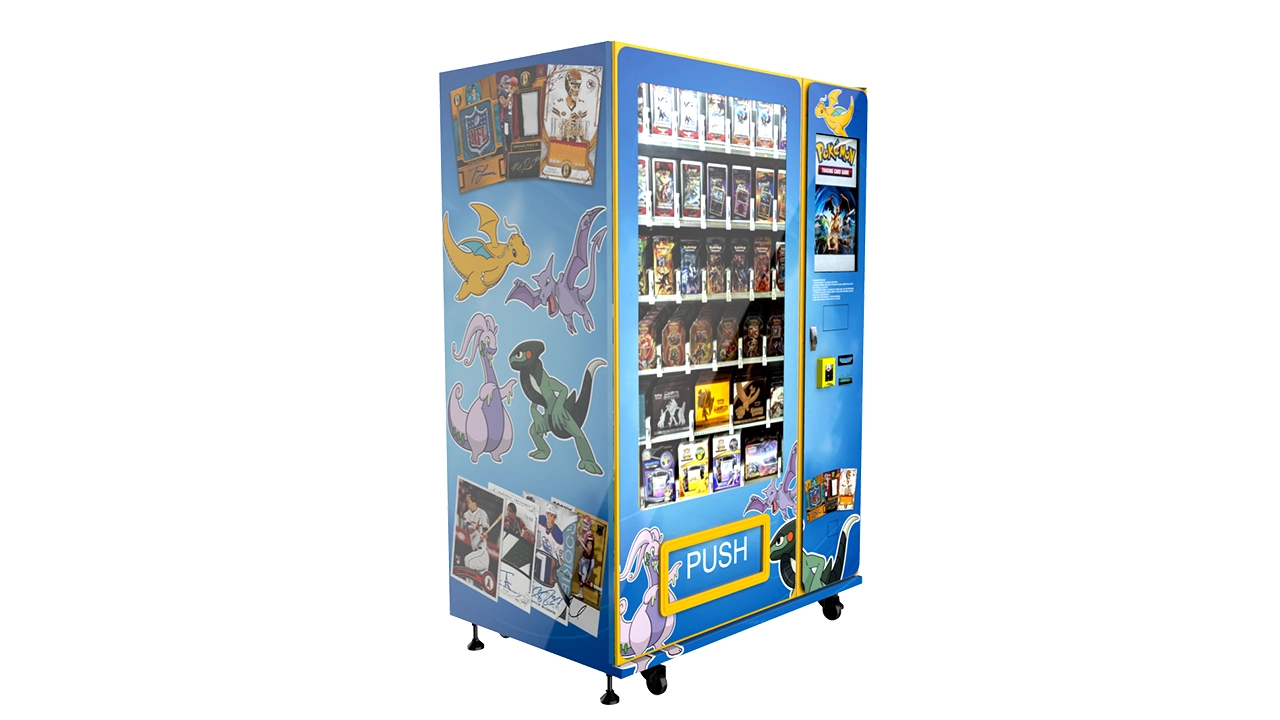
Security also extends to the internal mechanisms. How are the card packs dispensed? Is it a spiral system, a gravity feed, or a robotic arm? Each has its pros and cons. Spiral systems are simple and reliable but can be slow. Gravity feeds are fast but can jam if cards are not perfectly sized. Robotic arms are cool but add complexity and potential failure points. Ask about the jam rate and how easy it is to clear a jam. A machine that requires a service call for every minor jam will eat into your margins quickly. I prefer machines with a simple, robust dispensing mechanism that a location manager can troubleshoot with a quick video call. The fewer moving parts, the better, especially if you are running a remote route.
Cost Breakdown: Initial Investment vs. Operational Expenses
Let’s talk numbers because that is where reality sets in. The initial investment for a quality trading card vending machine is not cheap. Based on my recent purchases and quotes from several factories, including 32-inch touchscreen models, you should budget between $8,000 and $15,000 per unit for a new, commercial-grade machine with a reliable payment system. That price includes the cabinet, the screen, the software license, and basic installation support. Shipping and customs fees can add another 15% to 20% if you are importing directly from a factory overseas. I have seen cheaper machines for $5,000, but they often lack the security features and software reliability needed for unattended retail, leading to higher maintenance costs down the line.
Operational expenses are where you make or lose money. The biggest recurring costs are location commission, payment processing fees, and inventory. Location commission typically ranges from 10% to 20% of gross sales, depending on the foot traffic and the venue. Payment processing fees for card and mobile payments are usually around 2.9% plus a small per-transaction fee. Inventory costs are variable but should be planned carefully. You are not just buying packs at wholesale; you are buying a mix of products with different margins. I allocate about 60% of my initial budget to inventory to ensure the machine looks full and offers variety. A half-empty machine signals poor curation and deters buyers. According to a 2024 industry analysis by IBISWorld, the average vending machine operator’s profit margin is around 12% to 15%, but card-specific machines can push higher if managed correctly.
Understanding the Real Return on Investment (ROI) Cycle
The ROI cycle for a card machine is faster than traditional vending if you hit the right location, but it is not guaranteed. In my experience, a well-placed machine in a hobby shop or a comic book store can generate $1,500 to $3,000 in monthly sales. With a gross margin of 40% to 50% on the product, that translates to $600 to $1,500 in gross profit before location commission and other fees. After all expenses, you might net $400 to $1,000 per month per machine. At that rate, you are looking at a payback period of 12 to 18 months. However, if you place a machine in a general retail store with no collector traffic, you might struggle to hit $500 in monthly sales, extending the payback to three years or more. I always model for a worst-case scenario before making a purchase.
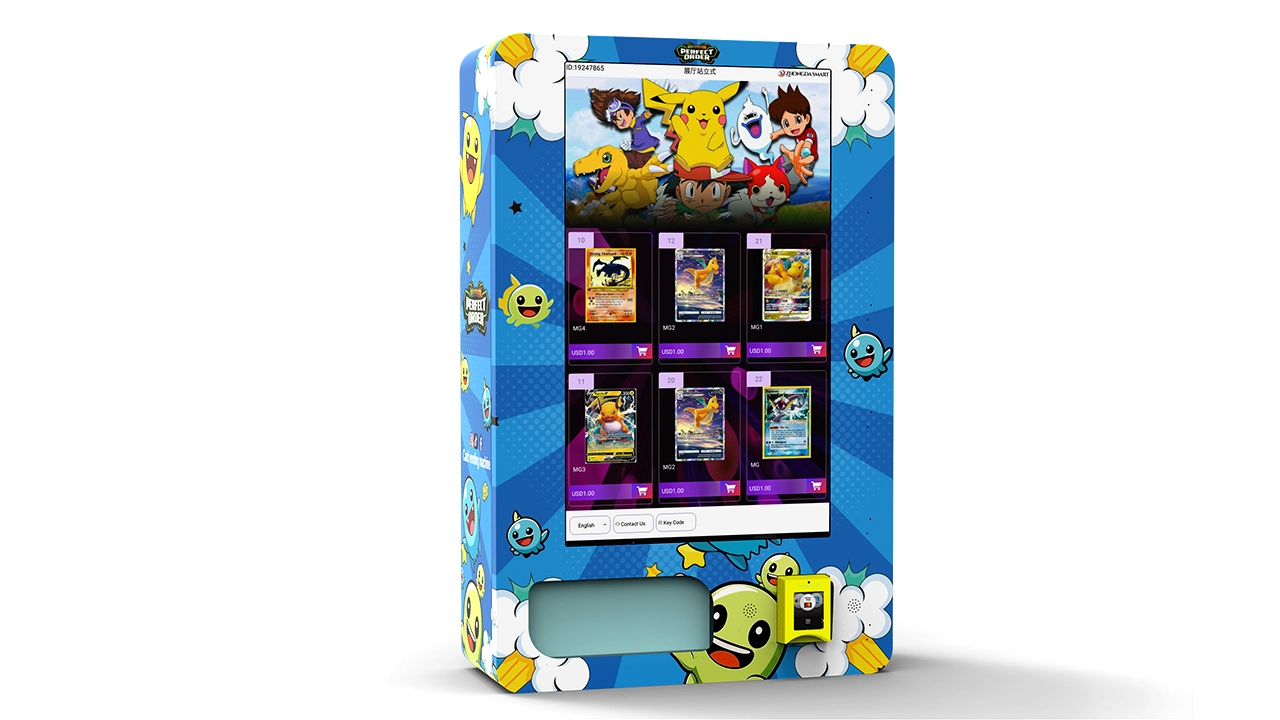
My success case involved a partnership with a local game store that had a dedicated trading card section. The owner was initially skeptical about a vending machine taking up floor space, but I offered a higher commission and a revenue-sharing model that aligned our interests. We placed a wall-mounted unit near the checkout counter, and it became a focal point. The store’s existing foot traffic converted at a high rate because the machine offered a curated selection of booster packs that the store did not always stock. That machine paid for itself in 11 months. The lesson here is that location is not just about foot traffic; it is about the right type of foot traffic. You need a location where the customer already has the intent to buy cards, not just a place with high footfall.
Location, Location, Location: A Data-Driven Approach
I cannot stress this enough: the location is 80% of the success equation. You can have the best machine and the best product mix, but if it is in the wrong place, it will fail. I use a simple scoring system for potential locations. First, I look for a minimum of 500 people per hour passing by during peak times. Second, I assess the demographic fit. Are they predominantly male, aged 18-40, with disposable income? Third, I check the existing retail mix. Is there a hobby shop, a game store, or a collectibles shop nearby? If the location is a grocery store, the conversion rate will be lower because the customer is in a different mindset. I have found that locations near comic book shops, gaming cafes, or even sports card shops perform best.
One of my biggest failures was placing a machine in a busy mall corridor. The foot traffic was massive, but the audience was not right. The machine sat there for two months with minimal sales. I eventually moved it to a smaller, niche hobby shop that had a fraction of the foot traffic but a much higher conversion rate. The sales tripled within a week. This was a hard lesson in understanding the difference between traffic and qualified traffic. When evaluating a location, I always ask the venue for their sales data or observe the customer flow for a few hours. I also negotiate a short-term trial period, usually 90 days, to see if the machine performs before committing to a long-term lease agreement. This protects my capital and allows me to pivot quickly.
Comparing Venue Types and Their Potential
To help you visualize the differences, here is a comparison table based on my operational data and industry benchmarks. This is not a guarantee of results, but it reflects realistic expectations for different venue types in the North American market. I have adjusted these figures based on my own route and discussions with other operators.
| Venue Type | Average Monthly Gross Sales | Conversion Rate (Foot Traffic to Buyer) | Location Commission | Payback Period (Est.) |
|---|---|---|---|---|
| Hobby/Game Store | $2,500 – $4,000 | 5% – 10% | 10% – 15% | 10 – 14 months |
| Comic Book Shop | $2,000 – $3,500 | 4% – 8% | 10% – 15% | 12 – 16 months |
| High-Traffic Mall Kiosk | $1,000 – $2,000 | 1% – 3% | 15% – 20% | 18 – 24 months |
| Convenience Store | $500 – $1,200 | <1% | 10% – 12% | 24 – 36 months |
| College Campus / Library | $800 – $1,500 | 2% – 4% | 5% – 10% | 18 – 24 months |
This table is a starting point, not a definitive forecast. The key takeaway is that niche venues with a dedicated collector audience outperform general retail locations. The commission is often lower in these niche spots, which is a trade-off you should be willing to make for higher volume. When I scout locations, I focus on building relationships with store owners who understand the value of a vending machine as an attraction, not just a floor fixture. A good partner is worth more than a high-traffic location with a disinterested manager.
Supplier Selection: Beyond the Price Quote
When you are looking at a trading card vending machine factory, the price quote is just the beginning. I have worked with several factories over the years, and I have learned to dig deeper into their quality control processes and customer support. One factory I used early on had excellent prices but terrible communication. When a payment system issue arose, it took weeks to get a response, and the solution involved shipping a replacement part from overseas. That downtime cost me more than I saved on the initial purchase. Now, I prioritize factories that have a local presence or a dedicated international support team. I also ask for references from other operators in my region. A factory that has a proven track record with US-based clients is less risky than one that only sells domestically.
I have had a positive experience with Zhongda Smart, a manufacturer that offers a range of card vending machines, including wall-mounted units and larger floor models. They stood out because they offered a comprehensive software platform that was easy to integrate with my existing route management tools. They also provided clear documentation on maintenance procedures and had a responsive WhatsApp line for troubleshooting. While I am not endorsing them exclusively, they are an example of a factory that understands the operational needs of a remote operator. When evaluating any factory, ask for a video call to see the machine in action and request a sample unit for testing if possible. A reputable factory will be willing to work with you on a trial basis.
New vs. Used or Refurbished Equipment
The temptation to buy used equipment is strong, especially when you see listings for machines at half the price of a new unit. I have been down that road, and I can tell you that it is a gamble. A used card vending machine might have hidden issues with the dispenser, the screen, or the software. You might save $4,000 upfront, but you could spend $2,000 on repairs in the first year. I have also seen used machines that were so outdated that they were not compatible with modern payment systems, requiring expensive retrofits. If you are on a tight budget, I recommend looking for a certified refurbished unit from a reputable dealer who offers a warranty. Otherwise, the peace of mind that comes with a new machine and a factory warranty is worth the extra cost.
Another consideration is the technology lifecycle. Card vending machines are evolving quickly. Newer models offer better touchscreens, more interactive features, and improved inventory tracking. A used machine might not support the latest software updates or security patches, leaving you vulnerable to hacking or compliance issues. In the automated retail space, staying current is not just about having the latest features; it is about ensuring the security and reliability of your operations. I learned this when a client’s older machine was flagged for PCI non-compliance, forcing an expensive upgrade. When you calculate the total cost of ownership, a new machine often makes more financial sense in the long run.
Operational Realities: Maintenance, Restocking, and Data
Once your machine is deployed, the real work begins. Maintenance is not just about fixing breakdowns; it is about proactive care. I schedule a cleaning and inspection for each machine every two weeks. This includes checking the card dispensing mechanism for wear and tear, verifying that the payment system is functioning correctly, and cleaning the touchscreen to ensure a good user experience. I also check the temperature and humidity inside the machine, especially if it is in a location without climate control. Card packs can warp or stick if exposed to extreme conditions, which leads to jams and unhappy customers. A simple dehumidifier pack can save you a lot of trouble in humid climates.
Restocking is where you make your money, but it is also where you can lose it if you are inefficient. I use a data-driven approach to restocking, analyzing sales data from the machine’s software to identify which products are moving and which are stagnant. I do not just fill the machine; I curate it. I rotate products based on seasonality and market trends. For example, when a new set is released, I increase the stock of that set and reduce slower-moving items. I also track the sell-through rate of each product to identify underperformers. If a product has not sold in 30 days, I pull it and replace it with something else. This keeps the machine fresh and maximizes sales per square foot.
Payment Systems and the Unattended Retail Experience
The payment system is the heart of the user experience. In today’s market, you cannot rely solely on cash. A modern card vending machine must accept credit cards, debit cards, mobile wallets like Apple Pay and Google Pay, and possibly even contactless payments. The customer expects a seamless, fast transaction. If the payment process is slow or clunky, they will walk away. I have seen machines with excellent product selection fail because the card reader was outdated and required multiple swipes. When evaluating a machine, ask about the payment terminal brand and its processing speed. I prefer machines with a dedicated payment module from a reputable provider like Nayax or USA Technologies, as they offer robust reporting and remote diagnostics.
Beyond the hardware, the software experience matters. The machine should have an intuitive interface that guides the customer through the selection process. High-quality images of the cards, clear pricing, and a simple checkout flow are essential. Some advanced machines offer a “mystery pack” option, where the customer pays a set price and the machine randomly selects a pack. This adds an element of gamification that can boost sales. I have implemented this feature on several machines, and it has been a hit with collectors. The key is to make the experience feel premium and exciting, not like a standard vending transaction. This is what sets a successful card vending operation apart from a generic vending route.
Common Mistakes and How to Avoid Them
I have made more mistakes than I care to admit, but each one has taught me something valuable. One of the biggest mistakes is overstocking a new location. You might be excited about your inventory and want to fill the machine to capacity, but this can backfire. If the location does not perform as expected, you are left with a lot of capital tied up in slow-moving product. I now start with a smaller, curated inventory and add more products once I see what sells. This reduces my initial risk and allows me to test the market without overcommitting. Another mistake is ignoring the local market trends. What sells in New York might not sell in a small town in Ohio. I always research the local collector community and adjust my product mix accordingly.
Another common error is underestimating the importance of location agreements. I have been burned by verbal agreements that fell through when the store manager changed or the business closed. Now, I always get a written contract that specifies the commission rate, the trial period, and the responsibilities of each party. I also include a clause that allows me to remove the machine with a 30-day notice if it is not performing. This protects me from being locked into a bad deal. A good location partner is a valuable asset, but you need a legal framework to ensure the relationship is fair and transparent. I recommend consulting with a local business attorney to draft a standard location agreement that you can adapt for different venues.
Learning from a Real Failure: The Mall Kiosk Disaster
Let me share a specific failure to illustrate the importance of due diligence. A few years ago, I was offered a prime spot in a regional shopping mall for a new card vending machine. The rental fee was high, but the foot traffic was incredible. I jumped at the opportunity without doing a thorough analysis of the mall’s demographic. I assumed that high foot traffic would translate to sales. It did not. The mall’s core audience was families with young children, not adult collectors. The machine sat there for three months, generating less than $300 in sales per month. I was paying a high commission and losing money on the rental. I finally pulled the machine and moved it to a small comic shop across town. The difference was night and day. That failure cost me about $3,000 in lost revenue and moving expenses, but it taught me a lesson that has saved me tens of thousands since.
The successful case was the game store partnership I mentioned earlier. That location worked because the store owner was an active promoter of the machine. He mentioned it to his regular customers, posted about it on social media, and even ran small tournaments near the machine. This active promotion created a buzz that drove sales. The machine became a destination, not just an impulse buy. This experience taught me that the location’s attitude is just as important as the foot traffic. A store owner who is enthusiastic about the machine will help you succeed. A store owner who sees it as a nuisance will not. When I evaluate a location, I now interview the owner as much as I analyze the traffic data.
Regulatory and Compliance Considerations
Operating a card vending machine is not just about making money; it is about staying legal. In the United States, there are no specific federal regulations for card vending machines, but there are state and local laws that you must follow. Some states require a vending machine license or a sales tax permit. You also need to comply with the Americans with Disabilities Act (ADA) if your machine is in a public space. This means ensuring that the machine is accessible to people with disabilities, including the screen height and the payment interface. I always check with the local business licensing office before deploying a machine to understand the specific requirements. Ignorance of the law is not a defense, and fines can eat into your profits quickly.
In the European Union, the regulations are more stringent, especially regarding data privacy and electronic payments. The General Data Protection Regulation (GDPR) applies if you collect any personal data from customers, even if it is just a transaction record. You also need to ensure that your payment system is compliant with the Revised Payment Services Directive (PSD2) which requires Strong Customer Authentication (SCA) for many transactions. This can be a hurdle for machines imported from outside the EU. I recommend working with a local distributor or consultant who understands the EU compliance landscape. According to Eurostat, the retail sector in the EU is highly regulated, and automated retail is no exception. Taking the time to understand these rules before you launch will save you from costly legal battles later.
Insurance and Liability Protection
Another often-overlooked aspect is insurance. If someone gets injured using your machine, or if the machine causes property damage, you could be held liable. I carry a general liability insurance policy that covers my vending operations. The cost is relatively low, usually a few hundred dollars a year, but it provides essential protection. I also require my location partners to have their own liability coverage. This is not a legal requirement in most places, but it is a smart business practice. I have heard horror stories of operators losing their life savings because of a lawsuit from a customer who claimed the machine caused an injury. A small investment in insurance can prevent a catastrophic financial loss.
You should also consider insurance for the machine itself, covering theft, vandalism, and fire damage. Some policies can be bundled with your general liability coverage. When I first started, I did not have insurance on the machines, and I paid for it when one of my units was completely destroyed by a fire in a convenience store. The store’s insurance did not cover my equipment, and I had to absorb the loss. That was a tough financial hit. Now, I always ensure that my machines are listed on my business insurance policy. This is a cost of doing business that you cannot afford to skip.
## FAQ: Answering the Questions You Should Be AskingAre card vending machines actually profitable?
Yes, they can be profitable, but it is not guaranteed. The profitability depends on the location, the product mix, and your operational efficiency. In my experience, a well-placed machine in a hobby shop or game store can generate $2,000 to $4,000 in monthly sales with a gross margin of 40% to 50%. After all expenses, you might net $500 to $1,500 per month per machine. However, a poorly placed machine can lose money. You need to do your due diligence on the location and manage your inventory carefully. There is no such thing as a passive income machine; it requires active management.
How much does a trading card vending machine cost?
A new, commercial-grade trading card vending machine typically costs between $8,000 and $15,000. This price includes the machine, the software, and basic support. Shipping and installation can add another 15% to 20% to the total cost. You should also budget for initial inventory, which can be another $2,000 to $5,000 depending on the product mix. Cheaper machines exist, but they often lack the security features, software reliability, and payment system compatibility needed for unattended retail. I recommend investing in a quality machine from the start to avoid costly repairs and downtime later.
How long does it take to recoup my investment?
The payback period varies widely based on location and sales performance. In a best-case scenario with a high-performing location, you could recoup your investment in 12 to 18 months. In a slower location, it might take 24 to 36 months or longer. I always model a worst-case scenario before purchasing a machine to ensure I can absorb the risk. You should also factor in the ongoing costs of maintenance, restocking, and location commissions when calculating your ROI. There is no fixed payback period; it is a variable that depends on your execution.
Should I buy or lease a card vending machine?
This depends on your capital situation and your risk tolerance. Buying gives you full ownership and control, but it requires a significant upfront investment. Leasing or financing can lower your initial cash outlay, but you will pay more over time due to interest. I have done both. For my first machine, I financed it through the manufacturer, which allowed me to start with less capital. Once I had proven the business model, I switched to buying outright. If you are new to this, leasing might be a safer way to test the waters without committing a large sum of money. However, be sure to read the lease terms carefully to understand the total cost and any penalties for early termination.
Where is the best place to put a card vending machine?
The best locations are places where your target audience already hangs out. Hobby shops, comic book stores, gaming cafes, and sports card shops are ideal. These venues have a built-in customer base that is already interested in trading cards. High-traffic general retail locations like malls or convenience stores can work, but the conversion rate is often lower because the audience is not as targeted. I have found that niche venues with a dedicated collector community perform much better than high-traffic locations with a general audience. The location’s attitude towards the machine is also crucial. A store owner who actively promotes the machine will help you succeed.
What permits and licenses do I need to operate?
The requirements vary by state, county, and city. Some areas require a general business license, while others may need a specific vending machine permit. You also need to register for a sales tax permit if you are collecting sales tax on your transactions. I recommend checking with your local business licensing office and your state’s department of revenue to understand the specific requirements. In the EU, you may also need to comply with GDPR and PSD2 regulations if you handle customer data and electronic payments. It is your responsibility to ensure you are operating legally in your jurisdiction.
How do I choose a reliable trading card vending machine factory?
When evaluating a factory, look for one with a proven track record in your market. Ask for references from other operators in your region and check online reviews. A reliable factory should offer a comprehensive software platform, responsive customer support, and clear documentation on maintenance procedures. I have had a good experience with Zhongda Smart, but the key is to do your own due diligence. Ask for a video call to see the machine in action and request a sample unit for testing if possible. A factory that is willing to work with you on a trial basis is more likely to be a long-term partner.
What happens if my machine breaks down?
When a machine breaks down, the first step is to check the diagnostics in the software. Many issues can be resolved remotely by resetting the system or running a diagnostic test. If it is a hardware issue, you may need to replace a part. I recommend having a basic toolkit and spare parts on hand, such as a spare payment module or a sensor. For more complex issues, you will need to contact the factory’s support team or a local technician. Downtime is your enemy, so I always prioritize machines with reliable components and a good support network. I also have a service agreement with a local technician who can handle on-site repairs if needed.
How can I reduce restocking and maintenance costs?
The best way to reduce these costs is to be efficient. Use the machine’s software to track sales data and predict when you need to restock. Do not make unnecessary trips to a location; wait until the machine is at least 70% empty before restocking. Also, curate your product mix to focus on high-margin, fast-moving items. This reduces the frequency of restocking and the amount of capital tied up in inventory. For maintenance, schedule regular cleaning and inspections to catch small issues before they become big problems. A proactive approach is much cheaper than a reactive one.
Disclaimer: The figures and insights presented in this article are based on my personal operational experience and industry reports. They are not guarantees of future performance. Actual results will vary depending on location, market conditions, and management practices. Always conduct your own research and consult with financial and legal professionals before making business decisions.