If you are weighing a trading card vending machine against a traditional card shop, the short answer is that they solve completely different problems, and most operators I know end up running both. The vending machine is not a replacement for a shop; it is a distribution channel that works while you sleep, but it demands a ruthless understanding of location data and restocking discipline that most retail owners simply do not have. I have spent over a decade placing automated retail units across North America, and I can tell you that the trading card vending machine trend is real, but the hype has also created a graveyard of poorly placed machines full of dusty booster packs. Before you spend a dollar, you need to understand the operational math, the failure points, and why a traditional card shop still holds one major advantage: community and expertise.
The Core Difference: Passive Distribution vs. Active Community
A traditional card shop is a destination. Customers walk in to trade, ask questions, participate in Friday Night Magic, or just browse the singles case. That foot traffic is built on relationships, events, and the tactile experience of opening packs at a table with other players. A trading card vending machine, on the other hand, is pure logistics. It sits in a high-traffic corridor, a grocery store lobby, or a mall food court, and it sells sealed product to people who may not even play the game yet. The machine captures impulse buyers, parents looking for a quick gift, and collectors who need a fix after work when your shop is closed.
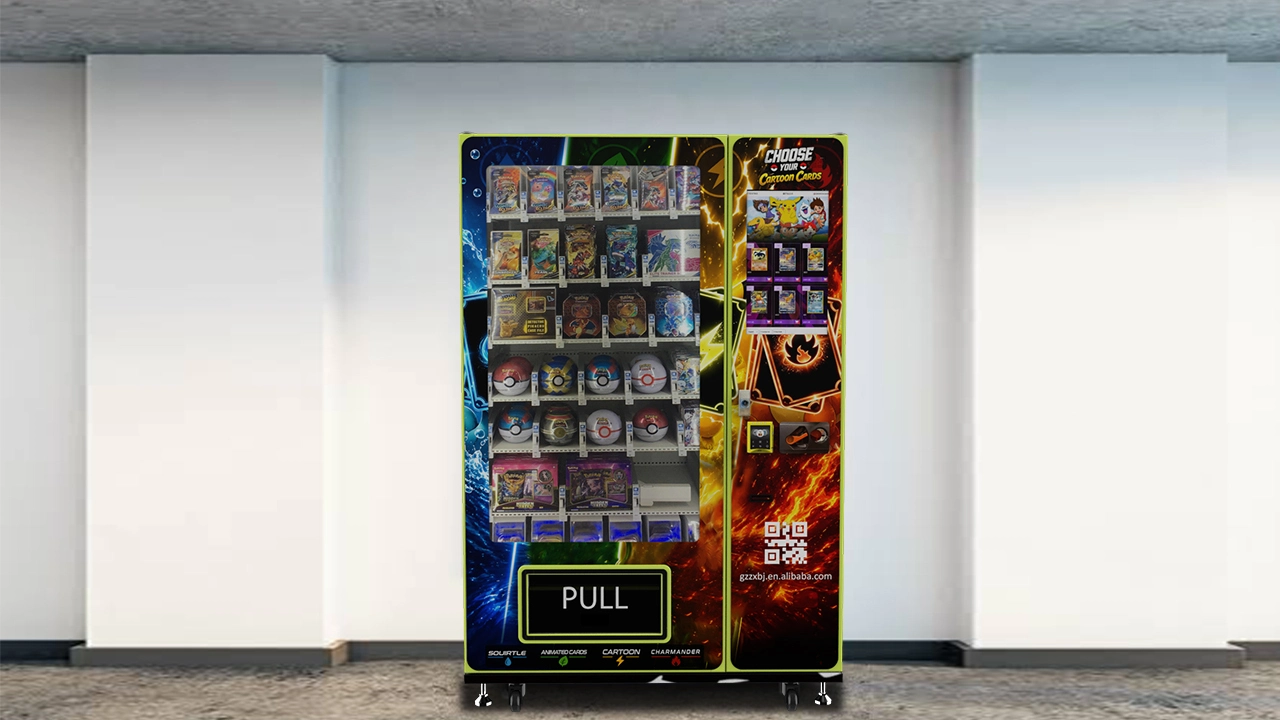
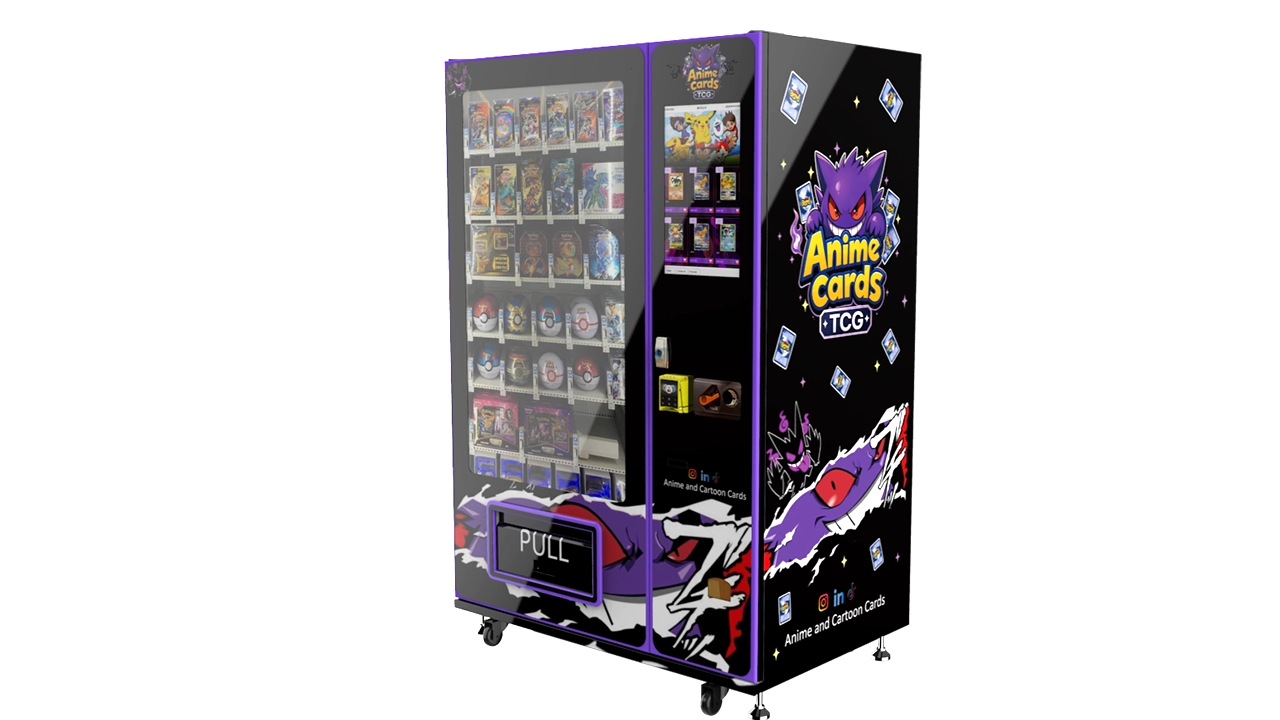
From my experience, the mistake is treating the machine like a mini-shop. You cannot staff it, you cannot answer questions, and you cannot manage a trade-in program through a glass front. What you can do is offer a curated selection of sealed booster packs, blister packs, and maybe some graded singles behind a locked case. The machine thrives on convenience, not conversation. That is why my first piece of advice is to define your goal. If you want to build a player base, open a shop. If you want to move sealed product with minimal labor, a self-service kiosk is your better bet.
Why I Started with a Shop and Almost Went Bankrupt
My first venture was a 1,200-square-foot card shop in a suburban strip mall. Rent was $4,200 a month, and I had two part-time employees. We did well on weekends, but Tuesday through Thursday were dead. I was paying for heat, lighting, and labor for eight hours a day just to sell maybe five booster packs. The turning point was when I realized my overhead was eating my margin alive. I sold a box of Pokemon for a 12% margin, but my rent alone ate 9% of my total revenue. That is when I started looking at automated retail as a way to extend my footprint without extending my lease.
I placed my first trading card vending machine in a local game store that was not a direct competitor. They sold board games and miniatures, not cards. The deal was a 15% commission on gross sales, and I handled all restocking. That machine did $1,800 in its first month on a single booster pack selection. That was when I understood the power of placement. The machine was not competing with my shop; it was a new point of sale in a place where card players already gathered but had no reason to buy cards. That first machine paid for itself in seven months, and it taught me that the traditional shop model is not dead, but it is limited by geography and hours.
Cost Breakdown: What You Are Really Paying For
Let me give you a realistic cost structure based on my own purchases and those of my clients. A basic 32-inch touchscreen trading card vending machine will run you between $4,500 and $9,000 depending on the vendor, the payment system, and whether it is new or refurbished. A larger unit with multiple shelves and a bill acceptor can go up to $15,000. I have seen wall-mounted card vending machines that cost less, around $3,200, but they hold fewer SKUs and are harder to secure in high-theft areas. Do not forget the hidden costs: shipping (often $300 to $800), installation, a dedicated 15-amp circuit, and insurance.
On the shop side, the initial investment is significantly higher. A traditional card shop with a 12-month lease, basic shelving, a counter, security cameras, and an initial inventory of sealed product and singles will easily cost $60,000 to $120,000 before you open the doors. That includes a security deposit, business licenses, point-of-sale systems, and a trade-in cash float. The operational costs are also brutal. You are looking at $1,500 to $3,000 a month in rent for a decent location, plus utilities, internet, and wages. If you pay yourself a salary, that is another $3,000 to $4,000 a month.
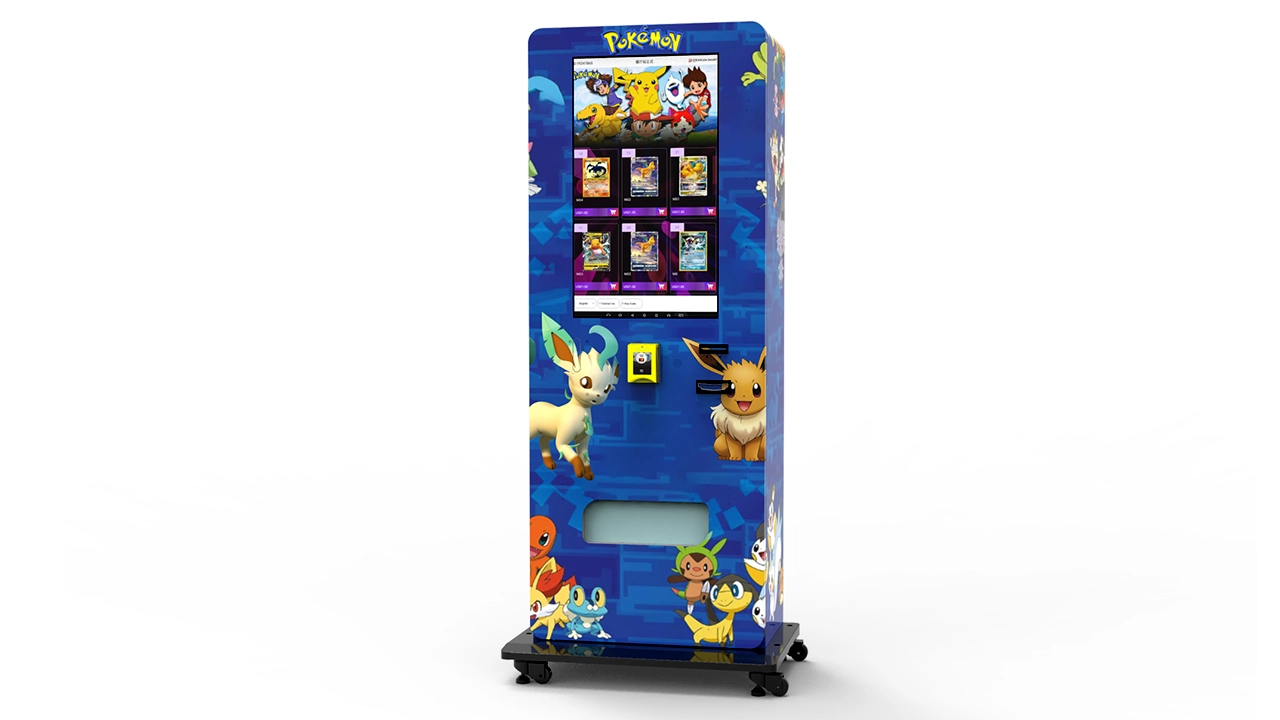
Here is a comparison table based on my operational experience and industry data from IBISWorld on retail trends:
| Cost Category | Trading Card Vending Machine | Traditional Card Shop |
|---|---|---|
| Initial Investment | $4,500 – $15,000 | $60,000 – $120,000 |
| Monthly Overhead (Rent, Utilities) | $150 – $500 (location fee or commission) | $2,500 – $5,000 |
| Labor | 4–6 hours/week for restocking | Full-time staff (1–3 people) |
| Inventory Risk | Low – small SKU count | High – large sealed and singles inventory |
| Revenue Potential (Monthly) | $500 – $3,000 per machine | $10,000 – $40,000 |
| Break-even Period | 6 – 18 months | 2 – 4 years |
That table is a simplification, but it shows the real difference in risk. A vending machine is a controllable experiment. A shop is a full-time commitment that forces you to become a community manager, an accountant, and a marketing director all at once. The data from the U.S. Small Business Administration shows that about 20% of new retail businesses fail within the first year, and a large part of that is overhead. A machine eliminates most of that overhead, but it also eliminates the human connection that keeps players loyal.
Location: The Single Most Important Decision
I have placed machines in laundromats, bowling alleys, mall walkways, and even a dentist office. The results vary wildly. My best performer is a machine in a 24-hour gym lobby that sells Pokémon and sports cards. That gym has about 1,200 members, and many of them are parents waiting for their kids to finish practice. That machine does $2,200 a month with zero marketing. My worst performer was in a comic book store that had terrible foot traffic. The owner was a friend, and I placed the machine there out of loyalty. It did $120 in its first month. I moved it to a grocery store entrance, and the same machine did $900 the next month.
Here is what I look for in a location: high dwell time, not just high foot traffic. A subway station has thousands of people passing by, but they are in a hurry. A grocery store, a pharmacy, or a laundromat has people waiting. That waiting time is when impulse purchases happen. I also look for locations with a family demographic. Trading cards are a nostalgia product for adults aged 25 to 40, but they are also a direct purchase for kids aged 8 to 15. A location near a school or a youth sports complex is gold. I have one machine outside a karate studio that does consistent sales every weekday afternoon.
If you are comparing a machine to a shop, remember that a shop forces you to be in one place. A machine allows you to test multiple locations for the cost of one machine and a bit of moving labor. I have a client who moves his machines every three months based on sales data. He treats it like a portfolio, not a storefront. That is the mindset you need. Do not fall in love with a location. Fall in love with the sales numbers.
My Failed Location: The Bowling Alley Lesson
I once placed a machine in a bowling alley that had 40 lanes and a busy weekend league. I assumed the family crowd would buy packs while waiting for their lane. The machine was placed near the shoe rental counter, which seemed logical. It did $300 in the first month and then dropped to $150. The problem was the clientele. The bowling alley was a league-heavy venue with mostly adults who were focused on drinking and socializing, not buying Pokémon cards. I also realized the machine was in a high-traffic area but low-dwell-time zone. People were walking by, but they were not waiting. They were heading to the bar or the restroom.
I moved the machine to a local library that had a kids' reading room. The library had a much lower total foot traffic, but the dwell time was enormous. Parents sat for 30 minutes while their kids picked books. That machine now does $700 a month. The lesson is simple: do not trust your gut. Trust the data. Use a simple counter to track foot traffic at different times of day. Talk to the business owner about their peak hours. Ask about the average age of their customers. If you cannot answer those questions, you are gambling, not investing.
Payment Systems and Theft Prevention
Modern trading card vending machines are not the old candy machines with a coin slot. They have cashless payment systems, touchscreens, and sometimes even facial recognition for age verification. I strongly recommend a machine with a card reader and mobile payment support (Apple Pay, Google Pay). Cash is still used in some locations, but it creates a theft risk and a maintenance headache. A cashless system reduces the risk of vandalism because there is no cash box to steal. It also gives you better data on sales patterns.
However, cashless systems come with a downside: transaction fees. You will pay 2.5% to 3.5% per transaction, plus a monthly gateway fee of $20 to $40. That eats into your margin. For a $4 booster pack, that is about 12 cents in fees. It is worth it for the security and the data, but you need to factor it into your pricing. I usually price my packs $0.50 to $1.00 above the MSRP to cover the fees and the convenience factor. Customers accept this at a machine because they are paying for convenience, not a deal.
Theft is a real issue, especially in unattended retail. I have had machines broken into twice. The first time, they pried the door open with a crowbar. The second time, they tried to use a car jack to spread the frame. Both times, the machines were in locations without security cameras. Now I only place machines in locations with 24/7 surveillance or at least a clear line of sight to a staffed counter. I also install a GPS and vibration sensor inside the machine that alerts me via text if it is moved or tampered with. That is a $150 add-on that pays for itself the first time it prevents a break-in.
Restocking and Inventory Management: The Real Work
People think a vending machine is a set-and-forget business. That is a fantasy. A trading card vending machine requires weekly restocking, and the restocking schedule depends on the sell-through rate. I have machines that need restocking twice a week and others that need it once a month. The key is to track sell-through by SKU, not just total sales. If you have a machine with 10 different booster packs, you will likely find that 80% of your sales come from 2 or 3 SKUs. That is the Pareto principle, and it is very real in card vending.
I use a simple spreadsheet to track inventory levels and sales velocity. I also keep a buffer stock of about 20% of the machine's capacity in my car or at a nearby storage unit. The worst thing you can do is have an empty slot in the machine. An empty slot is lost revenue, and it makes the machine look neglected. Customers will stop trusting it if they see empty shelves. I have learned to always carry a spare of each SKU, even if it means carrying a few extra boxes in my trunk.
One operational tip: rotate your stock. Do not just refill the same products in the same slots. Move slow sellers to a more visible slot or bundle them with a fast seller. I once had a stale box of Magic: The Gathering packs that would not sell on the bottom shelf. I moved it to the middle shelf next to a new Pokémon set, and it sold out in a week. The placement psychology is real. Also, pay attention to release dates. New sets sell out in days. Old sets linger. I always allocate at least 50% of my machine capacity to new releases and the rest to evergreen products like Pokémon and Yu-Gi-Oh!.
Maintenance: The Hidden Cost That Kills Beginners
Vending machine repair is not something you can ignore. The average machine will have a jam or a payment system error at least once every two months. If you are not handy, you will pay $75 to $150 per service call. That can wipe out a week of profit. I recommend learning basic troubleshooting: how to clear a jammed product, how to reset the payment system, and how to calibrate the spirals. The manufacturer usually provides a manual, and there are plenty of YouTube tutorials. I have replaced my own motors and sensors with parts ordered online for $20 to $50, which would have cost $200 in labor if I called a technician.
I also recommend a preventive maintenance schedule. Clean the glass and the touchscreen every two weeks. Lubricate the moving parts every three months. Check the temperature if the machine is outdoors. Extreme heat can warp cards, and extreme cold can cause the plastic to become brittle. I have a machine in a garage that gets very cold in winter, and I had to add a small heater to keep the internal temperature above 50°F. That was a lesson learned after I found a box of damaged cards that had frozen and cracked.
The good news is that a modern trading card vending machine is more reliable than the old snack machines. The electronics are simpler, and the product is lightweight. But you cannot ignore maintenance. A broken machine is worse than no machine because it damages your reputation with the host location. If the host sees a broken machine, they may ask you to remove it. I always respond to any error alert within 24 hours, even if it means driving an hour to reset a breaker.
Supplier Selection and the Zhongda Smart Option
Choosing the right machine supplier is more important than choosing the machine itself. I have bought machines from three different manufacturers, and the differences are significant. The cheapest machine I bought was $3,800, and it broke down three times in the first year. The most expensive was $9,500, and it has run flawlessly for three years. The difference was not just build quality; it was the after-sales support. A good supplier will send you replacement parts quickly, answer your emails, and provide firmware updates. A bad supplier will disappear after the sale.
I have seen some operators use Zhongda Smart for their machines, and I have tested a few of their units for a client. They offer a solid mid-range option, especially the 32-inch touchscreen models. Their build quality is decent, and the payment system integration is reliable. The main advantage is their customization options. They allow you to configure the number of trays, the type of spirals, and the software interface. That is useful if you want a machine that looks different from the standard units. However, I recommend you order a sample unit before committing to a bulk order. Test it in your own environment for at least a month. Check the response time of their technical support. Ask for a list of references from other operators.
When evaluating any supplier, ask these questions: What is the warranty period? (Most offer 1 to 2 years.) What is the replacement part lead time? (Aim for 5 to 7 days.) Do they offer remote diagnostics? (Some machines have built-in telemetry.) Is the payment system compliant with local regulations? (In the EU, you need to check the Payment Services Directive.) And most importantly, what is the failure rate of their machines in the field? A reputable supplier will give you a straight answer. If they avoid the question, walk away.
Legal and Compliance Issues: More Than You Think
Many beginners assume that a vending machine is a simple business with no permits. That is wrong. In the United States, you need a sales tax permit, a business license, and possibly a vending machine license depending on your city or county. In the European Union, you need to comply with the EU's General Product Safety Directive and, if you are selling to minors, age verification for certain trading cards that may be considered gambling-like. This is a growing concern, especially with sports cards that have a chance of containing autographs or rare inserts.
I have seen operators get fined for not having the proper permits. One of my clients in California was fined $500 for operating a machine without a vending permit in a county that required one. The fine was more than the machine's profit for two months. I recommend you contact your local city hall or check the U.S. Small Business Administration website for a checklist of required permits. In the EU, the situation is more complex because each member state has its own rules. I suggest consulting with a local business attorney or using the Eurostat business regulations portal to get started.
Insurance is another often-overlooked aspect. Your machine is an asset, and you need liability insurance in case someone is injured using it. The cost is usually $200 to $500 per year for a single machine, depending on the location. If the machine is in a high-traffic area, the premium may be higher. I always add the machine to my business insurance policy and specify the location. Do not rely on the host location's insurance, because their policy will not cover your machine or your products.
When a Traditional Card Shop Still Wins
There are situations where a traditional card shop is a better investment than a vending machine. If you have the capital and the passion, a shop gives you the ability to buy collections, sell singles, and host events. The singles market has a much higher margin than sealed product. A shop can buy a collection for 60% of market value and sell singles at 100% of market value, yielding a 40% margin. A vending machine cannot do that. It can only sell sealed product at a 10% to 15% margin. The difference is significant.
Also, a shop gives you a physical presence that can attract customers who want to trade and interact. That is a business model that cannot be replicated through a machine. If you are in a city with a strong gaming community, a shop can become a hub. You can charge for event entry, sell snacks, and build a loyal customer base. The downside is that it is a full-time job. You cannot run a shop from your phone while you are at another job. You have to be there, or you have to hire a manager you trust implicitly.
In my experience, the best approach is a hybrid model. Start with a machine to test the local market. If the machine does well, it proves there is demand. Then, consider opening a small shop or a counter inside a larger store. The machine can remain at another location to generate passive income while the shop builds the community. I have seen this work multiple times. The machine becomes a marketing tool for the shop, and the shop becomes a place where machine customers can go for more selection and expertise. It is a win-win.
Data-Driven Decisions: The Only Way to Scale
If you are serious about this business, you need to treat it like a business, not a hobby. That means tracking your numbers religiously. I use a cloud-based dashboard that connects to my machines via a cellular modem. It shows me real-time sales, inventory levels, and error alerts. That data allows me to make decisions about which products to stock, which locations to keep, and which machines to move. Without that data, you are flying blind.
I have a client who runs 15 machines across three states. He checks his dashboard every morning and makes decisions based on weekly trends. When a new set drops, he increases the allocation for that set. When a location underperforms for two consecutive months, he moves the machine. He has a rule: if a machine does not generate at least $500 in gross revenue per month, it gets relocated. That rule has saved him from losing money on bad locations. It is a simple threshold, but it works.
Data also helps with pricing. I occasionally run promotions, like a buy-one-get-one on older packs, to clear out inventory. I can see the impact of the promotion in real-time and adjust the discount if necessary. The machine is not just a sales channel; it is a data collection tool. Every transaction tells you something about your customers' preferences. Use that information to refine your offering.
FAQ: The Questions I Get Asked Every Week
Are trading card vending machines profitable?
Yes, they can be, but profitability depends on location, product mix, and operational efficiency. In my experience, a well-placed machine can generate $700 to $2,500 per month in gross revenue, with a net profit margin of 15% to 25% after product cost, location fees, and maintenance. However, a poorly placed machine can lose money. I have seen machines that only do $100 per month, which is not enough to cover the electricity and the opportunity cost of your time. You must be willing to move the machine if it underperforms.
How much does a trading card vending machine cost?
A new machine with a touchscreen and cashless payment system costs between $4,500 and $9,000. Larger models with more trays can cost up to $15,000. Refurbished machines are available for $2,500 to $4,000, but they come with higher maintenance risk. Do not forget the installation cost (if you hire someone), shipping, and the cost of your initial inventory, which should be around $1,000 to $2,000 depending on the product mix.
How long does it take to recoup the investment?
Based on my experience, the break-even period is usually 6 to 18 months. A machine in a great location with high-margin products can pay for itself in 6 months. A machine in a mediocre location might take 18 months or longer. I always recommend a break-even target of 12 months. If the machine cannot achieve that, it is not worth the risk. Remember that this is an estimate, and your results will vary based on location, foot traffic, and the popularity of the trading card products you choose.
Should a beginner buy or lease a machine?
I recommend buying if you have the capital. Leasing is often more expensive in the long run, and you do not build equity. However, if you are unsure about the business model, a lease can be a lower-risk way to test the waters. Some suppliers offer a lease-to-own program with monthly payments of $150 to $300. That is a good option if you are just starting out and do not want to commit a large sum of money. Just read the contract carefully, especially the maintenance and termination clauses.
Where should I place the machine to make the most money?
The best locations are grocery stores, pharmacies, laundromats, gyms, libraries, and family entertainment centers. Look for places with high dwell time and a family demographic. Avoid locations with low foot traffic or a customer base that does not match the trading card demographic. Always negotiate the location fee. Some hosts will accept a flat monthly fee ($50 to $200), while others prefer a commission (10% to 20% of gross sales). I prefer a flat fee because it simplifies my accounting, but a commission can be better for the host's motivation to promote the machine.
What permits and licenses do I need?
You will need a business license and a sales tax permit in most jurisdictions. Some cities and counties require a specific vending machine permit. In the EU, you may need to comply with the General Product Safety Directive and, if applicable, age verification for certain products. Check with your local business registration office or the U.S. Small Business Administration for a comprehensive checklist. Insurance is also necessary, both liability and property insurance for the machine itself.
How do I choose a reliable machine supplier?
Look for a supplier with a physical address, a phone number that someone answers, and a warranty that is clearly written. Ask for references from other operators. Test a sample unit if possible. Check the response time for technical support. I have used several suppliers, and the best ones are those that offer remote diagnostics and have a stock of spare parts. Zhongda Smart is one option that I have seen work for other operators, but always do your own due diligence.
What should I do if the machine breaks down?
First, check the basics: is it plugged in, is there a jam, is the payment system online? If you cannot fix it yourself, contact your supplier's technical support. If the machine is under warranty, the repair may be covered. If not, you will need to pay a technician, which can cost $75 to $150 per hour. I recommend learning basic troubleshooting to avoid unnecessary service calls. Also, have a backup plan for the products inside the machine in case you need to empty it for repairs.
How can I reduce restocking and maintenance costs?
Plan your routes efficiently. If you have multiple machines, group them by geographic area to reduce driving time. Track your inventory levels remotely to avoid unnecessary trips. Use a buffer stock system and rotate products to minimize waste. Learn to do minor repairs yourself. I also recommend using a machine with a high-capacity product tray to reduce the frequency of refills. The goal is to minimize the time you spend on each machine while maximizing its sales potential.
Final Thoughts: The Hybrid Future
The trading card vending machine is not a passing fad, but it is also not a golden ticket. It is a tool that works best when combined with a broader strategy. I have seen too many people buy a machine, place it in a bad location, and then blame the industry when it fails. The truth is that success requires work, data, and a willingness to adapt. A traditional card shop offers community and expertise, but it comes with high overhead and long hours. A machine offers flexibility and low overhead, but it demands constant attention to data and location performance.
If I were starting over today, I would buy one machine, place it in a high-dwell-time location, and track every metric for six months. I would learn the product mix, the sales cycles, and the maintenance quirks. Then, and only then, would I consider scaling to a second or third machine. The same logic applies to opening a shop: start small, test the market, and grow based on evidence, not emotion.
This is not a get-rich-quick scheme. It is a real business with real risks and rewards. The data from Statista shows that the trading card market is growing, but that growth does not guarantee your success. Your success will come from your ability to choose the right location, manage your inventory, and treat every dollar of revenue as a data point. Whether you choose a machine, a shop, or both, the same principles apply: know your numbers, understand your customers, and be willing to pivot when the data tells you to.
Disclaimer: The figures and insights provided in this article are based on my personal operational experience and are for informational purposes only. They do not constitute financial, legal, or investment advice. Costs, revenues, and break-even periods can vary significantly based on location, market conditions, and individual business decisions. Always conduct your own research and consult with qualified professionals before making any business investment.