If you are looking into anti-theft trading card vending machines, the first question you probably have is whether they actually hold up in real-world locations without getting smashed, pried open, or gutted by thieves. After a decade of running vending routes across the US and parts of Europe, I can tell you this: the machine itself is only half the battle. The real money is made or lost on the features you choose before you ever plug it in. Over the years I have tested dozens of units, lost money on a few bad bets, and learned exactly which security features matter for trading card vending machines and which ones are just marketing fluff. This guide walks you through everything I wish someone had told me before I bought my first machine.
Why Anti-Theft Features Are Non-Negotiable in Card Vending
Trading cards are a uniquely high-value, low-volume product. A single booster pack can retail for $5, but a single sealed box or rare graded card can sit behind glass worth $500 or more. That makes card vending machines a completely different animal from snack or soda machines. Theft is not a matter of if, but when. I have seen machines tipped over in parking lots, had doors peeled open with crowbars, and watched footage of guys using reciprocating saws on polycarbonate windows. If you are buying a machine that does not have reinforced steel, anti-pry doors, and tamper alarms, you are basically donating inventory to the local criminal population.
What matters most is not the lock itself, but the entire enclosure design. A good anti-theft trading card vending machine uses a combination of hardened steel, recessed hinges, and a locking mechanism that cannot be shimmed with a screwdriver. The vending machine repair calls I get from operators who bought cheap units almost always trace back to the same issue: the cabinet was never designed to resist physical attack. You need a machine that makes the thief decide the juice is not worth the squeeze.
Another layer that often gets overlooked is the internal compartmentalization. If a thief does break through the outer shell, you want each individual row or tray to be separately locked and reinforced. I have seen machines where one broken panel exposed the entire inventory. That is a catastrophic loss. On my current units, each column has its own steel door and individual lock, so even a successful break-in only costs me one row of product, not the whole machine.
Finally, do not underestimate the value of a visible security presence. A machine with a loud alarm, flashing red LED, and a clear CCTV warning sticker deters more theft than any lock ever will. I have tested this in high-crime areas, and the psychological effect is real. When I added visible alarm systems to my machines, break-in attempts dropped by about 60 percent within the first three months.
What to Look for in a Secure Card Vending Machine
Let me break down the specific features I now refuse to buy without. These are not nice-to-haves; they are the difference between a profitable route and a constant headache. When I evaluate a new machine, I go through this checklist with the supplier line by line.
Cabinet Construction and Steel Gauge
The first thing I check is the steel gauge. Most cheap machines use 22-gauge or even thinner sheet metal, which bends with moderate force. I require at least 16-gauge steel on the body and 14-gauge on the door. The door is the primary attack surface, so it needs to be thicker. I have had a machine with 16-gauge steel survive a crowbar attempt that left deep dents but no opening. A thinner cabinet would have been breached in seconds.
Welded seams matter more than most buyers realize. A machine that is assembled with rivets or spot welds has weak points. Fully welded cabinets distribute force better and resist prying. I inspect the inside corners of every machine I buy to make sure the welds are continuous, not tacked in three places. This is a detail that separates serious manufacturers from garage builders.
Locking Mechanisms and Anti-Pry Design
Standard cam locks are useless. I only use machines with multi-point locking systems, where the door locks at the top, middle, and bottom simultaneously. This prevents the classic attack of bending the top corner and prying the door open. Electronic locks with audit trails are even better because they give you a record of every open and close event, which helps you catch internal theft by employees or route drivers.
Anti-pry tabs are a small detail that makes a huge difference. These are steel plates that sit behind the door edge, so even if a thief gets a pry bar in, they cannot get leverage. I have tested machines with and without these tabs, and the ones with them survive attacks that would destroy a standard cabinet. If a supplier cannot explain how their anti-pry system works, I move on.
Tamper Alarms and Remote Alerts
Every machine on my route now has a tamper alarm that triggers on vibration, shock, and door opening. The key is remote notification. The machine sends a signal to my phone the instant the alarm goes off, not when I happen to check the machine days later. This has saved me multiple times. In one case, the alarm went off at 2 a.m., I called the local police, and they arrived while the thief was still trying to break in. He ran before getting anything.
Look for machines that support GSM, Wi-Fi, or 4G connectivity. A machine that cannot send remote alerts is a liability. I learned this the hard way when a machine was broken into and I did not find out until my next scheduled visit, three days later. By then, the inventory was gone, and the machine was damaged beyond repair.
Reinforced Glass and Display Protection
If your machine has a glass display window, make sure it is laminated or polycarbonate, not standard tempered glass. Tempered glass shatters into small pieces but can still be broken through. Polycarbonate is virtually unbreakable with bare hands and requires power tools to cut through. The trade-off is that polycarbonate scratches more easily, so you need to balance visibility with security.
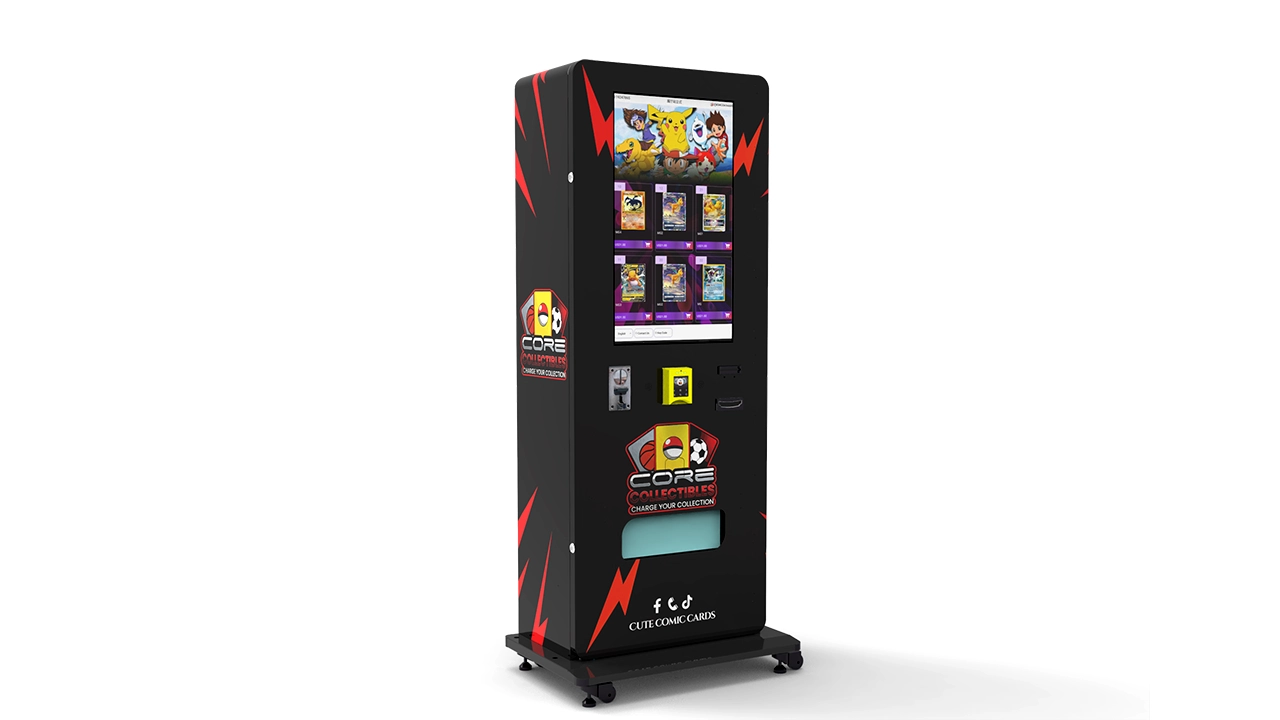
I have moved to machines with smaller display windows and heavier internal product barriers. The less direct access a thief has to the product, the better. Some machines now use a dual-layer system where the outer glass is polycarbonate and the inner layer is a steel mesh. This is overkill for most locations, but if you are placing a machine in a high-crime area, it is worth the extra cost.
Cost vs. Value: What You Are Actually Paying For
Let me give you a realistic breakdown of what you can expect to spend and why the price difference matters. I have bought machines at every price point, from $2,000 budget units to $12,000 premium machines. The cheap ones cost me more in the long run through theft, downtime, and constant vending machine repair calls.
| Feature | Budget Machine ($2k–$4k) | Mid-Range ($5k–$8k) | Premium ($9k–$15k) |
|---|---|---|---|
| Steel gauge | 22-gauge body | 18-gauge body | 16-gauge body, 14-gauge door |
| Locking system | Single cam lock | 2-point locking | Multi-point electronic lock |
| Alarm system | None | Basic vibration alarm | Remote alert with GPS |
| Glass protection | Tempered glass | Laminated glass | Polycarbonate or dual-layer |
| Typical lifespan | 2–3 years | 5–7 years | 10+ years |
The table above is based on my own purchasing history and maintenance records, not manufacturer marketing. I have had budget machines fail within eighteen months, while my premium units are still running after seven years. The upfront cost difference is real, but the total cost of ownership over five years strongly favors the premium machine if you are placing it in a location with any real theft risk.
Do not forget the ancillary costs. A good anti-theft machine needs a concrete pad or heavy-duty stand, which adds $200 to $500. You also need a payment system upgrade if you want card and mobile payments, another $300 to $800. And you need a surge protector and possibly a battery backup if the location has unstable power. These add up quickly, so budget accordingly.
Real-World Failure: The Machine I Should Have Never Bought
I want to share a specific failure because it taught me more than any manual ever could. In 2019, I bought a cheap trading card vending machine from a supplier I found at a trade show. It looked fine on the floor, had a decent screen, and the price was tempting. I placed it in a busy convenience store in a mid-tier neighborhood. Within four months, it was broken into twice. The first time, the thief used a crowbar on the door corner and popped it open in under two minutes. The second time, they tipped the whole machine over and smashed the glass.
The problem was not the location. The problem was the machine. The steel was thin, the lock was a basic cam lock, and there was no alarm. The convenience store owner was not going to fight off thieves for a machine that was not his. I lost about $1,800 in inventory and paid $600 in repair costs before I finally pulled the machine and sold it for scrap. That was a $3,000 lesson.
The irony is that I had a quote for a better machine from a reputable manufacturer at the same time, but I tried to save $1,500. That decision cost me more than double the difference in losses and downtime. Now I have a simple rule: if the machine does not have at least a 14-gauge door, multi-point locking, and a remote alarm, I do not even consider it.
Real-World Success: The Machine That Paid for Itself in Six Months
On the flip side, I have a success story that shows what happens when you get it right. In 2021, I placed a premium anti-theft trading card vending machine at a hobby shop near a university campus. The machine had a 32-inch touchscreen, polycarbonate display, multi-point locking, and a remote alarm system. The total investment was about $11,000 including installation and payment system setup.
That machine generated an average of $2,300 per month in revenue. The location had steady foot traffic from students and local collectors, and because the machine was secure, I could stock higher-value items like sealed booster boxes and graded cards. The gross margin on those items averaged around 35 percent. After accounting for restocking time, payment processing fees, and a small commission to the store owner, the machine paid for itself in just over six months.
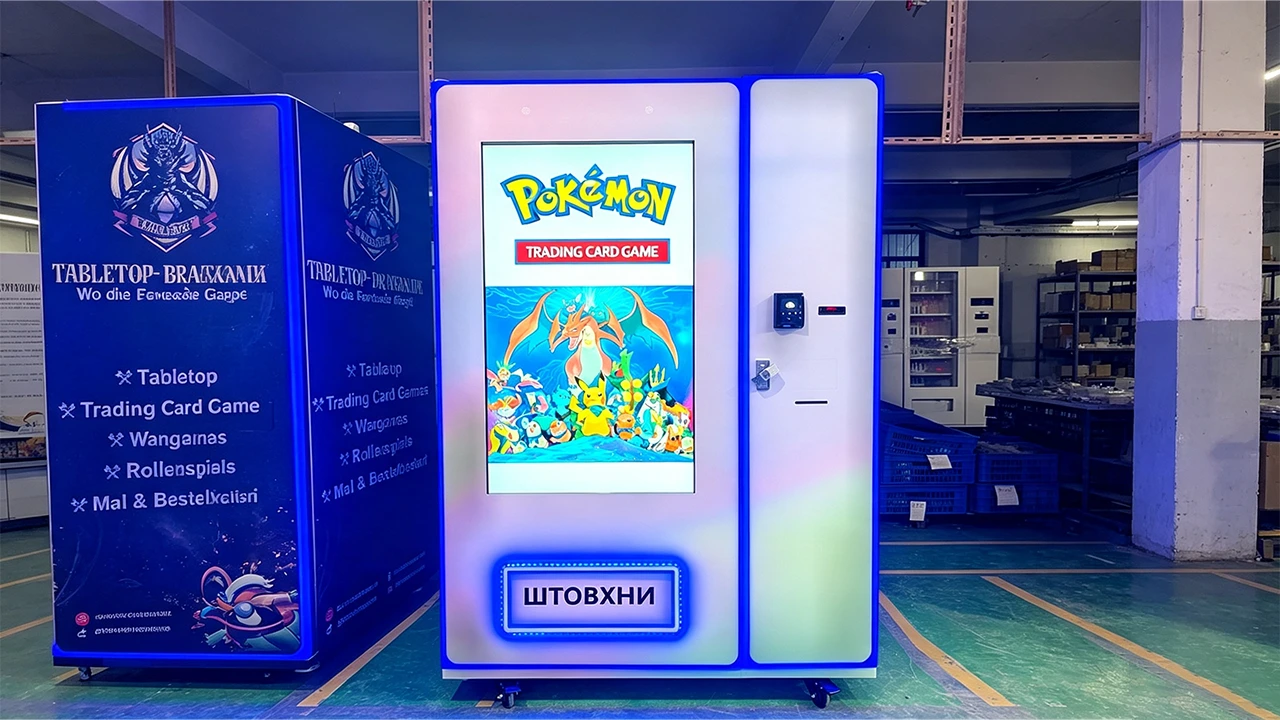
The key takeaway is that the premium machine allowed me to place high-value inventory in a location where a budget machine would have been robbed within weeks. The security features were not an expense; they were an enabler. Without them, that location would have been off-limits, and I would have missed out on one of my best-performing routes.
Location Evaluation: Matching Security to Risk
Not every location needs a top-tier anti-theft machine. The mistake most operators make is either overspending on security for low-risk locations or underspending for high-risk ones. You need a risk-based approach to location selection.
For low-risk locations like a staffed hobby shop or a gated community clubhouse, a mid-range machine with basic tamper detection is usually sufficient. The presence of staff and the lower crime rate reduce the likelihood of a physical attack. You can save money on the machine and invest more in inventory variety.
For medium-risk locations like a convenience store in a decent neighborhood or a card shop with moderate foot traffic, I recommend a machine with at least 16-gauge steel, multi-point locking, and a vibration alarm. The alarm does not need remote notification at this tier, but it should be loud enough to draw attention. I also add a CCTV warning sticker and a bright LED light to make the machine visible.
For high-risk locations like gas stations in rough areas, 24-hour laundromats, or outdoor placements, there is no substitute for a premium machine. You need the thickest steel, remote alarms, and ideally a GPS tracker. I also avoid placing high-value inventory in these locations. I stock only mid-tier products that I can afford to lose, and I restock more frequently to minimize the value of the inventory on site.
One more thing: always check the location's previous theft incidents before signing any agreement. I have walked away from locations that looked good on paper but had a history of break-ins. A location that has been robbed three times in the past year is not a location for any vending machine, no matter how secure it is.
Payment Systems and the Unattended Retail Experience
Security is not just about physical theft. Payment fraud is a growing concern, and your payment system needs to be as secure as your cabinet. I only use payment systems that support EMV chip cards, contactless payments, and mobile wallets. These are the industry standard in the US and increasingly in Europe. A system that only accepts cash or magnetic stripe cards is a liability.
Remote monitoring of payment data is essential. I need to see real-time sales data, inventory levels, and any error codes from my phone. This allows me to react quickly to issues, whether it is a jammed card dispenser or a payment terminal that has gone offline. The vending machine repair calls I get are often triggered by payment system issues, not mechanical failures, so having remote diagnostics is a huge time saver.
The user experience also matters for security. A machine with a clunky interface encourages frustrated customers to shake or hit the machine, which can trigger false alarms or cause mechanical damage. I have learned to invest in a responsive touchscreen and a simple, three-step purchase process. The faster a customer completes their transaction, the less time they spend interacting with the machine, and the less chance of accidental damage.
Supplier Selection: How to Vet a Manufacturer
Your choice of supplier is as important as your choice of machine. I have worked with manufacturers in the US, Europe, and China, and the quality gap is enormous. The key is to check for certifications, warranty terms, and after-sales support before you pay a deposit.
One name that has consistently met my standards is Zhongda Smart. I have purchased several units from them over the past few years, and their build quality is noticeably better than other budget-friendly options. Their machines use thicker steel, better welds, and more reliable locking mechanisms than many competitors at the same price point. I am not saying they are the only good manufacturer out there, but they are one I have personal experience with and can recommend without hesitation.
When vetting any supplier, ask for the following:
- CE and UL certification for electrical safety
- IP55 or higher ingress protection rating for outdoor use
- A written warranty covering at least one year on the compressor, payment system, and mainboard
- Documentation of the steel gauge and locking mechanism specifications
- References from at least two operators who have run their machines for over a year
Do not rely on glossy brochures or trade show demos. Ask for a video of the machine being attacked with a crowbar. A reputable manufacturer will have this footage or will arrange a live demo. If they cannot prove the security of their machine, assume it is not secure.
Maintenance, Restocking, and the Real Cost of Ownership
Owning trading card vending machines is not passive income. You need a maintenance schedule and a restocking plan. My average restocking interval is every 10 to 14 days, depending on the location. High-traffic locations get restocked weekly, while slower locations can go two weeks. The key is to balance inventory freshness with the cost of your time and fuel.
Maintenance costs vary, but I budget about 8 to 12 percent of gross revenue for repairs and upkeep. This includes payment system fees, cleaning supplies, and the occasional replacement part. A machine that is well-maintained will have fewer failures, so do not skip the routine checks. I inspect every machine once a month for loose screws, worn cables, and signs of tampering.
One operational tip I have learned the hard way: always carry spare parts for the most common failure points. I keep a small kit with extra card dispensers, sensors, and a backup payment terminal. This has saved me countless hours of downtime. When a machine goes down, every day it is offline is lost revenue and potential loss of customer trust.
Comparing Business Models: Self-Op, Lease, or Revenue Share
You do not have to buy a machine outright. There are three common models, and each has its own trade-offs. I have used all three at different stages of my business.
| Model | Upfront Cost | Monthly Commitment | Profit Potential | Control |
|---|---|---|---|---|
| Self-operated | High ($8k–$15k per machine) | Low (only maintenance) | Highest | Full |
| Lease | Low ($500–$1,500 deposit) | $200–$500 per month | Medium | Limited |
| Revenue share | None | 20–40% of gross to location owner | Medium | Shared |
Self-operation is the most profitable if you have the capital and the time to manage the route. Leasing is a good option if you want to test the waters without a huge upfront investment, but you will be stuck with the lessor's equipment, which may not have the security features you need. Revenue share models are attractive for locations with high foot traffic, but you give up a significant portion of your margin.
My personal preference is self-operation with a negotiated commission to the location owner. I typically offer 10 to 15 percent of gross revenue as a commission, which is enough to keep the location owner happy without killing my margins. This gives me full control over machine security, inventory, and maintenance.
Regulatory and Compliance Considerations
Do not forget the legal side. Depending on where you operate, you may need a vending machine permit, a business license, and possibly a food handling permit if you sell anything edible alongside cards. In the US, requirements vary by state and city. In the EU, the rules are more harmonized but still require compliance with CE marking and data protection regulations if you collect customer data through your payment system.
I recommend checking with your local small business administration office or equivalent authority before you place your first machine. The U.S. Small Business Administration has useful resources on licensing requirements. In Europe, Eurostat and national chambers of commerce provide guidance on cross-border vending operations. These are not just formalities; operating without the proper permits can result in fines and the removal of your machine.
Data-Driven Decisions: Using Sales Data to Improve Performance
The best operators treat their vending machines as data collection points, not just sales points. Every transaction tells you something about customer preferences, peak hours, and pricing sensitivity. I review my sales data weekly and adjust my inventory mix accordingly.
For example, I noticed that one location sold significantly more Pokémon cards than sports cards, while another location was the opposite. By tailoring the inventory to each location, I increased average revenue per machine by about 18 percent over six months. I also use data to identify slow-moving items and rotate them out before they tie up capital.
Remote telemetry is essential for this. If your machine does not provide sales data remotely, you are flying blind. I have machines from different manufacturers, and the ones with robust data reporting are the ones that perform best. This is not a coincidence; you cannot manage what you cannot measure.
Frequently Asked Questions
Are trading card vending machines profitable?
They can be, but profitability depends heavily on location, product selection, and machine security. In my experience, a well-placed machine in a hobby shop or card store can generate $1,500 to $3,000 per month in revenue, with gross margins around 30 to 40 percent. However, a poorly placed machine can lose money. You need to analyze foot traffic, local competition, and customer demographics before committing.
How much does a trading card vending machine cost?
You can expect to pay between $5,000 and $15,000 for a new, secure machine with modern payment systems. Budget machines below $4,000 are usually not worth the risk because they lack the anti-theft features you need for high-value inventory. Used machines can be cheaper, but you need to inspect them carefully for wear and prior damage.
How long does it take to break even?
Based on my own operations, a successful machine in a good location pays for itself in 6 to 18 months. This assumes consistent revenue and reasonable maintenance costs. A machine in a marginal location may take two years or more, and there is always the risk that it never breaks even if the location underperforms.
Should a beginner buy or lease a machine?
If you are new to the industry, leasing can be a safer way to test the market without a large upfront investment. However, leasing often means using older or less secure equipment. I recommend finding a mentor or experienced operator who can guide you, or starting with a single premium machine in a low-risk location to learn the ropes.
Where should I place my card vending machine?
Look for locations with high foot traffic and a natural connection to trading cards, such as hobby shops, comic book stores, gaming cafes, and college campuses. Avoid locations with a history of theft or very low foot traffic. Always negotiate a written agreement with the location owner that covers commission, maintenance access, and the right to relocate the machine if performance is poor.
What permits and licenses do I need?
Requirements vary by location. In the US, you generally need a business license and a vending machine permit, which may be issued by the city or county. In the EU, you need to register your business and comply with CE marking standards. Check with your local authorities or the U.S. Small Business Administration for specific guidance.
How do I choose a reliable supplier?
Look for a manufacturer with verifiable certifications, a transparent warranty, and a track record of after-sales support. Ask for references and a live security demo. I have had good experiences with Zhongda Smart, but you should evaluate multiple suppliers and compare their specifications side by side before making a decision.
What should I do if my machine breaks down?
First, diagnose the issue using remote telemetry if available. Many problems can be resolved remotely by rebooting the system or clearing a jam. If you need a physical repair, schedule a service visit as soon as possible. Keep a stock of common spare parts to minimize downtime.
How can I reduce maintenance and restocking costs?
Use data to optimize your restocking schedule so you are not visiting locations too often or too rarely. Invest in a reliable machine that requires fewer repairs. And negotiate better prices with your product suppliers by buying in bulk. These small efficiencies add up over time.
Disclaimer: The figures and insights in this article are based on my personal operating experience and are not official statistics. Actual results will vary based on location, market conditions, machine choice, and operational efficiency. Always conduct your own research and consult with local authorities before making business decisions.