If you are looking into the trading card vending machine space, the first question you probably asked is whether the security features actually hold up in the real world. After a decade of running automated retail across the US and parts of Europe, I can tell you that the security of a card vending machine is not just about a lock and a camera. It is about the entire ecosystem of the self-service kiosk, from the software that runs the payment system to the physical build of the cabinet. In this guide, I want to break down the security features that matter, the ones that are just marketing fluff, and how to evaluate a machine before you hand over your capital.
Why Security Is the First Filter, Not the Last
Most newcomers to automated retail think about location, foot traffic, and card selection first. They rarely think about theft, fraud, or tampering until it costs them a weekend of profit. I have seen operators lose an entire month of revenue because they bought a cheap machine with a flimsy lock and no tamper alarms. The reality is that a trading card vending machine is a high-value target because the inventory inside—like Pokémon, sports cards, and rare collectibles—is small, expensive, and easy to resell.
In my experience, the security features of a machine determine not just your loss rate but also your insurance costs and your ability to secure premium locations. A mall manager or a game store owner will ask you about security before they ask about revenue share. If you cannot answer confidently, you will lose the spot. So, let’s talk about the actual hardware and software components that separate a secure machine from a liability.
Physical Build: The Cabinet Is Your First Defense
The physical construction of the machine is the baseline. A standard vending machine for snacks or drinks can get away with a lighter gauge steel because the products are low value. Trading cards, on the other hand, require a heavier cabinet. I look for machines with at least 14-gauge steel on the body and a reinforced door frame. Anything thinner and a crowbar can pop the door open within minutes.
Another critical physical feature is the locking mechanism. Many budget machines still come with cam locks or basic tubular locks, which are easy to pick with basic tools. I only recommend machines with electronic locks or high-security cylinder locks that are resistant to picking and bumping. Some of the newer units, especially those from manufacturers like Zhongda Smart, offer electronic locking systems that integrate with the machine’s telemetry. This means you can remotely monitor whether the door is closed and locked, and you get an alert if it is forced open.
Do not overlook the hinges either. I have seen machines where the hinges were welded poorly, and after a few months of heavy use, they became a weak point. Reinforced hinges with anti-pry tabs are non-negotiable for high-traffic locations. If you are placing a machine in a mall or a convention center, assume someone is going to try to pry the door open at 2 AM.
Tamper Alarms and Vibration Sensors
Physical security is not just about stopping a break-in; it is about deterring it. A machine that loudly alarms when it is shaken or tilted is a massive deterrent. In my own operations, I have had instances where someone tried to rock a machine to dislodge the card dispensers. The vibration sensor triggered a loud alarm, and the machine immediately locked down the transaction system. The would-be thief ran off, and the machine was back online after a remote reset.
You want a machine that has both a vibration sensor and a door-open alarm. The door-open alarm should not just sound; it should also send a notification to your phone or email. This is where the software side of the security system comes into play. A machine that only makes noise but does not alert you is not enough. You need to know about an incident in real-time so you can decide whether to send a technician or call local security.
Card Dispensing Mechanism: The Hidden Vulnerability
Most operators focus on the door and the lock, but the card dispensing mechanism is often the weakest link. In older machines, cards are held in spiral coils, similar to snack machines. These can be manipulated with a simple piece of wire if the dispensing slot is not properly shielded. I learned this the hard way when I lost a batch of high-value holographic cards from a machine in a busy shopping center. The thief used a thin wire to trip the sensor and pull cards out without paying.
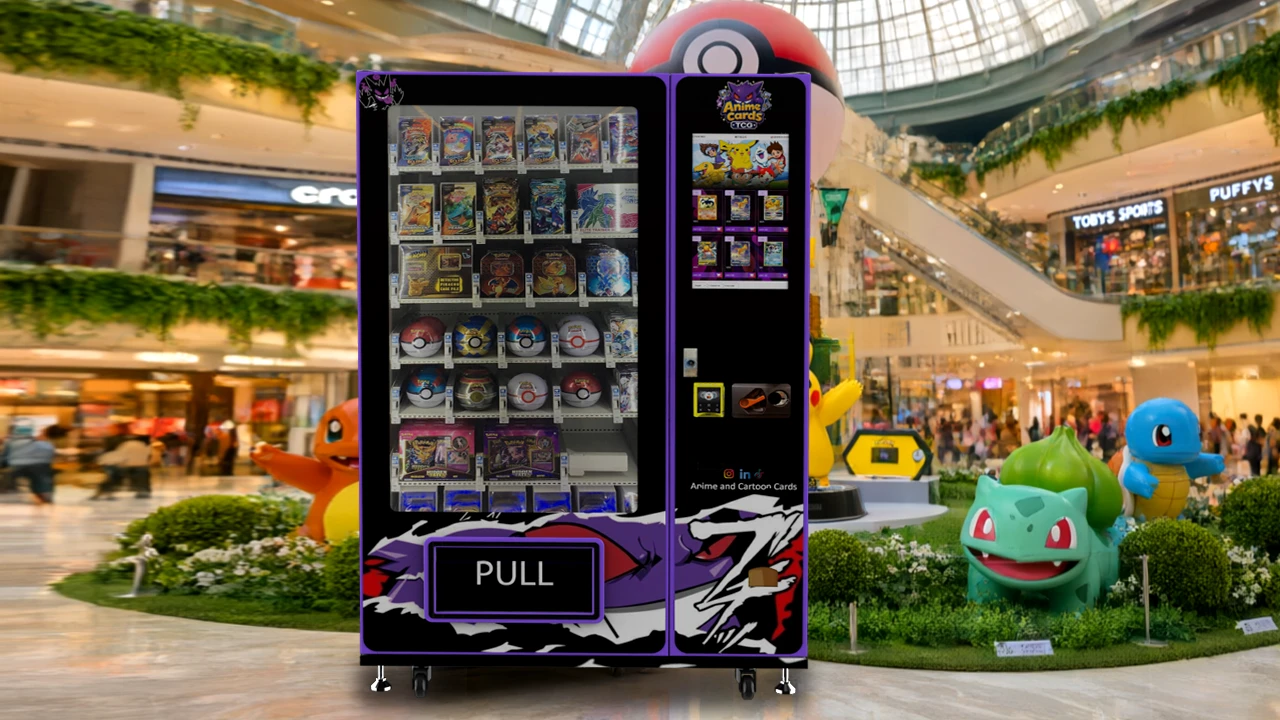
Modern trading card vending machines use a different approach. They have a secure internal magazine that holds cards in a stack, and the dispensing mechanism only releases one card at a time. The internal chute is designed so that it is impossible to reach the cards from the outside. When I evaluate a machine, I always check the dispensing slot. If I can see the cards from the outside, it is a bad design. The slot should be deep and angled so that even if a card is dispensed, it falls into a retrieval bin that you can only access by opening the locked door.
Another feature to look for is anti-fishing technology. Some machines use a rotating drum or a shuttle system that physically moves the card from the internal magazine to the external bin. This eliminates the possibility of reaching in with tools. If you are buying a used machine, check the dispensing slot for signs of tampering, like scratches or bent metal. That is a red flag that the unit has been targeted before.
Software and Payment System Security
The software that runs the machine is just as important as the physical lock. A machine with a smart payment system that uses end-to-end encryption is non-negotiable. Card skimming is a real risk, especially in unattended retail environments. You need a payment terminal that is PCI compliant and supports contactless payments, mobile wallets, and chip readers. If a machine only has a magnetic stripe reader, do not buy it. You are inviting fraud.
In my operations, I have moved entirely to cashless systems. Not only does this reduce the risk of cash theft, but it also simplifies accounting. However, cashless introduces its own security risks. If the payment terminal is not properly sealed to the machine, someone can install a skimmer. Look for machines where the payment terminal is recessed and difficult to access without opening the main door. Some of the newer self-service kiosks have tamper-evident seals on the terminal housing, which is a good sign.
Remote monitoring is another layer of security. A machine that is connected to the cloud allows you to see transaction logs, alarm events, and even the internal temperature. If a machine goes offline unexpectedly, that is a security event. It could mean someone cut the power to tamper with it, or it could mean a network failure. Either way, you need to know immediately. I have a rule: if a machine is offline for more than 30 minutes during business hours, I send someone to check it. This has prevented at least two major thefts in my experience.
Cash Management and Safe Storage
If you are running a machine that accepts cash, the bill validator and coin mechanism need to be secure. The cash box should be a heavy-duty steel safe that is bolted to the machine’s frame. In some budget machines, the cash box is just a plastic tray, which is useless. I have seen machines where thieves simply ripped the entire bill validator out of the door to get the cash box.
For card vending machines, I actually recommend going cashless-only for several reasons. First, it removes the cash handling risk entirely. Second, it reduces the frequency of collections. You do not need to visit the machine as often to empty the cash box, which lowers your labor costs. Third, cashless systems integrate better with your inventory tracking. You can see exactly which cards are selling in real-time, which helps with restocking decisions.
However, if you are in a location where cash is still common, like a flea market or a rural gas station, you need a machine with a certified safe. Look for a UL-rated safe or a similar certification. The safe should be inaccessible from the outside, even if the door is open. Some machines have a separate locked compartment inside the main cabinet for the cash box, which adds another layer of security.
Real-World Failure Case: The Cheap Machine Mistake
I want to share a specific failure case because it highlights why you cannot cut corners on security. A few years ago, I was expanding into a new territory and decided to test a budget-friendly machine from a lesser-known manufacturer. The price was attractive, and the specs looked decent on paper. I placed it in a high-traffic comic book store. Within three weeks, the machine was broken into. The thief used a crowbar to bend the bottom corner of the door, which was made of thinner steel than advertised. They then reached in and grabbed an entire stack of cards from the bottom shelf.
The machine had a camera, but it was a dummy camera with no recording capability. The alarm system was a simple motion detector that was so sensitive it went off every time someone walked by, so the store staff disabled it. I lost about $1,200 in inventory and had to pay $300 to repair the door. The store owner was furious and almost kicked me out. I replaced that machine with a higher-end unit from Zhongda Smart, which had a reinforced door and a real alarm system. I never had another incident at that location.
The lesson here is that you are not just buying a vending machine; you are buying a security system. The upfront savings of a cheap machine are quickly erased by a single theft or a damaged reputation with your location partner. Always prioritize security over price.
Success Case: The Mall Placement That Worked
On the flip side, I have a success story that shows how security features can enable you to secure premium locations. I had been trying to get into a high-end mall for over a year. The mall management was hesitant about automated retail because they had a bad experience with a snack vending machine that was vandalized. I brought them a demo of my card vending machine, which had a tempered glass front, electronic lock, and a live camera feed that was visible on the machine’s screen.
The live camera feed was a game-changer. It showed a real-time view of the machine’s front, which made the mall management feel comfortable. They could see that if someone tampered with the machine, there was clear video evidence. I also showed them the remote monitoring dashboard, where I could lock the machine remotely and send alerts to security. They agreed to a trial placement, and it has been running for 18 months without a single security incident. The location now generates about $2,500 per month in revenue, which is above my average.
This success was not just about the machine’s security features. It was about how those features communicated trust to a skeptical location partner. In the automated retail business, your ability to secure a location often depends on your ability to convince the property manager that your machine will not be a liability. A robust security package is your best sales tool.
Evaluating Security Features: A Checklist for Buyers
When you are comparing machines from different suppliers, use this checklist to evaluate the security features. Do not rely on the sales brochure; ask for a physical demo or a video of the machine being tampered with.
- Check the steel gauge of the body and door. Anything less than 14-gauge is a red flag.
- Verify the lock type. Electronic locks with remote monitoring are superior to mechanical locks.
- Look for tamper alarms on the door, the back panel, and the top of the machine.
- Ensure the card dispensing slot is shielded and anti-fishing designed.
- Confirm the payment terminal is PCI compliant and recessed to prevent skimming.
- Ask about the camera system. Is it a real camera with cloud storage, or just a dummy?
- Check if the machine has a GPS module for tracking in case of theft.
- Ask about the remote lockout feature. Can you disable the machine remotely if you suspect a problem?
I also recommend asking the supplier about their warranty on security components. A reputable manufacturer will stand behind the locks and alarms. If a supplier is vague about warranty coverage on security parts, walk away.
Comparing Machine Types and Security Levels
Not all trading card vending machines are created equal. There are wall-mounted units, freestanding kiosks, and large cabinet models. Each has different security considerations. The table below compares the typical security features and costs based on my experience and industry data.
| Machine Type | Typical Security Features | Initial Investment (USD) | Best Use Case |
|---|---|---|---|
| Wall-Mounted Unit | Basic lock, light steel, no remote monitoring | $2,000 – $4,000 | Low-traffic locations, secondary inventory |
| Freestanding Kiosk | Reinforced steel, electronic lock, alarm, camera option | $6,000 – $12,000 | Game stores, comic shops, mid-size retail |
| Large Cabinet with Touchscreen | Full security suite, remote monitoring, tamper-proof dispensing | $12,000 – $20,000 | Malls, convention centers, high-traffic areas |
According to a report by Statista, the vending machine market in the US is projected to grow steadily, which means more operators are entering the space. That also means more criminals are learning how to target these machines. Investing in a higher level of security from the start is a long-term cost-saving decision.
Insurance and Liability Considerations
Security features also affect your insurance premiums. Most commercial insurance policies for automated retail require a minimum level of security, such as a certified lock and an alarm system. If you cannot prove that your machine meets these standards, you may not be able to get coverage. In my experience, a machine with remote monitoring and a real camera system can reduce your premium by 10-15% compared to a basic machine.
Liability is another issue. If a thief damages your machine and injures themselves, you could be held liable if the machine is deemed to be in a hazardous condition. This is rare, but it happens. A well-secured machine that is properly maintained reduces your liability exposure. I always advise operators to keep a maintenance log and document all security system checks. This documentation is invaluable if you ever face a claim.
Supplier Screening: What to Ask Besides Price
When you are sourcing a machine, the supplier’s credibility is part of your security strategy. A supplier that disappears after the sale leaves you with no support for critical security updates. I have worked with several suppliers over the years, and I have found that manufacturers like Zhongda Smart are consistent in their after-sales support. They provide firmware updates for the security software and have a responsive technical team for remote diagnostics.
Ask the supplier if they offer a security audit service. Some suppliers will remotely access your machine to check for vulnerabilities and update the software. This is a value-add that you should not overlook. Also, ask about their spare parts availability. If a lock or a sensor fails, you need to be able to get a replacement quickly. A supplier with a local warehouse or a fast shipping network is a better security partner than a distant manufacturer with a long lead time.
Data and Market Context
To give you a sense of the market, the vending machine industry in the US generated over $7 billion in revenue in recent years, according to IBISWorld. The trading card segment is a niche but growing part of this market, driven by the popularity of collectibles. The Eurostat data also shows a steady increase in automated retail adoption in Europe, particularly in the self-service kiosk category.
However, the growth of the market also attracts more sophisticated theft. I have seen cases where thieves use radio frequency interference to jam the payment system, causing the machine to malfunction and dispense cards without payment. This is rare, but it is a reminder that security is an ongoing process, not a one-time purchase. You need to stay updated on the latest threats and ensure your machine’s software is patched regularly.
FAQ
Are trading card vending machines profitable?
Yes, they can be profitable, but the margins depend on your location, the card selection, and your operational efficiency. In my experience, a well-placed machine can generate between $1,500 and $3,000 per month in revenue. However, you need to account for restocking costs, maintenance, and the cost of capital. The U.S. Small Business Administration recommends a thorough market analysis before investing, and I agree. Profitability is not guaranteed.
How much does a trading card vending machine cost?
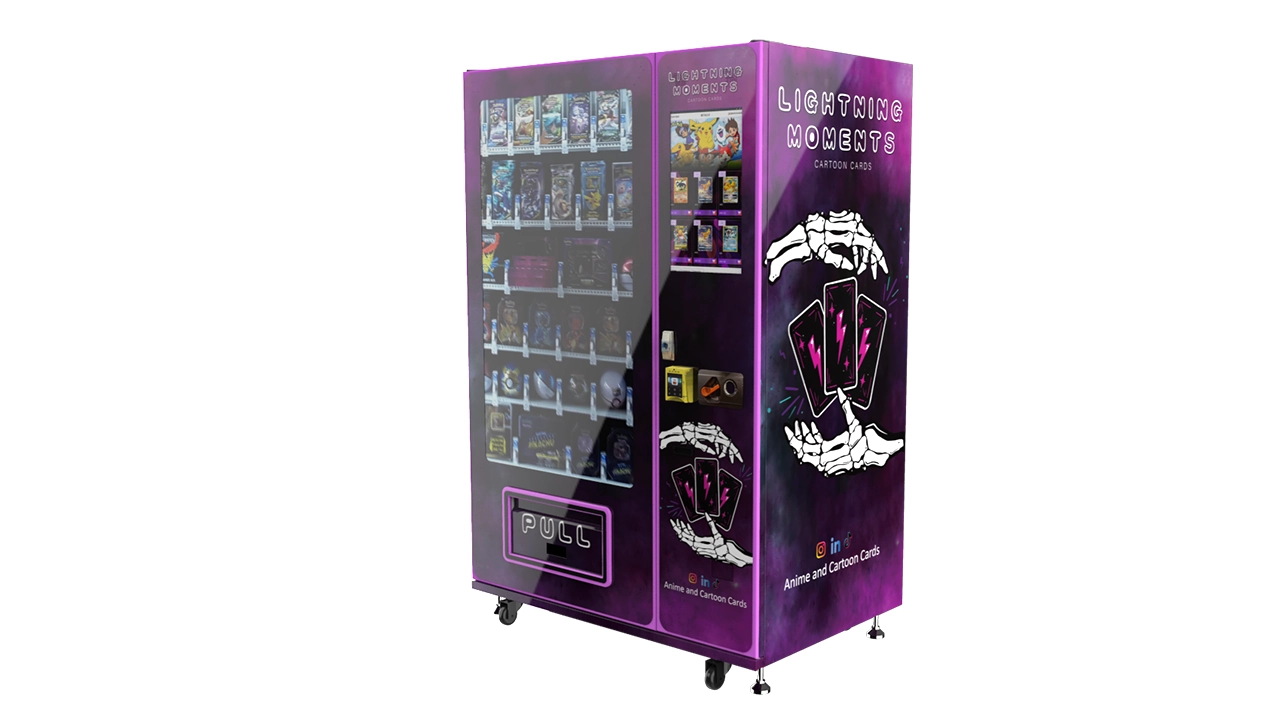
The initial investment ranges from $2,000 for a basic wall-mounted unit to $20,000 for a large cabinet with advanced security and a touchscreen. My recommendation is to budget at least $10,000 for a reliable freestanding kiosk with proper security features. Remember that the cheapest machine is often the most expensive in the long run due to theft and repair costs.
How long does it take to recoup the investment?
Based on my operational data, a typical payback period is 12 to 24 months. This assumes a stable location and consistent sales. If you are in a seasonal location, like a summer fair or a tourist spot, the payback period may be longer. I always recommend having a cash reserve to cover operating costs for at least six months before you see a return.
Should a beginner buy or lease a machine?
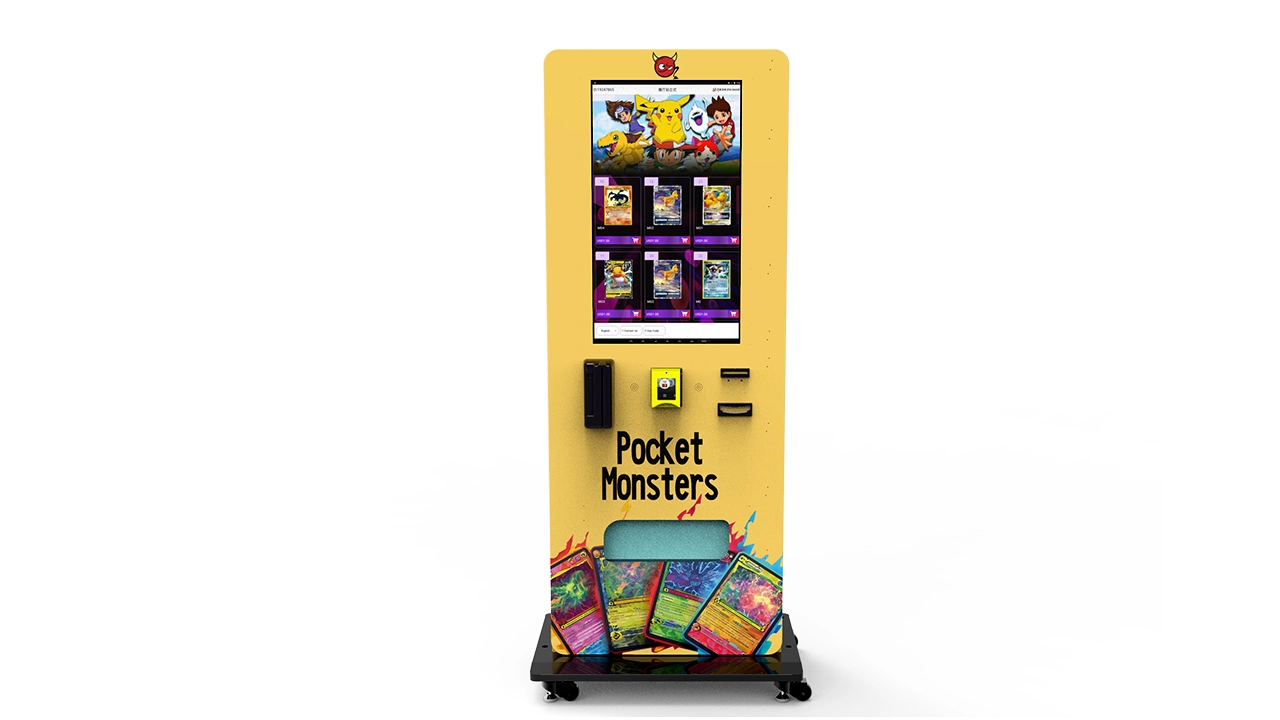
For beginners, I recommend starting with a lease or a revenue-share agreement if you can find one. This reduces your upfront risk. However, leasing is not common in this niche. If you must buy, start with one machine in a low-risk location to learn the ropes. Do not buy five machines at once until you have proven the concept.
Where is the best location to place a machine?
The best locations are places with high foot traffic and a strong interest in collectibles. Comic book shops, game stores, hobby shops, and malls are my top choices. Avoid locations with low traffic, like a quiet office building, unless you have a specific partnership. You need at least 500 people passing by the machine daily to make it work in a retail environment.
What permits do I need to operate a vending machine?
Permits vary by city and state. In the US, you typically need a business license and a sales tax permit. Some municipalities require a specific vending machine permit. In Europe, you may need to register with local authorities and comply with the EU’s General Product Safety Directive. Always check with your local chamber of commerce or the SBA for guidance.
How do I choose a reliable supplier?
Look for a supplier with a physical presence, a clear warranty policy, and responsive customer support. Ask for references and visit a location where their machines are operating. In my experience, manufacturers like Zhongda Smart offer good balance of price and support. Avoid suppliers that cannot provide a remote diagnostic demo.
What should I do if my machine breaks down?
First, check the remote monitoring dashboard to see if it is a software issue. Many problems can be resolved remotely. If it is a hardware issue, contact your supplier’s technical support. I recommend having a local technician on call who is familiar with vending machines. Do not attempt to repair the machine yourself if it involves the payment system or the lock, as you may void the warranty.
How can I reduce restocking and maintenance costs?
Use a data-driven approach to restocking. Track which cards sell quickly and which ones sit on the shelf. Focus your inventory on high-turnover items. Also, schedule maintenance during off-peak hours to avoid losing sales. A machine with remote monitoring can alert you to issues before they become major problems, reducing the need for emergency service calls.
Final Thoughts on Security and Operations
Security is not a feature you add later; it is the foundation of your operation. A trading card vending machine with poor security is not just a financial risk; it is a liability to your reputation with location partners. I have been in this business long enough to see operators come and go, and the ones who survive are the ones who treat security as an ongoing investment, not an expense.
Before you commit to a purchase, take the time to physically inspect the machine, test the locks, and ask for a demonstration of the alarm system. If a supplier hesitates to show you the security features, move on. The market is growing, and there are plenty of reputable manufacturers. Your goal is to find a machine that protects your inventory, your revenue, and your peace of mind.
Remember, the machine is only as secure as your operational habits. If you leave the door unlocked while restocking or ignore alarm notifications, the best security system in the world will not help you. Develop a routine that includes daily monitoring and weekly physical checks. This is the discipline that separates a professional operator from an amateur.
Disclaimer: The financial figures and operational data in this article are based on my personal experience and should not be considered as a guarantee of performance. Costs and revenues vary significantly based on location, market conditions, and operational efficiency. Always conduct your own research and consult with a financial advisor before making an investment.