If you run a retail store, card shop, or even a hobby-focused business and you haven’t looked at a custom sports card vending machine yet, you’re leaving money on the table. I’ve been in the automated retail space for over a decade, and I can tell you straight: the trading card vending machine trend isn’t a fad, it’s a shift in how collectors buy product. The machines work best when they’re placed where impulse buying meets a passionate audience. They cut labor costs, run 24/7, and turn dead floor space into a revenue stream. But they aren’t a set-and-forget business. In this guide, I’ll walk you through what actually works, what doesn’t, and how to avoid the costly mistakes I made early on.
Why Custom Sports Card Vending Machines Are Worth Considering
I remember the first time I saw a card vending machine in a mall in 2018. It was a simple glass-front unit with a few booster packs and a broken bill acceptor. I laughed and walked away. Two years later, I watched a line form outside a hobby shop at 9 AM on a Saturday, waiting for a restock of a Pokémon machine. That’s when I realized the category had changed. The demand for sealed product—sports cards, Pokémon, One Piece, even vintage packs—had outpaced the traditional counter sales model. Collectors want the thrill of the pull, but they also want speed and availability.
What makes these machines different from a standard snack vending unit is the product value density. A single box of trading cards can hold hundreds of dollars in retail value, yet it fits in a space the size of a shoebox. That changes your economics completely. You’re not selling a $1.50 candy bar; you’re selling a $15 pack or a $200 box. The margin per transaction is significantly higher, but so is the risk of theft, damage, and mechanical failure.
From a retail operator’s perspective, the biggest advantage is labor efficiency. You don’t need a staff member to stand behind a counter and ring up every pack. The machine handles the transaction, the inventory tracking, and the security. I’ve seen stores that were losing money on card sales due to theft and employee error turn a profit within six months just by switching to a self-service kiosk model.
What a Custom Sports Card Vending Machine Actually Costs
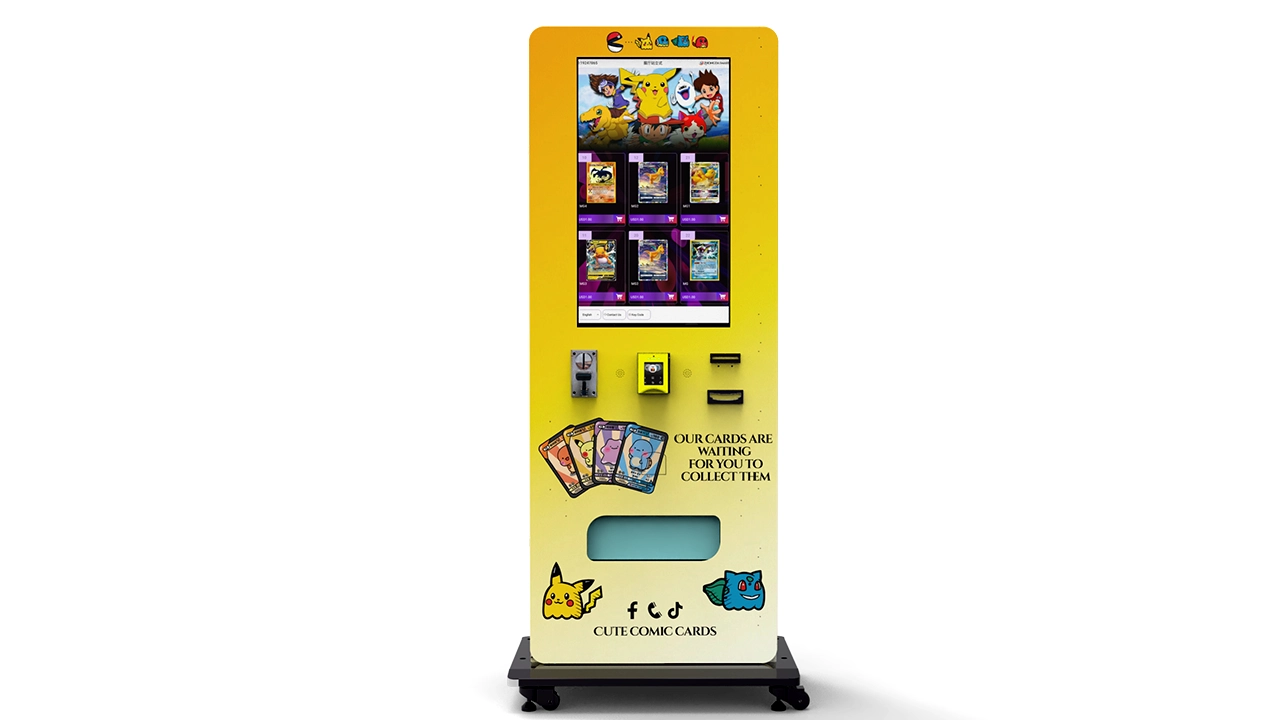
Let’s get the numbers out of the way because that’s what everyone asks me first. The initial investment for a new, custom-configured trading card vending machine ranges from $8,000 to $25,000 depending on the size, screen, and payment systems. A basic 32-inch touchscreen machine with spiral coils and a standard card dispenser will run you around $9,000 to $12,000. If you want a larger unit with multiple tiers, a high-resolution display, and a secure locking mechanism for high-value boxes, you’re looking at $18,000 to $25,000. These figures come from my own purchasing history and conversations with suppliers over the last three years, not from a manufacturer’s brochure.
But the machine is only half the story. You need to budget for shipping, installation, and initial inventory. Shipping a full-size card vending machine from a manufacturer in China or a domestic distributor can cost $500 to $1,500 depending on the freight class and your location. Installation, if you’re not handy with a pallet jack and a level, might run another $300 to $800. Then you’ve got the first stocking order. If you’re filling a 32-inch machine with a mix of boosters and boxes, plan on $3,000 to $6,000 in inventory just to make it look respectable.
| Machine Type | Initial Cost Range | Typical Monthly Revenue (Est.) | Payback Period (Est.) |
|---|---|---|---|
| Wall-mounted card dispenser | $3,500 – $6,000 | $800 – $1,500 | 6 – 12 months |
| 32-inch touchscreen floor unit | $9,000 – $14,000 | $2,500 – $5,000 | 8 – 18 months |
| Large multi-tier card vending machine | $18,000 – $25,000 | $6,000 – $12,000 | 12 – 24 months |
| Used/refurbished unit | $2,000 – $7,000 | Varies heavily | High risk |
I’ve seen operators quote payback periods of six months, and that’s possible in a high-traffic mall or a dedicated card show. But I’ve also seen a machine sit in a low-footfall strip mall for three months without breaking even. The variance is huge, and it’s tied directly to location and product mix. Don’t trust anyone who promises a fixed return.
Choosing the Right Machine Configuration
Not all card vending machines are created equal. The biggest mistake I made in my first year was buying a machine designed for snacks and retrofitting it for cards. The coils were too wide, the product fell awkwardly, and the machine jammed constantly. I lost more money in refunds and repair calls than I saved on the purchase price. Learn from that. You need a machine purpose-built for trading cards, or at least one with adjustable shelving and a card-specific dispensing mechanism.
When you’re evaluating equipment, pay attention to the delivery system. A spiral coil works fine for boxes and thicker packs, but it can damage thin foil packs. Look for a machine with a conveyor belt or a gravity-fed system for packs. The 32-inch touchscreen models from reputable manufacturers like Zhongda Smart offer flexible configurations that handle both boxes and packs without crushing the corners. I’ve used their units in two locations, and the build quality holds up well under constant use. They’re not the cheapest option, but they’re reliable, and in this business, reliability is what keeps your margins intact.
Another consideration is the payment system. In 2024, if your machine only takes cash, you’re losing 30% of potential sales. Most collectors under 35 don’t carry cash. You need a card reader, mobile wallet support (Apple Pay, Google Pay), and ideally a QR code payment option. The newer machines come with 4G connectivity and cloud-based management software, which lets you monitor inventory and sales remotely. That’s not a luxury; it’s a necessity if you’re running more than one unit.
Location Is Still the King
I can’t stress this enough: the machine doesn’t make the money, the location does. A custom sports card vending machine in the wrong spot is just an expensive piece of furniture. I’ve tested machines in comic shops, game stores, malls, grocery stores, and even a laundromat. The results varied wildly. The laundromat was a disaster—wrong audience, no impulse buy. The comic shop did okay but not great. The mall kiosk location, on the other hand, did four times the volume of the comic shop because of foot traffic and the “wow” factor of the machine itself.
What you’re looking for is a location with at least 500 people passing by per day, ideally more. But foot traffic alone isn’t enough. You need the right demographic. Sports card buyers are typically males aged 18 to 45, with disposable income and a nostalgic connection to the hobby. Places near card shops, hobby stores, sports venues, or entertainment complexes are prime. I’ve also seen successful placements inside larger retail stores that don’t already sell cards—the machine becomes a destination.
When I evaluate a potential spot, I don’t just look at the foot traffic count. I sit there for an hour and watch the flow. I talk to the store owner about their existing customer base. I check if there’s a local card community or a trading night. This kind of due diligence is what separates a profitable location from a money pit.
Self-Operate, Lease, or Revenue Share
You’ve got three main ways to run this business: you own and operate the machine yourself, you lease it from a provider, or you do a revenue share with a host location. Each model has its trade-offs, and I’ve done all three.
Self-operating gives you the most control and the highest profit per sale, but it also requires you to handle restocking, maintenance, and marketing. If you’re a retailer with existing staff, this is the natural fit. You’re already buying inventory, you know your customer, and you can fold the machine into your daily operations.
Leasing is a good option if you want to test the waters without a big capital outlay. You pay a monthly fee, and the provider handles maintenance and sometimes restocking. The catch is that your margins are thinner, and you’re at the mercy of the provider’s restocking schedule. I’ve seen leased machines go empty for two weeks because the provider’s route driver was sick. That’s lost revenue and frustrated customers.
Revenue share is where the host location provides the floor space and foot traffic, and you provide the machine and inventory. You split the gross revenue, typically 60/40 or 70/30 in your favor. This works well if you have a strong location partner and a reliable machine. I did a revenue share with a local game store for a year, and it was my most profitable single location. The store owner loved it because he didn’t have to invest in inventory, and I loved it because he brought in a steady stream of card collectors.
Inventory Management and Restocking
Here’s where most operators stumble. They treat the machine like a snack vending machine and restock once a week. That’s not enough. High-value cards sell fast, and if your machine looks picked over, collectors will go elsewhere. I’ve learned to restock based on sales data, not a fixed schedule. If a certain product sells out in two days, I know to increase the allocation for that slot.
I use a simple spreadsheet to track sales by slot, but the newer cloud-based machines do this automatically. The key is to maintain a “full look.” A machine that’s 80% full looks successful; a machine that’s 40% full looks abandoned. You want to create the perception of abundance. That means rotating slow-moving product out and replacing it with fresh items. It also means keeping the glass clean and the interior well-lit.
Restocking frequency depends on volume. A high-traffic mall machine might need restocking every two to three days. A lower-traffic store might only need it twice a week. But you should never let a slot stay empty for more than 48 hours. That’s the rule I operate by.
Maintenance and Repair Reality
Let’s talk about vending machine repair, because it will happen. The moving parts—the coils, the motors, the card readers—will fail eventually. I’ve had a jammed coil at 2 PM on a Saturday during a card show, and it cost me a full day’s sales. The average repair call for a card vending machine runs $150 to $400 depending on the issue and the technician’s travel time. If you’re not handy, you’ll be paying that more often than you think.
My advice is to learn basic troubleshooting yourself. Watch a few YouTube videos, read the manual, and keep a spare parts kit on hand. The most common issues are a misaligned coil, a jammed card dispenser, or a connectivity problem with the payment terminal. These are usually fixable in under 30 minutes if you know what you’re doing. For anything major, like a compressor issue (if you have a refrigerated unit) or a main board failure, you’ll need a professional.
One thing I’ve learned the hard way: buy from a supplier that offers good technical support. Zhongda Smart, for example, provides detailed manuals and responsive after-sales service. That’s worth more than saving a few hundred dollars on a machine from an unknown seller. When the machine goes down, you need someone who can answer the phone.
Payment Systems and the Unattended Retail Experience
The payment system is the bridge between the product and the customer. If it’s clunky, people walk away. I’ve tested machines with old-school bill validators and coin slots, and they consistently underperform. The modern card vending machine needs a 10-inch or larger touchscreen, a fast card reader, and support for NFC payments. Customers expect to tap their phone or watch and walk away.
There’s also the question of age verification. Some card products, especially sports cards with gambling-like mechanics (e.g., box breaks), may have age restrictions in certain jurisdictions. I’ve seen machines that integrate age verification via ID scanning, which is a smart addition if you’re placing in a location where minors might be present. It adds a layer of compliance and protects you from liability.
The unattended retail experience is all about trust. If the machine looks sketchy, if the screen is cracked, if the card reader looks tampered with, people won’t use it. Keep it clean, keep it bright, and make sure the transaction process is intuitive. A first-time user should be able to figure it out in under 10 seconds.
Learning from Failure: A Case Study
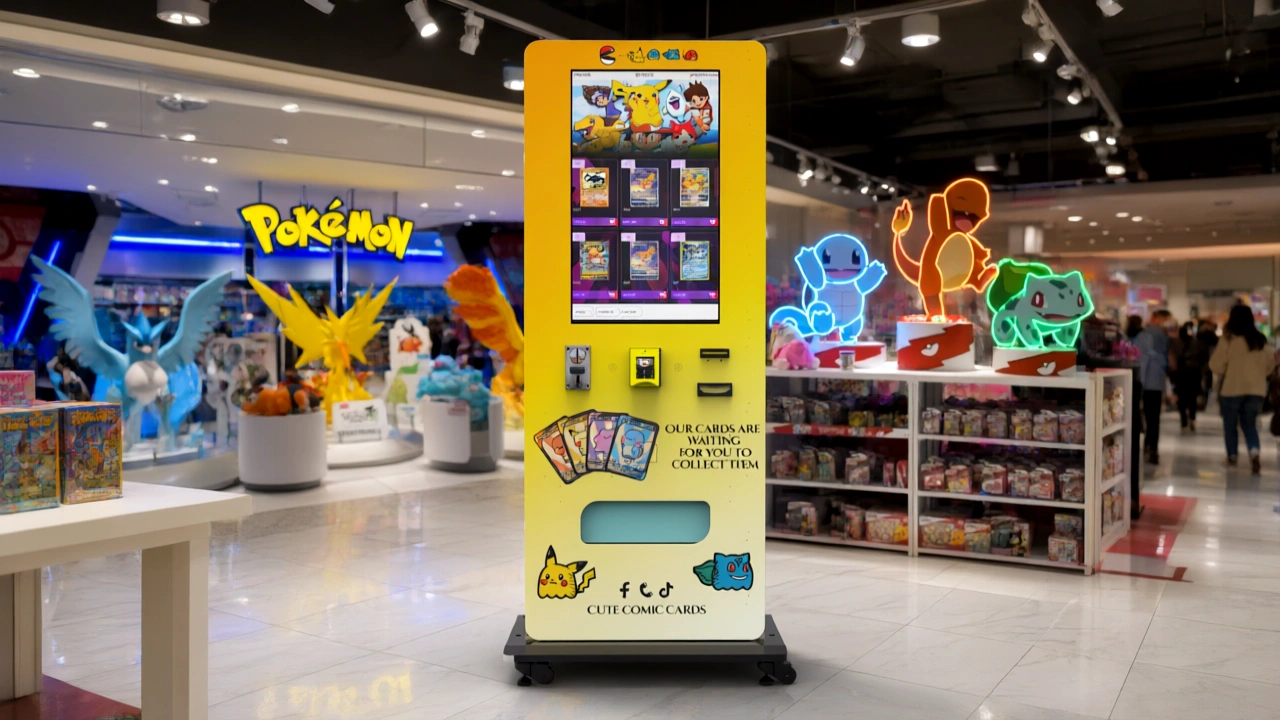
I want to share a failure that still stings. In 2021, I placed a custom sports card vending machine in a convenience store in a suburban area. The store had decent foot traffic, but it was mostly people buying cigarettes and lottery tickets. I thought the “impulse buy” logic would apply. It didn’t. The machine sat there for three months, averaging maybe $300 a month in sales. The rent for the floor space was $150 a month, so I wasn’t losing much, but I was tying up $10,000 in equipment and inventory.
The problem was the audience. The convenience store’s customer base wasn’t interested in $15 booster packs. They wanted cheap snacks and a cold drink. I moved the machine to a local hobby shop that ran weekly trading card tournaments, and within three weeks, it was doing $1,500 a month. Same machine, same inventory, completely different result. The lesson is simple: match the product to the location’s existing customer base.
Success Through Data: Another Case Study
On the flip side, I had a success that taught me the value of data. I placed a 32-inch touchscreen machine in a mall near the food court. The initial product mix was 70% sports cards, 30% Pokémon. After two months, the sales data showed that Pokémon was outselling sports cards 2 to 1. I adjusted the mix to 50/50, and then to 60% Pokémon, 40% sports. Total revenue increased by 35% just from that change.
I also started tracking sales by time of day. The machine did 60% of its sales between 4 PM and 8 PM on weekdays, and weekends were strong all day. That told me when to schedule restocking and when to have a technician on call. This kind of data-driven approach is what separates a profitable operation from a break-even one.
Regulations, Permits, and Compliance
Don’t overlook the legal side. Depending on where you are in the EU or North America, you may need a business license, a vending machine permit, and possibly a sales tax registration. In the U.S., the Small Business Administration has resources on the basics, but local regulations vary wildly. Some cities require a specific permit for unattended retail. In the EU, you need to be aware of GDPR if you’re collecting any customer data through the machine’s software.
You also need to consider product safety and labeling. Trading cards are generally low-risk, but if you’re selling any ancillary items like stickers or candy, you need to comply with food safety regulations if applicable. I always recommend consulting with a local business attorney before you sign a lease or buy a machine. The cost of legal advice is a fraction of the cost of a compliance violation.
How to Screen Suppliers
There are dozens of manufacturers out there, but only a handful build machines that last. When I screen a supplier, I ask five questions: What’s your warranty? How long have you been in business? Can you provide references from operators in my region? What’s your lead time? And what happens if I need a replacement part in two years? If they can’t answer those clearly, I move on.
I’ve had good experiences with Zhongda Smart, but I’ve also used domestic resellers who import from them. The key is to verify that you’re getting a genuine product with support. There are knockoff machines that look similar but use cheap components that fail within months. Check if the supplier has a physical presence or a service network in your country. If they’re just a trading company, you’re taking a risk.
Common Mistakes New Operators Make
I see the same mistakes over and over. First, they buy a used machine to save money, and then they spend more on repairs than they saved. Second, they put the machine in a location without doing proper foot traffic analysis. Third, they stock the machine with product they like, not what the local market wants. Fourth, they ignore the data and keep restocking the same slow-moving items.
Another mistake is underestimating the importance of the machine’s appearance. A scratched, dirty machine signals that it’s not cared for, and collectors will assume the product inside is also mishandled. I clean my machines every restock, and I replace the LED lights as soon as they start to dim. It’s a small cost that pays off in customer trust.
Cost vs. Revenue: Realistic Expectations
Let’s talk about realistic revenue. Based on my own fleet of six machines and conversations with other operators, a well-placed card vending machine can generate $2,000 to $8,000 in monthly gross revenue. The high end is rare and usually requires a prime mall location or a dedicated card show presence. The low end is common in secondary locations. Your gross margin on card products is typically 30% to 50%, depending on how you source inventory. If you buy wholesale boxes and sell at MSRP, you’re on the higher end. If you’re buying at retail, you’re on the lower end.
So, a machine doing $3,000 a month at a 40% margin gives you $1,200 in gross profit. Subtract rent (if any), maintenance, and your time, and you might clear $800 a month. That’s not a fortune, but it’s a nice side income from a machine that runs 24/7. The real money comes from scaling to multiple machines and optimizing each location.
Data Sources and Industry Trends
If you want to understand the market size, look at the broader collectibles and trading card industry. According to a report by Statista, the trading card market has seen significant growth in recent years, driven by nostalgia and the rise of online marketplaces. IBISWorld also tracks the hobby and collectibles retail sector, which includes card shops and related vending operations. These are good sources for understanding the macro trend, but remember that your local micro-market is what matters most.
The U.S. Small Business Administration has practical guides on running a retail business, including vending operations, which can help with the regulatory side. For EU operators, Eurostat provides retail trade data that can help you gauge consumer spending patterns in your region. None of these sources will tell you whether a specific location will work, but they’ll help you understand the industry’s health.
Long-Term Strategy and Scaling
Once you’ve got one machine running profitably, scaling is the natural next step. But don’t scale too fast. I made that mistake when I bought three machines at once and had to scramble to find good locations. The result was two mediocre locations and one good one. I should have been more patient.
When you scale, you need to think about logistics. Do you have a reliable vehicle to transport inventory? Can you handle restocking yourself, or do you need a part-time employee? What’s your plan for machine repair? These operational questions are what determine whether you grow or stall. I’ve seen operators with five machines who are always stressed, and I’ve seen operators with two machines who make a solid living. It’s not about the number of machines; it’s about the quality of each location and your efficiency in serving them.
Disclaimer
All figures in this article are based on my personal experience and industry conversations over the past decade. They are not guaranteed outcomes. Your actual costs, revenue, and payback period will vary based on location, product mix, operational efficiency, and market conditions. Always do your own research and consult with a financial advisor before making a significant investment.
Frequently Asked Questions
Are card vending machines profitable?
They can be, but it’s not automatic. A well-placed machine can generate a 30% to 50% gross margin on card sales. The key is location and product mix. I’ve seen machines profit from month one and others that took six months to break even. Don’t expect overnight riches.
How much does a custom sports card vending machine cost?
New machines range from $8,000 to $25,000 depending on size and features. Used machines can be cheaper, but they often require repairs. You’ll also need to budget for shipping, installation, and initial inventory.
How long does it take to recoup the investment?
Realistic payback periods are 8 to 24 months for a new machine. I’ve seen faster payback in prime mall locations, but that’s the exception, not the rule. It depends on your location and how well you manage inventory.
Should a beginner buy or lease a card vending machine?
If you’re new, leasing can be a safer way to test the waters. You’ll have lower upfront costs, but your margins will be thinner. Buying makes sense if you’re confident in your location and have the capital. I bought my first machine, but I had a solid location lined up.
Where should I place the machine to maximize earnings?
Look for locations with at least 500 people passing by daily, ideally with a demographic that matches card collectors. Hobby shops, game stores, malls, and sports venues are good candidates. Avoid convenience stores unless they already serve a young, male customer base.
What permits or licenses do I need?
You’ll likely need a business license and possibly a vending machine permit. In the U.S., check with your city and state. In the EU, you need to comply with local commercial regulations and GDPR if you collect customer data. Consult with a local attorney.
How do I choose a reliable supplier?
Ask about warranty, support, lead time, and references. Look for manufacturers with a service network in your region. I’ve had good results with Zhongda Smart, but always verify the supplier’s track record before paying.
What should I do if the machine breaks down?
Learn basic troubleshooting first. Keep a spare parts kit and have a technician’s contact on hand. For major issues, contact the manufacturer’s support. A machine that’s down is losing money, so speed matters.
How can I reduce restocking and maintenance costs?
Use a machine with cloud-based management to track sales data. Restock based on demand, not a fixed schedule. Keep the machine clean and well-lit to reduce vandalism. Buy quality equipment to minimize breakdowns.