If you’re asking how much money a trading card vending machine can make, the honest answer is: it depends more on where you put it and how you run it than on the machine itself. I’ve been in the vending business for over a decade, and I’ve seen single card machines pull in over $3,000 a month in the right mall corridor, while identical units sat silent in a laundromat and barely covered their electricity bill. The trading card vending machine niche is real, it’s growing, and it can be genuinely profitable—but it’s not a set-and-forget cash printer. You need to understand foot traffic, product mix, machine reliability, and your local buyer base before you commit a dollar.
Why Trading Card Vending Machines Are Different From Snack Machines
Most vending operators I know started with snack or soda machines. I did too. The margins are thin, the restocking is heavy, and you’re fighting over the same office break room as three other operators. Trading cards are a completely different animal. The product is small, light, and high-value. A single booster pack of Pokémon or sports cards can sell for $5 to $20, and the gross margin on sealed product is often 40% to 50% if you source wholesale correctly. Compare that to a candy bar where you’re lucky to clear 30% after spoilage and theft.
What really changes the game is the collector psychology. People don’t buy trading cards because they’re hungry. They buy because they’re hunting a specific card, chasing a chase card, or just enjoying the thrill of opening a pack. That means your customer is not a passive snacker—they’re an active enthusiast who will drive twenty minutes out of their way to visit a machine that’s known to have fresh stock. This is a completely different foot traffic model than traditional vending, and it rewards operators who understand the hobby.
Another difference is the self-service kiosk aspect. A modern trading card machine with a touchscreen can display what’s inside, show the price per pack, and even offer multiple product categories without taking up more floor space. This automated retail approach lets you run a higher-value transaction in a smaller footprint. In my experience, a card vending machine can generate the same monthly revenue as a large snack machine, but with a fraction of the restocking weight and frequency.
There’s also a novelty factor. When you place a card machine in a location that’s never seen one, it becomes a local attraction. I’ve watched kids drag their parents over, and adults who haven’t bought a card in twenty years stop to browse. That curiosity bump can give you a strong first few months, but you need repeat buyers to sustain it. That’s where restocking frequency and product rotation come in.
Realistic Revenue Numbers: What I’ve Actually Seen
Let’s talk money, because that’s why you’re here. I’ll be straight with you: anyone who promises a fixed monthly income from a trading card vending machine is selling you something. What I can give you is a range based on my own placements and those of operators I trust in the US and Europe.
In a high-traffic location—think a busy mall corridor, a popular hobby shop, or a tourist-oriented retail street—a well-stocked 32-inch touchscreen trading card vending machine can gross between $2,500 and $4,500 per month. I have one placement in a suburban shopping center near a game store that consistently does over $3,800 in monthly sales. The machine is positioned right outside the game store entrance, which gives me both foot traffic and a built-in audience of card buyers.
In a medium-traffic location, like a grocery store entrance or a busy convenience store, expect gross sales in the $1,200 to $2,200 range. This is still a solid return on a single machine, especially if your rent is low or you’re on a revenue share. In low-traffic spots, like a quiet office building or a small retail shop, you might see $400 to $800 a month. That can still be profitable if your costs are minimal, but it’s not the kind of return that justifies a brand-new machine purchase.
Let’s put some numbers on the expense side. A new commercial-grade card vending machine will cost you between $4,500 and $12,000 depending on size, screen configuration, and payment system. The 32-inch touchscreen units that are popular right now usually land in the $6,000 to $9,000 range. Installation, shipping, and initial setup can add another $500 to $1,500. You’ll also need inventory, and that’s the part new operators underestimate. I recommend starting with at least $2,000 to $3,000 in wholesale product so the machine looks full and gives buyers choice.
Ongoing costs include payment processing fees (usually 2.5% to 4% of sales), restocking labor (your time or an employee’s), and occasional maintenance. Vending machine repair is not something you can ignore. Even the best machines will have a card jam or a payment reader issue eventually. Budget around $50 to $100 per month per machine for maintenance over the long term, though you’ll have months with zero issues and months where you need a technician twice.
Break-Even and Payback Period: My Rule of Thumb
I’ve seen a lot of operators ask how long it takes to recoup their investment, and the honest answer is between six and eighteen months for a well-placed machine. If you’re paying $7,000 for a machine and clearing $1,500 a month after product cost and expenses, you’re looking at roughly five months to break even. If you’re in a slower spot clearing $600 a month, it’s closer to a year or more.
Let me give you a real failure case from my early days. I placed a card machine in a small comic book store that had maybe fifty customers a day. The owner was enthusiastic, but the foot traffic just wasn’t there. I grossed $300 in the first month, then $250, then $180. The machine was sitting in a corner that most customers never even walked past. I ended up moving it after four months and losing money on the transport and installation at the new site. The lesson was simple: the store owner’s enthusiasm doesn’t pay your bills. Foot traffic does.
On the flip side, I had a success case that taught me the value of adjacency. I placed a wall-mounted card vending machine in a large hobby and toy store, right next to the checkout counter. The store was already selling trading cards behind the counter, but they couldn’t display everything. My machine gave customers a self-service option for booster packs while the staff handled higher-value boxes and singles. That machine grossed over $2,800 in its second month, and the store owner eventually asked if we could add a second unit. That’s when I realized the best location isn’t just high traffic—it’s high traffic of people who are already in buying mode.
Location Is Everything: How I Evaluate a Site
I’ve developed a simple scoring system over the years, and I’ll share it with you because it’s saved me from making expensive mistakes. First, I look at raw foot traffic. I want to see at least 500 people passing per day in a retail setting, and ideally over 1,000. I’ll sit near the proposed spot for an hour on a weekday and an hour on a Saturday to get a sense of the flow.
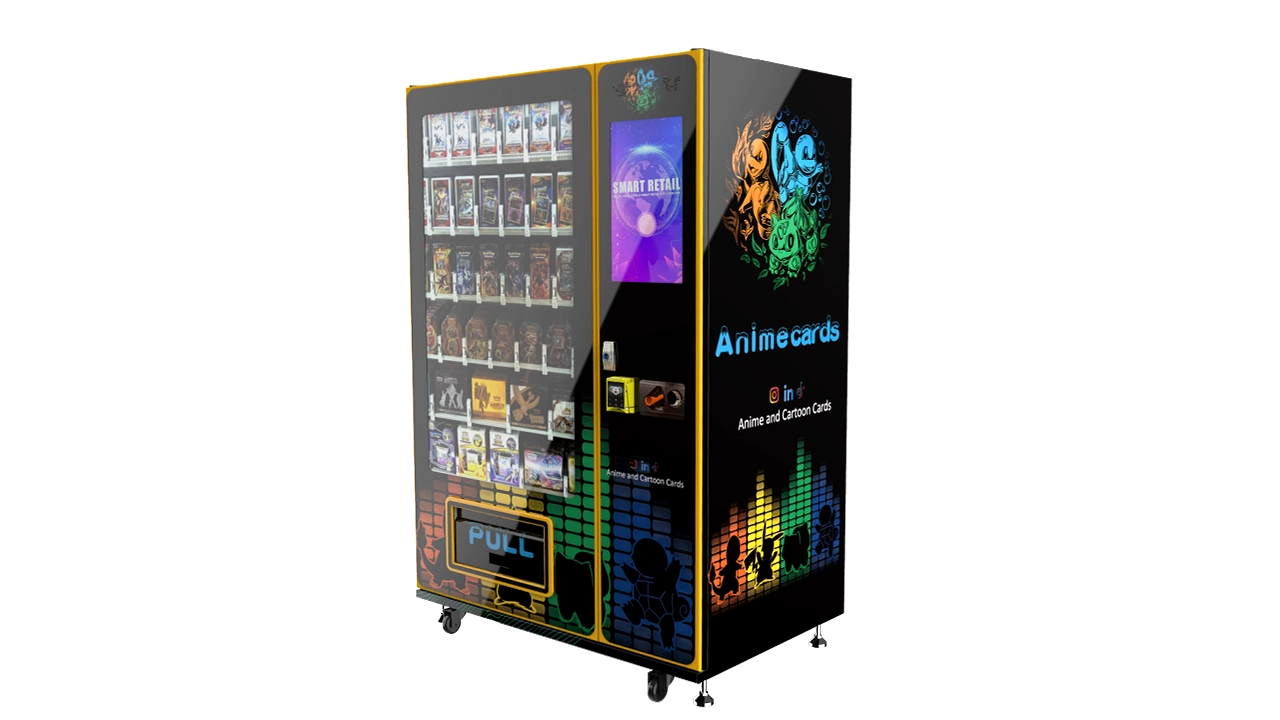
Second, I look at the customer profile. A trading card vending machine works best where there are children, teenagers, or young adults. Family entertainment centers, hobby shops, game stores, and even some movie theater lobbies are excellent. I’ve also seen good results in barbershops and salons that cater to a younger crowd, though that’s rarer.
Third, I negotiate the rent or revenue share. I prefer a revenue share of 15% to 25% over a fixed rent in most cases, because it aligns incentives. If the location doesn’t perform, the host doesn’t make money either, which makes them more willing to help promote the machine. If they insist on fixed rent, I want it to be no more than $100 to $200 per month unless the traffic is exceptional.
Fourth, I check for power access and security. The machine needs a standard outlet, and ideally it should be visible to staff or security cameras. Card machines hold high-value inventory, and theft or vandalism is a real concern. I’ve had a machine in a dim corridor that got rocked and damaged. Since then, I only place in well-lit, supervised areas.
Finally, I test the site with a small machine first if possible. I have a few compact units I use for trial placements. If the location does well for three months, I upgrade to a larger touchscreen model. This approach has saved me more than once.
Comparing Machine Types: What You Get for Your Money
Not all trading card vending machines are the same, and the type you choose affects both your upfront cost and your revenue potential. I’ll break down the common options I’ve used or seen in the field.
| Machine Type | Typical Price Range | Capacity | Best For | Trade-offs |
|---|---|---|---|---|
| Wall-mounted unit | $3,000 – $5,500 | 100 – 200 packs | Tight spaces, low-rent trials | Smaller display, less visual impact |
| 32-inch touchscreen kiosk | $6,000 – $9,500 | 300 – 500 packs | High-traffic retail, hobby shops | Higher cost, needs more space |
| Large floor-standing machine | $9,000 – $15,000 | 500 – 800 packs | Malls, entertainment centers | Heavy, harder to move, more inventory needed |
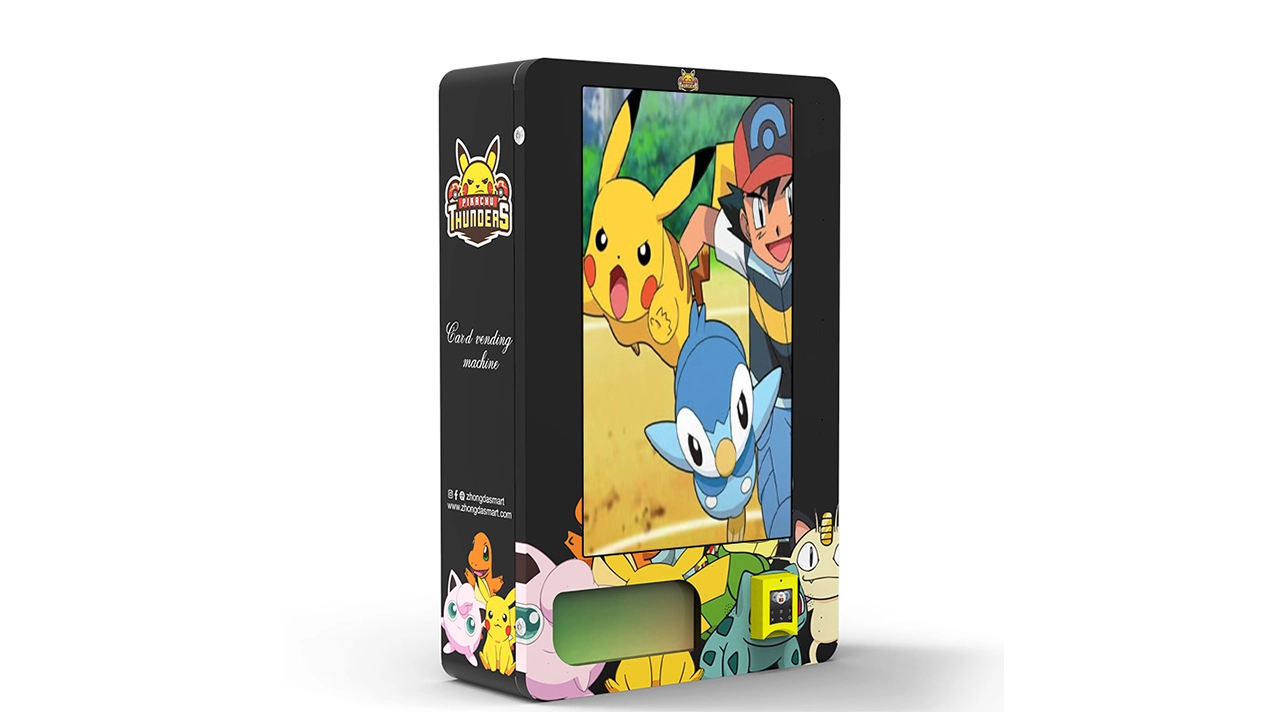
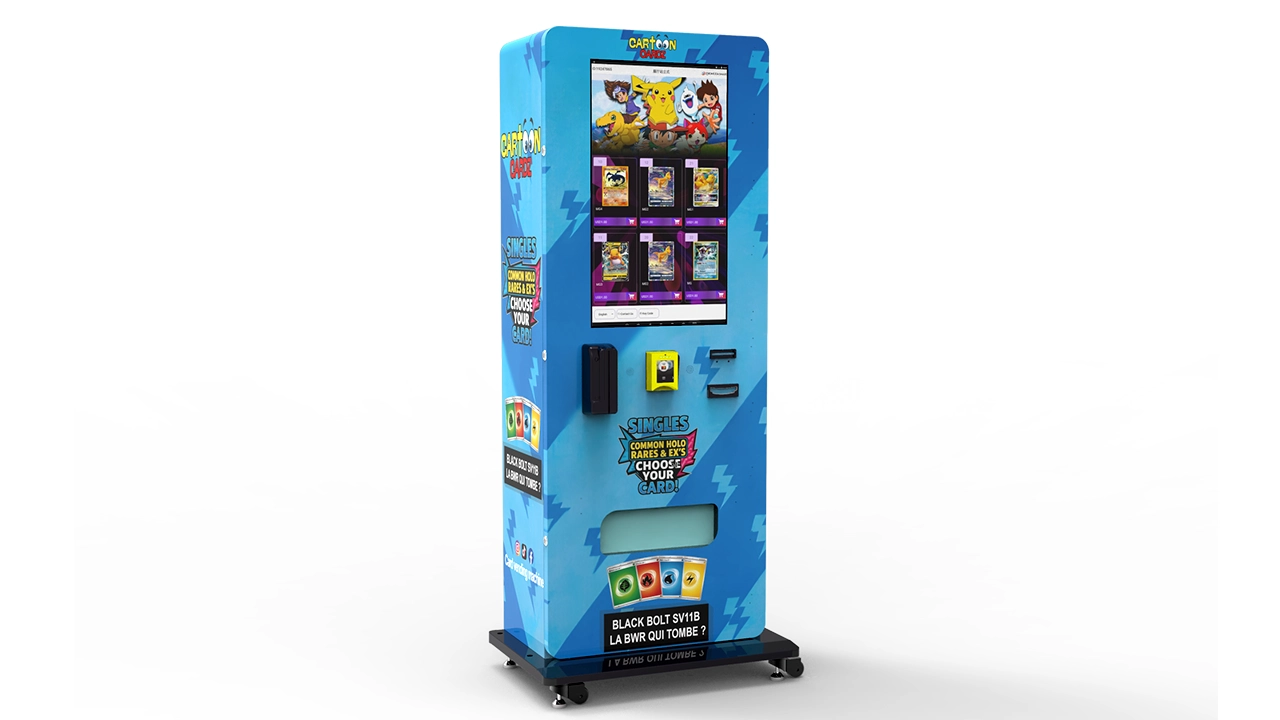
I’ve used all three types. The wall-mounted units are great for testing a location without a huge investment, but they don’t have the visual appeal that draws in curious customers. The 32-inch touchscreen trading card vending machine is my workhorse. It’s big enough to display product clearly, and the screen lets you run promotional videos or show what’s inside. The large floor-standing models are impressive, but they require a serious inventory commitment and a location that can justify the footprint.
One thing I’ll say about suppliers: I’ve purchased from several manufacturers over the years, and Zhongda Smart is one of the names that consistently delivers solid build quality and responsive support. I’m not saying they’re the only option, but if you’re comparing quotes, they’re worth putting on your list. Their touchscreen models have held up well in my placements, and the payment system integration was straightforward.
Inventory Management and Restocking: The Real Work
Here’s the part that nobody talks about in the sales brochures. A trading card vending machine is only as good as its inventory. If you let it run empty or fill it with slow-moving product, you’ll kill your own revenue. I’ve learned that a machine that looks half-stocked is a machine that people walk past.
I restock every one to two weeks, depending on the location. A high-traffic machine might need a full restock every week, while a slower one can go two weeks. The key is to track what sells and what sits. Pokémon and sports cards sell fast in most markets. Magic: The Gathering has a steady but smaller buyer base. Yu-Gi-Oh! and One Piece have regional spikes. I keep a simple spreadsheet of sales by SKU, and I rotate out anything that hasn’t moved in six weeks.
Your gross margin depends entirely on your sourcing. Buying sealed product at wholesale from distributors gives you the best margin, but it requires volume and a business license. I buy in bulk when there’s a new set release, and I take advantage of distributor deals. I also buy from reputable secondary wholesalers when I find good prices, but I’m careful about counterfeit product. The card market has a counterfeiting problem, and if you sell fake cards, your reputation is gone.
Restocking is also a chance to clean the machine, check for jams, and verify that the payment system is working. I carry a small toolkit and a spare card sensor on every route. Most issues I can fix on the spot. If it’s a major problem, I call a vending machine repair technician, but that’s rare if you maintain your equipment.
Self-Operated vs. Lease vs. Revenue Share
You have a few ways to get a card vending machine into a location, and each has its pros and cons. I’ve done all three, and I’ll give you my honest take.
Self-operated is the most common and gives you the most control. You buy or lease the machine, you source the inventory, you handle restocking and maintenance, and you keep all the revenue minus the location’s rent or share. This is the best model if you want to learn the business and maximize profit. The downside is that it’s time-intensive, and you carry all the risk.
Leasing a machine from a supplier is an option if you don’t want a big upfront cost. You pay a monthly fee, and the supplier often includes maintenance. The problem is that the monthly fee eats into your margin, and you’re still responsible for inventory. I’ve seen lease deals that look attractive but end up costing more than buying over two years.
Revenue share with a location is my preferred model for new sites. I provide the machine and inventory, and the host provides the space and foot traffic. We split the gross revenue, usually 80/20 or 75/25 in my favor. This lowers my risk and gives the host a reason to promote the machine. The downside is that my monthly take is lower, but I’m also not paying fixed rent if sales are slow.
Common Mistakes New Operators Make
Let me save you some money. I’ve made almost every mistake in this business, and I’ve seen plenty of others do the same. First, buying a machine before securing a location is a classic error. You’ll end up with a very expensive paperweight. Secure the site first, or at least have a strong lead.
Second, underestimating the importance of payment systems. A card vending machine needs to accept credit and debit cards, and mobile payments are increasingly expected. If your machine only takes cash, you’re losing a huge portion of potential sales. I’ve seen operators install machines with old-school coin mechanisms and wonder why they’re not making money. The modern buyer doesn’t carry cash.
Third, ignoring the local market. A machine that sells Pokémon in one city might fail in another where sports cards dominate. Do your research. Visit local hobby shops, check what people are buying, and tailor your inventory accordingly. I once stocked a machine with MTG boosters in a town where nobody played Magic. It took me six weeks to sell through that inventory.
Fourth, neglecting the visual presentation. The machine’s screen and lighting are your salespeople. Keep them clean and bright. If a machine looks dingy or the screen is dark, people assume it’s out of order. I clean my machines every visit and replace any burned-out lighting immediately.
The Payment System and User Experience
In automated retail, the user experience is everything. A customer who has to fumble with a payment reader or wait too long for a pack to dispense is a customer who won’t come back. I’ve tested machines with different payment systems, and the best ones have a seamless, fast transaction flow. The customer taps their card or phone, selects a product, and the machine delivers it within a few seconds.
I also recommend machines with a transparent front or a clear display window. Buyers want to see the product before they buy. A machine that hides the inventory behind a solid door is a machine that loses sales. The 32-inch touchscreen models I use have a glass front that lets customers see the booster packs clearly, and the screen shows the price and product details.
Another feature worth paying for is remote monitoring. Some machines have connectivity that lets you check inventory levels and sales data from your phone. This saves you trips to the machine and lets you know exactly when to restock. It’s not essential, but once you have a few machines, it’s a game-changer.
Regulations, Permits, and Local Rules
You can’t just drop a machine anywhere and start collecting money. Depending on your city or county, you may need a vending license, a sales tax permit, or a specific permit for automated retail. In the US, most municipalities require a business license and a sales tax permit. The U.S. Small Business Administration has a good overview of what you need to get started. In the EU, rules vary by country, and Eurostat has data on retail trade that can help you understand the market size.
I also recommend checking with the location’s management about any restrictions on vending machines. Some malls have exclusive contracts with vending operators, and you can’t just install a machine without permission. Always get a written agreement with the property owner or manager, even if it’s a simple one-page document.
Liability is another consideration. If a child gets a pack and chokes on a piece of packaging, you could be liable. It’s rare, but I carry liability insurance on my machines. It costs a few hundred dollars a year and gives me peace of mind.
Data and Industry Context
Let me give you some context from the broader vending and retail landscape. According to Statista, the global vending machine market was valued at over $50 billion in recent years, with steady growth projected. IBISWorld reports that the vending machine industry in the US alone generates billions in annual revenue, and operators have been diversifying into higher-value product categories to offset declining snack sales. Trading cards are part of that diversification trend.
The trading card market itself has seen a resurgence, driven by nostalgia and new collectors. The Pokémon TCG and sports card segments have grown significantly, and this has created demand for alternative retail channels like vending machines. My experience aligns with this trend: my card machines have outperformed every snack machine I’ve ever run on a per-square-foot basis.
But here’s the honest caveat: these are averages and trends, not guarantees. Your results will depend on your location, your inventory, and your effort. A machine in a dead location will not make money no matter how good the market is.
Maintenance and Troubleshooting
I’ve mentioned vending machine repair, but let me be more specific. The most common issues with card vending machines are card jams, payment reader failures, and screen glitches. Card jams usually happen when a pack is slightly oversized or the dispensing mechanism is worn. I carry spare sensors and a can of compressed air on my route. Most jams can be cleared in under ten minutes.
Payment reader issues are more serious. If the card reader goes down, you’re losing money every minute. I test the payment system at every restock, and I have a backup reader in my van. If I can’t fix it on site, I swap the whole reader and send the old one for repair. Downtime is your enemy in this business.
Screen glitches are less common, but they happen. A touchscreen that freezes or shows a black screen will make customers walk away. I recommend machines with a reliable screen and a good warranty. Zhongda Smart’s units have been dependable for me, and their warranty support has been responsive when I needed it.
Scaling Up: From One Machine to a Route
If you do well with your first machine, you’ll probably want to add more. I started with one machine, and now I run a small route of about a dozen card vending machines across several cities. The key to scaling is having a repeatable process. I have a checklist for site evaluation, a standard restocking schedule, and a spreadsheet for tracking sales and inventory.
I also learned to diversify locations. I have machines in hobby shops, a sports bar, a family entertainment center, and even a bowling alley. Each location has a different customer base, and that diversity protects me if one site underperforms. When one machine has a bad month, another usually picks up the slack.
Scaling also means you need more inventory. I maintain a small storage area at home where I keep boxes of booster packs and sealed product. I buy in bulk when there’s a new set release, and I take advantage of distributor deals. This keeps my cost per pack lower, which directly improves my margin.
Final Thoughts From the Field
I’ve been in this business long enough to see trends come and go. Trading card vending machines are not a fad, but they’re also not a get-rich-quick scheme. They’re a solid, niche opportunity for operators who are willing to learn the product, evaluate locations honestly, and put in the maintenance and restocking work. If you’re looking for a passive income stream, this isn’t it. If you’re looking for a business that rewards smart decisions and hard work, this might be for you.
Before you buy anything, spend time in the locations you’re considering. Watch how people shop. Talk to store owners. Look at what’s already selling. And when you do commit, start small, track everything, and be ready to move your machine if it’s not performing. The money is there, but you have to earn it.
Frequently Asked Questions
Are trading card vending machines profitable?
They can be, but profitability depends on location, inventory, and maintenance. A well-placed machine can gross $2,500 to $4,500 per month, while a poorly placed one might only bring in a few hundred. You need to evaluate each site carefully and keep your costs under control.
How much does a trading card vending machine cost?
You’ll generally pay between $3,000 and $15,000 for a new machine, depending on the size and features. A 32-inch touchscreen model typically costs $6,000 to $9,500. Add shipping, installation, and initial inventory costs to your budget.
How long does it take to break even?
With a good location and steady sales, you can break even in six to eighteen months. If the location is slow, it could take longer. I recommend starting with a revenue share agreement to reduce your fixed costs while you test a site.
Should I buy or lease a machine as a beginner?
I generally recommend buying a used or compact machine for your first placement. Leasing can be convenient, but the monthly fees eat into your profit. Buying gives you more control and a better long-term return if you choose your location wisely.
Where is the best place to put a card vending machine?
Look for locations with high foot traffic and a customer base that matches card buyers: hobby shops, game stores, family entertainment centers, malls, and sports bars. Avoid dim, low-traffic corners. A spot near a checkout counter or entrance works best.
Do I need any permits to operate a card vending machine?
In most US cities, you’ll need a business license and a sales tax permit. Some locations may also require a vending permit. In the EU, rules vary by country. Check with your local government and the property owner before installing a machine.
How do I choose a good supplier?
Look for a supplier with a track record, good warranty support, and responsive customer service. I’ve had good experience with Zhongda Smart, but you should also ask for references and read reviews from other operators. Avoid suppliers who won’t answer technical questions.
What should I do if my machine breaks down?
Start with basic troubleshooting: check the power, clear any jams, and test the payment reader. Keep spare parts like sensors and card readers on hand. For major issues, call a vending machine repair technician. Regular maintenance reduces breakdowns.
How can I lower restocking and maintenance costs?
Track your sales data to know exactly what to restock and when. Buy in bulk from distributors to lower your cost per pack. Clean and inspect your machine regularly to catch small issues before they become big ones. Use remote monitoring if your machine supports it.
Disclaimer: The revenue figures and cost estimates in this article are based on my personal operating experience and industry reports, not guarantees. Actual results vary depending on location, market conditions, and management. Always conduct your own research and consult a financial or legal professional before making business decisions.