If you operate in the vending industry, you have probably watched the trading card boom reshape what people expect from self-service retail. The question I hear constantly from operators and store owners is whether trading card vending machines can actually replace the traditional retail counter, where packs and boxes sit behind glass and require staff interaction. Based on my decade of running vending routes across the US and Europe, the honest answer is that these machines will not fully replace counters, but they will absolutely take over a significant share of card sales in the right locations. The key is understanding where they win, where they struggle, and how to structure your operation around real foot traffic rather than hype.
What a Trading Card Vending Machine Actually Changes
The traditional retail counter model relies on staff to unlock cases, answer questions, and process transactions. That works fine during peak hours, but it creates friction during slow periods and after hours. A trading card vending machine removes that friction entirely by offering a self-service kiosk that displays product, accepts payment, and dispenses sealed packs or boxes without any human involvement. In my experience, this shift matters most in locations where staffing is thin or where the store owner cannot dedicate a full shift to card sales.
I have placed machines in convenience stores, hobby shops, and even grocery store lobbies. The common thread is that the machine acts as an automated retail extension of the counter, not a replacement for the human relationship that collectors value. Regulars still want to talk to a shop owner about pull rates and new releases. But casual buyers and parents grabbing a pack for a kid’s birthday do not need that conversation. They just need a quick transaction, and that is where the machine wins.
What surprised me most in the first year was how much incremental revenue came from hours when the counter was closed. A machine in a 24-hour gym or a late-night convenience store can sell packs at 2 AM. That is revenue the counter simply cannot capture. Over time, I started viewing the machine not as a competitor to the counter but as a shift manager that never sleeps.
The real question is not whether machines replace counters, but whether you as an operator can identify the locations where automated retail outperforms human sales. That requires a clear-eyed look at your costs, your foot traffic, and your product mix.
My First Machine Was a Money Pit
I do not say this to scare you, but I want to be honest about my early mistakes. My first trading card vending machine was a cheap unit I bought from a supplier who promised high volume and low maintenance. The machine broke down within three weeks. The card dispenser jammed on a regular basis, the payment system rejected valid cards, and the screen froze during transactions. I spent more time driving to the location to fix it than I did actually making money.
The location itself was also a problem. I placed it in a small comic shop with maybe fifty visitors a day. That sounds like a decent fit, but the store already had a strong counter business with loyal customers. The machine sat in a corner, ignored, and the owner did not promote it because he saw it as competition for his own sales. My assumption that product would sell itself was wrong. You need a location where the machine is the primary point of sale, not an afterthought.
That failure taught me a hard lesson about equipment quality and supplier diligence. The machine I bought had no local service network, and the manufacturer’s support was slow and unhelpful. I ended up replacing the unit entirely within six months, losing most of my initial investment. If you are considering entering this space, do not repeat my mistake. Research the supplier, ask about spare parts availability, and demand a machine with a proven track record in your region.
Since then, I have worked with manufacturers like Zhongda Smart, who offer more robust builds and better after-sales support. That does not mean you should buy from them blindly, but it does mean you should look for a supplier that treats the machine as a long-term investment, not a one-time sale.
The Real Costs and Return Timeline
Let me give you a realistic breakdown of what you can expect to spend. A decent trading card vending machine will run you anywhere from $4,000 to $15,000 depending on size, screen configuration, and payment system. A basic wall mounted unit might cost closer to $3,000, while a large touchscreen machine with multiple dispensers can push past $20,000. These are not official prices, just what I have seen in the market over the past few years.
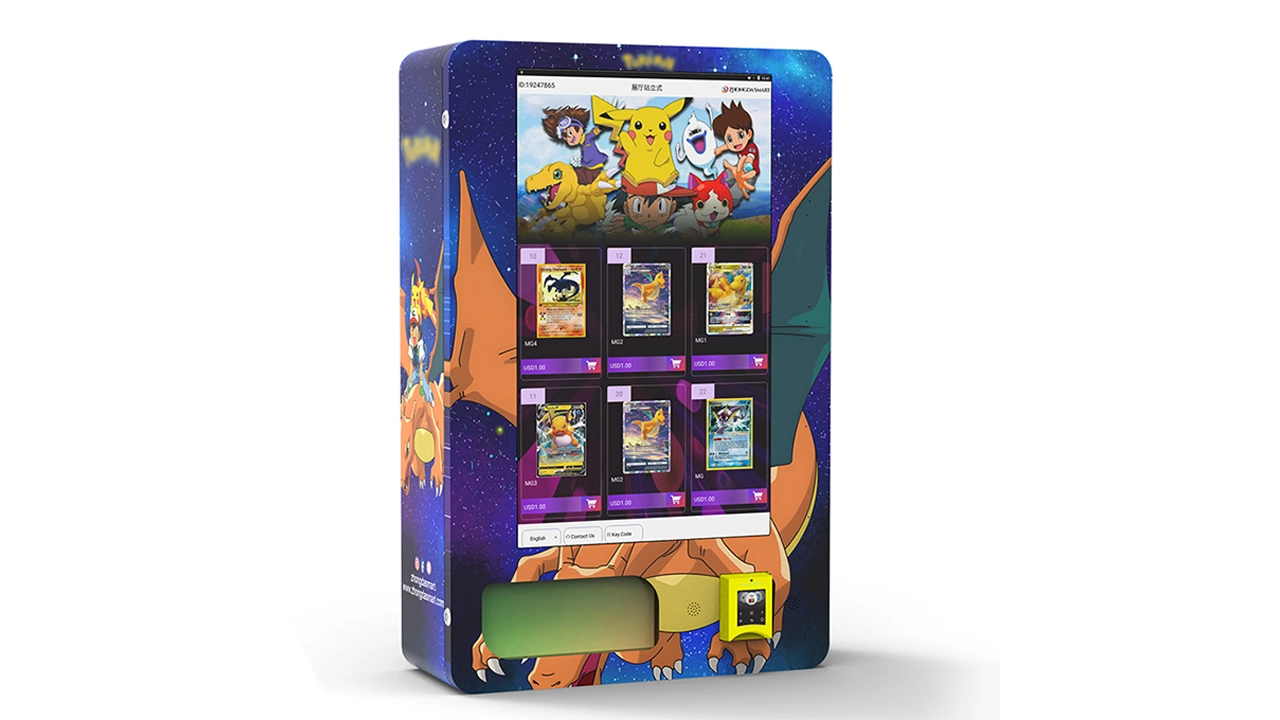
Beyond the machine itself, you need to budget for installation, shipping, and initial inventory. Cards are expensive to stock. A single sealed booster box can cost $150 to $300 depending on the set, and you will want at least ten to twenty boxes to make the machine look full. That means your initial inventory investment can easily hit $3,000 to $6,000. Add another $1,000 to $2,000 for shipping, installation, and misc setup costs, and your total startup figure lands between $8,000 and $20,000 per location.
On the revenue side, I have seen machines in high traffic locations gross between $1,500 and $4,000 per month. That is not a guarantee, just a range from my own routes and conversations with other operators. A machine in a busy mall or a large gaming store can do better, but a machine in a low traffic location might only bring in $500 a month. The difference comes down to foot traffic, product selection, and whether you rotate stock regularly.
Your gross margin on cards is typically between 30% and 45%, depending on how you source product. If you buy boxes at wholesale and sell packs at retail, you keep that spread. But you also need to factor in credit card processing fees, which usually run around 2.5% to 3.5% per transaction, plus any monthly payment system fees. After those costs, a realistic net margin lands around 25% to 35%.
Based on my experience, a well placed machine with strong sales can pay back its initial investment in 12 to 18 months. That assumes you are not constantly repairing the unit and that you keep inventory moving. If you choose a poor location or a cheap machine, the payback period stretches to two years or more, and in some cases never comes.
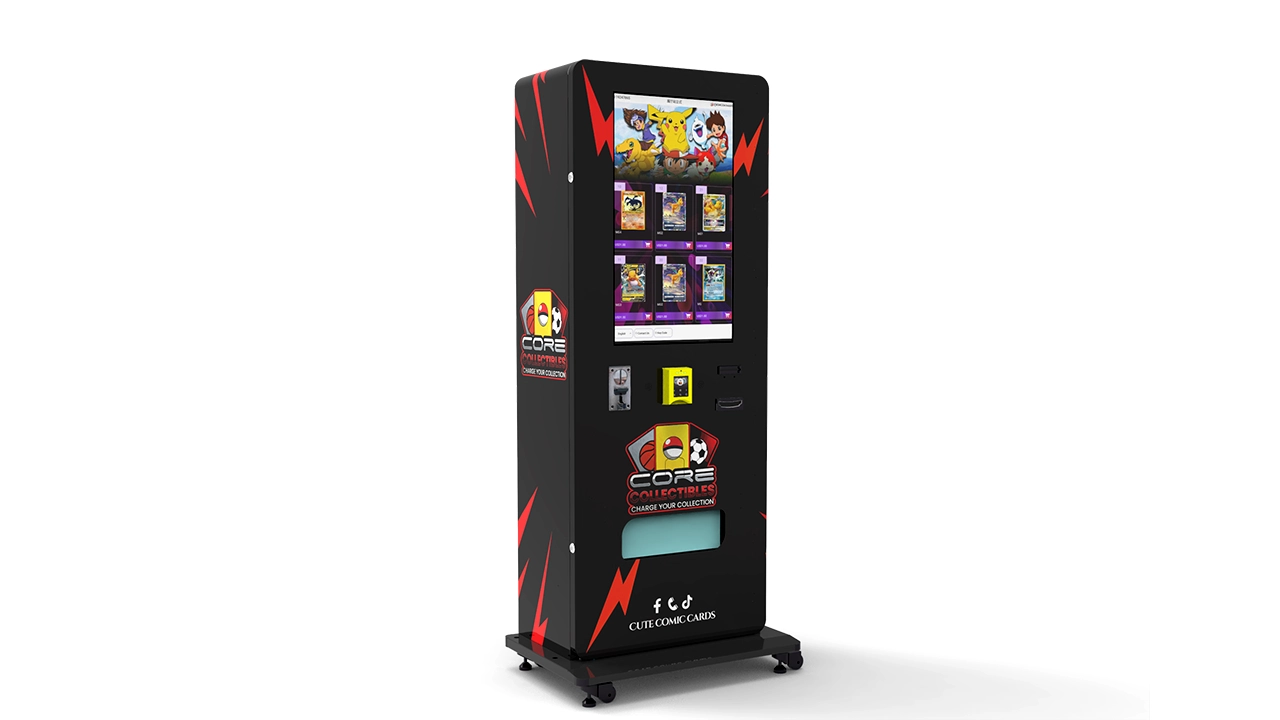
Here is a simple table that compares different machine types and their typical cost and revenue potential based on my observations:
| Machine Type | Initial Cost Range | Typical Monthly Gross | Payback Period | Best Use Case |
|---|---|---|---|---|
| Basic wall mounted unit | $3,000 – $6,000 | $500 – $1,500 | 18 – 24 months | Small stores, gyms, low rent locations |
| Mid size floor machine | $6,000 – $12,000 | $1,500 – $3,000 | 12 – 18 months | Convenience stores, hobby shops |
| Large touchscreen machine | $12,000 – $20,000+ | $3,000 – $5,000 | 10 – 16 months | Malls, gaming centers, high foot traffic areas |
Keep in mind that these numbers come from my own routes and conversations with other operators, not from any official industry report. Your results will vary based on location, rent, product mix, and how much time you put into maintenance and restocking.
Location Is Everything
I cannot stress this enough. A trading card vending machine in the wrong spot is just an expensive piece of furniture. In the right spot, it becomes a revenue generator that funds your next placement. The difference is night and day, and it comes down to foot traffic and buyer intent.
Look for locations with at least 500 to 1,000 people passing by per day. That is a rough benchmark I use, though it depends on the type of traffic. A convenience store in a residential area might have fewer daily visitors, but those visitors are repeat customers who may develop a habit of buying packs. A mall has more total traffic, but a lower percentage of people are there specifically to buy trading cards.
I have had great success in gaming stores and hobby shops that host tournaments. Those locations have a built in audience of collectors who are already spending money on cards. A machine placed near the tournament area or at the entrance captures impulse purchases and after-hours sales. One store I work with in Texas does over $3,000 a month in machine sales simply because the store hosts weekly events and the machine is visible from the main entrance.
On the flip side, I placed a machine in a laundromat once, thinking the captive audience would buy packs while waiting for their clothes. It was a disaster. The traffic was high, but the buyer intent was almost zero. People at a laundromat are not thinking about trading cards. The machine sat there for six months, selling maybe ten packs a week. I eventually moved it to a nearby game store, where it now does more in a week than it did in a month at the laundromat.
That experience taught me to evaluate not just foot traffic, but the match between the location’s customers and the product. A successful vending machine operation is about placing the right product in front of the right people at the right time. You cannot force a card machine into a location just because rent is cheap.
Self Service Kiosk vs. Traditional Counter
The debate over whether a self-service kiosk can replace a traditional counter often ignores the fact that they serve different customer segments. The counter builds relationships, answers questions, and provides a sense of community. The machine offers speed, convenience, and availability. In my experience, the best operations use both, with the machine handling routine transactions and the counter focusing on high value sales and customer engagement.
For example, a collector who wants to buy a full booster box or a rare single will usually want to talk to a human. They might have questions about condition, price, or trade options. That is not a transaction you want to automate. But the same collector might buy a few packs from the machine after hours or while the counter is busy. The machine captures revenue that would otherwise be lost.
There is also a psychological element. Some buyers prefer the anonymity of a machine. They do not want to feel judged for buying multiple packs, or they want to keep their spending private. A machine removes that social pressure and can actually increase pack purchases among certain customers.
From an operational standpoint, the machine also reduces labor costs. You do not need a staff member to stand behind the counter and process card sales. That frees up the owner or employee to focus on other tasks, like restocking shelves or helping customers with more complex needs. In a small store, that can be a huge advantage.
Equipment Selection and Supplier Screening
Choosing the right machine is more important than choosing the right location, because a bad machine will fail even in a great spot. I learned this the hard way with my first purchase, and I now spend a lot more time on due diligence before buying any unit.
Start with the build quality. Look for a machine with a metal frame, secure locks, and a dispenser mechanism that can handle the size and thickness of trading card packs. Card packs are not uniform like soda cans. They come in different sizes, and some packs have rigid corners that can jam a poorly designed dispenser. Ask the supplier for a demo or a video showing the machine dispensing actual trading card packs, not just standard boxes.
The payment system is equally important. You want a machine that accepts credit cards, mobile payments, and ideally cash. In the US, card payments are dominant, but in some European locations, cash is still common. A machine that only takes cards will miss a segment of customers. Look for a payment system that is EMV compliant and supports contactless payments like Apple Pay and Google Pay.
Screen quality matters more than you might think. A bright, responsive touchscreen draws attention and makes the machine feel modern. A dim or laggy screen makes the machine look broken, even if it works perfectly. In my experience, machines with a 32 inch touchscreen outperform smaller screen models in high traffic locations because they create a visual anchor that pulls people in.
When screening suppliers, ask about their service network. Where are spare parts stored? How long does it take to get a replacement dispenser or payment module? Is there a local technician who can service the machine, or do you have to ship it back to the factory? These questions separate a real partner from a one-time seller. I have had good experiences with Zhongda Smart on this front, but the key is to verify their claims with current customers. Ask for references and call them.
Maintenance, Restocking, and Daily Operations
No machine is maintenance free. Even the best trading card vending machine will need occasional repairs, and you have to be prepared for that. In my experience, the most common issues are card jams, payment system glitches, and connectivity problems. Most of these can be resolved with a quick reset or a simple part replacement, but you need to have a plan in place.
I recommend checking each machine at least twice a week, both to restock and to inspect for issues. A full machine that is not working is worse than an empty machine, because it frustrates customers and damages your reputation with the location owner. If a customer tries to buy a pack and the machine fails, they are unlikely to try again.
Restocking is more than just filling the machine. You need to track which products sell and which sit on the shelves. Trading card demand changes rapidly with new set releases and market trends. A set that is hot this month might be dead next month. I keep a simple spreadsheet for each machine, tracking sales by product line and restocking accordingly. Over time, this data tells you what to buy and what to avoid.
Your restocking schedule depends on the location. A high volume machine in a mall might need restocking every two to three days. A slower machine in a hobby shop might only need weekly attention. The key is to avoid empty slots, because an empty machine looks neglected and loses customer trust.
Maintenance costs vary, but I budget about 5% of monthly revenue for repairs and replacement parts. That covers the occasional jam, a faulty sensor, or a worn out dispenser motor. If you buy a cheap machine, that percentage goes up significantly. If you buy a quality machine, it stays manageable.
Payment Systems and the Customer Experience
The payment experience can make or break a trading card vending machine. Customers expect a fast, seamless transaction. If the machine takes too long to process payment, or if the card reader fails, they will walk away. I have seen machines lose sales simply because the payment terminal was slow or the screen instructions were confusing.
Look for a payment system that supports multiple methods: credit cards, debit cards, mobile wallets, and possibly cash. In the US, contactless payments are now the norm, and many younger buyers use their phones to pay. In Europe, cash is still common in some markets, so a machine with a cash acceptor has broader appeal. The more payment options you offer, the fewer customers you turn away.
The user interface also matters. The screen should clearly show the product selection, pricing, and payment instructions. I have found that machines with a simple, intuitive interface have higher conversion rates than machines with complicated menus. Customers should be able to complete a purchase in under thirty seconds. If it takes longer, they start to lose patience.
Another consideration is the transaction fee structure. Most payment processors charge a flat percentage per transaction, but some also charge a monthly fee or a per transaction fee. These costs eat into your margin, so you need to factor them into your pricing. I usually price packs slightly above retail to cover these fees, but I make sure the price is still competitive with the counter.
Comparing Business Models: Buy, Lease, or Partner
One of the first decisions you face is whether to buy the machine outright, lease it, or enter a partnership with the location owner. Each model has trade-offs, and the right choice depends on your capital, risk tolerance, and long-term goals.
Buying the machine gives you full control and keeps all the revenue. But it also puts all the risk on you. If the location fails, you are stuck with a machine that needs to be moved and reinstalled. Leasing reduces your upfront cost, but you end up paying more over time and you may be locked into a contract. Partnering with a location owner can reduce your risk and give you a built in customer base, but you have to share the revenue and you may have less control over placement and promotion.
In my experience, buying works best if you have the capital and you are confident in the location. Leasing makes sense if you want to test a location without committing a lot of money. Partnering works well if the location owner is actively involved in promoting the machine and understands the card market.
Here is a quick comparison of the three models:
| Model | Upfront Cost | Monthly Revenue Split | Risk Level | Control |
|---|---|---|---|---|
| Buy outright | Full machine cost | 100% to operator | High | Full control |
| Lease | Low or zero | Fixed monthly payment | Medium | Limited by contract |
| Revenue share | Low or zero | 20% – 50% to location | Low | Shared decision making |
I have used all three models at different times. For my most successful locations, I bought the machine outright because I wanted to keep the full margin and I was confident in the foot traffic. For experimental locations, I used a revenue share model to reduce my downside. That approach allowed me to test multiple spots without risking too much capital.
Common Mistakes New Operators Make
If you are new to this space, let me save you some pain by pointing out the mistakes I see most often. The first is buying a cheap machine to save money. That almost always backfires. The machine breaks down, the payment system fails, and customers lose trust. You end up spending more on repairs than you saved on the purchase price.
The second mistake is ignoring the location’s customer profile. A machine in a location with the wrong audience will not sell, no matter how good the machine is. You need to match the product to the people. A card machine in a retirement community is a waste of money, just as a snack machine in a school might be a better fit for a different product.
The third mistake is failing to track inventory and sales data. If you do not know what is selling, you cannot make informed decisions about restocking and product selection. I have seen operators stock the same slow moving product for months, wondering why the machine underperforms. The data is right there in the machine’s sales report. Use it.
The fourth mistake is neglecting maintenance. A machine that is dirty, broken, or out of order will not generate revenue. You need to commit to a regular maintenance schedule and have a plan for repairs. If you are not willing to do that, this business is not for you.
Data, Pricing, and Inventory Management
Successful trading card vending machine operation is a data game. You need to know your sales per product, your inventory turnover, and your margin per unit. I track all of this in a simple spreadsheet, and I review it weekly. That might sound tedious, but it is the only way to stay profitable.
Pricing is a delicate balance. If you price too high, customers will buy from the counter or online. If you price too low, you eat into your margin. I generally price packs at or slightly above the standard retail price, and I adjust based on demand. For hot sets, I can charge a premium. For older sets, I discount to move inventory.
Inventory management is about having the right mix of products. You want a few hot new releases to attract buyers, but you also need a selection of mid tier and budget products to appeal to different customers. I usually stock about 60% new releases and 40% established sets. That gives the machine variety without overloading it with slow movers.
One thing I have learned is that you cannot rely on a single product line. The trading card market is volatile, and a single set can lose value quickly. Diversify your inventory across multiple card games and brands. That way, if one product slows down, the others can carry the machine.
Regulations and Permits
Before you place a machine, you need to understand the local regulations. In the US, vending machines are generally allowed in commercial locations, but some cities require a business license or a vending permit. In the EU, regulations vary by country, and you may need to register the machine with local authorities. Check with the city or county where you plan to place the machine to understand the requirements.
You also need to consider tax implications. In the US, sales tax applies to vending machine sales in most states, and you are responsible for collecting and remitting that tax. In the EU, VAT rules apply, and you may need to register for VAT if your sales exceed a threshold. Consult a local accountant or business advisor to make sure you are compliant.
One thing I have learned is that location owners often have their own insurance requirements. Some stores require you to add them as an additional insured on your liability policy. That is a reasonable request, and you should factor the cost into your budget. It is a small price to pay for peace of mind.
Should You Replace Your Counter?
If you are a store owner asking whether a trading card vending machine can replace your counter, my answer is probably not entirely. The counter provides value that a machine cannot replicate. It offers personal interaction, expert advice, and a sense of community that keeps collectors coming back. But the machine can complement your counter and capture sales you would otherwise miss.
For operators who are not store owners, the machine is the counter. You are building a distributed retail network without the overhead of a physical store. That is a powerful model, but it requires discipline, data tracking, and a willingness to maintain your equipment.
I have seen the automated retail trend grow steadily over the past few years, and trading card machines are part of that shift. But I have also seen operators lose money by chasing hype without understanding the fundamentals. The machine is a tool, not a magic box. It works when you place it in the right location, stock the right product, and maintain it properly.
If you are considering entering this space, start small. Place one machine in a location you know well. Track your results for three to six months. Learn from the data. Then expand. That is the approach that has worked for me, and it is the approach I recommend to anyone who asks.
FAQ
Are trading card vending machines profitable?
They can be, but profitability depends heavily on location, product selection, and maintenance. In my experience, a well placed machine can gross $1,500 to $4,000 per month, with net margins around 25% to 35%. A poorly placed machine will lose money. Do not expect automatic profits without effort.
How much does a trading card vending machine cost?
A basic machine costs between $3,000 and $6,000. A mid size floor machine runs $6,000 to $12,000. A large touchscreen model can cost $12,000 to $20,000 or more. You also need to budget for shipping, installation, and initial inventory, which can add another $4,000 to $8,000.
How long does it take to break even?
Based on my experience, a well placed machine with strong sales can pay back its initial investment in 12 to 18 months. If the location is weak or the machine requires frequent repairs, the payback period can stretch to two years or more. There is no fixed timeline.
Should a beginner buy or lease a machine?
If you are new and want to test the waters, leasing or a revenue share model reduces your upfront risk. But buying gives you full control and better long term margins. I recommend starting with a single machine, either leased or purchased, and learning the business before scaling.
Where should I place a trading card vending machine?
Look for locations with high foot traffic and a customer base that matches the product. Gaming stores, hobby shops, malls, and convenience stores near schools or entertainment venues are good candidates. Avoid locations where the audience has no interest in trading cards, like laundromats or auto repair shops.
What permits or licenses do I need?
Requirements vary by city and country. In the US, you typically need a business license and possibly a vending permit. In the EU, you may need to register for VAT and comply with local regulations. Check with your local government and consult an accountant.
How do I choose a reliable supplier?
Look for a supplier with a proven track record, a local service network, and good after-sales support. Ask for references and contact them. Verify that spare parts are available and that the machine can be serviced locally. I have had good experiences with Zhongda Smart, but always do your own due diligence.
What should I do if the machine breaks down?
Have a plan in place before you need it. Contact the supplier’s support team, and if you have a local technician, schedule a repair visit. Keep spare parts on hand for common issues like card jams and payment system failures. Regular maintenance reduces the chance of breakdowns.
How can I reduce restocking and maintenance costs?
Track your sales data to understand which products sell and which do not. Stock accordingly to reduce slow moving inventory. Perform regular maintenance checks to catch small issues before they become big problems. Budget about 5% of monthly revenue for maintenance and repairs.
Disclaimer: This article reflects my personal experience and observations in the vending industry. Financial figures are estimates based on my own operations and conversations with other operators, not official statistics. Results vary by location, market conditions, and operational effort. Always conduct your own research and consult with professionals before making business decisions.