If you’re looking into a custom trading card vending machine manufacturer, the first thing I’ll tell you is this: stop obsessing over the hardware specs and start obsessing over your location and your operating costs. I’ve been in the automated retail space for over a decade, and I’ve watched more operators lose money on a flashy machine in a dead location than I have on cheap equipment in a high-traffic spot. The machine is just a box with moving parts; the real business is in foot traffic, card selection, and how fast you can turn inventory. That’s the honest truth from someone who’s been on the floor, not in a sales brochure.
Why Trading Card Vending Machines Are a Different Beast
Running a snack or soda vending route teaches you a lot, but it doesn’t fully prepare you for trading cards. The economics are completely different. With snacks, you’re moving high volume at low margins, and the customer will buy almost anything when they’re hungry. With trading cards, you’re dealing with a passionate, often niche audience, and the average transaction value is higher, but the buying trigger is emotional, not biological. You’re selling the hope of pulling a rare Charizard or a valuable rookie card, and that changes how you approach everything from machine placement to restocking frequency.
In my experience, a successful card vending operation hinges on three things: the right physical environment, a deep understanding of the collectibles market, and a reliable custom trading card vending machine manufacturer who doesn’t leave you hanging when a card gets jammed. If any one of those three pillars is weak, the whole thing collapses. I’ve seen operators with a great machine and a terrible location fail within six months, and I’ve seen operators with a basic machine in a comic book store thrive because they understood their customer base.
The Real Cost Breakdown: What You’re Actually Paying For
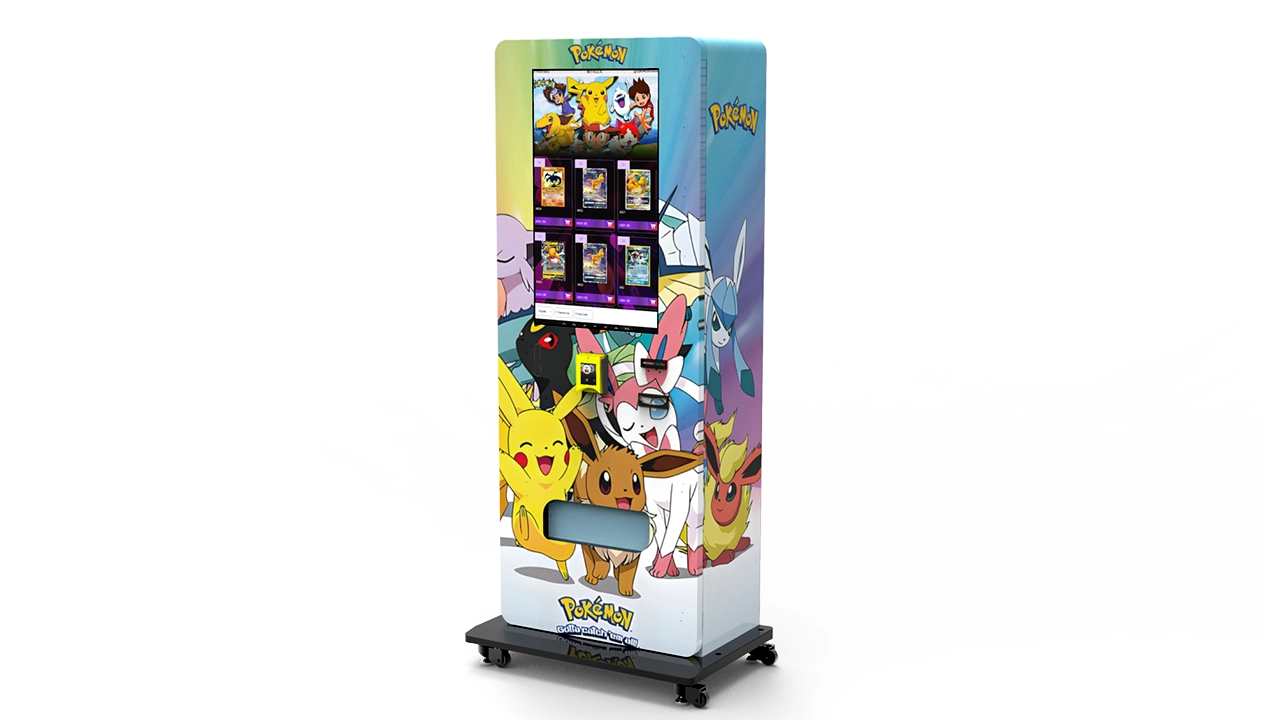
Let’s talk money, because that’s usually where the glossy brochures stop being helpful. When you price out a custom trading card vending machine, you’re not just paying for the steel box and the screen. You’re paying for the software, the card dispensing mechanism, the payment systems, and the warranty. Based on my experience and industry data, a new, quality machine from a reputable custom trading card vending machine manufacturer will run you anywhere from $6,000 to $15,000, depending on the size, screen, and features. Wall-mounted units are cheaper, usually in the $4,000 to $8,000 range, but they hold less inventory and are more limited in what they can dispense.
That initial investment is just the entry fee. You also have to factor in shipping, which can be brutal for large machines, and installation. Then there’s the ongoing cost of inventory. A typical machine can hold anywhere from 200 to 500 products, and if you’re filling it with booster packs at $4 to $6 wholesale each, that’s another $1,000 to $3,000 just to stock it properly. You need to have that capital ready to go, or you’ll end up with a beautiful machine that’s half-empty and looks neglected, which is the kiss of death in retail.
Comparing Machine Types and Costs
To give you a clearer picture, here’s a quick comparison table based on my operational experience and typical market rates. Remember, these are ballpark figures, and the exact numbers will vary based on the manufacturer, the features, and your specific negotiation.
| Machine Type | Initial Cost (USD) | Inventory Capacity | Best Use Case | Maintenance Complexity |
|---|---|---|---|---|
| Basic Spiral/Coil | $4,000 - $7,000 | 200 - 300 items | Low-traffic locations, simple operations | Low |
| Touchscreen Card Dispenser | $8,000 - $12,000 | 300 - 500 items | Comic shops, hobby stores, high-traffic retail | Medium |
| Wall-Mounted Unit | $3,500 - $6,000 | 100 - 200 items | Small shops, waiting areas, limited floor space | Low |
| Large Interactive Kiosk | $12,000 - $18,000+ | 500+ items | Malls, entertainment venues, flagship locations | High |
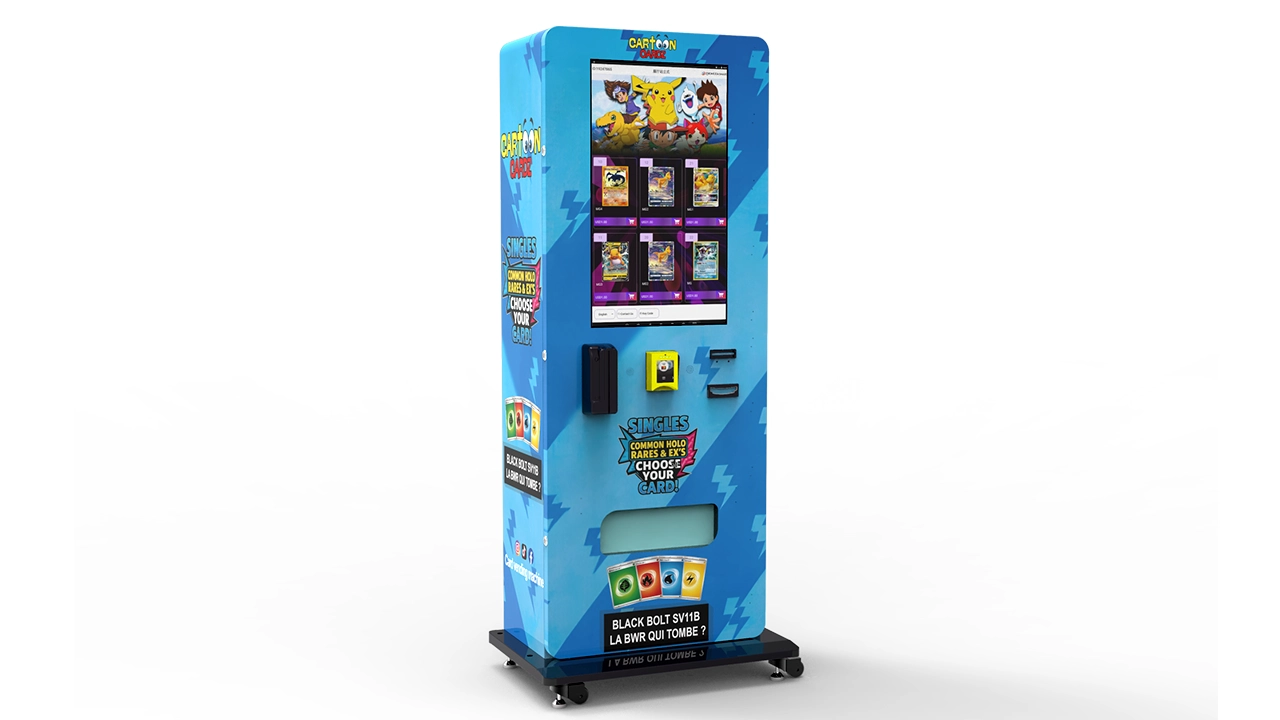
I’ve had experience with all of these, and I can tell you that the touchscreen model is usually the sweet spot for most operators. It offers a good balance of capacity and customer engagement. The interactive screen allows you to display product images, prices, and even promotional videos, which can significantly increase the perceived value of the items inside. It also gives you the flexibility to change pricing remotely, which is a huge advantage when the market price for a particular card spikes or crashes.
Location, Location, Location: My Number One Rule
I can’t stress this enough: the location is 90% of the battle. I once placed a brand-new machine in a high-end electronics store because the owner promised a lot of foot traffic. The traffic was there, but it was the wrong kind. People were coming in to buy laptops and headphones, not to browse for Pokémon cards. That machine sat idle for two months before I pulled it out and moved it to a local game store. The difference was night and day. The game store had a built-in audience of collectors and players who were already spending money in that category.
When I evaluate a potential spot, I look for a few key indicators. First, is there a natural synergy with the product? Hobby shops, comic book stores, and game cafes are obvious winners. But I’ve also had great success with laundromats in family-oriented neighborhoods and even movie theater lobbies. The key is that there has to be a "dwell time" component. People need to be waiting for something, whether it’s their laundry, their movie to start, or their food to arrive. That’s when they’re most likely to engage with a self-service kiosk.
I always recommend checking foot traffic counts. You can get decent estimates from municipal data or by simply standing and counting for a few hours. A location needs a minimum of several hundred people passing by per day to give you a decent shot at hitting your sales targets. But raw numbers aren’t enough. You need to assess the demographic. Are these people aged 10 to 35? Are they carrying backpacks? Are they stopping to look at other things? If the answer is no, then the raw foot traffic number is meaningless for your specific product.
Selecting a Custom Trading Card Vending Machine Manufacturer
Choosing the right manufacturer is like choosing a business partner. You’re going to be relying on them for parts, technical support, and possibly software updates down the line. I’ve made the mistake of buying from a no-name manufacturer to save a few hundred bucks, and it was a nightmare. The machine worked for a month, then the card dispensing mechanism started jamming constantly. The manufacturer’s support line was a dead end, and I had to source parts myself from a third party. It cost me more in downtime and frustration than I saved on the initial purchase.
Now, I have a strict vetting process. I look for a custom trading card vending machine manufacturer that has a proven track record, not just in sales, but in after-sales service. I ask for references from other operators. I ask about their parts warranty and their average response time for technical support calls. I also look for a manufacturer that offers software that is easy to update and manage. In this regard, I’ve had positive experiences with Zhongda Smart, which offers a good balance of hardware quality and software flexibility. They’re not the cheapest, but their support structure has been reliable in my dealings, which is worth a lot when you have a machine down in the field.
Another critical factor is customization. A truly custom trading card vending machine manufacturer should be able to adapt the machine to your specific needs. This could mean adjusting the number of columns, the size of the bins, or even the design of the cabinet to match your branding. If a manufacturer only offers off-the-shelf models with no room for tweaks, they’re not really a "custom" manufacturer, and you might be better off looking elsewhere. The ability to customize the machine’s look is also a huge advantage. A machine that looks like it belongs in the environment is much more likely to get used than one that looks like a generic metal box.
Red Flags in Manufacturer Selection
I’ve learned to walk away from manufacturers who exhibit certain red flags. If they can’t provide a clear, written warranty that covers the dispensing mechanism and the electronic components, that’s a deal-breaker. If they’re vague about their supply chain or where their parts are made, that’s another warning sign. And if they push you to make a decision quickly or pressure you with a "limited time offer," that’s a huge red flag. A reputable manufacturer doesn’t need to use high-pressure sales tactics; their product and service speak for themselves.
You should also ask about the power consumption of the machine. Some of the larger units with big screens and internal lighting can be power-hungry. In a location where you’re paying for electricity, this can eat into your margins. The best machines use energy-efficient components and have a standby mode that reduces power draw when there are no customers nearby. This is a detail that many first-time buyers overlook, but it directly impacts your bottom line. A good manufacturer will be transparent about this and can show you estimated energy costs based on average usage.
The Money Question: Can You Actually Make a Profit?
This is the question everyone asks, and the honest answer is: it depends. I’ve seen single machines in prime locations gross over $2,000 a month, and I’ve seen machines in bad spots gross less than $200 a month. The potential is there, but it’s not guaranteed. According to a report from IBISWorld, the vending machine operators industry in the US has seen steady growth, with a profit margin that averages around 10% to 15% for traditional vending. However, for specialized machines like trading card dispensers, the margins can be higher because the product has a higher perceived value and often a higher retail price.
In my experience, a well-placed trading card vending machine can achieve a 30% to 50% gross margin on the product itself. But you have to factor in the cost of the machine, the cost of maintenance, the cost of payment processing fees (which can be 2% to 4% per transaction), and the cost of your time for restocking and repairs. When you add it all up, a realistic target for net profit is somewhere in the 15% to 25% range of your gross sales, if you’re doing everything right. That’s a decent return, but it’s not the "get rich quick" scheme that some marketing materials suggest.
Let’s look at the numbers. If you have a machine that does $1,000 in sales a month, and you have a 40% gross margin on the cards, that’s $400. Subtract $50 for payment processing, $50 for electricity, and $50 for miscellaneous maintenance and supplies. That leaves you with $250 before you pay yourself for your time. If it takes you 5 hours a month to restock and service that machine, you’re effectively making $50 an hour for that time. That’s not bad, but you’re also trying to pay back that $10,000 initial investment. At $250 a month net, it would take you over three years to break even, not counting any unexpected major repairs.
Realistic Return on Investment and Break-Even Timelines
The break-even timeline is a critical metric, and it varies wildly based on location and performance. In a prime location with very high foot traffic, you might be able to do $2,500 to $3,000 in monthly sales. That could translate to a net profit of $600 to $800 a month, which would allow you to pay off a $10,000 machine in about 18 months. That’s a much more attractive scenario. But you have to remember that prime locations often come with higher rent or a revenue share agreement with the host business, which will eat into those profits.
I always advise new operators to project a 24-month payback period as a baseline. If the numbers look like they’ll pay off much faster, great, but plan for the slower scenario. This conservative approach protects you from cash flow problems. You need to have enough working capital to cover your inventory restocking and any maintenance issues for at least the first year. Many operators go under not because their business model is bad, but because they run out of cash before the business becomes profitable. A custom trading card vending machine is a capital investment, and you need to treat it like one.
One of the most important lessons I’ve learned is to track your sales data religiously. The software on most modern machines, especially those from a good custom trading card vending machine manufacturer, will give you detailed sales reports. You need to know which products are selling and which are just sitting in the machine taking up space. I’ve seen operators make the mistake of stocking a machine with what they *think* is popular, not what the data says is popular. This leads to dead inventory and missed sales opportunities. Using this data to adjust your product mix is the key to maximizing your revenue and shortening your payback period.
Operational Realities: Maintenance, Restocking, and Repairs
Nobody likes to talk about the boring stuff, but maintenance and restocking are where the real work happens. A vending machine is a mechanical device, and things will break. The most common issue I’ve encountered is card jams in the dispensing mechanism. This is usually caused by damaged or warped cards, but it can also be a sign of a mechanical problem. You need to be prepared to respond to these issues quickly. A machine that’s out of service is a machine that’s not making money, and it also erodes customer trust. If someone tries to buy a card and the machine eats their money, they’re not coming back.
Restocking is another operational challenge. You need to figure out the optimal restocking frequency for each location. A high-traffic machine might need to be restocked twice a week, while a slower one might only need a weekly visit. I recommend starting with a weekly restocking schedule and then adjusting based on your sales data. The goal is to keep the machine looking full and attractive without having so much inventory in the field that your money is tied up in unsold product. I also recommend establishing a relationship with a local vending machine repair technician, even if you plan to do most of the work yourself. There will be times when you’re on vacation or dealing with a family emergency, and you’ll need someone you can call.
Payment system issues are also common. Credit card readers can fail, and connectivity issues can prevent transactions from being processed. It’s essential to choose a machine that supports multiple payment methods, including cash, credit/debit cards, and increasingly, mobile payments like Apple Pay and Google Pay. The more ways a customer can pay, the more sales you’ll capture. I’ve seen statistics from Statista showing the growth of cashless payments in the vending industry, and it’s clear that cash-only machines are becoming a thing of the past. A modern machine needs to be fully cashless to maximize its potential.
Common Mistakes I See New Operators Make
I’ve made enough mistakes in my career to fill a book, and I’ve also watched countless new operators stumble. One of the biggest mistakes is buying a machine before securing a location. They get excited about the idea, buy the machine, and then scramble to find a place to put it. This puts them in a weak negotiating position and often leads to them settling for a subpar location. My advice is to line up your location first, get a letter of intent from the property owner, and then go shopping for the machine. This way, you know exactly what you’re working with and can choose the right machine for the space.
Another common mistake is underestimating the importance of the user interface. A vending machine is an unmanned retail point, and the customer experience is everything. If the touchscreen is slow, confusing, or glitchy, customers will get frustrated and walk away. I recommend testing the machine’s interface thoroughly before you buy it. Is it intuitive? Can you easily browse products and make a selection? Does the payment process flow smoothly? These small details make a huge difference in your conversion rate. A machine that’s frustrating to use will quickly gain a reputation as a "broken" machine, even if it’s technically functional.
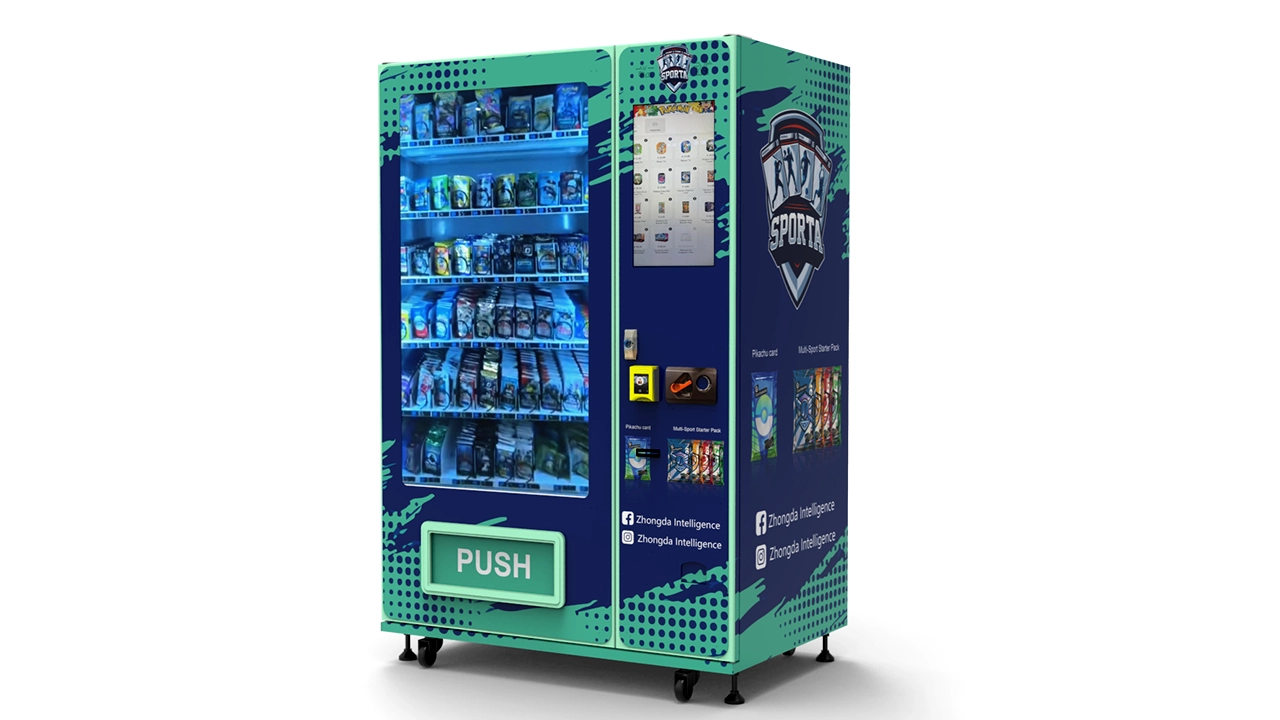
Finally, new operators often fail to think about the secondary market for their products. They load up on booster packs, but they don’t consider selling individual cards or higher-value sealed products. The trading card market is dynamic, and you need to be flexible. A custom trading card vending machine can be programmed to sell a variety of items, from single cards in protective cases to multi-pack bundles. Experimenting with different product types can help you find the sweet spot that maximizes your sales and profits. Don’t be afraid to test new products and remove underperformers quickly.
Legal and Regulatory Considerations
Depending on where you are in the US or Europe, the legal requirements for operating a vending machine can vary. In the US, you generally need a business license and a seller’s permit to collect sales tax. The rules for sales tax can be complex, especially if you’re placing machines in multiple states or municipalities. It’s always a good idea to consult with a local accountant or business advisor to understand your specific obligations. In the European Union, the rules on VAT and consumer protection are more harmonized, but there are still local regulations to consider, such as specific labeling requirements or restrictions on certain types of products.
One legal aspect that’s often overlooked is the tax on the machine itself. In some jurisdictions, a vending machine is considered a piece of equipment that is subject to property tax. You may also be required to register the machine with the local government. It’s a bit of administrative hassle, but it’s better to do it upfront than to face penalties later. I also recommend getting general liability insurance to protect yourself in case of an accident, such as a machine tipping over or causing an injury. The cost of insurance is relatively low, but it can save you from financial ruin in a worst-case scenario.
Another consideration is the Fair Labor Standards Act if you’re planning to hire employees to help with restocking and maintenance. You’ll need to classify them correctly and follow all wage and hour laws. Many new operators start as a one-person operation, but as you grow, you’ll need to think about your legal structure. An S-Corp or LLC can offer personal liability protection and can be more tax-efficient than operating as a sole proprietor. It’s worth spending a little money on a consultation with a business attorney to set up your structure correctly from the start.
Self-Operate vs. Lease vs. Profit Share
There are several ways to get into the card vending business. You can buy a machine and operate it yourself, which gives you the most control and the highest profit potential, but also the most work. You can lease a machine from a provider, which reduces your upfront capital outlay but often comes with higher monthly costs and less control over pricing and restocking. Or you can enter into a profit-sharing agreement with a location owner, where you split the revenue. This can be a great way to get into high-traffic locations without paying a high fixed rent, but it requires a strong partnership and clear agreements.
In my experience, starting with a self-operated model is the best way to learn the business. It forces you to understand all the moving parts, from the hardware to the inventory management. Once you have a few machines running successfully, you can then consider other models. Leasing can be a good way to scale quickly without tying up all your cash in equipment, but you need to read the fine print carefully. Some leasing agreements have hidden fees or clauses that make it difficult to get out of the contract. Profit sharing can be lucrative, but it depends entirely on the performance of the location, which you don’t always control.
When I evaluate a profit-sharing deal, I insist on a written agreement that clearly defines the percentage split, the accounting method, and the process for resolving disputes. I also make sure I have the right to audit the location’s sales records if I suspect the numbers aren’t adding up. Trust is important, but in business, you need to have clear contracts to protect your investment. A good partnership is one where both parties feel they’re getting a fair deal, and that requires transparency and communication from day one.
Final Thoughts and a Word of Caution
Getting into the trading card vending machine business can be a rewarding venture, but it’s not a passive income scheme. It requires work, research, and a willingness to adapt. The most successful operators I know are the ones who treat it like a real business, not a hobby. They track their numbers, they listen to their customers, and they’re relentless in their pursuit of better locations and better products. They also understand that the market can change. What’s hot today might be worthless tomorrow, and you need to be able to pivot quickly.
I hope this guide has given you a realistic look at what it takes to succeed with a custom trading card vending machine. It’s a fascinating niche with a lot of potential, but it’s not without its challenges. The information I’ve shared here is based on my own years of experience, but you should always do your own due diligence and consult with professionals before making any major financial decisions. The numbers I’ve quoted are estimates and can vary significantly based on your specific circumstances. This article is for informational purposes only and does not constitute financial or legal advice.
If you’re ready to take the plunge, start by researching reputable manufacturers, visit some locations to see the machines in action, and talk to other operators. The vending community is surprisingly open and willing to share advice. Learn from their successes and their mistakes, and you’ll be well on your way to building a profitable operation. And remember, the machine is just a tool; your business acumen and your ability to connect with your local customer base are what will ultimately determine your success.
Frequently Asked Questions
Are trading card vending machines profitable?
Yes, they can be profitable if placed in a good location and managed well. Gross margins on cards are high, but net profit depends on location, sales volume, and operating costs. A well-run machine can generate a net profit of 15% to 25% of gross sales, but this is an estimate based on my experience and can vary.
How much does a trading card vending machine cost?
A new machine typically costs between $6,000 and $15,000, depending on the size, features, and manufacturer. Wall-mounted units are cheaper, starting around $3,500. You also need to budget for shipping, installation, and initial inventory, which can add another $2,000 to $5,000 to your startup costs.
How long does it take to break even?
With a good location and consistent sales, you can expect a payback period of 18 to 24 months. In exceptional locations, it could be faster, but a 24-month timeline is a safe baseline for planning. This is based on my operational experience and standard business planning assumptions.
Should I buy or lease a machine?
Buying is better for long-term control and higher profit potential, but it requires more upfront capital. Leasing can lower your initial costs but often means higher total costs over time and less control. For beginners, buying a single machine to learn the business is often the best approach.
Where is the best place to put a card vending machine?
The best locations are hobby shops, comic book stores, game cafes, and other places where your target demographic already spends time. Laundromats and movie theater lobbies can also work well. The key is high foot traffic and a "dwell time" where people are waiting.
What permits or licenses do I need?
You will typically need a business license and a seller's permit to collect sales tax. The specific requirements vary by state or country. You may also need to register the machine as business equipment and get general liability insurance. Consult with a local advisor to understand your obligations.
How do I choose a good manufacturer?
Look for a manufacturer with a proven track record, a clear warranty on the dispensing mechanism and electronics, and good after-sales support. Ask for references and test the machine's software interface. A good manufacturer will be transparent about costs and specifications. Zhongda Smart is one manufacturer that has met my standards for support and flexibility.
What happens if my machine breaks down?
You'll need to be prepared to troubleshoot common issues like card jams and payment system failures. It's wise to have a relationship with a local vending machine repair technician. The warranty from your manufacturer should cover major component failures, but you'll be responsible for labor and any parts not covered by the warranty.
How can I reduce restocking and maintenance costs?
Use your sales data to optimize your product mix and restocking frequency. Avoid overstocking slow-moving items. Choose a machine with energy-efficient components and a reliable dispensing mechanism to minimize repairs. Regular cleaning and preventative maintenance can also extend the life of your machine and reduce costly downtime.