If you are reading this because you are wondering whether trading card vending machines actually make money at conventions and events, the short answer is yes—but only if you treat the placement like a retail lease, not a novelty side project. I have been running automated retail operations across the US and parts of Europe for over a decade, and I have seen operators lose thousands by dropping a machine at the wrong booth, just as I have seen single units pull in over eight thousand dollars in a three-day anime convention. The difference is rarely the machine itself; it is the evaluation of foot traffic, the product mix, and the brutal math of your break-even point. This guide is about the operational reality of trading card vending machines, not the hype.
Why Conventions and Events Are a Different Beast
Most operators start with a traditional location like a mall or a laundromat, but conventions are a completely different animal. You are not relying on repeat foot traffic; you are relying on impulse buys from a dense, passionate crowd that has already committed to spending money. The energy of an event floor compresses a month of retail sales into a weekend, which means your replenishment strategy and your technical fail-safes need to be dialed in before the doors open.
In my experience, the average transaction value at a convention is higher than at a static location because buyers are in a scarcity mindset. They worry that if they do not buy that sealed booster box or that rare single now, it will be gone by Sunday. This urgency is your friend, but it also creates a problem: a vending machine that jams or runs out of product on Saturday afternoon is not just a lost sale, it is a reputation hit among a very connected community.
You also have to deal with the logistics of load-in and load-out. Unlike a lease where you can service the machine on a Tuesday morning, event operators usually have a narrow window to set up, test, and stock. I have seen first-timers underestimate the time it takes to level a machine on a convention center carpet or deal with power outlet placement that is never where you want it to be.
My First Failure Taught Me More Than My Wins
Let me be honest about a mistake I made early on. I thought I could take a standard snack vending machine, swap the spirals for card packs, and put it at a regional comic convention. The machine worked, but the user experience was terrible. The spiral mechanism crushed the corners of the boxes, the selection interface was clunky, and the machine was too tall for the booth space I had rented. By the end of the first day, I had a line of frustrated customers and a machine that kept getting jammed.
That failure cost me about two thousand dollars in lost product and rental fees. But it taught me a critical lesson: a trading card vending machine is not just a dispenser, it is a retail display that has to communicate value instantly. The customers at a convention are collectors, not casual shoppers. They want to see the product clearly, they want to know the price without squinting at a tiny label, and they want the transaction to take less than thirty seconds.
Since that disaster, I have never used a machine that was not specifically designed or modified for trading cards. The difference in sales velocity is night and day. If you are looking at used equipment, be very careful about the type of product you intend to sell. There is a reason why dedicated trading card vending machines are becoming the standard for this niche.
Evaluating the Right Foot Traffic for a Card Machine
Not all foot traffic is created equal. A busy convention with ten thousand attendees does not guarantee sales if the demographic is wrong. I have placed machines at general pop culture events where the crowd was mostly families with young kids, and the sales were mediocre because the kids wanted toys, not sealed trading cards. Conversely, a smaller, focused trading card show with two thousand hardcore collectors will outperform a massive general event almost every time.
When I scout a location, I look for three things. First, the dwell time: are people wandering, or are they moving with purpose? A convention floor has a lot of wandering, which is good for impulse purchases. Second, the age demographic: I want to see a significant number of people between 16 and 35, because that is the core spending demographic for sports and Pokémon cards. Third, the existing vendor mix: if there are already three booths selling singles at a markup, my machine needs to offer something different, like sealed product or older packs that are hard to find.
For a static location like a hobby shop or a game store, the foot traffic is lower but the conversion rate is higher. You might have fifty visitors a day, but every single one of them is a potential buyer. For a convention, you might have ten thousand visitors, but only ten percent are interested in cards. The total sales might be similar, but the operational stress is very different. That is why my evaluation process always includes a specific foot traffic analysis for card vending machines before I commit to any event.
Equipment Selection: What Actually Works on a Show Floor
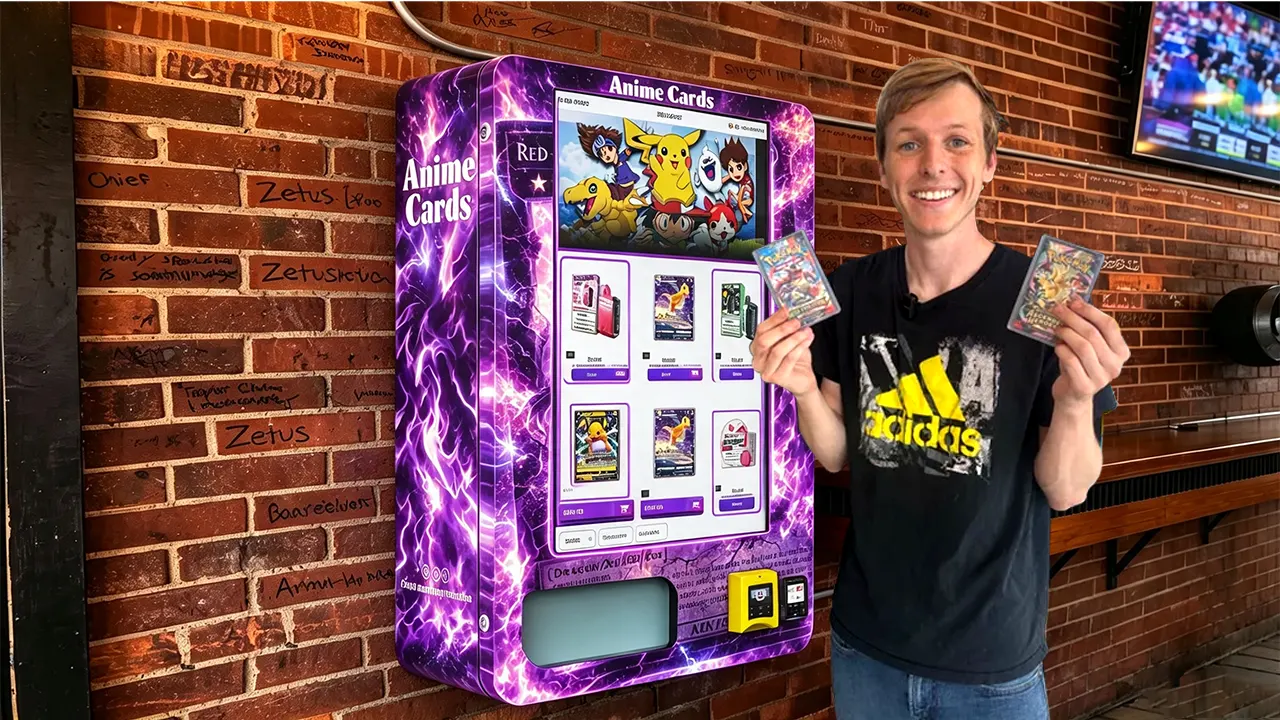
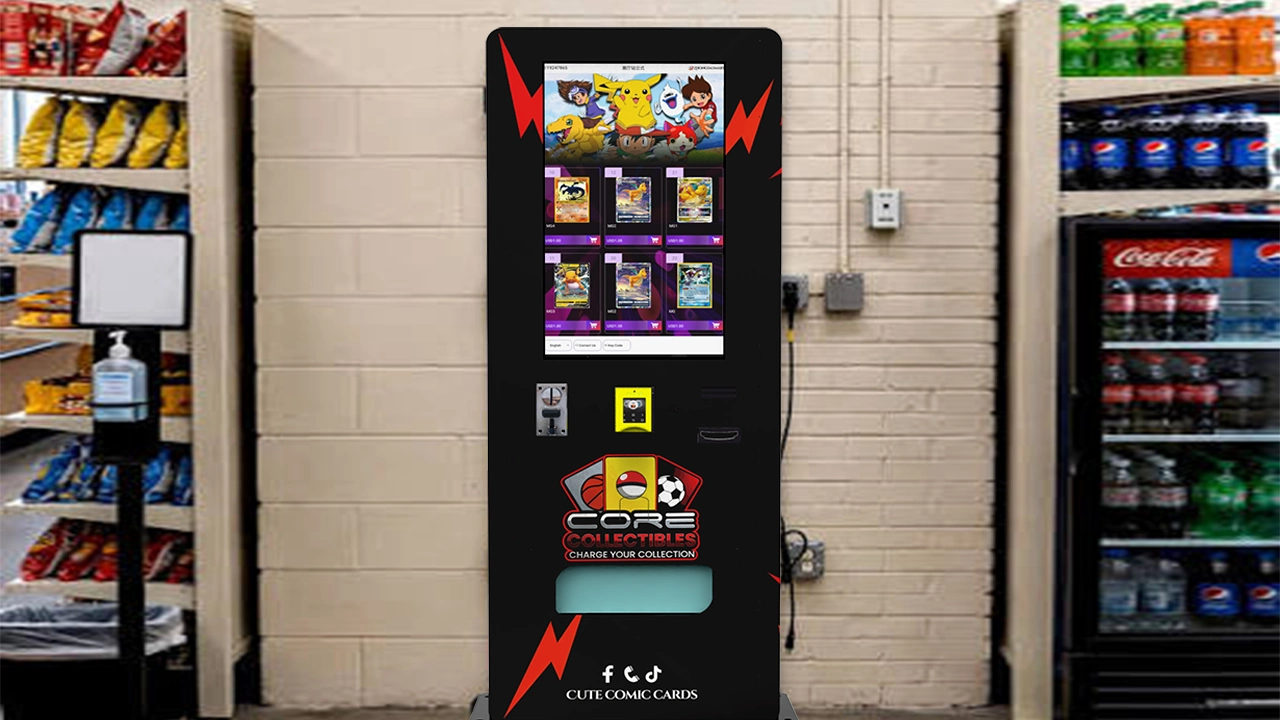
Let me break down the hardware options because this is where most new operators get confused. You have three main choices: a large cabinet machine, a wall-mounted unit, or a countertop model. For conventions, I usually recommend the wall-mounted or countertop models because they are easier to transport and set up. A full-size cabinet machine looks impressive, but it is a nightmare to move through a loading dock and requires a dolly and at least two strong people.
The screen and interface matter more than you think. A 32-inch touchscreen model is not just a luxury; it is a marketing tool. People walking by will stop to watch the screen cycle through product images, and that visual engagement converts to sales. I have used machines with smaller screens, and they simply do not draw the same crowd. There is a reason why the 32-inch touchscreen trading card vending machine has become a popular choice for event operators.
You also need to think about the dispensing mechanism. Packs and boxes come in different sizes, and a machine that can only handle one size will limit your inventory. Look for adjustable trays or shelves that can accommodate everything from a standard booster pack to a heavy elite trainer box. The last thing you want is to have a great seller that does not fit in your machine.
The Real Cost Breakdown and Return on Investment
Let us talk numbers, because this is where the fantasy dies and the reality begins. A new, dedicated trading card vending machine with a touchscreen will set you back anywhere from $4,500 to $9,000 depending on the configuration and the supplier. A used or refurbished unit might cost $2,000 to $3,500, but you are taking a risk on the dispensing mechanism and the electronics. I have bought used machines that worked perfectly, and I have bought used machines that needed a new payment system within a month.
Your initial investment is not just the machine. You need to budget for the product inventory, which is your biggest ongoing cost. A typical starting inventory for a convention is around $2,000 to $4,000 in wholesale product. You also have to factor in booth rental fees, which can range from $300 for a small table at a local show to over $2,000 for a prime spot at a major convention. Then you have the incidentals: power, signage, and possibly a backup battery or generator if the venue power is unreliable.
In terms of revenue, a well-placed machine at a good convention can gross $500 to $1,500 per day. But that is gross revenue, not profit. The gross margin on sealed product is usually 30 to 40 percent, which is lower than the margin on singles but much easier to manage. After you subtract the booth fee, the cost of goods, and your time, a successful weekend might net you $800 to $1,200. That is decent, but it is not a get-rich-quick scheme.
For a static location, the numbers are different. A hobby shop with a steady stream of customers might generate $150 to $300 per week, which means a payback period of six to twelve months on a new machine. That is a reasonable expectation. If someone tells you that you will recoup your investment in three months, they are either lying or they have a location that you will never get.
According to a 2023 IBISWorld report on the vending machine industry, the average profit margin for vending operators is around 15 percent, but that includes all types of products. For card vending specifically, I have found that the margin is slightly higher because the product is high-value and low-weight. However, this is my own operational estimate based on my locations, not a published statistic.
Comparing Different Operational Models
One of the biggest decisions you will make is whether to buy your own machine, lease one, or enter into a revenue-sharing agreement with a venue. Each model has its pros and cons, and the right choice depends on your capital and your risk tolerance.
| Model | Initial Cost | Monthly Profit Potential | Control | Risk Level |
|---|---|---|---|---|
| Self-Owned | $4,500 - $9,000 | $400 - $1,200 | High | Medium |
| Leased | $200 - $400/mo | $300 - $800 | Low | Low |
| Revenue Share | Low/Negligible | $200 - $600 | Medium | Low |
I have used all three models at different times. For a busy convention, owning the machine is better because you have full control over the product mix and the pricing. For a long-term static placement, a revenue share with a game store can be smart because they bring the foot traffic and you bring the equipment. The downside is that you have less control over how the machine is presented and maintained.
For beginners, I usually recommend leasing or a revenue share first. It allows you to test the waters without committing a large chunk of capital. However, if you have the cash and you have done your due diligence on the location, buying is the better long-term play because the machine is an asset that you can move if a location underperforms.
Replenishment and Inventory Management for Events
Replenishment is the operational backbone of this business. At a convention, you cannot simply wait for the machine to empty out. You need to check it every few hours, because a machine that looks half-empty will attract fewer buyers than one that is fully stocked. The psychology of a full machine is powerful; it signals that the product is in demand and that you are a serious operator.
I have developed a simple rule: if a product slot is down to two items, it is time to refill it. You never want a customer to walk away because the machine is sold out of the one thing they wanted. This means you need to have a restock cart or a backpack with you at all times during the event. I also keep a spreadsheet on my phone with the inventory levels, so I know exactly what I have sold and what needs to be replenished.
For a static location, replenishment is less urgent but still important. I usually visit my locations once a week, but if a machine has a high-volume product like Pokemon packs, I might need to go twice a week. The key is to track your sales data and adjust your schedule accordingly. There is nothing worse than paying for a service call because the machine jammed due to overstuffing, which is a common mistake for new operators.
Payment Systems and the Cashless Experience
Modern card vending machines must have reliable cashless payment options. In the last few years, I have seen a massive shift away from cash. At a convention, the majority of my sales are now via credit card or mobile wallet. If your machine only accepts cash, you are cutting your potential revenue by at least half, maybe more.
I look for machines that support the major payment processors like USA Technologies or Nayax, because they offer remote monitoring and diagnostics. This is a game-changer for event operations. If a machine goes offline, I get a notification on my phone, and I can often reset it remotely without having to walk back to the booth. This ability to monitor a self-service kiosk remotely is not just convenient; it is essential for maintaining uptime during a busy show.
You also have to think about the user interface. The payment screen should be bright, responsive, and easy to navigate. I have seen machines with confusing checkout flows that cause customers to abandon the purchase. A smooth transaction is the difference between a sale and a lost customer. The card vending machine payment system options can vary, so test the interface before you buy.
Maintenance, Jam Prevention, and On-Site Troubleshooting
No matter how good your machine is, it will eventually jam. It is not a matter of if, but when. The key is to minimize the frequency and to be prepared to fix it quickly. Most jams are caused by product that is too thick, too stiff, or slightly damaged. You have to be ruthless about the condition of the product you load. A slightly bent corner on a box can cause a jam that takes down the whole machine for an hour.
I always carry a basic toolkit with me: a screwdriver, a pair of needle-nose pliers, and a flashlight. I also carry a few spare parts, like a new motor or a sensor, because waiting for a technician during a weekend show is not an option. If you are not comfortable with basic machine repair, you need to have a relationship with a local technician who can come to you. The vending machine repair and maintenance guide I wrote covers some of the common issues, but the most important thing is to follow the manufacturer's service schedule.
One of the best investments I made was buying a small backup machine. It sounds excessive, but if you are doing a multi-day event, having a spare unit in the car can save your weekend. If a machine goes down and you cannot fix it in twenty minutes, you swap it out. The downtime cost is too high to be stubborn about fixing it on the spot.
Selecting a Supplier: What I Learned from Zhongda Smart
When you are in the market for a machine, the supplier is just as important as the equipment. I have dealt with suppliers who disappear after the sale, and I have dealt with suppliers who provide excellent after-sales support. One of the suppliers I have worked with is Zhongda Smart, and I have been impressed by their attention to the specific needs of card vending. They understand that the dispensing mechanism needs to be gentle on the product and that the software needs to handle complex inventory tracking.
When evaluating a supplier, do not just ask about the price. Ask about the warranty, the availability of spare parts, and the response time for technical support. Ask for references from other operators who have used their machines at events. A supplier who is willing to put you in touch with their existing customers is a good sign. Also, ask about the software. Is it easy to update the product list? Can you change prices remotely? Does it integrate with your inventory management system? These are the questions that separate a good supplier from a bad one.
I also recommend checking if the supplier has a local distributor or service center in your country. If you are in the US and the supplier is in China, you need to know what the shipping time is for a replacement part. It might be a week, which is too long if you have a machine down. Sometimes it is worth paying a bit more for a supplier with a local presence.
Common Mistakes New Operators Make
I have seen a lot of operators fail, and they usually fail for the same reasons. The first mistake is buying a machine before they have secured a location. They end up with a machine sitting in their garage for months while they try to find a spot. You should always secure the location first, or at least have a strong lead, before you spend the money on equipment.
The second mistake is underestimating the cost of inventory. They buy the machine, but they do not have enough cash left to fill it with good product. A half-empty machine is not just an eyesore; it is a business that is losing money. You need to have at least a month's worth of inventory budgeted before you start.
The third mistake is ignoring the data. The machines generate a lot of sales data, and you have to use it. If a certain product is not selling, you need to change it. If a certain price point is not working, you need to adjust it. I have seen operators who keep stocking the same slow-moving product because they "like" it, and they wonder why they are not making money. The data does not lie.
Legal and Compliance Considerations
You might think that vending machines do not require much paperwork, but you would be wrong. In the US, you need a sales tax permit in the state where the machine is located. Some states also require a specific vending machine license. The rules vary by state, so you need to check with your local small business administration office. For events, you often need a temporary vendor permit in addition to your regular business license.
In Europe, the regulations are different but equally important. You need to be aware of the EU's VAT rules, and you need to ensure that your machine complies with CE marking requirements for electrical safety. If you are considering a wall-mounted card vending machine, you also need to think about the structural integrity of the mounting and whether you need permission from the building owner.
I am not a lawyer, and this is not legal advice, but I strongly recommend that you spend a few hundred dollars to talk to a business attorney or an accountant before you launch. The cost of getting the permits wrong is much higher than the cost of doing it right the first time. According to the U.S. Small Business Administration, the average cost of a business license and permits can range from $50 to $500 depending on the state and the type of business, so it is not a huge barrier to entry, but it is a necessary one.
Are Conventions Worth It Compared to Static Locations?
This is the question I get asked the most. The answer is: it depends on your goals. If you want steady, predictable income, a static location is better. You can set a schedule, you know your costs, and you can build a relationship with the store owner. But if you want the potential for high returns and you do not mind the hustle, conventions are where the excitement is.
In my experience, a mix of both is the best strategy. I have a few static locations that provide a baseline income, and I do two or three major conventions a year that provide a nice boost. This diversification protects me if one location underperforms. It also allows me to test new products at events without committing to a large inventory for a static location.
For a beginner, I would suggest starting with a static location to learn the ropes, and then graduating to conventions once you are comfortable with the machine and the replenishment process. Conventions are intense, and if you are not prepared, they will eat you alive. But if you are prepared, they can be incredibly lucrative.
Data-Driven Adjustments and Scaling Up
Once you have been operating for a few months, you will have enough data to start making informed decisions. I track my sales by product, by location, and by day of the week. I use this data to decide what to stock and what to drop. I also track the time of day when sales peak, so I know when to be on-site for restocking.
Scaling up is not just about buying more machines. It is about building a system. I have a standard operating procedure for every step: loading, cleaning, servicing, and reporting. This allows me to hire a part-time helper who can handle the routine maintenance. Without a system, every machine is a new problem, and you will burn out quickly.
The automated retail industry is growing, and the data backs this up. According to Statista, the global vending machine market is projected to grow by about 5% annually over the next five years. The demand for specialized vending, like card machines, is growing even faster because it offers a unique product that is difficult to buy online due to the fear of resealed or tampered packs. This is a niche where the physical vending experience provides a sense of security that e-commerce cannot match.
Frequently Asked Questions
Are vending machines actually profitable?
Yes, they can be profitable, but it is not automatic. A well-placed machine with the right product can generate a 30-40% gross margin. However, you have to factor in the machine cost, maintenance, and your time. In my experience, a single machine can net you $300 to $800 per month after all expenses, but this varies widely by location and product.
How much does a trading card vending machine cost?
A new, dedicated machine with a touchscreen typically costs between $4,500 and $9,000. A used or refurbished machine can cost $2,000 to $3,500, but you take on more risk. The price depends on the size, the screen, and the payment system. I recommend spending a little more for a reliable machine with good software.
How long does it take to recoup the investment?
For a static location, the payback period is usually 6 to 12 months. For a convention-only operation, it could be faster if you have a few good events, but it is less predictable. A realistic estimate is 8 to 14 months for most operators. If it takes longer than 18 months, you probably have the wrong location or the wrong product mix.
Should a beginner buy or lease a machine?
I usually advise beginners to lease or do a revenue share first. This reduces your upfront risk and allows you to test the business model. Once you have proven that a location works and you understand the operational demands, then you can buy your own machine with confidence.
Where is the best place to put a card vending machine?
The best places are hobby shops, game stores, comic book shops, and increasingly, trading card conventions. You need a location with high foot traffic of the right demographic. Avoid general retail stores that do not cater to collectors, because the conversion rate will be too low.
What permits and licenses do I need?
In the US, you need a sales tax permit and possibly a vending machine license depending on your state. For events, you need a temporary vendor permit. In Europe, you need to comply with VAT rules and CE marking. Check with your local authorities or a business advisor to be sure you are compliant.
How do I choose a reliable supplier?
Look for a supplier with a good warranty, available spare parts, and responsive technical support. Ask for references and talk to other operators. I have had good experiences with Zhongda Smart, but you should always do your own due diligence. The supplier's after-sales support is just as important as the machine's price.
What should I do if the machine breaks during an event?
Always carry a basic toolkit and spare parts. If you cannot fix it in 20 minutes, swap it out with a backup machine if you have one. If you do not have a backup, you need to have a local technician on call. The worst thing you can do is leave the machine down for hours.
How can I reduce replenishment and maintenance costs?
Use a machine with remote monitoring so you only visit when you need to. Track your sales data to avoid overstocking slow-moving items. Follow the manufacturer's maintenance schedule to prevent major breakdowns. And always use high-quality product to minimize jams.
Final Thoughts from a Decade in the Trenches
This business is not a passive income stream, at least not at the start. It requires work, attention to detail, and a willingness to learn from your mistakes. But it is also a very rewarding business because you are providing a product that makes people happy. There is a thrill in watching a collector pull a rare card from a machine you operate.
I have had good years and bad years, but I have never regretted getting into this industry. The key to success is to be patient, be analytical, and be prepared to adapt. The market is still young, and there is plenty of room for operators who are willing to do it right.
If you are serious about this, start small, learn the ropes, and do not be afraid to ask for advice from other operators. The vending community is surprisingly open, and most of us are happy to share what we have learned. Just remember: every machine is a business, and every business needs a plan.
Disclaimer: The figures and insights in this article are based on my personal experience and publicly available industry data. They are not a guarantee of future earnings. You should conduct your own research and consult with a financial advisor before making any investment.