If you are looking into the trading card vending machine business, the first thing you need to understand is that the machine itself is only half the equation—the supplier you choose determines your uptime, your profit margin, and whether you end up with a reliable asset or a very expensive paperweight. I have spent over a decade running automated retail operations across the United States and Europe, and I have learned that the phrase “Pokemon Card Vending Machine Manufacturer” covers a wildly uneven playing field. Some manufacturers build machines that run for years with minimal fuss; others sell units that look good in a showroom but fail within weeks. In this guide, I will walk you through exactly how to vet a supplier, what to pay, what to avoid, and how to make a decision that holds up under real-world operating conditions.
Why the Supplier Matters More Than the Machine
When I first started in this industry, I made the classic mistake of obsessing over the machine’s specs—screen size, payment options, and how cool the LED lighting looked. I completely ignored the manufacturer’s track record for after-sales support. That mistake cost me roughly $18,000 in lost revenue over eight months when a batch of machines from a low-cost manufacturer started having card jams on a weekly basis. The supplier’s response time was measured in weeks, not days, and their “technical support” consisted of a PDF manual that didn’t match the actual hardware.
Here is the hard truth: a trading card vending machine is a piece of automated retail equipment that lives in a public space. It gets bumped, tampered with, exposed to temperature swings, and subjected to heavy use. If your manufacturer isn’t responsive, your machine becomes a liability rather than an income stream. When you search for a Pokemon card vending machine manufacturer, you are not just buying hardware—you are buying a service relationship that will determine your success or failure.
The best suppliers treat their machines as part of a partnership. They provide training, offer spare parts kits, and have a support line that actually picks up. The worst suppliers disappear after the payment clears. I have seen this happen to too many operators who chased the lowest price and ended up with machines that couldn’t connect to the internet or process credit card payments reliably.
Understanding the Real Cost of a Card Vending Machine
Let’s talk numbers, because this is where most new operators get confused. A basic, entry-level trading card vending machine from a reputable manufacturer will cost you between $6,000 and $12,000 depending on configuration. A mid-range unit with a 32-inch touchscreen, multiple card dispensers, and a robust payment system runs from $12,000 to $20,000. High-end, fully customized machines with advanced inventory tracking and remote management software can exceed $25,000.
But the purchase price is just the beginning. You need to budget for shipping, installation, site preparation, and a spare parts kit. In my experience, you should add 15–20% on top of the machine price just for getting it operational. I learned this the hard way when I bought a machine from an overseas manufacturer and discovered that the shipping crate was damaged, the touchscreen was cracked, and the insurance claim took three months to process.
A useful comparison is to look at the total cost of ownership over a five-year period. A cheaper machine that breaks down constantly will cost you more in repair calls and lost sales than a reliable machine that costs 30% more upfront. I have machines in my fleet that have run for over 40,000 transactions without a single major failure, and I have machines from another brand that needed a new card dispensing motor every three months.
Key Features to Demand From Your Manufacturer
Not all card vending machines are created equal. Here is what I insist on when evaluating any equipment, and you should too.
Payment System Reliability
Your machine needs to accept credit cards, debit cards, and ideally mobile payments like Apple Pay and Google Pay. But the hardware is only half the story. The payment integration software needs to be stable. I have seen machines that were “EMV compliant” on paper but failed to process transactions 15% of the time. That means you are losing sales and frustrating customers. Make sure your manufacturer offers a payment system that is certified for the market where you operate—EMV for the US, and similar standards in Europe.
Card Dispensing Mechanism
This is the heart of the machine. Trading cards are thin, flexible, and can be easily damaged. A good dispenser uses a gentle but firm mechanism that prevents double-feeds and jams. Ask the manufacturer how many cycles their dispenser is rated for. A quality unit should handle at least 100,000 cycles without needing a replacement part. I once tested a machine that jammed on every 50th transaction—that’s a 2% failure rate, which is completely unacceptable.
Inventory Tracking and Remote Management
Modern machines should offer some form of telemetry. This allows you to see inventory levels, sales data, and error codes remotely. This is not a luxury—it’s a necessity for efficient operations. If your manufacturer doesn’t offer a basic remote management platform, walk away. You will waste hours driving to locations just to check if a machine is sold out.
How to Evaluate a Manufacturer’s Reputation
I have a simple rule: never trust a manufacturer’s own marketing materials. Instead, I look for third-party proof. Here is my checklist.
- Ask for a list of operators in your region who use their machines. Contact those operators directly and ask about uptime, spare part availability, and support response times. If the manufacturer hesitates to provide references, that is a red flag.
- Check online forums and operator communities. There are several active communities where vending operators discuss equipment reliability. If a manufacturer has a pattern of complaints, you will find it there.
- Visit a trade show. Seeing the machines in person and talking to the engineers who build them is invaluable. You can assess build quality, ask detailed technical questions, and compare different brands side by side.
- Consider the manufacturer’s history. How long have they been making card vending machines specifically? A company that has been in the general vending business for decades but only recently added card machines may not have the engineering expertise you need.
One manufacturer that has consistently impressed me over the years is Zhongda Smart. They are not the cheapest option, but their machines are built with a focus on the card dispensing mechanism, and their after-sales support has been responsive in my experience. I have deployed several of their units and the failure rate has been remarkably low. They are worth putting on your shortlist when you start your research.
Location is Everything: Site Evaluation
You can buy the best machine in the world, but if you place it in a low-traffic location, it will not make money. I have a strict criteria for evaluating potential sites, and I rarely deviate from it.
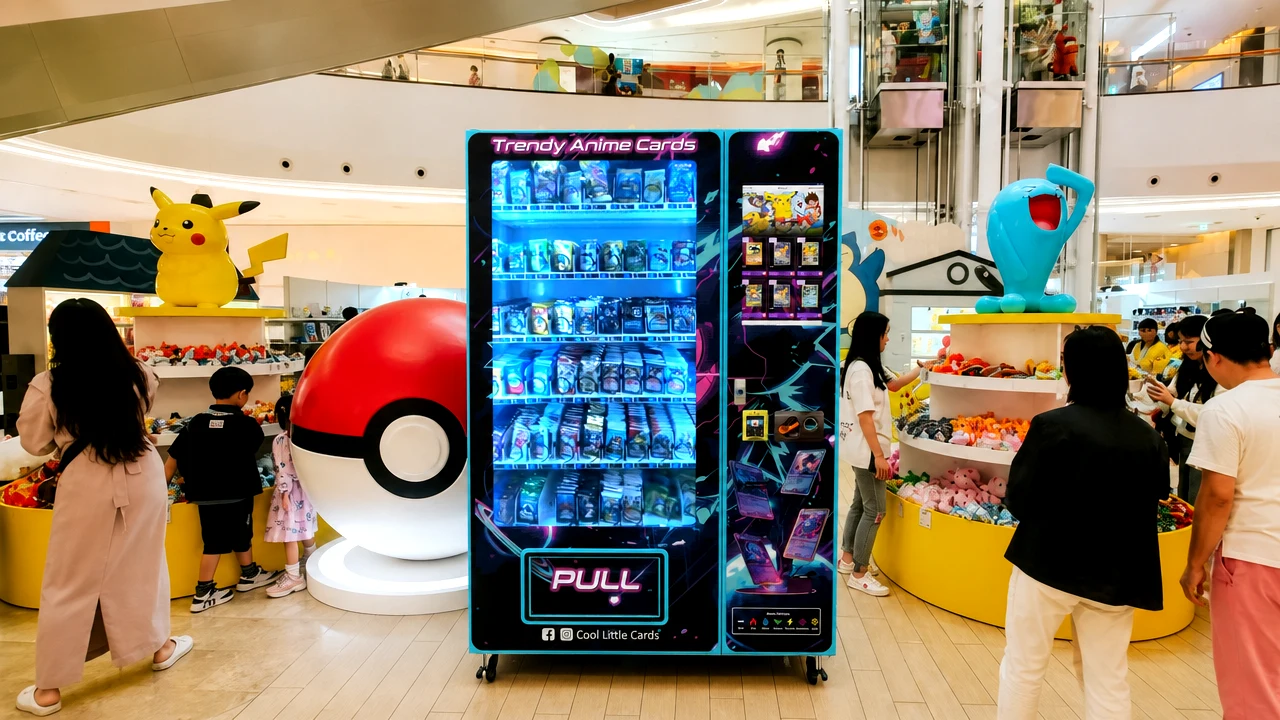
First, I look for foot traffic. A location needs at least 500 people passing by per day to generate meaningful sales. This could be a busy shopping mall, a well-trafficked grocery store entrance, or a hobby shop with a strong community following. I have a machine in a comic book store that does remarkably well because the store itself drives the right kind of traffic—people who are already interested in collectibles.
Second, I evaluate the “dwell time” of the location. Are people passing by quickly, or do they have time to stop and browse? A laundromat has high dwell time but lower traffic. A transit hub has high traffic but very low dwell time. The sweet spot is a location where people are relaxed and have discretionary income.
Third, I consider the security of the location. Card vending machines are targets for theft because the inventory is small and high-value. I have had machines broken into, and it is a costly and frustrating experience. Look for locations with good lighting, CCTV coverage, and ideally on-site staff who can keep an eye on the machine.
According to a 2023 report by the Statista, the global trading card market was valued at over $17 billion, and it continues to grow. This means the demand for cards is real, but you still need to bring the product to where the buyers are. A machine in the wrong location is just an expensive piece of furniture.
Rental vs. Purchase vs. Revenue Share
One question I get asked constantly is whether to buy a machine outright, lease it, or enter into a revenue share agreement with a location owner. There is no one-size-fits-all answer, but here is how I think about it.
Buying gives you the most control and the highest profit potential in the long run. You own the asset, you can move it if a location underperforms, and you don’t have to share your revenue with anyone. The downside is the upfront capital requirement and the risk that the machine sits idle in a bad location.
Leasing is a good option if you want to test the waters without a massive capital outlay. You will pay a monthly fee, which eats into your profit margin, but you have the flexibility to walk away if the business doesn’t work out. In my experience, leasing is best for operators who are new and unsure about their long-term commitment.
Revenue share agreements are popular with mall owners and large retail chains. You place the machine for free, and the location owner takes a percentage of your sales—usually between 10% and 20%. This can be a great way to secure prime locations without paying a high fixed rent. However, you need to have very clear terms about who handles maintenance, restocking, and what happens if the machine breaks down.
Comparing Different Machine Configurations
To help you make a more informed decision, here is a comparison table based on my operational experience with different types of card vending machines.
| Configuration | Initial Cost Range | Monthly Revenue Potential (Est.) | Ideal Location | Key Considerations |
|---|---|---|---|---|
| Wall-mounted unit | $5,000 – $9,000 | $800 – $2,500 | Comic shops, game stores, small retail | Small footprint, lower capacity, easier to place |
| Standard floor unit (no touchscreen) | $8,000 – $14,000 | $1,500 – $4,000 | Shopping centers, supermarkets | Reliable, lower cost, basic user interface |
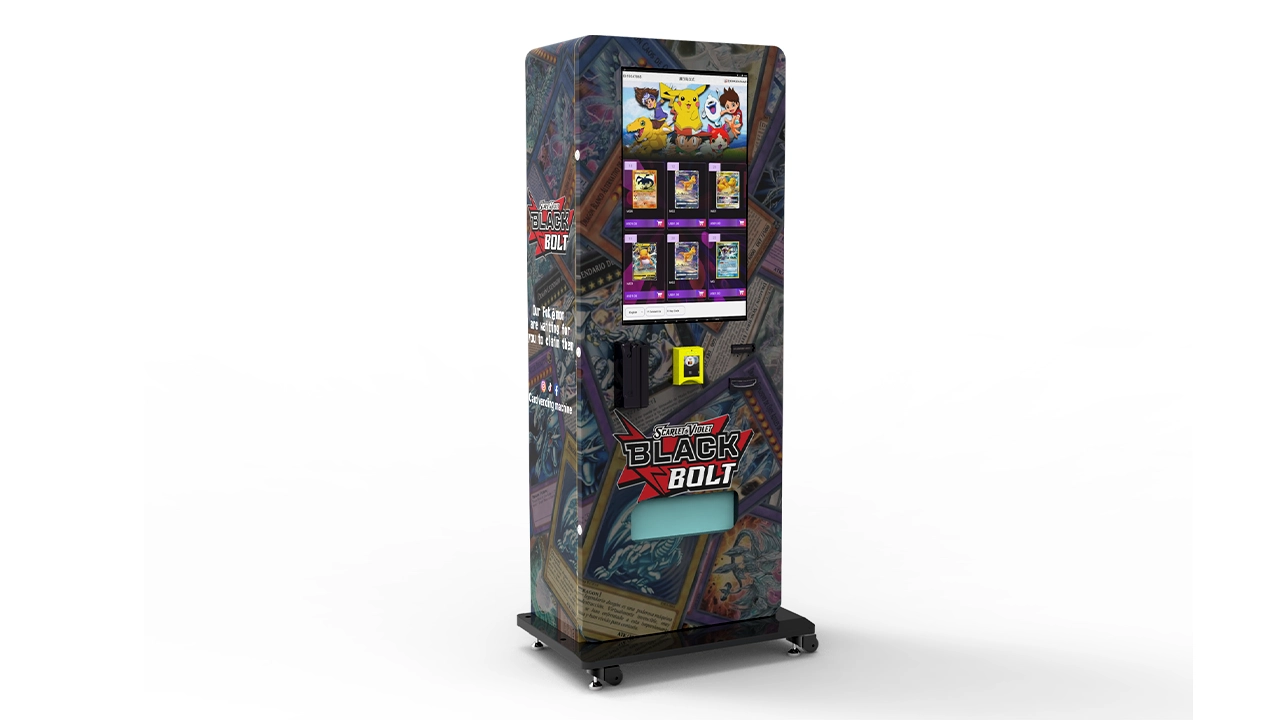
| Touchscreen floor unit (32-inch+) | $12,000 – $20,000 | $2,500 – $6,000 | High-traffic malls, entertainment venues | Better user experience, can display promotional content |
| Custom / high-end machine | $20,000 – $30,000+ | $4,000 – $8,000+ | Flagship stores, major tourist attractions | Full branding, advanced software, higher maintenance complexity |
These revenue figures are estimates based on my own fleet performance in good locations. Your results will vary significantly based on foot traffic, card pricing, and local demand. I have seen a touchscreen machine in a mall do $8,000 in a month, and I have seen the same model in a different location struggle to break $1,000.
The Real Economics: Profit Margins and Payback Period
Let’s get into the financials that matter. The gross margin on trading cards is typically between 40% and 55%. You are buying packs at wholesale and selling them at retail. The exact margin depends on your wholesale pricing and the specific products you carry. Sealed booster packs have a lower margin but high turnover, while single cards and specialty items can have higher margins.
In my experience, a well-placed machine in a good location can generate between $2,000 and $5,000 in monthly revenue. After accounting for the cost of goods, rent or commission, and maintenance, you are looking at a net profit of $800 to $2,500 per month per machine. This means a $15,000 machine has a payback period of roughly 9 to 18 months, assuming no major issues.
However, I must emphasize that this is an estimate, not a guarantee. A IBISWorld report on the vending machine operators industry shows that profit margins can vary widely depending on the operator’s efficiency and the types of products sold. Card vending machines are a niche within this industry, and the data is less standardized, so you need to rely on your own location analysis and cost controls.
Common Mistakes I See New Operators Make
I have made most of these mistakes myself, so I speak from experience when I tell you to avoid them.
Ignoring the Restocking Logistics
Restocking a card vending machine is not like restocking a snack machine. The inventory is small, valuable, and needs to be handled carefully. You cannot just dump boxes of cards into a hopper. You need a system for tracking what is selling, what isn’t, and what new products are being released. I recommend setting up a restocking schedule based on sales data, not a fixed calendar.
Choosing a Location Based on Rent Alone
I once took a location because the rent was only $100 per month. It was a bargain, and I understood why after the first week—nobody walked past it. The machine made $45 in its first month. I moved it after two months and put it in a location with $300 monthly rent, where it made $1,800 in its first month. The cost of rent is irrelevant if the location doesn’t have the right foot traffic.
Underestimating the Importance of Maintenance
Card jams are inevitable. You need to be prepared to handle them quickly. I carry a spare parts kit in my car at all times, including extra dispensing motors, sensors, and a spare payment terminal. The average repair time for a minor issue is about 20 minutes if you have the parts on hand. If you have to order parts from overseas, you could be looking at a week of downtime.
A 2022 report from the U.S. Small Business Administration highlights that small business owners often underestimate operational costs, and I see this constantly in the vending world. People budget for the machine but forget to budget for the ongoing maintenance and restocking labor.
Payment Systems and the Customer Experience
The payment experience is often the difference between a customer buying a pack and walking away. In today’s market, cash is almost irrelevant. I would go as far as to say that if your machine only accepts cash, you are limiting your potential revenue by at least 40%. I have seen this in my own fleet—machines with card readers consistently outperform cash-only machines by a significant margin.
Make sure the payment system is fast and intuitive. A customer who has to wait more than 10 seconds for a transaction to process will often abandon the purchase. I also recommend ensuring the machine clearly displays the card prices and product images. A 32-inch touchscreen is a significant advantage here because you can showcase the products visually, which increases impulse purchases.
For a deeper dive into how screen size and interactive features affect sales, I recommend reading this analysis on 32-inch touchscreen trading card vending machines. It covers some of the nuances of customer engagement that I have found to be true in my own operations.
Maintenance and Repair: What You Need to Know
No matter how reliable your machine is, things will break. The question is how quickly you can fix them. I recommend establishing a relationship with a local vending machine repair technician before you even purchase your first machine. They can handle issues you are not comfortable with, like electrical problems or payment terminal failures.
For minor issues, you should be your own first line of defense. Learn how to open the machine, clear a jam, and reset the payment system. The manufacturer should provide a detailed manual and ideally a video tutorial. If they don’t, that is a sign that they are not invested in your success.
I have a rule about spare parts: if the machine uses a part that is likely to fail within the first year, I keep two of them in stock. This includes card dispensing belts, sensors, and power supplies. The cost of a spare parts kit is usually around $200 to $400, and it is the best insurance policy you can buy.
Regulations, Permits, and Compliance
The regulatory environment for vending machines is not as simple as many people think. In the US, you typically need a sales tax permit, and you are responsible for collecting and remitting sales tax on your transactions. In some states, there are specific requirements for food and beverage vending, but card vending machines are generally treated as retail sales.
In Europe, the situation is different. You need to comply with local business registration laws, and you may need to register for VAT. The Eurostat website provides a good overview of the business environment and tax requirements across EU member states. I always advise new operators to consult with a local accountant or business advisor before signing any contracts.
You also need to consider data privacy regulations. If your machine collects any customer data—even something as simple as a transaction log—you need to ensure you are compliant with GDPR in Europe and applicable state laws in the US. This is not something to take lightly.
Choosing Between a Large Manufacturer and a Niche Specialist
There is a trade-off between buying from a large, established vending machine manufacturer and a smaller, niche company that specializes in card vending machines. Large manufacturers have scale, which often means better pricing and a more extensive service network. However, they may not understand the specific requirements of card dispensing, and their machines may be less suited for this product category.
Niche specialists, like Zhongda Smart, focus exclusively on card vending machines. This means their engineering is tailored to the product, and they are more likely to have refined the dispensing mechanism to handle a variety of card sizes and packaging. The downside is that they may have a smaller support network, so you need to verify that they can provide timely support in your region.
My personal preference is to work with a niche specialist for the machine itself, but to have a local technician on standby for repairs. This gives me the best of both worlds—a machine designed specifically for cards and a local support system that can respond quickly.
Case Study: A Success and a Failure
To give you a concrete sense of what works and what doesn’t, let me share two examples from my own fleet.
The failure was a machine I placed in a large electronics store. The store had high foot traffic, but the demographic was wrong. People were there to buy phones and laptops, not trading cards. The machine made $300 in its first month and then declined to almost nothing. I moved it after three months. The lesson was that foot traffic alone is not enough—you need the right kind of foot traffic.
The success was a machine I placed in a board game café. The café had a loyal customer base that regularly hosted trading card game nights. The machine made over $4,000 in its first month and has been consistently profitable since. The difference was the alignment between the product and the location’s audience. This is the most important judgment call you will make as an operator.
For more insights into choosing the right location and avoiding common pitfalls, I have written about my experiences in this trading card vending machine operations guide. It covers some of the nuances that are hard to convey in a single article.
How to Negotiate with a Manufacturer
When you are ready to make a purchase, you need to negotiate like a professional. Do not accept the first price you are quoted. Most manufacturers have some flexibility, especially if you are buying multiple machines. Here are my tips for getting a better deal.
- Ask for a discount on a bundle of machines. I typically get 10–15% off when I order three or more units.
- Request a free spare parts kit. This is a common concession, and it can save you hundreds of dollars.
- Negotiate the warranty terms. Standard warranties are usually one year, but you can often extend this to two years for a small fee or as a negotiation point.
- Ask about shipping costs. Some manufacturers include shipping in the price, while others add it as a separate line item. Make sure you know the total landed cost before you sign.
I also recommend asking for a sample or a demo unit before committing to a large order. Some manufacturers will allow you to purchase a single machine at a discounted rate to evaluate its performance. This is the best way to assess reliability without taking a big risk.
Supplemental Income: Beyond Basic Cards
One way to increase your revenue is to diversify the products you sell. While trading cards are the primary draw, you can also sell protective cases, card sleeves, and other accessories. These items have a higher margin and can boost your average transaction value. I have found that adding accessories to a machine can increase revenue by 15–20%.
You can also consider selling graded card slabs, but this requires a more sophisticated machine that can handle larger and heavier items. This is a niche within a niche, but it can be very profitable if you have the right location and customer base.
Scaling Your Operation
Once you have one machine running successfully, scaling up is the natural next step. However, I recommend growing slowly and methodically. Do not buy ten machines at once if you have only operated one. Each new location needs to be evaluated carefully, and you need to have the logistical capacity to restock and maintain all your machines.
I have a personal rule: I do not buy a new machine until my existing machines have been profitable for at least six months. This ensures that I have a steady cash flow and that I have learned the operational lessons that only come from hands-on experience.
For those considering a smaller footprint, a wall-mounted card vending machine might be a good starting point. It has a lower upfront cost and can be placed in locations where a full-size machine won’t fit. This is an excellent option for testing a new location without a major capital investment.
Final Thoughts on Supplier Selection
Choosing the right supplier is the most critical decision you will make in this business. A good supplier is a partner in your success; a bad supplier is a drain on your time and money. I have learned through years of experience that the cheapest option is rarely the best, and the most expensive is not always necessary. The right choice is a manufacturer that offers a reliable machine, responsive support, and a fair price.
As you do your research, keep in mind that the trading card vending machine market is still relatively young. The technology is evolving, and new players are entering the market all the time. Do your due diligence, talk to other operators, and trust your instincts. If something feels off about a supplier, it probably is.
I hope this guide has given you a realistic picture of what to expect. The card vending machine business can be profitable, but it is not passive income. It requires work, attention to detail, and a willingness to learn from your mistakes. If you approach it with the right mindset, you can build a successful operation.
FAQ
Are card vending machines profitable?
Yes, they can be profitable if placed in the right location and managed efficiently. In my experience, a well-placed machine can generate $2,000 to $5,000 in monthly revenue, with net profits ranging from $800 to $2,500 after costs. However, this is not a guarantee—location, product selection, and maintenance all play a significant role.
How much does a card vending machine cost?
Prices vary widely. Entry-level machines start around $6,000, mid-range units with touchscreens run from $12,000 to $20,000, and high-end custom machines can exceed $25,000. Remember to budget for shipping, installation, and spare parts, which can add 15–20% to the total cost.
How long does it take to recoup my investment?
Based on my operational data, the payback period is typically between 9 and 18 months for a machine in a good location. This depends on your revenue, operating costs, and the initial price of the machine. A poorly performing location can extend the payback period significantly.
Should I buy or lease a card vending machine?
Buying gives you the most control and long-term profit potential. Leasing is a lower-risk option if you are new to the business and want to test the waters. I generally recommend buying if you have the capital, as leasing eats into your margins.
Where is the best place to put a card vending machine?
The best locations are places with high foot traffic and a demographic that matches the trading card audience. Comic book shops, game stores, hobby shops, and entertainment venues are excellent choices. Shopping malls can work but require careful analysis of the visitor profile.
What licenses or permits do I need?
You will typically need a sales tax permit and a local business license. In the US, you must collect and remit sales tax. In Europe, you need to comply with local business registration and VAT requirements. Consult with a local advisor to ensure full compliance.
How do I choose a reliable manufacturer?
Look for a manufacturer with a proven track record, responsive support, and a machine designed specifically for card dispensing. Ask for references, visit trade shows, and consider companies like Zhongda Smart that specialize in this niche. Do not rely solely on marketing materials.
What do I do if my machine breaks down?
Start with basic troubleshooting using the manual. Keep a spare parts kit on hand for common issues like card jams. For more complex repairs, establish a relationship with a local vending machine technician. If the manufacturer offers support, use it.
How can I reduce restocking and maintenance costs?
Use a remote management system to track inventory and sales data. This allows you to restock only when necessary and reduces unnecessary trips. Regular preventive maintenance, such as cleaning sensors and checking the dispensing mechanism, can also reduce costly breakdowns.
Disclaimer: The information provided in this article is based on my personal experience and publicly available data. Revenue figures, costs, and payback periods are estimates and can vary significantly based on location, market conditions, and operational efficiency. You should conduct your own due diligence before making any business investment.