If you’ve been watching the surge in trading card values and wondering whether a Pokemon card vending machine business is actually worth the capital, the short answer is yes—but only if you treat it like a retail operation, not a hobby. I’ve spent over a decade placing automated retail units across the U.S., and the card machine niche is one of the few categories where a well-placed unit can gross $1,500 to $4,000 per month with margins north of 40%. But I’ve also seen operators lose their shirts by buying the wrong equipment, ignoring foot traffic data, or stocking the wrong product mix. This guide walks you through the real costs, realistic timelines, and the operational details I’ve learned from both wins and costly mistakes in the trading card vending machine space.
Why Trading Card Machines Are a Different Beast
Most vending machines sell consumables—snacks, drinks, even electronics. A card machine sells collectibles, which means your inventory behaves more like a retail shelf than a snack dispenser. You’re dealing with sealed product, chase cards, and a customer base that checks prices on their phones before they buy. That changes everything about how you stock, price, and maintain the unit.
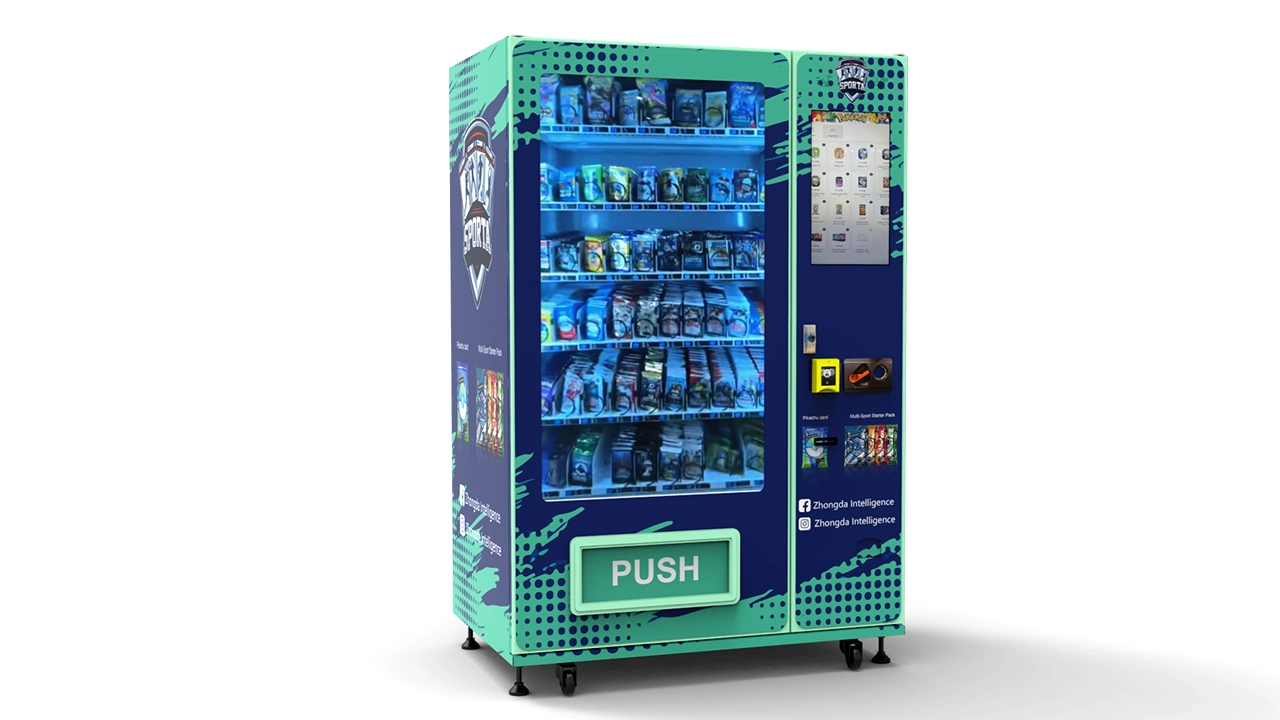
In my experience, the biggest difference is the transaction size. A typical snack sale is under $3, but a card pack sale runs $5 to $30, and sometimes you’ll sell a single sealed booster box for $150 or more. That means fewer transactions to hit the same revenue, which lowers your restocking frequency—but it also means you need to be much more careful about theft, card condition, and product rotation.
Another major difference is the emotional component. Collectors don’t buy because they’re hungry; they buy because they’re chasing a pull. That makes the machine's screen, the lighting, and the way you display the product matter more than it does for a soda vending machine. A dull, poorly lit machine will underperform even in a busy location.
I’ve also noticed that card machines attract a younger crowd—teens and young adults—who are comfortable with touchscreens and digital payments. If your machine only accepts coins and bills, you’re cutting off a significant portion of your potential buyers. I’ll get into payment systems later, but trust me, this is a non-negotiable in 2025.
Finally, the secondary market for cards is volatile. A set that’s hot this month might be discounted next month. You need to stay on top of release schedules, chase card values, and community sentiment—or you’ll end up with dead inventory that you paid retail for and can only offload at wholesale. That’s a lesson I learned the hard way in my second year, and I’ll share that story shortly.
What a Pokemon Card Vending Machine Actually Costs
The initial investment for a card vending machine business is not uniform. You can spend anywhere from $4,000 to $20,000 per unit, depending on whether you buy new or used, the screen size, the security features, and whether the machine is designed specifically for trading cards or adapted from a general-purpose vending machine.
From my experience, a purpose-built card machine with a 32-inch touchscreen, card dispensing mechanism, and LED lighting will run you between $8,000 and $15,000 new. I’ve seen cheaper units in the $4,000 to $6,000 range, but they tend to have smaller capacities, flimsier dispensing mechanisms, and less reliable card ejectors. If you’re planning to sell sealed product like booster packs, the dispensing mechanism is the most critical part—a jammed card pack will kill your revenue for the day and frustrate customers.
You also need to budget for shipping, installation, and setup. Shipping a full-size card machine across the country can cost $300 to $800 depending on the freight carrier. Installation is usually straightforward—most units just need a standard 110V outlet—but you might need a licensed electrician if the location doesn’t have a dedicated circuit.
Then there’s the inventory. Initial stocking for a card machine typically runs $2,000 to $5,000, depending on how many SKUs you want to carry and whether you’re buying booster packs, blisters, or sealed boxes. I recommend starting with a mix of low, mid, and high-priced items to test what your location responds to. Don’t dump all your capital into one product line.
If you’re looking at a trading card vending machine as a turnkey solution, understand that the upfront cost is just the beginning. You’ll also need a payment processing setup, which might add $200 to $500 for a card reader and cashless payment system if it’s not built in. Some machines come with integrated payment systems; others require you to purchase a separate reader.
Finally, don’t forget the cost of a credit card merchant account. Card vending machines are considered higher-risk by some processors, so you might pay a slightly higher transaction fee—around 2.7% to 3.5% plus a small per-transaction fee. That’s an ongoing cost you need to factor into your margin calculations.
My First Machine: A Costly Lesson
I want to share a failure story because it shaped how I evaluate every machine and location since. In my second year of operating automated retail, I bought a refurbished general-purpose vending machine and modified it to dispense card packs. It was cheap—around $2,500—but it wasn’t designed for cards.
The dispensing mechanism was a spiral coil, which works fine for chips and candy but is terrible for card packs. The packs would occasionally get stuck, the coil would bend the corners, and customers would call me to complain about damaged product. I lost at least $1,200 in refunds and wasted product in the first three months. Worse, the machine’s display was a small digital screen that didn’t show card imagery well, so buyers had no idea what they were getting.
That machine ended up costing me more in lost sales and maintenance than if I had just spent the extra $5,000 on a purpose-built unit. I eventually sold it at a loss and replaced it with a dedicated card machine. The new unit paid for itself in about seven months at the same location—proof that the equipment choice matters more than the location in some cases.
The lesson I took away: don’t cut corners on the dispensing mechanism or the display. A card machine is a specialty device, and treating it like a modified snack vending machine is a recipe for trouble. I’ve seen operators with 32-inch touchscreen trading card vending machines outperform older units by 30% to 50% simply because the interactive display creates more engagement and trust.
Another mistake I made was stocking too many high-value items in that first machine. I put in a few $100+ sealed boxes, thinking they would drive revenue. But the machine wasn’t secure enough, and I had a break-in attempt within two months. No one got the product, but the machine was damaged, and I lost a week of sales. Since then, I’ve learned to keep the highest-ticket items in locked compartments or only in machines with reinforced security features.
Choosing the Right Equipment
When you’re evaluating card vending machines, the first thing to look at is the dispensing mechanism. There are basically three types: spiral coil, gravity-fed, and robotic arm. Spiral coil is the cheapest but least reliable for card packs. Gravity-fed works well for uniformly sized packs, but it can jam if the packs are slightly different thicknesses. Robotic arm systems are the most reliable but also the most expensive.
In my experience, the gravity-fed systems with a horizontal carousel work best for sealed booster packs. They’re simple, have fewer moving parts, and are easier to troubleshoot. I’ve had machines run for months without a single jam when the product is uniform. The downside is that they’re less flexible if you want to sell different-sized products like tins or boxes.
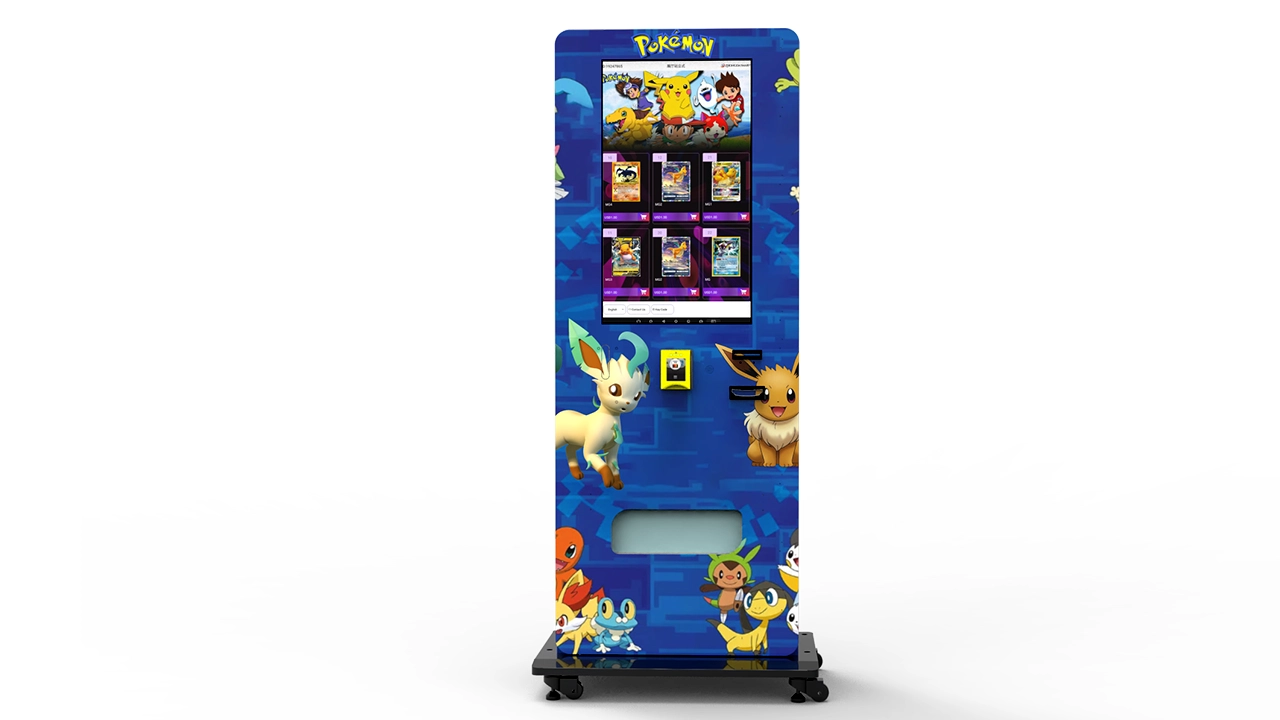
Screen size and interactivity are also critical. A larger touchscreen allows you to display card images, set prices dynamically, and even run promotional videos. I’ve found that machines with a 21-inch screen or larger generate more interest and higher sales per visit. A wall-mounted card vending machine with a smaller screen might work in a tight space, but it won’t have the same visual impact as a floor-standing unit.
Security is another factor that new operators often overlook. Card machines are targets for theft because the product is high-value and easily resold. Look for machines with reinforced doors, electronic locks, and tamper alarms. Some manufacturers offer a security cage or anchoring system, which I highly recommend for outdoor or semi-public locations.
When I evaluate a machine, I also check the payment system. It should accept credit cards, mobile payments like Apple Pay and Google Pay, and ideally cash for younger customers who might not have cards. A machine that only takes cash is a non-starter in most locations today. I’ve seen a 15% to 20% sales lift just by adding a cashless reader to an older machine.
One brand I’ve worked with on several deployments is Zhongda Smart. Their card vending machines are designed specifically for collectibles, with reliable dispensing mechanisms and interactive screens. I’m not saying they’re the only option, but when you’re vetting suppliers, look for manufacturers with a track record in the card niche, not just general vending machines. Ask for videos of the dispensing mechanism in action and request a sample test before you commit to a bulk order.
Location: The Make-or-Break Factor
I can’t stress this enough: a card machine in the wrong location will fail no matter how good the equipment or inventory is. The location determines your foot traffic, the demographic, and the likelihood of impulse purchases. In my experience, the best locations are hobby shops, comic book stores, gaming cafes, and even some convenience stores with a strong young male demographic.
I’ve also placed machines in shopping malls and entertainment centers. A mall location with high foot traffic can generate $3,000 to $5,000 per month, but the rent and commission can eat into your margins. I typically negotiate a 10% to 20% commission for high-traffic locations, which is standard in the vending industry. In lower-traffic locations like a small retail shop, you might get a flat monthly fee or no commission at all.
When evaluating a location, I look at three things: foot traffic, dwell time, and the existing customer base. Foot traffic is obvious—you need people walking by. Dwell time matters because a card machine is not a quick purchase; people browse, compare prices, and sometimes call a friend for advice. A location where people linger, like a game store or a food court, will naturally do better.
The customer base is the most nuanced factor. A card machine in a fitness center will probably fail because the demographic doesn’t overlap. But a machine in a university student lounge or a comic book shop has a natural audience. I once placed a unit in a laundromat thinking the dwell time would help, but the demographic was wrong—I was lucky to sell $300 per month. I moved it to a gaming cafe and tripled revenue within a month.
You should also consider the location’s hours. A machine inside a store that closes at 6 PM will only sell during those hours. A machine in a 24-hour convenience store or a hotel lobby can sell around the clock. I have a machine in a 24-hour truck stop that consistently does $2,000 per month, mostly because it’s always accessible.
For a deeper dive into location evaluation and foot traffic benchmarks, I’ve written about specific criteria in this trading card vending machine location guide, but the short version is: start with a location that already sells trading cards or has a strong collectible culture, then expand from there.
Comparing Business Models: Buy, Lease, or Revenue Share
One of the most common questions I get is whether to buy a machine outright, lease it, or enter a revenue-sharing agreement with a location. Each model has its pros and cons, and the right choice depends on your capital, your risk tolerance, and how much control you want over operations.
Buying a machine outright is the most straightforward. You own the asset, you keep all the revenue, and you have full control over pricing and inventory. The downside is the upfront cost and the risk if the location doesn’t perform. I’ve bought machines that paid for themselves in six months and others that took over a year. You need to be prepared for that variance.
Leasing is a lower-risk option if you can find a manufacturer or third-party finance company that offers it. You pay a monthly fee, often $150 to $300 for a card machine, and you can return the unit if it doesn’t work out. The downside is that you never build equity, and the lease payments eat into your margin. I’ve seen lease deals that look attractive on the surface but end up costing more than buying over a two-year period.
Revenue sharing with a location is common in the vending industry. You provide the machine and inventory, the location provides the space and electricity, and you split the revenue—usually 70/30 or 80/20 in your favor. This model reduces your upfront risk and can get you into premium locations that would otherwise charge a high rent. The downside is less control and a lower per-machine profit.
Here’s a simple comparison table based on my experience with card vending machines:
| Model | Upfront Cost | Monthly Profit Potential | Risk Level | Control Level |
|---|---|---|---|---|
| Buy Outright | $8,000 – $15,000 | $600 – $2,500 | Medium | Full |
| Lease | $0 – $500 deposit | $300 – $1,500 | Low | Partial |
| Revenue Share | $2,000 – $5,000 (inventory) | $400 – $1,800 | Low – Medium | Limited |
I’ve used all three models at different times. For a first-time operator, I usually recommend buying one machine outright if you have the capital, because it gives you the clearest picture of the economics. If you’re short on cash or want to test a location, a revenue-share agreement is a smart way to get started without overcommitting.
Inventory Management and Restocking
Inventory is where most new operators make mistakes. They either overstock a single set, understock popular items, or fail to rotate product based on sales data. I’ve learned that a card machine needs a balanced mix of products across price points and release dates.
At minimum, I stock three tiers: low-end packs under $5, mid-range boosters at $5 to $15, and high-end items like elite trainer boxes or sealed booster boxes at $30 to $150. The low-end items serve as entry points for casual buyers, while the high-end items attract serious collectors who are willing to spend more. You need both to maximize revenue.
Restocking frequency depends on your sales velocity. A busy machine in a hobby shop might need restocking every 3 to 4 days. A slower machine in a convenience store might only need attention once a week. I track sales data from the machine’s software and adjust my restocking schedule accordingly. I’ve seen operators restock too often, wasting time and gas, or not often enough, losing sales when the machine is empty.
One operational tip: always carry a small stock of the most popular items in your vehicle when you do your rounds. There’s nothing worse than arriving at a machine, finding it empty of the best-selling product, and having to make a second trip. I learned this after a particularly frustrating week where I drove 40 miles round-trip three times for one machine.
Another lesson is to track sell-through rates by SKU. If a product hasn’t sold in 30 days, it’s probably priced too high or not desirable in that location. I’ve had to discount slow movers by 20% to 30% just to clear inventory, which eats into profit. You’re better off starting with a conservative mix and expanding based on data.
For those interested in the operational side, there’s a useful breakdown of restocking and inventory management in this card vending machine restocking guide, but the core principle is simple: treat inventory like a living system, not a one-time purchase.
Maintenance, Repairs, and Downtime
No machine is immune to breakdowns. Card vending machines, with their moving parts and electronics, will require maintenance. The most common issues I’ve dealt with are card jams, payment system failures, and screen glitches. Downtime is your enemy—every hour the machine is out of service is lost revenue and a frustrated customer.
I recommend establishing a relationship with a vending machine repair technician in your area before you even buy a machine. You don’t want to be searching for a repair person when your machine is down. Most cities have technicians who specialize in automated retail equipment, and some manufacturers offer service contracts.
For minor issues, like a card jam, you can often fix it yourself with basic tools. I keep a small toolkit in my car—screwdrivers, pliers, a flashlight, and some cleaning supplies. The dispensing mechanism needs regular cleaning, especially if the location is dusty. I’ve seen machines go from trouble-free to constant jams simply because the sensors were coated with dust.
Payment system issues are trickier because they often require software updates or remote diagnostics. Many modern card machines have telemetry that allows remote monitoring and troubleshooting. I can check my machines’ status from my phone, which saves me a lot of unnecessary trips. If a machine reports a payment error, I can often reboot it remotely before driving out.
One piece of advice: don’t buy a machine without a warranty. Most new machines come with a 1-year parts and labor warranty, and I’ve found that the first year is when most issues surface. If you buy used, get it inspected by a technician before you put it on location. I’ve seen operators buy used machines that looked fine but had worn-out dispensing mechanisms that failed within weeks.
For a more detailed look at common failures and troubleshooting, you can check this card vending machine maintenance guide, but the key takeaway is to budget for maintenance—typically 5% to 10% of your gross revenue—and don’t ignore small issues before they become big ones.
Payment Systems and the Cashless Shift
The payment system is the customer’s gateway to your business. If it’s slow, confusing, or unreliable, you lose sales. In 2025, a card vending machine that only accepts cash is a dinosaur. I’ve seen a 20% to 30% increase in sales simply by adding a modern card reader that supports tap-to-pay and mobile wallets.
When choosing a payment system, look for one that supports multiple payment methods: credit and debit cards, mobile payments (Apple Pay, Google Pay), and ideally cash for younger buyers. Some payment systems also allow you to set dynamic pricing, run promotions, or offer loyalty discounts, which can be a differentiator.
I’ve also experimented with machines that use a QR code system where customers scan a code to pay and the machine dispenses the product. This works well for tech-savvy customers but can be a barrier for older buyers or those without smartphones. I recommend offering both a card reader and a QR code option to cover all bases.
Transaction fees are an ongoing cost. For a card machine, you can expect to pay 2.7% to 3.5% per transaction, plus a small flat fee. I’ve found that some processors specialize in vending and offer lower rates, so shop around. Over a year, the difference between 2.7% and 3.5% on $30,000 in sales is $240—not huge, but it adds up across multiple machines.
Another consideration is the speed of the payment system. Customers in a hurry don’t want to wait 30 seconds for a transaction to process. I’ve tested machines with older payment terminals that took 10 seconds to connect, and I noticed a higher rate of abandoned transactions. A modern, fast payment system is worth the investment.
The shift to cashless is part of the broader trend toward self-service kiosks and automated retail. A card machine with a good payment system is effectively a self-service kiosk for collectibles, and that’s where the industry is heading. If you’re planning to scale, prioritize machines with robust payment integration.
Realistic Revenue and Profit Expectations
Let’s talk numbers. I’ve seen card vending machines gross anywhere from $500 to $6,000 per month, but the median is probably around $1,200 to $2,500 per month for a well-placed, well-stocked machine. Your profit depends on your product margins, location costs, and operational efficiency.
On average, the gross margin on sealed trading card product is 30% to 50% if you buy at wholesale or distributor pricing. That means on $2,000 in monthly sales, you might clear $600 to $1,000 before location costs and maintenance. A good location with $3,000 in monthly sales could yield $1,200 to $1,500 in profit.
Your payback period is the key metric. If you spend $12,000 on a machine plus $3,000 on initial inventory, your total investment is around $15,000. At $1,000 per month in profit, you’re looking at 15 months to break even. At $1,500 per month, you’re at 10 months. I’ve seen both ends of that spectrum.
According to data from IBISWorld, the vending machine industry in the U.S. has an average profit margin of around 6% to 8% for traditional snack and beverage operators, but specialty machines like card dispensers can achieve higher margins due to lower spoilage and higher transaction values. That aligns with my experience—card machines are more profitable per square foot than traditional vending.
However, I always caution new operators against expecting the high end of the range. The market is still young, and not every location will perform. I recommend a conservative financial model: assume $1,000 to $1,500 per month in gross sales for the first three months, then adjust based on actual performance. If the machine does better, great—but don’t quit your day job based on optimistic projections.
Another data point: the U.S. Small Business Administration notes that the average vending machine business has a startup cost of $10,000 to $50,000, with annual revenue per machine varying widely by location and product type. Card machines fit within that range, but the variance is higher because of the collectible market’s volatility.
Common Mistakes and How to Avoid Them
I’ve made a lot of mistakes in this business, and I’ve also watched other operators fail. The most common mistake is buying a machine before securing a location. You should have a location locked down—or at least a strong lead—before you commit to spending $10,000 on equipment. I’ve seen operators buy machines and then struggle for months to find a spot.
Another mistake is ignoring the product mix. If you stock only high-end items, you might scare off casual buyers. If you stock only low-end items, you won’t generate enough revenue to justify the machine. A balanced mix is essential. I’ve also seen operators stick with a losing product line for too long. If something isn’t selling, replace it within two weeks, not two months.
Pricing is another area where new operators trip up. They either price too high, based on eBay listings, or too low, leaving money on the table. I price my items at or slightly below the typical online retail price, which makes buying from the machine a no-brainer for convenience. But I never price below my cost plus a reasonable margin.
Location agreements are another pitfall. Some operators sign a lease or commission agreement without understanding the terms. I always get the agreement in writing, specify the commission percentage, and clarify who handles electricity and maintenance. A verbal agreement is a recipe for disputes down the road.
Finally, don’t underestimate the importance of marketing. A card machine in a busy location will generate some sales on its own, but you can boost revenue by putting a sign on the machine, posting on local social media groups, or partnering with the location to cross-promote. I’ve seen a simple “new Pokémon packs in stock” sign increase weekly sales by 20%.
The Role of Data and Adjustments
Data is your best friend in this business. Modern card machines come with software that tracks sales by SKU, time of day, and payment method. I review this data weekly and make adjustments based on what I see. If a particular product only sells on weekends, I might adjust the inventory mix or offer a weekend-only promotion.
One of the most important metrics is sell-through rate—the percentage of inventory sold within a given period. I aim for a 60% to 80% sell-through rate over 30 days. If a product is below 50%, I discount it or replace it. If it’s above 90%, I increase the order quantity.
I also track performance by location. If a machine hasn’t hit my minimum revenue target for three consecutive months, I move it. I’ve moved machines from a failing location to a better one and seen revenue triple. The cost of moving a machine is usually $100 to $200, which is worth it if the new location performs better.
Seasonality is another factor. Trading card sales often spike around new set releases and holidays. I stock up on newly released sets and make sure the machine is fully stocked before a major release date. I’ve seen a single new set drive a 50% increase in monthly sales.
For operators interested in a data-driven approach, this card vending machine data analytics guide offers practical tips on tracking and adjusting your inventory. The bottom line is that you need to treat each machine as a mini retail store, with constant attention to what sells and what doesn’t.
Legal and Compliance Considerations
Before you place a machine, you need to understand the local legal requirements. In the U.S., vending machines are generally allowed in commercial spaces, but some cities require a vending permit or business license. The U.S. Small Business Administration has a helpful checklist for business licenses and permits, and I recommend checking with your local city or county clerk’s office.
Sales tax is another consideration. You’ll need to collect and remit sales tax on your card sales, which means registering for a seller’s permit in most states. The rate varies by state and sometimes by county, so make sure you understand your obligations. I’ve seen operators get hit with penalties for not collecting sales tax properly.
If you’re placing a machine in a location that has a contract with another vendor, make sure you’re not violating any exclusivity agreements. Some malls and stores have contracts with specific vending operators, and your machine might be in violation. Always get written permission from the property owner before installation.
Insurance is often overlooked. I recommend a general liability policy that covers your machine and any potential injuries or property damage. If a customer gets injured using your machine, you don’t want to be personally liable. The cost is usually a few hundred dollars per year, which is worth the peace of mind.
For operators in the EU, the regulatory landscape is slightly different. The European Commission’s Single Market and Standards site provides guidance on product compliance, and you’ll need to ensure your machine meets CE marking requirements if you’re placing it in the EU. Payment processing in the EU also requires compliance with PSD2, which mandates strong customer authentication for online payments.
Scaling Your Card Vending Machine Business
Once you’ve proven a single machine works, scaling is the natural next step. But scaling introduces new challenges, especially around inventory management and maintenance. I started with one machine, and now I operate a small fleet. The transition from one to multiple machines required a different mindset.
The first thing I did was standardize my equipment. Having multiple machines from the same manufacturer makes maintenance easier because I can keep common spare parts and troubleshoot faster. I also negotiated better pricing on inventory by buying in larger quantities.
I also developed a route-based restocking schedule. Instead of driving to each machine individually, I planned my routes to minimize travel time. This reduced my fuel costs and allowed me to check on machines more frequently without excessive time commitment.
Another scaling tip is to hire help when you can’t keep up. I hired a part-time technician to handle restocking and minor repairs, which freed me up to focus on location scouting and business development. The cost of hiring is offset by the additional revenue from having more machines in the field.
Finally, I recommend building relationships with other operators in the vending industry. There are trade associations and online forums where operators share tips, warn about unreliable suppliers, and sometimes even buy or sell used equipment. This network has been invaluable for finding good locations and avoiding bad deals.
For those considering a more compact solution, a wall-mounted card vending machine can be a good option for smaller locations with limited floor space. It’s a lower-cost entry point and can be a way to test a location before committing to a full-size unit.
Frequently Asked Questions
Is a card vending machine profitable?
Yes, a card vending machine can be profitable if placed in a good location and stocked with the right product mix. From my experience, a well-run machine can net $600 to $1,500 per month after all costs, but results vary significantly by location and operational efficiency.
How much does a card vending machine cost?
A new, purpose-built card vending machine typically costs between $8,000 and $15,000. Used or refurbished units can be cheaper, but they often come with higher maintenance risks. You should also budget for shipping, installation, and initial inventory.
How long does it take to recoup the investment?
The payback period is typically 10 to 18 months, depending on your location, sales volume, and operating costs. I’ve seen machines pay for themselves in as little as six months in high-traffic locations, but that’s not the norm.
Should I buy or lease a card vending machine?
Buying is better if you have the capital and want full control. Leasing is a lower-risk option if you’re testing the waters or have limited upfront cash. I’ve done both—buying for locations I’m confident about and leasing for experimental spots.
Where is the best place to put a card vending machine?
The best locations are hobby shops, comic book stores, gaming cafes, and entertainment venues with a young, engaged demographic. High foot traffic is important, but the customer base matters just as much. I avoid locations with a mismatched demographic, regardless of foot traffic.
What permits do I need?
In the U.S., you’ll typically need a business license and a seller’s permit for sales tax collection. Some cities require a specific vending permit. In the EU, you’ll need to comply with CE marking and local business registration requirements.
How do I choose a reliable machine supplier?
Look for a supplier with experience in the trading card niche, request videos of the dispensing mechanism, and ask for references from other operators. I’ve had good experiences with Zhongda Smart, but always do your own due diligence before ordering.
What if my machine breaks down?
Establish a relationship with a vending machine repair technician before you need one. Keep basic spare parts on hand and use remote monitoring to diagnose issues quickly. Most new machines come with a 1-year warranty, so take advantage of that.
How do I reduce restocking and maintenance costs?
Plan efficient routes, track sales data to avoid overstocking, and perform regular cleaning and preventive maintenance. Remote monitoring can also save you unnecessary trips by alerting you to issues before they require a site visit.
What are the risks of this business?
The main risks are location underperformance, card market volatility, and equipment failure. The collectible market can shift quickly, so you need to stay informed about trends and be willing to adjust your inventory. Insurance and a good maintenance plan can mitigate some of these risks.
Disclaimer: The figures and estimates in this article are based on my personal operating experience and publicly available industry data. Actual results will vary depending on location, market conditions, equipment choice, and operational decisions. This content is for informational purposes only and does not constitute financial, legal, or investment advice.