If you are looking at trading card vending machines and wondering whether they are a real business or just a passing trend, the short answer is that they can be extremely profitable, but only if you treat them like a retail operation rather than a passive ATM. After a decade of running automated retail across the US and parts of Europe, I have seen operators make fortunes on a single machine in a comic shop, and I have also seen people lose their shirts by placing units in the wrong location with the wrong inventory. The key to scaling this business is not buying more machines; it is building a system that lets you evaluate locations, manage inventory, and handle maintenance without being chained to a van every single day. In this guide, I will walk you through the real economics, the equipment choices, the mistakes, and the strategies that separate operators who grow from those who stall out.
Why Trading Card Vending Machines Are a Different Beast
Most vending machines sell consumables like snacks or drinks, which means the customer buys the product, consumes it, and then buys again. Trading cards are different because the value is not always in the specific pack you buy; it is in the potential for a rare card. This makes the machine feel more like a lottery ticket than a soda dispenser, which fundamentally changes how you approach location selection and inventory.
In my experience, the biggest advantage of trading card machines is the gross margin. A pack of Pokémon or sports cards that costs you $2.50 to $3.50 wholesale can retail for $5 to $10, depending on the set and the market. That is a 50% to 70% gross margin, which is significantly higher than typical snack vending. However, that margin comes with a catch: you have to deal with theft, vandalism, and the need to constantly rotate stock based on what is hot and what is not.
Another difference is the customer base. You are not selling to office workers or tourists passing by; you are selling to a niche, passionate community that actively searches for where to buy cards. This means your machine can be in a lower-traffic area than a traditional vending location and still perform well, as long as it is visible to the right audience. A machine in a dedicated hobby shop with 100 daily visitors can outperform a machine in a busy mall with 5,000 daily visitors, simply because the conversion rate is higher.
The Real Costs: What You Are Actually Paying For
When I started, I made the classic mistake of only budgeting for the machine price. I quickly learned that the total cost of ownership includes the machine, the payment system, the inventory, the installation, and the ongoing maintenance. Let me break down the numbers based on my actual purchases and those of colleagues I trust.
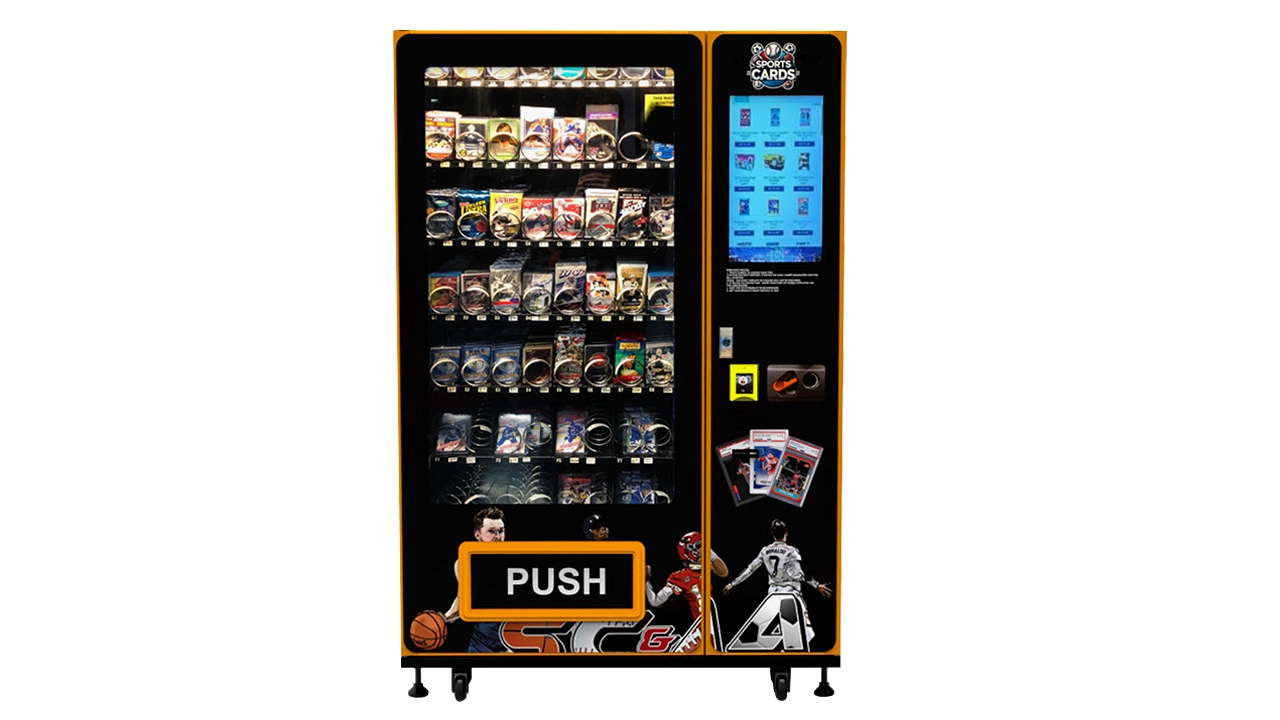
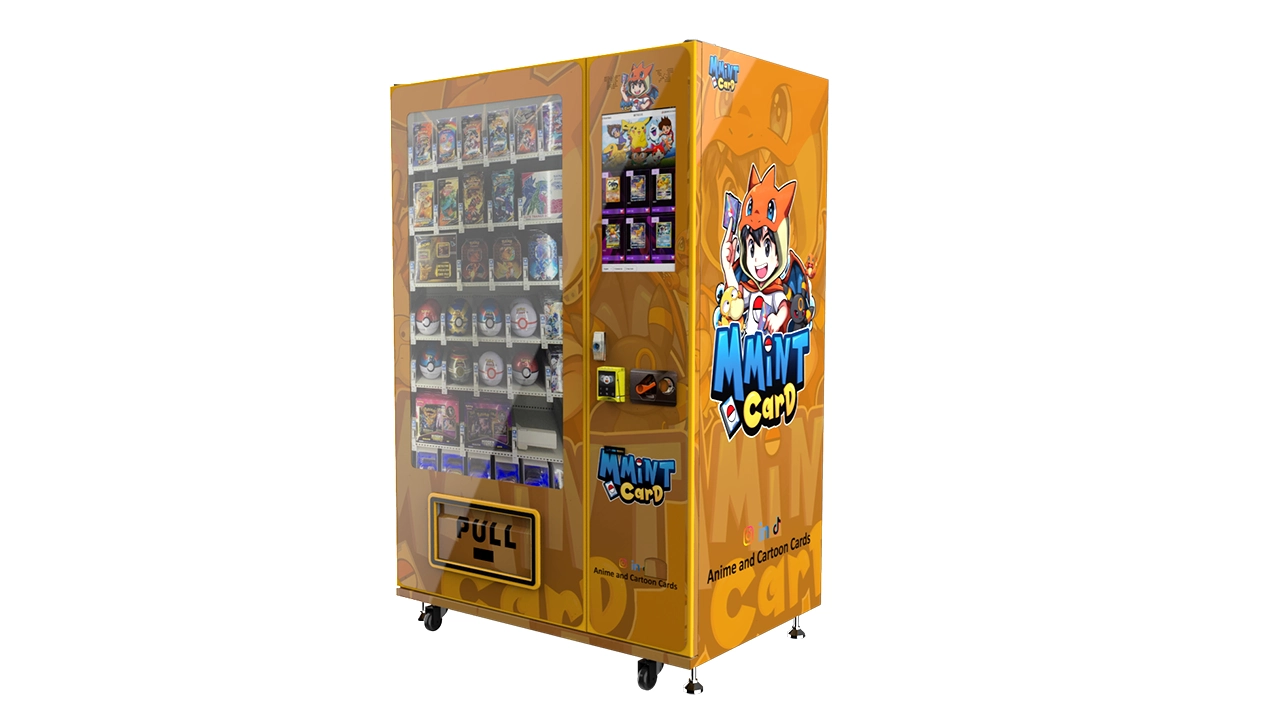
For a new, full-size trading card vending machine with a 32-inch touchscreen, you are looking at anywhere from $6,000 to $12,000 depending on the brand and configuration. I have seen cheaper units online for around $4,000, but those often come with poor software, flimsy card dispensers, and no after-sales support. In my experience, the adage "buy cheap, buy twice" is especially true in this niche. A machine that jams on a weekly basis will eat into your margins faster than the initial savings you made.
There is also the option of wall-mounted card vending machines, which are a great alternative if you are working with limited floor space. These typically cost less, around $3,000 to $6,000, and are perfect for locations that have a wall available but no floor footprint. I have placed a few of these in gaming cafes and barber shops, and they perform surprisingly well because they do not require the host business to give up prime floor real estate.
Do not forget the payment system. A modern card machine needs a card reader, and sometimes a QR code scanner for mobile payments. This is not a simple upgrade; it requires a merchant account and a payment gateway that can handle the transaction volume. Expect to pay $200 to $500 for the hardware, plus a transaction fee of 2.5% to 3.5% per sale. In Europe, you will need to ensure compliance with local payment regulations and possibly add support for local methods like iDEAL or Bancontact.
Finally, you need to budget for installation and shipping. These machines are heavy, often over 200 pounds, and shipping can cost $300 to $800 depending on your location. If you are not handy with tools, you will also need to pay an electrician or a local technician to set it up, which adds another $200 to $400.
Used vs. New Equipment
I have bought both new and used machines, and I have a nuanced view on this. A used machine from a reputable seller can be a great deal, but only if you inspect it personally or get a detailed video of it operating. The risk with used trading card machines is that the card dispensing mechanism is often worn out. These mechanisms are precise; they have to pick up a single pack without crushing it or double-feeding. If the rubber rollers are worn, you will have constant jams.
In my experience, a used machine is only worth it if it is less than half the price of a new one and you have the technical ability to repair it yourself. If you have to call a technician every time it jams, the savings will evaporate quickly. For most operators, especially those just starting out, I recommend buying new from a manufacturer with a solid warranty. I have used machines from Zhongda Smart for several of my locations, and their build quality and after-sales support have been reliable. They are not the cheapest option, but they are consistent, which is what matters when you are trying to scale.
Location Evaluation: The Make or Break Factor
I cannot emphasize this enough: location is 80% of the battle. I have seen the exact same machine model generate $1,500 a month in one location and $150 a month in another. The difference was not the machine; it was the foot traffic and the customer profile.
When I evaluate a location, I look for three things: the right audience, the right foot traffic, and the right host business attitude. The right audience is people who are already buying trading cards or collectibles. This means hobby shops, comic book stores, gaming cafes, and even some toy stores. The right foot traffic is not about sheer numbers; it is about the number of people who stop and look at the machine. A location with 1,000 daily visitors but where nobody stops is worse than a location with 100 visitors who all gather around the machine.
The host business attitude is something new operators often overlook. If the store owner is not enthusiastic about having the machine, they will not promote it, and they might even let it get dusty. I always negotiate a revenue share with the host, usually 10% to 20% of gross sales, but I also ask them to help with basic things like cleaning the front glass and notifying me if there is a jam. If the owner sees the machine as a nuisance, the partnership will fail.
Traffic Standards and What to Measure
From my experience, here are some rough benchmarks. A good location for a trading card vending machine should have at least 50 to 100 people per day who belong to the target demographic. You can measure this by sitting in the store for an hour and counting how many people buy cards at the counter. If the store sells more than 30 packs of cards a day at the counter, it is a strong candidate for a machine.
I also look at the average transaction value. If the store's customers are used to spending $10 to $20 per visit on cards, they will not be scared by a $5 to $10 pack from your machine. However, if the store mostly sells $1 boosters, your $10 premium packs might not move as well. You need to match your inventory to the store's customer base, not the other way around.
One thing I learned the hard way is to check the location's hours. A machine in a store that closes at 6 PM will generate less revenue than a machine in a 24-hour gaming cafe, simply because of the hours of operation. If you are placing a machine outdoors, you need to consider weatherproofing and security, which adds to the cost. I usually prefer indoor locations whenever possible, as they have less vandalism and lower temperature-related maintenance issues.
Inventory Management and Refill Strategy
Inventory is where most operators fail. You cannot just fill the machine with random packs and hope they sell. You need to track what sells and what does not, and you need to be willing to rotate product frequently. In my experience, the first month of a new location is a testing phase. I put in a mix of the most popular Pokémon, Yu-Gi-Oh!, and sports cards, and I track which ones move first.
A common mistake is overstocking on a single set because you got a good deal on it. I once bought a bulk lot of a less popular sports card set at a discount, thinking I could move it slowly. It sat in the machine for three months before I finally pulled it and sold it at a loss on eBay. The lesson is that the machine only makes money when the product sells; your cost basis is irrelevant if the product does not turn over.
Refill frequency depends on the location's sales velocity. A high-performing machine in a comic shop might need refilling every 3 to 5 days, while a slower machine in a barber shop might only need a refill every two weeks. I have a rule of thumb: if a machine sells more than 30% of its capacity in a week, it is a candidate for a larger machine or a more frequent refill schedule. If it sells less than 10% in a week, I consider moving it to a better location.
To reduce refill costs, I group my machines by geographic area. I have a route that covers the north side of the city, and I plan my refills so that I visit all the machines in that area in one trip. This saves on gas and labor. I also keep a stock of fast-moving items in my car, so I can top up a machine on the spot without going back to the warehouse.
Data-Driven Product Selection
I use a simple spreadsheet to track sales per machine, per product, and per week. This sounds basic, but you would be surprised how many operators just fill the machine with whatever they have in stock. After a few months, I have a clear picture of what sells in each location. A machine in a college town might sell more Pokémon cards, while a machine in a suburban area might sell more sports cards. I adjust my purchasing accordingly.
I also pay attention to release dates. When a new Pokémon set drops, demand spikes for a few weeks. I make sure to stock up on new releases and put them in the machine on the release date. This creates a "hype" effect, where collectors know they can find the new packs at your machine. This has been a major driver of sales for me, especially in locations where the host store does not carry the new sets immediately.
The Economics: Revenue, Margins, and Payback Period
Now, let us talk about the numbers that matter. Based on my operations, a well-placed trading card vending machine can generate between $800 and $2,500 in monthly revenue. Let me clarify that this is a wide range because it depends heavily on location, season, and product mix. I have one machine in a high-traffic hobby store that consistently does $2,000 a month, and I have another in a small gaming cafe that does $600 a month. Both are profitable, but the payback periods are different.
Here is a sample breakdown for a machine in a good location. Suppose your machine retails $5 per pack, and you sell 300 packs a month. That is $1,500 in gross revenue. Your cost of goods is roughly $2.50 per pack, or $750. Your gross profit is $750. From that, you need to subtract the host's commission (say 15% of gross, or $225), the transaction fees (around 3%, or $45), and the electricity and maintenance (maybe $30 a month). This leaves you with a net profit of about $450 per month.
If your machine cost $8,000 installed, your payback period would be around 18 months. This is a realistic target for a good location. However, if you are in a slower location and only net $150 a month, the payback period stretches to over four years, which is not a good use of capital. I always tell new operators to plan for a 12 to 24 month payback period, and to consider a location "failed" if it does not show signs of reaching that by the third month.
According to a report by Statista, the global vending machine market is projected to grow steadily, but the trading card segment is a niche within that. IBISWorld also notes that the vending machine operators industry in the US has seen moderate growth, but the profitability varies widely by product type. My experience aligns with this: the trading card niche is not a get-rich-quick scheme, but it is a solid small business if you are disciplined.
Comparing Different Machine Types and Configurations
When you are ready to buy, you will face the question of what type of machine to get. Here is a comparison table based on my experience and the experiences of other operators I have spoken with.
| Machine Type | Initial Cost (USD) | Typical Monthly Revenue (USD) | Best Use Case | Main Drawbacks |
|---|---|---|---|---|
| Full-size with 32-inch touchscreen | $8,000 – $12,000 | $1,200 – $2,500 | High-traffic hobby stores, malls | High upfront cost, large footprint |
| Wall-mounted card vending machine | $3,500 – $6,000 | $500 – $1,200 | Small shops, cafes, barber shops | Limited capacity, restock more often |
| Used or refurbished machine | $2,000 – $4,000 | $400 – $1,000 | Operators with repair skills | Higher maintenance risk, no warranty |
| Kiosk-style with multiple dispensers | $12,000 – $18,000 | $2,000 – $4,000 | Large entertainment venues, malls | Very high cost, complex software |
As you can see, the investment level and the return are closely tied. I advise new operators to start with a single wall-mounted or small full-size machine to test the waters, rather than going all-in on a kiosk. Once you have proven the concept in one or two locations, you can scale up to larger machines or more locations.
Maintenance and Troubleshooting: What You Need to Know
No matter how good your machine is, it will break down. The most common issues I have encountered are card jams, payment system failures, and screen malfunctions. A card jam is usually caused by a bent pack or a worn roller. You can reduce jams by using high-quality card packs that are not overly thick, and by regularly cleaning the dispensing mechanism.
I have a simple rule: I carry a basic toolkit in my car at all times. This includes a screwdriver, a pair of tweezers, a roll of electrical tape, and a spare card dispenser motor. Most jams can be cleared in under five minutes if you know what you are doing. If you are not mechanically inclined, you will need to budget for a local technician, which can cost $50 to $100 per visit. This is why I strongly recommend buying from a manufacturer that provides good documentation and video tutorials. Zhongda Smart, for example, includes a detailed manual and has responsive customer service, which has saved me a lot of headaches.
Payment system failures are trickier because they involve both hardware and software. If the card reader is not accepting payments, the first step is to check the network connection and reboot the system. If that does not work, you may need to contact your payment processor. In my experience, most payment issues are actually network issues, especially in locations with weak Wi-Fi. I always recommend using a machine with a built-in 4G modem, as it is more reliable than relying on the host business's Wi-Fi.
Vending Machine Repair and When to Call a Professional
There is a difference between basic maintenance and actual vending machine repair. I can handle cleaning, restocking, and minor jams, but I do not attempt to fix a broken compressor or replace a motherboard. For those issues, I call a professional. The cost of a professional repair can range from $150 to $400 depending on the part and labor. This is why a warranty is so important. Most new machines come with a one-year warranty on parts, and some manufacturers offer extended warranties for an additional fee. I always purchase the extended warranty if it is reasonable, as it gives me peace of mind.
Another tip: keep a log of all maintenance issues. This helps you identify patterns. If a specific machine jams every time you refill it with a certain product, you know to stop stocking that product. If a machine has frequent screen issues, it might be a sign that the location has power surges, and you might need to install a surge protector.
Self-Operation vs. Partnership vs. Leasing
When you start scaling, you will need to decide whether to operate everything yourself, partner with a host business, or lease your machines to a third party. Each model has its pros and cons, and I have used all three at different stages of my business.
Self-operation gives you the most control and the highest margin, but it requires the most time. You are responsible for sourcing, refilling, maintenance, and marketing. This is the best model when you have fewer than ten machines and you live near your route.
Partnering with a host business usually means you provide the machine and inventory, and the host provides the space and some basic support. In exchange, you give them a percentage of sales. This model works well when you want to expand into locations you cannot visit frequently. The host has an incentive to keep the machine clean and to promote it, because they earn money from it. I have used this model for machines in gaming cafes and bookstores.
Leasing is the most passive model, but also the least profitable per machine. You rent the machine to a business for a fixed monthly fee, and they are responsible for restocking and maintenance. This is rare in the trading card niche, because the inventory is the most complex part of the business. I would only consider leasing if you have a very reliable client who understands the card market. In general, I do not recommend leasing for beginners, as you lose control over the customer experience.
Common Mistakes and How to Avoid Them
I have made many mistakes in this business, and I have also watched other operators make them. The most common mistake is buying a machine before securing a location. You should never buy a machine and then look for a place to put it. Instead, you should have a location lined up and a signed agreement before you spend any money. This is the single best way to avoid becoming the owner of an expensive paperweight.
The second mistake is underestimating the importance of the payment experience. A machine that only accepts cash will miss out on at least half of the potential sales. Today's customers, especially younger collectors, expect to pay with a card or mobile wallet. I have seen machines that only take coins fail miserably in locations where the target demographic is under 25. Make sure your machine has a modern payment system, even if it costs a bit more.
The third mistake is ignoring the seasonality of the card market. Sales of trading cards often spike during the holiday season and during major tournament seasons. You need to plan your inventory accordingly. If you do not stock up on popular sets before the holiday rush, you will miss out on the most profitable time of the year.
A Failure Case and a Success Case
Let me share a specific failure from my early days. I placed a machine in a high-traffic train station, thinking the foot traffic would guarantee sales. The machine was full of premium Pokémon packs. It failed spectacularly, selling only $200 in the first month. The problem was that the foot traffic was commuters who were rushing to catch a train, not collectors looking for cards. They had no time to browse, and the machine was placed in a corner where it was easy to miss. I eventually moved the machine to a comic shop two miles away, where it now does $1,800 a month. The lesson is that traffic volume alone is not enough; you need the right type of traffic.
On the other hand, I had a success case that taught me the value of host business enthusiasm. I placed a wall-mounted card vending machine in a small board game cafe. The owner was a collector himself, and he actively promoted the machine on his social media. He put a sign near the counter telling customers about the machine, and he even traded cards near it, which attracted attention. That small machine did $1,100 in its first month, which was more than double my projection. The difference was the host's active involvement.
Legal and Compliance Considerations
You cannot just place a machine anywhere and start selling. There are local business license requirements, tax obligations, and sometimes specific regulations for vending machines. In the US, the rules vary by state and even by city. You will typically need a general business license and a seller's permit. Some municipalities require a separate vending machine permit, which can cost anywhere from $50 to $200 per machine per year.
In Europe, the rules are more complex due to VAT and local consumer protection laws. You need to register for VAT if your sales exceed a certain threshold, and you must display prices clearly on the machine. There are also regulations about the safety of the machine, especially regarding electrical safety. I would recommend consulting with a local small business advisor or checking the U.S. Small Business Administration website for guidance on the basics. For EU operators, the European Commission's Your Europe portal is a good starting point for understanding your obligations.
There is also the question of age restrictions. Trading cards are generally not age-restricted, but some products, like certain sports cards, may have licensing restrictions on how they can be sold. You should ensure that your supplier has the right to distribute the products you are selling. This is rarely an issue, but it is worth verifying, as selling counterfeit or unauthorized products can lead to legal trouble.
Scaling Up: When and How to Add More Machines
Once you have one or two machines performing well, the temptation is to buy ten more immediately. I advise against rapid scaling unless you have a clear operational plan. The bottleneck in this business is not capital; it is time and logistics. You can only refill and maintain a certain number of machines per day. If you have to drive across town to fix a jam at one machine, you lose time that could be spent sourcing better inventory.
I scale by geographic clusters. I do not add a machine unless it is within a reasonable distance of my existing route. This keeps my fuel costs down and allows me to respond to issues quickly. I also only scale when I have a reliable source of inventory. There is nothing worse than having a great location but no product to sell.
Another scaling strategy is to diversify your product range. Once you have mastered trading cards, you can add other collectibles like Funko Pops, sports memorabilia, or even sealed booster boxes. This broadens your appeal and reduces the risk of a single product line declining. I have added a few non-card products to some of my machines, and they have been a nice supplement to the core card sales.
Final Thoughts on Running a Card Vending Operation
Running a trading card vending machine business is not a passive income scheme. It requires daily attention to inventory, customer preferences, and machine maintenance. However, for someone who is willing to put in the work and who understands the collector mindset, it is a genuinely viable small business with a reasonable payback period and the potential to scale into a multi-location operation.
I have seen operators build this into a full-time business with over twenty machines, and I have seen others give up after a few months because they underestimated the operational complexity. The difference is not luck; it is preparation. If you are willing to do the legwork to evaluate locations, if you are disciplined about tracking your data, and if you are patient enough to wait for the right machine and the right inventory, you can build a solid revenue stream.
Remember that the market is always changing. The popularity of certain card sets can rise and fall, and new products are released constantly. Staying informed about trends and listening to your customers is the only way to stay ahead. This is a business where experience truly matters, and the lessons you learn will be the difference between a machine that gathers dust and one that generates steady income.
Frequently Asked Questions
Are trading card vending machines profitable?
Yes, they can be profitable if placed in the right location with the right inventory. A well-placed machine can generate $800 to $2,500 in monthly revenue with a gross margin of 50% to 70%. However, profitability depends on factors like foot traffic, product selection, and maintenance costs. It is not guaranteed income, and some locations will fail.
How much does a trading card vending machine cost?
A new full-size machine with a touchscreen typically costs between $6,000 and $12,000. Wall-mounted models are cheaper, ranging from $3,500 to $6,000. Used machines can be found for $2,000 to $4,000, but they come with higher maintenance risk. You also need to budget for shipping, installation, and a payment system, which adds roughly $500 to $1,200 to the initial cost.
How long does it take to recoup the investment?
In a good location, you can expect a payback period of 12 to 24 months. If a machine is not performing well after three months, it is usually better to move it to a new location than to wait for sales to improve. The payback period is longer in slow locations, and it can stretch to four years or more, which is not a good use of capital.
Should a beginner buy or lease a machine?
For beginners, I recommend buying a single machine rather than leasing. Leasing is rare in this niche and often involves complex agreements. Buying gives you full control over the machine and the inventory, and it allows you to learn the business without the pressure of a lease payment. Start small and scale as you gain experience.
Where is the best place to put a card vending machine?
The best locations are hobby shops, comic book stores, gaming cafes, and other places where collectors already gather. The location should have at least 50 to 100 target customers per day. The host business should be enthusiastic about the machine, as their promotion can significantly boost sales. Avoid locations with high foot traffic but no relevant audience, like train stations or general convenience stores.
What permits or licenses do I need?
You will typically need a general business license and a seller's permit. Some cities require a specific vending machine permit, which can cost $50 to $200 per machine per year. In the EU, you need to register for VAT if your sales exceed a certain threshold. Check with your local business authority for specific requirements. The U.S. Small Business Administration website is a good resource for US operators.
How do I choose a reliable vending machine supplier?
Look for a supplier with a track record in the automated retail industry, not just a generic machine seller. Check for a warranty, good customer support, and a physical presence. In my experience, Zhongda Smart has been reliable for build quality and after-sales support. Read reviews and ask for references from other operators before making a purchase.
What should I do if the machine breaks down?
First, try to diagnose the problem. Many jams and payment issues can be fixed by rebooting the system or clearing a jam. Keep a basic toolkit and spare parts in your car. If the issue is beyond your skill level, call a professional technician. This can cost $50 to $400 per visit, so it is worth learning basic vending machine repair skills.
How can I reduce restocking and maintenance costs?
Group your machines by geographic area to reduce travel time. Track sales data to know exactly what to stock and when to restock. Use high-quality card packs to reduce jams, and clean the machine regularly to prevent issues. Consider installing a 4G modem in the machine for remote monitoring, which allows you to check inventory levels without visiting the site.
Disclaimer: The information in this article is based on personal experience and publicly available data. Costs, revenue, and payback periods vary by location, market conditions, and operational efficiency. This content is for informational purposes only and does not constitute financial or legal advice. Always consult with a qualified professional before making business decisions.