If you’re looking for locations for trading card vending machines, the short answer is this: you don’t find a spot that has foot traffic, you find a spot where the right kind of foot traffic already spends money on impulse purchases. I’ve been operating automated retail equipment for over a decade, and I’ve placed card vending machines in comic shops, hobby stores, malls, and even a laundromat that surprised everyone. The difference between a machine that earns $200 a month and one that earns $2,000 is rarely the machine itself—it’s almost always the location agreement, the visibility, and the demographic match. Let me walk you through how I evaluate locations, what I’ve learned from failures, and what data actually matters when you’re scouting for trading card vending machine placements.
Why Location Is the Only Thing That Matters
I’ve seen operators obsess over which vending machine model to buy, whether to use a 32-inch touchscreen or a basic keypad, and how to configure payment systems. Those things matter, but they matter after you’ve secured a location. A machine with a clunky interface in a high-traffic hobby store will still outsell a sleek machine hidden in a quiet hallway. The reverse is rarely true.
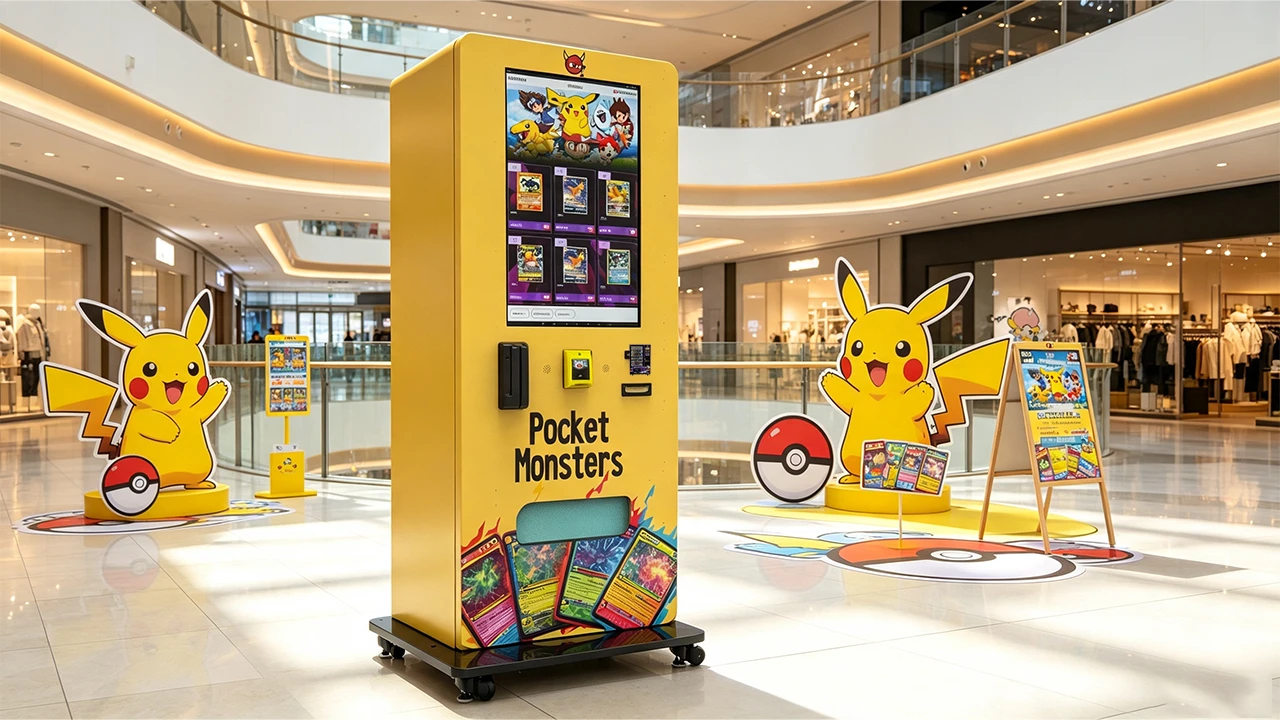
In my experience, the first question you should ask is not “what machine should I buy?” but “where can I place a machine that will see at least 50 relevant people per day?” Relevant means people who already buy trading cards, collectibles, or similar impulse items. You can’t teach a location to bring you card collectors. You can only find a location that already has them.
That’s why I spend more time on location scouting than on equipment selection. And that’s why this guide is structured around the way I actually approach placements—not around a theoretical checklist. Let’s break down the real process.
The Real Cost Structure Before You Even Scout
Before you start talking to store owners, you need to know your numbers. I’ve seen too many new operators sign a lease or a revenue-share agreement without understanding their break-even point. Here’s what I tell everyone who asks: assume your all-in cost for a new card vending machine, delivered and set up, is between $4,000 and $12,000 depending on the configuration. A basic wall-mounted card vending machine will run you closer to the lower end. A large touchscreen model with multiple dispensing trays and remote monitoring will push you toward the higher end.
You also need to budget for installation, shipping, and initial inventory. Inventory is the hidden cost that surprises most people. If you’re stocking Pokémon, sports cards, or even mystery packs, you’re going to need $1,500 to $3,000 just to fill the machine properly. That’s not a one-time cost either—it’s a revolving investment that you’ll need to manage carefully.
Let’s put this into perspective with a simple table that compares different setup costs I’ve seen in real operations. These are estimates based on my own purchases and those of operators I’ve mentored, not official industry statistics.
| Setup Type | Equipment Cost Range | Initial Inventory Cost | Typical Monthly Revenue Potential | Payback Period Estimate |
|---|---|---|---|---|
| Wall-mounted basic unit | $3,500 – $5,500 | $1,500 – $2,500 | $300 – $800 | 6 – 12 months |
| Freestanding mid-size unit | $6,000 – $9,000 | $2,500 – $4,000 | $600 – $1,500 | 8 – 14 months |
| Large touchscreen machine | $10,000 – $14,000 | $3,500 – $6,000 | $1,200 – $3,000 | 10 – 18 months |
These numbers vary wildly based on location, season, and how well you maintain the machine. But they give you a baseline. If you don’t know your numbers before you start scouting, you’ll end up accepting a bad deal because you’re desperate to place a machine.
How I Actually Scout Locations for Trading Card Vending Machines
I don’t use a fancy algorithm or a data service. I use a combination of observation, conversations with local business owners, and a simple traffic count method that I’ve refined over the years. Here’s the process I follow every time I’m looking for a new spot for a trading card vending machine.
Step 1: Identify the Core Demographic Zones
Trading cards have a specific buyer profile. It’s mostly male, aged 8 to 35, with a strong secondary market driven by nostalgia and speculation. That means you’re looking for places where this demographic already gathers. Comic book shops are the obvious first choice, but they’re not the only option. Hobby game stores, card shops, collectible toy stores, and even certain video game retailers work well.
I’ve also had success in places you wouldn’t immediately associate with trading cards. One of my most profitable machines is in a family entertainment center that has a small arcade and a party room. The parents are there for the kids, but the kids are the ones buying packs. Another solid spot was a bowling alley that had a small retail corner. The key is to look for places where people are already in a spending mindset, not just passing through.
Step 2: Do the 3-Day Traffic Count
I never take a store owner’s word for foot traffic. I sit in the parking lot or across the street and count. I do this for three days: one weekday, one Friday, and one Saturday. I’m not counting total foot traffic—I’m counting the number of people who look like they belong to my target demographic. That means people carrying backpacks, groups of kids with parents, or adults who linger near the collectibles section.
If I see fewer than 30 relevant people per day, I usually walk away. That might sound low, but remember: you only need a fraction of those people to make a purchase. A machine that sells 10 packs a day at $5 each is doing $1,500 a month. That’s a solid return for a single placement.
Step 3: Talk to the Owner About Their Customer Behavior
Foot traffic counts tell you about quantity, but not about quality. I ask the store owner three questions: Do customers ever ask about trading cards? Do you sell any collectibles now? How long do people usually stay in the store? The answers tell me whether the location has a built-in demand or whether I’d be creating demand from scratch. Creating demand is possible, but it’s harder and takes longer.
One of my biggest failures came from ignoring this step. I placed a machine in a vape shop because the owner promised high foot traffic. The traffic was there, but it was the wrong kind. People came in, bought their product, and left. Nobody lingered near the machine. I pulled the machine after three months and lost about $800 on the experiment. That was an expensive lesson in demographic fit.
Evaluating Revenue Share vs. Flat Rent
When you talk to location owners, you’ll usually be offered one of two deals: a flat monthly rent or a revenue share. I’ve done both, and I have a clear preference depending on the location’s track record.
Flat rent is better when you’re confident in the location’s performance. You pay a fixed amount, say $100 to $250 per month, and you keep everything else. This works well in established hobby stores where you know the customer base is strong. The downside is that you’re taking all the risk. If the machine underperforms, you still owe the rent.
Revenue share is better for new or unproven locations. The owner takes 10% to 20% of your gross sales, sometimes more. This reduces your upfront risk, but it also means you’re giving up a chunk of your margin. I usually suggest a revenue share for the first three months, then convert to flat rent once we both see the numbers. That way, the owner feels like they’re getting a fair deal, and I’m not locked into a bad lease.
Here’s a quick comparison table based on my own deals:
| Deal Type | Upfront Risk | Monthly Cost | Best For | My Experience |
|---|---|---|---|---|
| Flat Rent | Higher for operator | $100 – $300 | Proven hobby stores | Preferred when I trust the location |
| Revenue Share | Lower for operator | 10% – 20% of gross | New or unproven spots | Good for testing, but watch your margin |
| Hybrid (rent + small %) | Moderate | $50 – $150 + 5% | Negotiated deals | My go-to for mid-tier locations |
One thing I always negotiate is a clause that lets me move the machine after a trial period if it doesn’t hit a minimum revenue target. This protects you from being stuck in a dead spot. Most owners will agree if you phrase it as a way to keep both sides happy.
The Equipment Side of the Equation
Once you’ve found a location, you need to make sure the machine actually fits the space and the use case. I’ve seen operators buy a huge freestanding unit for a small corner in a card shop, and it just doesn’t work—it blocks the aisle, customers can’t browse, and the owner gets annoyed. Before you commit to a specific model, measure the space and think about how people will interact with the machine.
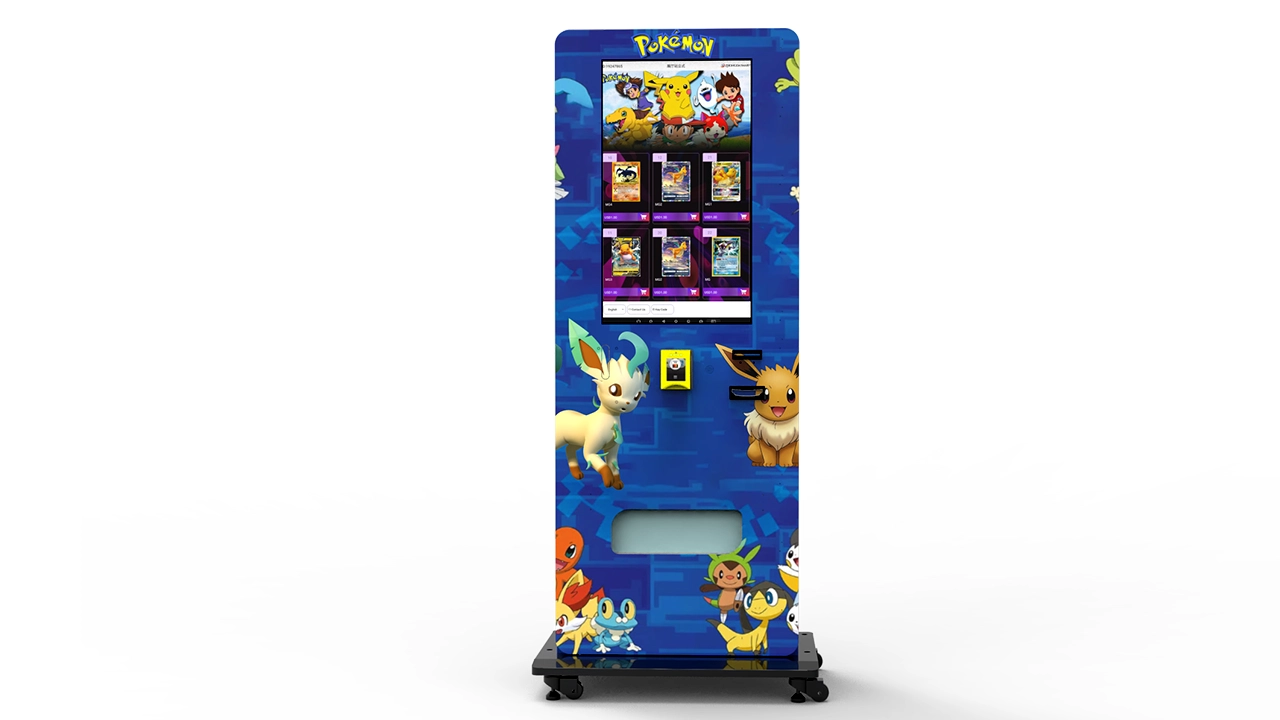
For smaller locations, a wall-mounted card vending machine is often the smartest choice. It takes up less floor space, it’s easier to install, and it still holds a decent inventory. I’ve placed these in comic shops and small hobby stores, and they perform well because they don’t disrupt the existing layout.
For larger spaces, like malls or entertainment centers, a freestanding unit with a touchscreen makes more sense. The screen isn’t just for show—it lets you display product images, pricing, and even promotional videos. That can increase the perceived value of the packs and encourage more impulse buys. I’ve also found that touchscreen models are easier to update remotely if you choose a machine with cloud-based management.
When I’m buying equipment, I look for reliability first and features second. A machine that breaks down twice a month will kill your revenue and your relationship with the location owner. I’ve had good experiences with Zhongda Smart’s card vending machines—they’re built for the self-service kiosk market and their card-specific models handle the dispensing mechanism well. I’m not saying they’re the only option, but they’re a name I’ve seen hold up in real-world placements. Always ask for a demo unit or a warranty that covers the dispensing motor and the payment system.
Payment Systems and the Self-Service Experience
Your machine needs to accept cards, mobile payments, and ideally cash. In my experience, about 70% of transactions are card or mobile. If your machine only takes coins and bills, you’re cutting off the majority of your potential sales. Make sure the payment system is certified for the region you’re operating in—PCI compliance is not optional.
I also recommend machines that support remote monitoring. This lets you check inventory levels, sales data, and error codes without visiting the site. It saves you hours every week, especially if you have multiple machines spread across different locations. A self-service kiosk that can’t be monitored remotely is a headache waiting to happen.
One thing that surprises new operators is how often customers need help. Even with clear instructions, someone will try to pay with a method you don’t support, or they’ll get confused by the selection process. I always put a small sign on the machine with my phone number and a QR code that leads to a troubleshooting page. It reduces the number of calls I get and keeps the location owner from having to act as tech support.
Maintenance and Repair: The Part Nobody Talks About
Every machine breaks eventually. The question is how quickly you can get it fixed. I’ve learned to do basic vending machine repair myself—jammed dispensing spirals, faulty card readers, and resetting the mainboard. If you’re not willing to learn these basics, you’ll be at the mercy of a technician who charges $100 an hour plus travel time.
I budget roughly 5% of my gross revenue for maintenance and repairs. That covers replacement parts, occasional technician visits, and the cost of a backup machine if I need to swap one out. I also keep a small inventory of common spare parts—spiral motors, sensors, and power supplies. It’s not exciting, but it’s what keeps your machines running.
The hardest part of maintenance is not the mechanical work—it’s the logistics. If a machine goes down on a Saturday, you need to be able to respond by Sunday or Monday at the latest. That’s why I only place machines within a two-hour drive of where I live. Anything farther away becomes too expensive to service regularly.
Real Data: What the Industry Says
I want to be clear about the difference between my experience and public data. My revenue numbers are based on my own operations and those of operators I know personally. They’re not official statistics. But there is some public data that gives you a sense of the market.
According to Statista, the global vending machine market was valued at over $40 billion in recent years, with steady growth expected in automated retail and self-service kiosks. IBISWorld also reports that the vending machine operators industry in the U.S. generates billions in annual revenue, with a growing number of specialized machines like card dispensers entering the market. The U.S. Small Business Administration provides general guidance on retail leases and location agreements, which is useful when you’re negotiating with property owners.
Here’s the thing: the trading card vending machine niche is still small compared to traditional snack and drink vending. That means there’s less competition, but also less established data. You’ll be relying on your own judgment and local market knowledge more than on industry benchmarks.
Common Mistakes I See New Operators Make
I’ve made most of these mistakes myself, so I can tell you about them without judgment. The first mistake is overpaying for a machine. New operators see a flashy touchscreen model and think it’s the key to success. In reality, a basic machine in a great location will outperform a premium machine in a mediocre location every time.
The second mistake is ignoring the importance of inventory variety. If you only stock one type of card, you’re limiting your audience. I try to have at least three or four different product categories—sports cards, Pokémon, mystery packs, and sometimes even single cards in protective cases. This gives customers a reason to browse and buy multiple items.
The third mistake is not tracking your numbers. You need to know exactly what sells, when it sells, and at what margin. I use a simple spreadsheet for each machine, and I review it weekly. If a product hasn’t sold in two weeks, I replace it. This data-driven approach is what separates profitable operators from hobbyists.
My Success Case: The Laundromat That Worked
I mentioned earlier that I have a machine in a laundromat that surprised everyone. I placed it as an experiment because the owner offered me free rent and a 10% revenue share. The foot traffic was mostly adults, but there were also kids waiting with their parents. I stocked it with low-priced mystery packs and single cards, not expensive booster boxes. The result? It does about $400 a month in sales, which isn’t huge, but the rent is free and the maintenance is minimal. It’s a reminder that you don’t need a perfect location—you need a location where a small but consistent number of people are in a buying mood.
How to Approach Store Owners Without Sounding Like a Salesperson
When I approach a potential location, I don’t pitch a machine. I pitch a partnership. I explain that I’ll handle all the equipment, maintenance, and inventory, and that the store owner gets a percentage of sales or a flat rental fee. I bring a small mockup or a photo of my existing machines so they can visualize it. I also offer a trial period—usually 60 days—where they can see the numbers before committing to a long-term agreement.
Most owners are not thinking about trading card vending machines. They’re focused on their core business. So when you walk in and offer a way to generate extra income with zero effort on their part, you’re solving a problem they didn’t know they had. That’s the angle that works.
Location Agreements: What to Put in Writing
Always get the agreement in writing, even if it’s a simple one-page document. I’ve had verbal agreements fall apart because the store owner sold the business or changed their mind. Your contract should include the commission or rent amount, the trial period, who handles maintenance, and what happens if the machine underperforms. You should also specify that you retain ownership of the machine and can remove it if the agreement ends.
I’m not a lawyer, and I’m not giving legal advice, but I always recommend having a basic contract template reviewed by a professional once. It’s a small cost that protects you from bigger headaches down the road.
Final Thoughts on Finding Locations
Finding locations for trading card vending machines is not about luck—it’s about methodical scouting, honest conversations with business owners, and a willingness to walk away from a bad deal. Start small, track your numbers, and don’t be afraid to move a machine if it’s not performing. The machines are just tools; your real asset is your ability to match a product with the right audience.
If you’re just starting out, I’d recommend placing your first machine in a hobby store or comic shop where the customer base is already established. Learn the rhythm of restocking, understand what sells, and then expand to other locations. It’s not a get-rich-quick business, but it can be a solid source of passive income if you treat it like a real operation.
Frequently Asked Questions
Are trading card vending machines profitable?
They can be, but profitability depends heavily on location, product selection, and your ability to maintain the machine. In my experience, a well-placed machine can generate $300 to $3,000 per month in gross sales. After costs, you’re looking at a net margin of 30% to 50% for a successful placement. But there are no guarantees, and some machines will lose money.
How much does a trading card vending machine cost?
A new machine typically costs between $4,000 and $12,000 depending on the size, screen type, and features. Wall-mounted card vending machines are cheaper, while large touchscreen models are more expensive. You also need to budget for shipping, installation, and initial inventory.
How long does it take to recoup the investment?
Most operators I know recoup their investment within 6 to 18 months, assuming the machine is in a decent location. If the machine underperforms, it can take longer or you may never fully recoup. I always recommend starting with a lower-cost machine to reduce your risk.
Should a beginner buy or lease a machine?
Leasing reduces your upfront cost but often locks you into a long-term contract with higher overall costs. Buying a basic machine is usually better for beginners who want to learn the business without massive financial exposure. I bought my first machine outright, and it was the right call.
Where is the best place to put a trading card vending machine?
Comic shops, hobby stores, card shops, and family entertainment centers are the best starting points. Look for places with steady foot traffic of people who already spend money on collectibles or impulse items. High-traffic malls can work, but rent is often higher and the wrong demographic can kill your sales.
What permits or licenses do I need?
Requirements vary by state and country. In the U.S., you’ll typically need a business license and a sales tax permit. Some states require a vending machine operator license. Check with your local small business administration or municipality before you start. I’m not a lawyer, and this is not legal advice—always verify local regulations.
How do I choose a reliable vending machine supplier?
Look for suppliers with a track record in the automated retail space, good warranty terms, and responsive customer support. I’ve had positive experiences with Zhongda Smart’s card vending machines, but you should always ask for references and test the machine before buying. Avoid suppliers that don’t offer any warranty or after-sales support.
What should I do if my vending machine breaks down?
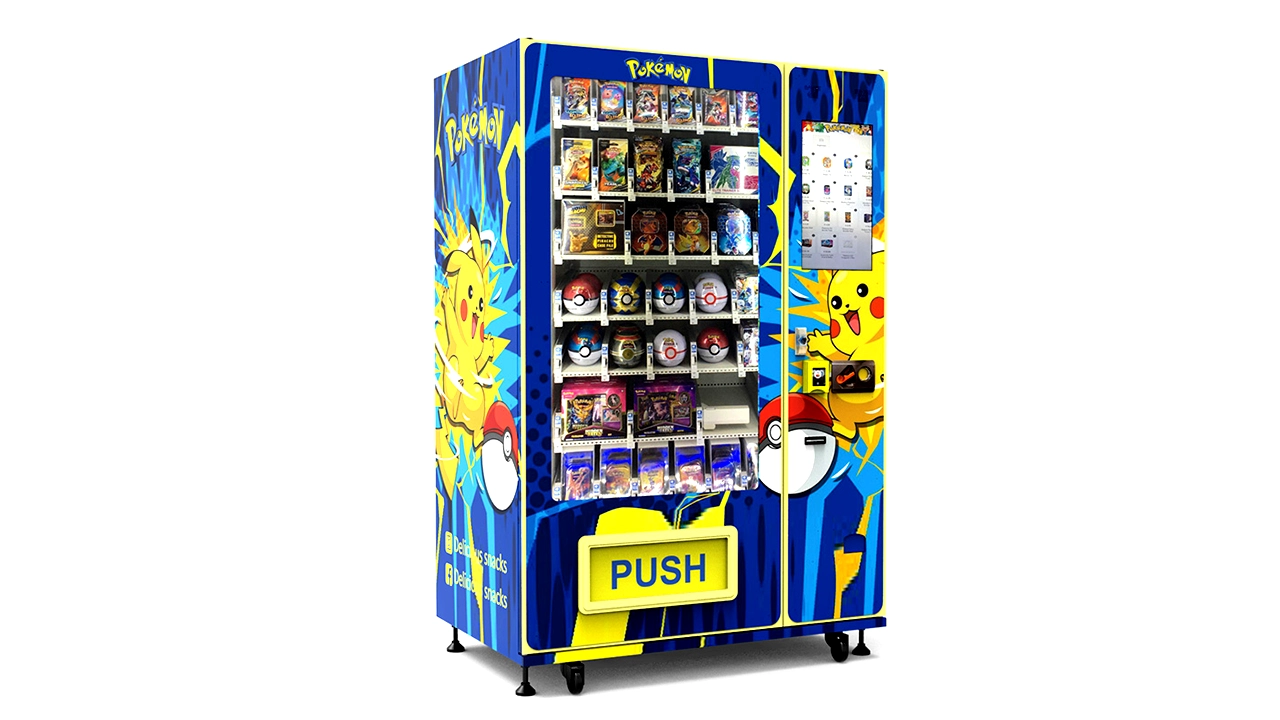
Learn basic troubleshooting first. Many issues are simple to fix, like a jammed dispenser or a disconnected sensor. If you can’t fix it, you’ll need a technician. Always keep a backup plan, like a spare machine or a way to refund customers if the machine is out of service.
How can I reduce restocking and maintenance costs?
Use remote monitoring to track inventory levels and error codes. Plan your restocking routes to minimize travel time. Buy spare parts in bulk and learn to do basic repairs yourself. Also, choose locations that are close to your home base so you can respond quickly when needed.
Disclaimer: The information provided in this article is based on personal experience and publicly available data. Revenue figures, costs, and payback periods are estimates and may vary significantly based on location, market conditions, and operational factors. This content is for informational purposes only and does not constitute financial, legal, or professional advice. Always conduct your own research and consult with qualified professionals before making business decisions.