If you are looking into how to source sports cards for vending machines, the honest answer is that this is where most operators either build a steady side income or quietly bleed out their startup capital. I have spent over a decade placing automated retail units across the US and Europe, and the single biggest mistake I see newcomers make is obsessing over the machine hardware while treating card sourcing as an afterthought. Your profit margin is not determined by the touchscreen or the payment system; it is determined by what you pay for a sealed box or a bulk lot and how quickly you can turn that inventory. In this guide, I will walk you through the sourcing strategies, supplier vetting, and operational rhythms that separate sustainable trading card vending machine routes from expensive garage ornaments.
The Real Economics of Card Vending Machines
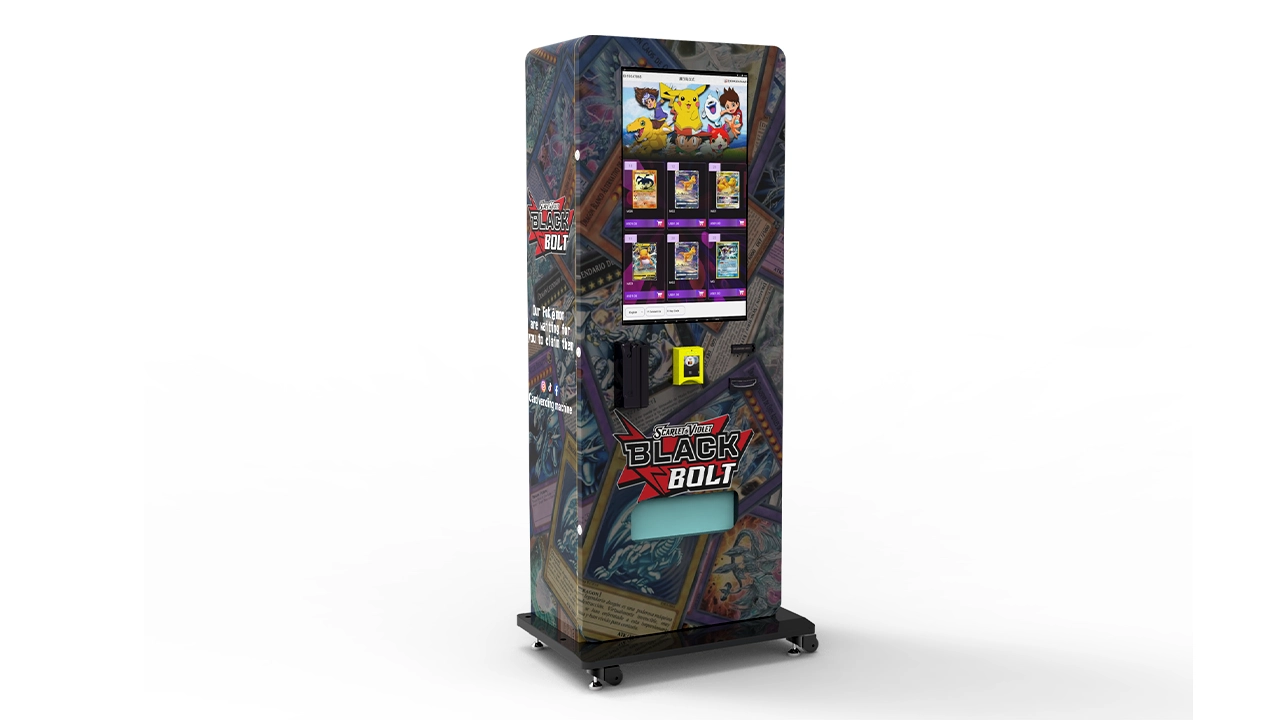
Before you even contact a supplier, you need to understand the unit economics. A typical trading card vending machine, configured with a 32-inch touchscreen and card dispensing mechanisms, will set you back anywhere from $6,000 to $15,000 depending on whether you buy new or refurbished. That is the easy part. The harder part is inventory. If you are buying sealed hobby boxes at retail, your margins are thin and your cash flow will be tied up in cardboard for months. If you buy wholesale or through distribution, you can get that cost down by 20 to 30 percent, but that requires volume and relationships.
Based on my own route data, a well-placed machine in a comic shop or a mall corridor can move between $800 and $2,500 per month in card sales. The gross margin on singles is usually higher than on sealed product, but singles require more labor for sorting, pricing, and restocking. Sealed product moves faster and requires less handling, but the per-unit profit is lower. You have to decide early which model fits your time and capital. There is no universal answer, and anyone who tells you otherwise has not run a route through a slow summer.
I have seen operators succeed with both approaches, but the ones who last treat sourcing as a weekly discipline, not a one-time purchase. They have spreadsheets, they track sell-through rates by product, and they rotate inventory based on what is actually selling at the point of sale. The machine is just the storefront; the cards are the business.
Why Sourcing Strategy Determines Your Survival
Let me share a failure from my early years. I placed a machine in a high-traffic gaming store, signed a solid lease, and filled the unit with a mix of Pokémon and sports cards that I had bought at near-retail prices because I was impatient. The machine looked great, the location was busy, and sales were decent for the first three weeks. Then the novelty wore off, and I realized my restocking costs were eating every dollar of margin. I was buying sealed product at $90 and selling it for $110, which sounds fine until you account for card processing fees, maintenance visits, and the occasional jammed dispenser. I was effectively working for free.
The turnaround came when I shifted to sourcing through distribution channels and local bulk buyers. I started buying collections from estate sales, local card shops that wanted to offload slow movers, and online wholesale auctions where I could pick up mixed lots at 40 to 50 percent below retail. That changed my margin structure completely. The machine became profitable not because I found a better location, but because I fixed my sourcing. If you take nothing else from this article, understand that sourcing is the business. The machine is just the delivery mechanism.
This is also where I learned to separate my personal collecting interest from my business decisions. I love vintage basketball cards, but my customers in a suburban mall want Pokémon and current NFL rookies. You have to sell what moves, not what you like. That is a hard lesson for many collectors who get into this side of automated retail.
Where to Source Sports Cards for Vending Machines
There are several distinct channels for sourcing inventory, and each has its own risk profile and cost structure. You should not rely on a single channel, especially in the first year. Diversification protects you from price spikes, allocation cuts, and counterfeit risks.
Direct from Distributors and Wholesalers
The most reliable long-term source is a licensed distributor. Companies that supply hobby shops also supply vending operators, but they usually require a business license, proof of resale, and minimum order volumes. You will not get hobby shop pricing on a single box, but you will get consistent allocation on new releases, which is critical for Pokémon and sports cards during hype cycles. The downside is that you are competing with established card shops for the same allocation, and distributors often prioritize their long-standing retail accounts.
In my experience, building a relationship with one or two distributors over several months pays off. They start offering you unallocated product, damaged box deals, and overstock at significant discounts. This is not something you can force; it comes with consistent ordering and prompt payment. If you are just starting out, expect to pay closer to wholesale retail and work your way up.
Buying Bulk Collections and Estate Lots
This is where the real margins are, but it is also where the risk lives. I regularly buy collections from people who inherited a relative’s card hoard or from local shops that want to clear out bulk commons and unorganized boxes. You can often get these lots for $0.10 to $0.25 per card, which gives you enormous flexibility when pricing singles for your machine. The key is knowing what is in the lot before you buy. I always ask for photos, count boxes, and do a quick scan for recognizable sets and stars. I have been burned more than once by a "collection" that was mostly 1990s junk wax with no resale value.
For sports cards specifically, focus on rookie cards, inserts, and parallels from the last five to ten years. Vintage is great, but it is harder to price accurately in a vending machine format where customers expect quick, transparent pricing. Bulk lots work best when you have the time to sort and list, or when you have a reliable helper who can handle the grunt work. If you are paying someone else to sort, factor that labor cost into your margin calculation.
Online Wholesale Auctions and Marketplaces
Platforms like eBay, B-Stock, and even specialized Facebook groups can be useful for sourcing, but you have to be disciplined. I have found good deals on sealed product from sellers who are liquidating inventory, but I have also overpaid. The trick is to set a maximum price per pack or per box before you bid, and to factor in shipping and platform fees. For singles, I use marketplaces to fill specific gaps in my inventory, not as a primary source. It is too easy to lose your margin to shipping costs and seller markups.
One approach that works well is to buy unopened boxes from online liquidators who specialize in retail returns. These are often products that were returned to big-box stores and then sold in bulk. The condition can be variable, but the price is often 30 to 50 percent below wholesale. I have had good luck with this for trading card vending machine stock, but always open a few boxes to check for tampering before you trust a new liquidator.
Local Card Shops and Trade-In Programs
Do not overlook your local competition. Many brick-and-mortar card shops are happy to sell bulk lots, overstock, and slow-moving product to vending operators because it frees up their cash flow and shelf space. I have built relationships with three shops in my region that call me first when they have a bulk lot they do not want to sort. This is a win-win: they get quick cash, and I get inventory at a price that supports my vending model. You just have to be clear that you are not a collector looking for a deal; you are a business buyer with a resale certificate.
Evaluating Suppliers and Avoiding Counterfeits
Counterfeit cards are a real problem in automated retail, and they will destroy your reputation faster than any mechanical failure. I learned this the hard way when a batch of fake autographed cards slipped into my inventory through a bulk lot I bought online. The customer complaints were immediate, and I had to issue refunds and pull the entire line. That mistake cost me over $2,000 and several weeks of trust with the location owner.
To protect yourself, only buy from suppliers who can provide a clear chain of custody. For sealed product, buy from distributors or reputable resellers with high feedback scores. For singles, use authentication services when the value justifies it, and always inspect cards for printing quality, gloss, and edge sharpness. If a deal seems too good to be true, it almost always is. I now have a simple rule: if I cannot verify the source, I do not buy it.
When it comes to equipment suppliers, the same logic applies. You want a manufacturer with a track record of reliable hardware and accessible support. In my fleet, I have used machines from several manufacturers, and the ones that have held up best are those with modular dispensing systems and remote diagnostics. I have also worked with Zhongda Smart on a couple of installations, and their units have been solid in terms of build quality and software stability. They are not the only option, but they are a reasonable benchmark when you are comparing specs and support contracts.
Equipment Selection and Configuration
Your sourcing strategy should influence your equipment choice, not the other way around. If you plan to sell mostly sealed boxes and packs, you need a machine with adjustable shelving and a robust dispensing mechanism. If you are going to sell singles, you need a machine with individual card holders or a carousel system that can handle varying card thicknesses. I have seen operators waste money on machines that were overkill for their inventory, or worse, machines that could not handle the products they wanted to sell.
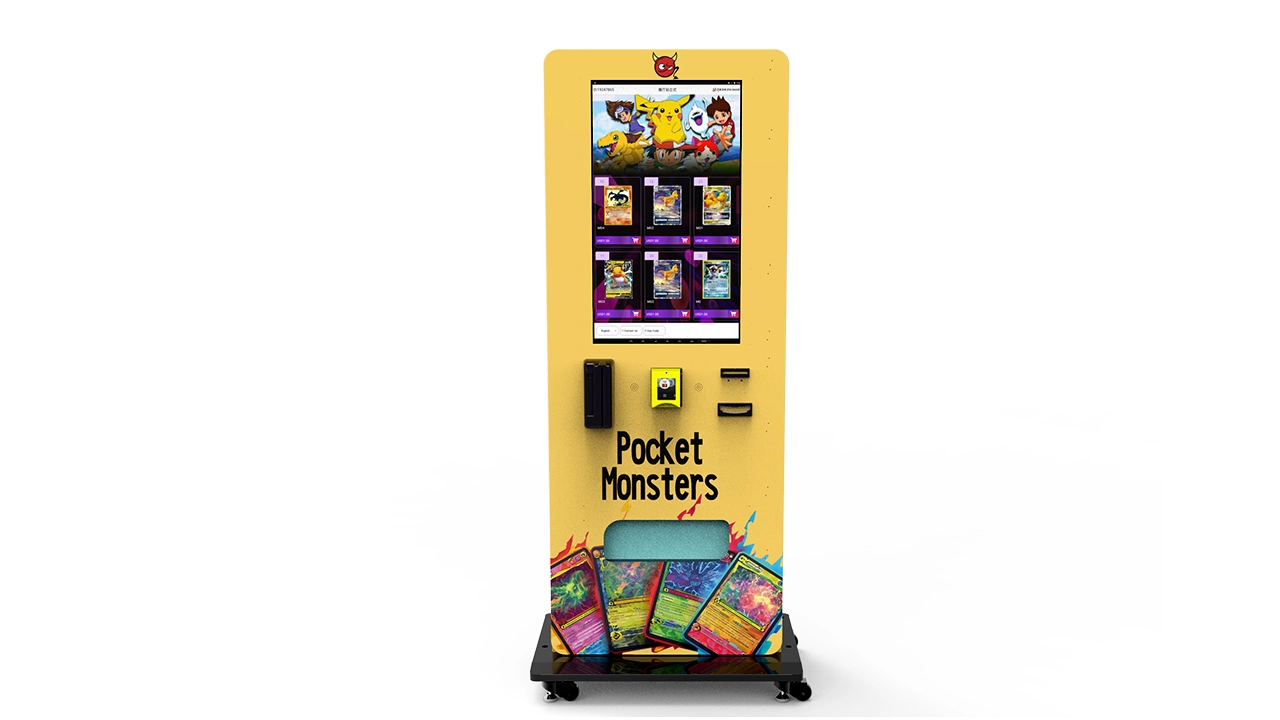
A 32-inch touchscreen trading card vending machine is a good starting point for most locations because it gives you enough screen real estate to display product images and pricing clearly. It also allows customers to browse categories without having to squint at a small display. If you are placing a machine in a tight space, a wall-mounted card vending machine can be a smart choice, but remember that it limits your inventory capacity and may require more frequent restocking.
Do not underestimate the importance of the payment system. In Europe and North America, customers expect contactless payments, Apple Pay, and Google Pay. A machine that only accepts cash or chip cards will lose sales, especially among younger buyers. I also recommend machines with remote monitoring so you can track inventory levels and sales data without visiting each location. This is not a luxury; it is a necessity if you have more than two or three machines.
Location Selection and Placement Strategies
You can have the best sourcing in the world, but if the machine is in the wrong place, it will not matter. Location is the other half of the equation. I have placed machines in comic book shops, game stores, mall corridors, and even a laundromat. The results vary wildly. The best performing machines are in locations where the target audience already gathers for related activities. A comic shop with a weekly game night is a goldmine. A random convenience store with no card culture is a desert.
When evaluating a location, I look for three things: foot traffic, dwell time, and the existing customer profile. Foot traffic matters, but dwell time matters more. A place where people linger, like a gaming café or a hobby shop, gives them time to browse and make an impulse purchase. A high-traffic transit hub may have thousands of people passing by, but if they are in a hurry, they are not buying trading cards. I have also found that locations with a dedicated card section or a community bulletin board tend to perform better because they signal that cards are welcome there.
Do not sign a long-term lease for a machine until you have tested the location for at least three months. I use a simple revenue share model with many of my hosts: they get a percentage of sales instead of a fixed monthly rent. This aligns incentives and makes it easier to move the machine if it underperforms. If a host insists on a fixed fee, I ask for a trial period or a clause that allows me to terminate with 30 days’ notice. Protecting your flexibility is critical in this business.
Comparing Business Models: Buy, Lease, or Revenue Share
One of the most common questions I get is whether to buy a machine outright, lease it, or enter a revenue-sharing agreement with a location owner. There is no single right answer, but here is how I think about it based on my experience.
| Model | Initial Cost | Control | Risk | Best For |
|---|---|---|---|---|
| Buy Outright | $6,000 – $15,000 | Full control | High upfront capital | Operators with capital and experience |
| Lease | $150 – $400/month | Limited control | Lower upfront, but ongoing cost | New operators testing the market |
| Revenue Share | Minimal upfront | Shared control | Dependent on host location | Operators with strong host relationships |
In my own route, I prefer to buy machines outright once I have validated a location. The upfront cost is painful, but the long-term margin is much better. Leasing makes sense if you are testing a new area or if you do not have the capital to buy multiple units. Revenue share is a great way to get into a prime location without a big upfront payment, but you have to be careful that the host does not interfere with your pricing or product selection. I have had hosts try to dictate what I stock, and that never ends well.
Operational Maintenance and Repairs
No matter how good your machine is, it will break down. Card dispensers jam, screens freeze, and payment systems glitch. The key is to have a plan for vending machine repair before you need it. I have a local technician who handles hardware issues, and I have learned to do basic troubleshooting myself. You should know how to reset the machine, clear a jam, and check the network connection. These simple skills will save you hundreds of dollars in service calls.
I also recommend keeping spare parts on hand, especially for high-wear items like card dispensing wheels and sensors. Ordering a replacement part and waiting for shipping can mean a week of downtime, which is lost revenue and lost customer trust. In my experience, proactive maintenance is far cheaper than reactive repairs. I schedule a monthly check for each machine, even if it is just a visual inspection and a clean of the sensors.
Remote monitoring is a game-changer. I can see sales data, inventory levels, and error codes from my phone. This allows me to schedule restocking visits only when needed, rather than driving to each location on a fixed schedule. It also helps me spot issues early, like a product that is not selling or a dispenser that is jamming repeatedly. If you are serious about running a profitable route, invest in machines with good telemetry.
Restocking and Inventory Management
Restocking frequency depends on your sales volume and the capacity of your machine. A high-traffic location might need restocking every three to five days, while a slower location might only need it weekly or bi-weekly. I track sell-through rates for every product and adjust my restocking schedule accordingly. The goal is to minimize the time between a product selling out and a replacement being available, without carrying so much inventory that your cash flow is tied up.
I also use a simple rule for inventory rotation: if a product has not sold in 60 days, it gets pulled and replaced. This is painful when you have invested in a sealed box that is not moving, but holding onto dead inventory only makes the problem worse. You have to be willing to take a loss on a slow mover and reinvest that money in something that sells. For trading card vending machine operators, data is your best friend. Track everything, review it weekly, and make decisions based on the numbers, not your gut.
Data-Driven Adjustments and Category Rotation
One of the biggest advantages of automated retail is the data you collect. Every sale tells you something about your customer base. I review my sales data monthly and look for patterns: which products sell best at which locations, what times of day are busiest, and which price points are most attractive. This information drives my sourcing decisions. If I know that a particular location sells more Pokémon than sports cards, I adjust my inventory mix accordingly.
I also rotate product categories to keep the machine fresh. A machine that has had the same stock for three months will see declining sales. I introduce new products every few weeks, even if it is just a small batch of a new release or a different mix of singles. This creates a sense of discovery and gives regular customers a reason to check the machine again. The trading card vending machine model works best when it feels like a mini retail experience, not a static vending box.
Common Mistakes and How to Avoid Them
I have made most of the mistakes in this business, so let me save you the trouble. The first mistake is overpaying for inventory. If you cannot buy at a price that supports a healthy margin, you should not buy at all. The second mistake is ignoring maintenance. A machine that is down for a week loses more than just sales; it loses customer trust. The third mistake is choosing a location based on rent rather than customer profile. A cheap location with no card culture is more expensive than a premium location with the right audience.
Another common error is failing to account for the cost of capital. If you are financing your machines or your inventory, the interest payments eat into your margin. I always calculate my true cost of capital before making a major purchase. Finally, do not ignore the legal side. Depending on where you operate, you may need a business license, a resale certificate, and insurance. In the EU, there are also data privacy rules that apply to any machine that collects customer information. Check with your local authorities before you launch.
Regulatory and Compliance Considerations
The regulatory environment for vending machines varies significantly between the US and Europe. In the US, you generally need a sales tax permit and a business license, but the requirements differ by state. In Europe, you may need to comply with VAT registration, product safety standards, and in some cases, local vending machine regulations. For example, in France, the term distributeur automatique covers a wide range of automated retail, and there are specific rules about consumer protection and machine safety. I recommend consulting with a local business advisor before you invest in a new market.
Insurance is another area that is often overlooked. A machine that falls and injures someone, or a card that turns out to be counterfeit, can lead to liability issues. I carry general liability insurance for each machine and make sure my contracts with location hosts clearly define who is responsible for what. This is not the most exciting part of the business, but it is essential for long-term survival.
Cost Breakdown and Return on Investment
Let me give you a realistic cost breakdown based on my experience. A new machine costs between $6,000 and $15,000. Initial inventory for a mixed stock of sealed boxes and singles will run another $3,000 to $8,000, depending on how deep you want to go. Installation, signage, and initial marketing might add $500 to $1,500. So your total startup cost for a single machine is roughly $10,000 to $25,000. This is a significant investment, and you should not expect to recoup it in a month.
In my experience, a well-operated machine in a good location can generate $1,000 to $2,500 per month in gross sales. After the cost of goods sold, location fees, and maintenance, your net profit might be $400 to $1,200 per month. That puts your payback period somewhere between 12 and 24 months. This is not a get-rich-quick scheme, but it can be a solid source of passive income if you are disciplined. According to IBISWorld, the vending machine industry in the US has been growing steadily, and automated retail is expected to expand further as consumers become more comfortable with self-service kiosks.
Self-Service Kiosks and the Future of Automated Retail
The broader trend of borne en libre-service and machine en libre-service is reshaping how consumers buy products. Trading cards are a natural fit for this model because they are standardized, relatively small, and appeal to a demographic that is comfortable with technology. I have seen a growing number of operators integrate card vending machines with loyalty programs and mobile apps, which increases customer retention and average order value. The solution de vente automatisée is not just about convenience; it is about creating an engaging retail experience.
In Europe, the adoption of automated retail has been slower than in the US, but it is accelerating. A report from Eurostat indicates that consumer spending on hobby and leisure products has remained stable, and the convenience of automated retail is attracting new customers. I believe that card vending machines will become a common sight in hobby shops, malls, and even airports over the next few years. The operators who succeed will be those who treat sourcing as a strategic function, not a logistical chore.
Final Thoughts on Sourcing Sports Cards for Vending Machines
If you are serious about this business, start with sourcing. Build relationships with distributors, learn to evaluate bulk lots, and understand your true cost of goods. The machine is a tool, not the business. The business is buying cards at the right price and selling them at a price that supports your operating costs and a reasonable profit. There is no secret formula, but there is a discipline that comes with experience. I have had my share of failures, and I have learned from each one. The operators who survive are the ones who are willing to adapt, track their data, and treat this like a business, not a hobby.
According to the U.S. Small Business Administration, small retail businesses typically need to maintain a gross margin of at least 30 to 40 percent to cover overhead and generate a profit. That is a useful benchmark for your card pricing. If your margin is below that, you need to either raise prices or lower your sourcing costs. And remember, the market is always changing. What sells this year might not sell next year. Stay flexible, keep learning, and do not be afraid to make changes when the data tells you to.
I also want to add a brief disclaimer: the figures I have shared are based on my own operational experience and should be treated as estimates, not guarantees. Actual results will vary depending on your location, inventory mix, and management efficiency. Always do your own research and, if possible, talk to other operators in your area before making significant investments. This is a business like any other, and it rewards careful planning and hard work.
Frequently Asked Questions
Are card vending machines profitable?
Yes, they can be profitable, but it depends heavily on location, sourcing, and operational discipline. In my experience, a well-run machine can generate $400 to $1,200 per month in net profit after all costs. However, many machines fail because operators overpay for inventory or place them in poor locations.
How much does a card vending machine cost?
A new machine typically costs between $6,000 and $15,000, depending on configuration and features. Initial inventory will add another $3,000 to $8,000. Total startup cost for a single machine is usually $10,000 to $25,000.
How long does it take to recoup the investment?
Most operators see a payback period of 12 to 24 months, assuming the machine is placed in a good location and managed efficiently. If you are paying high lease fees or your inventory is not selling, the payback period will be longer.
Should a beginner buy or lease a machine?
If you are new to this business, leasing can be a good way to test the market with lower upfront costs. However, leasing reduces your long-term margin. I recommend starting with a single machine, learning the ropes, and then buying outright once you have validated your model.
Where is the best place to put a card vending machine?
The best locations are places where your target audience already gathers, such as comic book shops, game stores, hobby shops, and mall corridors. Look for high foot traffic, dwell time, and a customer profile that matches card buyers.
What permits or licenses do I need?
Requirements vary by region. In the US, you typically need a business license and a sales tax permit. In the EU, you may need VAT registration and compliance with local consumer protection laws. Check with your local authorities before launching.
How do I choose a reliable equipment supplier?
Look for manufacturers with a track record of reliability, good customer support, and accessible spare parts. I have had positive experiences with Zhongda Smart, but you should compare multiple options and read reviews from other operators before deciding.
What should I do if the machine breaks down?
Have a plan in place before it happens. Learn basic troubleshooting, keep spare parts on hand, and have a local technician you can call. Remote monitoring can help you identify issues early and schedule repairs before they become costly.
How can I reduce restocking and maintenance costs?
Use remote monitoring to track inventory levels and sales data, so you only visit locations when needed. Rotate products based on sales data to avoid dead stock, and invest in a machine with reliable components to minimize breakdowns.