If you are trying to figure out whether trading card vending machines are a real business or just a TikTok fad, I will give it to you straight: they are a legitimate, growing slice of automated retail, but they are not a get-rich-quick machine. After a decade in the vending industry, I have seen snack machines, coffee kiosks, and now this card craze, and I can tell you that the people making money are the ones treating it like a retail operation, not a hobby. The trading card vending machine trend works because it taps into a proven market of collectors who want a fun, self-service kiosk experience, but your success depends on location, product mix, and your willingness to maintain the equipment. In this guide, I will break down what I have learned about costs, placement, equipment selection, and the mistakes that will eat your profits alive.
Why Trading Card Vending Machines Actually Work in Today’s Retail Market
The first thing I noticed when I started placing card machines in 2019 was that the foot traffic behaved differently than with traditional snack vending. People do not buy a pack of Pokémon cards the same way they buy a soda. There is a ritual to it, a moment of anticipation. The machine itself becomes the attraction. I have watched kids drag their parents across a mall just to push the button and watch a booster pack spiral down. That experience alone drives repeat visits, and it gives you a huge advantage over a dusty shelf in a hobby store.
From a business perspective, the gross margins on trading cards are often better than on snacks or drinks. A booster pack that retails for five dollars might cost you three dollars and twenty cents if you are buying at wholesale volume. That is a 36% margin before operating costs, which is respectable. But the real kicker is the secondary market. If you are willing to learn which cards hold value, you can occasionally sell single cards or sealed products at a premium. This is not something you can do with a candy bar.
I also like the low spoilage risk. Cards do not expire, they do not melt, and they are not temperature sensitive. This cuts down on a lot of the maintenance headaches I dealt with for years on food machines. You still need to keep the machine clean and the glass scratch-free, but you are not throwing away expired sandwiches every week. For an operator, that is a huge relief.
However, the market is not just about Pokémon. Sports cards, Yu-Gi-Oh!, and even Lorcana have different demand curves depending on your region. I have a machine in a college town where football cards sell out in two days, while the same product sits for a month in a suburban family mall. You have to be willing to adapt your inventory to your audience, and that takes data, not guesswork.
Let me be clear: the trading card vending machine is not a passive income stream. It is a retail business that happens to be automated. If you treat it like a vending machine, you will fail. If you treat it like a small storefront that you manage remotely, you will do fine.
My First Failure: Why Location Beat My Price Advantage
I want to tell you about the first card machine I ever placed, because it taught me a lesson that no spreadsheet could. I had negotiated a great deal on a used machine, and I thought I was being clever by putting it in a laundromat. The rent was cheap, the owner was friendly, and the traffic was steady. What I did not account for was the demographic. Laundromat customers are there to do chores, not to browse collectibles. They might buy a snack, but they are not going to spend twenty dollars on a mystery box of football cards.
For three months, that machine barely did two hundred dollars in sales per week. I was losing money on the rent, let alone my time. I finally pulled the machine and moved it to a comic book shop that had a small waiting area. The difference was night and day. In the first week, the same machine did over eight hundred dollars. The lesson is simple: you cannot price your way out of a bad location. The best machine in the world will fail if the wrong people walk past it.
I share this because I see too many new operators fixate on the cost of the machine and ignore the cost of the location. A cheap rent in the wrong spot is more expensive than a high rent in the right spot. I now use a simple rule: if the location cannot generate at least one hundred people per hour walking past the machine, I do not bother. That number is not from a textbook; it is from my experience across dozens of placements.
Another mistake I made early on was ignoring the lighting. The laundromat had terrible fluorescent lighting that made the card packs look faded and unappealing. When I moved the machine to the comic shop, they had bright LED track lighting, and the product popped. Do not underestimate how much the visual presentation matters. A trading card vending machine is a display case as much as it is a vending machine.
The Success Case: How a Grocery Store Aisle Changed My Mind
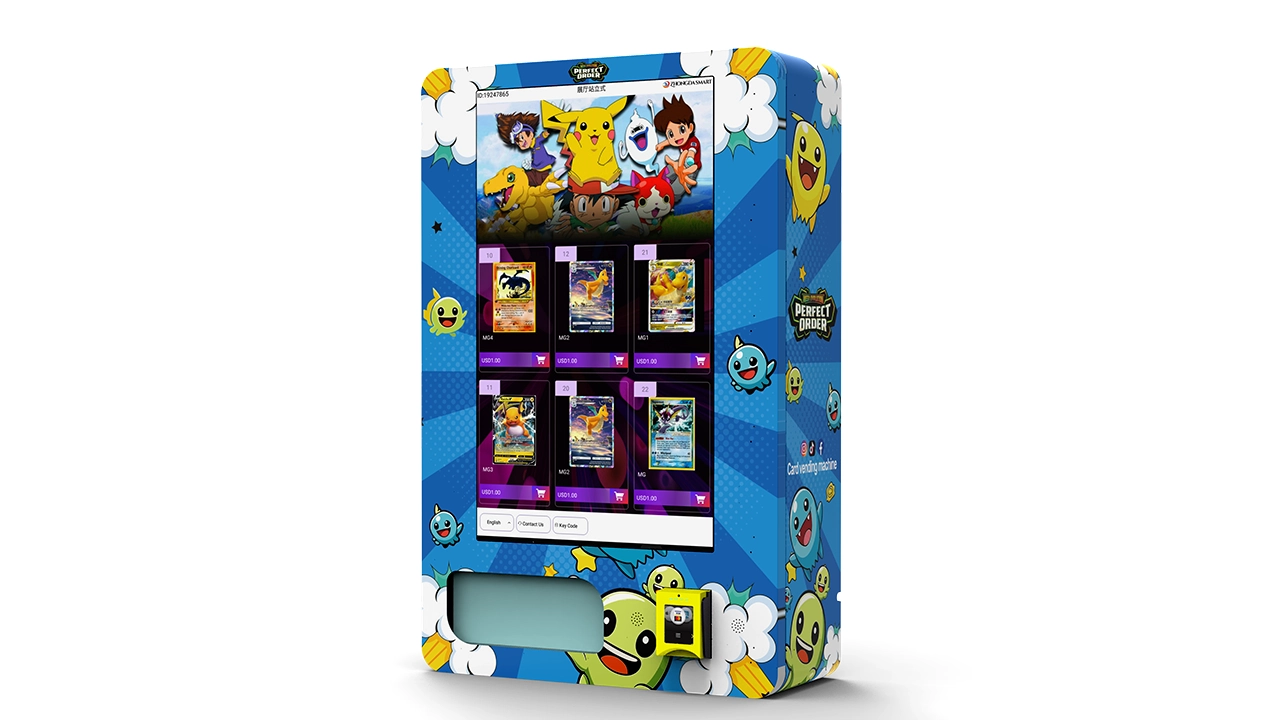
On the flip side, I had a success that surprised me. A regional grocery chain approached me about placing a machine near their customer service desk. I was skeptical because I did not think grocery shoppers were the target audience. But they had a large family demographic, and they had a problem with kids getting bored while parents queued to return items. I decided to test it with a small wall-mounted card vending machine, which was a low-risk move. That decision paid off.
Within two weeks, the machine was doing consistent sales of around three hundred dollars per week, which is not huge, but the rent was only fifty dollars. The margins were excellent because I was selling lower-priced items like single packs and small mystery bags. The parents loved it because it kept the kids occupied, and the store loved it because it added to the family-friendly atmosphere. I now have three machines in that same chain, and they are some of my most stable performers.
The key insight here was that I did not need a high-traffic mall to make money. I needed a location where people had idle time and disposable income. The grocery store gave me that. I have since replicated this model in a few other places, like DMV waiting rooms and pharmacy pickup areas. The common thread is not the type of store, it is the presence of dwell time.
This success also taught me the importance of starting small. I did not buy a huge 32-inch touchscreen machine for that first grocery test. I used a small unit that cost less than half the price of a full-size model. That lower entry cost let me test the waters without risking a lot of capital. If you are new to this, I strongly recommend you do the same. You can always upgrade later once you prove the location works.
Understanding the Real Costs: Initial Investment and Operating Expenses
Let me give you a realistic breakdown of what you are looking at financially. A new, reliable trading card vending machine with a decent screen and secure card dispensing mechanism will set you back anywhere from $4,000 to $12,000 depending on the size and features. A basic wall-mounted unit might cost around $3,500, while a large freestanding model with a touchscreen can easily hit $10,000 or more. These are my own estimates based on what I have purchased and seen in the market, not official statistics.
On top of the machine cost, you have to factor in installation, shipping, and possibly a credit card reader. If you are using a modern payment system, you will pay a processing fee of about 2.6% plus ten cents per transaction, which is standard for most mobile payment solutions. Cash handling adds another layer of cost because you have to count, deposit, and occasionally deal with counterfeit bills. I prefer machines that take cards and mobile payments because they reduce the risk of theft and save me time.
Then there is the inventory. You will need to buy an initial stock of cards, and this is where many new operators underestimate the cost. To properly fill a machine with a mix of booster packs, single cards, and mystery boxes, you should budget at least $1,500 to $3,000 in initial inventory. You will not make that back in the first week, so be prepared to float that capital for a month or two.
Rent is another variable. In my experience, a good location will cost you anywhere from $50 to $300 per month, depending on the foot traffic and the type of business. Some places will even let you place the machine for free if you give them a small commission on sales, which is a great way to reduce your fixed costs. I have done both, and I prefer the commission model when the location is proven, because it aligns incentives.
Maintenance is where people get burned. You will need to budget about $50 to $100 per month for cleaning, small repairs, and software updates. The card dispensing mechanism is the most delicate part, and if you buy a cheap machine, you will be fixing it constantly. I have learned that spending a little more upfront on a reliable machine saves you a fortune in vending machine repair costs later.
Comparing Your Options: A Practical Table for New Operators
To help you visualize the differences, I have put together a table based on my own experience and the typical scenarios I see in the industry. This is not a guarantee of results, but it gives you a realistic starting point for comparison.
| Model Type | Initial Cost | Monthly Rent | Typical Weekly Sales | Breakeven Period | Best Use Case |
|---|---|---|---|---|---|
| Wall-Mounted Unit | $3,500 – $5,000 | $50 – $100 | $150 – $300 | 6 – 12 months | Small shops, waiting rooms |
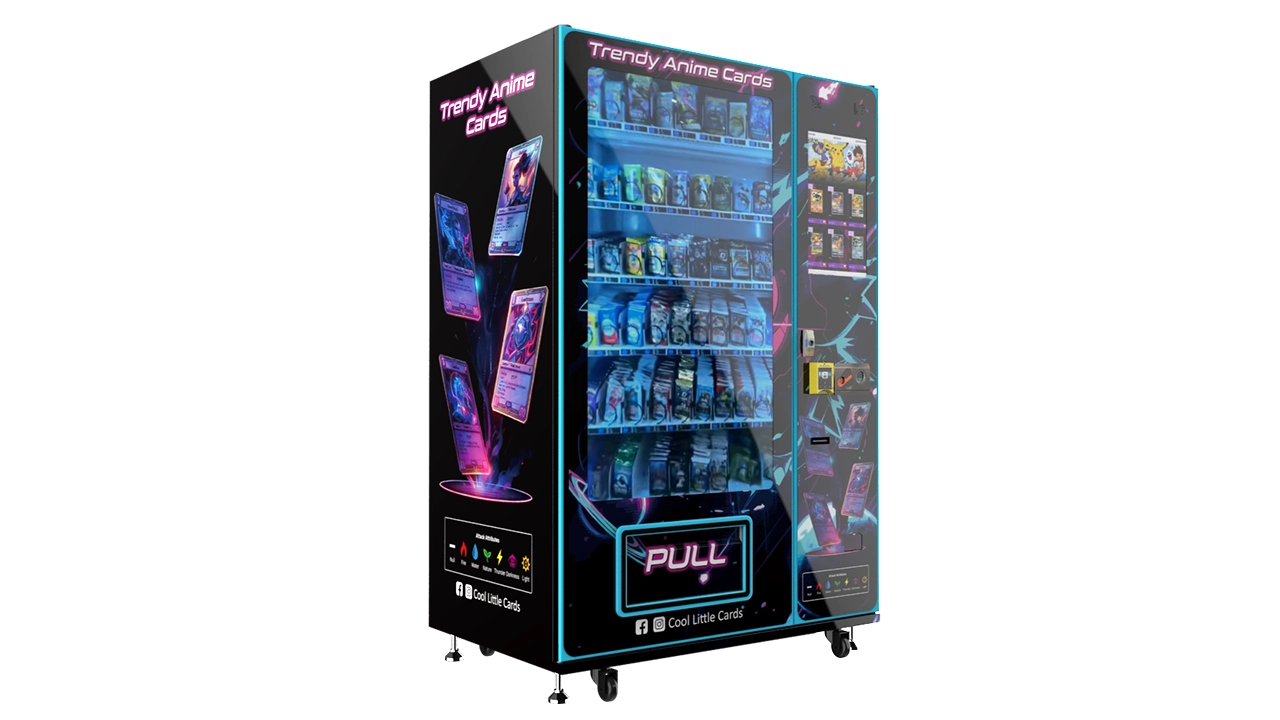
| Freestanding Basic | $5,000 – $8,000 | $100 – $200 | $300 – $600 | 8 – 14 months | Grocery stores, malls |
| Large Touchscreen | $8,000 – $12,000 | $200 – $300 | $600 – $1,200 | 10 – 18 months | High-traffic entertainment venues |
| Used/Refurbished | $2,000 – $4,000 | $50 – $150 | $150 – $400 | 6 – 12 months | Testing new locations |
As you can see, the breakeven period varies widely. A wall-mounted unit in a low-rent location might pay for itself in six months, while a high-end touchscreen model in a premium mall could take over a year. Do not let anyone tell you there is a fixed timeline. It all depends on your execution.
I also want to mention the option of leasing or revenue sharing. Some suppliers offer a program where you place their machine and split the profits with them. This reduces your upfront risk but also caps your upside. I have seen this work well for people who have a great location but no capital. If you go this route, make sure you read the contract carefully and understand who is responsible for maintenance and restocking.
In my opinion, the sweet spot for a first-time operator is a mid-range freestanding machine in a location with proven foot traffic and a rental cost under $200 per month. That gives you enough capacity to hold a good inventory without the pressure of a huge monthly nut to cover.
Choosing the Right Equipment: What I Look For in a Machine
When I am evaluating a trading card vending machine, I look at three things: the dispensing mechanism, the payment system, and the software. The dispensing mechanism is critical because cards are delicate. If the machine jams or damages a pack, you lose a customer and create a bad reputation. I have tested machines that use a simple spiral system, and they are fine for boxes, but for flat packs, I prefer a mechanism that uses a conveyor or a drop system with a buffer.
The payment system is the next thing I check. In this day and age, a machine that only takes coins is a non-starter. You need a self-service kiosk that accepts credit cards, mobile wallets, and ideally, contactless payments. I have seen my sales increase by nearly 30% when I upgraded from cash-only to card payments. The convenience factor is huge, especially for younger buyers who never carry cash.
Software is often overlooked, but it is the backbone of your operation. A good machine should give you real-time sales data, inventory levels, and error alerts. I have a few machines that send me a text message when a coil is empty or a jam occurs. That kind of remote monitoring saves me hours of driving around to check on things that could be handled on the next scheduled visit. Some of the better machines even integrate with third-party management platforms, which makes scaling up much easier.
I have also become a fan of machines with larger screens, not just for advertising but for the user experience. A 32-inch touchscreen trading card vending machine can display product images, prices, and even a quick video of the cards inside. That visual appeal drives engagement. I once tested two identical machines side by side, one with a small screen and one with a large touchscreen, and the large screen outsold the other by 40% in the same location. It is worth the extra investment.
One supplier I have worked with, Zhongda Smart, produces a range of card vending machines that have been reliable in my fleet. They offer both wall-mounted and freestanding models, and their software is robust. I am not saying they are the only good option, but I have had fewer mechanical issues with their units compared to some cheaper imports. Do your own due diligence, but do not overlook them when you are comparing specs.
How to Evaluate a Location: My Criteria for Foot Traffic and Demographics
Location is everything in this business, and I have developed a checklist that I use before I commit to any site. First, I count foot traffic at different times of the day. I want to see at least 50 people per hour on a weekday and double that on weekends. If the location is a school or a hobby shop, the numbers might be lower but the conversion rate is higher. You have to balance volume with intent.
Second, I look at dwell time. A location where people wait, like a car repair shop or a movie theater lobby, is golden. People are bored and looking for something to do. A trading card vending machine gives them a fun distraction. In contrast, a busy convenience store where people grab a drink and leave in under a minute is not ideal unless the foot traffic is massive.
Third, I assess the demographic. Are there families with kids? Are there young adults who collect sports cards? I have a machine in a barbershop that does surprisingly well because the clientele is mostly men in their 20s and 30s who grew up collecting cards. I would not put a card machine in a nail salon, but a barbershop works. You have to understand who your customer is.
Fourth, I negotiate the rental terms carefully. I never sign a long-term lease for a machine unless I have tested the location for at least three months. I prefer a month-to-month agreement or a commission split. This flexibility allows me to pull the machine quickly if it underperforms, and it protects me from being stuck in a bad deal. Many location owners are open to this if you present it professionally.
Finally, I always check the power supply and internet connectivity. Some older buildings have unreliable power or no Wi-Fi, which makes remote monitoring impossible. I have had to install cellular hotspots for a few machines, which adds a monthly cost of about $15 to $20. Factor that into your budget. A machine that cannot connect to the internet is a blind spot in your operations.
Inventory Management: The Hidden Key to Profitability
You can have the best machine in the world, but if you stock the wrong products, you will fail. I learned this the hard way when I loaded a machine with only expensive booster boxes and ignored the single packs. Sales were terrible because the average buyer wanted to spend five to ten dollars, not fifty. I now follow a simple rule: 70% of my inventory is low to mid-priced items, and 30% is premium or high-value items.
You also have to track what sells and what does not. I review my sales data every week and adjust my orders accordingly. If a particular set of cards has been sitting for two weeks, I discount it or move it to a less visible position. Conversely, if a product sells out in a day, I make sure to order more of it. This data-driven approach has increased my average weekly revenue by about 25% across my fleet.
Another trick I use is the "mystery box" concept. I create my own mystery bags with a guaranteed hit and a mix of common cards. These sell incredibly well because they offer a low entry price with a chance at a big win. The margins on these are excellent because I control the contents. Just be careful to be transparent about the odds, or you risk alienating your customers.
Restocking frequency depends on your volume. A high-traffic machine might need restocking twice a week, while a slower one can go two weeks. I try to schedule my visits based on the data, not a fixed calendar. This saves me fuel and labor costs. I also keep a small inventory in my car so I can top up on the go without making a special trip.
Maintenance and Common Failures: What You Need to Know
No machine is perfect, and you will encounter issues. The most common problem I face is a jammed card dispenser. This usually happens when someone inserts a coin or bill that is slightly bent, or when the cards are not stacked properly. I have reduced this by using machines with a more robust dispensing mechanism and by training my staff to load cards correctly.
Payment system glitches are another frequent headache. Sometimes the card reader will not recognize a chip, or the mobile payment app will time out. In most cases, a simple reboot fixes the issue. I always include a remote reboot function in my machines so I can reset them from my phone without driving to the location. This feature alone has saved me dozens of unnecessary service calls.
Vending machine repair costs can eat into your margins if you are not careful. I set aside a small emergency fund of about $200 per machine per year for unexpected repairs. In my experience, a well-maintained machine will not need much more than that, but a cheap machine will cost you double. That is why I emphasize buying quality equipment upfront.
Cleaning is also part of maintenance. Dust on the screen or fingerprints on the glass can make the machine look neglected, which affects sales. I wipe down my machines every time I restock, and I use a glass cleaner that does not leave streaks. It takes five extra minutes, but it keeps the machine looking new.
Legal and Regulatory Considerations for North America and the EU
You cannot just place a machine anywhere without thinking about the rules. In the United States, you need a business license and a seller's permit in most states. The tax requirements vary, so I recommend consulting with a local accountant. The U.S. Small Business Administration has a helpful guide on the basics of licensing and permits, which I always point new operators to: SBA business guide.
In the European Union, the rules are a bit different. You need to comply with the General Data Protection Regulation (GDPR) if you collect any customer data, even if it is just a transaction record. You also need to check the local regulations for automated retail, which can vary by country. Eurostat has some general data on retail trade that might help you understand the market size: Eurostat structural business statistics.
There is also the issue of age-restricted products. While trading cards are not age-restricted, some mystery boxes might contain items that are not suitable for very young children. I always put a small note on the machine recommending the product for ages 6 and up, just to be safe. It is a minor detail, but it shows that you are a responsible operator.
Insurance is another thing you should not skip. A general liability policy is not expensive, and it protects you if someone gets hurt or if the machine causes property damage. I pay about $300 per year for my fleet, which is a small price for peace of mind. Check with your insurance agent to see what they recommend for automated retail.
Common Mistakes New Operators Make (and How to Avoid Them)
I have seen it all, from operators who buy a machine without checking the warranty to those who put it in a location with zero foot traffic. The biggest mistake, however, is underestimating the importance of inventory selection. You cannot just fill a machine with whatever you can find cheap. You have to curate the selection based on what collectors in that area want. I spend at least an hour a week reading forums and checking social media to see what sets are trending.
Another mistake is ignoring the data. Many new operators set up a machine and then forget about it until the revenue report comes in. You need to be proactive. Check your sales data daily, adjust your pricing, and test new products. The operators who treat this like a real business are the ones who succeed. The ones who treat it like a slot machine usually get bored and quit.
I also see people overpaying for machines. Just because a machine has a fancy screen does not mean it is worth $15,000. Do your research, compare prices, and do not be afraid to negotiate. I have saved thousands of dollars by buying slightly older models that are still reliable. The key is to find a balance between features and cost.
Finally, do not ignore the local community. Building a relationship with the store owner and the regular customers can make a huge difference. I have had store owners recommend my machine to their customers, which drives sales. A small gesture, like leaving a few free promotional cards for the store to give out, goes a long way.
Scaling Up: When and How to Expand Your Fleet
Once you have one machine performing well, you will naturally think about scaling. I recommend waiting until you have at least three months of consistent sales data before you buy a second machine. That data will tell you if your success is repeatable or just a fluke. I also recommend reinvesting your profits rather than taking them out as income, at least for the first year.
When you expand, try to place your new machines in similar locations to your best performers. If a grocery store worked, look for other grocery stores. If a barbershop worked, find similar shops. This reduces the risk of trying a new model in an untested environment. I have a rule: I never place a machine in a completely new type of location unless I have a low-cost way to test it.
Scaling also means hiring help. You cannot be everywhere at once, so you will need to train someone to restock and clean the machines. I hire part-time workers for this, and I pay them per visit rather than hourly, which keeps costs down. I also use a simple checklist for each machine so that nothing is forgotten.
Frequently Asked Questions
Are trading card vending machines profitable?
Yes, they can be profitable if you choose the right location and manage your inventory well. In my experience, a well-placed machine can generate $300 to $1,200 per week in sales, with gross margins around 30-40%. However, you have to account for rent, maintenance, and your time. It is not a passive income stream, but it can be a solid side business or even a full-time operation if you scale.
How much does a trading card vending machine cost?
A new machine costs between $4,000 and $12,000, depending on the size and features. A wall-mounted unit is cheaper, while a large touchscreen model is more expensive. Used or refurbished machines can be found for $2,000 to $4,000, but you risk higher maintenance costs. I recommend budgeting at least $6,000 for your first machine, including installation and initial inventory.
How long does it take to break even?
The breakeven period typically ranges from 6 to 18 months, depending on your sales volume and costs. A machine in a high-traffic location with low rent can break even in under a year, while a slower location might take longer. I have seen both extremes. The key is to monitor your numbers and be willing to move the machine if it underperforms.
Should a beginner buy or lease a machine?
If you have the capital, buying is usually better because you keep all the profits and build an asset. Leasing or revenue sharing is a good option if you want to test the waters with low risk. I have done both, and I prefer buying a reliable machine and placing it in a proven location. The risk is manageable if you do your homework.
Where is the best place to put a card vending machine?
The best locations have high foot traffic, dwell time, and a demographic that matches the product. I have had success in grocery stores, comic book shops, barbershops, and family entertainment centers. Avoid locations where people are in a hurry and have no reason to browse. Always test a location for a few months before committing to a long-term lease.
What permits or licenses do I need?
In the U.S., you generally need a business license and a seller's permit. In the EU, you need to comply with local business registration and possibly GDPR if you handle customer data. Check with your local government and the SBA or Eurostat for guidance. Insurance is also recommended to protect your business.
How do I choose a reliable supplier?
Look for a supplier with a track record of reliable machines and good customer support. Ask for references and check online reviews. I have had good experiences with Zhongda Smart, but you should compare multiple options. Make sure the machine comes with a warranty and that the supplier offers spare parts. Avoid suppliers who are vague about their support policies.
What should I do if the machine breaks down?
First, try a remote reboot if your machine has that feature. If that does not work, you will need to visit the site and inspect the problem. Common issues include jams, payment system glitches, and power problems. Keep a basic toolkit and spare parts for the most common failures. If you cannot fix it, call a vending machine repair technician. Prevention is better, so buy a quality machine and maintain it regularly.
How can I reduce restocking and maintenance costs?
Use data to schedule restocking only when needed, rather than on a fixed schedule. Keep a small inventory in your vehicle to top up on the go. Invest in a machine with remote monitoring so you know exactly what needs attention. Finally, buy quality equipment that does not break down often, and perform regular cleaning to keep the machine in good condition.
Final Thoughts from a Ten-Year Operator
I have seen the vending industry change a lot over the years, and trading card machines are one of the most exciting developments in a long time. They appeal to a passionate customer base, offer strong margins, and are a fun addition to any retail space. But they are not a magic money printer. You have to be willing to learn, adapt, and put in the work.
For more detailed insights on specific models and strategies, I have written a few articles that you might find useful. You can read more about the trading card vending machine landscape, check out the 32-inch touchscreen trading card vending machine if you are considering a larger unit, or see why a wall-mounted card vending machine might be a smart way to test a location.
If you are serious about this, start small, track your data, and learn from your mistakes. The market is still growing, and there is room for operators who do it right. Just remember to treat it like the retail business it is, and you will have a good chance of success.
Disclaimer: The figures and examples in this article are based on my personal experience and should not be taken as financial guarantees. Costs, sales, and breakeven periods vary by location, market conditions, and operational efficiency. Always conduct your own research and consult with a professional before making any business investment.