If you are looking for the best wall-mounted trading card vending machine, the honest answer is that the best unit is not the most expensive one, nor the one with the flashiest screen—it is the one that fits your specific location, your restock routine, and your real-world foot traffic. I have spent over a decade placing automated retail equipment across the US and Europe, and I have learned that a wall-mounted card machine only makes money when the operator understands the economics of the location first. The best wall-mounted trading card vending machine for a comic shop in a suburban strip mall is completely different from the best unit for a busy card show or a high-traffic hobby store in a downtown core. In this guide, I will break down what actually matters when buying, placing, and running these machines, based on my own wins and losses.
Why Wall-Mounted Card Vending Machines Are Different
Wall-mounted trading card vending machines occupy a strange middle ground in automated retail. They are not full-sized vending machines that hold hundreds of products, and they are not tiny impulse-buy gumball machines either. They are designed specifically for trading cards, typically sports cards, Pokémon, and other collectible card games, and they offer a self-service kiosk experience that lets customers browse and buy sealed products without needing a staff member to unlock a display case.
The biggest advantage of a wall-mounted unit is the footprint. You can place it in a narrow hallway, next to a register, or in a corner that would otherwise be dead space. This makes it attractive to store owners who do not want to give up floor space for a full-size machine. But the compact size also means lower inventory capacity, which forces you to be much smarter about what you stock and how often you replenish.
From my experience, the operators who fail with these machines are the ones who treat them like a passive income stream. There is nothing passive about running card vending. You are constantly chasing the right product mix, dealing with card supply shortages, and monitoring the machine remotely to see which items are selling and which are sitting. The machine itself is just a tool; the real work is in the selection and the location.
I have also seen a common misconception that wall-mounted units are cheaper to run because they are smaller. That is only partially true. The per-unit cost of the machine is lower, but the maintenance and restocking labor can be just as high as a larger machine, especially if you are servicing multiple locations across a city.
What Makes a Wall-Mounted Card Machine "Best"
When I evaluate a wall-mounted trading card vending machine, I look at five things: build quality, payment system reliability, inventory capacity, software usability, and after-sales support. The screen size and the LED lights are nice to have, but they do not matter if the card dispensing mechanism jams on a regular basis.
Build quality is the first thing I check. I have opened up machines from different manufacturers and the difference in internal components is staggering. Cheaper machines use plastic gears and thin sheet metal that bends under the weight of a full load of cards. Better machines use metal gears, reinforced frames, and tamper-resistant locks. I have personally seen a cheap machine fail within three months because the spiral mechanism stripped its teeth from the weight of heavy sealed boxes.
Payment systems are the second critical area. The best wall-mounted trading card vending machine should accept credit cards, mobile payments, and ideally cash if the location demands it. But here is the thing: card readers fail more often than any other component. I have learned to choose machines that use standard, widely available payment modules from companies like Nayax, USA Technologies, or Cantaloupe, because replacement parts are easy to source and the support networks are reliable.
Inventory capacity matters more than most first-time buyers think. A wall-mounted unit that only holds 50 items will require restocking every few days in a good location, which eats into your margins. I prefer machines that can hold at least 100 items, even if that means a slightly larger footprint. The restock frequency is a hidden cost that most people do not calculate until they are driving across town every other day.
Software usability is often overlooked. The best wall-mounted trading card vending machine should have a backend dashboard that lets you see real-time sales data, change prices remotely, and adjust the product selection without visiting the machine. Some machines still require you to manually enter prices on the screen, which is a nightmare when you have ten machines in different locations.
Finally, after-sales support is the difference between a profitable operation and a headache. I have dealt with manufacturers in China, Europe, and the US, and I can tell you that the cheapest machine is rarely the best when you need a replacement part shipped quickly. A machine that is down for two weeks during a card release week can cost you more in lost sales than the price difference between a cheap and a mid-range unit.
Real-World Costs and Return on Investment
Let me give you some real numbers from my own operations. A good wall-mounted trading card vending machine from a reliable manufacturer will cost you between $2,500 and $6,000 depending on the configuration. If you buy from a budget supplier, you can get a basic unit for around $1,500, but I have learned the hard way that you will spend that savings on repairs within the first year.
Installation and setup add another $300 to $800, depending on whether you need an electrician and how complex the mounting is. You also need to factor in the cost of the initial inventory. For a wall-mounted unit, I typically load between $1,500 and $3,000 worth of cards, depending on the product mix. So your total initial investment is usually in the range of $4,500 to $10,000 per location.
Now, what can you expect in revenue? This varies wildly by location, but I have seen well-placed units in hobby shops generate between $800 and $2,500 per month in gross sales. A unit in a high-traffic card show or a convention center can do more, but those are temporary placements. The gross margin on trading cards is typically between 30% and 45%, depending on the product. So a unit doing $1,500 per month in sales might generate $500 to $600 in gross profit before expenses.
Your operating costs include restocking labor, payment processing fees (usually 3% to 5%), electricity, and occasional repairs. I estimate the monthly operating cost for a single wall-mounted unit at $150 to $300, assuming you are not paying someone a dedicated salary to service it. That means the payback period for a well-placed machine is usually 12 to 18 months. In a bad location, you might never pay it back.
According to IBISWorld, the vending machine industry in the US has grown steadily over the past five years, with operators increasingly moving toward specialized machines like card dispensers because they offer higher margins than traditional snacks and beverages (IBISWorld vending machine operators industry report). This aligns with what I see on the ground: the operators who are thriving are the ones who have niche products, not the ones running generic snack machines.
The Failure Case That Taught Me About Location
I want to share a specific failure because it shaped how I evaluate every new location now. About four years ago, I placed a wall-mounted card machine in a small family-run convenience store in a residential neighborhood. The store owner was enthusiastic, the rent was low, and the foot traffic seemed decent—about 150 customers per day. I thought it was a safe bet.
It was a disaster. The store's customer base was mostly older adults buying groceries and cigarettes. The few kids who came in were not interested in paying $15 for a pack of trading cards when they had no idea what was inside. The machine sat idle for weeks. I restocked it, changed the product mix, even added cheaper items, but the problem was not the product—it was the audience. The location simply did not have the right demographic for collectible cards.
I lost about $800 in that experiment after accounting for the machine, installation, and unsold inventory that I had to move to another location. The lesson was simple: you cannot force a card vending machine into a location just because it has foot traffic. The traffic has to be the right traffic.
Since then, I have developed a mental checklist for location evaluation. I look for stores that already sell trading cards or related hobby products. I look for locations near schools, game stores, or comic shops. I also check whether the store has a social media presence that can promote the machine. The best locations are not always the busiest; they are the ones where the customers already understand the value of a sealed booster pack.
How to Evaluate a Location Before You Commit
Location evaluation is not rocket science, but it requires discipline. I have a simple three-step process that I use for every potential placement, and it has saved me from repeating the mistake I just described.
First, I spend at least two hours in the store at different times of day. I watch who comes in, what they buy, and whether they linger. I am looking for customers between the ages of 10 and 35, which is the core demographic for trading cards. If I see parents with kids, that is a good sign. If I see mostly older adults, I move on.
Second, I talk to the store owner about their existing card sales. If they already sell cards from behind the counter and they tell me they cannot keep them in stock, that is a strong signal. If they do not sell cards at all, I ask why. Sometimes it is because they do not want to deal with the inventory, which is actually a good opportunity for a machine. But if they tried it and it did not sell, I take that as a warning sign.
Third, I check the foot traffic numbers. I do not trust vague estimates from store owners. I count customers myself for an hour or two. For a wall-mounted card machine, I want to see at least 100 people per day entering the store, and I want at least 10% of them to be in the target demographic. This is not a scientific formula, but it is a practical benchmark I have developed through trial and error.
One more thing: I always ask about the store's hours and whether they have a peak season. A store near a school will have strong sales during the school year and a slump in summer. A store near a convention center will spike during events. You need to understand these patterns before you commit, because they directly affect your restocking schedule and your revenue projections.
Comparing Wall-Mounted Units to Full-Size Vending Machines
Many operators ask me whether they should start with a wall-mounted unit or go straight to a full-size machine. The answer depends on your goals and your budget. I have run both, and they serve different purposes.
Full-size vending machines hold much more inventory, which means you can offer a wider variety of products and restock less frequently. They also have larger screens, better payment systems, and more room for branding. But they are expensive—typically $8,000 to $15,000 for a good unit—and they require significant floor space. They also need more power and are harder to move if the location does not work out.
Wall-mounted units are cheaper, easier to install, and can fit in locations where a full-size machine would never work. They are also less intimidating for first-time operators because the initial investment is lower. The downside is the limited capacity and the fact that you will be restocking much more often in a busy location.
I have seen successful operators use a hybrid approach. They start with a wall-mounted unit in a smaller store to test the market, and then when they prove the concept, they upgrade to a full-size machine or add a second wall-mounted unit in another location. This is a smart way to grow without putting all your capital at risk.
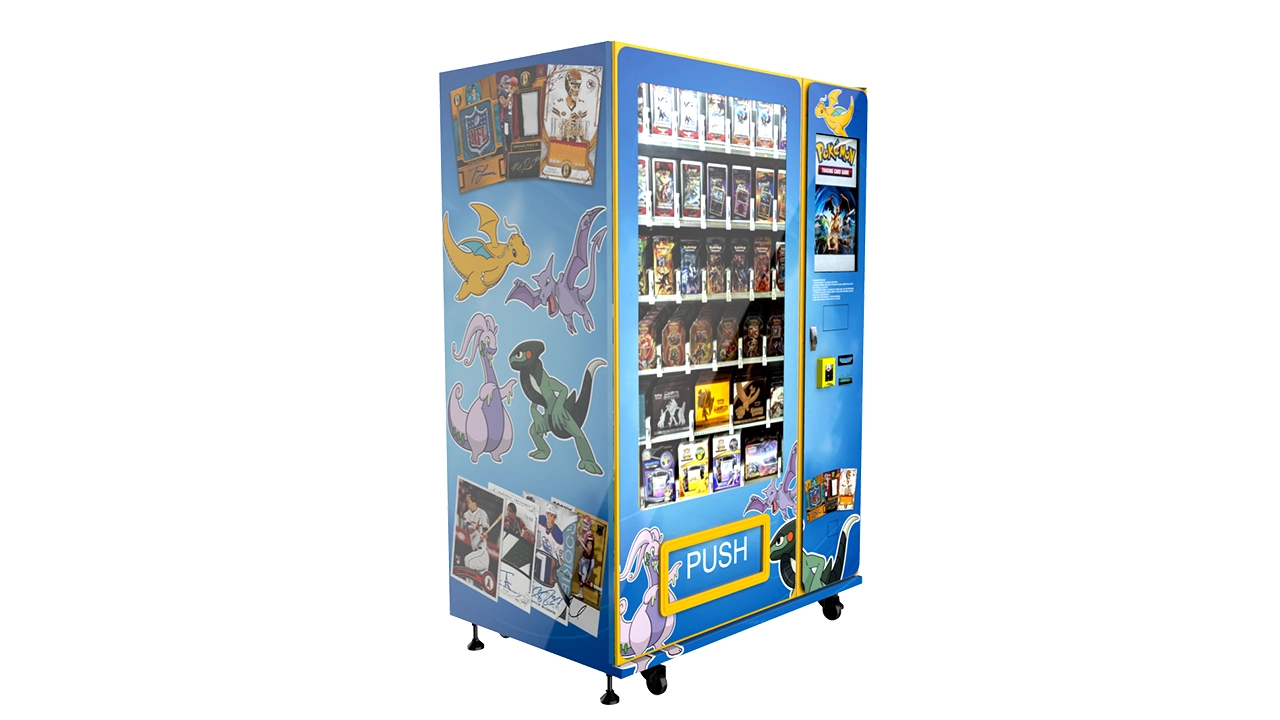
| Feature | Wall-Mounted Unit | Full-Size Vending Machine |
|---|---|---|
| Initial Cost | $2,500 – $6,000 | $8,000 – $15,000 |
| Inventory Capacity | 50 – 150 items | 300 – 600 items |
| Footprint | Minimal, mounts on wall | Requires floor space |
| Restock Frequency | Every 3 – 7 days in good locations | Every 1 – 2 weeks |
| Installation Complexity | Low, basic mounting and power | High, may require electrical work |
| Payback Period | 12 – 18 months | 18 – 30 months |
| Best Use Case | Small stores, test locations, narrow spaces | High-traffic areas, wide product mix |
This table is based on my own operational data and should be treated as a general guide, not a guarantee. The numbers will shift based on your location, product mix, and how efficiently you manage your restocking.
The Success Case: A Card Shop That Doubled Its Sales
On the flip side, I have a success story that shows what happens when everything aligns. I placed a wall-mounted unit in a small card shop in a mid-sized city in the Midwest. The shop had been operating for three years and had a loyal customer base, but the owner was struggling to keep up with demand during peak hours. Customers would ask for a specific booster box, and the owner would have to stop helping other customers to unlock the display case and retrieve it.
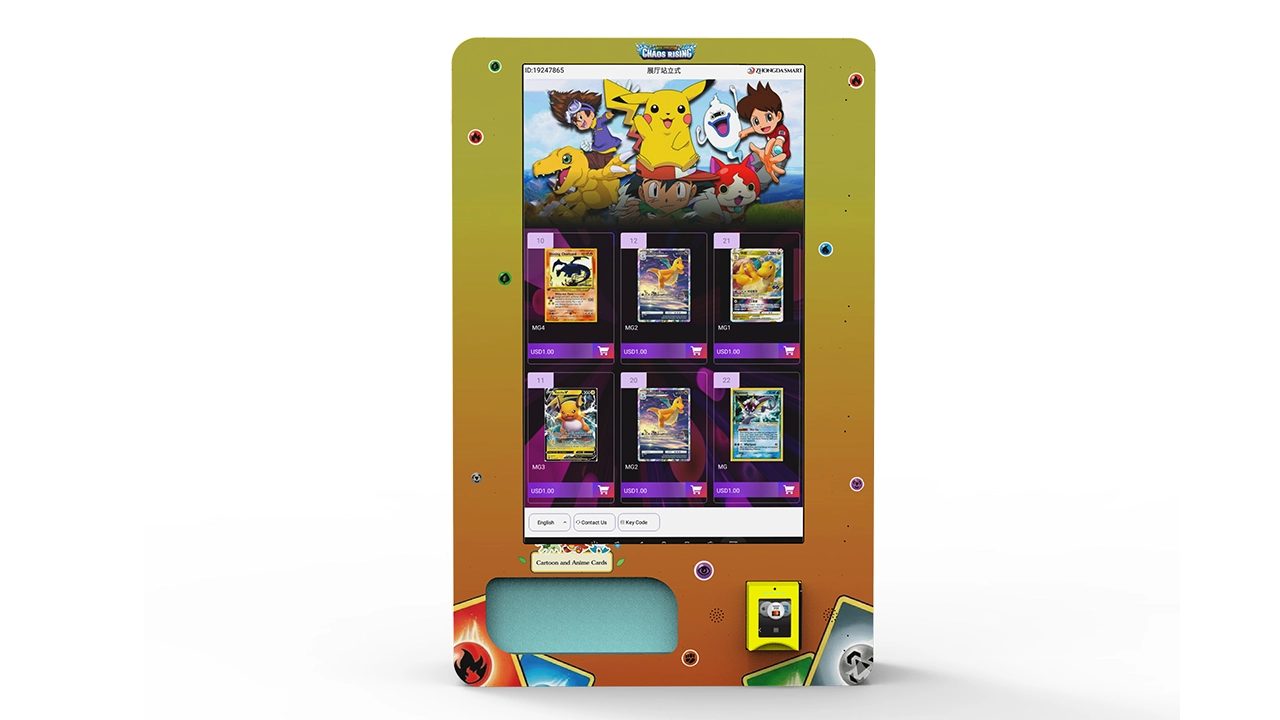
I proposed a wall-mounted trading card vending machine that would handle the impulse purchases and the lower-priced items, freeing up the owner to focus on higher-value sales. The machine was placed near the front door, right in the path of customers entering and exiting. I loaded it with a mix of Pokémon, sports cards, and some lower-priced accessories like sleeves and top loaders.
The results were immediate. In the first month, the machine generated over $1,800 in sales. The owner was surprised because he had not expected the machine to cannibalize his counter sales—but it actually increased them. Customers who came in for a quick pack from the machine often ended up browsing the store and buying more. The machine created a self-service option that reduced friction and increased average transaction value.
That machine has now been running for two years with minimal issues. The owner restocks it himself every few days, and he has become a strong advocate for the concept. The key to this success was that the location already had the right audience. The machine did not create demand; it simply captured demand that was already there.
Choosing the Right Manufacturer and Supplier
When it comes to buying a wall-mounted trading card vending machine, the manufacturer you choose matters more than any other decision. I have worked with several suppliers over the years, and I have developed a clear set of criteria for evaluating them.
First, I look for a manufacturer that has been in business for at least five years and has a track record of producing card-specific machines. There are many general vending machine manufacturers that have added a card machine to their lineup, but they often do not understand the specific requirements of card dispensing—like the need to handle different package sizes and the importance of a gentle dispensing mechanism that does not damage the product.
Second, I check the build quality by asking for detailed photos and videos of the internal components. I want to see metal gears, a solid frame, and a reliable dispensing mechanism. If the manufacturer cannot provide these, I move on.
Third, I evaluate their after-sales support. I ask about warranty terms, the availability of spare parts, and their response time for technical issues. A manufacturer that is located in a different time zone and takes three days to respond to a support ticket is not worth the savings.
One manufacturer that has consistently impressed me is Zhongda Smart. They have been producing card vending machines for several years and have a solid reputation for build quality and support. I have used their wall-mounted units in two of my locations, and they have performed reliably. Their machines use standard payment modules, which makes repairs easy, and their software dashboard is intuitive. I am not saying they are the only good manufacturer out there, but they are one that I trust based on my own experience.
Payment Systems and the Self-Service Experience
The payment system is the heart of the self-service kiosk experience. If the payment fails, the customer walks away, and you lose the sale. I have tested machines with different payment modules, and I have learned that reliability is more important than features.
Most modern wall-mounted card machines come with a standard card reader that accepts credit and debit cards, as well as mobile payments like Apple Pay and Google Pay. Some also accept cash, but I generally recommend against cash for card machines because it increases the risk of theft and requires more frequent collection.
The payment processing fees are a real cost that you need to budget for. Typically, you will pay between 3% and 5% of each transaction to the payment processor. This might not sound like much, but it adds up over time. I have negotiated better rates by using a single payment processor across all my machines, which gives me leverage to ask for a lower percentage.
Another thing to consider is the customer experience. The best wall-mounted trading card vending machine should have a clear, easy-to-use interface that lets customers browse the available products, see the price, and complete the purchase in under a minute. If the interface is confusing or slow, customers will abandon the transaction. I have seen machines with beautiful screens that were terrible to use because the menu structure was convoluted.
Restocking and Inventory Management
Restocking is the most labor-intensive part of running card vending machines, and it is where most operators lose money. The key is to develop a restocking routine that minimizes your time and maximizes your sales.
I use a simple rule: restock before the machine is empty, not after. If a machine is completely sold out of a popular item, you are losing sales every hour it stays empty. I check my machines remotely at least twice a day, and I restock when inventory drops below 30% for any given slot.
The product mix is another critical factor. I have learned that a mix of high-priced items (booster boxes, elite trainer boxes) and low-priced items (single packs, sleeves) works best. The high-priced items generate the revenue, while the low-priced items drive impulse purchases and keep the machine active.
I also track sales data by product and by location. This allows me to see which items are selling well and which are not. I rotate the product mix every few weeks based on this data. For example, if a particular Pokémon set is not selling, I will replace it with a newer set or a different product category.
According to Statista, the trading card game market has grown significantly in recent years, with the global market expected to reach billions in revenue (Statista trading card games market overview). This growth has created more demand for automated retail solutions, but it also means more competition. The operators who succeed are the ones who stay on top of their inventory data and adapt quickly to changing trends.
Maintenance and Troubleshooting
No matter how good your machine is, it will eventually need maintenance. The most common issues I have encountered are card jams, payment system failures, and screen malfunctions. You need to be prepared to handle these issues or have a reliable technician on call.
Card jams are the most frequent problem. They usually happen when a customer inserts a product that is slightly too large for the slot, or when the dispensing mechanism gets misaligned. I have learned to choose machines with a more forgiving dispensing mechanism that can handle slight variations in package size. I also include a clear instruction label on the machine that tells customers not to force products into the slots.
Payment system failures are less common but more frustrating. If the card reader stops working, the machine is effectively dead. I always carry a spare card reader in my car so I can swap it out quickly. I have also learned to choose machines that use standard payment modules, because finding a replacement part for a proprietary system is much harder.
Screen malfunctions are usually a sign of a deeper electrical issue. If the screen flickers or goes black, I first check the power supply and the connections. If that does not fix it, I call the manufacturer's support line. The best wall-mounted trading card vending machine manufacturers offer remote diagnostics, which can save you a lot of time and money.
Legal Considerations and Permits
Running a vending machine business is not just about buying a machine and placing it. You need to consider the legal and regulatory requirements, which vary by country and even by city.
In the United States, you will typically need a business license and a sales tax permit. Some cities require a specific vending machine permit, while others do not. I recommend checking with your local city hall or the U.S. Small Business Administration website to understand the requirements in your area (SBA guide on business licenses and permits).
In the European Union, the rules are different in each member state. You will need to register your business, obtain a VAT number, and comply with local consumer protection laws. The Eurostat website provides useful data on business regulations across the EU (Eurostat official website).
You also need to think about liability. If a customer buys a product from your machine and it is defective, you could be held responsible. I recommend having a clear refund policy and making sure your machine displays your contact information in case a customer needs to reach you.
Buy, Rent, or Revenue Share: Which Model Works Best
One of the most common questions I get is whether to buy a machine outright, rent one, or enter into a revenue-sharing agreement with a store owner. Each model has its pros and cons, and the right choice depends on your financial situation and your risk tolerance.
Buying a machine gives you full control and the highest potential return, but it also requires the most capital upfront. If the location fails, you are stuck with a machine that you need to move and reinstall elsewhere.
Renting a machine is a good option if you want to test the market without a large upfront investment. However, rental fees can eat into your profits, and you may not have the same level of control over the machine's configuration.
Revenue sharing is an attractive model for store owners because it requires no upfront cost from them. You provide the machine and the inventory, and the store owner provides the space and the foot traffic. You split the revenue, typically 50/50 or 60/40 in your favor. This model works well when the store owner is confident in their customer base but does not want to take on the financial risk.
I have used all three models, and I have found that buying is the best long-term strategy if you have the capital and you are confident in the location. Revenue sharing is a good way to get your foot in the door with a store owner who is hesitant. Renting is the least attractive option because you are paying for something that could be generating equity.
Common Mistakes New Operators Make
I have made almost every mistake in the book, and I have also watched other operators make the same errors. Here are the most common ones I see.
The first mistake is buying the cheapest machine available. I understand the temptation to save money, but a cheap machine will cost you more in repairs and lost sales. I have seen operators buy a $1,500 machine and then spend $800 in repairs within the first six months. A $3,000 machine would have been a better investment.
The second mistake is ignoring the location's demographic. As I described earlier, foot traffic alone is not enough. You need the right kind of foot traffic. I have seen machines placed in gyms, laundromats, and convenience stores that failed because the customer base was not interested in trading cards.
The third mistake is not tracking sales data. If you do not know which products are selling and which are not, you are flying blind. I use the software dashboard that comes with my machines to track sales by product, by time of day, and by location. This data is invaluable for making decisions about product mix and restocking schedules.
The fourth mistake is neglecting maintenance. A machine that is out of order for a week is not just losing sales; it is also losing customer trust. I have a maintenance checklist that I run through every time I visit a location, and I keep spare parts in my car so I can fix common issues on the spot.
The Role of Data in Optimizing Your Operation
Data is the difference between a hobby and a business. The best wall-mounted trading card vending machine operators treat their machines as data collection points, not just sales points.
I track a set of key metrics for each machine: daily sales, average transaction value, sell-through rate by product, and restock frequency. I use this data to make decisions about product mix, pricing, and whether to keep or move a machine.
For example, if I notice that a particular product has a sell-through rate of less than 20% over a month, I will replace it with something else. If a machine consistently generates less than $500 per month in sales, I will consider moving it to a different location. This data-driven approach has helped me avoid the trap of holding onto underperforming locations out of stubbornness.
I have also found that data helps when negotiating with store owners. If I can show a store owner that their location generated $1,200 in sales last month, they are more likely to agree to a revenue-sharing arrangement that is favorable to me. Numbers speak louder than promises.
Future Trends in Card Vending
The card vending industry is still young, and it is evolving quickly. I see several trends that will shape the market over the next few years.
First, the integration of better software and remote management tools will make it easier for operators to run multiple machines from a single dashboard. This will lower the barrier to entry and allow more small operators to enter the market.
Second, the use of larger touchscreens and interactive displays will improve the customer experience. Some machines already have screens that show product images, prices, and even videos of the cards inside a pack. This is a powerful sales tool, but it also increases the cost of the machine.
Third, the growth of the trading card market itself will drive demand for more machines. As more people collect cards, the need for convenient, self-service access to sealed products will increase. This is a positive sign for operators who are already in the space.
However, I also expect increased competition. As more operators enter the market, the best locations will become harder to secure. The operators who succeed will be the ones who have strong relationships with store owners and a proven track record of running profitable machines.
Final Thoughts on Choosing the Best Wall-Mounted Trading Card Vending Machine
There is no single best wall-mounted trading card vending machine that works for everyone. The best machine for you depends on your budget, your location, and your operational capacity. What I can tell you from years of experience is that the machine is only a small part of the equation. The real work is in the location selection, the product mix, and the ongoing maintenance.
I have seen operators make money with basic machines in great locations, and I have seen operators lose money with expensive machines in bad locations. The difference is not the machine; it is the operator's understanding of the market and their willingness to put in the work.
If you are just starting out, I recommend buying a mid-range wall-mounted unit from a reputable manufacturer like Zhongda Smart, placing it in a location that already sells trading cards, and tracking your sales data from day one. Start small, learn the ropes, and expand only when you have proven that the concept works.
This is a business that rewards patience and attention to detail. The best wall-mounted trading card vending machine is the one that you can maintain, restock, and monitor effectively. Everything else is just marketing.
Frequently Asked Questions
Are trading card vending machines profitable?
Trading card vending machines can be profitable if placed in the right location with the right product mix. In my experience, a well-placed machine can generate $800 to $2,500 per month in gross sales, with gross margins between 30% and 45%. However, profitability depends on factors like foot traffic, customer demographics, rent, and restocking efficiency. There is no guaranteed profit, and some locations will fail.
How much does a trading card vending machine cost?
A new wall-mounted trading card vending machine typically costs between $2,500 and $6,000, depending on the configuration, screen size, and payment system. Budget machines can be found for around $1,500, but they often have higher repair costs. You should also budget for installation, initial inventory, and ongoing operating costs.
How long does it take to recoup the investment?
Based on my operational experience, a well-placed machine in a good location will pay back its initial investment in 12 to 18 months. A machine in a poor location may never pay back. The payback period depends on your sales volume, your gross margin, and your operating costs. I recommend tracking your sales data closely to see if a machine is on track.
Should I buy or rent a card vending machine?
Buying is generally the better long-term strategy because you build equity and have full control over the machine. Renting is a good option if you want to test the market with minimal upfront cost, but rental fees will reduce your profit margin. Revenue sharing with a store owner is another option that requires no upfront cost from you.
Where is the best place to put a card vending machine?
The best locations are hobby shops, comic book stores, card shops, and stores near schools or universities. The key is that the location must already have customers who are interested in trading cards. Foot traffic alone is not enough; the demographic has to be right. I recommend spending time in the store and talking to the owner before you commit.
What permits or licenses do I need?
The requirements vary by country and city. In the US, you will typically need a business license and a sales tax permit. Some cities require a specific vending machine permit. In the EU, you will need to register your business and obtain a VAT number. Check with your local government or the Small Business Administration for specific requirements.
How do I choose a reliable manufacturer?
Look for a manufacturer with at least five years of experience, a track record of producing card-specific machines, and good after-sales support. Ask for detailed photos of the internal components and verify that they use standard payment modules. I have had good experiences with Zhongda Smart, but you should do your own research and compare options.
What happens if the machine breaks down?
Most machines come with a warranty, but you should be prepared to handle common issues like card jams and payment system failures. I recommend choosing a machine that uses standard payment modules so you can easily source replacement parts. Keep a spare card reader on hand and have a maintenance checklist for each site visit.
How can I reduce restocking and maintenance costs?
Use a machine with a higher inventory capacity to reduce restock frequency. Track your sales data to identify fast-moving products and avoid stocking slow movers. Choose a machine with reliable components to reduce the likelihood of breakdowns. Plan your restocking routes to minimize travel time between locations.
Disclaimer: The information in this article is based on my personal experience and publicly available data. Revenue and cost figures are estimates and will vary based on your specific location, product mix, and operating efficiency. You should conduct your own research and consult with a financial advisor before making any investment decisions.