If you’re looking into a trading card vending machine for your business, the first question that almost always comes up is how many packs can it actually hold. After a decade of operating vending routes across the U.S. and Europe, I can tell you the honest answer is: it depends on the machine, the product mix, and how often you want to refill. Most commercial card vending machines hold between 200 and 600 packs, but that number only matters if you understand how it affects your restocking schedule, cash flow, and placement strategy. A machine that holds 600 packs sounds great on paper, but if you put it in a low-traffic location, those packs will sit there for months. Let me walk you through the real-world numbers, the mistakes I’ve made, and what you should actually look for before spending a dime.
What a Trading Card Vending Machine Actually Is
Before we get into capacity numbers, let’s be clear about what we’re talking about. A trading card vending machine is a self-service kiosk designed to dispense sealed packs of trading cards—think sports cards, Pokémon, Yu-Gi-Oh!, or even collectible card games. These machines typically use a spiral coil or a gravity-fed shelf system to release a single pack when a customer pays via cash, card, or mobile wallet.
Unlike traditional snack vending machines that hold hundreds of items across multiple rows, card machines are usually more compact. They’re built to handle smaller, lighter products, and the capacity is measured in packs rather than units. This is a critical distinction because it changes how you approach inventory and maintenance.
In my experience, the most common configurations are the 32-inch touchscreen models, wall-mounted units, and larger floor-standing kiosks. Each has its own capacity range, and each serves a different type of location. I’ll break those down in a moment, but first, let’s talk about why capacity matters more than you think.
The capacity of your machine directly impacts your operating costs. If you’re refilling every three days, you’re spending time and fuel that eats into your margins. If you’re refilling every three weeks, you might be missing out on sales because popular packs are out of stock. The sweet spot depends on your location’s foot traffic and the selling speed of the products inside.
Let’s get into the specifics of how many packs different machines can hold, based on the models I’ve operated and tested over the years.
Capacity by Machine Type: What I’ve Seen in the Field
When I talk about capacity, I’m not just reading spec sheets. I’ve loaded these machines myself, counted the packs, and watched how they sell in real locations. Here’s what I’ve learned about the three main types of card vending machines.
Floor-Standing Card Vending Machines
These are the big units you see in hobby shops, malls, and entertainment venues. They typically hold anywhere from 300 to 600 packs, depending on the number of trays and the size of the packs. A standard model with 30 to 40 coils can hold about 10 to 15 packs per coil, which adds up quickly.
The advantage of a floor-standing machine is that you can mix products. You might have one row for Pokémon, another for sports cards, and a third for higher-margin mystery packs. This diversity helps you test what sells without committing the entire machine to one product.
However, larger capacity doesn’t always mean better. I’ve seen operators load 500 packs into a machine in a low-traffic location and then struggle with stale inventory. Cards have a shelf life in terms of hype cycles. A set that’s hot this month might be dead in three months. If your machine holds too much, you’re tying up capital in product that’s losing value.
32-Inch Touchscreen Models
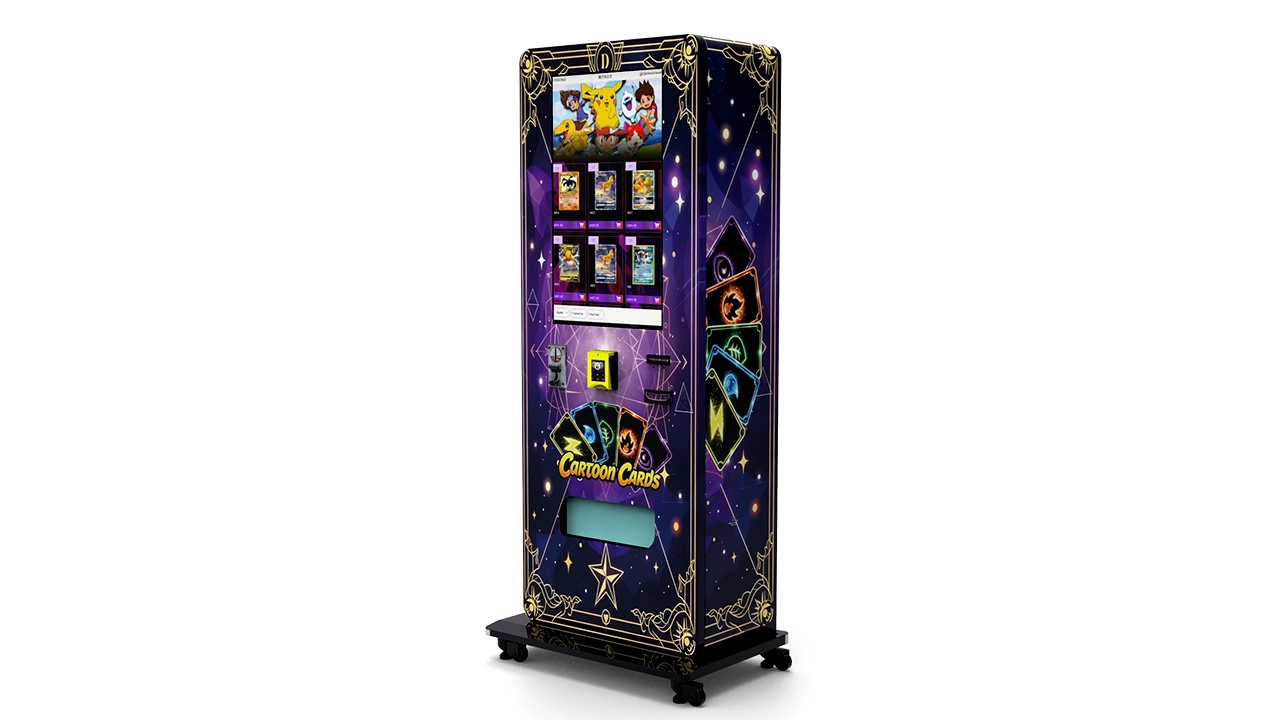
These are the newer, more interactive machines that have become popular in the last few years. They typically hold between 200 and 400 packs. The touchscreen allows for a more engaging customer experience, which can justify a higher price point per pack. But the screen takes up space that could otherwise be used for product storage.
In my experience, these machines work best in locations where you can charge a premium. A 32-inch touchscreen card vending machine in a busy mall can sell packs at 20% to 30% above retail because the experience feels more like a vending event than a simple purchase. The capacity is lower, but the turnover is faster, so you’re refilling more often but making more per pack.
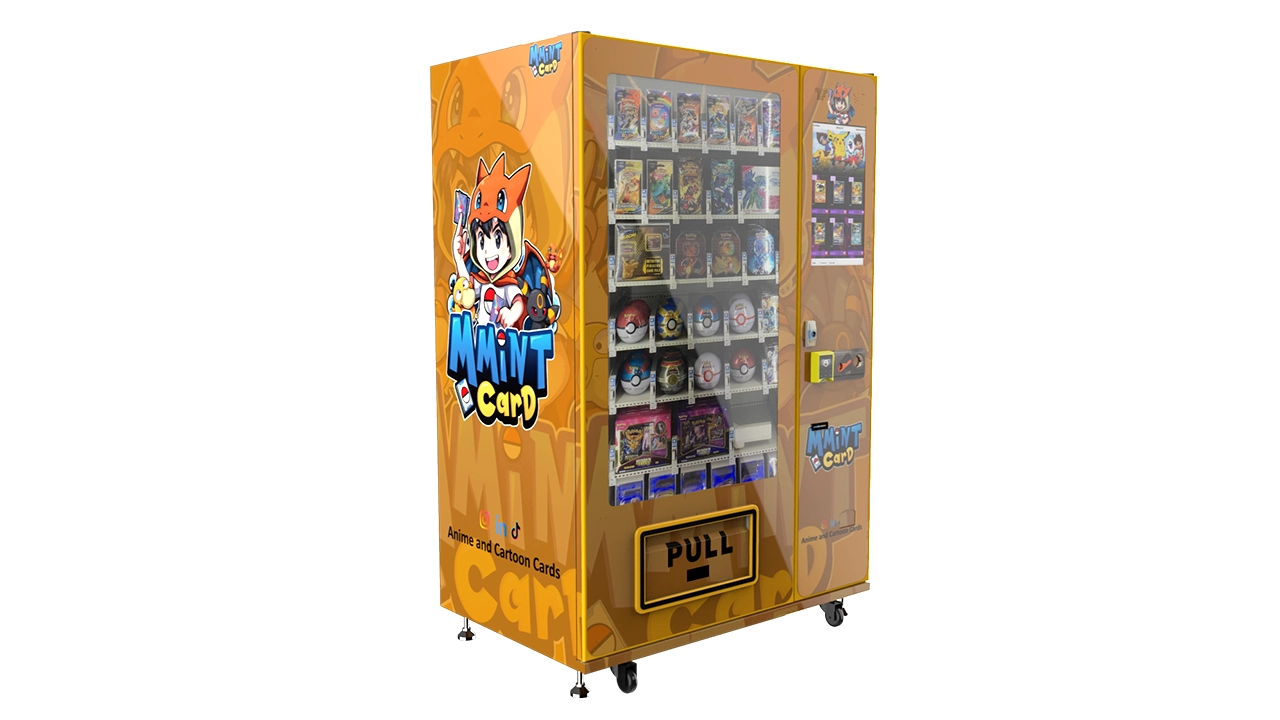
One thing to watch for with these models is the software. The touchscreen interface needs regular updates, and the payment system integration can be finicky. If you’re not comfortable with basic troubleshooting, you’ll want a supplier who offers solid support. I’ve had to deal with a frozen screen at a location during a Pokémon release day, and it was not fun.
Wall-Mounted Card Vending Machines
These are the compact units designed for tighter spaces—think convenience stores, barbershops, or game cafes. They usually hold between 100 and 250 packs. The capacity is limited, but they’re much cheaper to buy and install. They also use less power and are easier to move if a location doesn’t work out.
Wall-mounted units are a great entry point for someone testing the waters. I started with one of these in a local comic shop, and it taught me more about the business than any guide could. The downside is that you’ll be restocking more frequently, which means you need to be disciplined about your schedule.
If you’re considering a wall-mounted unit, pay attention to the coil spacing. Some packs are thicker than others, and you need to make sure the machine can handle the specific product you plan to sell. I’ve seen operators buy a wall-mounted machine and then discover that their preferred packs don’t fit properly, leading to jams and customer frustration.
Why Capacity Alone Doesn’t Determine Profitability
Here’s where I see a lot of newcomers make a mistake. They assume that a machine with more capacity will automatically generate more revenue. That’s not how it works. The key metric is sales velocity—how fast the packs actually sell. You can have a 600-pack machine that does $200 a week, or a 200-pack machine that does $500 a week. The latter is the better investment.
Let me give you a real example from my own experience. I placed a floor-standing machine in a suburban hobby shop that had steady but modest foot traffic. The machine held about 500 packs, and I filled it with a mix of sports cards and Pokémon. At first, sales were decent—about $300 a week. But after the initial novelty wore off, sales dropped to $150 a week. I was sitting on inventory that wasn’t moving, and the hobby shop owner wasn’t happy about the machine taking up floor space.
In contrast, I placed a smaller 32-inch touchscreen model in a downtown game cafe that hosted weekly trading card tournaments. That machine held about 250 packs, but it was doing $600 a week because the customers were already there, ready to buy. The capacity was lower, but the turnover was much faster. That taught me a valuable lesson: location and customer behavior matter more than raw capacity.
So, when you’re evaluating a machine, don’t just ask how many packs it can hold. Ask yourself: how fast will those packs sell in the location I’m targeting? If you can’t answer that question, you’re not ready to buy.
Real-World Capacity Data from My Routes
Let me share some numbers from my actual operations to give you a sense of what to expect. These are based on my experience, not official statistics, so take them as rough benchmarks. I’ve operated machines in the U.S. Midwest and in several EU countries, and the patterns have been surprisingly consistent.
In a high-traffic mall location, a floor-standing machine with 500 packs typically needs restocking every 7 to 10 days. The average pack price is around $6, so weekly gross revenue is roughly $1,200 to $1,500. In a hobby shop with moderate traffic, that same machine might only sell 30% of its inventory in a week, requiring restocking every two weeks or so. The revenue drops to around $400 to $600 weekly.
For a wall-mounted unit with 150 packs in a convenience store, I’ve seen restocking intervals of 5 to 7 days, with weekly revenue around $300 to $400. The key takeaway is that capacity and revenue don’t move in lockstep. You need to match the machine size to the location’s sales potential.
According to IBISWorld, the vending machine industry in the U.S. generates approximately $7 billion in annual revenue, and the average vending machine operator manages around 50 machines. That gives you an idea of the scale you might be working toward, but it doesn’t tell you much about individual machine performance. For that, you need local data and a willingness to test.
Matching Machine Capacity to Location Type
One of the most important skills I’ve developed is the ability to eyeball a location and estimate how many packs it can sell in a week. This isn’t an exact science, but after a few years, you get a feel for it. Here’s a rough framework I use.
For a mall or entertainment venue with heavy foot traffic, I look for a machine with at least 400 to 600 packs. These locations have high impulse buying, and you want to avoid running out of stock on a Saturday afternoon. Running out is worse than having a few extra packs sitting in the machine.
For a hobby shop or game store, a machine with 200 to 400 packs is usually sufficient. These locations have a dedicated customer base, but they don’t have the same volume as a mall. A smaller machine also allows you to rotate products more frequently, which keeps the inventory fresh and exciting.
For a convenience store, barbershop, or other small retail space, a wall-mounted unit with 100 to 250 packs is the right call. These locations have lower foot traffic, and a large machine would just take up space without generating enough revenue to justify it.
I’ve also placed machines in gyms and laundromats, but those are niche locations that require careful product selection. Sports cards do well in gyms, but Pokémon packs might sit unsold. You have to be willing to experiment and adjust your product mix based on what the data tells you.
How Restocking Frequency Affects Your Bottom Line
Restocking is the hidden cost of this business. It’s not just about the time it takes to fill the machine—it’s about the fuel, the wear and tear on your vehicle, and the opportunity cost of not being able to do something else with that time. When you’re calculating your margins, you need to factor in these costs.
In my experience, a restocking trip costs about $15 to $25 in time and fuel, assuming you’re within a 20-mile radius of your location. If you’re restocking a machine every 5 days, that’s roughly $90 to $150 a month in logistics costs. That might not sound like much, but it adds up across multiple machines.
One way to reduce restocking frequency is to choose a machine with higher capacity. But as I mentioned earlier, higher capacity only helps if the location can actually sell the product. Otherwise, you’re just holding inventory longer, which increases your working capital requirements.
Another strategy is to analyze your sales data and adjust the product mix. If certain packs sell faster, dedicate more coils to those products. This is especially important for card vending machines because the hype around specific sets can change quickly. A set that’s selling out in a week might be dead in a month, and you need to be ready to swap it out.
Comparing Costs: Machine Types and Their Economics
Let me give you a practical comparison of the different machine types based on cost, capacity, and revenue potential. This table is based on my own purchasing experience and the typical performance I’ve seen in the field. Remember, these are rough figures and your results will vary.
| Machine Type | Typical Cost (USD) | Pack Capacity | Weekly Revenue Potential | Restocking Interval |
|---|---|---|---|---|
| Wall-Mounted | $2,000 – $4,000 | 100 – 250 | $200 – $400 | 5 – 7 days |
| 32-Inch Touchscreen | $6,000 – $10,000 | 200 – 400 | $400 – $800 | 7 – 10 days |
| Floor-Standing | $8,000 – $15,000 | 300 – 600 | $600 – $1,500 | 7 – 14 days |
These numbers are based on my experience operating in the U.S. and EU markets. The cost of the machine is just the beginning—you also need to factor in installation, payment system setup, and any permits required by your local jurisdiction. A floor-standing machine might look like the best value in terms of cost per pack, but it also requires more upfront capital and a more suitable location.
The 32-inch touchscreen model is a sweet spot for many operators because it offers a balance between capacity and customer engagement. It’s also easier to place in a variety of locations because its footprint is smaller than a floor-standing unit. I’ve had success with these in mid-sized retail spaces and entertainment venues.
Wall-mounted units are the cheapest way to enter the business, but they have limitations. You’ll be restocking more often, and the lower capacity means you have less room for product diversity. That said, they’re a good option for testing a location before committing to a larger machine.
What a 10-Year Operator Looks for in a Machine
After a decade in this industry, I’ve developed a checklist that I use when evaluating a trading card vending machine. It’s not just about capacity—it’s about reliability, ease of maintenance, and the ability to adapt to changing market conditions.
First, I look at the coil system. Are the coils easy to remove and replace? Can they handle different pack sizes? I’ve seen machines where the coils are poorly designed, and they jam constantly. That’s a nightmare because it requires a service call, and every service call eats into your margin.
Second, I check the payment system. Does it accept contactless payments, mobile wallets, and cash? In today’s market, you need at least contactless and mobile payment options. According to Statista, contactless payments are expected to account for over 50% of all point-of-sale transactions in the U.S. by 2025. If your machine doesn’t support this, you’re losing sales.
Third, I look at the software. Can you remotely monitor inventory levels? Can you adjust pricing without visiting the machine? These features save you time and money. I’ve been using machines with remote monitoring for the last five years, and it’s made a significant difference in my operating efficiency.
Finally, I consider the supplier. The machine is only as good as the support behind it. I’ve worked with several suppliers, and the one that stands out is Zhongda Smart. Their machines have been reliable, and their after-sales support has been responsive when I needed help. That’s not an ad—it’s just the reality of my experience. A good supplier will help you troubleshoot issues, provide replacement parts quickly, and offer guidance on machine placement.
Common Mistakes I’ve Made (and Seen Others Make)
I’ve been in this business long enough to have made my share of mistakes. Let me share a few so you can avoid them.
The biggest mistake I made early on was overestimating the capacity I needed. I bought a floor-standing machine for a location that only had moderate foot traffic, and it underperformed. The machine was too big for the location, and I had tied up too much capital in inventory. I eventually moved that machine to a better location, but the lesson stuck with me.
Another mistake is ignoring the product mix. I once filled a machine entirely with one type of card pack because I got a good deal on it. That was a disaster. The packs didn’t sell well, and I was stuck with inventory that I had to discount to move. Now I always diversify the product mix, even if it means paying slightly more per pack.
I’ve also seen operators neglect regular maintenance. A card vending machine is like any other piece of equipment—it needs to be cleaned, lubricated, and inspected on a regular basis. If you skip maintenance, you’ll eventually have a breakdown, and the cost of the repair will far exceed the cost of the maintenance.
One more mistake: not understanding the local market. I’ve seen operators place machines in locations where the customer base simply doesn’t buy trading cards. It doesn’t matter how good the machine is if the customers aren’t there. Before placing a machine, do your due diligence on the local demographics and shopping habits.
How to Evaluate a Location Before Signing a Contract
Location is everything in this business. I’ve developed a simple evaluation process that I use before committing to any placement. It’s not foolproof, but it has saved me from several bad deals.
First, I observe the foot traffic at different times of the day and week. I want to see at least 50 people per hour passing by the location during peak times. If it’s less than that, the location probably can’t support a card vending machine.
Second, I look at the customer profile. Are the people passing by likely to buy trading cards? A location near a school or a game store is a good sign. A location in a business district might not be as promising, unless you’re targeting office workers who collect cards as a hobby.
Third, I check the competition. Are there other card vending machines nearby? If so, that could be a sign that the market is saturated, or it could mean there’s enough demand for multiple machines. I look at how well the existing machines are maintained—if they’re dirty or out of stock, that’s an opportunity for me.
Finally, I negotiate the terms with the location owner. I prefer a revenue-sharing arrangement over a flat rental fee, because it aligns my interests with the location’s owner. If the machine doesn’t perform, we both feel the pain, and the owner is more likely to help promote it.
The Role of Payment Systems in Card Vending
Payment systems have evolved significantly over the last decade. When I started, most card vending machines were cash-only. That limited the customer base, especially younger buyers who don’t carry cash. Today, you need a machine that accepts credit cards, debit cards, and mobile payments.
I’ve seen a significant increase in sales when I upgraded a machine to accept contactless payments. The convenience factor is real. Customers are more likely to make an impulse purchase if they can pay with a tap of their phone or card. According to Eurostat, the use of contactless payments in the EU has grown steadily, and that trend is mirrored in the U.S.
Another consideration is the payment processing fee. These fees typically range from 2% to 4% of each transaction. That might not sound like much, but it cuts into your margin. When you’re pricing your packs, you need to account for these fees.
I also recommend choosing a machine that supports remote payment monitoring. This allows you to see transaction data in real time and identify any issues with the payment system before they become major problems. It’s a small feature that can save you a lot of headaches.
Maintenance and Repair: What You Need to Know
No matter how good your machine is, it will eventually need maintenance or repair. The key is to be prepared and to choose a machine that’s easy to service. I’ve had to deal with everything from jammed coils to faulty card readers, and each issue requires a different approach.
Regular maintenance includes cleaning the machine, checking the coils, and inspecting the payment system. I recommend doing a basic maintenance check every time you restock. This takes about 10 minutes and can prevent many common issues.
For more complex repairs, you’ll likely need to call a technician. The cost of a service call can range from $100 to $300, depending on your area and the complexity of the issue. This is why I always stress the importance of choosing a reliable machine and a responsive supplier. A machine that breaks down frequently will eat into your profits quickly.
I’ve also found that having a spare parts kit can save you time and money. Simple parts like coils and card readers are relatively inexpensive, and being able to replace them yourself can avoid a costly service call. I always keep a few spare coils and a backup card reader in my vehicle.
Should You Buy or Rent a Card Vending Machine?
This is a common question, and the answer depends on your situation. If you’re new to the business and want to test the waters, renting might be a good option. Some suppliers offer rental programs that include maintenance and support. This reduces your upfront risk and allows you to learn the ropes without a large capital investment.
However, renting is more expensive in the long run. The monthly rental fee adds up, and you don’t build any equity in the machine. If you’re confident in your ability to find good locations and manage the operations, buying is usually the better choice.
In my experience, buying a machine makes sense if you plan to operate it for more than two years. The initial cost is higher, but the monthly savings compared to renting will eventually offset the difference. I’ve bought all of my machines outright, and it’s allowed me to scale my business without ongoing equipment costs.
There’s also the option of a lease-to-own arrangement, which can be a middle ground. You pay a higher monthly fee, but you have the option to buy the machine at the end of the lease term. This can be a good way to manage cash flow while building toward ownership.
How to Choose a Supplier You Can Trust
Choosing the right supplier is one of the most important decisions you’ll make. I’ve worked with several suppliers over the years, and I’ve learned to ask specific questions before making a purchase.
First, ask about the warranty. A good warranty should cover the machine for at least one year, and it should include parts and labor. Some suppliers offer extended warranties for an additional cost, which can be worth it if you’re buying a higher-end machine.
Second, ask about the availability of spare parts. If the supplier doesn’t stock parts for the model you’re buying, you’ll have trouble getting repairs done quickly. I always check that the supplier has a local distributor or a fast shipping option for parts.
Third, ask about training and support. Does the supplier offer installation and training? Do they have a helpdesk you can call if you have issues? This is especially important for the software and payment system integration.
I’ve had positive experiences with Zhongda Smart, and I’ve also used other suppliers. The key is to do your research and read reviews from other operators. Don’t just go with the cheapest option—go with the supplier that offers the best overall value in terms of reliability, support, and price.
Understanding the Regulatory Side
Depending on where you operate, there may be regulations that affect your card vending machine business. In the U.S., vending machines are generally regulated at the state and local level. You may need a business license, a sales tax permit, and possibly a vending machine permit. The U.S. Small Business Administration is a good resource for understanding the requirements in your area.
In the EU, the regulations can vary by country. You may need to register your business, comply with consumer protection laws, and ensure that your machine meets safety standards. Eurostat provides data on retail and vending industry trends that can help you understand the market.
One thing to keep in mind is that trading cards are generally not considered food products, so you don’t need to worry about food safety regulations. However, if you ever decide to add other products to your machine, such as snacks or beverages, you’ll need to comply with additional rules.
I also recommend checking with your local authorities about placement restrictions. Some municipalities have rules about where vending machines can be placed, especially if they’re on public property. It’s better to check before you sign a contract.
FAQ: Answering the Questions Every New Operator Asks
I get asked a lot of questions about trading card vending machines, and I’ve compiled the most common ones here. These are the questions I wish I had asked before I started.
Are vending machines profitable?
Yes, they can be, but it depends on the location, product mix, and your ability to manage costs. In my experience, a well-placed card vending machine can generate $300 to $1,500 in weekly revenue. The margin on trading cards is typically 30% to 50%, so your gross profit could be $100 to $750 per week. However, you need to account for restocking costs, maintenance, and payment processing fees.
How much does a trading card vending machine cost?
The price ranges from about $2,000 for a basic wall-mounted unit to $15,000 for a high-end floor-standing model with a touchscreen. The 32-inch touchscreen models typically cost between $6,000 and $10,000. You should also budget for installation, payment system setup, and initial inventory.
How long does it take to recoup the investment?
Based on my experience, a payback period of 12 to 24 months is realistic if you choose a good location and manage your costs. A machine that generates $500 in weekly gross revenue and has a 40% margin will produce about $200 in weekly profit. Over a year, that’s roughly $10,400. If the machine cost $8,000, you’d recoup your investment in about 10 months. But this is an estimate, and your results will vary.
Should a beginner buy or rent a machine?
If you’re new and want to minimize risk, renting is a good option. It allows you to test the business without a large upfront investment. However, buying is better in the long run if you’re committed to the business. I recommend starting with one used or entry-level machine and learning the ropes before scaling up.
Where is the best place to put a card vending machine?
High-traffic locations like malls, game stores, hobby shops, and entertainment venues are the best. Look for places where the customer base is already interested in trading cards. Avoid locations with low foot traffic, even if the rent is cheap.
What permits or licenses do I need?
You’ll likely need a business license and a sales tax permit. Some states and municipalities require a vending machine permit. Check with your local government and the U.S. Small Business Administration for guidance. In the EU, you’ll need to comply with local business registration and consumer protection laws.
How do I choose a reliable supplier?
Look for a supplier with a good warranty, available spare parts, and responsive customer support. Read reviews from other operators and ask for references. My experience with Zhongda Smart has been positive, but you should do your own research and compare options.
What should I do if the machine breaks down?
Start with basic troubleshooting like checking the power supply, clearing any jammed coils, and inspecting the card reader. If you can’t fix it, call a local technician or your supplier. Having a spare parts kit can help you resolve common issues quickly.
How can I reduce restocking and maintenance costs?
Choose a machine with remote monitoring, use data to optimize your product mix, and schedule restocking efficiently. Regular maintenance prevents major breakdowns. Grouping machines in the same area can also reduce travel time and fuel costs.
Final Thoughts from a 10-Year Operator
The trading card vending machine business has been good to me, but it’s not a get-rich-quick scheme. It requires careful planning, a willingness to learn, and the ability to adapt to changing market conditions. Capacity is an important consideration, but it’s just one piece of the puzzle. The real key to success is finding the right location, choosing a reliable machine, and managing your operations efficiently.
If you’re just starting out, I encourage you to do your homework. Talk to other operators, visit locations where card vending machines are in use, and start small. Test a wall-mounted unit in a promising location before investing in a larger machine. The lessons you learn will be worth more than any guide.
One last piece of advice: don’t be afraid to move a machine if it’s not performing. I’ve relocated machines multiple times, and each time it was the right call. The flexibility to adapt is what will keep you in business for the long haul.
This article is based on my personal experience and does not constitute financial or legal advice. Market conditions vary, and you should consult with professionals before making significant business decisions.