If you’ve been watching the automated retail space for any length of time, you’ve probably seen the same short videos I have: a collector pulling a rare holographic Charizard from a glass-fronted machine, the crowd behind them losing their minds. That clip has driven a lot of people to ask me whether a trading card vending machine is worth buying in 2026. My short answer, after running a mixed fleet of snack, drink, and card machines for over a decade, is that it can be—but only if you treat it like a retail location, not like a slot machine. The machines that make money are the ones placed in high-foot-traffic hobby shops, malls, and entertainment venues, and operated by someone who understands inventory turnover and local demand. The ones that fail are almost always bought on impulse, stocked with the wrong product, and parked in a low-traffic spot where nobody under thirty ever walks.
The Difference Between a Card Machine and a Traditional Vending Machine
Most people assume that if they can run a snack machine, they can run a card machine. That’s the first mistake. A snack vending machine is essentially a logistics tool: you restock the same items, collect the cash, and repeat. A trading card vending machine is closer to a self-service kiosk for a collectibles business. The inventory is high-value, the SKU count is massive, and the customer expectations are completely different. Someone buying a bag of chips doesn’t care about the condition of the packaging. Someone buying a sealed booster pack absolutely does.
You’re also dealing with a different type of consumer. Collectors are not impulse buyers in the traditional sense. They are informed, often obsessive, and they know exactly what they want. If your machine doesn’t have the latest set, or if the price-per-pack is above the local game store rate, they will walk away and buy online. That means your machine needs to be part of a larger ecosystem—either as a complement to a physical store or as a destination in itself, which is much harder to pull off.
In my experience, the most successful card machine operators are the ones who already run a hobby shop or a comic book store. They have the inventory, the supplier relationships, and the customer base. The machine becomes an extension of the counter, not a standalone business. For someone completely new to the industry, the learning curve is steep, and the margin for error is thin.
What a Trading Card Vending Machine Actually Costs in 2026
Let’s talk numbers, because that’s what everyone really wants to know. A new, purpose-built trading card vending machine with a touchscreen interface, card protection features, and a secure dispensing mechanism will cost you anywhere from $8,000 to $18,000 depending on the configuration. The larger 32-inch touchscreen models, which are popular in malls and entertainment venues, sit at the higher end of that range. Wall-mounted card vending machines, which I’ve seen more of in Europe and Japan, are cheaper—usually between $5,000 and $9,000—but they hold far less inventory and are better suited to niche locations like game stores or hobby shops.
If you’re looking at used machines, and I’ve bought a few in my time, you can find them for $3,000 to $6,000. But here’s the catch: trading card vending machines are not like snack machines. The dispensing mechanism has to be gentle enough to protect the cards, and the security features need to be robust enough to deter theft. A used machine that was built for another purpose, or that has been abused, will cost you more in vending machine repair and downtime than you saved on the purchase price. I learned that the hard way with a 2019 model that jammed twice a week and scared off more customers than it served.
Beyond the machine itself, you have to budget for installation, shipping, payment system setup, and initial inventory. The inventory is the big one. A well-stocked machine with a mix of Pokemon, sports cards, and a few higher-end sealed products will easily run you $5,000 to $10,000 in wholesale costs. That’s not counting the display cards, which are usually single cards in protective cases that you’ll need to replace as they sell.
Realistic Revenue and Payback Period
Here’s where I have to be honest with you, because there is a lot of nonsense online about how these machines print money. They don’t. A well-placed trading card vending machine in a busy mall or a large hobby store can generate $2,000 to $6,000 per month in gross sales. That sounds great until you remember that the gross margin on sealed product is not what you think. Booster packs have a margin of about 25% to 35% after wholesale costs, and that’s before you account for credit card fees, electricity, and the cost of your time.
I have one machine in a regional shopping center in the UK that does around £3,500 a month in sales. After restocking, payment processing fees, and the machine’s share of the floor space rent, I’m clearing maybe £1,200 a month. That machine paid for itself in about nine months. I have another machine in a suburban location that does £800 a month and barely breaks even. Same machine, same products, completely different result. The difference is foot traffic and the local collector culture.
For a payback period, you should realistically plan for 12 to 18 months on a new machine if you get the location right. If someone tells you they’re making their money back in three months, they’re either lying or they got lucky with a viral moment that won’t repeat. According to IBISWorld’s recent data on the vending machine operator industry, average profit margins for vending operators hover around 6% to 8%, and that includes all types of vending, not just cards. Card machines can do better because of the higher ticket price, but the inventory risk is also higher.
Location Is Everything: How I Evaluate a Site
I’ve written before about trading card vending machine placement strategies, and I’m going to repeat the core principle here: foot traffic is the only metric that matters, and it has to be the right kind of foot traffic. You need a location where people are already spending money on entertainment or hobbies. A mall corridor with 5,000 people passing per day sounds great, but if the average age is 55 and the stores around you are selling clothing and home goods, you’re not going to sell cards.
What I look for is a location with at least 1,500 to 2,500 people per day walking past, with a visible presence of younger demographics or families. The best spots I’ve found are next to game stores, movie theaters, comic book shops, and even toy stores. I have one machine sitting next to a cinema entrance, and it does well because parents are looking for something to occupy the kids before the movie starts. Another machine is inside a hobby shop, and it works because the shop’s existing customers are already in a buying mindset.
I’ve also had a failure that taught me a lot. I placed a machine in a busy grocery store, thinking that the sheer volume of foot traffic would make up for the lack of a collector demographic. It didn’t. The machine sat there for six months, selling maybe 10 packs a day, and the store manager eventually asked me to remove it because it was taking up space. Grocery shoppers are not card collectors. They are on a mission to buy food and get out. That was a $9,000 lesson.
New vs. Used vs. Leasing: What I Recommend for New Operators
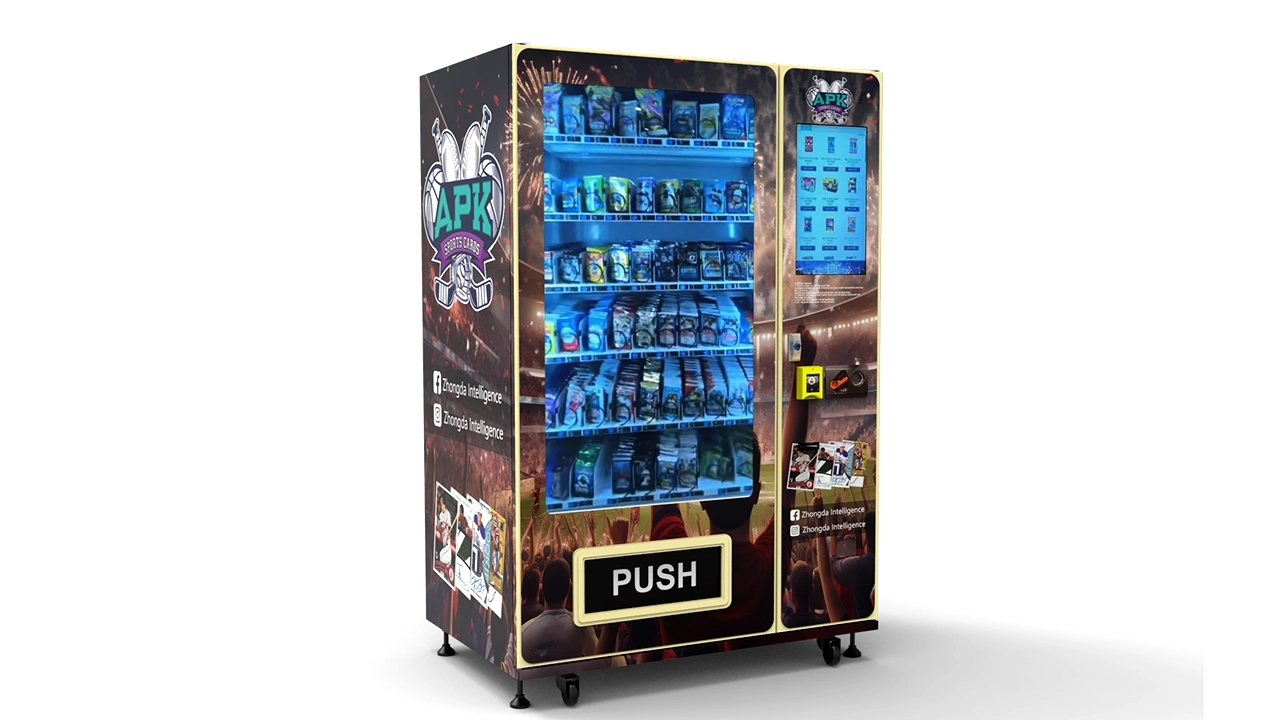
For someone just starting out, I usually recommend leasing or financing a new machine rather than buying a used one. The reason is simple: you don’t yet know if you have the right location or the right product mix, and you don’t want to be stuck with a machine you can’t sell if the business doesn’t work out. A lease gives you an exit strategy. The U.S. Small Business Administration has a useful guide on equipment financing options that explains the difference between a capital lease and an operating lease, and I think it’s worth reading before you commit.
If you do buy used, and I know some operators who have made it work, you need to budget for vending machine repair from day one. The card dispensing mechanisms are more delicate than a snack spiral, and they wear out faster. You should also check whether the machine supports modern payment systems. A machine that only takes coins or old magnetic stripe cards is going to be a problem, because most people under 35 don’t carry cash and a growing number don’t carry physical credit cards either.
When I buy equipment, I look for a manufacturer that has been around for a while and has a track record of supporting their machines. I’ve worked with a few different suppliers over the years, and I’ve come to appreciate the more established Chinese manufacturers like Zhongda Smart, who have been making automated retail equipment for years and understand the need for reliable card dispensing mechanisms. That’s not an endorsement of every product they make, but I’ve found their build quality to be consistent, and their after-sales support is better than most.
Payment Systems and the Unattended Retail Experience
The payment system is one of the most overlooked parts of a card vending machine, and it’s also one of the most important. In 2026, if your machine doesn’t accept contactless payments, Apple Pay, and Google Pay, you are cutting off a huge portion of your potential customers. I’ve seen machines in Europe that only accept coins, and they are almost always underperforming. The 32-inch touchscreen trading card vending machine models I’ve tested come with built-in card readers and support for mobile wallets, which makes a big difference in conversion rates.
You also need to think about the user experience from the customer’s perspective. A card vending machine is not a snack machine. People are going to take their time, browse the selection, and possibly buy multiple items. The interface needs to be intuitive, the screen needs to be bright and responsive, and the machine needs to dispense the cards without damaging them. I’ve seen machines that take 30 seconds to dispense a single pack, and that’s unacceptable. If the process is slow or awkward, people will lose interest and walk away.
Another thing to consider is the security of the transaction. Card machines are prime targets for thieves, not just because the cards are valuable, but because the machines are often placed in semi-secure areas. You need a machine with a solid locking mechanism, and you should consider a remote monitoring system that alerts you if the machine is tampered with. The cost of a good telemetry system is worth it, because the alternative is finding out about a break-in three days later when you go to restock.
Inventory Management and the Art of Restocking
Restocking a card vending machine is nothing like restocking a snack machine. You can’t just fill it with whatever you have and hope it sells. You have to think about the local market, the current set rotation, and the price points that your customers are willing to pay. I’ve learned that the best approach is to keep a diverse mix of products: some low-priced booster packs for casual buyers, some mid-priced products for regular collectors, and a few high-end items for the serious spenders.
I restock my machines every two to three weeks, depending on the location. A machine in a high-traffic mall might need restocking every week, while a machine in a hobby shop might go three weeks before it needs attention. The key is to track your sales data and adjust accordingly. I use a simple spreadsheet to track what sells and what doesn’t, and I’ve found that the top 20% of SKUs usually account for 80% of the revenue. That’s the Pareto principle in action, and it applies to card vending just as much as any other retail business.
One mistake I made early on was overstocking a new set that I thought would be popular. It turned out that the local market wasn’t interested, and I had $3,000 of inventory sitting in the machine for months. I eventually had to sell it at a discount to move it out. Now, I never stock more than two or three boxes of any single product, and I always leave room for new arrivals. The card vending machine restocking strategy that works best is one that prioritizes flexibility over volume.
The Pros and Cons of Different Machine Types
If you’re serious about this business, you need to choose the right machine for your location. The table below summarizes the main differences between the types of machines I’ve operated or evaluated over the years. It’s not exhaustive, but it gives you a quick comparison that I hope is useful.
| Machine Type | Initial Cost (USD) | Inventory Capacity | Best Location | Payback Period (Est.) | Main Risk |
|---|---|---|---|---|---|
| 32-inch Touchscreen Floor Model | $12,000 – $18,000 | High (400+ items) | Malls, entertainment venues | 12 – 18 months | High initial cost, slow foot traffic if poorly placed |
| Standard Floor Model (Non-Touchscreen) | $8,000 – $12,000 | Medium (200 – 300 items) | Hobby shops, game stores | 10 – 16 months | Less engaging user interface |
| Wall-Mounted Card Vending Machine | $5,000 – $9,000 | Low (80 – 150 items) | Comic shops, small retail | 8 – 14 months | Limited inventory diversity |
| Used / Refurbished Machine | $3,000 – $6,000 | Varies | Any location with existing traffic | 6 – 12 months (if it works) | Frequent vending machine repair, outdated payment systems |
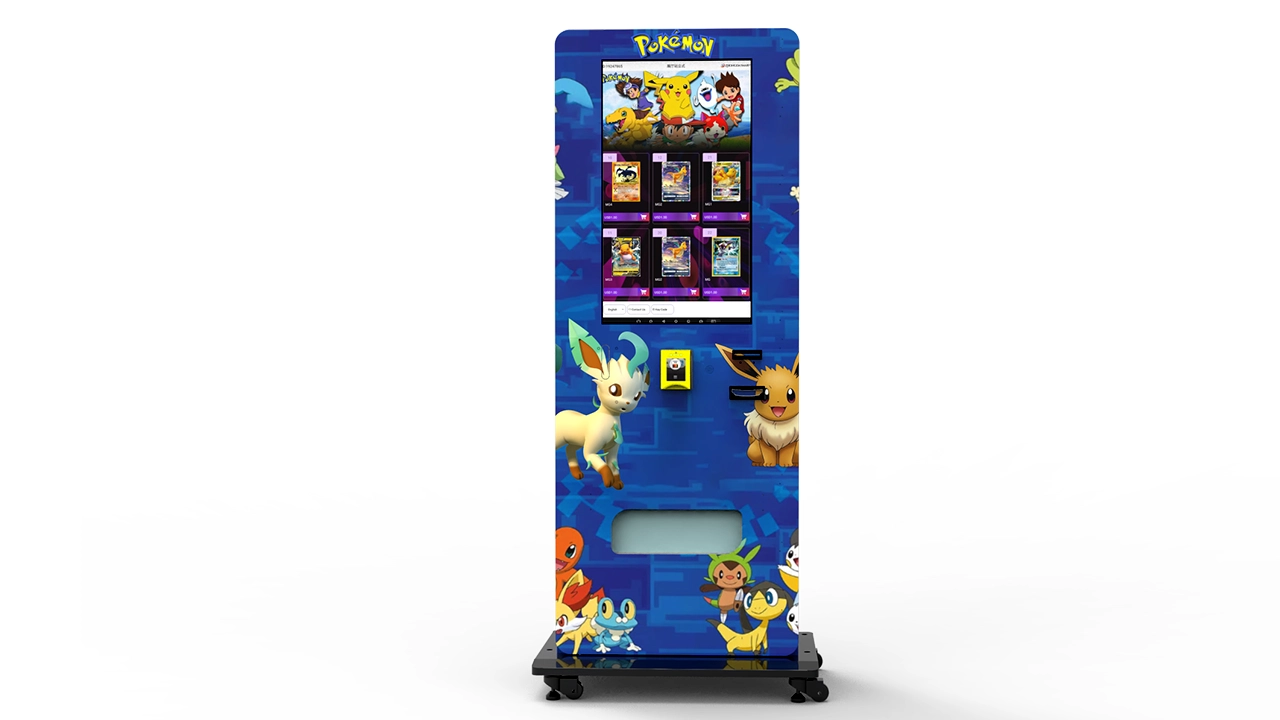
As you can see, the wall-mounted card vending machine is the cheapest entry point, and I’ve seen some operators use them very effectively in small retail spaces. The trade-off is that you can’t stock as much variety, and you’ll need to restock more frequently if the machine is in a good location. For a first-time operator, I think a standard floor model is the sweet spot: not too expensive, decent capacity, and a proven track record in a variety of settings.
Common Mistakes I See New Operators Make
I’ve been in this business long enough to see a lot of people come and go, and the failures usually follow a predictable pattern. The first mistake is buying a machine before securing a location. I know it sounds obvious, but you’d be surprised how many people buy a machine and then scramble to find a spot for it. That’s backwards. You should identify the location first, negotiate the terms, and then buy the machine that fits that space.
The second mistake is underestimating the importance of inventory selection. A card vending machine is not a passive investment. It requires constant attention to market trends, new product releases, and pricing strategies. If you’re not willing to put in the time to research what’s selling, you’re going to end up with a machine full of dead stock. I’ve seen operators lose money because they bought a pallet of a set that was overprinted and had no secondary market value.
The third mistake is ignoring the data. Every machine I operate has a telemetry system that tells me what’s selling, when it’s selling, and how much revenue I’m generating. If you’re not using data to drive your decisions, you’re operating on gut feeling, and that’s a recipe for disaster. According to a recent report from Statista on the vending machine market, the integration of IoT and telemetry in vending machines is one of the key drivers of growth in the industry, and operators who use data to optimize their routes and inventory see significantly higher margins.
Self-Operation vs. Partnership vs. Placement Deals
There are three main ways to run a card vending machine, and each has its own set of trade-offs. The first is self-operation, where you own the machine, secure the location, buy the inventory, and handle all the maintenance and restocking. This gives you the highest profit potential, but it also requires the most time and effort. I run most of my machines this way because I have the experience and the systems in place to manage them efficiently.
The second option is a partnership with an existing business. For example, you could partner with a game store owner who provides the space and some of the inventory, and you split the profits. This reduces your risk and your workload, but it also reduces your upside. I’ve seen this model work well for people who have a full-time job and want to run a card machine as a side project. The key is to have a clear agreement about who is responsible for what, including restocking, maintenance, and dealing with customer complaints.
The third option is a placement deal, where you place the machine in a location for free and the host business takes a percentage of the revenue. This is the easiest way to get started, but it’s also the least profitable. You’re essentially paying for the foot traffic with a share of your margin. I’ve done a few placement deals, and they work best in locations where the host business doesn’t want to deal with the hassle of running a machine but has the space and the traffic. The wall-mounted card vending machine is a good fit for this model because it takes up minimal floor space and can be installed quickly.
How to Choose a Supplier and Avoid the Scams
Choosing the right supplier is one of the most important decisions you’ll make, and it’s also one of the most difficult because there are a lot of companies out there that will sell you a cheap machine and then disappear when you need support. I’ve dealt with suppliers in China, Europe, and the US, and I’ve learned to ask a few key questions before I hand over any money.
First, ask about the warranty and the after-sales support. A reputable supplier will offer at least a one-year warranty on the machine, and they should have a local service network or at least a reliable shipping process for replacement parts. Second, ask about the payment system compatibility. Make sure the machine supports the payment methods that are common in your target market. Third, ask for a list of existing customers and try to contact one or two of them. If the supplier can’t provide references, that’s a red flag.
I’ve also learned to be wary of suppliers that offer machines at prices that are significantly lower than the market average. There’s a reason why a machine is cheap: it’s either poorly built, uses outdated technology, or is being sold by a company that won’t be around in two years. I’ve had a good experience with Zhongda Smart, who have been manufacturing vending equipment for over a decade and have a solid reputation in the industry. They’re not the only option, but they’re a safe choice if you’re looking for a reliable machine at a fair price.
Legal Requirements, Permits, and Insurance
The legal side of running a card vending machine is often overlooked, but it’s just as important as the operational side. In the US, the requirements vary by state and by city. Some jurisdictions require a vending machine license, while others just require a general business license. You’ll also need to collect and remit sales tax on your sales, which means you need to register with the appropriate tax authority.
In the EU, the rules are different. You need to comply with the General Product Safety Directive, and there may be specific requirements for electrical safety and electromagnetic compatibility. The European Commission’s website has a useful guide to the CE marking requirements for vending machines, and I recommend reading it before you import any equipment. Insurance is another consideration. Your business insurance should cover the machine, the inventory, and any liability that might arise from someone using the machine.
I’m not a lawyer, and this isn’t legal advice, but I can tell you from experience that it’s better to spend a few hundred dollars on a consultation with a business attorney than to find out later that you’re not compliant. The last thing you want is to have your machine seized or face a fine because you didn’t have the right permits.
Maintenance, Repairs, and the Hidden Costs of Ownership
Every machine I own has required repairs at some point. It’s inevitable. The card dispensing mechanism is the most common failure point, especially if you’re selling products that are slightly different in size or thickness. I’ve also had issues with the card reader and the touchscreen. In my experience, the average annual maintenance cost for a card vending machine is around 5% to 10% of the machine’s purchase price. That’s not counting the cost of downtime, which can be significant if the machine is out of service for a week.
To minimize downtime, I always keep a spare parts kit on hand, including a spare dispensing motor, a card reader, and a power supply. I also have a relationship with a local vending machine repair technician who can come out on short notice if I’m not able to fix the problem myself. If you’re not handy with tools, you need to factor in the cost of a technician, which can range from $50 to $100 per hour depending on where you are.
The best way to reduce maintenance costs is to buy a quality machine in the first place. A cheap machine might save you money upfront, but it will cost you more in the long run. I’ve seen operators spend more on repairs in the first year than they would have spent on a better machine. That’s why I always recommend buying from a reputable manufacturer, even if it means paying a bit more.
How to Lower Your Restocking and Maintenance Costs
There are a few strategies I use to keep my costs down. The first is route optimization. If you have multiple machines, you should plan your restocking trips so that you visit multiple locations in one trip. This reduces your fuel costs and your time. The second is inventory forecasting. By tracking your sales data, you can predict how much of each product you’ll need and avoid overstocking. The third is buying in bulk. I order my inventory in bulk from a distributor, which gives me a lower per-unit cost, but I’m careful not to buy too much of any single product.
Another strategy is to use a machine that supports remote monitoring. This allows me to check the inventory levels and the sales data from my phone, so I can plan my restocking trips more efficiently. I can also see if there’s a problem with the machine before it becomes a major issue. For example, if the machine reports a jam, I can go out and fix it before it’s out of service for a week.
Finally, I would recommend considering the self-service kiosk model for your business. A self-service kiosk is not just a vending machine; it’s an interactive retail experience. The best machines allow customers to browse the full inventory, see product images, and even read reviews before they buy. This increases the average transaction value and reduces the number of people who walk away without buying.
Is It Worth It in 2026? My Honest Conclusion
So, is a trading card vending machine worth buying in 2026? The answer is yes, but with caveats. It’s worth it if you have the right location, the right inventory, and the willingness to treat it like a real business. It’s not worth it if you’re looking for a passive income stream or a quick way to make money. The machines that succeed are the ones that are operated by people who understand the collectibles market and are willing to put in the time to manage the inventory and maintain the equipment.
I’ve seen too many people buy a machine, put it in the wrong place, and then complain that it doesn’t make money. That’s not the machine’s fault. It’s the operator’s fault. If you’re serious about this, do your research, talk to other operators, and start small. You can always scale up once you’ve proven the concept.
I also want to be clear that the numbers I’ve shared here are based on my own experience and publicly available data. Your results will vary depending on your location, the products you sell, and the local market conditions. According to IBISWorld, the vending machine industry in the US is projected to grow at an annualized rate of 3.2% from 2024 to 2029, which suggests that there is still room for growth, but the competition is also increasing. The profitability of card vending machines depends on your ability to differentiate yourself and provide a better experience than your competitors.
If you’re still reading this, you’re probably more serious than most. That’s a good sign. The fact that you’re doing your research and thinking about the details puts you ahead of the people who just buy a machine on a whim. But don’t let that confidence turn into overconfidence. Take your time, find the right location, and build a plan before you spend any money.
Frequently Asked Questions
Are trading card vending machines profitable?
Yes, they can be profitable, but it depends heavily on location and inventory management. In my experience, a well-placed machine in a high-traffic area can generate $2,000 to $6,000 in monthly gross sales, with a net profit of $800 to $1,500 after all costs. However, a poorly placed machine can lose money. Profitability is not guaranteed, and you should expect a payback period of 12 to 18 months on a new machine.
How much does a trading card vending machine cost?
A new machine typically costs between $8,000 and $18,000, depending on the size and features. Wall-mounted models are cheaper, starting around $5,000. Used machines can be found for $3,000 to $6,000, but they come with higher maintenance risks and may need repairs sooner. You also need to budget for inventory, installation, and payment system setup.
How long does it take to recoup the investment?
Most operators I know recoup their investment in 12 to 18 months. This assumes a good location, steady sales, and efficient inventory management. If you have a great location and high sales, it could be faster, but I would not plan on anything less than a year. If someone promises a three-month payback, be skeptical.
Should I buy or lease a card vending machine for a beginner?
I recommend leasing or financing for beginners because it reduces your upfront risk and gives you an exit strategy if the business doesn’t work out. Leasing also preserves your cash flow for inventory, which is where you’ll need the most money. Once you have proven the concept, you can consider buying.
Where is the best place to put a card vending machine?
The best locations are places with high foot traffic and a demographic that matches the collectibles market. Hobby shops, game stores, comic book stores, malls, and movie theaters are all good options. You need at least 1,500 to 2,500 people passing by per day. Avoid grocery stores and general retail unless there is a specific reason to believe the customers are interested in cards.
What permits and licenses do I need?
This varies by state and city. In the US, you typically need a business license and a vending machine permit. You also need to register for sales tax collection. In the EU, you need to comply with the General Product Safety Directive and have the CE marking on your machine. I recommend consulting with a local business attorney to ensure you’re compliant.
How do I choose a supplier?
Look for a supplier with a good reputation, a solid warranty, and a track record of supporting their customers. Ask for references and contact them. Be wary of prices that seem too good to be true. I’ve had good experiences with Zhongda Smart, but you should do your own research and compare multiple suppliers before making a decision.
What happens if the machine breaks down?
You need to have a plan for repairs. This could mean having a spare parts kit, a local technician, or a relationship with the supplier’s service department. The average annual maintenance cost is about 5% to 10% of the machine’s purchase price. Downtime costs you money, so it’s important to address issues quickly.
How can I reduce restocking and maintenance costs?
Use a route optimization strategy if you have multiple machines, track your sales data to forecast inventory needs, and buy in bulk from distributors. Remote monitoring can help you identify issues early and plan your restocking trips more efficiently. Investing in a quality machine will also reduce the frequency of repairs.